Category: Multi System Operators

  • “India is not yet mature for RIO deals”: Sanjev Hiremath

    “India is not yet mature for RIO deals”: Sanjev Hiremath

    The current scenario in India is not very viable to allow for reference interconnect offer (RIO) to take off. No broadcaster would want to be on a RIO agreement because the moment you are on RIO, your distribution is affected. Broadcasters want their channels to be carried by all operators and also in good packs for maximum reach.


    Subscription too would be lower at least initially. The RIO rate X subscribers on CPS basis will mostly likely be lower than the existing negotiated price for that channel.


    India is not yet an addressable pay TV subscription market and RIO deals will not work anytime soon; neither for the broadcaster nor for the DPO. The addressable billing system, consumer communication and B to C marketing needs to kick-in. 


    Currently, broadcasters want reach and DPO wants carriage or at the least it does not want to pay for the channel and keep its content cost down. There is competition among DPOs too and cost of content is critical to all. RIO is a regulatory mandate in the absence of a deal and a good basis for negotiations. Money saved on carriage on RIO (as there is no carriage) can be used for discounts to structure deals. 


    In the immediate future, some channels will get impacted due to poor uptake or because of it being a niche or premium channel. Some of these channels will likely go on RIO especially stand alone ones. As and when billing for content gets established we move to a more mature market where broadcasters will get decent subscription revenues, niche channels will be able to survive and premium channels will make more money being a-la-carte on a CPS deal.


    We are in a transition phase of moving to the real objective of DAS, pay as per channels viewed/subscribed – in short, ADDRESSABILITY!


    (These are purely personal views of consultant Sanjev Hiremath and indiantelevision.com does not necessarily subscribe to these views.)

  • Bombay HC may hear Digicable license cancellation case next week

    Bombay HC may hear Digicable license cancellation case next week

    KOLKATA: The Bombay High Court may hear the Digicable Network license cancellation case next week most probably on Monday.

    Earlier as well, the Bombay HC had granted relief to the multi-system operator (MSO) when it extended the order cancelling its permanent registration till 5 November. “The case was adjourned as the MIB counsel had sought around four weeks’ time to file replies in the matter,” says an analyst.

    Jagjit Singh Kohli-promoted Digicable Network, which challenged the Ministry of Information and Broadcasting’s order on 13 September, had earlier got an ad interim stay against the order till 6 October.
    “The hearing has been postponed for the next two to three days,” said Kohli.


    The MSO had approached the court in September post which it got an ad interim stay till 6 October and subsequently till 5 November. The MSO had challenged the basis on which the security clearance was denied to the MSO.


    A similar case is being heard in the Kolkata High Court on the petition filed by its JV -Digicable Comm on its licence cancellation. That case has been postponed to 28 November. The Kolkata based MSO has got a stay order on its cancellation twice and this being the third time. The court observed that when the MSO received its DAS licence in 2013, it was subject to security clearance from Home Ministry and the same has been denied in the order passed in September 2014.


    In July, the ministry of information and broadcasting had cancelled the licences of Digicable Comm while in September the same was done for Digicable Network, on the basis of denial of security clearance by the Home Ministry.


  • With broadcaster backing, MSOs eye voluntary digitisation

    With broadcaster backing, MSOs eye voluntary digitisation

    MUMBAI: When the industry was moving in full force towards digitising phase III and phase IV cities, the Information and Broadcasting Ministry announced the postponement of digitisation till 2016. The news may have elated a few, but multi system operators (MSOs) and broadcasters have been critising the move. 


    “It is the MSOs who have to invest in digitisation,” says Siti Cable CEO VD Wadhwa and president of the newly formed All India Digital Cable Federation (AIDFC). In such a scenario, Wadhwa has suggested voluntary digitisation in these phases.

    The MSOs have a feeling that with delayed digitisation, the local cable operator (LCO) will not pay them the incremental money, since digitisation is not taking place.
     

    With delayed digitisation, broadcasters who were looking for a hike in their subscription revenue from the phase III and phase IV markets will also have to put a break to their dreams. 

    The MSO too is at loss. Currently, an MSO invests close to Rs 1500 per set top box and additional money on connectivity. “With this delay, the MSOs are not going to get any return on their investments for the next 15 months.  So whether I pay today or after 15 months, my interest cost will keep getting high, since I will be borrowing money and then investing,” informs Wadhwa.

    To tackle this situation, Wadhwa suggests that since the industry has to in any case move to digitisation in the next two years, they can start with voluntary digitisation.  “Broadcasters will have to back the MSOs to achieve this,” he says adding that Siti Cable is ready for voluntary digitisation, provided that broadcasters do not charge the MSO for the next 15 months.

    “Since the MSO is bringing in the money, the broadcasters should agree to not charge for next 15 months,” he says.

    Wadhwa also suggests that voluntary digitisation can be smooth provided the LCOs increase the cable bill in phase III and IV markets by Rs 50-Rs 60. “LCOs have till today been charging only Rs 150-Rs 180 from the consumer for some 60 channels. I would suggest that since with digitisation the number of channels will go up to 200-250, the LCOs should increase the bill by Rs 50-60 per subscriber.”

    Wadhwa is of the view that the LCOs can keep 50 per cent of the amount they increase in the cable bill. “With this, till digitisation is complete, while the ARPU for the MSO increases, the LCO can also get 50 per cent more on what he is currently getting,” he opines.


    In order to make this possible, Wadhwa will first try to bring consensus amongst MSOs and then will talk to all the broadcasters. “If the broadcasters support us, we will go ahead with voluntary digitisation.  We will also go to each state and talk to the LCOs,” he concludes. 


  • TDSAT gives a week’s time to Telengana MSOs to carry TV9

    TDSAT gives a week’s time to Telengana MSOs to carry TV9

    MUMBAI: The Telecom Disputes Settlement Appellate Tribunal (TDSAT) has directed the multi system operators (MSOs) in Telengana to resume the broadcast of news channel TV9 within a week from the passing of the order on 29 October.


    The case which had been filed by the Associated Broadcasting Corporation (ABC) against MSOs Hathway Cable & Datacom, Siti Vision Digital Media and others, had actually been shut in early October when TDSAT had directed the state MSOs to carry the channel. At that time, the Telengana state additional advocate general Ramachandra Rao had said that the government would provide security to the MSOs and LCOs for carrying the channel. This was subject to ABC not broadcasting content that would violate the law or put out defamatory content against the state of Telangana.


    However, the Central Government solicitor general Ranjit Kumar regretfully said that the assurance given by Rao ‘remained mere words on a piece of paper’. To this, Rao produced proof of letters sent to the Telangana Police director general asking them to ensure that ‘no untoward incident takes place as a result of the petitioner’s broadcast as per the TDSAT order.’


    However, counsel for the MSOs said that the police would come to rescue only after the MSOs had suffered damages from the mob. The answer to this would be to issue a public notice or a press release so that the MSOs could resume broadcast.


    The TDSAT has directed the State of Telangana to file an affidavit that as long as TV9 refrains from defamatory content against the state, its people, government and follows the Programme Code and the Advertisement Code, the government would provide security. It has also asked the broadcaster and the MSOs to publicise the order through electronic media.


    The MSOs will have to intimate the police about the date when they shall resume broadcast. TV9 has been switched off from the state of Telangana from several months due to its broadcast of content that even the TDSAT saw as ‘highly defamatory’.


  • MSOs to put Star India channels on a la carte

    MSOs to put Star India channels on a la carte

    MUMBAI: The multi system operators (MSOs) are gearing up for the big change. In order to meet the deadline given by the Telecom Disputes Settlement Appellate Tribunal (TDSAT), the leading MSOs under the umbrella of All India Digital Cable Federation (AIDCF) met in New Delhi today.


    “The main agenda of the meeting was to discuss how we will implement the order passed by the Tribunal,” says AIDCF president and Siti Cable CEO VD Wadhwa speaking to indiantelevision.com.


    During the meeting, the MSOs discussed the modus operandi for implementation of RIO by 10 November and also the challenges.


    “There are three major challenges: at the consumer level, at the local cable operator level and thirdly at the technology level,” adds Wadhwa.


    Every MSO, according to Wadhwa has different subscriber numbers. “All the packages have to be upgraded or downgraded. We will have to see if the system can support the changes for millions of subscribers,” he says.


    AIDCF has decided to put all the Star India channels on a la carte. “We cannot carry all the Star channels, since it is coming up to be very expensive. So we have decided to put all the Star channels on a la carte and will let the consumer decide which channels they want,” he informs.


    Wadhwa says that even after the incentives that Star is offering, the cost for the MSO has doubled. “Even if we take the maximum discounts, the channel prices are going up by 100 per cent,” he says.


    Not only this, AIDCF is forming a sub-committee which will be meeting Star India officials early next week. “The committee will meet the officials to explain to them the challenges we are facing. This system is viable for none,” he adds.


    All the MSOs will be signing the RIO deals with Star before 10 November and in the meanwhile start working on creating new packages. “We will decide the pricing of the channel based on the consumer demand for the channel,” he concludes.


    The MSOs will inform the consumers of the changes at individual level.


    The meeting was attended by Siti Cable, Hathway Cable & Datacom, Den Networks, Manthan, GTPL amongst others. 

  • AIDCF to hold a meeting to discuss Star’s RIO deal implementation

    AIDCF to hold a meeting to discuss Star’s RIO deal implementation

    MUMBAI: Just 10 days after its formation, the All India Digital Cable Federation (AIDCF) under the presidentship of Siti Cable CEO VD Wadhwa is all set meet for the second time on 31 October in New Delhi. The meeting will be attended by the leading multi system operators (MSOs) and has a set agenda for the day.


    The meeting which is being held just a day after the Telecom Disputes Settlement Appellate Tribunal (TDSAT) accepted Star India’s 10 November deadline for implementation of the RIO deal by MSOs is not co-incidental.


    “The platform operators are meeting in Delhi in order to decide on the modus operandi for implementation of the RIO deal, the deadline for which is 10 November,” says a MSO, who is likely to be a participant of the meeting.


    The TDSAT in its order has asked the MSOs to sign the RIO deals with Star before 10 November, failing which the broadcaster can disconnect its signals.


    The meeting is likely to be attended by Manthan, Siti Cable, GTPL, Hathway among others.


  • Hathway raises Rs 150.40 crore

    Hathway raises Rs 150.40 crore

    MUMBAI: After getting board approval of raising Rs 150.40 crore from preferential allotment of shares on 10 September, the multi system operator (MSO) Hathway Cable & Datacom has now issued a notice on BSE intimating the preferential allotment of 47,00,000 Equity Shares of face value of Rs 10 each of the company to CLSA Global Markets (CLSA).


     “The Board of Directors of the Company at its meeting held on 14 October 2014, have allotted 47,00,000 fully paid-up equity shares of face value of Rs 10 each (the Equity Shares) of the Company to the following allottee at a price of Rs 320 per Equity Share (inclusive of premium of Rs 310 per Equity Share) aggregating to Rs 150,40,00,000 (Rupees one hundred fifty crore forty lakh only) by way of a preferential allotment, ” the company statement said.


    “As per the provisions of the ICDR Regulations, the Equity Shares allotted to CLSA Global Markets PTE. Ltd shall be locked in for a period of one year, from the date of receipt of Trading Approval,” the statement added.


    After the board meeting, the MSO also revealed that, “Consequent to the Preferential Allotment, the issued, subscribed and fully paid-up Equity Shares of the Company has increased from 16,13,98,900 Equity Shares to  16,60,98,900 Equity Shares. The total shareholding of the promoter/promoter group entities in the company now stands reduced from 44.74 per cent to 43.48 per cent of the expanded share capital.”


    After the board meeting held on 9 September, the company had announced raising of Rs 300.40 crore. Capital Partners’ Smallcap World Fund and Global Small Capitalisation Fund bought a total of 94 lakh shares for the fund raising.

  • Kolkata MSOs to meet Star officials on 30 Oct, again

    Kolkata MSOs to meet Star officials on 30 Oct, again

    KOLKATA: The cable TV industry is on its way to some major changes. While the industry got a shock, after Star India decided to provide its channels to multi system operators (MSOs) only on the basis of Reference Interconnect Offer (RIO), the immediate reaction that came was of increased prices of cable TV services.


    The decision of Star to provide channels on RIO, led to MSOs in Kolkata requesting for a meeting with the broadcaster in order to re-consider the decision as well as for increasing the time frame for implementation of RIO deals.


    The meeting which took place on 28 October saw Star India officials proposing their incentive scheme, which the broadcaster had announced on 27 October, to the platform operators in the state. The incentives, as earlier reported by indiantelevision.com will be based on three criteria: the number of channels the MSO takes, the number of subscribers it distributes the channel to and the ease of access that it provides to the consumers for the Star channels.


     “We will decide on Star’s incentive scheme in the next two-three days. We will do all the permutation and combination and then take a call on whether we should go with the incentive scheme or opt for normal RIO,” said Siti Cable Kolkata director Suresh Sethiya.


    The city based MSOs, who do not want to lose their subscriber base, are currently working on the various modules of the proposed incentive and will meet the Star officials again on 30 October, after thoroughly reading the new scheme internally.  


    Sethiya further said, “Star has a bouquet of channels and if a cable TV home in Kolkata, does not wish to watch Marathi channels, he may not pay for it. We are working on the price.”


    Another city-based MSO on condition of anonymity said that Star has offered an incentive of around 60 per cent for its Hindi GEC Life OK, 9 per cent for Star Plus and 15 per cent for Star Jhalsa.


    Star Network comprising Star Plus, Life OK, Star Jhalsa, Star Movies, Star Sports, National Geographic among others, could lose its viewers in Kolkata, if the MSOs fail to offer the channels at an attractive price. “The ground is not prepared for RIO rates. We will negotiate with Star on 30 October again,” said the MSO.


    A local cable operator said that the customers are worried as they will have to pay a hefty price for cable TV services again in a short span of 10 months.


    If the MSOs do not agree to the incentives being given by Star, based on the three conditions, the consumer could have to shell anywhere between Rs 35-40 for two Star channels, a source said adding that if the consumer wants more of the broadcasters’ channels they will definitely have to pay more.


    With most MSOs removing the Star channels from the different packages and providing the same on a-la-carte, the prices of the package will go down by Rs 9, Rs 12 and Rs18 respectively for their different packages.

  • Germany’s Panaccess bets big on CAS in India

    Germany’s Panaccess bets big on CAS in India

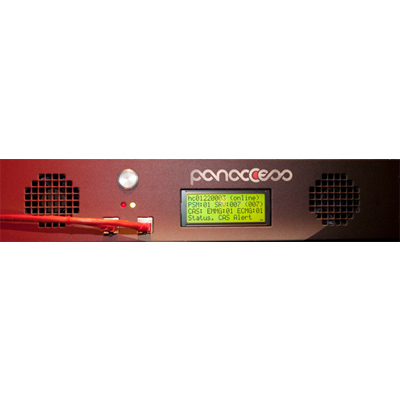
    KOLKATA: Panaccess, a German-headquartered company for CAS, SMS, billing and VoD, aims to promote CAS in India. The company is not only betting on business from the remaining phases i.e. III and IV, but is also approaching the multi-system operators (MSOs) in phase I and II.


    “There is good scope for CAS, SMS and billing in the next phases. And a few existing clients want to replace with our CAS and hence, we are approaching the MSOs in phase I and II along with newer ones,” informs Panaccess sales consultant GK Viswanath.


    “We have commissioned our conditional access system, subscriber management system and billing for a MSO in Pondicherry,” he answers, when asked about the work executed in the country.


    The company, which is slated to open a service centre in Bengaluru by April 2015, has already established its products and services in 32 countries across the world. It serves as a single window for a set of secured and revenue protected suite of solutions that complements and adds revenue streams to existing and new cable TV and DTH operations.


    After April, the company will start visiting all the major MSOs and plans to advertise a lot more as well. “We participate in all the major cable TV exhibitions etc,” he states.


    On the problems MSOs face with existing CAS system, he says, “They can resolve the problems by replacing with our CAS i.e. SMS and billing which are built in. Hence, there is no need for MSOs to go any anywhere else for these facilities. Apart from this, we also provide with solutions through broadband services.”


    In the coming months, the company, which currently employees around 15 people in the country, plans to recruit a few more.  “Next fiscal will see at least 10 for sales and 15 for technical and five for backend and five demonstrator appointments,” he says.


    On the extended deadline of cable TV digitisation in India from 2014 to 2016, he comments, “There are some people who had already started manufacturing STBs indigenously; they are the ones which have been affected by this decision.”


    “We can coordinate with the MSOs those who are planning to go for headends or STBs. We hope to capitalise the market early,” he concludes.


  • Q3-2014: Rating’s lower Comcast’s NBC Cable Networks Ad Rev; Cable Communications Ad Rev up

    Q3-2014: Rating’s lower Comcast’s NBC Cable Networks Ad Rev; Cable Communications Ad Rev up

    BENGALURU: A few days ago, Comcast Corporation (Comcast) reported a 4 per cent y-o-y growth in consolidated revenue (TR) in Q3-2014 to $ 16,791 million from US$ 16151 million in Q3-2013. However, q-o-q, the company’s revenue was almost flat with a fractional drop of 0.3 per cent from $ 16,844 million.

    As per the company’s press release, it receives advertisement revenue (Ad Rev) from two business streams:  Cable Communications and its subsidiary NBC Universal.

    Ad revenues from two segments that contribute to NBC Universal’s ad revenues include Cable Networks and Broadcast Television while NBC Universal’s other segments includes Filmed Entertainment and Theme Parks.

    Advertisement Revenue dropped in the earlier quarter Q2-2014 by 14.1 per cent as compared to Q1-2014 and it has dropped further q-o-q by 8.4 per cent in Q3-2014. Over the 11 quarter period (period under consideration) starting Q1-2012 (quarter ended 31 March, 2012) till Q3-2014 (quarter ended 30 September, 2014 or current quarter), the company’s Total advertisement revenue (Ad Rev) shows a downward linear trend in terms of percentage of TR.

    However during the period under consideration, the company’s Ad Rev in absolute dollar terms shows a slight upward trend, as do the Ad Rev from Comcast’s Cable Communication as well as NBC Universal business streams.

    For Q3-2014, as mentioned above, the company’s Ad Rev was down 8.4 per cent to $ 2,556 million (15.2 per cent of TR) from $ 2,789 million (16.6 per cent of TR) in Q2-2014, but was 3.1 per cent more than the $ 2,480 million (15.4 per cent of TR) in the corresponding year ago quarter.

    Over the 11 quarters under consideration, the company’s average Ad Rev in terms of percentage of Comcast TR has been reported at 17.3 per cent.  As mentioned above, the company’s Ad Rev in terms of percentage of TR was much lower during Q3-2014 at 15.2 per cent of TR and at 16.6 per cent of TR during Q2-2014.

    Also, for the period under consideration, the highest contribution by Ad Rev in terms of percentage of TR as well as absolute value in dollars was in Q3-12 at $ 3,403 million (20.6 per cent of TR), while the lowest figure for the same period was in Q1-2013 at 14.8 per cent of TR and $ 2,268 million. Please refer to figure 1 for details of Comcast’s Ad Rev during the eleven quarters under consideration.

    Cable Communications Ad Rev

    As shown in figure 1, Ad Rev from Cable Communications is at a lesser fraction of the company’s Total Ad Rev, averaging around 20.3 per cent of the company’s total Ad Rev during the period under consideration.  This trend however seems to be changing with Cable Communications Ad Rev increasing for the second quarter in a row. In Q3-2014, Ad Rev from Cable Communications was 1.3 per cent higher at $ 607 million (5.5 per cent of Cable Communications TR, 23.7 per cent of Comcast Ad Rev, 3.6 per cent of Comcast TR) than the $ 599 million in Q2-2014 (5.4 per cent of Cable Communications TR, 21.5 per cent of Comcast Ad Rev, 3.6 per cent of Comcast TR) and 12.2 per cent more than the $ 541million in Q3-2013 (5.2 per cent of Cable Communications TR, 21.8 per cent of Comcast Ad Rev, 3.3 per cent of Comcast TR).

    Impact of NBC Universal Ad Revenue on Comcast Revenue

    NBC Universal Ad Rev contributes around 80 per cent to Comcast’s Ad Rev. Obviously, a drop in Ad Rev by both or either of these NBC Universal’s segments will affect Comcast Ad Rev and Comcast TR.

    About 60 per cent of NBC Universal’s Ad Rev comes from Broadcast Television. Please refer to figure 2 below for the breakup of NBC Universal’s Ad Rev break-up. In Q3-2014, both of NBC Universal’s segments’ Ad Revs have de-grown. 

    NBC reported a fall of 11 per cent in Ad Rev in Q3-2014 to $ 1,949 million (32.9 per cent of NBC Universal TR, 76.3 per cent of Comcast Ad Rev, 11.6 per cent of Comcast TR) from $ 2,190 in Q2-2014 (36.4 per cent of NBC Universal TR, 78.5 per cent of Comcast Ad Rev, 13 per cent of Comcast TR), but was just 0.5 per cent more than $ 1,939 million in Q3-2013 (33.1 per cent of NBC Universal TR, 78.2 per cent of Comcast Ad Rev, 12 per cent of Comcast TR).

    Cable Networks, on the other hand reported a bigger drop of 15.8 per cent in their Ad Rev reported at $ 796 million (40.8 per cent of NBC Universal Ad Rev, 13.4 per cent of NBC Universal TR, 31.1 per cent of Comcast Ad Rev, 4.4 per cent of Comcast TR) from $ 945 million in Q2-2014 (43.2 per cent of NBC Universal Ad Rev, 15.7 per cent of NBC Universal TR, 33.9 per cent of Comcast Ad Rev and 5.6 per cent of Comcast TR), and 4.7 per cent less than the $ 835 million in Q3-2013 (43.1 per cent of NBC Universal Ad Rev, 14.3 per cent of NBC Universal TR, 33.7 per cent of Comcast Ad Rev and 5.2 per cent of Comcast TR). The company attributes lower Ad Rev from this segment to a drop in ratings.

    In Q3-2014, Broadcast TV Ad Rev fell 7.4 per cent in Q3-2014 to $ 1,153 million (59.2 per cent of NBC Universal Ad Rev, 19.5 per cent of NBC Universal TR, 45.1 per cent of Comcast Ad Rev and 6.9 per cent of Comcast TR) from $ 1,245 million in Q2-2014 (56.8 per cent of NBC Universal Ad Rev, 20.7 per cent of NBC Universal TR, 44.6 per cent of Comcast Ad Rev and 7.4 per cent of Comcast TR), but 4.4 per cent more than $ 1,104 million  in Q3-2013(59.2 per cent of NBC Universal Ad Rev, 19.5 per cent of NBC Universal TR, 45.1 per cent of Comcast Ad Rev and 6.9 per cent of Comcast TR).