Category: Multi System Operators

  • Despite roadblocks, India attains 48% digital pay-TV penetration in 8 years: MPA

    Despite roadblocks, India attains 48% digital pay-TV penetration in 8 years: MPA

    MUMBAI: Following a blitzkrieg of cable set-top box (STB) deployment, the digitisation process is taking a breather as operators shift focus from deployment to monetisation in order to ensure growth with profitability. 


    As per a recent Media Partners Asia (MPA) report, the pace of India’s pay-TV growth story may appear to be in trouble. However, the report also points out that the process of profitable digitisation typically takes 15-20 years. “In this context, for a market characterised by low average revenue per user (ARPUs), absence of tiering and fragmented last mile cable distribution, India has done well to attain 48 per cent digital pay-TV penetration in eight years,” the report highlights. 


    As the industry consolidates and regroups, the current phase of India’s pay-TV industry offers significant opportunities for value creation across various business segments. The key opportunities and levers, according to MPA are as follows:


    Cable


    Initial STB seeding by cable operators has improved subscriber declarations. Accordingly, with the transition from analog to digital, net ARPUs to multi system operators (MSOs) have grown 10x, to Rs 100 per subscriber per month. However, the current balance sheet position of most MSOs does not justify market expansion. MSOs are therefore compelled to drive operational efficiencies through prepaid services and packages. This helps improve yields from existing digital subscribers. Operators successful in executing such moves will attract refinancing (of existing debt) to expand their consumer offerings with bundled broadband and HD services. Over time, MSOs will also gain more operational control of their networks through majority ownership of joint ventures, and eventually acquire primary points at affordable prices.


    At each stage of cable’s evolution, the operating margin for MSOs will grow multifold. The business will remain capital-intensive but as operators grow to become full-service providers, they hold the potential to generate significant returns on capital employed (RoCE). Cable assets should not just be evaluated on reach and the digital subs base but also on their ability to cross-sell high value services such as HD and broadband. Also important is their effective economic interest in the last mile business. As the approach for MSOs shifts from width to depth, structurally, cable platforms will remain concentrated in the top 50 cities. This could change dramatically, however, with the entry of deep-pocketed players such as Reliance Jio and the growth of Headend-in-the-Sky (HITS) platforms, which seek to digitise rural markets.


    Several international and long-term financial strategics have also been eyeing partnerships with India’s cable and broadband players. This would help expedite capital as well as technical, operational expertise.


    DTH


    Since its inception, the DTH sector has made cumulative investments of Rs 275 billion and has been primarily responsible for driving penetration of digital pay-TV. With a base of more than 41 million active subscribers, DTH is poised to benefit from greater economies of scale. In 2014, the DTH industry reported an average EBITDA of Rs 38 per sub per month, with margins at 16 per cent. Moreover, two of the leading operators, Dish TV and Airtel Digital, have already started generating positive free cash flow (FCF). 


    Over time, MPA expects the DTH industry at large to generate meaningful FCF through: 


    (1) EBITDA margin expansion, as operating leverage starts to play out with subscriber acquisitions in Phase III and Phase IV DAS markets; and 


    (2) The composition of incremental revenue becoming driven more by ARPU growth rather than subscriber volumes. Leading players will be able to self finance future growth as well as consolidate the market, creating significant value in the process.


    Broadcasting


    India’s $3.5 billion broadcast industry remains in a sweet spot. The dual revenue stream of advertising and subscription is expected to benefit from a resurgent economy as well as improved structural dynamics anchored to steady growth in the number of TV households (TVHH) and higher digital pay-TV penetration.


    At 60 per cent TVHH penetration, India continues to add seven million new TV homes each year. In other words, at an average family size of 4.5 members, TV is gaining more than 30 million potential viewers each year. Television will continue to offer the highest reach to advertisers, relative to other media. As a result, advertisements will remain the major revenue stream for broadcasters, while an increase in affiliate sales will help stabilise the business and drive profitability.


    As of end-2014, total affiliate sales for broadcasters reached $1.1 billion, according to MPA. Significantly, 80 per cent of affiliate revenues were derived from digital subscribers (cable DAS + DTH), while India’s digital pay-TV penetration stood at 48 per cent for the same period. Digitisation has therefore improved subscription yields for broadcasters.


    In 2014, an average broadcaster’s yield from digital subscribers stood at Rs 74 per sub per month, against Rs 18 per sub per month from analog. There is therefore upside on affiliate sales, as analog subscribers in Phases III and IV convert to digital.


    Besides leading to greater addressability, digitisation has also improved channel distribution economics by lowering the cost of distribution and allowing multiple modes on content delivery (SD, HD SVoD, TVE etc). Although cable continues to account for more than 80 per cent of the carriage and placement (C&P) market in India, since the roll-out of DAS in 2012, the cable net distribution income (or NDI, which is essentially subscription income minus C&P costs) for broadcasters has grown by 137 per cent, to $218 million. 


    Going forward, the growth of the broadcasting industry will be driven by:


    (1) Expansion in advertising through sub-segmentation and identifying new genres


    (2) An increase in the addressable subscriber base with more digital homes


    (3) Growth in subscription yields: MPA projects total pay-TV channel revenues for broadcasters to grow from $3.5 billion in 2014 to $6.1 billion by 2019, and to $7.9 billion by 2023.


    Based on the relative growth for other markets in Asia- Pacific (ex-China), India is expected to contribute more than one-third of the total channel revenue business in the region by 2023. India’s strategic importance in the region cannot be ignored. For major international networks,

    India already contributes a significant part of their overall APAC business.


    Broadband to sow seeds for new digital assets


    Significant investments are also being made in India’s fixed and wireless broadband infrastructure. This will help boost internet penetration and improve average broadband download speeds. To address the challenge of last mile connectivity, the Department of Telecom (DoT) is considering joining forces with cable MSOs and local cable operators to help boost broadband penetration in smaller cities and towns. The above proposal, if implemented, can open new avenues for cable broadband.


    MSOs have already increased their investments in broadband. As of end-2014, cable broadband subscribers stood at one million, or only 0.3 per cent penetration of total households in the country. However, the entry of new players such as Reliance Jio could dramatically change the fixed broadband landscape. Having recently secured a pan-India MSO license, the company claims to have built the capacity to serve 20 million fiber-to-the-home (FTTH) customers.


    Traditional broadcasters are looking to capitalise on the emerging digital opportunity by investing to create long-term assets. For instance, incumbent broadcasters Zee, Star and Sony have started to aggressively invest in delivering branded OTT services. The belief is that online video consumption will complement the existing linear pay-TV business. Eventually, subscription OTT services will take off as bandwidth costs become more affordable and compelling exclusive content is made available for online audiences. Nonetheless, revenue monetisation will require more scalability, as online video revenues are projected to account for not more than 10 per cent of total video industry revenues over the next decade.

  • AIDCF submits recommendations to I&B; asks for removal of 8% AGR on cable broadband

    AIDCF submits recommendations to I&B; asks for removal of 8% AGR on cable broadband

    MUMBAI: Broadband is the way forward for multi system operators (MSOs) who are looking at improving their average revenue per user (ARPU). Understanding the pain areas of the operators who are looking at expanding their broadband base, the newly formed MSO association- All India Digital Cable Federation (AIDCF), recently met the Information and Broadcasting Ministry (I&B) on the issue of 8 per cent AGR being charged on MSOs offering broadband services.


    During the meeting a five point recommendation was submitted to the Ministry, which later will be submitted to the Department of Telecommunications (DoT). The recommendation reads:


    1)      Remove the 8 per cent AGR applicable for MSOs who are offering broadband services.


    2)      It has requested the Government to support MSOs for right of way and protection of infrastructure laid on ground. MSOs offering broadband services feel that the pole charges levied by some states are huge. Also, to set up the broadband service, expensive equipment needs to be installed on streets and poles. According to AIDCF, as of now, there are no rules per se, to protect the equipment which costs anywhere between Rs 7000 to Rs 10,000. The association, through the recommendation, is asking the Government to protect the expensive equipment, so that the MSOs can start installing the infrastructure.


    3)      The association has asked the Government to rationalise import duties on network equipment. While the Government has plans for ‘Digital India’ and ‘Make in India’, there are still certain infrastructure related products which are not being manufactured in the country, and hence have to be imported. The association has thus asked the Government to rationalise the import duties being charged on these goods, until someone from the country starts manufacturing them.


    4)      It has requested the Government, like in the case of Telecom, to provide infrastructure status to the cable broadband network. With the infrastructure status, MSOs will become eligible for easy bank financing, in addition to overseas fund raising to expand their broadband base.


    5)      Allow use of Universal Service Obligation (USO) fund for wireline network rollout in the country.


  • Digicable launches e-payment solution app for hassle free utility services

    Digicable launches e-payment solution app for hassle free utility services

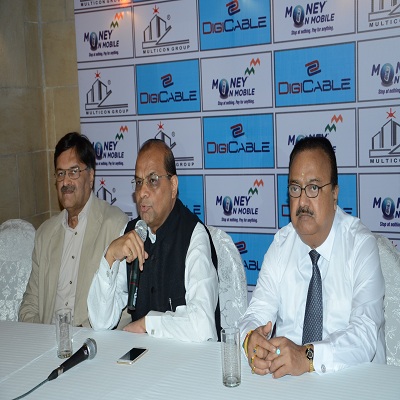
    MUMBAI: Multi system operator Digicable has launched an utility service app for Kolkata. Christened, Complete E-payment Solution, this mobile app will initially be available only to the local cable operators (LCOs).


    The app will allow the LCOs to provide a wide array of hassle-free utility services at the doorstep of their customers. This value added facility will present the LCOs another source of income.


    The customers can avail this facility from their LCOs to make instant payments for services including credit card bill, electric bill, mobile bill payment, direct to home (DTH) recharge, mobile recharge, cash deposit in own bank account, train, flight and movie ticket booking, at a very nominal cost while enjoying the comfort of their home.

    As a confirmation of the payment, a real time receipt will be sent to the customers’ registered mobile number with no added cost.


    The company has associated with leading banks, mobile/DTH/airline operators, Indian Railways and The Calcutta Electric Supply Corporation (CESC) to provide fast and smooth utility solution services.


    Multicon Group & Digicablecomm Services chairman Dileep Singh Mehta said, “Being an operator friendly MSO, we always strive to enhance our services and provide new opportunities to the local cable operators. This facility will not only help the LCOs to enhance their earnings but it will also enable the customers to make most of the essential utility service related transactions from the comfort of their home and on a completely secured and accountable network. This product is a win-win for all.”

  • Siti Cable and Dish TV join hands to form ‘Comnet’

    Siti Cable and Dish TV join hands to form ‘Comnet’

    MUMBAI: Dr Subhash Chandra led Essel Group believes in innovation and how. The two companies from the group, multi system operator (MSO) Siti Cable Network and direct to home (DTH) player Dish TV have formed a joint venture (JV) to deal with the ever growing content cost. Christened ‘Comnet’, the JV will help synergise the strengths of both the organisations in dealing with broadcasters.


    Essel Group has synergies in broadcast, cable, DTH and over the top (OTT) services. “When we look at either of these platforms, the key to its existence is content. The cost of content today is increasing rapidly and at a pace with which even the connections in the market aren’t growing,” tells Siti Cable CEO VD Wadhwa to indiantelevision.com.


    According to Wadhwa, while the consumer average revenue per user (ARPU) levels is increasing in single digits, broadcasters, who sign one-year deals with distribution platforms, expect the revenues grow anywhere between 20-60 per cent. “This is impractical, unsustainable and is no way any business model will evolve or work,” he adds.  


    The reason both Dish TV and Siti Cable have come together is to be able to make the best use of each other’s advantages and disadvantages. While DTH doesn’t enjoy as much carriage as cable gets, when it comes to content deals, DTH platforms have an upper hand. “While my input cost, which is the content cost is growing at a fast pace, I am not being able to drive the market price. If consumer ARPUs remain low, we can’t allow the content cost to go up. Also considering both the platforms target the same set of consumers in the market, it made more sense for us to join hands to deal with broadcasters,” informs Wadhwa.


    Dish TV CEO RC Venkateish says, “This move will help both the entities to provide quality content at affordable price to consumers.”


    Both, the DTH and cable platform currently is unable to pass on the increased input cost to the customer. “And then there are the additional taxes. The Delhi government recently increased the entertainment tax from Rs 20 to Rs 40, not realizing that it is a price sensitive market. Neither the consumer nor the broadcaster is ready to take the burden of the increasing cost. In order to protect our business model and remain a consumer friendly company and comply with all the rules and regulations, we thought of coming together,” he says.  


    The JV will help the duo in not just controlling deals with broadcasters, but also in sourcing equipments. “Both Dish TV and Siti Cable need set top boxes. There are a lot of synergies if we work together,” he adds.


    Between Siti Cable and Dish TV, the two currently have more than 2 crore subscribers, which in the next two years, according to Wadhwa will go up to 4 crore. “If we are currently present in 2 crore households, we are talking of almost 9-10 per cent of India’s population. This gives us a lot of leverage,” he says.


    According to Wadhwa, while the broadcasters have already come together to work for the advantage of the broadcasting sector, the distribution platforms too need to work in a synergy. “While that is currently not possible, at least the two companies in the group should start working together immediately,” he opines.


    As part of the JV, the duo will hold joint discussions with broadcasters, taking joint call on the deals. “If the broadcaster wants to arm twist Siti Cable, it has to be careful that Dish TV may also react or vice versa,” he informs.  


    Starting 1 July, 2015, it is ‘Comnet’ that will do the negotiations with broadcasters for both the platforms together. Post that, a direct contract between the broadcaster and the distribution platform will be signed. “The benefit will be shared between Dish TV and Siti Cable,” concludes Wadhwa.

  • Can the Indian cable television industry truly head the US cable television industry way?

    Can the Indian cable television industry truly head the US cable television industry way?

    People often tend to compare the cable television industry in India with that of the US. They say that the industry is headed the US way. One of the crucial points is internet service and more specifically broadband service. This business and revenue growth alternative has been gaining a lot of attention from the cable television industry as an expansion strategy. Higher Average Revenue Per User (ARPU) in India, to the extent of 3 to 5 times the ARPU earned through transmission of television bouquets, certainly makes this service an attractive proposition.


    Comparisons with a mature market like the US may not work in India. Indian cable television players have a long road ahead before any comparison or trying to relate with the industry, in any way could even start to make sense.


    One of the foremost factors is money. According to the National Cable and Television Association, USA (NCTA), the total US broadband industry investments since 1994 is about US$ 1400 billion (4.7 per cent of the US’s estimated revenue for 2014) or 60.7 per cent of India’s nominal GDP of US 2308 billion in April 2015. Money can bridge the technology gap, leapfrog it, as it has in many instances in India.


    Of course, this leads to the oft repeated point about the high cost of implementation of all DAS phases. It is a foregone fact that the capex starved cable television industry with poor balance sheets is going to deploy more money towards that effort if it wants the government to allow it to remain in business. Delays in deadlines may be possible, but in the current scenario, DAS is there to stay and is required for the benefit of all stakeholders.


    Notwithstanding the bureaucracy logjam that India is notorious for, another major stumbling block is the slow and hugely over vamped judicial system (besides regulation) in India that could take years to decide on any dispute. Settling of civil disputes has no deadline in India. The cliché, for businesses, ‘time is money’, holds good here too.


    Let us look at internet services


    The number of internet users worldwide will surpass 3 billion (300 crore) in 2015, according to eMarketer, increasing 6.2 per cent next year to reach 42.4 per cent of the entire world’s population. By 2018, eMarketer estimates, nearly half the world’s population, or 360 crore people, will access the internet at least once each month.  


    eMarketer says that by 2016 India will jump the US as the second-largest internet user population. China leads the world in terms of number of internet users with estimated 66.98 crore users, followed by the US with 25.93 crore and India with 24.23 crore say eMarketer estimates. In 2016, the publication estimates an Indian internet user base of 28.38 crore, higher than the 26.49 crore projections for the US. By 2018, India’s estimated internet subscriber base will be 34.63 crore or probably in the range of about 25-28 per cent of the population of the country at that time. Indian population figures for 2013 are an estimated 125.2 crore. Current population estimates for the US are about 32 crore, or the US has an internet density percentage of about 80, while China’s internet density percentage is about 50 and India just under 20.


    “Inexpensive mobile phones and mobile broadband connections are driving internet access and usage in countries where fixed internet has been out of reach for consumers, whether that’s due to lack of infrastructure or affordability,” said eMarketer senior forecasting analyst  Monica Peart. “While highly developed markets are nearly saturated in terms of internet users, there’s significant room for growth in emerging ones; for example, India and Indonesia will both see double-digit growth in each year between now and 2018.”


    The growing youth population is another important driver, as the most technologically savvy, and their demands shape internet development itself, says a Euromonitor report.


    According to the Telecom Regulatory Authority of India (TRAI), India had a wireline broadband subscriber base (speed greater than 512 kpbs) of 155.2 lakh and 852.3 lakh wireless broadband subscribers as on 30 April, 2015 or 1007.6 lakh broadband subscribers totally. This means that less than 1 per cent of the total population of the country has broadband. There is no denying the fact that the potential is huge, more so for broadband.


    Siti Cable (Siti), a multi system operator (MSO), believes that its strategy of cross-selling broadband services to its existing cable television subscribers and new customers will provide it with an opportunity to increase ARPUs, increase retention rates, ensure higher sustainable EBITDA margins and leverage upon its existing pan India presence.


    A few players such as medium sized MSO Atria Convergence Technologies (ACT) had actually changed its strategy since 2012 and started focusing more on broadband services, without losing focus on its MSO operations. It offers broadband internet in areas where it does not have cable subscribers. Despite being a regional player, ACT is the second largest private wired broadband player in the country, just after the mobile telecom behemoth Airtel. ACT’s broadband subscriber base has grown by 43.76 per cent to 6.11 lakh in the 12 months until 31December, 2014. As on 30 April, 2015, ACT had a wired broadband subscriber base of 6.8 lakh.


    However, ACT has followed a different strategy when compared to the other MSOs who use DOCSIS on the existing television cable for internet delivery. The company has laid separate optic fibre lines for internet delivery and hence owns even the last mile, rather than use its existing cable infrastructure and be dependent upon the LCOs’ whims and fancies.


    It must also be noted that the number of internet subscribers that each major cable television player in the US has runs in crores in a couple of cases. The largest MSO in India in terms of cable subscribers – Den Networks, with about 130 lakh subscribers has less than half the customer relationships that Comcast’s Cable Communications segment has with 272.34 lakh subscribers, of which about 223.75 lakh are video subscribers and 223.69 lakh are high speed internet subscribers. While Den’s cable subscriber base is about 58 per cent of Comcast Cable Communications segment, its internet subscriber base as on 31 March, 2015, is a small fraction at just 23,000 or just a little more than one thousandth of the internet subscribers that Comcast has. Even, ACT’s internet subscriber base of about 7 lakh is less than one-thirtieth of Comcast’s Cable Communications High-Speed internet subscribers. Is there any comparison?


    According to Nielsen’s 2015 Advance National TV Household Universe Estimate (UE), there are 11.64 crore TV homes in the U.S. prior to the start of the 2014-15 TV season. The number of homes represents a 0.5 per cent increase from Nielsen’s 2013-14 TV Household Universe Estimate. The number of persons aged 2 and older in U.S. TV Households is estimated to be 29.6 crore—also an increase of 0.5 per cent from last year. This puts the number of subscribers in the previous year as per Nielsen’s estimates at 11.58 crore.  The Indian carriage universe has 16.8 crore homes (44.3 per cent more than the estimated US TV homes) according to the FICCI- KPMG Indian Media and Entertainment Industry Report 2015. (FICCI-M&E 2015 report).


    The number of video subscribers through wire in the US as of 2013 was about 6.6 crore or the country had a cabletelevision percentage density just under 21. India has a TV home (TV Households or TV HH) density percentage of a little less than 13.5 (this includes DTH for India).


    Besides a number of cable television and IPTV service providers, the US has two big DTH players – Dish and Directv that had a combined subscriber base in Q1-2015 of approximately 341 lakh, or about 29 per cent of the total TV homes in the US estimated by Nielsen. India had an active DTH subscriber base of about 405.4 lakh (24.3 per cent of TV HH in India) as on 31 December, 2014.


     As mentioned above, in India, internet services ARPU is much higher than the ARPU from cable television services as compared to more mature markets such as the US, where it is the other way around. At the time of writing of this report, internet services monthly ARPU could be between 50 to 65 per cent of the video monthly ARPUs’ in the US. Video monthly ARPU would typically be in the range of US$ 75 to US$ 95, while internet monthly ARPU would range between US$ 40 to US$ 50. Is there an ARPU comparison? No way!


    Let us look at three players in the US. The entities in this report – Comcast Corporation’s Cable Communications segment, Time Warner Cable (TWC, about half the size of Comcast Cable Communications segment) and Charter Communications (Charter Comm) (About half the size again of TWC) represent about 32 per cent of the total US TV homes estimated by Nielsen.


    In Q1-2015, these entities combined video subscribers dropped by 6.12 lakh (1.61 per cent) to 373.47 lakh (32.09 per cent of Nielsen’s estimated TV Homes) from 379.59 lakh (32.77 per cent of Nielsen’s estimated TV Homes) in Q1-2014. Individually too, all the three entities reported loss of video subscribers in Q1-2015 to the extent of 1 per cent in the case of Comcast and Charter Comm and 3.08 per cent in the case of TWC, as compared to the corresponding year ago quarter. Despite the drop in video subscribers, the other two reported an increase in revenue from video in Q1-2015, while TWC even saw its video revenues drop by 1.04 per cent in Q1-2015 as compared to Q1-2014.


    The total number of internet subscribers of these three entities exceeded the total number of video subscribers in Q1-2015– internet subscribers grew to 392.5 lakh (5.1 per cent more than video subscribers) as compared to 369.45 crore (2.67 per cent less than video subscribers) in Q1-2014. All the three players reported increases in their internet subscription base as well as revenue from Internet in Q1-2015 when compared to the year ago quarter.


    Triple play (or triple product) subscribers increased in all the three cases, between 0.61 per cent in the case of Charter Comm to 14.49 per cent in the case of TWC and 4.26 per cent in the case of Comcast in Q1-2015 when compared to Q1-2014. TWC and Charter Comm’s double play subscriber base shrank 8.05 per cent and 0.6 per cent respectively, while Comcast’s double play subscription numbers increased in comparison during similar periods.


    Notes: (1) 100,00,000 = 100 lakh = 10 million = 1 crore


    (2) Revenues for US companies and some figures in this report have been mentioned in US$, million; subscription numbers in lakh or crore and TV homes in crore.


    (2) SARPU, a term similar to ARPU has been coined by the writer to bring terms to a common denominator for all the three US entities. To arrive at SARPU, the writer has added the quarterly revenues from each stream and divided the result by the number of customer relationships in that quarter and further divided the second result by 3 to arrive at a rough estimate of the revenue earned per relationship per month by the entity. Similarly, individual revenues from video, internet and voice streams/business have been divided by the number of subscribers of video, internet and voice streams respectively, further divided by 3 to arrive at an SARPU of that stream. Residential subscriber numbers have been used wherever available.


    (2.1) VIVE, another term coined by the writer, means video, internet and voice, the three main revenue generating streams or businesses for the three US entities in this report.


    (3) Voice numbers has been included, since there are number of overlaps in subscription numbers for VIVE of all the three entities.


    (4) ARPUs’ and SARPUs’ in this report are on a monthly basis unless stated otherwise.


    Comcast Cable Communications segment


    Comcast’s Cable Communications segment’s (probably the largest cable company and home internet services provider in the US) comprises 272.34 lakh relationships in Q1-2015 (quarter ended 31 March, 2015). The number grew by just 1.62 per cent from the 268 lakh in Q1-2014, and was driven by increases in double and triple product relationships.  This is what the cable industry in India is trying to ape – the double and triple play numbers.


    The breakup of these customers is 83.99 lakh single product, 2.39 per cent lower than the 86.05 lakh in Q1-2014; 88.90 lakh double product, 2.7 per cent more than the 86.56 lakh double product consumers in Q1-2014 and 99.45 lakh triple product consumers, 4.26 per cent more than the 95.39 lakh in  Q1-2014.


    The breakup of number of Comcast’s cable operations customers base on products is 223.75 lakh of video consumers in Q1-2015 – the number fell by 8000 as compared to the corresponding year ago quarter; 223.69 lakh high-speed internet consumers – the number increased by 4.07 lakh as compared to Q1-2014; and 112.70 lakh voices consumers – the number increased by 77000 as compared to the previous year ago quarter.


    Based on the financials filed by the company for Q1-2015, 69.16 per cent of the company’s consumers’ use two (double play) or more of its products, (up 127 basis points or 1.87 per cent higher) than the 67.89 per cent in Q1-2014.


    Let us examine the revenue that these businesses bring in for the company:


    Comcast’s Cable Communications segment revenue in Q1-2015 grew 6.26 per cent to US$ 11430 million from US$ 10757 million in Q1-2014. Combined revenue from Video, Internet and Voice (VIVE) businesses in Q1-2015 grew 4.89 per cent to US$ 9281 million (81.20 per cent of Cable Communications segment revenue) from US$ 8848 million (82.25 per cent Cable Communications segment revenue) in Q1-2014.


    Video revenue in Q1-2015 was US$ 5331million (57.44 per cent of VIVE revenue), 2.95 per cent more than the Rs 5178 million (58.52 per cent of VIVE revenue) in Q1-2014; Internet revenue in Q1-2015 grew 10.69 per cent to US$ 3044 million (32.80 per cent of VIVE) from US$ 2750 million (31.08 per cent of VIVE) in Q1-2014. Voice revenue fell 1.52 per cent in Q1-2015 to US$ 906 million (9.6 per cent of VIVE revenue) from US$ 920 million (10.4 per cent of VIVE revenue) in Q1-2014.


    A simple back of the envelope calculation as mentioned in Note 2 above shows the simple average monthly revenue per user (SARPU) of US$ 113.60 for Q1-2015, up 3.22 per cent as compared to the US$ 110.05 in Q1-2014.


    Similarly, Video SARPU grew 3.99 per cent in Q1-2015 to US$ 79.42 from US$ 76.37 in Q1-2014; Internet services SARPU grew 4.25 per cent to US$ 45.36 (56.97 per cent of video SARPU) in Q1-2015 from US$ 43.51 (57.12 per cent of video SARPU) in Q1-2014; Voice SARPU fell 5.06 per cent to US$ 26.80 from US$ 28.23 in the year ago quarter.


    Time Warner Cable


    Let us see how another big player in the US performed – Time Warner Cable (TWC).  In Q1-2015 the company saw its highest q-o-q growth in internet subscriber base since 2007 by 3.15 lakh to 119.90 lakh from 116.75 lakh in the quarter ended 31 December, 2014. Y-o-y, the company’s internet subscriber base grew by 6.32 lakh. However, the company’s video subscribers fell 3.08 per cent in Q1-2015 to 108.19 lakh from 111.63 lakh in Q1-2014. Voice subscribers increased 14.06 per cent in Q1-2015 to 56.04 lakh from 49.13 lakh in Q1-2014. TWC’s customer relationships increased 1.27 per cent in Q1-2015 to 147.16 lakh from 145.32 lakh in Q1-2014.


    In Q1-2015, the number of consumers using TWC’s double or triple play increased by 64 basis points (up 1.05 per cent) to 61.45 per cent from 60.81 per cent.


    TWC’s overall revenue in Q1-2015 grew 2.06 percent to US$ 4662 million from US$ 4568 million in Q1-2014. Its VIVE revenue in Q1-2015 grew 1.96 per cent to US$ 4638 million (99.49 per cent of overall revenue) from US$ 4549 million (99.58 per cent of overall revenue) in Q1-2014.


    Video revenue fell 1.04 per cent in Q1-2015 to US$ 2469 million (53.23 per cent of VIVE revenue) from US 2495 million (54.85 per cent of VIVE revenue); Internet revenue grew 8.86 per cent to US$ 1696 million (36.57 per cent of VIVE revenue) in Q1-2015 from US$ 1558 million (34.25 per cent of VIVE revenue) in Q1-2014. Voice revenue in Q1-2015 fell 4.64 per cent to US$ 473 million (10.2 per cent of VIVE revenue) from US$ 496 million (10.9 per cent of VIVE revenue).


    TWC’s SARPU per customer relationship was US$ 105.06 in Q1-2015 or 0.68 per cent higher than the US$ 104.34 in Q1-2014.


    TWC’s video SARPU in Q1-2015 increased 2.1 per cent to US$ 76.07 from US$ 74.50 in Q1-2014; Internet SARPU increased 3.12 per cent to US$ 47.15 (61.98 per cent of video SARPU) in Q1-2015 from US$ 45.72 (61.37 per cent of SARPU) in Q1-2014 and Voice SARPU fell 16.4 per cent in Q1-2015 to US$ 28.13 from US$ 33.65 in Q4-2014.


    Charter Communications


    Charter Communications (Charter Com), an even smaller player than Comcast or TWC, reported 4.48 per cent growth in residential consumer relationships in Q1-2015 to 59.27 lakh from 56.73 lakh in Q1-2014. Video subscription base fell 1 per cent to 41.53 lakh (70.07 per cent of total relationships) from 41.95 lakh (73.95 per cent of total relationships) in Q1-2014; Internet subscription base grew in Q1-2015 by 8.23 per cent to 48.91 lakh (82.52 per cent of total relationships, addition of 3.23 lakh subscribers) from 45.91 lakh (79.66 per cent of total relationships) in Q1-2014; Voice subscribers grew 6.71 per cent in Q1-2015 to 24.81 lakh (59.74 per cent of total relationships) from 56.93 lakh (40.98 per cent of total relationships) in the corresponding year ago quarter.


    Overall revenue grew 7.27 per cent to US$ 2362 million in Q1-2015 from US$ 2202 million in Q1-2014. VIVE revenue in Q1-2015 grew 6.68 per cent to US$ 1980 million (83.83 per cent of overall revenue) from US$ 1856 million (84.29 per cent of overall revenue).


    Video revenue increased 3.58 per cent in Q1-2015 to US$ 1129 million (53.23 per cent of VIVE revenue) from US$ 1090 million (54.85 per cent of VIVE revenue) in Q1-2014; Internet revenue increased 16.4 per cent to US$ 717 million (36.21 per cent of VIVE revenue) in Q1-2015 from US$ 616 million (33.19 per cent of VIVE revenue) in Q1-2014. Voice revenue in Q1-2015 fell 10.67 per cent to US$ 134 million (6.77 per cent of VIVE revenue) from US$ 150 million (8.08 per cent of VIVE revenue) in Q1-2014.


    Charter Comm’s SARPU in Q1-2015 increased 2.11 per cent to US$ 111.35 from US$ 109.05 in Q1-2014. Video SARPU increased 4.63 per cent to US$ 90.62 in Q1-2015 from US$ 86.61 in the corresponding year ago quarter; Internet SARPU in Q1-2015 increased 7.54 per cent to US$ 48.87 (53.92 per cent of video SARPU) from US$ 45.44 (52.46 per cent of video SARPU) in Q1-2014; Voice SARPU fell 16.28 per cent in Q1-2015 to US$ 18 from US$ 21.51 in Q1-2014.


    Let us see what the richest Indian does through Reliance Jio Media, for this is probably the only group/entity that has the deep pockets to really offer a shimmer of comparison with the media giants in the US.


    Can we truly compare Cable television internet in India with the industry in the US? No way!

  • All India Digital Cable Federation condemns ET hike in Delhi

    All India Digital Cable Federation condemns ET hike in Delhi

    MUMBAI: The Arvind Kejriwal led Aam Aadmi Party is currently dealing with a lot of criticism, especially from the cable and direct to home (DTH) sector. This, after it presented its budget for the national capital on 25 June. Of the many decisions, the government has decided to increase the entertainment tax on cable and DTH services from the current Rs 20 to Rs 40. While it is the consumers who have to bear the burden of the increased taxes, both the cable operators and DTH players have come out heavily on this decision.


    The newly formed All India Digital Cable Federation (AIDCF) through a statement said, “The Delhi government’s recent announcement proposing to double the entertainment tax on the cable TV and DTH services in the budget is an added burden on the common man whose main source of entertainment is television. Aam Aadmi Party, which had promised to control the prices by reducing electricity and water charges is negating by the proposed hike. Due to this, the common man will have to bear the brunt of yet again, an additional tax, as cable TV operators will have no choice but to pass on this hike to the common man.”


    The statement further said, “It should be noted that cable TV is the biggest medium for news, entertainment and education. It should also be noted that the common man is already burdened by an increase in service tax from June 2015. The said proposal of Delhi government is like giving a piece of bread with right hand and snatching back the same from left hand. All India Digital Cable Federation strictly condemns the proposed hike.”


    In an earlier statement, even the DTH Operators Association of India, a body consisting of all private DTH players had condemned the hike. Association president and Videocon d2h CEO Anil Khera had then said, “The recent announcement of doubling of entertainment tax on cable TV and DTH services made by the Aam Admi Party government seems unfair and illogical. DTH as a platform is considered as critical to citizen’s right to information, news, education and entertainment. The sector is already saddled with high tax, where 33 per cent of revenues are taxed between the Centre and State. DTH operators that comprises Tata Sky, Dish TV, Airtel Digital TV, Videocon d2h, Sun Direct and Reliance Big TV, will have no choice but to hike their tariffs in Delhi to accommodate this hike in entertainment tax and the load will finally fall on the customer. By dropping electricity prices on the one hand and increasing entertainment tax on DTH on the other, does not seem like a move in favour of the aam aadmi! Is this how we plan to achieve a balance budget and reduce fiscal deficit?”

  • DTH & cable ops miffed as AAP hikes entertainment tax in Delhi

    DTH & cable ops miffed as AAP hikes entertainment tax in Delhi

    MUMBAI: Delhiites can expect to dole out more cash for their weekly dose of entertainment courtesy the new budget presented by the Arvind Kejriwal led Aam Aadmi Party (AAP). Under the new budget, while entertainment tax (ET) on cable TV and direct to home (DTH) in the national capital has gone up from the current Rs 20 to Rs 40, that for cinema halls has been hiked by 20-40 per cent. This, even as Maharashtra based cable operators, paying a hefty sum of Rs 45 as entertainment tax, are still fighting a case in the Bombay High Court for slashing the taxes, with little respite.

    According to Delhi based cable operators, while there aren’t any issues per se with increasing the entertainment tax, their grouse is that the government should have devised a way of collection from consumers before increasing the ET.


    As for now, it is the local cable operator who collects the ET from consumers and then gives it to the multi system operator (MSO). The system sees a number of leakages and blame game. While LCOs lament that the customer does not pay ET, MSOs believe that the LCO fail to pass on the collected ET to them. Since the onus of finally submitting the ET collection to the government is on the MSO, not surprisingly they are held guilty more often than not.


    While Delhi fell in phase I of DAS, where interconnect agreement should have been signed and billing started, thus protecting leakages, the same has yet not been achieved. Thus, increasing the ET by Rs 20 seems no less than a burden to both LCOs and MSOs.


    “The government can increase the entertainment tax, but then what are the measures it has put in place to be able to facilitate collection,” says Cable Operators Federation of India (COFI) president Roop Sharma.

    Sharma believes that the government should give incentives to cable operators for collecting entertainment tax from consumers. “The LCOs are the biggest sufferers in the whole process as they face the task of extracting this additional amount from their customers,” she adds.


    According to a Delhi based MSO, hiking entertainment tax is an unwelcome move. “With the earlier tax system, the exact amount was not being collected and this resulted in the MSOs getting penalized. The LCOs will not be able to collect the extra money from the ground, which will mean that the MSOs will have to pay the remaining from their own pocket,” the MSO tells Indiantelevision.com on condition of anonymity.


    The MSO is also of the opinion that while digitization was aimed at bringing in transparency, which ensured lesser leakages, hiking taxes and thus increasing the cable bill was unjustified.


    DTH Operators Association of India president and Videocon d2h CEO Anil Khera said, “The recent announcement of doubling of entertainment tax on cable TV and DTH services made by the Aam Admi Party government seems unfair and illogical. DTH as a platform is considered as critical to citizen’s right to information, news, education and entertainment. The sector is already saddled with high tax, where 33 per cent of revenues are taxed between the Centre and State. DTH operators that comprises Tata Sky, Dish TV, Airtel Digital TV, Videocon d2h, Sun Direct and Reliance Big TV, will have no choice but to hike their tariffs in Delhi to accommodate this hike in entertainment tax and the load will finally fall on the customer. By dropping electricity prices on the one hand and increasing entertainment tax on DTH on the other, does not seem like a move in favour of the aam aadmi! Is this how we plan to achieve a balance budget and reduce fiscal deficit?”


    On the other hand, Sharma informs that while the hike in entertainment tax is applicable for private DTH players, DD Freedish has been kept away from it. “Surprisingly the DD Freedish service is not taxed, but the same channels forced upon the cable TV networks will demand a tax. It appears there is no co-ordination between the central and Delhi government and in the bargain the aam aadmi has to suffer,” she adds.


    MSOs and DTH players will now have to come up with a campaign to inform consumers of the hike in entertainment tax, so that it is easier to collect from the ground.


    This also could be the trigger for going prepaid, something that Mumbai based MSO IMCL has started, where the customers pays for the channels they want to watch in advance. Defaulters, if any, face disconnection of set top boxes. The mechanism can at least help in collection and not make the LCOs or MSOs fall in the defaulter category. However, one thing remains unchanged, which is that the consumer will surely have to have deep pockets for their entertainment needs and demands going forward. 

  • Ortel Broadband launches 50 Mbps DOCSIS 3.0 internet

    Ortel Broadband launches 50 Mbps DOCSIS 3.0 internet

    MUMBAI: Ortel Communications has introduced 50 Mbps mega speed DOCSIS 3.0 broadband internet in Odisha. While initially being deployed in Bhubaneswar, the service will be made available in other markets as well.


    DOCSIS 3.0 allows a much higher throughput compared to the earlier versions by using multi-channel bonding simultaneously for download/upload.


    Ortel Communications president and CEO Bibhu Prasad Rath said, “We are happy to launch mega speed broadband services of up to 50 Mbps on DOCSIS 3.0 technology. This will redefine the consumer experience of internet usage and we believe that mega speed internet at low cost will revolutionize the internet markets that we are present in. We intend to aggressively pursue this in our markets which will help us increase the overall broadband subscriber base. The company plans to actively deploy DOCSIS 3.0 modems to deliver impressive internet surfing experience to its subscribers. With faster digitization of cable TV customers, we will be in a strong position to leverage the opportunity by offering COMBO plans of Digital TV and Internet connections.”


    DOCSIS technology has been developed by CableLabs, an International consortium of cable operators and MSOs, and approved by the International Telecommunication Union (ITU-T). This technology has been widely used in Europe and USA by leading ISPs.


    The internet subscribers in India have evolved over a period of time and Ortel Broadband has launched the mega speed broadband internet plans to cater to subscribers who have increased video led internet consumption. HD video content viewings as well as increased download speeds are the main benefits of DOCSIS 3.0 mega speed Ortel Broadband. Higher end online gaming responses will be almost real time. Ortel Broadband DOCSIS 3.0 subscribers can download a movie of 750 MB in two minutes and video songs can be downloaded within seconds based on the plans selected and system configuration.


    The company has invested in laying its own network with reverse path compatibility making it capable of providing Triple play service including broadband and VoIP services.

  • What’s in store for the Indian broadcast industry?

    What’s in store for the Indian broadcast industry?

    MUMBAI: The Indian media and entertainment industry is on the cusp of growth with phase-III and IV digitisation underway. However, even as the government is optimistic about meeting digitisation deadlines, multiple stakeholders are of the opinion that to meet the 2016 yearend deadline is unrealistic and far-fetched to say the least.

    Reiterating the sentiment is a research report by Bank of America-Merrill Lynch, which says that digitisation will be a slow process and will be complete only by FY2020-21. 

    The Bank of America-Merrill Lynch lists out four things that the Indian media industry should watch out for. They are as follows:  

    1) Digitisation: A Slow Process

    Even though the government has mandated full digitisation by December 2016, the research says that digitisation will be a slow process as on-ground checks show that it is nearly impossible for stakeholders to stick to the deadline. Bank of America-Merrill Lynch expects the entire roll out to be complete only by FY2010-21, with bulk of the benefits flowing in FY’18-19.

    Larger MSOs don’t have a local presence: In phase-I and II DAS-mandated areas, the large MSOs already had their infrastructure laid out and had knowhow of the local conditions. However, phase-III and IV are more remote areas where the MSOs do not have an established network, and hence will take time to rollout their network. These areas have been dominated by the local/ smaller MSOs, who may not have the wherewithal to invest capex and fund set-top-boxes (STB) for consumers. The report says that if digitisation happens slowly, the local MSOs will be able to capture this market (wherever analog cable is present), thus limiting the land grab of DTH operators.

    Government has reasons to be ambivalent on digitisation: The government benefits from digitisation in way of increased tax collections. At the same time, it will be vary of making voters pay a higher tariff for Pay TV bills. The ARPUs for phase-III and IV areas are lower; and a move to digital TV will entail a significant rise in their pay TV bills. Considering that TV is the main source of entertainment for Indians, the government may look to ease the digitisation roll-out slowly, rather than sticking to tight deadlines.

    ARPUs are lower: The phase-III and IV DAS-mandated areas have a lower ARPUs compared to phase-I and II geographies, which would make it difficult for MSOs and DTH companies to push through a premium ARPU product. As per the research, more innovations like Dish’s low-ARPU Zing proposition (focusing on low-cost local content), lower price points and differential geographical pricing to drive adoption are likely to be seen.

    2) Ad revenue growth to be strong in FY2016

    Advertisement revenues strong: Ad revenue growth is expected to be strong in FY16, on back of: 1) A pick up in economy and the resultant rise in ad spends; 2) Increased ad spending by e-commerce companies; and 3) Television maintaining its share of the advertisement pie. Ad spends have a strong correlation with nominal GDP. Considering that the economy is expected to pick up going forward, the Bank of America-Merrill Lynch report forecasts 13 per cent ad revenues growth for the industry, which is in line with industry estimates. (Source: KPMG-FICCI Annual report 2015).

    Implementation of BARC: The prevalent industry TV rating data (TAM) has often been cited for inconsistencies by broadcasters and advertisers. Hence, the industry bodies representing the three key stakeholders – broadcasters, advertisers, and advertising and media agencies – launched a new rating system – BARC India. Since it has the support of the industry, the report suggests that it will eventually replace TAM as the industry standard for determining TV ratings. Given that the new rating uses different methodology and sample set, the status quo TV ratings is at a risk of being upset. Though Zee has managed to hold on to third spot among Hindi GECs in the recently released data, as BARC moves towards a countrywide coverage, volatility in future ratings will remain a concern.

    Smart devices will lead to increasing viewership and ad revenues: With increasing penetration of smart devices, overall video consumption will increase. Since Indians are quite willing to watch ad-supported free content, the ad revenues will increase with the rise in online viewership.

    3) DTH: Factoring ARPU hike for 2-3 years

    Impending move to RIO to increase ARPUs: Star India has made the first move by completely moving its channel bouquets to RIO pricing, without materially impacting its viewership. Even as other broadcasters are still debating on whether to move to RIO, according to the Bank of America-Merrill Lynch report, Star’s successful move makes it only a matter of time before other broadcasters move to RIO pricing as well. Moving to RIO will increase the content cost for MSOs, necessitating an increase in tariffs to protect profitability. This does not factor in the RIO sing-ups in the base case. As per the report, an upside to subscription revenue estimates will be seen for both broadcasters and DTH operators in case market moves to RIO pricing.

    Subscribers in low-ARPU areas may opt for ala carte subscription: Unlike in the West, regulation in India mandates broadcasters to make available their channels on a piece meal basis. Since the average Indian watched just 17 channels, there is a risk of consumers in the low ARPU phase-III and IV DAS- mandated areas shifting to subscribe on a per-channel basis to reduce their monthly bills.

    Reduction in carriage and placement fees: Digitisation of Pay TV will reduce the carriage and placement fees (C&P fees) that are paid to MSOs for beaming their content. Digitisation mandates complete removal of the placement fees. Additionally, digitisation of the channel signals has resulted in a 3-4x decrease in the bandwidth needed to broadcast individual channels, allowing MSOs to beam as many as 2,000 channels within the allotted bandwidth, and thus weakening the case for MSOs to charge for a non-existent constraint. While the broadcasters are still paying carriage charges, the charges on a per-channel basis have been reducing. According to the report, this trend is expected to continue in the future.

    HD channels to increase ARPUs: Subscription to HD channels have increased in recent months, due to: 1) HD content being made available; 2) Costs of HD STBs have fallen and the non HD boxes point that distributors have stopped procuring non-HD boxes; and 3) Penetration of HD-enabled television sets have increased. As per the estimates by Bank of America-Merrill Lynch, HD subscribers on an average have ARPUs higher by about Rs 100. And with the HD take-up increasing up to 22 per cent for the DTH operators, HD is expected to positively drive up ARPUs.

    4) Fragmentation of channels & content costs

    Ad cap and the fragmentation of channels: The government has recently implemented the 12-minute ad cap (per hour). As a result, the sector has seen a slew of new channel launches and increase in ad rates to offset the impact. The report expects that investment in new channel launches will continue in the near term.

    Content to become increasingly more important: In a digitised world, quality content is going to be increasingly more important. With the likely kicking in of RIO pricing, and possible move to ala carte packages, broadcasters will need the content “hook” to lure the subscriber to pay a higher price for the same content.

    Content costs to rise: As more channels compete for the revenue pie, and channels move to RIO pricing, broadcasters are likely to increase their investments to produce quality content. In this context, the larger broadcasters will be in a better place to cope with the change with them having deeper pockets to invest in new content.

  • FY-2015: Indian cable industry – long haul work in progress

    FY-2015: Indian cable industry – long haul work in progress

    BENGALURU: The cable industry in India has made a remarkable amount of progress in implementing DAS in phase I and phase II considering the weak balance sheets that most players carry, but all still have a long way to go before they actually start making profits. However, the promise of addressability, greater transparency and higher average revenue per user (ARPU) is yet to be realized by the cable industry.

    Current Status

    As on 31 December, 2014, 138 multi system operators (MSOs) have been granted permanent registration (for 10 years) for providing Cable TV services through Digital Addressable Systems (DAS) by the Ministry of Information and Broadcasting (MIB).

    DAS roll out in phases III and IV is expected to be more challenging on account of larger geographical spread, poor balance sheets of the cable industry players and low potential for ARPUs from the conventional cable carriage and subscription business. Implementation of phases I and II was challenging, tiered packages have yet to be offered to the viewer and billing is still work in progress as MSOs still face resistance from local cable operators (LCOs) in giving up ownership of customers in some cases.

    Cable players in India have started giving broadband services a lot of serious attention in fiscal 2015. A few players such as the medium sized MSO Atria Convergence Technologies Private Limited (ACT) had actually changed strategy since 2012 and started focusing more on broadband services, without losing focus on its MSO operations. Despite being a regional player, ACT is the second largest private wired broadband player in the country with a market share of 3.24 per cent and over 6.11 lakh broadband subscribers as on 31 December, 2104, just after the behemoth Airtel (15 lakh subscribers, 7.95 per cent market share). ACT had 4.25 lakh (includes numbers of Beam Telecom Limited which was merged with ACT on 1 April, 2014) broadband customers as on 31 December, 2013 and hence, its broadband subscriber base has grown by 43.76 per cent in the 12 months until 31 December, 2014. As on April 30, 2015, Atria had a wired broadband subscriber base of 6.8 lakh.

    Public sector companies such as BSNL (the largest wired internet services player in India with 69.83 per cent market share, 1.317 crore subscribers) and MTNL (6.02 per cent market share and 11.3 lakh subscribers) are of course bigger players in the wired broadband services than ACT. Among the major MSOs in the country, Indusind Media & Communications Limited is probably the only player whose broadband subscriber base has not grown much until 31 December, 2014, during which the company reported 29,709 internet subscribers (including 3539 narrowband subscribers) as compared to the 28,337 subscribers (including 4750 narrowband subscribers) as on 31 December, 2013.

    Internet services has turned into a heavy capex exercise for many MSOs where the last mile is owned by LCOs mainly because an MSO may not be allowed access to the customer for sales and service by the LCO, and/or the quality of the cable may not be at par.

    This report takes four MSOs – Den Networks Limited (Den), Siti Cable Network Limited (Siti), Hathway Cable and Datacom Limited (Hathway) and Ortel Communications Limited (Ortel), financials as a sample size.

    Note: 100,00,000 = 100 lakh = 10 million = 1 crore

    Let’s look at FY-2015 numbers reported by these companies:

    (Please refer to Fig 1 below) The sum total of operating revenue (OR) for these companies in FY-2015 grew 9.94 per cent to Rs 3213.27 crore from Rs 2922.86 crore in the previous year. Den, the company with the highest operating revenue numbers and subscriber base amongst the three, showed the lowest operating revenue growth of just 1.16 per cent to Rs 1129.64 crore in FY-2015 from Rs 1116.69 per cent in FY-2014. Siti showed the highest operating revenue growth at 29.93 per cent in FY-2015 at Rs 905.93 crore from Rs 627.24 crore in FY-2014. The minnow – Ortel’s operating revenue grew 20.46 per cent to Rs 158.79 crore in FY-2015 from Rs 128.50 crore in the previous fiscal, while that of the second largest player among the four, Hathway grew 4.33 per cent to Rs 1022.91 crore in the current year from Rs 980.43 crore in FY-2014.

    Cable Subscription Numbers

    Most MSOs’ revenue model is subscription, carriage plus advertising charges for cable services and broadband. Set- top-box (STB) seeding is a one time periodic revenue (maybe once every five years?) for the companies that could later erode the profits – considering the depreciation and the interest cost on the STB subsidy that many MSOs offer to subscribers.

    In its FY-2014 annual report, Den said it serves an estimated 1.3 crore households of which over 64 lakh had opted for digital subscription as on 31 March, 2014. The company has a digital subscriber base of 70 lakh (53.85 per cent of total number of 1.3 crore subscribers) as on 31 March, 2015, of which 51 lakh are in phases I and II of DAS, and Den continues to bill about 80 per cent of these subscribers.

    On the other hand, Siti has reported 1.05 crore subscribers and a digital subscriber base of 53.8 lakh (51.24 per cent of total subscribers) for FY-2015, a conversion of 13.8 lakh subscribers to digital over a 12 month period, from the 40 lakh digital subscribers it had reported at the end of FY-2014. As a matter of fact, in Q4-2015, the company deployed 5.3 lakh STBs, and a big portion of its seeding had taken place then.

    Hathway has a subscriber base of 1.18 crore of which 85 lakh (72 per cent of total subscribers) are digital and 65 lakh are paying subscribers. This makes it the biggest player in the country in terms of digital subscribers.

    Ortel reported a subscriber base of 4.72 lakh in FY-2015 as compared to 4.61 lakh in FY-2014. The company reports 1.07 lakh (22.73 per cent of total subscribers) digital subscribers as on 31 March, 2015.

    Ortel CEO and President Bibhu Prasad Rath said, “Ortel Communications’ direct-to-consumer offering with full control over the ‘last mile’ network has enabled us to emerge as a dominant regional player in the cable TV and broadband business. With increasing penetration in our core and emerging markets along with the inorganic LCO buy out strategy, we believe we are well-positioned to achieve our immediate target of approximately 1 million RGUs by the end of FY-2017.”

    Subscription income for all the four mentioned companies has grown, with Siti showing the highest jump at 56.41 per cent – from Rs 339.5 crore in FY-2014 to Rs 531 crore in FY-2015. (Please refer to figure 2 below) Ortel’s subscription revenue grew the least 4.36 per cent – from Rs 75.7 crore in the previous year to Rs 79 crore in FY-2015.

    Siti Cable executive director and CEO V D Wadhwa said, “Our focus on monetization of existing business in phase I and II cities in FY-2015, led to a strong subscription revenue growth of 57 per cent y-o-y and operating EBITDA margin expansion. Siti Cable is engaged in proactive seeding and well placed to benefit from the ongoing digitization process.”

    Internet Services

    As mentioned above, offering internet service is a part of many of the major MSOs’ business and revenue expansion strategy. Internet services, and more so broadband services of all the four companies mentioned in this report have in general shown higher revenue growth than their cable services revenues.

    Den commenced its broadband services in Q1-2015 and has garnered 23,000 subscribers since then. Den CEO Pradeep Parameswaram said, ”We are laying the foundations of building a powerful consumer franchisee in broadband, cable television and television shopping. Significant investments are being made to bring disruptive consumer offerings to the market. We are augmenting out historical strengths in cable operations with high quality talent in all functions.”

    Siti Cable’s broadband revenue in FY-2015 grew 53.3 per cent to Rs 26.5 crore from Rs 17 crore in FY-2015. The company reported a broadband subscriber base of 70,100 in FY-2015 as compared to 54,000 in FY-2014.

    “We are looking to expand our broadband presence on Docsis technology in our endeavour to diversify our revenue stream and provide the consumer with a compelling experience,” added Wadhwa.

    Hathway’s broadband revenue jumped 47 per cent to Rs 247.5 crore in FY-2015. With the addition of Delhi and Central Mumbai to Docsis 3.0 and upgradation of Surat Network, Hathway is the only MSO to offer high speed 50 mbps broadband services in Delhi, Mumbai, Pune, Bangalore, Hyderabad and Surat.

    Ortel’s broadband revenue increased five per cent to Rs 28.9 crore in FY-2015 from Rs 27.5 crore in FY-2014. The company’s broadband subscribers increased 7.52 per cent in FY-2015 to 58,519 from 54,427 in the previous year.

    “We anticipate further improvement in margins going forward as a result of deeper penetration in the Cable business along with our continued focus on the high-margin Broadband segment,” said Ortel’s Rath.

    EBIDTA

    The financials of three of the four sample players showed an increase in operating profits (simple EBIDTA including other income). (Please refer to Fig 3 below) Den EBIDTA dropped to half at Rs 180.23 crore in FY-2015 from the Rs 360.41 crore in FY-2014. With an increase of 94.17 per cent, Siti’s FY-2015 EBIDTA almost doubled to Rs 168.43 crore from Rs 86.74 crore in FY-2014. Hathway’s EBIDTA in FY-2015 increased 16.13 per cent to Rs 560.9 crore from Rs 483 crore in the previous year. Ortel’s EBIDTA increasd 44.6 per cent to Rs 59.05 crore from Rs 40.84 crore in the previous fiscal.

    Profit/Loss

    (Please refer to figure 4 below) Two of the three large players in this sample – Siti Cable and Hatway have reported higher loss in FY-2015, while Den’s results have turned to the red in FY-2015 from the black in FY-2014. Ortel, which was listed a few months ago on the bourses, is the only one among the four that has reported a small profit of Rs 5.90 crore (3.62 per cent margin) in the current year as compared to a loss of Rs 13.79 crore in the previous year.

    “We have seen the positive results on subscription revenues and collections in Q4 of the current year. The profitability has been impacted because of the new business initiatives of the company including broadband, TV Shop and football as we build Den for future,” said Den’s Parameswaran.

    Last year, Den became the owner of the Hero Indian Super League’s Delhi Team – Delhi Dynamos FC. With the introduction of Delhi Dynamos FC, the company aims to become the default destination for entertainment, information and interactivity for the Indian family.

    End Points

    As the value chain shifts to addressable systems and tiering, growth in cable TV ARPUs will be driven by customized channel packs, premium content channels, HD channels and other value added services. It will not be easy going because cable industry players have to contend with DTH players who have strong balance sheets and are backed by deep pockets – be it Airtel, Tata Sky, Videocon d2h, Sun Direct or Reliance.

    The cable industry players need to sort out the ambiguity about revenue shares between the MSOs and LCOs and between the MSOs and broadcasters. The one positive is that larger MSOs appeared to have stopped poaching LCOs from each other, at least in phases I and II areas. “It’s not because the industry has turned goodie-goodie all of a sudden. Generally, it is just not worth the cost to pay to an LCO to switch loyalties in a phase I and II areas, or any area where digitsation has happened in a major way,” reveals an MSO on condition on anonymity. That attitude has to change for the common good of the industry.

    An industry source cites instances of LCOs still trying to fudge numbers despite deployment of STBs, with the LCOs claiming that a customer has relocated without returning the STB, or fudging with the number of STBs received. On the other hand, some LCOs need help in developing a robust last mile infrastructure.

    The cable industry has to leverage whatever advantages it has – this could be providing local information and relevant local news, local advertisements, etc., on MSOs’ own channels and services.

    A key differentiator could be the service quality and the personal connect that many operators have developed with consumers. Industry players need to change the impression they create right from ground up. This includes approach to customers for bill collection, to how each individual is perceived by anyone and everyone in the value chain, and more so banks and financers. Big as well as multiple middle sized players have already brought in a degree of professionalism across many levels and hence have relatively easier access to funding.

    Long term common purpose unity is what the cable industry needs desperately. Each player has to mature, has to understand and accept that one cannot do without the other. The road is still long and arduous.