Category: Multi System Operators

  • Hathway gets govt nod for increasing FDI; Den proposal deferred

    Hathway gets govt nod for increasing FDI; Den proposal deferred

    NEW DELHI: Hathway Cable and Datacom Limited has received approval from the Government for increasing foreign investment limit for FIIs, FPIs, etc.


    The Government has cleared seven foreign investment proposals, including that of Hathway, totalling over Rs 981 crore.


    The recommendation by the Foreign Investments Promotion Board (FIPB) under the Portfolio Investment Scheme from 49 per cent of its issued and fully paid up share capital to 74 per cent was approved by the Finance Ministry.


    However, the proposal by the other major multi system operator, Den Networks Limited has been deferred yet again. The proposal was for increase in foreign investment limit beyond 49 per cent and upto 74 per cent by FIIs, NRIs, FPIs, and other eligible foreign investors through route of Secondary Market/Open Market purchase.


    Proposals of Reliance Globalcom (Bemuda) and Sistema Shyam Teleservices were also deferred.


    According to the Ministry, the proposal, related to the telecom and broadcasting sector had investment worth Rs 963 crore. 

  • Comcast & Discovery Communications renew long-term distribution deal

    Comcast & Discovery Communications renew long-term distribution deal

    MUMBAI: Comcast Corporation and Discovery Communications have renewed their long-term distribution agreement that will deliver Discovery’s 12 US networks to Comcast’s Xfinity TV customers across the US.


    The renewal also includes TV Everywhere rights, ensuring Xfinity TV customers have access to Discovery brands and programs on multiple platforms, both in and out of the home.


    “Comcast is a dynamic and innovative company and has been a great partner of Discovery’s for over two decades. We look forward to continuing our relationship and unlocking the value of Discovery’s content in even greater ways for Xfinity viewers,” said Discovery Communications president and CEO David Zaslav.


    “We’re pleased to extend our relationship with Discovery and its family of networks under this long-term renewal agreement. This renewal will enable our Xfinity TV customers to experience Discovery’s content in more ways and on more platforms than ever before,” added Comcast Cable president and CEO Neil Smit.

  • Sky pumps major investment in digital skills

    Sky pumps major investment in digital skills

    MUMBAI: Sky is stepping up its commitment to digital skills and innovation with the creation of a brand new, world-class technology hub in the north of England, and the expansion of its dedicated technology training schemes. 


    The new technology hub, which will create up to 400 highly-skilled jobs, will open later this year in Leeds. It will be focused on designing and developing Sky’s next generation of websites and apps across its offering.


    Based at Allied London’s Leeds Dock, in the heart of the city, the hub will establish a dynamic and creative environment for Sky’s technology teams, expanding their capabilities in order to continue to lead the growth of new ways of watching content on multiple devices, in and out of the home.


    Sky is also expanding its commitment to those starting out in their careers in technology by creating its second Software Engineering Academy, in Leeds, which will offer opportunities for young people across the north of England to gain skills and build a career in technology. In addition, Sky has increased the number of places on offer at its successful Software Engineering Academy in London.


    The Software Engineering Academy offers graduates a hands-on, accelerated learning programme, providing practical, on-the-job training including opportunities to develop and support software for teams across Sky, including Sky Sports. 


    In London, the number of places available at the Academy annually has increased from 24 to 36. The company aims to emulate the success of the London Software Engineering Academy in Leeds, initially recruiting 24 graduates and eight apprentices a year. These will join the 118 young people who’ve gone through the Software Engineering Academy since launch four years ago.


    Sky is mirroring its expansion in the UK by increasing its involvement in the US technology industry as it seeks to partner and collaborate with ambitious start-ups in Silicon Valley. Sky has already entered into successful partnerships with a number of tech start-ups, including IP streaming service provider Roku, multiscreen video leader Elemental and video delivery firm 1 Mainstream. 


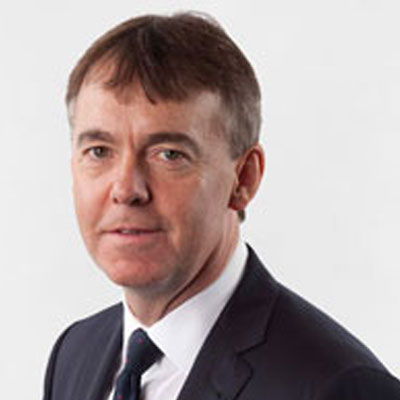
    Sky group CEO Jeremy Darroch said, “Digital skills and innovation are at the heart of what we do at Sky, helping us give customers the best possible TV experience, whether at home or on the move. With our investment in Leeds, we’re creating one of the largest digital communities in the UK. We are looking forward to bringing hundreds of new jobs to the city and giving young people the opportunity to build their skills and help shape the digital services of the future.”


    MP, Secretary of State for Business, Skills and Innovation, the Rt Hon Sajid Javid added, “I’m delighted that Sky is furthering its investment in Leeds with the creation of 400 new jobs and a new technology hub. The announcement is a boost to the digital economy of the entire Northern Powerhouse, and will undoubtedly help to cement Leeds as a leading technology cluster.”

  • Q2-2015: Comcast reports 11% revenue growth, loses 69,000 video customers

    Q2-2015: Comcast reports 11% revenue growth, loses 69,000 video customers

    BENGALURU: Comcast Corporation (Comcast) reported 11.3 per cent growth in consolidated revenue in Q2-2015 (quarter ended 30 June, 2015) to $18,743 million as compared to the $16,844 million in the corresponding year ago quarter. 


    In Q1-2015, the company had reported consolidated revenue of $17,853 million. The company’s Cable Communications and NBCUniversal segments reported a y-o-y increase in revenue.


    Comcast consolidated operating income increased 7.9 per cent in Q2-2015 to $4105 million as compared to the $3804 million in Q2-2014 and was 5.5 per cent more than the $3890 million Q1-2015. Year to date (YTD, 6M-2015), the company’s consolidated revenue grew 6.8 per cent to $36,596 million from $34,252 in the corresponding year ago period. 


    Though the company’s Cable Communication segment reported a fall of 69,000 video customers in Q2-2015, video revenue grew 3.7 per cent in Q2-2015 to $5431 million from $5239 million during the corresponding year ago quarter. YTD, video revenue increased 3.3 per cent to $10,762 million as compared to $10,417 million in 6M-2014.


    Comcast Chairman and CEO Brian L Roberts said, “Our second quarter results, including 11.3 per cent revenue growth and eight per cent operating cash flow growth, demonstrate the strength and momentum we are seeing across our businesses. In Cable, high-speed Internet and business services continued to perform extremely well, and, significantly, this was the best second quarter video customer results we’ve had in nine years. Our focus on accelerating the deployment of our transformative X1 platform, as well as efforts to improve customer service, are clearly making a difference, with lower churn across all product categories. NBCUniversal had an exceptional quarter, led by the record-breaking box office performances of Jurassic World and Furious 7 and continued strong momentum in our theme parks. In addition, NBC won the 2014-2015 broadcast season for adults 18-49. Our teams are executing incredibly well across our strong and diversified portfolio, and I am excited for what we can deliver in the rest of 2015 and beyond.”


    Note: 100,00,000 = 100 lakh = 10 million = 1 crore


    Let us look at the numbers reported by Comcast


    Cable Communications


    Comcast’s Cable Communications segment has three products – video, high speed internet and voice.  Five streams add to the segment’s revenue – video, high speed internet, voice, business service and advertising.


    This segment’s revenue in Q2-2015 grew 6.3 per cent to $11,729 million as compared to the $11,029 million in Q1-2014. YTD also, the segment’s revenue increased 6.3 per cent to $23,159 million as compared to $21,786 million in 6M-2014. 


    Cable Communications customer relationships increased to 272.65 lakh in Q2-2015 as compared to 267.75 lakh in Q2-2014.


    Single product customer relationships declined in Q2-2015 to 83.43 lakh from 85.10 lakh in Q1-2014; double product customer relationships in Q2-2015 to 89.36 lakh from 85,74,000 in Q2-2014; triple product customer relationships increased in Q2-2015 to 99.87 lakh from 96.91 lakh in the corresponding year ago quarter.


    Operating Cash Flow for Cable Communications increased 5.1 per cent to $4798 million Q2-2015 compared to $4564 million in Q2-2014, reflecting higher revenue, partially offset by a 7.2 per cent increase in operating expenses primarily related to higher video programming costs, as well as an increase in technical and product support expenses driven by an acceleration in the deployment of X1 and investments to improve the customer experience. As a result, this quarter’s operating cash flow margin was 40.9 per cent compared to 41.4 per cent in the prior year period.


    For the six months ended 30 June, 2015, Cable operating cash flow increased 5.7 per cent to $9472 million compared to $8964 million in 6M-2014. YTD operating cash flow margin was 40.9 per cent compared to 41.1 per cent in 2014.


    Video 


    Video revenue has been mentioned above. The company lost 69,000 video customers in Q2-2015, much lower than the 144,000 customers it lost in Q1-2014. Total video customer relationships in Q2-2015 stood at 223.06 lakh as compared to the 224.57 lakh in the corresponding year ago quarter.


    High speed Internet


    High speed internet revenue in Q2-2015 grew 10 per cent to $3101 million from $2819 million in Q2-2014. YTD, revenue from this stream grew 10.3 per cent to $6145 million from $5569 million in 6M-2014.


    High speed internet customer relationships in Q2-2015 improved by 180,000 as compared to the improvement of 203,000 in Q2-2014. The total number of high speed internet customer relationships in Q2-2015 stood at 225.48 lakh, in Q2-2015, the corresponding number was 212.71 lakh.


    Voice


    Voice revenue in the current quarter at $903 million declined 2.1 per cent as compared to the $921 million in Q2-2014. YTD, revenue from this stream declined 1.8 per cent to $1809 million as compared to the $1842 million in 6M-2014.


    Voice customer relationships increased to 113.19 lakh as compared to the 110.03 lakh in Q2-2014.


    Business services, Advertising and Other


    Business services revenue grew 20.4 per cent to $1161 million in Q2-2015 as compared to $961 million in Q2-2015. Business services revenue in 6M-2015 increased 20.9 per cent to $2275 million as compared to the $1883 million in 6M-2014.


    Advertising revenue in Q2-2015 declined by 0.9 per cent to $582 million from $589 million in Q2-2014, while for 6M-2015, revenue declined 0.8 per cent to $1086 million as compared to $1094 million in 6M-2014.


    ‘Other’ revenue in Q1-2015 increased 10.9 per cent to $551 million as compared to the $497 in the corresponding year ago quarter. YTD, ‘Other’ revenue increased 10.2 per cent to $1082 million as compared to the $982 million in 6M-2014.


    NBCUniversal 


    Cable Networks, Broadcast television, Filmed Entertainment and Themed Parks contribute to NBCUniversal segment’s revenues.


    NBCUniversal revenue in Q2-2015 at $7230 million increased 20.2 per cent as compared to the $6016 million in the corresponding year ago quarter. For 6M-2015, revenue from this segment increased 7.3 per cent to $13,834 million from $12,892 million in the corresponding year ago six month period.


    Operating cash flow increased 19.4 per cent to $1712 million in Q2-2015 as compared to the $1434 million in Q2-2014. During 6M-2015, operating cash flow from this segment improved 16.8 per cent to $3206 million as compared to the $2745 million in 6M-2014 driven by strong results at Filmed Entertainment and Theme Parks.


    Cable Networks


    Cable Networks revenue in Q-2015 declined 4.6 per cent to $872 million as compared to the $914 million in Q2-2014, reflecting a 26.3 per cent decrease in content licensing and other revenue due to the timing of content provided under licensing agreements and a three per cent decline in advertising revenue, partially offset by a 5.6 per cent increase in distribution revenue. Operating cash flow decreased 4.6 per cent to $872 million compared to $914 million in Q2-2014, reflecting lower revenue and modest increases in other operating and administrative expenses.


    For 6M-2015, revenue 2.2 per cent to $1170 million as compared to the $1809 million in 6M-2014. Operating cash flow decreased 2.2 per cent to $1.8 billion in 6M-2015.


    Broadcast Television


    Broadcast Television revenue increased 3.7 per cent in Q2-2015 to $240 million as compared to the $231 million in Q2-2014 reflecting a slight increase in advertising revenue and higher retransmission consent fees, which were offset by lower content licensing revenue. Operating cash flow decreased 3.7 per cent to $231 million compared to Q2-2014, primarily reflecting increases in other operating and administrative expenses, which were largely offset by a decrease in programming and production costs associated with the timing of the airing of certain shows in our primetime schedule.


    YTD, Broadcast Television revenue increased 14 per cent to $413 million as compared to $352 million in 6M-2014. Excluding $376 million of revenue generated by the NFL’s Super Bowl in the Q1-2015, as well as $846 million of revenue generated by the Sochi Olympics in Q1-2014, revenue increased 2.6 per cent. Operating cash flow increased 14 per cent to $413 million compared to $362 million in 6M-2014.


    Filmed Entertainment


    Filmed Entertainment revenue in Q2-2015 more than doubled (up 2.17 times) to $422 million as compared to the $195 million in Q2-2014 driven by higher theatrical revenue from the record performances of Furious 7 and Jurassic World. Operating cash flow increased $227 million to $422 million, reflecting higher revenue, partially offset by an increase in the amortization of film costs and higher advertising, marketing and promotion expense due to a larger film slate.


    For 6M-2015, revenue increased 48.1 per cent to $715 million as compared to $483 million in 6M-2014. Operating cash flow increased 48.1 per cent to $715 million compared to $483 million in 6M-2014.


    Themed Parks


    Themed Parks in Q2-2015 increased 44.9 per cent to $354 million as compared to the $244 million in Q2-2014 reflecting higher guest attendance and per capita spending, driven by the continued success of Orlando’s The Wizarding World of Harry Potter – Diagon Alley. Q2-2015 cash flow increased 44.9 per cent to $354 million compared to $244 million in the same period last year, reflecting higher revenue, partially offset by an increase in operating costs to support the new attractions.


    For 6M-2015, revenue increased 48.9 per cent to $616 million as compared to the $414 million in 6M-2014. Operating cash flow increased 48.9 per cent to $617 million compared to $414 million in 6M-2014.

  • AIDCF asks b’casters to create level playing field for OTT & cable TV

    AIDCF asks b’casters to create level playing field for OTT & cable TV

    MUMBAI: The All India Digital Cable Federation (AIDCF) is on a roll. The multi system operator (MSO) association, which first submitted its recommendations to the Information & Broadcasting (I&B) Ministry and then to the GST Committee, has now written to broadcasters with Over the Top (OTT) platforms.


    The Association has written a letter to Star India, Multi Screen Media and IndiaCast Media Distribution. In the letter, AIDCF has stressed on how the broadcaster is giving content free of cost to its OTT platforms, while charging MSOs for the same content.


    Giving an example of Star India’s OTT platform hotstar, a source close to the development tells Indiantelevision.com, “Star India, on one hand offers simulcast or immediate transmission of fresh popular content completely free of cost to its OTT subscribers on hotstar and on the flip-side, it charges the MSOs huge sum for the same set of content.”


    AIDCF’s letter to broadcasters, a copy of which is with this website, reads:


    1) The cable industry is contributing huge subscription revenue to 

    broadcasters for the same set of content and programme.


    2) It contributes to a large viewership for the channels the network has.


    3) Also helps the broadcaster in gaining higher TRPs, which in turn leads to a better ad rate for the portfolio of channels thus increasing the advertisement revenue.


    The letter points out that this scenario of offering simulcast/immediate transmission of fresh content completely free of cost to OTT subscribers is not favourable for the Cable TV industry and its relationship with broadcasters, considering the growth in the subscriber base for the broadcasters’ OTT application.


    According to AIDCF, this is a threat to the pay TV cable business model, which defeats the purpose of paying huge license fees to broadcasters. “Some of our subscribers have started complaining saying, ‘Why should we pay you for the content, which is available free of cost via say hotstar or Sony Liv,’” informs the source.


    Giving free of cost content to OTT platforms is affecting the average revenue per user (ARPU) of the cable TV industry, subsequently hampering the growth of business at large.


    AIDCF in its letter has asked broadcasters to create a level playing field amongst respective distribution platforms. “We have requested the broadcaster to make content available on their OTT platform a paid service with a subscription fees. Alternatively, the same content should also be made available free of cost to other distribution platform,” the source reaffirms.

  • MSO body submits recos to GST committee; wants ET subsumed under GST

    MSO body submits recos to GST committee; wants ET subsumed under GST

    MUMBAI: The growing taxes have been of great concern to all. The recent move of the Delhi government to hike entertainment tax to Rs 40 just added to the growing woes. To address this, the newly formed multi system operator (MSO) body All India Digital Cable Federation (AIDCF) has submitted its recommendation to the select Goods and Services Tax (GST) committee.


    Through the recommendation, the association has suggested that entertainment tax (ET) be subsumed under GST.


    It can be noted that the entertainment tax, which is being submitted by MSOs, varies from state to state. So while Delhi pays Rs 40, Maharashtra pays a sum of Rs 45. What’s more, in some states like West Bengal and Kerala, even the municipality collects entertainment tax thus adding to the burden.


    “It is for this reason that we have asked the GST committee to subsume ET into GST for all the states and municipalities in India. This will also mean a uniform taxation policy where no one will have to pay separately to state governments or to municipalities,” a source close to the development tells Indiantelevision.com.


    Meanwhile, the source also suggests that a similar recommendation has been sent by the DTH Operators Association, who currently have to pay close to 40 per cent of their income in taxes. However, at the time of filing this report, DTH Operators Association president and Videocon d2h CEO Anil Khera was unavailable for comment despite repeated attempts.


    It may be recalled that in April this year, Khera had welcomed GST wholeheartedly and had said that it would only help the DTH sector to prosper. “DTH is the biggest victim of multiple taxation policy and GST will simplify that. The industry needs a uniform taxation system and the sooner it comes the better it is,” Khera had then said.

  • ABS Seven Star to launch MPEG 4 headend; targets phase III, IV cities

    ABS Seven Star to launch MPEG 4 headend; targets phase III, IV cities

    MUMBAI: ABS Seven Star is all set to make its next big move. The Mumbai based multi system operator (MSO), which so far had been operating MPEG 2 headend, will now launch its MPEG 4 headend with as many as 500 channels.


    While it is currently in the testing phase, the official launch is slated for 25 July.


    The new headend will be placed at Andheri West in Mumbai. “We have taken a new premise for setting up the MPEG 4 headend,” ABS Seven Star CMD Atul Saraf tells Indiantelevision.com.


    The MPEG 4 headend will have 75 high definition (HD) channels. “We will be swapping the MPEG 2 set top boxes (STBs) with the MPEG 4 HD boxes in the next four months,” added Saraf.


    Priced at Rs 2500, the STBs are hybrid with both cable and Ethernet. The boxes have been manufactured under ABS Productions Pvt Ltd, which has contracted Videocon Group’s Trend Electronics to manufacture them at its Aurangabad plant. “The box is on Broadcom chipset,” informed Saraf.


    The company has already tested 2000 boxes on its network. “We will continue our old MPEG 2 headend till all the boxes are swapped,” he said.


    With this launch, the MSO is now targeting phase III and IV cities of digitisation. “At the time of launch, we will be present in at least three-four states,” he informed.


    ABS Seven Star is aiming at reaching 10 million households in the next two years. “India is huge, and another 17 million STBs are needed to digitize the whole country. We will have our own pipe in that,” he informed.


    In order to expand, the MSO is also taking the acquisition route in phase I. “We will acquire lots of networks in phase I, talks for which are already on,” concluded Saraf. 

  • Hinduja’s HITS platform NXT Digital to launch in August

    Hinduja’s HITS platform NXT Digital to launch in August

    MUMBAI: The Hinduja Group has christened its headend in the sky (HITS) service platform as NXT Digital. The service is slated to launch in August 2015.


    Speaking to Indiantelevision.com, Hinduja Ventures’ investment arm Grant Investrade managing director Tony D’silva said, “We had applied for the HITS licence in November 2012 and finally after a wait of three years, we have got the Grant of Permission Agreement (GOPA) license on 14 July, 2015.”


    At the time of its launch, NXT Digital will concentrate on the phase III and IV digitisation markets, which currently have more than 110 million analogue TV households.


    The platform has already started rolling out set top boxes (STBs). “We have already got order for 2.5 million STBs,” informed D’silva adding that deals with two broadcast networks has also been signed. 


    NXT Digital will launch with 150-200 channels in August and aims to take it up to 500 plus MPEG-4 encrypted services including HD channels with the ability to insert local channels as per requirement by October-November 2015. Not just this, the platform will also introduce value added service (VAS) like Darshan, TV Everywhere, Games and Learning by December, this year.


    “We believe the platform will strongly support the laudable national mission to roll out Digital Addressable Systems (DAS) of broadcasting all over India,” said D’silva. 


    NXT Digital, according to D’silva, will not just help last mile operators (LMOs) and multi system operators (MSOs) in going digital as per government mandated standards and within set deadlines, but will also help them remain independent and retain the ownership of their network. 


    NXT Digital brand name and logo


    According to D’silva, NXT Digital is a futuristic product, which caters to the next generation. Designed by Chlorophyll, the eagle in the logo symbolizes the empowered LMO/MSO who, with the new HITS platform, can soar into the skies with complete freedom and ownership, to achieve greater growth. The soaring eagle is also indicative of the reach of NXT Digital.


    D’Silva said, “While HITS is the pipeline of content delivery, our offering will not be limited to encrypted television channels through digitally addressable systems. Instead, we will offer a rich bouquet of every kind of additional digital service such as VAS, OTT and others that will keep getting added. Hence, we decided to go with the name NXT Digital, and both, the name and the logo represent the next level in the digital technology we will offer.”


    Research and outcome 


    In order to understand the market and the needs of the LMOs, the company  undertook an in-depth research to find out the requirements of the distribution fraternity in December 2014. A research was conducted with 2000 LMOs, MSOs and their representatives across 120 cities in phase III and IV markets. 


    The research threw up six major requirements of the LMOs and MSOs. These were as follows: 


    1) Retain ownership of their network


    2) Drive broadcaster deals


    3) Package and price their offerings according to the needs of their market


    4) To be able to acquire STBs according to their convenience


    5) The ability to insert local channels for their end-subscribers


    6) Have a sophisticated digital service that could help them compete with other digital platforms like DTH to ensure their digital offerings were future-ready so that their subscriber-bases would only grow.


    “In other words, they wanted to remain independent, own their network, and go digital as per government norms and within the deadlines,” D’Silva said.


    The HITS platform will offer the choice of two different service models: a white label service model and a full service model.


    “By signing up for a NXT Digital service, a network owner in a Phase III market can be saved the burden of having to make huge investments in the technology and highly skilled manpower required to convert his analog households to digital,” he informed.


    The entire infrastructure and backend, including a call centre for customer service, will be taken care by NXT Digital. “The network owner can concentrate on growing his business through managing his network, local channels deployment, broadcaster deals and more,” D’silva said. 


    Technology partners 


    The technology programme manager for NXT Digital is Castle Media and its team, led by Vynsley Fernandes, who has set up several world class operations in broadcasting and digital networks in India and overseas.


    GIL has partnered with Thaicom-7 for satellite, C-Band transponders, Nagravision DLK for CAS-embedded platform; OpenTV1 for middleware; Hansen Technologies for subscription management system and billing solutions and Changhong, Telesystems and others for STBs.


    Manpower and offices


    NXT Digital currently has close to 200 people working in different parts of the country. These people have been picked from the broadcast, cable and telecom sectors. 


    The company has four regional offices in Mumbai, Delhi, Kolkata and Bengaluru and 16 state offices. 


    Pricing and revenue share


    The STBs have been made available to LMOs on cash and carry model. While the SD STB is priced at Rs 1400, the HD box will cost Rs 1800. 


    NXT Digital will charge the LMO a flat fee of Rs 20 per subscriber.


    In case the consumer pays directly to the platform for any la carte channels, using the online mode of payment, NXT Digital will have a revenue share with the LMOs.   


    The HITS platform will work on a prepaid model. “While there will be an option for postpaid, but we will concentrate on the prepaid model. Not just this, unless the consumer application form (CAF) is in place, the customer will not be activated,” informed D’silva.


    Awareness drive


    GIL has readied a pan-Indian awareness drive across markets, showcasing its services portfolio, technology capabilities and quality of services. The company will conduct roadshows in 39 cities in order to train the LMOs.


    The campaign will be spread across all media consumed including but not limited to radio, local-media and OOH.

  • Den Networks gets FIPB nod to raise FDI limit

    Den Networks gets FIPB nod to raise FDI limit

    MUMBAI: The wait is finally over for multi system operator (MSO) Den Networks. The MSO has got clearance from the Foreign Investment Promotion Board (FIPB) to increase its foreign investment limit from the existing 49 per cent to 74 per cent.


    With this, the company which is currently building its broadband base and also working towards digitisation in phase III and IV areas, is looking at attracting overseas capital into the company. 


    It can be noted that Den Networks had sought for increase in foreign investment limit beyond 49 per cent and up to 74 per cent by FIIs, NRIs, FPIs, and other eligible foreign investors through route of secondary market and / or open market purchase.


    Earlier in March this year, the Board of Directors of Den Networks had approved this proposal to increase foreign investment limit.

    The decision was subject to shareholder approval (through postal ballot), FIPB nod and adherence to all other statutory requirements. 


    Currently, FIIs hold 20.27 per cent stake in Den Networks.

  • Registered MSOs for DAS areas touch 275 mark; cancellations total 29

    Registered MSOs for DAS areas touch 275 mark; cancellations total 29

    NEW DELHI: With less than six months for the completion of Phase III of Digital Addressable System (DAS) for cable television, the number of multi system operators (MSOs) who have been given permanent registration for a period of ten years is now 215.


    In addition, a total of 60 MSOs have been given provisional registration, while 29 MSOs have had their licences cancelled or their files have been closed.


    The number of MSOs getting permanent licences has gone up sizably since the list issued on 22 June put this figure at 191.


    While a majority of MSOs including Kal Cables have had their licences cancelled following the Home Ministry denying security clearance, some have been cancelled for non-operation. These include only four, which were cancelled in 2015.


    MSOs given permanent registration pan India after 22 June include Goldy Diginet of Rajasthan, Engineer’s Resource Associates India of Madhya Pradesh, Multireach Media of Kolkata, SHR Digital Networks of Delhi and Siti Cable Network Limited of Noida.


    The others are as follows: E-Cable Vision of Chhatisgarh to cover the Districts of Dhamtari, Charama, Kanker, Keskal, Konda Goan, Jagdalpur, Gidam, Dantewada, Kirndul, Nagarnar, Balod, Dalli Rajraha, Bhanupartapur, Mahasamund, Kurud and Nagri under Phase-lll & lV; Manair Digital Entertainment Networks for Telengana; Narmada Cable Network for Kareli and Narsinghpur Tehsils in Madhya Pradesh, Linkmen Services for West Bengal; Desh Entertainment for West Bengal Under Phase III & IV; Sai Digital Services for Andhra Pradesh and Telangana under Phase lll and lV; INSAT Cable Network for Sitara, Pune, Sangli, Solapur and Raigard/Sindu Durg Districts in Maharashtra; Mahapatra Dooradarshan Cable Network System for Ganjam District of Odisha; Raj Cable Network for Anuppur, Shahdol and Umaria District in Madhya Pradesh and Koria, Surajpur and Ambikapur District in Chhattisgarh, Baba Nanak Optical & Fiber in Punjab; Aurangabad Satellite Cable Service Centre for West Bengal areas; SM Cable for Pachpadra in Barmer District of Rajasthan; Diamond Cable Network for Bhandara, Gondia & Nagpur Districts of Maharashtra under Phase-lll & lV; Zaka Cable TV Network for Uttar Pradesh and Uttarakhand; One Digital TV Services in Nalgonda, Khamam, Warangal, Ranga Reddy & Mahaboob Nagar Districts under Phase lll & lV in Telangana; Bhagyalakshmi Communication Network in Rompicherla, Chinnagottigallu, Bakarapet, Sodam, Somala, Chowdepalle’ Kallur, Damal Gheruvu and Kalikiri in Ghittoor District of Andhra Pradesh; and Bhimavaram Community Network in West Godavari district of Andhra Pradesh.


    While there is no new addition to the northeast, one licence has been issued for Kashmir to J K Cable Network for Sopore, Baramula, Zainageer, Rafiabad, Bandipora, Handwara, Kupwara, Uri, Pattan, Tangmarg, Gulmdrg, Sumbal, Hajin, Narbal and parts of Srinagar. 


    While Kal Cables continues to be blacklisted by the Home Ministry, licences issued for Tamil Nadu are: Lucky Cable Vision which will cover area in all cities, towns, Town Panchayats, Village Panchayats of Pollachi (Taluka) Udhumalpet (Taluka), Palani (Taluka), Valparai (Taluka), Kinathu, Kadavu (Taluka) Phase III & Phase IV; and King Digital Network for Salem.