Category: Multi System Operators

  • Q3-2016: Siti Cable turnaround; Reports Rs 56 crore profit; operating revenue up 67%

    Q3-2016: Siti Cable turnaround; Reports Rs 56 crore profit; operating revenue up 67%

    BENGALURU: Last year, the DTH industry, led by the Essel Group’s Dish TV reported profits, and the trend has continued so far over the next two quarters. For the quarter ended 31 December, 2015 (Q3-2016, current quarter), it is another Essel group company, from the carriage industry – Siti Cable Network Limited (Siti Cable) that has reported a profit after tax (PAT) of Rs 56 crore (1.5 per cent margin on operating revenue or OPREV) as compared to a loss of Rs 18.5 crore in the corresponding year ago quarter and a loss of Rs 19.4 crore in the immediate trailing quarter. The growth essentially has been driven by higher activation revenue in the current quarter due to the 15 lakh subscribers added in Q3-2016.


    Note: 100,00,000 = 100 lakh = 10 million = 1 crore


    EBIDTA in the current quarter more than doubled (up 2.6 times) YoY at Rs 129.9 crore as compared to Rs 50.1 crore and also more than doubled QoQ (up 2.5 times) from Rs 51.5 crore.


    Over the nine month period ended 31 December, 2015 (9M-2016), the company reported a PAT of Rs 0.9 crore as compared to a loss of Rs 56.6 crore during the corresponding year ago nine-month period. The company reported an EBIDTA of Rs 220 crore in 9M-2016 as compared to an EBIDTA of Rs 136.3 crore in 9M-2015.


    So has the cable industry in India with Siti Cable results as a harbinger of profits, turned the corner, and could start reporting profits from now on, or is this a one off good result? Only time will tell.


    Siti Cable reported a 66.9 per cent YoY OPREV growth in the current quarter at Rs 369.9 crore as compared to Rs 221.6 crore and a 57.9 per cent QoQ growth as compared to Rs 234.2 crore. For 9M-2016, Siti Cable reported 26.7 per cent YoY OPREV growth at Rs 832.3 crore as compared to Rs 649.9 crore.


    Siti Cable executive director & CEO V D Wadhwa said, “Focussing on our guiding principle of creating value for all stakeholders, the company has achieved the financial turnaround for the first time in the history of the company and reported PBT of Rs 56 crore in Q3-FY16 and Rs 5.1 crore for the nine months of FY16. At Siti Cable, our efforts to strive for operational excellence continue and during the quarter the company has added 1.1 million digital subscribers, over 10,000 broadband customers and achieved all-time high EBITDA growth of 159 percent YoY. We expect this momentum to sustain in the coming quarters. We are also aggressively looking for inorganic growth opportunities in the geographies, which make strategic sense for us to expand and have acquired some networks in the western part of the country which shall add additional 1.5 million subscribers to our existing subscriber base of 10.7 million. We strongly believe in cohesiveness among like-minded players and are actively engaged in our efforts as a consolidator in the industry.”


    Revenue streams


    The company reports four revenue streams: Subscription, Carriage, Activation and Broadband. Revenue from all the streams grew, with activation showing the highest YoY and QoQ growth. Subscription revenue in the current quarter increased 7.4 per cent YoY at Rs 145.8 crore (39.8 per cent of OPREV) as compared to Rs 135.7 crore (61.2 per cent of OPREV) and grew 5.3 percent QoQ from Rs 138.5 crore (58 per cent of OPREV). 


    Carriage revenue in the current quarter grew 9.8 per cent YoY to Rs 60.5 crore (16.4 per cent of OPREV) as compared to Rs 55.1 crore (24.9 per cent of OPREV) and was almost flat (grew 0.3 per cent) QoQ as compared to Rs 60.3 crore (25.7 per cent).


    Activation revenue in the current quarter was almost eight times (grew 7.7 times) YoY at Rs 105 crore (28.4 per cent of OPREV) as compared to Rs 13.6 crore (6.1 per cent of OPREV) and grew by more than five times (5.4 times) QoQ as compared to Rs 19.4 crore (8.8 per cent of OPREV).


    Broadband revenue in the current quarter almost doubled (grew 99 per cent) at Rs 13.9 crore (3.8 per cent of OPREV) as compared to Rs 7 crore (3.2 per cent of OPREV) in Q3-2015 and increased 49.5 per cent QoQ as compared to Rs 9.3 crore (4 per cent of OPREV).


    Subscription numbers


    The company has added 15 lakh cable subscribers in the current quarter to reach a subscription base of 122 lakh from 107 lakh in the immediate trailing quarter. Digital subscribers increased by 10 lakh to 68 lakh from 58 lakh. The company says that it has added 11 lakh digital subscribers in the current quarter as compared to 3.3 lakh added in Q2-2016. HD subscribers in Q3-2016 have gone up to 35,372 from 25,000 in Q2-2016. Broadband subscribers in the current quarter increased 17 per cent to 1,07,000 from 91,450 in Q2-2016.


  • Q3-2016: Siti Cable turnaround; Reports Rs 56 crore profit; operating revenue up 67%

    Q3-2016: Siti Cable turnaround; Reports Rs 56 crore profit; operating revenue up 67%

    BENGALURU: Last year, the DTH industry, led by the Essel Group’s Dish TV reported profits, and the trend has continued so far over the next two quarters. For the quarter ended 31 December, 2015 (Q3-2016, current quarter), it is another Essel group company, from the carriage industry – Siti Cable Network Limited (Siti Cable) that has reported a profit after tax (PAT) of Rs 56 crore (1.5 per cent margin on operating revenue or OPREV) as compared to a loss of Rs 18.5 crore in the corresponding year ago quarter and a loss of Rs 19.4 crore in the immediate trailing quarter. The growth essentially has been driven by higher activation revenue in the current quarter due to the 15 lakh subscribers added in Q3-2016.


    Note: 100,00,000 = 100 lakh = 10 million = 1 crore


    EBIDTA in the current quarter more than doubled (up 2.6 times) YoY at Rs 129.9 crore as compared to Rs 50.1 crore and also more than doubled QoQ (up 2.5 times) from Rs 51.5 crore.


    Over the nine month period ended 31 December, 2015 (9M-2016), the company reported a PAT of Rs 0.9 crore as compared to a loss of Rs 56.6 crore during the corresponding year ago nine-month period. The company reported an EBIDTA of Rs 220 crore in 9M-2016 as compared to an EBIDTA of Rs 136.3 crore in 9M-2015.


    So has the cable industry in India with Siti Cable results as a harbinger of profits, turned the corner, and could start reporting profits from now on, or is this a one off good result? Only time will tell.


    Siti Cable reported a 66.9 per cent YoY OPREV growth in the current quarter at Rs 369.9 crore as compared to Rs 221.6 crore and a 57.9 per cent QoQ growth as compared to Rs 234.2 crore. For 9M-2016, Siti Cable reported 26.7 per cent YoY OPREV growth at Rs 832.3 crore as compared to Rs 649.9 crore.


    Siti Cable executive director & CEO V D Wadhwa said, “Focussing on our guiding principle of creating value for all stakeholders, the company has achieved the financial turnaround for the first time in the history of the company and reported PBT of Rs 56 crore in Q3-FY16 and Rs 5.1 crore for the nine months of FY16. At Siti Cable, our efforts to strive for operational excellence continue and during the quarter the company has added 1.1 million digital subscribers, over 10,000 broadband customers and achieved all-time high EBITDA growth of 159 percent YoY. We expect this momentum to sustain in the coming quarters. We are also aggressively looking for inorganic growth opportunities in the geographies, which make strategic sense for us to expand and have acquired some networks in the western part of the country which shall add additional 1.5 million subscribers to our existing subscriber base of 10.7 million. We strongly believe in cohesiveness among like-minded players and are actively engaged in our efforts as a consolidator in the industry.”


    Revenue streams


    The company reports four revenue streams: Subscription, Carriage, Activation and Broadband. Revenue from all the streams grew, with activation showing the highest YoY and QoQ growth. Subscription revenue in the current quarter increased 7.4 per cent YoY at Rs 145.8 crore (39.8 per cent of OPREV) as compared to Rs 135.7 crore (61.2 per cent of OPREV) and grew 5.3 percent QoQ from Rs 138.5 crore (58 per cent of OPREV). 


    Carriage revenue in the current quarter grew 9.8 per cent YoY to Rs 60.5 crore (16.4 per cent of OPREV) as compared to Rs 55.1 crore (24.9 per cent of OPREV) and was almost flat (grew 0.3 per cent) QoQ as compared to Rs 60.3 crore (25.7 per cent).


    Activation revenue in the current quarter was almost eight times (grew 7.7 times) YoY at Rs 105 crore (28.4 per cent of OPREV) as compared to Rs 13.6 crore (6.1 per cent of OPREV) and grew by more than five times (5.4 times) QoQ as compared to Rs 19.4 crore (8.8 per cent of OPREV).


    Broadband revenue in the current quarter almost doubled (grew 99 per cent) at Rs 13.9 crore (3.8 per cent of OPREV) as compared to Rs 7 crore (3.2 per cent of OPREV) in Q3-2015 and increased 49.5 per cent QoQ as compared to Rs 9.3 crore (4 per cent of OPREV).


    Subscription numbers


    The company has added 15 lakh cable subscribers in the current quarter to reach a subscription base of 122 lakh from 107 lakh in the immediate trailing quarter. Digital subscribers increased by 10 lakh to 68 lakh from 58 lakh. The company says that it has added 11 lakh digital subscribers in the current quarter as compared to 3.3 lakh added in Q2-2016. HD subscribers in Q3-2016 have gone up to 35,372 from 25,000 in Q2-2016. Broadband subscribers in the current quarter increased 17 per cent to 1,07,000 from 91,450 in Q2-2016.


  • Hathway Cable & Datacom director Brahmal Vasudevan resigns

    MUMBAI: Hathway Cable & Datacom independent director Brahmal Vasudevan has tendered his resignation at the company with effect from 13 January, 2016.


    Vasudevan, who founded Creador and serves as its CEO, joined Hathway as an independent director in 2011. 


    He has also had stints with Monet Investment Advisors and ChrysCapital Investment Advisors as managing director.

  • ‘Broadcasters should black out areas where DAS implementation is tardy; Govt should move SC:’ VD Wadhwa

    ‘Broadcasters should black out areas where DAS implementation is tardy; Govt should move SC:’ VD Wadhwa

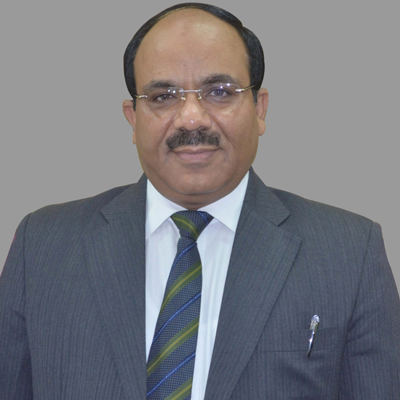
    An Alumnus of Harvard Business School and a fellow member of the Institute of Company Secretaries of India, V D Wadhwa carries his multifarious responsibilities with a humility and ease that belies the positions he had occupied in the private sector. 


    SitiCable executive director and CEO, Wadhwa has almost 30 years of general management experience in consumer lifestyle and retail industries. Additionally, he has also served on various committees of FICCI and Assocham besides serving as president of the Horological Federation of India.


    His personal interests include – playing squash, adventure sports, and travelling.


    Donning the hat of All India Digital Cable Federation’s president for the past 15 months, Wadhwa is convinced that the move towards digital addressable system (DAS) is in the  right direction. In an interview with Indiantelevision.com, he justifies this and is of the opinion that there should be no let up.


    Excerpts from the interview:


    With cable operators and multi system operators in so many states having got extension orders from the courts, do you feel the government should have given more time before implementing Phase III covering all urban areas?

    No, I feel that the Government has taken the right decision in not extending the date except where Court orders have come. With reports that there are pockets even in the first two phases where analogue signal is still being beamed, any extension by the Government would have made the MSOs and LCOs go slow and this could have gone on for years.


    At least the stakeholders now know they have a deadline that they have to meet. We should not forget that all stakeholders knew since September 2014 that the Government had set a deadline it would stick to, and had enough time to get ready for DAS Phase III.


    What is the way out?

    The Government should go to the Supreme Court and stop all the High Court cases on DAS.


    But there is great shortage of set top boxes, if you go by the pleadings before the High Courts…

    In SitiCable, we have 11 million subscribers on our network and we have already seeded three million STBs in Phase III. I am confident that we will complete five to six million in the next couple of months and reach 10 million by March. Thus we will cover 6.5 million boxes of the first three phases. Other stakeholders had enough time to order STBs if they had acted in time.


    But these are Chinese STBs with little or no service.

    They are Chinese, but they are reliable and when we fit this in any household, we give the requisite service for taking care of any problems.


    What about indigenous STBs?

    It is true that there is very little indigenous production with just two manufacturers. There are less than two per cent indigenous STBs. The Government will have to facilitate more under its Make in India scheme. But that is not our field. We have expertise as the distribution pipe.


    Pricing of STBs is also a problem since there is no fixed rate.

    STBs had initially cost much more, but are now being sold for just around Rs 1200 and even on a rental basis.


    What do you think should be done to speed up the DAS process?

    Implementation on the ground needs support. And the broadcasters should black out areas where implementation is tardy.


    And now the Government is gearing up for Phase IV, which covers the rural areas…

    In my view, Phase III and Phase IV should have been done together as the government had initially planned. In any case, there is a 30 per cent base of direct-to-home (DTH) platforms in Phase IV so a large pocket is already digitised. In fact, the total DTH segment in Phase III and IV is around seventy per cent.


    What are SitiCable’s future plans?

    We are very clear that we now have to concentrate on broadband and add on at least 500,000 subscribers every year.

  • Siti Cable acquires stakes in 7 MSOs; to raise Rs 680 crore

    Siti Cable acquires stakes in 7 MSOs; to raise Rs 680 crore

    MUMBAI: Siti Cable Network has acquired varying amounts of equity stakes in as many as seven multi system operators (MSOs).


    Amongst these is also the Mumbai based cable and television service provider Scod 18 Networking, in which the company picked up a 76 per cent stake.


    Additionally, Siti Cable has also acquired equity stake in six other smaller companies. While the company acquired 100 per cent stake in Variety Entertainment, it picked up 51 per cent stake each in Sai Star Digital Media, Bargachh Digital Communication Network and Krishna Teja Digital Entertainment. It also picked up 49 per cent stake each in Siti Faction Digital and Siti Jony Digital Cable Network.


    Siti Cable Network is also planning to raise up to Rs 680 crore through issuance of warrants and optionally fully convertible debentures (OFCDs) to promoter companies.


    In a BSE filing the company said that the Board of Directors approved, subject to shareholders’ approval, issuance of 14,28,57,143 number of warrants convertible at option of the holder in one or more tranches to Direct Media & Cable and/or Arrow Media & Broadband, entities forming part of promoter/promoter group of the company at Rs 35 per warrant, the total value of warrants shall not be more than Rs 500 crore.


    The company will also issue 51,428,571 OFCDs to Digital Satellite Media & Broadband, entity forming part of promoter/promoter group of the company at Rs 35 per OFCD, the total value of OFCDs shall not be more than Rs 180 crore.


    A source at Siti Cable informed Indiantelevision.com that the funds for the acquisitions would be sourced internally, and that the Rs 680 crore that were being raised would be to boost internal resources.

  • Q3-2015: US cable industry video slide continues; ARPU rises

    Q3-2015: US cable industry video slide continues; ARPU rises

    BENGALURU: Like in the previous two quarters and even earlier, the cable industry in the US continues to bleed video subscribers, albeit slower than before, while internet and business services (BS) continue to be growth drivers in terms of subscription numbers and revenue in the quarter ended 30 September, 2015 (current quarter, Q3-2015). This report considers three players for Q3-2015 – Comcast Cable Communications segment, Time Warner Cable and Charter Communications. Overall, YoY and QoQ subscription numbers or customer relationships of the three players in this report have increased, despite a fall in video customers.

    Comcast Inc., Cable Communications segment is the largest player by far among the sample players in this report; Time Warner Cable, Inc., (TWC), is a little less than half the size of Comcast’s Cable communications segment in terms of revenue and Charter Communications (Charter) with revenues that are less than half again as TWC’s.

    Despite the continued slide in video customer relationship, the combined sum of video subscribers in Q2-2015 of the three entities was about 3.72 crore or almost two thirds (61.4 per cent) of the 6.6 crore video subscribers through wire in the US as of 2013 numbers. The three players in this report are generally considered amongst the biggest players in the US cable television industry. All have three major revenue streams – Video, Internet and Voice (VIVE).

    Note: (a) 100,00,000 = 100 lakh = 10 million = 1 crore

    (b) While denominations for US$ have been mentioned in millions or billions where applicable, denominations for numbers have been mentioned lakhs and crores.

    (c) Residential customer relationship numbers have been used in this report wherever the breakup has been mentioned in SEC filings by the concerned entity. In the case Comcast Cable Communications segment, the breakup of subscription numbers in terms of Residential and Business Services has not been indicated.

    (d) The results and the conclusions in this report may not necessarily reflect the true trends and nature of the cable communications industry in US.

    Performance in Q3-2015

    In general, six streams add to most of the three entities’ revenue – three products – Video, high speed Internet, Voice; Business Services (BS); Advertising; and Other. Collectively, the first three have been given the acronym VIVE by the author. Generally VIVE numbers, be they subscription or revenue indicate residential subscribers and revenue from these subscribers in this report. This report examines VIVE and touches briefly upon BS of some of the players later on. It must be noted that BS revenue exceeds revenue from Voice services, but since voice is one of the three limbs of triple play, it has been mentioned along with Video and Internet.

    As mentioned above, in general, Internet has been driving growth, both in terms of revenue and subscription numbers. Contribution by BS is growing and is in low double digits in terms of percentage of overall revenue. Historically, over the previous two years, video revenues in Q3 of a year drop QoQ, before increasing in Q4 again. This has also happened in the current quarter Q3-2015. Due to the drop in video revenues, combined VIVE revenue has dropped QoQ in Q3-2015.

    Overall combined subscription numbers in Q3-2015 increased 0.82 per cent (increased by 397,000) QoQ to 485.52 lakh and increased by 2.78 per cent (increased by 1,315,000) YoY from 472.37 lakh. QoQ growth was driven by a growth in internet and voice subscribers and partly offset by a decline, albeit at a much lower rate, of video subscribers.

    In the current quarter combined Video Subscribers declined 0. 12 per cent QoQ to 371.57 lakh from 372 lakh and declined by 0.54 per cent YoY from 373.60 lakh. Combined high speed data subscribers in the current quarter increased 1.72 per cent QoQ to 403.54 lakh from 396.71 lakh and increased 6.88 per cent YoY from 377.55 lakh. Combined Voice subscribers in Q3-2015 increased 1.48 per cent QoQ to 199.80 lakh from 196.89 lakh and increased 8.30 per cent YoY from 184.48 lakh.

    The combined overall revenue (OR) of the three players in Q3-2015 increased 0.13 per cent (increased by $27 million) QoQ to $20,112 million from $20,085 million and increased 5.62 per cent (increased by $1070 million) YoY from $19,042 million. Please refer to Fig A2 below.

    Combined VIVE revenue in the current quarter declined 0.74 per cent (declined by $120 million) QoQ to $16,075 million from $16,195 million, but increased 4.2 per cent (increased by $648 million) YoY from $15,427 million. Video revenues of all the three players declined in this quarter as compared to the previous quarter. Internet revenues of all the three players increased, while Voice revenue of Comcast Cable Communications Segment and Charter increased. Voice revenue in the case of TWC declined QoQ in Q3-2015.

    Average Revenue Per User (ARPU) continued to rise as is evident from Figure A3 below, with Comcast Cable Communications ARPU at $143.12 in Q3-2015 being about 13 per cent higher than TWC’s ARPU of $126.92 and about 26 per cent more than Charter Communications ARPU of $113.39. This huge discrepancy reflects the fact that Comcast has a much higher proportion of multi-play (triple play and double play) customers when compared to the other two players. Please refer to Figure A4 below. While Comcast Cable Communications segment (A4-1 below) had about 31 per cent of single play customers, and 69 per cent multi-play (33 per cent of double play and 36 per cent triple play) customers in Q3-2015, in the case of the other two players (A4-2 and A4-3 below), single play customers totalled about 39 per cent and multi-play customers around 61 per cent.

    Business Services Revenue

    Combined Business Services Revenue (BSR) of the three entities increased 3.93 per cent QoQ to $2,330 million (11.59 per cent of combined Overall Revenue or combined OR) from $2,242 million (11.16 per cent of combined OR) and increased 17.20 per cent YoY from $1,988 million (10.44 per cent of combined OR). As has been mentioned, contribution by BSR to OR has been increasing – Combined BSR share of combined OR in Q2-14 was 9.99 per cent, in Q3-2015 it was 11.59 per cent.

    Please refer to figure B below. BSR has been increasing in absolute dollars as well as by way of contribution to OR. Amongst the three players in this report, BSR contribution has been the highest in terms of percentage of overall revenues in the case of TWC over the past six consecutive quarters considered in this report. Even in the case of Comcast Cable Communications segment, which had the highest BSR in terms of absolute dollars, BSR’s contribution has entered into double digits in terms of percentage of OR in the current quarter. While Comcast Cable Communications Segment break-up of residential and BSR subscription numbers is not available, Figure B1 below clearly indicates that TWC and Charter BSR subscription numbers have been increasing over time. 

  • “Our strategy is clear, we are ready to associate with everybody but we won’t compromise with our transparency:” Tony D’Silva

    “Our strategy is clear, we are ready to associate with everybody but we won’t compromise with our transparency:” Tony D’Silva

    For Hinduja’s Headend In The Sky (HITS) platform – NXT Digital, which was launched earlier this year, the journey so far has been about tussling it out. From procuring the requisite license from the Ministry of Information & Broadcasting (MIB) to getting broadcasters on board, for NXT Digital, it was no mean feat. Focusing on phase III and IV areas of Digital Addressable System (DAS), the venture has made it very clear that they mean business and are here for the long haul.

    Led by Grant Investrade managing director Tony D’Silva, the venture is investing heavily in order to achieve the goals that have been set. With an aim to spread its network pan India, NXT Digital has deployed teams on ground to reach out to operators. Speaking to Indiantelevision.com’s Anirban Roy Choudhury, D’Silva speaks about the roadmap ahead for NXT Digital, the recent deal with Zee Entertainment Enterprises as well as India’s cable digitisation drive. D’silva makes no bones about the fact that the company is ready to associate with anybody but will not compromise with its transparency.

    Read on:

    How did the industry respond to the launch of NXT Digital?

    The launch of NXT Digital has been very well received by most markets across the country. Initially people were skeptical about what this system was all about. There was a lot of negative publicity in the market spread by people with various vested interests saying that we would face the same problems that Jain HITS faced. I think we have been able to overcome that gradually. And now we believe that we are a platform to stay. We have made substantial investment and have the financial support to invest more.

    What do you think has been the biggest achievement so far for NXT Digital?

    The most important achievement is the fact that we have successfully signed all the broadcasters. The deal with broadcasters is for both active and passive services (with exception of Zee), which is a greater achievement. Now I think we have started to move faster. Initially the progress was a little slow because there was a lot of confusion in the market as what will be the last date of DAS Phase III. However, now that there is clarity on the final date, the demand has seen a substantial growth in terms of COPE mini headend systems and set top boxes (STBs).

    When you speak about demand, is there any particular region where you are witnessing the demand or is it pan India?

    It is indeed pan India. In fact, we are observing a huge demand in phase I and II areas. But considering our decision to not disturb the existing ecosystem, we have decided to focus on phase III and IV markets only as of now. That said, we will review the model whenever needed.

    How robust is your infrastructure to meet the growing demand?

    We built our infrastructure for a particular demand but we have gone well beyond that demand and hence we have to now re-build our infrastructure. And that’s exactly what we will do to meet the demand.

    Infrastructure will certainly not be a problem as far as NXT Digital is concerned. We are evaluating various options when it comes to STBs. DAS Phase IV will have a different affording power as compared to phase III and keeping the diversity in mind, we plan to offer a variety of options when it comes to STBs. By next year we will add one or two more transponders too.

    How do you plan to ensure cordial reach out to the operators?

    We reach out to the operators through various print, digital mediums, live roadshows etc. Moreover we have an on-ground team, which interacts with the operators. I think the proof of the pudding is in the eating. Once cable operators as well as the market have seen our services, there will automatically be a level of satisfaction and confidence and then they will be our ambassadors.

    What’s your take on pricing when it comes to DAS Phase III and IV?

    The content pricing is a function of broadcasters. We follow a business model where we don’t make any money from content. We don’t want to make money from content. The lower the broadcaster gives us, the lower we offer to our operators. Broadcasters unfortunately don’t see a difference between Phase III and Phase IV even though we have been repeatedly appealing to them because there is a clear difference in Average Revenue Per User (ARPU) in the two regions. I think it’s the function of authority overseeing the digitisation process to ensure the fact that the price quoted is fair for the entire ecosystem.

    Is there a clear enough revenue model?

    I think there should be a differentiation in the markets, or another way to look at it is to see what you can afford and pay for it. But I don’t know if the second one is a right option at this stage. And the reason I say at this stage is because the consumer is used to a kind of model and suddenly you cannot give him another rationale and logic. The transition needs to happen after following a logical approach and that is something that I firmly believe in. You cannot bring in a change by being harsh on the end consumers. 

    How many operators has NXT Digital signed with so far? Are you happy with the number?

    We are very close to touching the 500 mark and I am very happy with the number. The number will go up substantially as we come closer and closer to the D-Day. There are a huge number of people who are still trying to figure out the best way forward. The main reason why operators held back was because they were insecure about us not having all the content. After getting Zee on board that problem has been addressed and now we will certainly see the demand going up.

    The other problem that we faced in the initial stages was our broadcaster friends campaigning against us. They went on to many operators and mis-informed them saying NXT Digital will also be on the same track as Jain HITS as we will not provide them the content. I think we have proved that these were just rumours and hence they don’t count anymore.

    What’s your take on the entire digitisation process?

    Not all operators are equipped with higher education and hence they do not understand the actual meaning of digitisation. Digitisation does not mean putting a digital head-end and STBs but it is also about managing the backend, packaging and bundling. On the other hand, there are a lot of smart, intelligent Chinese vendors all around laying the trap and there are a good number of operators falling in that trap maybe because of the government pressure or lack of understanding.

    The other thing I have been telling the government is that when you look at regulation per se, the entire onus of implementing digitisation lies on the MSO. However, we are forgetting that a very important part of the process is the local cable operator (LCO), who is delivering the signal to the end consumer. Therefore billing, receipt collection, ensuring quality, consciousness and other on-ground responsibilities should remain with the LCO.

    The government needs to understand that unlike many other countries, India is not a homogenous market. On a single street you will find slums and multi-storeyed apartments, which are both are consuming content. The LCO cannot go with a fixed price because it will be more than some or less than some. Moreover, he will also have to pay service tax on it. The concept of billing needs to be realistic and practical. There are a lot of things that need to be addressed if we really want to digitise the country. 

    You are also providing local channel facility, which is something that lacks on DTH. Who takes the responsibility of the content put on those channels?

    We have a mechanism through which operators can have as many as eight – sixteen local channels. The benefit is that they are all encrypted and hence piracy is taken care of. We are clear with the operator that whatever content is put up, should follow the Cable Act. If the operator airs pirated content or breaches the law, the broadcasters can inform us and we will switch off signals. We have the power to switch off, which other MSOs don’t and that’s another advantage that we have. We have to understand one thing that the COPE belongs solely to the operator and therefore the liability of whatever is inserted through that COPE is on him. 

    Can DD Freedish capitalise on the on-ground chaos? If there is a blackout, people may just move to DD Freedish?

    DD Freedish is also like any other DTH platform. I don’t think it meets consumer requirements. The consumer knows what he wants to watch. Setting up a DD Freedish and buying an STB is similar investment. It’s just that there is no subscription fee attached to DD Freedish but it has its limitations when it comes to number of channels. And not only channels, the exposure that we offer is far beyond, be it international with global channels, local channels or value added services. So we are far ahead of a platform like DD Freedish and we are not bothered by it.

    You had all major broadcasters on board except Zee. How was your experience inking the deal with Zee?

    A deal that took four months to be signed cannot be called a smooth one. We went to the MIB, the Telecom Regulatory Authority of India (TRAI) and then eventually tussled it out at the Telecom Disputes Settlement and Appellate Tribunal (TDSAT). For many years now we have been requesting TRAI to come up with a standard Interconnect Agreement (ICA). There are so many operators across the country who cannot even afford to go to the TDSAT. It’s not an easy process; he has to come to Delhi, hire a lawyer and it needs a lot of financial backup. The deal signing with Zee was a learning experience for me. It was a case of dealing with people who say something and do something totally different. It was a clear case of mis-interpretation of law.

    What is the way forward for NXT Digital?

    Value added services are important to ensure growth and now we are focusing aggressively on that front. I want to make one thing very clear, which is that the Hinduja Group will fight this till the very end. We are not going to be tempered over by anybody in this industry. If there is a genuine problem or concern, we are more than happy to sit and discuss. At the same time, no matter what, we will not be stepped on for nothing. I firmly believe that the whole is always bigger than the individual. If we have all the broadcasters with us and one against, there has to be some vested interest. Our strategy is clear, we are ready to associate with everybody for business or betterment of the industry but we won’t compromise with our transparency. 
  • Mukesh Ambani flags off ambitious digital initiative – Reliance Jio

    Mukesh Ambani flags off ambitious digital initiative – Reliance Jio

    MUMBAI: On the eve of the 83rd birth anniversary of the family patriarch Dhirubhai Ambani, Reliance Infocom Limited (RIL) launched Jio, Mukesh Ambani’s most ambitious digital initiative designed to deliver hi-speed connectivity and 4G broadband services in every nook and corner of India, to its one lakh-plus employees and their families.

    The star-studded event, which featured Shah Rukh Khan and Academy-winning music director A R Rahman, saw many a firsts. The event saw the third-generation of Ambanis – twins Isha and Akash – taking centre-stage and welcoming the audience. It was also the first Employee-only, Partner-Consumer initiative ever to have happened in the history of corporate India, with over a lakh employees spread across a 1,072 centres across India, and one in Dallas, US, connected to the launch event at RCP on Jio’s own hi-speed network. Through two-way video conferencing, RIL chairman and managing director Mukesh Ambani interacted with employees, who were watching the event from distant places.

    The participants, all of whom where RIL and Jio’s employees hailed from varied cultural backgrounds located in diverse geographies. The motto: One India. One RIL. One Jio. One for all and all for one – resounded at the venue.

    RIL launch event was reflective of a miniature India, where people from all walks of life and from various backgrounds engaged simultaneously. With this employee launch, Jio became the common strand that runs through every single employee, entwining them together.

    Speaking on the occasion,  Ambani said, “Friends, today on the eve of the 83rd birthday of Dhirubhai, it is my proud privilege to invite all our Reliance families and friends to be the first to experience Jio’s services. While you enjoy Jio Digital Life, I am also counting on you, as part of my family, to be part of co-creating the best experience for all our customers. I am sure that when you experience the next generation service of Reliance Jio – you will spread the word.” 

    Iterating his confidence in the youth of India, he further added, “India and Indians cannot afford to be left behind in this new world. India is ranked around 150 in the Internet and mobile broadband penetration out of 230 countries; Jio is conceived to change this. 1.3 billion Indians cannot be left behind as the world enters a new era. We have the youngest population in the world. Give them the tools. Give them the skills. Give them the environment. They will surprise us. It is this opportunity to transform the lives of our 1.3 billion Indians that motivated Reliance to enter this space. And Jio is the result. Jio will help advance and realise the potential of every Indian and India. I have no doubt that with the launch of Jio, India’s rank will go up from around 150 to among the top 10 in the next few years for internet and mobile broadband penetration.”

    The event also saw the Old Reliance, the traditional projects and production powerhouse (B2B), joining hands with the New Reliance, the consumer-facing business of retail and digital services (B2C), to celebrate the employee launch of Jio, elevating them all on to a common digital platform where they will be living the same Digital Life. 

    The event was unique in another aspect. Digital townhalls of large corporates and multinationals usually involve only the top bosses. This is the first time a company has involved every single one of its employees, from the lowest rung right to the top, and their families in the town hall event. The corporate world has never witnessed anything like this before.

    As was reported earlier by Indiantelevision.com, the commercial launch of Reliance Jio is slated for March – April 2016.

  • Scale meets technology at Reliance Jio’s massive employee launch

    Scale meets technology at Reliance Jio’s massive employee launch

    MUMBAI: Reliance Jio’s launch for its employees is set to create history in corporate India, as for the first time an employee launch will see as many as 35,000 people attending the event at the venue. 

    The event will be beamed live on the Jio network across 1000+ locations – one of them being in Dallas, US – where another 80,000 – 90,000 Reliance Industries Ltd’s (RIL) employees and their immediate kin will be watching.

    The locations will be connected to the event venue at Reliance Corporate Park (RCP) via Jio’s high-speed network, which will enable two-way video interaction between employees outside Mumbai and RIL chairman Mukesh Dhirubhai Ambani. 

    “The conglomerate will provide high-speed Jionet Wi-Fi free to 35,000 spectators at the venue in RCP,” the company said. The venue, with its huge futuristic stage to match the digital spirit of Jio and spaced out stands for spectators’ viewing comfort, has been built from scratch in seven days flat, with thousands of men, and heavy duty machines like earthmovers and cranes, working in shifts round the clock. Gigantic LED screenshave been set at strategic locations at the event venue.

    Digital invitations have been sent out to every RIL employee. The link on the digital invite leads employees to an exclusive portal managed by BookMyShow (BMS). Once employees registers themselves and their immediate family on the portal, the portal allocates tickets for the employees and their families.

    “Seat allocation happens automatically (no choice of option), and QMS codes are generated to facilitate electronic allocation. Seats are colour-coded and numbered. Car parking too is allotted by the same portal, with separate spaces for chauffeur-driven and self-driven cars” an executive taking care of the production informed Indiantelevision.com.

    The mega launch of Reliance Jio will no doubt be watched with bated breath by all and sundry. 

  • Reliance Jio appoints Shah Rukh Khan as brand ambassador

    Reliance Jio appoints Shah Rukh Khan as brand ambassador

    MUMBAI: Shah Rukh Khan will soon be seen as the face of Mukesh Ambani’s telecom services brand Reliance Jio, which is slated for a soft launch next week.


    Khan, who earlier endorsed rival telecom brand Airtel, will be present at Reliance Jio’s soft launch on 27 December, which is also the eve of Dhirubhai Ambani’s birth anniversary.


    As was reported earlier by Indiantelevision.com, Reliance Jio will be handing out two lakhs cards to hand-picked ‘privileged’ people as a part of the soft launch. The commercial roll-out of the telecom service is expected by March 2016.


    On 27 December, Khan will be unveiling the Reliance Jio brand along with the company’s employees. AR Rahman will also be a part of the launch.