Category: Multi System Operators

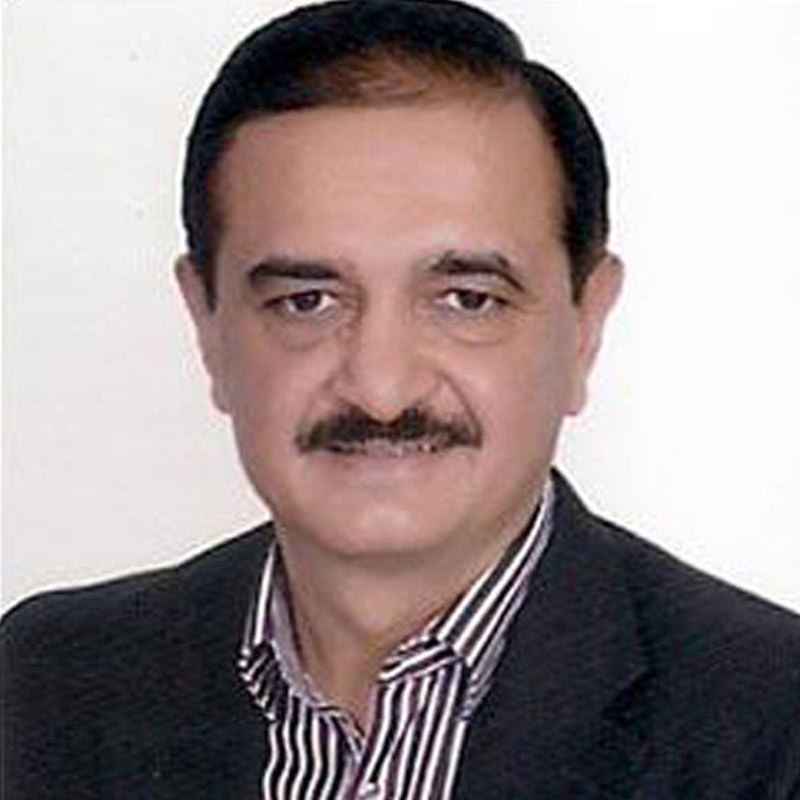
  • Den Networks confirms S N Sharma appointment as CEO

    Den Networks confirms S N Sharma appointment as CEO

    MUMBAI: A few days ago Indiantelevision.com reported that S N Sharma would be re-joining Den Networks after departing from it a year and a half or so ago. The report was based on sources and it was unconfirmed. Today Den Networks informed the Bombay Stock Exchange (BSE) that Sharma will indeed be re-joining the national cable TV MSO Den as its chief executive officer (CEO) with immediate effect. Erstwhile CEO Pradeep Parameswaran will continue to work with the company as an advisor to the company.

    A cable TV industry veteran Sharma has over 30 years of experience of which over 25 years have been in media. He holds a Bachelor’s degree in Electronics and Communications and a Master’s degree in Business Administration.

    DEN Networks chairman & managing director Sameer Manchanda said that he was happy to welcome Sharma back to the DEN family. Said he: “We are confident of Sharma’s unparalleled experience in the cable TV Industry and under his able leadership DEN will scale greater heights in time to come. DEN’s cable TV partners and associates on the ground are all geared up to work in perfect coordination to adopt new systems and technologies for better monetisation of investments.”
  • Den Networks confirms S N Sharma appointment as CEO

    Den Networks confirms S N Sharma appointment as CEO

    MUMBAI: A few days ago Indiantelevision.com reported that S N Sharma would be re-joining Den Networks after departing from it a year and a half or so ago. The report was based on sources and it was unconfirmed. Today Den Networks informed the Bombay Stock Exchange (BSE) that Sharma will indeed be re-joining the national cable TV MSO Den as its chief executive officer (CEO) with immediate effect. Erstwhile CEO Pradeep Parameswaran will continue to work with the company as an advisor to the company.

    A cable TV industry veteran Sharma has over 30 years of experience of which over 25 years have been in media. He holds a Bachelor’s degree in Electronics and Communications and a Master’s degree in Business Administration.

    DEN Networks chairman & managing director Sameer Manchanda said that he was happy to welcome Sharma back to the DEN family. Said he: “We are confident of Sharma’s unparalleled experience in the cable TV Industry and under his able leadership DEN will scale greater heights in time to come. DEN’s cable TV partners and associates on the ground are all geared up to work in perfect coordination to adopt new systems and technologies for better monetisation of investments.”
  • DEN Networks takes control of Snapdeal home shopping JV

    DEN Networks takes control of Snapdeal home shopping JV

    MUMBAI: Jasper Infotech CEOs Kunal Bahl and Rohit Bansal are working on getting their ecommerce platform Snapdeal in ship shape by focusing on customer satisfaction and net revenues instead of gross merchandise value (GMV). This follows the march that rivals such as Flipkart and Amazon have stolen from it.

    Getting rid of any diversifications and other assets that are not scaling up is probably part of the fitness plan. And that explains why the company has decided to divest its equity stake in Macro Commerce Private Ltd, which operates the DEN-Snapdeal home shopping channel.

    When it was launched as a 50:50 joint venture with cable TV MSO DEN Networks with much hype last year, Bahl had stated that he was targeting Rs 500 crore in revenues from TV commerce in year one.
    The numbers did not stack up and Snapdeal TV did a turnover of Rs 3.17 crore in 2015 and Rs 28 crore in 2017.

    DEN Network promoter Sameer Manchanda probably has more faith in the home shopping television initiative than Bahl. Hence, late last week DEN informed the Bombay Stock Exchange that it was buying an additional 32.87 per cent stake in the company from Jasper Infotech at a cost of Rs 60 million. Rs 10 million is for purchase of existing shares and Rs 50 million is through a rights issue, which will lead to an infusion of funds into Macro Commerce.

    Post the acquisition, DEN Networks’ shareholding will rise to 82.87 per cent in Macro from the 50 per cent currently.

    The purpose of the deal, the cable MSO says, is to take a controlling stake in the venture, expand the business and effectively manage the operations of the TV channel.

    The market responded well to DEN Networks’ announcement: its shares rose to Rs 94.70 in early morning trades, then dropped to Rs 89.90 – a rise of 0.35 paise over its previous close by day’s end.

  • DEN Networks takes control of Snapdeal home shopping JV

    DEN Networks takes control of Snapdeal home shopping JV

    MUMBAI: Jasper Infotech CEOs Kunal Bahl and Rohit Bansal are working on getting their ecommerce platform Snapdeal in ship shape by focusing on customer satisfaction and net revenues instead of gross merchandise value (GMV). This follows the march that rivals such as Flipkart and Amazon have stolen from it.

    Getting rid of any diversifications and other assets that are not scaling up is probably part of the fitness plan. And that explains why the company has decided to divest its equity stake in Macro Commerce Private Ltd, which operates the DEN-Snapdeal home shopping channel.

    When it was launched as a 50:50 joint venture with cable TV MSO DEN Networks with much hype last year, Bahl had stated that he was targeting Rs 500 crore in revenues from TV commerce in year one.
    The numbers did not stack up and Snapdeal TV did a turnover of Rs 3.17 crore in 2015 and Rs 28 crore in 2017.

    DEN Network promoter Sameer Manchanda probably has more faith in the home shopping television initiative than Bahl. Hence, late last week DEN informed the Bombay Stock Exchange that it was buying an additional 32.87 per cent stake in the company from Jasper Infotech at a cost of Rs 60 million. Rs 10 million is for purchase of existing shares and Rs 50 million is through a rights issue, which will lead to an infusion of funds into Macro Commerce.

    Post the acquisition, DEN Networks’ shareholding will rise to 82.87 per cent in Macro from the 50 per cent currently.

    The purpose of the deal, the cable MSO says, is to take a controlling stake in the venture, expand the business and effectively manage the operations of the TV channel.

    The market responded well to DEN Networks’ announcement: its shares rose to Rs 94.70 in early morning trades, then dropped to Rs 89.90 – a rise of 0.35 paise over its previous close by day’s end.

  • Hinduja Ventures increases stake in Indusind Media

    Hinduja Ventures increases stake in Indusind Media

    MUMBAI: The Hinduja group is in a consolidation mood. Especially in its media business. Group company Hinduja Ventures informed the Bombay stock exchange today that it was buying both ordinary and preferential shares of Indusind Media & Communications Ltd (IMCL) from another Hinduja venture Grant Investrade Ltd (GIL).

    IMCL runs the InCable Net, IN Digital, IN2Cable and IN Phone businesses, while GIL is getting ready to aggressively roll out its HITS platform NXT Digital after its launch last year.

    In the communiqué, HVL has stated that it will be buying 43.03 lakh Rs 10 face value shares (equal to 5.82 per cent of IMCL’s paid up capital) of IMCL at a premium of Rs 456 per share, and it will also purchase 7.04 million preference shares (equal to 26.02 per cent of IMCL’s paid up preference capital) of Rs 10 each at par from GIL.

    HVL’s holding in IMCL will rise to 61.91 per cent from 56.09 per cent once the transaction is completed by 20 July 2016.

    IMCL, according to the notification had a turnover of Rs 434- odd crore and a net worth of 139.20 crore in the year ended 31 March 2016.

    Observers say that the transaction will allow some funds to be infused into GIL as it moves to take NXT Digital to its next phase.

  • Hinduja Ventures increases stake in Indusind Media

    Hinduja Ventures increases stake in Indusind Media

    MUMBAI: The Hinduja group is in a consolidation mood. Especially in its media business. Group company Hinduja Ventures informed the Bombay stock exchange today that it was buying both ordinary and preferential shares of Indusind Media & Communications Ltd (IMCL) from another Hinduja venture Grant Investrade Ltd (GIL).

    IMCL runs the InCable Net, IN Digital, IN2Cable and IN Phone businesses, while GIL is getting ready to aggressively roll out its HITS platform NXT Digital after its launch last year.

    In the communiqué, HVL has stated that it will be buying 43.03 lakh Rs 10 face value shares (equal to 5.82 per cent of IMCL’s paid up capital) of IMCL at a premium of Rs 456 per share, and it will also purchase 7.04 million preference shares (equal to 26.02 per cent of IMCL’s paid up preference capital) of Rs 10 each at par from GIL.

    HVL’s holding in IMCL will rise to 61.91 per cent from 56.09 per cent once the transaction is completed by 20 July 2016.

    IMCL, according to the notification had a turnover of Rs 434- odd crore and a net worth of 139.20 crore in the year ended 31 March 2016.

    Observers say that the transaction will allow some funds to be infused into GIL as it moves to take NXT Digital to its next phase.

  • Delay in Phase III monetisation likely to disturb profitability of MSOs: ICRA

    Delay in Phase III monetisation likely to disturb profitability of MSOs: ICRA

    MUMBAI: In the cable TV space, in the current fiscal the revenue growth of multiple system operators (MSOs) will remain sensitive to regulatory changes, says ICRA. While lifting of stay orders and consequent discontinuation of analog signals in Phase III markets will remain a key subscription revenue growth driver, any extension with respect to Phase IV deadline (beyond December 31, 2016) will impact the activation revenues.

    With an estimated population of over 60 million households in Phase IV markets, cable TV players do not anticipate any extension in Phase IV deadline. However, the implementation is expected to be along the experience of Phase III, with analog signals being discontinued in a phased manner. Of the analog population in Phase III and Phase IV markets, residual analog subscriber base amongst the top three MSOs stood at ~9.5 million subscribers only (as on March 31, 2016), against a total analog population of over 6 0 million in the country, indicating healthy growth opportunities for DTH operators and regional MSOs. In this direction, DTH operators have introduced lower priced vanilla STBs and channel packages to tap the opportunity in Phase IV markets; however, DD Free Dish is also expected to emerge as a key player in Phase IV, given the price sensitive nature of subscribers.

    “Over the last few years, market leaders in the cable TV space have adopted an inorganic growth strategy for entering new geographies and increasing their subscriber universe, consolidation in the cable TV space is expected to continue as MSOs look at further strengthening their market position in their respective geographies,” says ICRA Ratings SR GVP Subrata Ray.

    While the overall placement revenues are expected to remain buoyant, driven by new channel launches and the inclusion of tier II and tier III markets in audience measurement metrics; some correction on account of the change in the nature of content deals (net of placement revenues) with larger broadcasting networks is anticipated. While the subject of discontinuation of analog signals in Phase III markets remains under litigation, monetisation of the Phase III markets is expected to get deferred by nearly a year before the benefits of the healthy STB seeding, achieved in Phase III markets, start percolating.

    “In view of the potential delays in Phase III monetisation, ability of the MSOs to improve cost efficiencies and ARPUs from Phase I and Phase II markets remains crucial to support the profitability metrics in the current fiscal,” says Ray.

    During this transition phase, the cash accruals of MSOs are expected to improve gradually as incremental capex requirements are likely to remain low.

    “The capex outlay of MSOs over the medium term will be driven towards achieving higher broadband penetration in identified markets; investments in LCO management and improving penetration of value-added services such as HD channels and Video-on-Demand in digitised markets. In addition, replacement capex for STBs seeded in Phase I and Phase II markets will also drive the investment requirements of MSOs over the medium term,” adds Ray.

  • Delay in Phase III monetisation likely to disturb profitability of MSOs: ICRA

    Delay in Phase III monetisation likely to disturb profitability of MSOs: ICRA

    MUMBAI: In the cable TV space, in the current fiscal the revenue growth of multiple system operators (MSOs) will remain sensitive to regulatory changes, says ICRA. While lifting of stay orders and consequent discontinuation of analog signals in Phase III markets will remain a key subscription revenue growth driver, any extension with respect to Phase IV deadline (beyond December 31, 2016) will impact the activation revenues.

    With an estimated population of over 60 million households in Phase IV markets, cable TV players do not anticipate any extension in Phase IV deadline. However, the implementation is expected to be along the experience of Phase III, with analog signals being discontinued in a phased manner. Of the analog population in Phase III and Phase IV markets, residual analog subscriber base amongst the top three MSOs stood at ~9.5 million subscribers only (as on March 31, 2016), against a total analog population of over 6 0 million in the country, indicating healthy growth opportunities for DTH operators and regional MSOs. In this direction, DTH operators have introduced lower priced vanilla STBs and channel packages to tap the opportunity in Phase IV markets; however, DD Free Dish is also expected to emerge as a key player in Phase IV, given the price sensitive nature of subscribers.

    “Over the last few years, market leaders in the cable TV space have adopted an inorganic growth strategy for entering new geographies and increasing their subscriber universe, consolidation in the cable TV space is expected to continue as MSOs look at further strengthening their market position in their respective geographies,” says ICRA Ratings SR GVP Subrata Ray.

    While the overall placement revenues are expected to remain buoyant, driven by new channel launches and the inclusion of tier II and tier III markets in audience measurement metrics; some correction on account of the change in the nature of content deals (net of placement revenues) with larger broadcasting networks is anticipated. While the subject of discontinuation of analog signals in Phase III markets remains under litigation, monetisation of the Phase III markets is expected to get deferred by nearly a year before the benefits of the healthy STB seeding, achieved in Phase III markets, start percolating.

    “In view of the potential delays in Phase III monetisation, ability of the MSOs to improve cost efficiencies and ARPUs from Phase I and Phase II markets remains crucial to support the profitability metrics in the current fiscal,” says Ray.

    During this transition phase, the cash accruals of MSOs are expected to improve gradually as incremental capex requirements are likely to remain low.

    “The capex outlay of MSOs over the medium term will be driven towards achieving higher broadband penetration in identified markets; investments in LCO management and improving penetration of value-added services such as HD channels and Video-on-Demand in digitised markets. In addition, replacement capex for STBs seeded in Phase I and Phase II markets will also drive the investment requirements of MSOs over the medium term,” adds Ray.

  • MSO number touches 940 with forty more getting clearance in June 2016

    MSO number touches 940 with forty more getting clearance in June 2016

    NEW DELHI: As the country marches towards the deadline of the final phase which will complete cable digitlization all over the country, as many as forty multi-system operators have received provisional licences in June and taken the total to 711.

    Early this month, the government announced the cancellation of the permanent licence of one more MSO and the number of permanent licencees (up to ten years) fell by one to 229.

    The Information and Broadcasting Ministry had cancelled the licences of 27 MSOs and closed their cases by 2 June. In most of the other cases in the list of cancelled registrations, it is because of failure to get security clearance from the Home ministry. However, there are cases of many MSOs holding provisional licences not completing certain formalities relating to shareholders and so on.

    According to the latest list upto 28 June 2016, the area of operation of four MSOs have been revised after 2 June, one of which – Thamizhaga Cable TV Communication Pvt. Ltd, Chennai – has now got licence to operate pan-India barring the metros of Delhi, Mumbai and Kolkata. Chennai is in any case under stay following a court order after the first phase.

    Of the new licencees, three – Fastway Media Cable Network Pvt. Ltd of Delhi, Metro Trade Links of Bhopal, and Megbela Infitel Cable & Broadband Private Limited from New Delhi have got pan India licences.

    The other new registrations include the states of, or specific districts in, Arunachal Pradesh, Bihar, Uttar Pradesh, Haryana, Maharashtra, Odisha, Tamil Nadu, Uttarakhand, Rajasthan, Madhya Pradesh, Telangana, Gujarat, Karnataka, Chhatisgarh, and Andhra Pradesh.

    With the Home ministry directive about doing away with security clearances for MSOs not being communicated in writing to the MIB, the pace remains slow.

    The permanent licence issued to Kal Cable of Chennai had been cancelled on 20 August 2014, but this cancellation was set aside by Madras High Court on 5 September the same year. However, Kal Cable’s name continues to be in the cancelled list – presumably because the cases are still pending.

  • MSO number touches 940 with forty more getting clearance in June 2016

    MSO number touches 940 with forty more getting clearance in June 2016

    NEW DELHI: As the country marches towards the deadline of the final phase which will complete cable digitlization all over the country, as many as forty multi-system operators have received provisional licences in June and taken the total to 711.

    Early this month, the government announced the cancellation of the permanent licence of one more MSO and the number of permanent licencees (up to ten years) fell by one to 229.

    The Information and Broadcasting Ministry had cancelled the licences of 27 MSOs and closed their cases by 2 June. In most of the other cases in the list of cancelled registrations, it is because of failure to get security clearance from the Home ministry. However, there are cases of many MSOs holding provisional licences not completing certain formalities relating to shareholders and so on.

    According to the latest list upto 28 June 2016, the area of operation of four MSOs have been revised after 2 June, one of which – Thamizhaga Cable TV Communication Pvt. Ltd, Chennai – has now got licence to operate pan-India barring the metros of Delhi, Mumbai and Kolkata. Chennai is in any case under stay following a court order after the first phase.

    Of the new licencees, three – Fastway Media Cable Network Pvt. Ltd of Delhi, Metro Trade Links of Bhopal, and Megbela Infitel Cable & Broadband Private Limited from New Delhi have got pan India licences.

    The other new registrations include the states of, or specific districts in, Arunachal Pradesh, Bihar, Uttar Pradesh, Haryana, Maharashtra, Odisha, Tamil Nadu, Uttarakhand, Rajasthan, Madhya Pradesh, Telangana, Gujarat, Karnataka, Chhatisgarh, and Andhra Pradesh.

    With the Home ministry directive about doing away with security clearances for MSOs not being communicated in writing to the MIB, the pace remains slow.

    The permanent licence issued to Kal Cable of Chennai had been cancelled on 20 August 2014, but this cancellation was set aside by Madras High Court on 5 September the same year. However, Kal Cable’s name continues to be in the cancelled list – presumably because the cases are still pending.