Category: Multi System Operators

  • Q2-17: Higher subscription revenue, activation fees boosts Ortel revenue

    Q2-17: Higher subscription revenue, activation fees boosts Ortel revenue

    BENGALURU: The Bibhu Prasad Rath led regional cable television and broadband internet player Ortel Communications Limited (Ortel) reported 17.3 percent year-over-year (y-o-y) growth in total revenue from operations (TIO) for the quarter ended 30 September 2016 (Q2-17, current quarter). Quarter-over-quarter (q-o-q), TIO increased 2.5 percent in the current quarter as compared to the immediate trailing quarter. Ortel reported TIO of Rs 53.7 crore for Q2-17, of Rs 45.8 crore for Q2-16 and Rs 52.4 crore for Q1-17.

    Profit after tax (PAT) for Q2-17 declined 10.2 percent y-o-y to Rs 2.5 crore from Rs 2.8 crore in Q2-16, but almost tripled (2.95 times) q-o-q from Rs 0.9 crore in Q1-17.

    Company speak:

    Ortel President and CEO Rath said, “We reported steady performance during the quarter led by balanced growth in Cable TV and Broadband revenues. Subscription fees in both the segments jumped by 7 percent q-o-q. More importantly, I am happy to highlight that the overall costs have stabilized with 5 percent reduction in Total Expenses. This was possible due to management’s focus on efficiency and cost rationalisation.”

    “During the quarter, we turned EBITDA positive in the emerging markets of Andhra Pradesh, Chhattisgarh, West Bengal, Telengana and Madhya Pradesh. I believe, this is a huge positive for us and I am confident that the operating performance in the emerging markets will further improve as the subscriber base increases,” said Rath further.

    “The road ahead appears encouraging and we remain on track to demonstrate solid performance in times ahead. Full control over the last mile network as well as our strategy of focusing on B2C customers will continue to drive growth for us,” revealed Rath.

    Revenue breakup

    Cable TV revenue in Q2-17 increased 35.8 percent y-o-y to Rs 42 crore from Rs 30.9 crore in Q2-16 and increased 2 percent q-o-q from Rs 41.2 crore.

    Cable TV Activation fees or connection fees in Q2-17 were almost 6 times (5.9 times) at Rs 4.2 crore as compared to Rs 0.7 crore in Q2-16, but declined 8.1 percent q-o-q from Rs 4.6 crore.

    Cable TV subscription revenue in Q2-17 increased 44.4 percent y-o-y to Rs 29.7 crore from Rs 20.6 crore and increased 7.2 percent q-o-q from Rs 27.7 crore. Channel carriage fees in the current quarter declined 16 percent y-o-y to Rs 8.1 crore from Rs 9.7 crore and declined 9 percent q-o-q from Rs 8.9 crore.

    Broadband services revenue in Q2-17 increased 22.4 percent to Rs 10 crore from Rs 8.1 crore in Q2-16 and increased 4.8 percent q-o-q from Rs 9.5 crore. Internet connection fees in Q2-17 declined 33 percent y-o-y to Rs 0.5 crore from Rs 0.7 crore and declined 24.8 percent q-o-q. Internet subscription fees in Q2-17 increased 27.9 percent y-o-y to Rs 9.5 crore from Rs 7.4 crore and increased 7 percent q-o-q from Rs 8.8 crore.

    Ortel’s revenue from its infrastructure leasing segment in Q2-17 declined 83.5 percent to Rs 1 crore from Rs 6 crore in Q2-16 but increased 3.2 percent q-o-q.

    Subscription numbers (revenue generating units – RGUs’), ARPU

    During the current quarter, the total subscribers (both cable and television) stood at 804,889 subscribers. Net addition in Q2-17 stood at 34,748

    Television ARPU’s remained almost flat. Analog and Digital TV ARPU stood as Rs. 153 per month and Rs. 154 per month for Q2-17 and Q2-16 respectively. For the immediate trailing quarter, ARPU was Rs 152. Digital ARPU’s have been falling. In Q2-17 it was Rs 167, in Q2-16, it was Rs 183 and Q1-17, ARPU was Rs 169.

    The company added 1.573 broadband subscribers in Q2-17, taking its total broadband subscriber count to 79,182.

    Broadband ARPU in the current quarter increased to Rs 406 from Rs 395 in Q2-16 and Rs 401 in Q1-17.

    Let us look at the other numbers reported by Ortel in brief.

    Total expenses (TE) in Q2-17 increased 20 percent y-o-y to Rs 37.2 crore as compared to Rs 31 crore, and declined 4.8 percent q-o-q from Rs 39 crore.

    Programming cost in Q2-17 declined 8.5 percent y-o-y at Rs. 8.6 crore as compared to Rs 9.4 crore and declined 13.3 percent from Rs 10 crore. Employee expenses during the current quarter stood 6.8 percent higher y-o-y at Rs. 6 crore as compared to Rs 5.6 crore, but declined 3.1 percent q-o-q from Rs 6.2 crore.

    EBITDA in Q2-17 (including other income) came in at Rs. 17.1 crore (31.5 percent margin), representing a y-o-y decline of 1.2 percent from Rs 17.3 (35.8 percent margin), but a 22.8 percent q-o-q increase from Rs 13.9 crore (26.3 percent margin).

    Note: The unit of currency in this report is the Indian rupee – Rs (also conventionally represented by INR). The Indian numbering system or the Vedic numbering system has been used to denote money values. The basic conversion to the international norm would be:

    (a) 100,00,000 = 100 lakh = 10,000,000 = 10 million = 1 crore.

    (b) 10,000 lakh = 100 crore = 1 arab = 1 billion.


  • Q2-17: Higher subscription revenue, activation fees boosts Ortel revenue

    Q2-17: Higher subscription revenue, activation fees boosts Ortel revenue

    BENGALURU: The Bibhu Prasad Rath led regional cable television and broadband internet player Ortel Communications Limited (Ortel) reported 17.3 percent year-over-year (y-o-y) growth in total revenue from operations (TIO) for the quarter ended 30 September 2016 (Q2-17, current quarter). Quarter-over-quarter (q-o-q), TIO increased 2.5 percent in the current quarter as compared to the immediate trailing quarter. Ortel reported TIO of Rs 53.7 crore for Q2-17, of Rs 45.8 crore for Q2-16 and Rs 52.4 crore for Q1-17.

    Profit after tax (PAT) for Q2-17 declined 10.2 percent y-o-y to Rs 2.5 crore from Rs 2.8 crore in Q2-16, but almost tripled (2.95 times) q-o-q from Rs 0.9 crore in Q1-17.

    Company speak:

    Ortel President and CEO Rath said, “We reported steady performance during the quarter led by balanced growth in Cable TV and Broadband revenues. Subscription fees in both the segments jumped by 7 percent q-o-q. More importantly, I am happy to highlight that the overall costs have stabilized with 5 percent reduction in Total Expenses. This was possible due to management’s focus on efficiency and cost rationalisation.”

    “During the quarter, we turned EBITDA positive in the emerging markets of Andhra Pradesh, Chhattisgarh, West Bengal, Telengana and Madhya Pradesh. I believe, this is a huge positive for us and I am confident that the operating performance in the emerging markets will further improve as the subscriber base increases,” said Rath further.

    “The road ahead appears encouraging and we remain on track to demonstrate solid performance in times ahead. Full control over the last mile network as well as our strategy of focusing on B2C customers will continue to drive growth for us,” revealed Rath.

    Revenue breakup

    Cable TV revenue in Q2-17 increased 35.8 percent y-o-y to Rs 42 crore from Rs 30.9 crore in Q2-16 and increased 2 percent q-o-q from Rs 41.2 crore.

    Cable TV Activation fees or connection fees in Q2-17 were almost 6 times (5.9 times) at Rs 4.2 crore as compared to Rs 0.7 crore in Q2-16, but declined 8.1 percent q-o-q from Rs 4.6 crore.

    Cable TV subscription revenue in Q2-17 increased 44.4 percent y-o-y to Rs 29.7 crore from Rs 20.6 crore and increased 7.2 percent q-o-q from Rs 27.7 crore. Channel carriage fees in the current quarter declined 16 percent y-o-y to Rs 8.1 crore from Rs 9.7 crore and declined 9 percent q-o-q from Rs 8.9 crore.

    Broadband services revenue in Q2-17 increased 22.4 percent to Rs 10 crore from Rs 8.1 crore in Q2-16 and increased 4.8 percent q-o-q from Rs 9.5 crore. Internet connection fees in Q2-17 declined 33 percent y-o-y to Rs 0.5 crore from Rs 0.7 crore and declined 24.8 percent q-o-q. Internet subscription fees in Q2-17 increased 27.9 percent y-o-y to Rs 9.5 crore from Rs 7.4 crore and increased 7 percent q-o-q from Rs 8.8 crore.

    Ortel’s revenue from its infrastructure leasing segment in Q2-17 declined 83.5 percent to Rs 1 crore from Rs 6 crore in Q2-16 but increased 3.2 percent q-o-q.

    Subscription numbers (revenue generating units – RGUs’), ARPU

    During the current quarter, the total subscribers (both cable and television) stood at 804,889 subscribers. Net addition in Q2-17 stood at 34,748

    Television ARPU’s remained almost flat. Analog and Digital TV ARPU stood as Rs. 153 per month and Rs. 154 per month for Q2-17 and Q2-16 respectively. For the immediate trailing quarter, ARPU was Rs 152. Digital ARPU’s have been falling. In Q2-17 it was Rs 167, in Q2-16, it was Rs 183 and Q1-17, ARPU was Rs 169.

    The company added 1.573 broadband subscribers in Q2-17, taking its total broadband subscriber count to 79,182.

    Broadband ARPU in the current quarter increased to Rs 406 from Rs 395 in Q2-16 and Rs 401 in Q1-17.

    Let us look at the other numbers reported by Ortel in brief.

    Total expenses (TE) in Q2-17 increased 20 percent y-o-y to Rs 37.2 crore as compared to Rs 31 crore, and declined 4.8 percent q-o-q from Rs 39 crore.

    Programming cost in Q2-17 declined 8.5 percent y-o-y at Rs. 8.6 crore as compared to Rs 9.4 crore and declined 13.3 percent from Rs 10 crore. Employee expenses during the current quarter stood 6.8 percent higher y-o-y at Rs. 6 crore as compared to Rs 5.6 crore, but declined 3.1 percent q-o-q from Rs 6.2 crore.

    EBITDA in Q2-17 (including other income) came in at Rs. 17.1 crore (31.5 percent margin), representing a y-o-y decline of 1.2 percent from Rs 17.3 (35.8 percent margin), but a 22.8 percent q-o-q increase from Rs 13.9 crore (26.3 percent margin).

    Note: The unit of currency in this report is the Indian rupee – Rs (also conventionally represented by INR). The Indian numbering system or the Vedic numbering system has been used to denote money values. The basic conversion to the international norm would be:

    (a) 100,00,000 = 100 lakh = 10,000,000 = 10 million = 1 crore.

    (b) 10,000 lakh = 100 crore = 1 arab = 1 billion.


  • Competition regulator okays Goldman Sachs stake purchase in Den Networks

    Competition regulator okays Goldman Sachs stake purchase in Den Networks

    MUMBAI: Investment banking major Goldman Sachs has received the Competition Commission’s approval to increase its stake in Den Networks to over 24 per cent by acquiring additional shares through preferential allotment route.

    indiantelevision had reported that MSO Den Networks existing shareholder Goldman Sachs is picking up 1.58 crore equity shares at a price of Rs 90 per share via a preferential allotment. This will take Goldman Sachs’ equity stake in the cable TV service provider up from 17.79 per cent to 24.49 per cent and involve an injection of much needed capital to the tune of Rs 142.43 crore. The divestment is expected to trim promoter stake in the company to 37 per cent.

    Media observers say that the Indian cable TV ecosystem – including the government, the regulator TRAI, broadcasters, MSOs and cable TV operators – has stumbled in the digitization process which was mandated by the ministry of information and broadcasting four years back. They have also been saying that investor sentiment towards the sector is pretty weak. Shares of most leading Indian cable TV companies have been depressed, and have been parked at lows. However, DEN Networks has been taking steps to correct the perception. It has brought back its CEO SN Sharma who has since been working on raising revenues and profitability.

    The transaction has now been cleared by the Competition Commission of India (CCI), as per the regulator’s website.

    The additional acquisition would be done by the holding companies of Goldman Sachs — Broad Street Investments (Singapore) Pte (BSIPL) and MBD Bridge Street 2016 Investments (Singapore) Pte (MBD), according to filing submitted to CCI. BSIPL and MBD are investment holding companies and are not engaged in business of manufacturing of products or the provision of service, PTI reported. Den Networks is into distribution of television channels through analog as well as digital modes.

    The Goldman investment came as a shot in the arm for Den Networks as well as the Indian cable TV sector which is grappling with reinventing its business model.

    Investors had greeted the Goldman Sachs announcement with delight. Den Networks had made an investor presentation in which it stated that its digital rollout is progressing well. Of the 13 million subscribers it has had, almost 9.8 million of them upgraded to digital in Q1 2017. Five million of these are in DAS Phase I & II areas with the remainder being in Phase III and phase IV.

  • Competition regulator okays Goldman Sachs stake purchase in Den Networks

    Competition regulator okays Goldman Sachs stake purchase in Den Networks

    MUMBAI: Investment banking major Goldman Sachs has received the Competition Commission’s approval to increase its stake in Den Networks to over 24 per cent by acquiring additional shares through preferential allotment route.

    indiantelevision had reported that MSO Den Networks existing shareholder Goldman Sachs is picking up 1.58 crore equity shares at a price of Rs 90 per share via a preferential allotment. This will take Goldman Sachs’ equity stake in the cable TV service provider up from 17.79 per cent to 24.49 per cent and involve an injection of much needed capital to the tune of Rs 142.43 crore. The divestment is expected to trim promoter stake in the company to 37 per cent.

    Media observers say that the Indian cable TV ecosystem – including the government, the regulator TRAI, broadcasters, MSOs and cable TV operators – has stumbled in the digitization process which was mandated by the ministry of information and broadcasting four years back. They have also been saying that investor sentiment towards the sector is pretty weak. Shares of most leading Indian cable TV companies have been depressed, and have been parked at lows. However, DEN Networks has been taking steps to correct the perception. It has brought back its CEO SN Sharma who has since been working on raising revenues and profitability.

    The transaction has now been cleared by the Competition Commission of India (CCI), as per the regulator’s website.

    The additional acquisition would be done by the holding companies of Goldman Sachs — Broad Street Investments (Singapore) Pte (BSIPL) and MBD Bridge Street 2016 Investments (Singapore) Pte (MBD), according to filing submitted to CCI. BSIPL and MBD are investment holding companies and are not engaged in business of manufacturing of products or the provision of service, PTI reported. Den Networks is into distribution of television channels through analog as well as digital modes.

    The Goldman investment came as a shot in the arm for Den Networks as well as the Indian cable TV sector which is grappling with reinventing its business model.

    Investors had greeted the Goldman Sachs announcement with delight. Den Networks had made an investor presentation in which it stated that its digital rollout is progressing well. Of the 13 million subscribers it has had, almost 9.8 million of them upgraded to digital in Q1 2017. Five million of these are in DAS Phase I & II areas with the remainder being in Phase III and phase IV.

  • MSOs finally cross 1000 as pan-India DAS deadline nears

    MSOs finally cross 1000 as pan-India DAS deadline nears

    NEW DELHI: With less than three months to go for the deadline of the final phase which will complete cable digitlization all over the country, the total number of multi-system operators has finally crossed 1000 with 774 getting provisional licences till 30 September 2016.

    The deadline is 31 December 2016.

    The number of permanent licences (up to 10 years) remains at 229 and the total therefore is 1003 MSOs.

    The Information and Broadcasting Ministry today released the list of 29 MSOs whose licences have been cancelled and cases closed. In addition, there are four cases in which some high courts have stayed the cancellation orders in petitions filed by these MSOs.

    Until 2 June this year, the number of cases closed was 27, and so the number has gone up by another two. In most of the other cases in the list of cancelled registrations, it is because of failure to get security clearance from the home ministry. However, there are cases of many MSOs holding provisional licences not completing certain formalities relating to shareholders and so on.

    Four MSOs earlier in the cancellation list have been restored licences. They include Silverline Entertainment, Eminent Cable Networks, and Skynet Digital Services which got security clearance from the Home Ministry and Tanuku Communication Network of Andhra Pradesh which has got provisional licence.

    According to the latest list up to 30 September 2016, the areas of operation of four MSOs have been revised after 30 September 2016 (three in the permanent list and one in the provisional list).

    Of the new licencees, three – Radient Digitek Network Pvt. Ltd of Rajasthan, Dabang Duniya Publication Pvt. Ltd of Madhya Pradesh, and Alfa Cable of Mumbai – have got pan-India licences, though Radient is minus Rajasthan.

    The other new registrations after June 2016 include the states of, or specific districts in, Uttar Pradesh, Haryana, Maharashtra, Odisha, Tamil Nadu, Uttarakhand, Rajasthan, Madhya Pradesh, Telangana, Gujarat, Karnataka, Chhatisgarh, and Andhra Pradesh Maharashtra, Punjab, Himachal Pradesh, West Bengal, Kerala, Telengana, Jammu and Kashmir, and Meghalaya.

    With the home ministry directive about doing away with security clearances for MSOs not being communicated in writing to the MIB, the pace remains slow.

    The permanent licence issued to Kal Cable of Chennai had been cancelled on 20 August 2014, but this cancellation was set aside by Madras High Court on 5 September the same year. However, Kal Cable’s name continues to be in the cancelled list – presumably because the cases are still pending.

    In the last meeting of the DAS Task Force, MIB joint secretary had said that there were six thousand MSOs in the country but only a handful of them had come forward to register.

  • MSOs finally cross 1000 as pan-India DAS deadline nears

    MSOs finally cross 1000 as pan-India DAS deadline nears

    NEW DELHI: With less than three months to go for the deadline of the final phase which will complete cable digitlization all over the country, the total number of multi-system operators has finally crossed 1000 with 774 getting provisional licences till 30 September 2016.

    The deadline is 31 December 2016.

    The number of permanent licences (up to 10 years) remains at 229 and the total therefore is 1003 MSOs.

    The Information and Broadcasting Ministry today released the list of 29 MSOs whose licences have been cancelled and cases closed. In addition, there are four cases in which some high courts have stayed the cancellation orders in petitions filed by these MSOs.

    Until 2 June this year, the number of cases closed was 27, and so the number has gone up by another two. In most of the other cases in the list of cancelled registrations, it is because of failure to get security clearance from the home ministry. However, there are cases of many MSOs holding provisional licences not completing certain formalities relating to shareholders and so on.

    Four MSOs earlier in the cancellation list have been restored licences. They include Silverline Entertainment, Eminent Cable Networks, and Skynet Digital Services which got security clearance from the Home Ministry and Tanuku Communication Network of Andhra Pradesh which has got provisional licence.

    According to the latest list up to 30 September 2016, the areas of operation of four MSOs have been revised after 30 September 2016 (three in the permanent list and one in the provisional list).

    Of the new licencees, three – Radient Digitek Network Pvt. Ltd of Rajasthan, Dabang Duniya Publication Pvt. Ltd of Madhya Pradesh, and Alfa Cable of Mumbai – have got pan-India licences, though Radient is minus Rajasthan.

    The other new registrations after June 2016 include the states of, or specific districts in, Uttar Pradesh, Haryana, Maharashtra, Odisha, Tamil Nadu, Uttarakhand, Rajasthan, Madhya Pradesh, Telangana, Gujarat, Karnataka, Chhatisgarh, and Andhra Pradesh Maharashtra, Punjab, Himachal Pradesh, West Bengal, Kerala, Telengana, Jammu and Kashmir, and Meghalaya.

    With the home ministry directive about doing away with security clearances for MSOs not being communicated in writing to the MIB, the pace remains slow.

    The permanent licence issued to Kal Cable of Chennai had been cancelled on 20 August 2014, but this cancellation was set aside by Madras High Court on 5 September the same year. However, Kal Cable’s name continues to be in the cancelled list – presumably because the cases are still pending.

    In the last meeting of the DAS Task Force, MIB joint secretary had said that there were six thousand MSOs in the country but only a handful of them had come forward to register.

  • Going a la carte with Star and Indiacast has helped: Bibhu Prasad Rath

    Going a la carte with Star and Indiacast has helped: Bibhu Prasad Rath

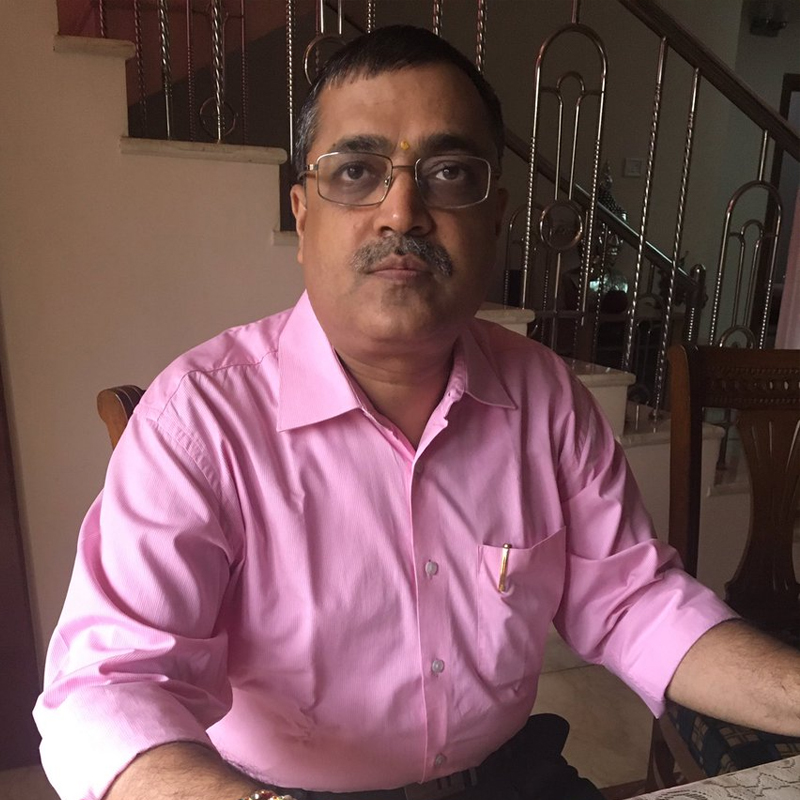
    Bhibu Rath heads one of the small regional cable TV players in the TV distribution business: Ortel Communications. The MSO began as a local player in the state of Odisha. But, it has since spread into neighboring states such as Chattishgarh, West Bengal, Andhra Pradesh and Telangana. In fact, it is one of a handful of cable TV distribution companies which went in for an IPO and are listed on the Bombay Stock Exchange.

    Rath has been with Ortel since 1999 and no one probably knows the company and the business it operates better than he does. Hence, he has focused on building a two-way state-of-the-art communication network enabled for ‘triple play’ services (video, data, and voice capabilities) with control over the ‘last mile’ over the last few years. That regulation has stymied his VoIP ambitions, has not been a stumbling block. In fact, it has emboldened him to move aggressively in the direction of broadband.

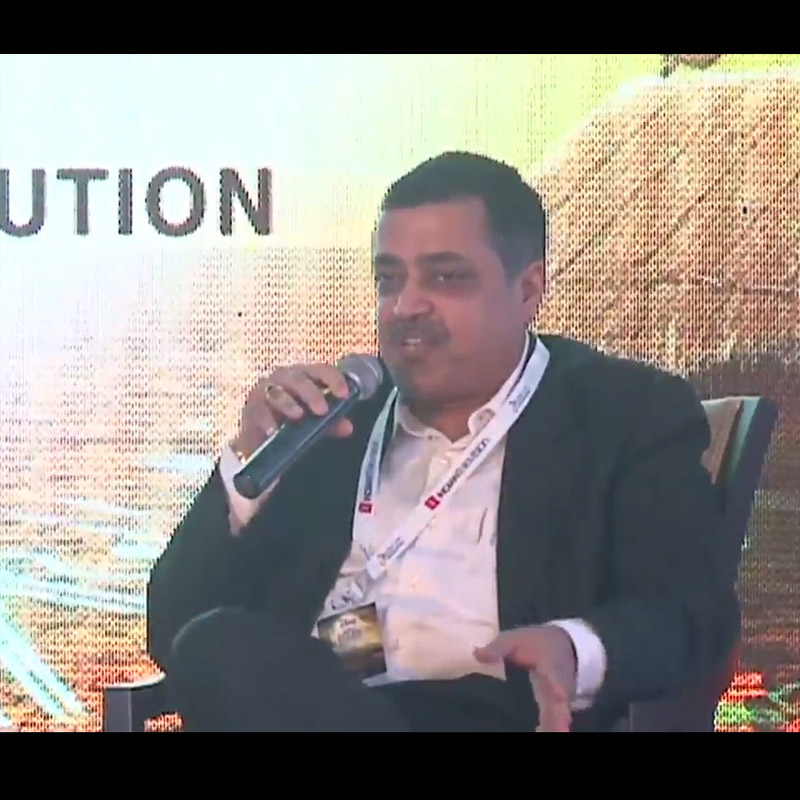
    Rath was one of the key note speakers at IDOS 2016 here. And, he had a one-on-one conversation with the Indiantelevision.com CEO and Editor-in-Chief Anil Wanvari. He was forthcoming and transparent on a range of issues. Read on to find out what he had to say:

    Are you at an advantage or disadvantage of being a niche player ?

    It’s a great advantage actually. You need to understand that why we are a regional player.  Because, we have always believed in depth and not in width. So, we are actually a last-mile player unlike other national MSOs. In a lighter vein, in fact, I keep telling people that we are not a MSO, we are the largest LCO. So, if you are  doing a last-mile network, you have limitations of national presence. So, we have consistently focused on the regional markets and, even within regional market, we have consistently focused on Phase III markets – tier 2, tier 3 markets. Not on the metros.  Like we are there in Telangana but not in Hyderabad. So, currently, we are focusing on four states even though we are present in six states  — that is Odisha, Chattisgarh, Andhra Pradesh and Telangana. And, we have a small presence in West Bengal and Madhya Pradesh. So, it gives us a great advantage that we are focused, we are localized, we are last mile, we are going directly to the consumer.

    Your non-Odisha market is around 233,000 subscribers and your major part, that is, 770,000 subscribers, are in Odisha. Is non-Odisha market going to grow or Odisha?

    That’s (non-Odisha) the one which is growing. In March 2015, when we went public we had half a million subs. Today, we are close to 800,000. Our guidance to the market has been — we will get to a million by March 2017.  If you see the growth in the last five quarters — that is four quarters of last year and Q1 of this year — you will see 70-75 per cent incremental growth has come from outside Odisha, and they are mostly in Andhra Pradesh, Telangana and Chhattisgarh. So that’s the trend going to continue and most of the growth will come from outside Odisha.

    Your analog and digital ARPUs are at Rs 141 and Rs 169 a month, but your digital ARPUs have come down. Why is that and where do you see it going?

    Well, digital ARPUs have come down marginally. But, the mix of analog and digital has gone up. So, digital as a percentage of cable TV swap has gone up very significantly in last five quarters. As of June-end, it was 45 per cent. That’s the reason why ARPU has marginally gone down.

    I have a slightly different view from the rest of the people from the industry. We don’t think this is a great ARPU-driven business. You need to realize that this is a wireline business — not wireless like DTH. So, the wireless guys like DTH have an inherent advantage that they can choose and pick their customer. 5,000 customers in Delhi, 50,000 in Odisha – it’s the same for them. We are in the wireline business. We are laying cable in front of homes and its extremely capex-heavy unlike the MSOs model. If you keep aside the STB, the last mile model is capex-heavy as compared to the MSO-LCO model, because a large part of the network is actually built by the LCO. Whereas, here we deal with it ourselves.

    Now, say, you network 100 homes. My objective is to get as as many of these 100 homes as I can as my customers instead of trying to raise my ARPU by Rs 10. I would prefer to operate at a moderate to low ARPU but I increase my market share and penetration ratio and make up through the number of customers than trying to increase the ARPUs.  So, if you see my penetration ratio: 770,000 customers I have 1.2 million home passes – that is like 60 per cent. To my mind that is a more important metric in the business than just the ARPU numbers. Having said that ARPU will increase – but only marginally, I am not a great believer invery high level of ARPU increase.

    Even in the context of digitization, I kept saying that its objective is not to increase ARPU. Why would the government and the regulator do something wherein the cost to the customer would go up? That’s just the antithesis of what the government does. The government would like to do what helps the consumers, and what helps the consumers is to give them choice, not raise prices.

    So, in doing digitization, give the choice to the consumer — let the consumer pick up at Rs 99, and let someone else pick up at Rs 500. Let your average be at Rs 150-200. Hence, we operate at high penetration, and moderate ARPUs.

    Being a regional player, do you have enough negotiating power? You recently concluded deals with Star and Indiacast which were challenging. Has it become easier for you to deal with the broadcaster?

    It’s a relationship  with the broadcasters — which has been going on but recently we have tried to bring a major shift in the relationship. The two deals which you mentioned with Indiacast and Star TV – they are two of the top half a dozen bouquets operating in India. What we tried to do actually is we tried to test and implement the true spirit of digitization. This means consumer should decide. Whether he wants a channel or not, he should decide and if he should pay.

    With these two deals, we said we will go a la carte. And, as you know, a la carte prices are extremely high. The effective price that a broadcaster gets from the consumers is typically between 10–15 per cent of a la carte price.

    So, for example, the Star TV bouquet – the a la carte prices are at Rs 200, the bouquet prices are typically at Rs 25-26. Despite the a la carte being high, we decided to try it. And we decided to offer it to our viewers and consumers, and allowed them to decide. And, to my surprise, the results have been fantastic.

    Being a last mile model, I don’t have issues of packaging, etc. So, we have complete packaging on our network. We have a backend which can activate a channel. A consumer can send an SMS and get his channel in two minutes via a call centre as well. The payout to me has come down significantly – very significantly — on these two bouquets. But, for consumers, it has gone up, for some it has gone down. So, it’s working very well. This is the way forward. Having done these two deals, I don’t want to do any more soon. I would like to stabilize these two first.

    Has your revenue been impacted because of this?

    Not at all, because when you put a channel on a la carte, there are two models that have been implemented. One is we have put a la carte add-on – that is consumers pay and take it. In another experiment I did, I just threw open the channels to consumers. I said you don’t have to pay anything extra, just decide what you want.  There are
    consumers who will be happy to pay a significant amount for the channels like Fox Life, CNBC, TLC and that’s beauty of doing a la carte, instead of dumping a CNBC channel on the entire base.

    In our markets, 90-95 per cent of the viewers don’t watch CNBC or Fox Life. Why should I dump it? Instead, let me give it to these 2-3 per cent consumers, and let them pay.

    So my revenue has not gone down and my costs have reduced. I am even ready to let go my revenue because these two are interrelated. Whether I increase the ARPU by Rs 10  or I reduce my cost by Rs 10, it doesn’t matter to my ROC. The whole idea is to move on to a pass on the model where consumers decide. The revenue may increase or decrease, only time will tell.

    The MIB says that 93 per cent of Phase III has been digitized whereas you have stated in your areas it is 50-55 per cent. Where lies the truth?

    I don’t want to comment on the MIB numbers because I actually don’t know where the numbers are coming from. We are below 50 per cent. As regards the litigation of DAS Phase III, we are one of the guys who went to court and got a stay. And, that hearing for case is coming up in October.

    That does not mean I did not want to digitize. I definitely want to godigital. I definitely want to get to 100 per cent but we wanted time. And, in many parts of the country, analogue was running in the month of January, and it is running even today. And I can safely tell you, if there was no stay order, analogue would have continued for some more time. I wanted legal cover that If I am doing analogue, I am not doing something illegal. I am pursuing digital in the true spirit. And, the offtake of digital has been very good actually. And, I don’t expect the court order to continue for a very long period. Irrespective of what happens in court, I am pursuing it and I will complete digitalization. We are fully committed to it.

    Your content cost has come down to Rs 50 or so is it because of Star and Indiacast deals or is it because of other factors? Do you expect them to go down further?

    I expect content costs to go down little further. It has been the combination of a couple of factors;  it is not because I got better deals with  broadcasters. The content cost has come down is because of two factors — one is the deal with Star TV and Indiacast on a la carte basis. But, this cost will go up in the long run because consumers will adopt more and more channels and we are mentally prepared that this will go up.

    And, at some point, even a la carte may actually exceed and go beyond what I was paying on a fixed-fee model. It will take time. But, we should be prepared to pay more on a la carte model. But, by then, consumers should also take more a la carte channels and my revenue should also go up.

    The other reason is that we are expanding a lot to other markets and, our expansion strategy has been to acquire LCOs  and the local MSOs. So, we basically do a lump sum, lock stock and barrel buyout. And, those guys we take over have been extremely efficient as compared to what we were doing in terms of negotiating with the broadcaster – their costs are low. Their costs essentially get passed on to us. So that counts for a little cheaper price. But, it will increase.

    You will not set up digital headends rather will go with opex model by taking intercity bandwidth. Is it a way forward for smaller players rather than investing in digital headends which are expensive?

    I think it cost around Rs 10 lakhs a year per link – that’s the deal I have.  I am sure Hathway, Den and Siti must be having better deals because of the size.. So we have taken a view that we will go on opex model. It will be like we will have one head end in Odisha and one for Andhra and Telangana  and one for Bengal and Chhattisgarh because they have language issues and content mix is different. That’s the way forward for the smaller guys.  But when you talk about the smaller guys, they may not have multiple locations to take link actually one of the reason the cable community in Phase III and Phase IV are finding difficult to execute digitization is essentially this.

    Because of this in Phase III you have markets with a million population and you have markets with 10,000 population. If you see the list that the government has issued, there are markets with 10,000-15,000 population at the low end. There are some states which have removed those lists and there are some states which never reacted.

    I have seen the Telangana, Andhra Pradesh list. There are homes with 10,00-20,000  population. For 20,000 population places,  that is about 4,000-5,000 homes. Out of this, 1,000 will be on DTH. You will have 3,000-4,000 cable customers. How does one actually do digital? Hathway, DEN, Siti and I can do it. Because, I have many other locations, I can take a link for Rs 10 lakh.

    But, if there is an independent guy, it is simply not possible, not viable from his perspective to set up a headend. The link is not an option for the smaller guys. That is one of the fundamental reasons why there has been a resistance to digitalization in Phase III and Phase IV. So that’s slowly getting sorted out. The link costs are coming down. The headend costs are coming down. The awareness is going up. So I am sure it will happen.

    You are investing  Rs 120 crore in coming year?

    When I did my IPO on 15 March, I had a two-year capex plan for FY-16 and FY-17. For FY-16 and FY-17, my plan was to go from half a million to one million by  FY17. So, to add this 500,000 customers, we had to put a capex of Rs 250 crore in these two years. Maybe this year’s numbers are part of it. So, if you are asking me, where is this going – in video, broadband or cable? In technology, nothing is called video or broadband, everything is based on the packet. So, given that we are a last mile player, our entire money goes into the network or buying out the LCO. And, even when I buy out an LCO, I dismantle the entire network and build my own network. So, the entire money goes into the network, creating the homes passed.

    Your broadband ARPUs are Rs 400. Are they going to up? Are the markets resistant to ARPU hikes in broadband?

    On the broadband side, the story is different. Video operates on a high penetration ratio. Broadband is on low penetration.  And, I believe that Broadband ARPUs will grow faster than cable TV ARPUs. Simply because there is a lot of upgradation change happening in the product itself. Earlier, we were on DOCSIS 2.0. We could provide 10 MBPs. Most of the consumers were on 512 KBPs or 1 MBPS or 2 MBPS. Now we have started DOCSIS 3.0. The technical spec is 300 MBPs. On the ground, we are able to deliver 100 MBPs. And the offers we have are 10 MBPS, 20 MBPs, 50 MBPS, and 100MBPs. This number is very less. This ratio between DOCSIS 2.0 and DCOSIS 3.0 is going to change. Increasing the speed will obviously lead to more downloads and streaming online. Hence, these ARPUS will increase.

    What we also have been doing is build mobility into the wire line. For example, you have a home wifi modem, you can use it to make your home wireless. You don’t need to put a separate router, the cable models of DOCSIS 3.0 have inbuilt routers. We are also building public hotspots. A KFC or a coffee shop — where consumers spend an hour or so. So you use the public hot spot and use your login and password to continue enjoy all the broadband speeds you enjoy at home. All these factors will lead to our broadband ARPUs going up.
  • Going a la carte with Star and Indiacast has helped: Bibhu Prasad Rath

    Going a la carte with Star and Indiacast has helped: Bibhu Prasad Rath

    Bhibu Rath heads one of the small regional cable TV players in the TV distribution business: Ortel Communications. The MSO began as a local player in the state of Odisha. But, it has since spread into neighboring states such as Chattishgarh, West Bengal, Andhra Pradesh and Telangana. In fact, it is one of a handful of cable TV distribution companies which went in for an IPO and are listed on the Bombay Stock Exchange.

    Rath has been with Ortel since 1999 and no one probably knows the company and the business it operates better than he does. Hence, he has focused on building a two-way state-of-the-art communication network enabled for ‘triple play’ services (video, data, and voice capabilities) with control over the ‘last mile’ over the last few years. That regulation has stymied his VoIP ambitions, has not been a stumbling block. In fact, it has emboldened him to move aggressively in the direction of broadband.

    Rath was one of the key note speakers at IDOS 2016 here. And, he had a one-on-one conversation with the Indiantelevision.com CEO and Editor-in-Chief Anil Wanvari. He was forthcoming and transparent on a range of issues. Read on to find out what he had to say:

    Are you at an advantage or disadvantage of being a niche player ?

    It’s a great advantage actually. You need to understand that why we are a regional player.  Because, we have always believed in depth and not in width. So, we are actually a last-mile player unlike other national MSOs. In a lighter vein, in fact, I keep telling people that we are not a MSO, we are the largest LCO. So, if you are  doing a last-mile network, you have limitations of national presence. So, we have consistently focused on the regional markets and, even within regional market, we have consistently focused on Phase III markets – tier 2, tier 3 markets. Not on the metros.  Like we are there in Telangana but not in Hyderabad. So, currently, we are focusing on four states even though we are present in six states  — that is Odisha, Chattisgarh, Andhra Pradesh and Telangana. And, we have a small presence in West Bengal and Madhya Pradesh. So, it gives us a great advantage that we are focused, we are localized, we are last mile, we are going directly to the consumer.

    Your non-Odisha market is around 233,000 subscribers and your major part, that is, 770,000 subscribers, are in Odisha. Is non-Odisha market going to grow or Odisha?

    That’s (non-Odisha) the one which is growing. In March 2015, when we went public we had half a million subs. Today, we are close to 800,000. Our guidance to the market has been — we will get to a million by March 2017.  If you see the growth in the last five quarters — that is four quarters of last year and Q1 of this year — you will see 70-75 per cent incremental growth has come from outside Odisha, and they are mostly in Andhra Pradesh, Telangana and Chhattisgarh. So that’s the trend going to continue and most of the growth will come from outside Odisha.

    Your analog and digital ARPUs are at Rs 141 and Rs 169 a month, but your digital ARPUs have come down. Why is that and where do you see it going?

    Well, digital ARPUs have come down marginally. But, the mix of analog and digital has gone up. So, digital as a percentage of cable TV swap has gone up very significantly in last five quarters. As of June-end, it was 45 per cent. That’s the reason why ARPU has marginally gone down.

    I have a slightly different view from the rest of the people from the industry. We don’t think this is a great ARPU-driven business. You need to realize that this is a wireline business — not wireless like DTH. So, the wireless guys like DTH have an inherent advantage that they can choose and pick their customer. 5,000 customers in Delhi, 50,000 in Odisha – it’s the same for them. We are in the wireline business. We are laying cable in front of homes and its extremely capex-heavy unlike the MSOs model. If you keep aside the STB, the last mile model is capex-heavy as compared to the MSO-LCO model, because a large part of the network is actually built by the LCO. Whereas, here we deal with it ourselves.

    Now, say, you network 100 homes. My objective is to get as as many of these 100 homes as I can as my customers instead of trying to raise my ARPU by Rs 10. I would prefer to operate at a moderate to low ARPU but I increase my market share and penetration ratio and make up through the number of customers than trying to increase the ARPUs.  So, if you see my penetration ratio: 770,000 customers I have 1.2 million home passes – that is like 60 per cent. To my mind that is a more important metric in the business than just the ARPU numbers. Having said that ARPU will increase – but only marginally, I am not a great believer invery high level of ARPU increase.

    Even in the context of digitization, I kept saying that its objective is not to increase ARPU. Why would the government and the regulator do something wherein the cost to the customer would go up? That’s just the antithesis of what the government does. The government would like to do what helps the consumers, and what helps the consumers is to give them choice, not raise prices.

    So, in doing digitization, give the choice to the consumer — let the consumer pick up at Rs 99, and let someone else pick up at Rs 500. Let your average be at Rs 150-200. Hence, we operate at high penetration, and moderate ARPUs.

    Being a regional player, do you have enough negotiating power? You recently concluded deals with Star and Indiacast which were challenging. Has it become easier for you to deal with the broadcaster?

    It’s a relationship  with the broadcasters — which has been going on but recently we have tried to bring a major shift in the relationship. The two deals which you mentioned with Indiacast and Star TV – they are two of the top half a dozen bouquets operating in India. What we tried to do actually is we tried to test and implement the true spirit of digitization. This means consumer should decide. Whether he wants a channel or not, he should decide and if he should pay.

    With these two deals, we said we will go a la carte. And, as you know, a la carte prices are extremely high. The effective price that a broadcaster gets from the consumers is typically between 10–15 per cent of a la carte price.

    So, for example, the Star TV bouquet – the a la carte prices are at Rs 200, the bouquet prices are typically at Rs 25-26. Despite the a la carte being high, we decided to try it. And we decided to offer it to our viewers and consumers, and allowed them to decide. And, to my surprise, the results have been fantastic.

    Being a last mile model, I don’t have issues of packaging, etc. So, we have complete packaging on our network. We have a backend which can activate a channel. A consumer can send an SMS and get his channel in two minutes via a call centre as well. The payout to me has come down significantly – very significantly — on these two bouquets. But, for consumers, it has gone up, for some it has gone down. So, it’s working very well. This is the way forward. Having done these two deals, I don’t want to do any more soon. I would like to stabilize these two first.

    Has your revenue been impacted because of this?

    Not at all, because when you put a channel on a la carte, there are two models that have been implemented. One is we have put a la carte add-on – that is consumers pay and take it. In another experiment I did, I just threw open the channels to consumers. I said you don’t have to pay anything extra, just decide what you want.  There are
    consumers who will be happy to pay a significant amount for the channels like Fox Life, CNBC, TLC and that’s beauty of doing a la carte, instead of dumping a CNBC channel on the entire base.

    In our markets, 90-95 per cent of the viewers don’t watch CNBC or Fox Life. Why should I dump it? Instead, let me give it to these 2-3 per cent consumers, and let them pay.

    So my revenue has not gone down and my costs have reduced. I am even ready to let go my revenue because these two are interrelated. Whether I increase the ARPU by Rs 10  or I reduce my cost by Rs 10, it doesn’t matter to my ROC. The whole idea is to move on to a pass on the model where consumers decide. The revenue may increase or decrease, only time will tell.

    The MIB says that 93 per cent of Phase III has been digitized whereas you have stated in your areas it is 50-55 per cent. Where lies the truth?

    I don’t want to comment on the MIB numbers because I actually don’t know where the numbers are coming from. We are below 50 per cent. As regards the litigation of DAS Phase III, we are one of the guys who went to court and got a stay. And, that hearing for case is coming up in October.

    That does not mean I did not want to digitize. I definitely want to godigital. I definitely want to get to 100 per cent but we wanted time. And, in many parts of the country, analogue was running in the month of January, and it is running even today. And I can safely tell you, if there was no stay order, analogue would have continued for some more time. I wanted legal cover that If I am doing analogue, I am not doing something illegal. I am pursuing digital in the true spirit. And, the offtake of digital has been very good actually. And, I don’t expect the court order to continue for a very long period. Irrespective of what happens in court, I am pursuing it and I will complete digitalization. We are fully committed to it.

    Your content cost has come down to Rs 50 or so is it because of Star and Indiacast deals or is it because of other factors? Do you expect them to go down further?

    I expect content costs to go down little further. It has been the combination of a couple of factors;  it is not because I got better deals with  broadcasters. The content cost has come down is because of two factors — one is the deal with Star TV and Indiacast on a la carte basis. But, this cost will go up in the long run because consumers will adopt more and more channels and we are mentally prepared that this will go up.

    And, at some point, even a la carte may actually exceed and go beyond what I was paying on a fixed-fee model. It will take time. But, we should be prepared to pay more on a la carte model. But, by then, consumers should also take more a la carte channels and my revenue should also go up.

    The other reason is that we are expanding a lot to other markets and, our expansion strategy has been to acquire LCOs  and the local MSOs. So, we basically do a lump sum, lock stock and barrel buyout. And, those guys we take over have been extremely efficient as compared to what we were doing in terms of negotiating with the broadcaster – their costs are low. Their costs essentially get passed on to us. So that counts for a little cheaper price. But, it will increase.

    You will not set up digital headends rather will go with opex model by taking intercity bandwidth. Is it a way forward for smaller players rather than investing in digital headends which are expensive?

    I think it cost around Rs 10 lakhs a year per link – that’s the deal I have.  I am sure Hathway, Den and Siti must be having better deals because of the size.. So we have taken a view that we will go on opex model. It will be like we will have one head end in Odisha and one for Andhra and Telangana  and one for Bengal and Chhattisgarh because they have language issues and content mix is different. That’s the way forward for the smaller guys.  But when you talk about the smaller guys, they may not have multiple locations to take link actually one of the reason the cable community in Phase III and Phase IV are finding difficult to execute digitization is essentially this.

    Because of this in Phase III you have markets with a million population and you have markets with 10,000 population. If you see the list that the government has issued, there are markets with 10,000-15,000 population at the low end. There are some states which have removed those lists and there are some states which never reacted.

    I have seen the Telangana, Andhra Pradesh list. There are homes with 10,00-20,000  population. For 20,000 population places,  that is about 4,000-5,000 homes. Out of this, 1,000 will be on DTH. You will have 3,000-4,000 cable customers. How does one actually do digital? Hathway, DEN, Siti and I can do it. Because, I have many other locations, I can take a link for Rs 10 lakh.

    But, if there is an independent guy, it is simply not possible, not viable from his perspective to set up a headend. The link is not an option for the smaller guys. That is one of the fundamental reasons why there has been a resistance to digitalization in Phase III and Phase IV. So that’s slowly getting sorted out. The link costs are coming down. The headend costs are coming down. The awareness is going up. So I am sure it will happen.

    You are investing  Rs 120 crore in coming year?

    When I did my IPO on 15 March, I had a two-year capex plan for FY-16 and FY-17. For FY-16 and FY-17, my plan was to go from half a million to one million by  FY17. So, to add this 500,000 customers, we had to put a capex of Rs 250 crore in these two years. Maybe this year’s numbers are part of it. So, if you are asking me, where is this going – in video, broadband or cable? In technology, nothing is called video or broadband, everything is based on the packet. So, given that we are a last mile player, our entire money goes into the network or buying out the LCO. And, even when I buy out an LCO, I dismantle the entire network and build my own network. So, the entire money goes into the network, creating the homes passed.

    Your broadband ARPUs are Rs 400. Are they going to up? Are the markets resistant to ARPU hikes in broadband?

    On the broadband side, the story is different. Video operates on a high penetration ratio. Broadband is on low penetration.  And, I believe that Broadband ARPUs will grow faster than cable TV ARPUs. Simply because there is a lot of upgradation change happening in the product itself. Earlier, we were on DOCSIS 2.0. We could provide 10 MBPs. Most of the consumers were on 512 KBPs or 1 MBPS or 2 MBPS. Now we have started DOCSIS 3.0. The technical spec is 300 MBPs. On the ground, we are able to deliver 100 MBPs. And the offers we have are 10 MBPS, 20 MBPs, 50 MBPS, and 100MBPs. This number is very less. This ratio between DOCSIS 2.0 and DCOSIS 3.0 is going to change. Increasing the speed will obviously lead to more downloads and streaming online. Hence, these ARPUS will increase.

    What we also have been doing is build mobility into the wire line. For example, you have a home wifi modem, you can use it to make your home wireless. You don’t need to put a separate router, the cable models of DOCSIS 3.0 have inbuilt routers. We are also building public hotspots. A KFC or a coffee shop — where consumers spend an hour or so. So you use the public hot spot and use your login and password to continue enjoy all the broadband speeds you enjoy at home. All these factors will lead to our broadband ARPUs going up.
  • Bihar govt trebles cable TV entertainment tax to Rs 50

    Bihar govt trebles cable TV entertainment tax to Rs 50

    MUMBAI: Even as the government is working on subsuming entertainment and other incidental taxes into a goods and service tax (GST) which would be around 18 per cent, cable TV subscribers in Bihar are about to be delivered a blow to their wallets. A couple of days ago, the state’s cabinet stamped its approval on a proposal to hike entertainment tax from Rs 15 to Rs 50 per subscriber.

    That’s a 200-plus per cent escalation, and it places the state amongst the top entertainment tax-levying states in India. According to earlier statistics released by the Telecom Regulatory Authority of India (TRAI), Bihar accounts for about three per cent of the cable TV subscribers in India. That means the state has anywhere between two million and three million subs.

    According to data released by cable TV tracking firm Chrome Data, Bihar had achieved only 68 per cent digitization by February 2016. Additionally, TV viewers in the state had been opting for DTH, rather than cable with the DTH subscriber base, jumping 32 per cent in just one month, following the imposition of digitization. Estimates are that only the city of Patna has a 400,000 cable TV subscribers.

    Currently, TV viewers’ cable bills are anywhere between Rs 250 and Rs 350 per month for their cable TV connection. With the Rs 50 entertainment tax levy, cable TV MSOs are expecting these to rise to between Rs 300 and Rs 400.

    The Times of India has stated that the Bihar government is taking this step to plug the revenue gap that has sprung up following the imposition of prohibition. It says the government had a shortfall of Rs 5,000 crore. Additionally, the commercial taxes department has been set a tax collection target of Rs 22,000 crore for fiscal 2016-2017. And, of course, cable TV is an easy target.

    However, with disclosures from the fragmented cable TV trade being as they are, observers wonder whether the tax hike will yield the desired results.

  • Bihar govt trebles cable TV entertainment tax to Rs 50

    Bihar govt trebles cable TV entertainment tax to Rs 50

    MUMBAI: Even as the government is working on subsuming entertainment and other incidental taxes into a goods and service tax (GST) which would be around 18 per cent, cable TV subscribers in Bihar are about to be delivered a blow to their wallets. A couple of days ago, the state’s cabinet stamped its approval on a proposal to hike entertainment tax from Rs 15 to Rs 50 per subscriber.

    That’s a 200-plus per cent escalation, and it places the state amongst the top entertainment tax-levying states in India. According to earlier statistics released by the Telecom Regulatory Authority of India (TRAI), Bihar accounts for about three per cent of the cable TV subscribers in India. That means the state has anywhere between two million and three million subs.

    According to data released by cable TV tracking firm Chrome Data, Bihar had achieved only 68 per cent digitization by February 2016. Additionally, TV viewers in the state had been opting for DTH, rather than cable with the DTH subscriber base, jumping 32 per cent in just one month, following the imposition of digitization. Estimates are that only the city of Patna has a 400,000 cable TV subscribers.

    Currently, TV viewers’ cable bills are anywhere between Rs 250 and Rs 350 per month for their cable TV connection. With the Rs 50 entertainment tax levy, cable TV MSOs are expecting these to rise to between Rs 300 and Rs 400.

    The Times of India has stated that the Bihar government is taking this step to plug the revenue gap that has sprung up following the imposition of prohibition. It says the government had a shortfall of Rs 5,000 crore. Additionally, the commercial taxes department has been set a tax collection target of Rs 22,000 crore for fiscal 2016-2017. And, of course, cable TV is an easy target.

    However, with disclosures from the fragmented cable TV trade being as they are, observers wonder whether the tax hike will yield the desired results.