Category: Multi System Operators

  • MSOs share different outlooks on impact of NTO 2.0

    MSOs share different outlooks on impact of NTO 2.0

    MUMBAI: All the stakeholders of the broadcasting sector had a tough time coping with the new tariff order (NTO), which was implemented last year. While TRAI brought amendments to the new price regime, touted as NTO 2.0, on 1 January, it has again sent tremors across the industry. The changes have irked broadcasters but multi system operators (MSOs) have different opinions on NTO 2.0’s impact.

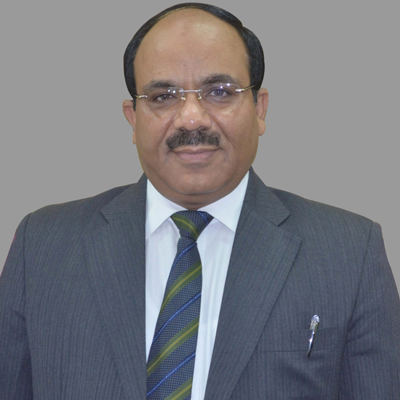
    The NTO had a drastic impact on the players in the cable industry resulting in a dip in subscriber base. However, Siti Networks nodal officer for broadband and video verticals Vishwa Bandhu Sharma feels that the new provisions will not disrupt MSOs again.

    He told Indiantelevision.com, “There was a lot of subscriber loss when NTO 1 came in effect. Multi-TV homes stopped using their second and third TV sets. But with NTO 2.0, we are expecting them to activate those TV sets again.”

    Speaking about the impact that the reduction of prices will have on the industry, Sharma shared that the ARPU would remain more or less the same because of the discount on the NCF. He said that he is expecting people to move to more a-la-carte selections for channels that have good content but are not a part of the new bouquets.

    While Sharma believes that MSOs will benefit from NTO 2.0, one of the major MSOs, not willing to be named, opined that the changes will affect the top and bottom lines of both MSOs and local cable operators (LCOs).

    “Discount of 60 per cent on additional TV will result in revenue loss for both MSO and LCO. The loss will be 12-15 per cent and will reflect in the top line and bottom line. Even if 10 per cent STBs (second TV) are recovered, the loss will be 8-10 per cent,” the executive from the other MSO stated.

    TRAI also said in the amended regulation that broadcasters shall not be permitted to give any discount for adoption of bouquets to DPOs in the 15 per cent category as permitted in Interconnection Regulations 2017. According to the executive, this will result in the reduction in bottom line of the MSOs. Additionally, it will increase disputes between the broadcasters and MSOs.

    While DD channels have been excluded from NCF, the executive said: “We have invested in infrastructure for building channel capacity and delivering it to subscribers. We cannot charge placement from the government but our right to charge NCF subscriber should not be withdrawn.”

    Siti Network’s Sharma also added, “When broadcasters were given a chance to rework their prices, they took it to the maximum level and also charged a premium rate. They also included their low base channels in the bouquets, even with bouquet price at 50-60 per cent off. Of course, it (NTO 2.0) will be a disadvantage because now to include those channels in the bouquet, they will have to reduce the price or they will have to leave the channel out for a-la-carte selection. People will not be subscribing to lesser popular channels, and that’s why they are not happy.”

  • IMCL’s Vynsley Fernandes on NTO changes, tech improvements and staying relevant

    IMCL’s Vynsley Fernandes on NTO changes, tech improvements and staying relevant

    MUMBAI: In the last couple of years, streaming services have emerged as a big challenge to traditional cable distributors while the business model has changed too owing to the new tariff order (NTO). Amid the flux, upgrading the existing structure, technology and strategy has become necessity to stay relevant. At the commemoration of the twenty fifth anniversary celebration, IndusInd Media and Communications Ltd (IMCL) unveiled a new mnemonic logo #IamNXT25. As a part of the celebration, the company is launching many new products and solutions to stay relevant in the game.

    As IMCL CEO Vynsley Fernandes summarises, “So everything we do from now is how do we stay relevant and how do we grow and how do we become a brand new generation for the next 25 years.” He adds that a better integration of IMCL’s four products – digital cable, Headend-In-The- Sky (HITS), broadband business and entertainment content will be noticeable. Citing an example, he says IMCL has launched a combination product of HITS and broadband in Hyderabad.

    IMCL’s intra and inter collaborative strategy going forward:

    Talking to Indiantelevision.com, Fernandes also speaks about how IMCL strikes the balance between HITS and digital cable. He says that while the former helps IMCL in remote areas, the latter keeps reigning in high density cities. He cites the example of Andaman and Nicobar Islands, where HITS is a great solution and IMCL has close to 20,000 customers there. Moreover, it is looking at offering customers cable or HITS in their individual terrains coupled with broadband services.

    In a unique model, IMCL has also collaborated with some very large MSOs in India including its competitors who are keen to leverage HITS technology. Under the ‘managed service model’, they will use the technology in the remote areas as a delivery mechanism. While IMCL currently has 5 million subscribers, it has signed managed services agreements for another 5 million customers.

    “We have crossed 50 cities already as we speak. And while broadband has continued to grow and has a significant growth, it will get a renewed thrust in this combo package. Because wherever we go, wherever we have HITS or digital cable, we are bundling our broadband service with it so that will carry more traction. So, while we may not necessarily look at radically growing beyond 50 cities or 50 towns, we are looking at increasing the penetration of our broadband within those 50 cities and towns by bundling it with either with digital cable or HITS,” Fernandes comments on broadband expansion.

    Talking on technological investments, he adds that IMCL has just completed satellite migration moving from Vikon 5 to Intelsat 39. He also adds that IMCL is now on a new technology, 32 APSK. He says that the focus is on ensuring not just investments in new technology, but investments in cutting edge future-proof technology.

    Did IMCL lose consumers during NTO 1.0?

    “I think it would be incorrect to say that our growth in revenues and ARPU is only to do with NTO. We have been building our capabilities and our model year-on-year to meet our promoter’s vision for the future. The group envisaged the need for another cutting-edge platform that could reach phase 3 and 4 markets, and HITS (headend-in-the-sky) was the only way to do this and we launched our HITS services in 2015,” he comments on NTO 1.0’s effect on financial stability.

    “We also were the first MSO to move to prepaid billing of both operators and subscribers. This was a huge challenge in a market used to postpaid transactions, yet we realised that this is where ultimately the industry would have to get to in order to survive. This transition caused us some churn but helped us towards improving our financial stability,” he adds.

    He mentions that IMCL was one of the first MSOs to launch mobile and web applications to help operators and subscribers activate and interact with its platforms more easily. It even migrated to 16APSK modulation on the HITS satellite in order to be able to add more channels within the existing satellite capacity without increasing costs.

    He accepts that IMCL lost subscribers in the new regime like other DPOs but he claims their churn rate was less than that experienced by others. Firstly, he mentions that IMCL engaged with partners, cable operators/distributors, early on, way before implementation of NTO 1.0, in November 2018 – to help them understand what NTO was all about and how it needed to be implemented. IMCL conducted around 150 workshops and training sessions all across India as it felt it was important for all stakeholders to understand and grasp the changes taking place.

    IMCL ensured that everyone was ready and knew how to create packages, bundles, what types of questions subscribers were likely to ask. He says they were, therefore, ready on the ground for handling the shift to the NTO regime.

    “Secondly, the technology we had implemented allowed us to be able to cater to subscribers’ requirements. One important thing about NTO was the whole concept of allowing the customer to choose what he wants to watch and paying only for that. Whilst we did create our own packages to help subscribers, these only have a penetration of around 18 per cent in HITS. The other 82 per cent of our subscribers opted to select their own choice of broadcaster bouquets and ALC. This capability to allow the consumer to effect their choice was one of the key reasons for customer satisfaction and therefore reduced churn,” he states.

    What does IMCL expect from NTO 2.0 and how are they preparing?

    From a DPO perspective, he does not think there'll be significant changes with the implementation of NTO 2.0. Overall, it is effectively tweaks to the NTO 1.0 framework including multi-home TV, right pricing etc, as he says. According to him, there is logic in putting in regulations for multi-homes as this was not included in original regulations. He hopes that it can now use this to help claw back some of the customers it had lost during NTO 1.0 who had relinquished their 2nd and 3rd TVs at home.

    He is also of the view that there will be no significant revenue changes if broadcasters reduce channel prices. He thinks that the more the prices of content drop, the more customers are likely to increase their viewing of content and add their 2nd/3rd TVs to their homes again, many of which were discontinued when transitioning to the NTO regime. He believes that revenues could possibly increase as customers expand their portfolio of channels.

    Fernandes notes that with respect to NTO 2.0, perhaps the key driver is technology-readiness and communications. “Our technology is completely ready if we have to provide new bundles, packaging and pricing. Our systems are effectively already delivering such requirements. We’ve deployed systems from global leaders in pay-TV technology and that are being used by some of the largest platforms in the world. So for us to be able to make a transition, however small or significant, we're ready for it,” he comments.

    “From a communications perspective, we work very closely with our business partners and our local cable operators. They have all played a significant and critical role in helping us to implement NTO 1.0.  Our success has not been because of us directly marketing to subscribers, but because our business partners and LCOs are able to reach and educate customers personally. We would use the same mechanism all over again because we've seen it to be very successful,” he signs off. 

  • GTPL Hathway believes NTO 2.0 won’t affect price stability

    GTPL Hathway believes NTO 2.0 won’t affect price stability

    MUMBAI: At the very beginning of 2020, the Telecom Regulatory Authority of India (TRAI) issued fresh amendments to the New Tariff Order (NTO) within less than one year of its implementation. Rattled by the sudden change, the stakeholders in the industry seem to be displeased. But in contrast, GTPL Hathway believes NTO 2.0 is an extension of NTO 1.0 and price stability in the market will continue despite the revision.

    “There is NCF for Rs 160 in the new NTO and there is NCF Rs 130 in the earlier NTO plus we could charge additional Rs 20 for every additional 25 channels, so broadly speaking, from a short-term perspective, they are more or less similar kind of thing. So, NCF has a big portion of earning. That is something which is more or less protected while one can debate on what kind of future impact it will have after three years, after five years, but from a short-term perspective that is protected,” GTPL Hathway chairman and non-executive director  Rajan Gupta said in an earnings call after q3 result.

    “In fact, we have the ability to charge Rs 30 more in case market forces allow us to charge and GTPL being high market share in many territories, they should have the ability to charge higher and we are happy about the consumer. I think consumers will have more choices,” he added.

    According to Gupta, DPOs with higher market share should be able to make many more relevant bouquets for consumers, for example, genre-level bouquet while currently bouquets are limited to five-six, which is more based on the ARPU slabs.  He said having very micro bouquets is also needed.  He stated that can happen with NTO 2.0 on the back of flexibility it offers for DPOs.

    Although he mentioned this is not a full assessment on NTO 2.0 but the MSO believes on the basis of the initial assessment that it should see a lot of stability in earnings and cash flow.

    “It is too early to speak about how the ARPU will happen in NTO 2.0. In NTO 1.0, if you see this quarter, our ARPU has stood at around Rs 118 and we are expecting that it will go up in q4. We have gone down by Re 1- Rs 1.5 because of the festive offer given by the broadcasters. We are expecting that in q4, it will go up as the festive offer is over. Right now, we have to wait to see what new bouquets, new channel prices come from the broadcasters in NTO 2.0 and only after the assessment, we can comment on NTO 2.0 ARPU,” GTPL Hathway  Cable TV business head and chief strategy officer Piyush Pankaj said.

    He also added that it is not certain right now if less money will be coming from customers because it depends on what type of bouquets and a-la-carte price the broadcasters will come through. But he said there is price stability in the market during the last one year and they believe price stability would continue.

  • Siti numbers improve on optimisation of major matrices

    Siti numbers improve on optimisation of major matrices

    BENGALURU: Indian leading multi-system operator (MSO) Siti Networks Limited (Siti) reported 7.8 percent increase in revenue from operations at Rs 1,210.29 crore for the nine month period ended 30 December 2019 (9M 2020, YTD 2020) as compared to the Rs 1,122.71 crore for the corresponding nine month period of the previous year (9M 2019, previous nine month period).  The company’s total expense for 9M 2020 increased 4.9 percent to Rs 1,330.30 crore (108.8 percent of Total Income) from Rs 1,267.81 crore (111,6 percent of Total Income) in the previous nine month period. Siti’s total expense across all major heads decreased 7.7 percent in 9M 2020, as compared to 9M 2019, but for pay channel, carriage share and related costs which increased by Rs 120.94 crore or 23.7 percent.

    Sit reported a lower loss of Rs 117.87 crore in 9M 2020 as compared to a loss of Rs 140.36 crore in 9M 2020.

    Siti claims in its earnings release that 9M 2020 operating EBITDA surged 1.24 times over similar duration of last fiscal, to Rs. 267.6 crore. The company attributes this jump to strict control over expenses and operating efficiencies. Siti says that its operating EBITDA Margin for 9M 2020 also expanded by 1.1 times y-o-y to 22 percent.

    Siti says its subscription revenue for 9M 2020 grew 19.5 percent y-o-y to Rs. 868.7 crore, aided by the strong growth. Subscription ARPU  leapt 1.8 times to Rs.128 per month. Total Revenue (excluding activation) also surged 12.7 percent y-o-y to Rs. 1218.9 crore for the same period.

    Siti CEO Mr Anil Malhotra said: “We are focused on working closely with

    our distribution partners for increased sweating of ground assets further through introduction of allied value-added services for our customers Siti Broadband with Zee 5, India’s fastest growing OTT app, gives both partners an opportunity to scale up our business ambitions, creating value for all our stakeholders with a focused and strategic approach."

    Let us look at the other numbers reported by the company

    Total Income for 9M 2020 increased 7.6 percent y-o-y to Rs 1,222,26 crore from Rs 1,135.11 crore in 9M 2019. Pay channel, carriage sharing and related costs in 9M 2020 increased 23.7 percent y-o-y to Rs 631.14 crore from Rs 510.20 crore. Employee benefits expense in 9M 2020 declined 7.6 percent y-o-y to Rs 57.83 crore from Rs 62.61 crore.  Finance costs in 9M 2020 reduced 3.1 percent y-o-y to Rs 122.16 crore from Rs 126.05 crore. Other expense in 9M 2020 reduced 10 percent y-o-y to Rs 261.17 crore from Rs 290.35 crore.

    Numbers for Q3 2020 as compared to Q3 2019

    For the quarter ended 31 December 2019 (Q3 2020, quarter under review), revenue from operations increased 4.3 percent y-o-y to Rs 402.60 crore from Rs 385.92 crore in Q3 2019. Total Income increased 4.6 percent in the quarter under review to Rs 407.94 crore from Rs 390.11 crore. Loss for Q3 2020 at Rs 33.56 crore was lower than loss of Rs 35.41 crore in Q3 2019.

    Total expense in Q3 2020 increased 4.9 percent to Rs 442.17 crore from Rs 421.70 crore, Excluding pay channel, carriage sharing and related costs, expenses in Q3 2020 declined 10.6 percent to Rs 227.75 crore from Rs 254.72 crore in Q3 2019. Employee benefits expense in Q3 2020 declined 9.5 percent to Rs 18.75 crore from Rs 20.71 crore in Q3 2019. Finance costs in Q3 2020 reduced 7.5 percent to Rs 38.06 crore from Rs 41.13 crore. Other expense in Q3 2020 decreased 13.4 percent to Rs 84.28 crore from Rs 97.33 crore.

  • NXTDIGITAL reports total income of Rs 938.68 cr for 9 months ended 31 Dec

    NXTDIGITAL reports total income of Rs 938.68 cr for 9 months ended 31 Dec

    MUMBAI: NXTDIGITAL Ltd on Monday reported its financial results for the third quarter and nine months ended 31 December 2019. On a consolidated basis, the company reported a total income of Rs 938.68 crore for the nine months ended 31 December, 2019 as against a total income of Rs 527.36 crore for the corresponding period of the previous year recording a growth of close to 78 per cent.

    For the same period, the company reported a Profit After Tax of Rs 100.10 crore as against a loss of Rs 344.04 crore for the corresponding period of the previous year. The company reported a consolidated net profit after tax of Rs 33.63 crore for the quarter as against a net loss after tax of Rs 122.84 crore for the quarter ended December 31, 2018.

    The company claims that the main growth driver has been the smart turnaround of the media business of the company carried out through its significant subsidiary IndusInd Media & Communications Limited (“IMCL”). IMCL is one of India’s leading digital content distribution companies, delivering digital content via cable as well as through satellite on its Headend-In-The-Sky (HITS) platform – through a vast network of established Local Cable Operators.

    IMCL continues to set the trend for innovation, driven by its superior HITS technology that delivers nearly 700 television services to consumers in the most remote regions across India; irrespective of the weather or terrain.

    “The vision and mission of the government viz. ‘Digital India’, ‘Skill India’ and ‘Make in India’ is embodied in our principles for success. We are proud to partner with over 50,000 individuals comprising Local Cable Operators and their teams across India – who are well trained and skilled in digital service delivery; whilst employing world-class yet native technology at our partners premises. This remains a significant edge in our endeavor to perform.”  IMCL chief executive officer Vynsley Fernandes says.

    Recently, several multi-system operators (MSOs), including one of India’s biggest has signed up for managed services via IMCL’s HITS platform – in semi-urban and rural markets. To support the MSO’s regional requirements, IMCL is augmenting its satellite capacity that will allow it to carry a greater number of regional channels. “Our HITS platform was designed specifically to help MSOs and LCOs deliver services across India seamlessly; with excellent uptimes and a high quality of service, through significant investments in technology. This will encourage infrastructure sharing – to ultimately bring down cost of operations and ensure customers across the country benefit from the quality of service, the choice of channels and the effective delivery pricing,” says Fernandes.

    On the satellite front, IMCL continues to remain the leader in innovation. After being the first satellite platform in the world to adopt and implement 16APSK modulation in 2016 – which ensures a higher throughput and optimal use of satellite capacity; IMCL is currently implementing the next generation 32APSK technology; cementing its leadership position globally, in technology lead.

    IMCL has recorded profits consistently over the last four quarters driven by its focused business strategy of growth in size – in the smaller towns and villages; and growth in ARPU through value added services and other offerings in the metro towns and cities. Consumer viewership experience and quality of service continue to drive IMCL’s business strategy as is evidenced by the very low customer churn ratio and pre-paid collection percentages at close to 100% per cent.

  • Den Networks reports profitable Q3 2020

    Den Networks reports profitable Q3 2020

    BENGALURU: Indian cable network and broadband company Den Networks Ltd (Den) reported consolidated profit after tax (PAT) of Rs 12.28 crore for the quarter ended 31 December 2019 (Q3 2020, quarter or period under review) as compared to a loss of Rs 31.21 crore for the corresponding year ago quarter (Q3 2019, y-o-y) and 28.9 per cent higher than the Rs 9.53 crore for the immediate trailing quarter (Q2 2020, q-o-q). Consolidated EBITDA for the quarter at Rs 58.28 crore was 21.2 per cent higher y-o-y than Rs 48.1 crore and was 20.1 per cent higher q-o-q than Rs 48.51 crore.

    Den reported consolidated operating revenue of Rs 318.08 crore, which was 3.1 per cent higher y-o-y, but was 4.3 per cent lower q-o-q than Rs 332.42 crore.

    Segment revenue

    The company has two segments – Cable Distribution Network (Cable) and Broadband.

    Cable revenue increased 3 per cent y-o-y in the quarter under review to Rs 300.46 crore from Rs 291.59 crore, but declined 4.6 per cent q-o-q from Rs 314.92 crore. Cable segment operating result for Q3 2020 was 6.23 crore as compared to a loss of Rs 8.95 crore for Q3 2019 and a loss of Rs 21.14 crore for the immediate trailing quarter.

    Major revenue heads for the Cable business are Subscription, Placement, Other operating income and Activation. Cable Subscription revenue in Q3 2020 increased 10 per cent y-o-y to Rs 189 crore from Rs 172 crore and increased 6 per cent q-o-q from Rs 178 crore. Placement revenue increased 8 per cent y-o-y to Rs 87 crore from Rs 81 crore but declined 1 per cent q-o-q to Rs 88 crore. Other operating income in Q3 2020 declined 52 per cent y-o-y to Rs 6 crore from Rs 13 crore and declined 68 per cent q-o-q from Rs 19 crore. Activation revenue declined 29 per cent y-o-y to Rs 18 crore from Rs 25 crore and declined 39 per cent q-o-q from Rs 29 crore.

    Broadband revenue increased 4.7 per cent y-o-y in Q3 2020 to Rs 17.62 crore from Rs 16.82 crore and increased 0.7 per cent q-o-q from Rs 17.50 crore. The segment reported a lower operating loss result for Q3 2020 at Rs 5.4 crore and a loss of Rs 6.6 crore for Q3 2019 and a loss of Rs 5.1 crore for Q2 2020.

    Let us look at the other results posted by Den for Q3 2020

    Consolidated total expenses for Q3 2020 at Rs 321.63 crore was 4.8 per cent lower y-o-y than Rs 337.84 crore and was 11.9 per cent q-o-q lower than Rs 365.27 crore. Consolidated content costs in Q3 2020 declined 4.7 per cent y-o-y to Rs 141.60 crore from Rs 148.65 crore and was 11.2 per cent lower q-o-q than Rs 159.45 crore.

    Consolidated placement fees at Rs 1.08 crore during the quarter under review was 89.2 per cent lower y-o-y than Rs 9.99 crore and was 76.2 per cent lower q-o-q than Rs 4.54 crore. Consolidated employee benefits expense for Q3 2020 at Rs 23.72 crore was almost flat (down 0.3 per cent y-o-y and down 0.2 per cent q-o-q) than Rs 23.8 crore in Q3 2019 and Rs 23.8 crore in Q2 2020.

    Consolidated finance costs during the quarter decreased 9.7 per cent y-o-y to Rs 4.38 crore from Rs 13.88 crore and declined 30.6 per cent q-o-q from Rs 6.31 crore. Consolidated other expenses in Q3 2020 increased 19.9 per cent y-o-y to Rs 93.39 crore from Rs 77.87 crore but declined 2.9 per cent q-o-q from Rs 96.15 crore.

  • MSOs on distribution challenges post NTO

    MSOs on distribution challenges post NTO

    MUMBAI: The internet has given choice to consumers to select packages and watch content of their choice. A rapid increase in the viewership on mobile and OTT platforms on a daily basis has become a threat to the DTH and cable distribution ecosystem. Apart from the internet, competing with broadband services and OTT is another challenge post NTO. The experts from the broadband and cable industry gathered at Video and Broadband Summit (VBS) 2019 in December, organised by Indiantelevision.com to discuss innovative measures taken by companies to stay ahead of the curve. 

    The Remediation Company founder & partner Shyamala Venkatachalam, moderated the panel discussion on 'The Distribution Challenge' at VBS 2019. The panelists Den Networks Ltd CEO SN Sharma, Kerala Communicators Cable Ltd. (KCCL) ex-CEO and SCTE India GC member Shaji Mathews, Metro Cast Network India Pvt Ltd promoter Nagesh Narayandas Chhabria, Tata Sky Ltd chief financial officer G Sambasivan, SITI Networks Ltd chief executive officer Anil Malhotra and Fastway Transmissions Pvt Ltd consultant (strategic planning) Peeush Mahajan shared their views on how distribution companies are innovating to stay ahead of the curve. They also briefed the audiences on the measures adopted to counter relentless disruption.  

    "Technology is unstoppable and customer is the king. As lot of innovations keep on happening, the business has to adapt the changes and has to focus on two things – customer viewing experience and customer service. For making viewing experience the best, we are investing very heavily on our backend and the distribution pipeline and will be increasing the bandwidth capacity manifold,” said Sharma.

    He further continued, “In India, after a lot of HD channels were launched, still only 20 per cent of subscribers are using the HD platform. As we have taken a conscious decision to only deal with HD boxes from the new year, we will ensure that HD content will be available for every subscriber. Even if consumers are not willing to subscribe for HD channels because of the higher subscription amount, we will ensure that the consumer gets the SD service which will be as good as HD experience.”

    "The movement from SD to HD has been much below the consumer’s expectations. The movement to OTT and hybrid boxes has happened over a period of time. As today the content is produced in HD or even higher than that in 4K, lot of MSOs are setting up HEVC transmission and they will also be introducing boxes with capacity of higher than higher definition. The process has to be gradual, which also depends on the willingness of the players to invest in the business," said Mathews. 

    On the issue of interoperability of STB, he said that the concept of comparing the STP with a mobile phone is not right, as the STB is a sim card and not the mobile phone. So, the whole concept needs to be overlooked.

    The challenge for MSOs is that it is not viable for them to go to village areas and give connections to around 200 – 300 houses. “The main concern now is that 15 – 20 per cent of our existing customers are not coming back to us post NTO. This is because of the communication gap between the LCO and the customers. To bridge this gap we have to educate the LCO by training them. Also communicating through social media, direct marketing or door to door marketing is an option to convince customers,"  said Chhabria.

    He also said, “MSOs should get their existing customer base back, which is around 15 – 20 per cent. The NTO model has been stabilised and people can now invest. Two years ago it was a non-viable business, but now we can show the investors that it is a viable business and ask them to invest as there is an opportunity to earn money.”

    Sambasivan shared his view on distribution challenges. He said that as per the India projection report, OTT is growing very fast and the number of hours of video consumption is going up. DTH and cable industry need to be worried as 90 per cent consumption is on mobile. But OTT is not an immediate threat to the DTH and the cable industry because along with OTT, consumers are also watching television. The viewership on television in the last five years has not decreased. OTT may be a threat after around ten years.

    Throwing some light on the post NTO challenges faced by the industry, Malhotra said that we are facing two challenges, first is two competitions. The first competition we are facing from broadband services, which is a linear way of giving signals compared to STBs. To provide SD, HD or 4K content we need to provide STBs which will decode the signal and provide content in the respective definitions. The second competition from OTT is device agnostic because in the broadband, whether it’s 4K, HD or SD, all signals are distributed similarly. The quality bandwidth decides what kind of viewership experience a customer has.

    “The second challenge is that suddenly there are internet users in the country. As per TRAI’s published data, 64 crore is half of the population of India. This population buys smartphones and we do not know how much of this population has moved away from linear TV to internet. From a content perspective, the kind of content which is popular is the adult site and is popular on OTT platform and not allowed to be beamed on the linear TV. The unfair competition will be that if the customer demands a personalised content, which is viewable on the OTT platform, but not viewable on the linear video platform despite having user enabled features on the device. Also the password sharing piracy is a challenge as more than one person can view the same content on different devices. So, overall technological aspects have to be considered,” he said.

    Sharma added that the message for MIB is that piracy is one of the issues which need to be addressed as lot of investments have been done at the state level for implementing NTO. DOT, few years back had addressed the issue by appointing state level cells. The other issue is the linkage of a la carte price with the bouquet price.

    Mahajan thanked TRAI for implementing a la carte and said that TRAI has given a choice to the customers. In 2018, 98-99 per cent of the customers were on suggestive bouquets offered MSOs and DPOs. In last 8-9 months, a big migration has happened from 2-22 per cent from bouquet to a la carte and it keeps on happening on a daily basis. We have to put in more efforts to educate the subscribers and train the LCOs, as LCOs are the key people who can generate a need for a la carte. DPOs have put in a lot of effort and will continue in future also. By the end of 2020, 35-40 per cent consumers should move on a la carte.

    Malhotra said that as per the regulations, TRAI has done a perfect thing by giving a choice to the customers. Unfortunately, the customer needs a la carte along with a package of their suitability. It is very difficult for a customer to choose between 800 channels and make a package of its own. But packaging is important and there are three ways of doing it. Packaging happens at a broadcaster level and if the customer wants the broadcaster package, then the distributor cannot dismantle the package.

  • VBS 2019 to focus on post NTO environment, relevance of cable and rise of internet

    VBS 2019 to focus on post NTO environment, relevance of cable and rise of internet

    MUMBAI: The year 2019 has fundamentally changed Indian TV broadcast industry. The long-awaited New Tariff Order (NTO) was finally greenlit in February, forcing broadcast networks, DTH players and cable operators to move to a new tariff regime. However, even as TV broadcasters and distribution platforms were adjusting to the NTO, TRAI floated a new consultation paper on tariffs in August, causing further uncertainty and disruption in the already volatile market.

    Amidst this flux and all-around uncertainty, Indiantelevision.com is bringing together stalwarts from the industry on a platform that dissects the various issues at the heart of the NTO, how it’s impacting broadcasters and distributors, changes proposed to it and why broadcasters are unhappy with TRAI for floating a new consultation paper within six months of NTO.

    The initiative is called Video and Broadband Summit (IDOS in its earlier avatar) to be held at Mumbai on 11 December. Leaders from DTH, cable and broadband, broadcast, regulatory bodies, and technology segments will discuss the state of the industry, address issues and find solutions.

    After a keynote address by Anil Wanvari, founder Indiantelevision.com, doyens of broadcast industry and distribution platforms like IndiaCast Media Distribution President Amit Arora, Star India Distribution President Gurjeev Singh Kapoor, IndusInd Media and Communications CEO Vynsley Fernandes, GTPL Hathway VP Yatin Gupta, The Remediation Company founder Shyamala Venkatachalam and Bhima Riddhi Digital Services promoter Nagesh Narayandas Chhabria will discuss the TRAI consultation paper on tariffs in a panel discussion to be moderated by Elara Capital VP Karan Taurani.

    While TRAI has faced a barrage of criticism from industry players for the new consultation paper, it’s important to note that distributors (DTH, LCOs and MSOs) and broadcasters, both have very different grievances from TRAI. While broadcasters are nearly unanimous that TRAI should not disallow them from creating bouquets, nor impose a discount cap on these bouquets – two of the key issues discussed in the TRAI consultation paper – among the cable distributors there is a general consensus that broadcast networks have indeed misused their freedom to create bouquets by offering unlimited discounts on these packs. Distributors are also unhappy with the discounting cap imposed for them but not for the broadcasters.

    Even the recent Open House Discussion, organised by TRAI at Delhi in October, failed to resolve the issue or bring together broadcast networks and distributors on the same page. VBS 2019 provides yet another opportunity for broadcasters and distributors, two of the key constituents of the media and entertainment industry, to deliberate on these issues in a rapidly changing regulatory framework.

    To oversee and participate in these deliberations, there will be TRAI Advisor Arvind Kumar, who will also address the gathering and will bring some much-needed clarity on TRAI future course of action on the consultation paper for which it received nearly 300 comments from broadcast networks, DTH, LCOs and MSOs, as well as from ordinary consumers.

    To give the perspective of distributors on how the NTO, and the expected amendments to it, affected their businesses, there will be a panel discussion in which SITI Networks CEO Anil Malhotra, GC member of SCTE India Shaji Mathews, Fastway Transmissions Consultant Peeush Mahajan and Bhima Riddhi Digital Services Promoter Nagesh Narayandas Chhabria will participate.

    Advertising industry is at the other end of the spectrum, the other big sector that had to adjust to post NTO environment. To discuss the advertisers' view and their take on the dynamic pay-TV landscape, there will be Godrej head media services Subha Sreenivasan Iyer, ITC PR and media head Jaikishin Chhaproo and Havas Media Group managing partner West & South Kunal Jamaur. They will participate in a panel discussion to be moderated by Castle Media CEO Ru Ediriwira.

    There will also be a presentation from Broadpeak business development manager Hervé Creff, on "Keeping control of HDMI1 with Android TV Operator Tier – the "super-aggregator" approach."

    This will be followed by a panel discussion on how to transform the TV broadcast sector to fuel growth – what are the key issues facing the industry and how can more transparency and discipline be injected into it? PwC partner and leader Raman Kalra, Elara Capital VP – research analyst (media) Karan Taurani, KPMG India partner, head-media and entertainment Girish Menon and BBC News head of distribution – South Asia Sunil Joshi will participate in a panel discussion to be moderated by SBICAP Securities head of equity research Rajiv Sharma.

    Local cable operators also constitute an important link in the TV broadcast value chain in India. Despite the presence of strong DTH players like Tata and Bharti Airtel and the rise of OTT, as much as 65 per cent of TV homes in India are still connected through these local cable operators, as per TRAI estimates. Maharashtra Cable Operators Federation (MCOF) president Arvind Ramesh Prabhoo and IndusInd Media and Communication COO Rouse Koshy will participate in a panel discussion on how has the role of the LCO changed under the new regulatory framework and its significance going forward.

    The rise of some of the Free to Air (FTA) channels in the post NTO environment has been another prominent feature of 2019. To discuss the roadmap ahead for FTA channels, there will be a panel discussion in which SAB Group CEO Manav Dhanda, Enterr10 TV MD – Fakt Marathi Shirish Pattanshetty, Republic Media Group CEO Vikas Khanchandani, 9X Media chief revenue officer Pawan Jailkhani and Shemaroo Entertainment COO Kranti Gada will participate.

    There will also be a presentation by Romil Ramgarhia, COO, BARC India will also do a presentation on ‘TV viewership trends in post NTO era,’ and will share with the audience the changing dynamics of TV industry since the NTO. Has TV viewership declined post NTO, are people subscribing to more or less channels post NTO, has the NTO benefitted FTA channels will be some of the themes Romil will take in his presentation.

    Internet has emerged as another prominent distributor in the broadcast industry. Not only have OTT players emerged as challengers to broadcast networks, but also Reliance Jio Fiber is partnering with LCOs and MSOs to deliver video broadcast services. A string of channels are now also available on OTT platforms.

    To discuss the role of the internet in the broadcast industry, there will be a fireside chat between Anil Wanvari and Jio Fiber president Anuj Jain. The summit will end with a panel discussion on the role of the internet in video distribution in which Google Industry head media and entertainment Sandeep Ramesh, Jio VP – advertising and strategy Mohit Kapoor, COAI director General Rajan S Mathews, ZEE5 chief revenue officer and business head Taranjeet Singh and MediaKind head of marketing – APAC Chiranjeev Singh will participate. 

  • Video and Broadband Summit 2019 to discuss way forward with NTO & changing digital landscape

    Video and Broadband Summit 2019 to discuss way forward with NTO & changing digital landscape

    MUMBAI: How is the new tariff order (NTO) impacting the broadcast and video distribution landscape in India? How can broadcast networks effectively partner with LCOs and MSOs to successfully navigate the post-NTO environment? These are some of the key themes which will be discussed at the Video and Broadband Summit 2019.

    Running in its sixteenth year, the summit will be held in Mumbai on 11 December and will bring together stalwarts from television broadcasting, internet and distribution sectors under one roof to discuss and deliberate key issues facing the sector and recognise the accomplishments of key stakeholders.

    Over the last one-and-a-half-decades, VBS (earlier IDOS) has grown to become India's definitive Pay-TV and video distribution get together. However, this year’s summit is critical given that 2019 has witnessed some of the most fundamental changes in the pay TV and broadcast industry.

    While, on the one side TV networks, LCOs, MSOs and DTH players are still adjusting to the fundamental changes introduced by the NTO – described by many as the most significant reform in broadcast TV in decades – on the other, India has seen exponential growth of OTT players. Together, these changes will fundamentally alter how Indians consume entertainment in the years to come.

    If these changes were not enough in themselves, the telecom and internet distribution sectors are also undergoing fundamental changes. While, the entry of Reliance Jio Fibre has not proved to be the ultimate disruptor industry experts were expecting it to be, the recent Supreme Court ruling on the AGR (adjusted gross revenue) issue, asking telecom companies to pay Rs 92,000 crore has considerably dampened the industry sentiment and can negatively affect their ability to raise funds for broadband, network expansion and digital India.

    Not surprisingly, since the Supreme Court ruling, all major telecom operators in India, ranging from Airtel, Vodafone Idea and Reliance have announced mobile tariff charge hikes by as much as 20 per cent. Given that Airtel and Reliance are also deeply entrenched in providing broadband services, any tariff hike can impact broadband penetration as well.

    The delegate profile for this year’s VBS is a reflection of the concerns facing the industry. As many as 60 per cent of the participants in this year’s VBS will be LCOs, MSOs and distributors, while 15 per cent delegates will be coming from broadcast networks including Star India – also a summit partner. Significantly, 25 per cent of the delegates this year will come from telecom, broadband, technology and data platforms. Without doubt, apart from getting the industry perspective on various issues ailing the industry as well as future opportunities, the summit will also provide an excellent opportunity for networking between the various stakeholders in the media and entertainment industry.

    Some of the key sessions in the summit will be:

    • Free To Air: The roadmap ahead
    • NTO: The future roadmap; TRAI consultation paper and how will the amendments to the existing tariffs play out?
    • Transforming the sector to fuel growth: What are the key issues facing the sector? How can more transparency and discipline be injected into it?
    • The distribution challenge: How are distribution companies innovating to stay ahead of the curve? What measures are they adopting to counter relentless disruption?
    • Internet: The changing role in video distribution
    • Role of the LCO: How has the role of the LCO changed under the new regulatory framework and its significance going forward? 
    • The advertisers’ view: Advertisers’’ view on dynamic Pay-TV landscape and how AdEx is likely to fare going forward with more changes anticipated to the NTO.

    To discuss all these relevant issues, the summit has also lined up a distinguished panel of more than two dozen speakers. Among them are:

    The VBS summit is an initiative of Indiantelevision.com. Started in 2000 by media and television analyst Anil Wanvari, Indiantelevision.com is the first online information and interactive service focusing on the Indian television and media business. Indiantelevision.com organises close to a dozen events every year, among them are The Indian Telly Awards, Tele-Wise Tamil, Media HR Summit, Brandvid Awards, Vidnet, The Indian Telly Technical Awards, and The Content Hub.
     

  • MSO applicants seek approval status in OHM

    MSO applicants seek approval status in OHM

    MUMBAI: Five MSO applicants and registered MSOs participated in an open house meeting to ascertain the status of their MSO application for grant of registration along with other queries.

    Representatives from TJ  Cable Network, World Phone Infrastructure Services, Haur Cable Network, Lamjingba Times Pvt Ltd, Yadav Cable Network were present in the meeting.

    Representatives from TJ Cable Network raised a query regarding change of entity from proprietorship firm to partnership firm and asked whether it is possible to transfer MSO registration from proprietor to partnership. But such a change is not possible since there is no such provision in the CTN Act.

    The representative of applicant MSO World Phone Infrastructure Services informed about the status of the application and were told that their application is under examination in the DAS Section of the Ministry.

    In addition to that, the  representatives of Haur Cable Network, Lamjingba Times  Pvt Ltd, Yadav  Cable  Network  mentioned  were informed about the  status of their applications that is under scrutiny in  the DAS section and security clearance from  MHA awaited.