Category: Multi System Operators

  • TRAI orders monthly, quarterly compliance reports from TV distributors

    TRAI orders monthly, quarterly compliance reports from TV distributors

    NEW DELHI: India’s broadcast regulator has ordered all distribution platform operators (DPOs) — including DTH, cable (MSOs), headend in the sky (Hits)  and IPTV players — to file performance monitoring reports every month and quarter, in a bid to sharpen oversight of the sector.

    The Telecom Regulatory Authority of India (TRAI), acting under section 12 of its 1997 Act, said the move was aimed at ensuring compliance, protecting consumer interests and fostering orderly growth of the TV distribution industry.

    Until now, only DTH firms were required to furnish quarterly reports, a rule dating back to 2008 and expanded in 2019 to cover MSOs and Hits)  operators. The new order updates formats to reflect changes in tariff, interconnection and quality-of-service rules.

    From now, operators must file monthly reports within ten days of month-end, and quarterly reports within 15 days of each quarter’s close. Smaller DPOs with fewer than 30,000 subscribers may skip the quarterly filing.
    The order marks another tightening of regulatory screws on a sector under pressure from both rising consumer expectations and surging competition from streaming platforms.

  • Cable TV lobby urges tax cut to 5 per cent as sector reels under strain

    Cable TV lobby urges tax cut to 5 per cent as sector reels under strain

    NEW DELHI:The All India Digital Cable Federation (AIDCF), the apex body of cable operators, has petitioned information and broadcasting minister Ashwini Vaishnaw and finance minister Ashwini Vaishnaw  to slash goods and services tax on cable television from 18 per cent to 5 per cent.

    The appeal rides on prime minister Narendra Modi’s push for “next-generation GST reforms” and a two-rate structure. The federation argues that cable remains the cheapest mass medium, reaching 64 million households and sustaining 10–12 lakh jobs, yet is under siege from rising costs and unregulated OTT rivals.

    Powered by 852 multi-system operators and 1.6 lakh local cable operators—mostly small entrepreneurs—the sector was even recognised as an “essential service” during the pandemic. But the economics are dire. Broadcaster fees have surged nearly 600 per cent, pushing up subscription costs by 35–40 per cent. With consumers balking at higher tariffs, margins are collapsing.

    “Market dynamics have become unfair for MSMEs in cable TV, as they are bound by tariff regulations while OTTs operate without comparable oversight,” AIDCF wrote.

    The lobby claims a GST cut would restore affordability for households, ease working capital pressures, enable fresh broadband investment under Digital India, and protect lakhs of jobs.

    AIDCF secretary general Manoj P Chhangani urged the government to table the matter at the next GST Council meet: “A reduction will safeguard the viability of MSOs and LCOs and preserve cable’s role in inclusive connectivity.”

    Industry watchers caution that while OTT is growing fast, cable still dominates in small towns and villages. A tax reprieve, they say, could decide whether it remains India’s broadcast backbone—or fades into obsolescence.

  • Hathway Bhawani stays tuned in with steady Q1 despite revenue static

    Hathway Bhawani stays tuned in with steady Q1 despite revenue static

    MUMBAI: Even in the choppy waters of cable and broadband, Hathway Bhawani has kept its wires untangled. Hathway Bhawani Cabletel & Datacom Ltd reported a modest consolidated net profit of Rs 0.82 lakh for the quarter ended June 30, 2025, according to its unaudited financial results approved by the board on July 14. This marks a sharp dip from Rs 29.03 lakh in the previous quarter, but a turnaround from a net loss of Rs 11.41 lakh in the corresponding quarter last year.

    While revenue from operations inched up marginally by 1 per cent year-on-year to Rs 60.91 lakh, total income for the quarter stood at Rs 61.17 lakh. The company’s share of profit from its joint venture, Hathway Bhawani NDS Network Ltd, contributed Rs 0.27 lakh to the bottom line this quarter.

    Operating expenses remained broadly stable, with feed charges at Rs 22.29 lakh, employee benefit expenses at Rs 11.55 lakh, and other expenses slightly lower year-on-year at Rs 17.10 lakh. However, deferred tax and a short provision of Rs 1.46 lakh for earlier years dragged down the profit after tax to a net loss of Rs 0.77 lakh. The company also recorded a minor actuarial gain of Rs 0.05 lakh from remeasurement of benefit plans.

    On the standalone front, the picture remained similar revenue matched the group’s performance at Rs 60.91 lakh, but net loss widened slightly to Rs 1.04 lakh due to the same tax adjustments.

    The company also addressed long-standing telecom licensing fee demands totalling Rs 4,130.38 lakh from the Department of Telecommunications, reaffirming its legal confidence and reiterating that no provision was necessary based on legal opinion.

    While the earnings per share stood at a flat Rs (0.01), the company closed the quarter with stability on most operating metrics. In a sector where volatility often rules the screen, Hathway Bhawani continues to keep the static at bay even if the signal isn’t quite booming just yet.

    (If you are an Anime fan and love Anime like Demon Slayer, Spy X Family, Hunter X Hunter, Tokyo Revengers, Dan Da Dan and Slime, Buy your favourite Anime merchandise on AnimeOriginals.com.)

  • GTPL Hathway navigates challenging quarter, eyes future growth

    GTPL Hathway navigates challenging quarter, eyes future growth

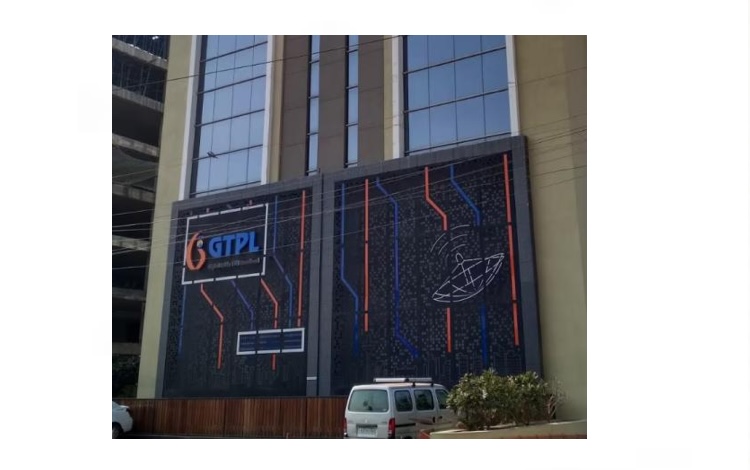
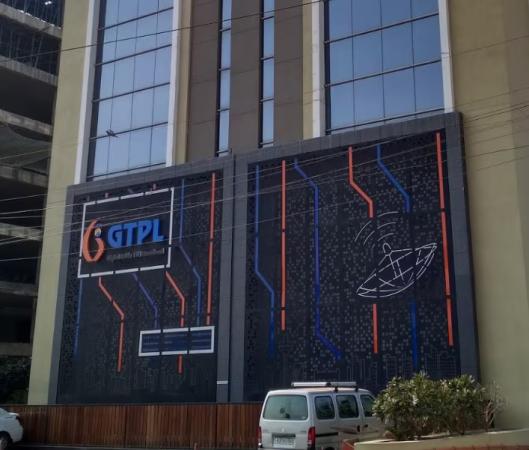
    MUMBAI: GTPL Hathway has unveiled its unaudited financial results for the first quarter ended 30 June 2025, revealing a mixed bag for the entertainment and broadband major. While the company saw an uptick in its top line, profitability faced a squeeze during the period.

    The consolidated revenue from operations for Q1 FY26 stood at Rs 5,946.79 million, a healthy increase from Rs 5,359.94 million reported in the same quarter last year. Total income also reflected this growth, climbing to Rs 5,990.20 million from Rs 5,432.95 million year-on-year. On a consolidated basis, total income for the quarter reached Rs 9,091 million, marking a 7 per cent rise year-on-year and a 1 per cent increase quarter-on-quarter.

    However, the spotlight falls on the company’s profitability. Net profit after tax (Pat) saw a significant decline, coming in at Rs 56.25 million for Q1 FY26, a stark contrast to Rs 150.23 million in Q1 FY25. Consolidated PAT was Rs 105 million, consistent with the previous quarter but down from Rs 143 million in Q1 FY25. Consolidated earnings before interest, taxes, depreciation, and amortisation (EBITDA) was recorded at Rs 1,123 million, with an EBITDA margin of 12.4 per cent. This is a decrease from Rs 1,205 million and a 14.2 per cent margin in the corresponding quarter of the prior fiscal year.

    Operationally, GTPL Hathway continues to expand its reach. The cable television business maintained a strong subscriber base, with 9.60 million active set-top boxes and 8.90 million paying subscribers as of Q1 FY26. The broadband segment also showed progress, reaching 1.05 million active subscribers and a home-pass count of 5.95 million. Average data consumption per customer soared to 410 GB per month, a 17 per cent increase year-on-year, while average revenue per user (ARPU) held steady at Rs 465..

    In a strategic move, the board of directors approved the re-appointment of Anirudhsinh Jadeja as managing director for a further three-year term, effective from 8 December 2025.

    The company also highlighted a contingent liability related to a demand from the Department of Telecommunications (DOT) for licence fees totalling Rs 9,754.15 million. GTPL Hathway remains confident in its legal position and has not recognised any provision for this matter.

    (If you are an Anime fan and love Anime like Demon Slayer, Spy X Family, Hunter X Hunter, Tokyo Revengers, Dan Da Dan and Slime, Buy your favourite Anime merchandise on AnimeOriginals.com.)

  • EY-AIDCF report: Indian cable TV faces dire times unless government and regulator step in with regulatory reforms

    EY-AIDCF report: Indian cable TV faces dire times unless government and regulator step in with regulatory reforms

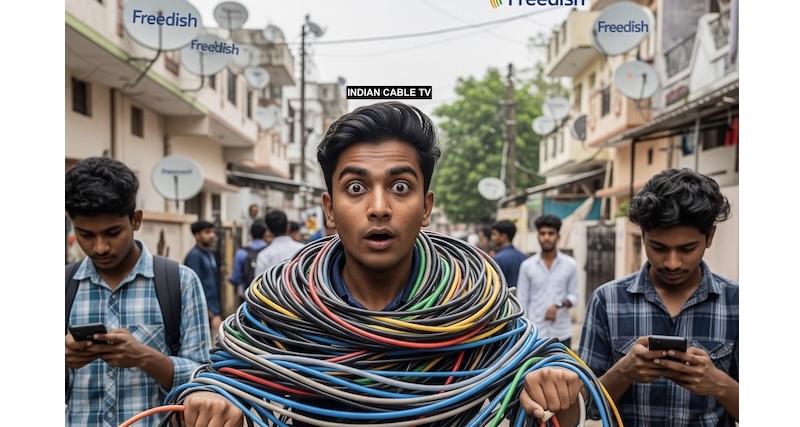
    NEW DELHI: India’s cable TV industry is on the ropes, reeling from a perfect storm of digital disruption, regulatory overkill, and changing viewer habits. A blistering new report by EY and the All India Digital Cable Federation (AIDCF) reveals a 40 million plunge in pay TV homes since 2018—down from 151 million to just 111 million in 2024—and warns that the bleeding isn’t over yet.

    By 2030, the figure could drop to as low as 71 million, as Indians flock to OTT, Free Dish, and smart TVs offering slicker content, better tech, and zero monthly bills. The fallout? A staggering 31 per cent collapse in employment across the Local Cable Operator (LCO) network, with up to 1.95 lakh jobs on the chopping block.
    The pay TV playbook, once defined by “kam daam, zyada samaan,” is now buckling under rising channel rates, bundling woes, and what LCOs call a “regulatory regime rigged for broadcasters.”

    A whopping 93 per cent of LCOs surveyed reported a drop in take-home income, with 79 per cent saying their earnings have nosedived by over 20 per cent since 2018.

    * Revenue for major distribution platform operators (DPOs) has shrunk by over 16 per cent since 2018, while EBITDA margins have plunged by 29 per cent.

    * Cable TV subscriptions have halved to 60 million, while smart TVs connected to the internet hit 50 million monthly active sets in 2024.
    * Pay TV now makes up just 58 per cent of the TV pie, down from 81 per cent in 2018, even as India’s TV household base touched 190 million.

    Despite being the backbone of India’s broadcast reach—physically connecting over 500 million people—LCOs remain the industry’s ignored foot soldiers, calling out a “top-heavy system” that allegedly favours deep-pocketed broadcasters and digital players.

    AIDCF proposes radical surgery: from activating over 20 million inactive set-top boxes and offering subsidies in “TV dark” zones, to limiting near-simultaneous OTT releases of pay TV content, and ensuring a level playing field between cable, OTT, Free TV and FAST channels.

    But with TRAI’s piecemeal tariff reforms (NTO 1.0 to 4.0) fuelling more legal duels than industry stability, stakeholders are demanding a full-blown reset. As OTT juggernauts steam ahead and content increasingly lives in the cloud, the cable industry’s survival may hinge not just on policy support but on reinventing itself as a digital services hub, not just a pipe.

    As the report bluntly puts it: without immediate intervention, the sun may set on the 30-year reign of India’s cable TV kings.

  • Charter & Cox to merge to create largest cable TV & broadband provider in the US

    Charter & Cox to merge to create largest cable TV & broadband provider in the US

    MUMBAI: In a mega-merger straight out of a business blockbuster, Charter Communications and Cox Communications have inked a definitive agreement to combine their businesses, creating an industry giant in mobile, broadband, and video entertainment. As part of the agreement,  Charter Communications will buy the privately held rival Cox for $21.9 billion.

    The deal values Cox Communications at a cool $34.5 billion, calculated using Charter’s 2025 estimated adjusted EBITDA multiple.

    Under this arrangement, Charter will snap up Cox’s commercial fibre, managed IT, and cloud businesses, while Cox’s residential cable will be folded into Charter Holdings, a subsidiary of Charter. The merger, which still needs regulatory and shareholder approval, will see Cox Enterprises pocket $4 billion in cash, $6 billion in convertible preferred units, and 33.6 million common units in Charter’s partnership.

    The merger will  create the largest US cable TV and broadband provider with around 38 million subscribers, surpassing market leader Comcast. Industry observers may recollect that Charter had last year agreed to acquire cable TV billionaire John Malone’s Liberty Broadband, which will now have an indirect interest in Cox, following the merger’s clearance.

    The Cox family, which has been in the cable business since 1962, is handing over the reins to Charter but keeping a significant seat at the table. Cox Enterprises, will own approximately 23 per cent of the combined entity and its CEO Alex Taylor will become chairman of Charter’s board, while Chris Winfrey  will continue as president & CEO of the combined company.

    “We’re honored that the Cox family has entrusted us with its impressive legacy and are excited by the opportunity to benefit from the terrific operating history and community leadership of Cox,” said Winfrey. “Cox and Charter have been innovators in connectivity and entertainment services – with decades of work and hundreds of billions of dollars invested to build, upgrade, and expand our complementary regional networks to provide high-quality internet, video, voice and mobile services. This combination will augment our ability to innovate and provide high-quality, competitively priced products, delivered with outstanding customer service, to millions of homes and businesses. We will continue to deliver high-value products that save American families money, and we’ll onshore jobs from overseas to create new, good-paying careers for US employees that come with great benefits, career training and advancement, and retirement and ownership opportunities.” 

    “Our family has always believed that investing for the long-term and staying committed to the best interests of our customers, employees and communities is the best recipe for success,” said Taylor. “In Charter, we’ve found the right partner at the right time and in the right position to take this commitment to a higher level than ever before, delivering an incredible outcome for our customers, employees, suppliers and the local communities we serve.”

    In a patriotic move, the combined company is pledging to bring customer service jobs back to the US, with all employees earning a starting wage of at least $20 per hour, alongside industry-leading benefits. Cox customers will also be treated to Charter’s famed 100 per cent US-based customer support, fast technician dispatches, and transparent pricing—no more surprise fees.

    The consumer-facing brand across Cox’s territories will become Spectrum, while the combined company will eventually rebrand as Cox Communications, maintaining its headquarters in Stamford, Connecticut, and a significant presence in Atlanta, Georgia.

    Spectrum customers can expect access to advanced wifi, Spectrum Mobile with mobile speed boost, and the Spectrum TV app, all under a simplified pricing model. For business customers, Charter’s robust portfolio of business telecom services, including Segra and RapidScale, will become part of the combined offering.
    The merger isn’t just about size—it’s about smarts. With more network muscle, the new entity will ramp up investments in mobile, video, and AI tools while taking the fight to big tech in advertising and content distribution.

    The deal is expected to generate $500 million in annual cost savings within three years, thanks to streamlined operations and better buying power. But it’s not just about the bottom line—Charter will establish a $50 million foundation to support community leadership in Cox’s territories and launch an employee relief fund to help staff in times of crisis.

    The combined company will carry Cox’s $12 billion in debt but expects higher cash flow and better investment returns over time, with a new leverage target of 3.5x to 4.0x. Industry observers may recollect that Charter had last year agreed to acquire cable TV billionaire John Malone’s Liberty Broadband, which will now have an indirect interest in Cox, following the merger. 

    It’s a blockbuster telecom tale where two rivals become allies, customers win, and big tech finally faces a serious challenger.

  • Hathway tunes up profits as broadband beams bright, but cable remains a drag

    Hathway tunes up profits as broadband beams bright, but cable remains a drag

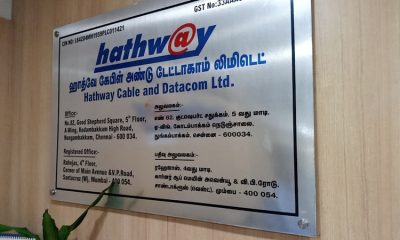
    MUMBAI: Hathway Cable and Datacom has wrapped FY25 with a cautiously upbeat tune, posting a consolidated profit of Rs 92.5 crore—a modest dip from Rs 99.3 crore in FY24. But if you zoom into the latest quarter, Q4 was anything but quiet.

    Revenue for the fourth quarter stood at Rs 513.2 crore, up four per cent from Rs 493.4 crore a year ago. Total income rose to Rs 546.6 crore in Q4 FY25, compared to Rs 533.6 crore in Q4 FY24. Net profit came in flat at Rs 34.8 crore, nearly mirroring last year’s Rs 34.6 crore.

    But the real tempo change came in the mix: other income more than doubled to Rs 33.4 crore from Rs 16 crore last quarter, while expenses remained tightly controlled, nudging up just three per cent year-on-year. EPS for the quarter held at Rs 0.20.

    Segment-wise, broadband held its line with Rs 149 crore in revenue, while cable TV brought in Rs 346 crore, both marginally higher year-on-year. Yet cable continued its loss-making streak, clocking a Q4 segment loss of Rs 12.4 crore. Broadband barely eked out a Q4 profit at Rs 0.9 crore.

    Total consolidated income for FY25 hit Rs 2,146 crore, inching up from Rs 2,119 crore in FY24. Broadband revenue came in at Rs 602 crore, down slightly from Rs 623 crore. Cable TV, however, crept up to Rs 1,372 crore from Rs 1,349 crore.

    The broadband division’s yearly profit fell to Rs 9.9 crore from Rs 31.9 crore. Cable TV slumped deeper, posting a Rs 61.5 crore loss, widening from Rs 47 crore in FY24.

    The surprise chartbuster? Hathway’s securities trading segment, which ballooned to Rs 85.5 crore from a humble Rs 8.9 crore. Other income also stayed generous at Rs 106.7 crore. These non-core wins helped keep overall profitability in the black.

    Total assets rose to Rs 5,121 crore from Rs 4,963 crore, while equity expanded to Rs 4,384 crore. Borrowings and lease liabilities slimmed down, giving the balance sheet a cleaner look.

    However, a lingering cloud remains: a Rs 3,201 crore demand from the Department of Telecommunications for unpaid licence fees. The company, backed by legal advice, continues to contest the demand and has made no provision.

    With cable still bleeding, broadband levelling off, and securities surprisingly saving the day, Hathway’s FY25 tune is part resilience, part remix. Whether the beat goes on in FY26 depends on plugging operational leaks and finding new hits in its digital playbook

  • GTPL Hathway announces fiscal year 2025 results; recommends dividend

    GTPL Hathway announces fiscal year 2025 results; recommends dividend

    MUMBAI: Cable TV MSO and broadband major GTPL Hathway Ltd  has released its audited financial results for the fourth quarter and the entire financial year, ended 31 March 2025. The board of directors, at its recent meeting, approved these results and recommended a dividend of Rs. 2.00 per equity share of Rs. 10 each, subject to shareholder approval.

    Here’s a snapshot of the company’s standalone financial performance, with comparisons to the previous year:

    finanials
    For the quarter ended 31 March 2025, GTPL Hathway reported revenue from operations of Rs. 5,621.91 million, a 10.44 per cent increase compared to the same period last year, and a net profit after tax of Rs. 81.50 million, a decrease of 18.10 per cent.

    For the year ended 31 March 2025, revenue from operations reached Rs. 21,933.81 million, an 8.13 per cent increase year-over-year, and net profit after tax was Rs. 478.03 million, a 37.30 per cent decrease compared to the previous year.

    The company’s board has proposed a dividend of Rs. 2.00 per share.

    segment results

    The old stager, cable TV, remains a significant contributor to GTPL Hathway’s coffers, raking in Rs 28,620.85 million for the year. However, the segment’s profitability has taken a hit, dropping to  Rs 268.48 million, compared to a far healthier Rs 859.68 million in the previous year. The fourth quarter, in particular, saw a loss of Rs 6.68 million. The internet service segment continues its race, pulling in Rs 5,485.09 million for the year, and a profit of Rs 218.31 million.

    Meanwhile GTPL Hathway  has paid a one-time application fee of Rs 100 million and has obtained approval from the ministry of information & broadcasting to establish, maintain, and operate a headend-in-the- sky (HITS) broadcasting services platform for a 10-year period, in compliance with the HITS guidelines. As at 31 March 2025, the company  is in the process of setting up the associated network and also obtaining other necessary licences.

    A media release issued by the company had the following to say: 

    Q4 FY25 Total revenue stood at Rs 8,989 million a growth of 10 per cent  Y-o-Y
    * FY25 revenue stood at Rs  35,072 million a growth of 8 per cent  annually and broadband revenue grew by four per cent  annually
    * EBITDA for Q4 FY25 stood at Rs   1,144 million  with an EBITDA Margin of 12.7 per cent  and an operating EBITDA margin of 22 per cent. For the full year, EBITDA stands at Rs   4,625 million with EBITDA Margin of 13.2 per cent  with an operating margin of 22 per cent 
    * Q4 FY25 Profit After Tax stood at Rs   105 million  and the same for FY25 is Rs   479 million

    Digital Cable TV
    • Active subscribers were 9.60  million as of March 31, 2025, achieving an increase by 100K Y-o-Y
    • Paying subscribers stood at 8.90 million, increasing by 100K Y-o-Y
    • Subscription revenue from cable TV stood at Rs   2,982 million for Q4FY25 & Rs  12,327 million for FY25
    • Company signed grant of permission agreement (GOPA) with ministry of information and broadcasting for
    providing headend-in-the-sky (HITS) services for a period of 10 years

    Broadband
    • Increase in broadband subscribers by 25K Y-o-Y thus standing at 1045K
    • Broadband revenue increased by 4% to Rs   1,358 million  for Q4 Y-o-Y &Rs   5,456 million  for FY25
    • Homepass as on 31 March  2025, stood at Rs 5.95 million – an addition of 150K Y-o-Y. Of the 5.95Mn, 75 per cent available for FTTX conversion
    • Broadband average revenue per user (ARPU) stood at Rs  465 per month per sub, increased Rs 5 Y-o-Y.
    • Average data consumption per user per month was 396 GB, an increase of 11 per cent  Y-o-Y.

    GTPL Hathway Ltd  managing director Anirudhsinh Jadeja said:  “It pleases me to report that the company has sustained its subscriber base across both business divisions reflecting the resilience within operations in an overall challenging industry environment. We continue to remain optimistic about our long-term strategies and our initiatives to capitalize on the evolving consumer trends.The upcoming financial year will be pivotal as we look to enhance our capabilities for distribution of TV services with material benefits expected to accrue over the medium term. We are constantly enhancing the ambit of our offerings, upgrading and implementing technological innovations and focusing on providing consumer centric services. We will continue to evaluate opportunities for growth across our businesses.”

  • Hathway Bhawani Cabletel’s profit takes a bit of a tumble

    Hathway Bhawani Cabletel’s profit takes a bit of a tumble

    MUMBAI: Cable TV company Hathway Bhawani Cabletel & Datacom Ltd has released its financial figures, and it’s a bit of a rollercoaster.

    For the quarter ended 31 March, 2025, revenue from operations clocked in at Rs 77.36 lakh, a decent step up from the Rs 65.50 lakh in the same quarter last year. Other income also perked up a bit, hitting Rs 16.81 lakh. 

    However, when you look at the bottom line, the profit/loss before tax for the year took a bit of a beating. It went from a loss of Rs 0.60 lakh in the previous year to a more robust profit of Rs 5.92 lakh. Still, the net profit/loss for the period tells a slightly different tale, with Rs 4.33 lakh profit compared to Rs (4.29) lakh in the previous year. 

    Expenses also played their part. Feed charges remained pretty steady, but employee benefit expenses saw a bit of a nudge upwards. 

    Revenue from operations for the year ended 31 March 2025 came  in at Rs 256.80 lakh, compared to Rs 268.33 lakh in the previous year. Other income, however, perked up nicely to Rs 18.37 lakh.

    When it comes to expenses, feed charges were relatively stable at Rs 87.99 lakh. However, employee benefit expenses climbed to Rs 59.66 lakh, which is a noticeable jump.

    Now, the crucial bit: profit and loss. The profit before tax for the year stood at Rs 5.92 lakh, a swing from the loss of Rs (3.99) lakh in the previous year. Net profit/loss for the year also showed a positive shift, with a profit of Rs 4.33 lakh compared to a loss of Rs (4.29) lakh the year before.

    The MSO is contesting a demand from the department of telecommunications (DoT) are still for a hefty Rs 4,130.38 lakh in licence fees, a figure that includes interest and penalties.  

  • GTPL Hathway signs grant of permission agreement with MIB for HITS

    GTPL Hathway signs grant of permission agreement with MIB for HITS

    MUMBAI: In a bold move, GTPL Hathway is preparing to colonise India’s broadcast wilderness. The Reliance Industries-owned cable TV and broadband maverick secured ministry of information & broadcasting (MIB)  approval in July 2024 to launch its Headend-In-The-Sky (HITS) project, with Rs 100 crore earmarked to execute it, subject to it being able to fulfill the laid-down guidelines.

    Having met them successfully, the company inked a grant of permission agreement (GOPA) with the ministry  on 27 March, securing a decade-long broadcast channel distribution mandate. The nerve centre? Ahmedabad for what could be a nationwide entertainment revolution. The company informed the Bombay stock exchange about the development through a regulatory filing. 

    Piyush Pankaj, the company’s chief strategy officer, had revealed during an analysts’ call in January 2025 that the project was 80 per cent complete. The idea was  to target satellite-dark regions, particularly the infrastructure-starved northern territories through the HITS service..

    The strategic thrust: by marrying cable TV and DTH technologies, GTPL aims to beam entertainment into the digital hinterlands where traditional infrastructure fears to lay its cables. It is believed that GTPL has leased twelve Telkomsat C-band transponders to broadcast the company’s digital dreams.