MUMBAI: Karnataka cable TV users are likely to face a blackout of TV channels on 24 January if the Karnataka State Cable Television Operators Association goes ahead with its intention to protest against the Telecom Regulatory Authority of India’s (TRAI) new tariff order. The state has 60 to 70 lakh cable channel subscribers.
The association has decided to black out cable channels across the state on January 24 from 6 am to 10 pm. According to a report in The Hindu, the channels will be switched off by the respective associations.
As quoted in the report, VS Patrick Raju, president of the association said the TRAI decision is regressive. He also added it would go against the interests of both the channel subscribers and the operators.
“TRAI has come out with the new regulations without taking operators into consideration. At present, the operators are giving 450 channels for Rs 300 and if the new rules come into place, the subscriber will end up paying Rs 1,500 for same number of channels as the channel rate ranges from Rs 1 to Rs 19. In addition, a provision has been made to charge 18 per cent. The TRAI regulation is a regressive act and new rules are introduced just to favour big corporate bodies,” he added.
Cable operators across India are going against the new regime and this Karnataka incident is not any different. Many experts in the cable industry have spoken against the TRAI formula that dictates revenue sharing model.
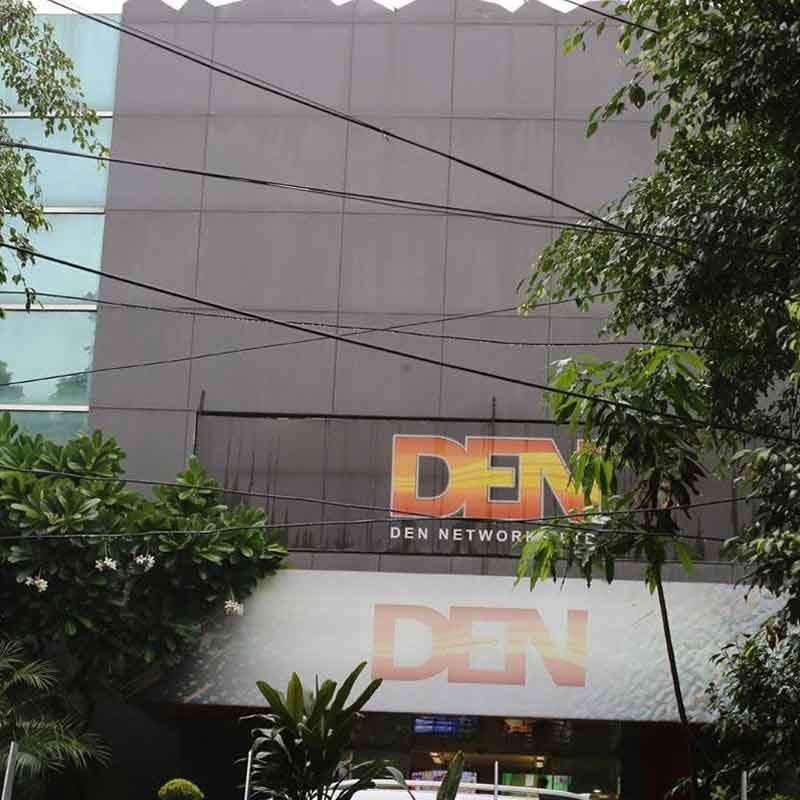
BENGALURU: Indian cable distribution network and broadband internet services (broadband) provider Den Networks Ltd reported 6 per cent drop in consolidated operating revenue numbers for the quarter ended 31 December 2018 (Q3 2019, quarter or period under review) as compared to the corresponding year ago quarter (y-o-y, Q3 2018).
Den Network’s operating profit (EBITDA) declined 39 per cent y-o-y during the period under review to Rs 48.10 crore (15.6 percent of operating revenue) from Rs 78.83 crore (24 per cent of operating revenue) in Q3 2018.
Den reported a net loss of Rs 31.21 crore in Q3 2019 as compared to a profit after tax of Rs 1.73 crore in Q3 2018.The company reported total comprehensive loss (TCL) of Rs 31.06 crore as compared to total comprehensive income of Rs 1.31 crore in Q3 2018.
Segment numbers
Den has two segments – cable distribution networks (Cable) and broadband. Both segments reported lower y-o-y revenues and operating loss for the quarter under review.
Cable segment revenue reduced 6.1 per cent y-o-y in Q3 2019 to Rs 291.59 crore from Rs 310.50 crore in Q3 2018. Den reported that the segment had an operating loss of Rs 8.95 crore as compared to an operating profit of Rs 25.20 crore in Q3 2018.
Den Networks reported 5.1 per cent y-o-y decline in operating revenue for its broadband segment in Q3 2019 at Rs 16.82 crore as compared to Rs 17.72 crore in Q2 2018. The segment’s operating loss reduced to Rs 6.60 crore in Q3 2019 from an operating loss of Rs 7.29 crore.
Let us look at the numbers reported by Den Networks for Q1 2019
Den Networks consolidated revenue from operations in Q3 2019 was Rs 308.41 crore, 6 per cent lower than the Rs 328.22 crore in Q3 2018. Consolidated total revenue including consolidated other income declined 6.4 per cent y-o-y in Q3 2019 to Rs 313.32 crore from Rs 334.92 crore in Q3 2018.
Consolidated total expenditure for the quarter under review increased 3.9 per cent y-o-y in Q3 2019 to Rs 337.84 crore (109.5 percent of operating revenue) from Rs 325.20 crore (99.1 per cent of operating revenue) in the corresponding quarter of the previous year.
Consolidated content cost increased 10.5 per cent y-o-y in Q3 2019 to Rs 148.65 crore (48.2 per cent of operating revenue) as compared to Rs 134.56 crore (41 per cent of operating revenue) in Q3 2018. Consolidated placement fees reduced 9.3 per cent y-o-y in Q3 2019 to Rs 9.99 crore (3.2 per cent of operating revenue) from Rs 12.48 crore (3.4 per cent of operating revenue) in Q3 2018.
Den Networks consolidated employee benefits expense during the period under review declined 7.5 per cent y-o-y to Rs 23.80 crore (7.7 per cent of operating revenue) from Rs 25.73 crore (7.8 per cent of operating revenue) in Q3 2018. Consolidated other expenses in Q3 2019 increased 1.6 per cent y-o-y to Rs 77.87 crore (25.2 per cent of operating revenue) in Q3 2019 from Rs 76.62 crore (23.3 per cent of operating revenue) in the corresponding quarter of the previous year.
Company speak
Den CEO SN Sharma said, “Cable subscription ARPU is consistent with respect to the previous quarter which stood at Rs 96 per box (including tax).
"TRAI tariff order implementation, a potential gamechanger in the cable industry, is underway wherein we have taken host of initiatives and strengthened our internal processes including IT systems. In order to migrate to the new tariff order, consumer has various options to exercise his choice of channels through our consumer / LCO mobile applications and web portal.
"Extensive LCO/distributor awareness programme are under progress wherein the partners are explained in clear terms the benefits they would get in the overall value chain. Prepaid system for cable subscription partners, the most preferred billingoption under the new tariff order, has been successfully rolled out during the quarter in select markets.”
Strategic investments in Den by Reliance Industries
On 17 October 2018, the Mukesh Ambani led Reliance Industries Ltd reported to the bourses that it has decided to make strategic investments thought a primary investment of Rs 2,045 crore through a preferential issue under SEBI regulations and secondary purchase of Rs 245 crore from the existing promoters for a 66 percent stake in Den. Reliance also said that it would make a primary investment of Rs 2,940 crore through a preferential issue under SEBI regulations for a 51.3 per cent stake in Hathway Cable and Datacom Ltd (Hathway) of the Rajan Raheja group.
LONDON and SINGAPORE, 15 January 2019 – Synamedia, the largest independent video software provider, today announced it has extended its seven-year partnership with TrueVisions, Thailand’s leading pay-TV operator.
As part of the new multi-year contract, Synamedia VideoGuard will protect and secure TrueVisions’ investments in live sports, news, entertainment and other premium content delivered to its 3.9 million cable and satellite subscribers. The deal ensures that TrueVisions can deliver new premium, blended broadcast/IP services to customers without compromising on security. In 2019, TrueVisions will roll out an Android TV set-top box which will also be protected by VideoGuard.
Synamedia is the market leader in video security solutions with the industry’s longest and strongest track record safeguarding pay-TV operators’ revenues against pay-TV piracy. Drawing on its 30-year heritage, Synamedia’s continuing relationship with TrueVisions will involve working on new security solutions to fight piracy and protect revenue streams.
Dr. Jen, Procurement Director of True Group of Companies, said, “We have benefitted from VideoGuard’s industry-leading security since 2011 to secure our investments in premium content. By extending our partnership with Synamedia we are protecting our brand with the world’s leading set-top box security solution and safeguarding subsequent potential revenues as we look to enhance and enrich our subscribers’ viewing experiences with new blended broadcast/IP services.”
Sue Couto, Senior Vice President and General Manager, Asia Pacific for Synamedia, added, “Being the market-leader in Thailand, it is vital that TrueVisions’ video content and services are secured against all types of threats. Synamedia is committed to stamping out piracy and will continue to work closely with TrueVisions to maximise their current revenues while also developing new solutions and services that will delight their customers and open up additional revenue streams.”
MUMBAI: The third quarter of 2018 saw a slight fall in pay TV subscribers, making it the first ever marked changed and probably a point of worry for cable and DTH operators world over.
The decrease was by 0.11 million, down by 0.02 per cent, as per informitv’s Multiscreen Index reported by Advanced Television.
Out of the top 100 services, just 43 saw gains including India’s Dish TV where it saw an increase of 200,000. This helped keep up the overall gain in the Asia Pacific region by 1.22 million. With a total of 23.5 million subscribers, Dish TV led the world pack in terms of subscriber numbers with about 23.5 million subscribers after its merger with Videocon d2h.
Numbers fell for the first time in the Americas, Asia, and MENA regions. Globally, cable saw a cut of 0.22 million while DTH lost 0.9 million. In the US, AT&T U-Verse was the only one to witness a rise in subscribers by just 13,000.
Almost all quarters, to date, have seen a 1 per cent rise stay steady. Analysts will continue to see whether coming quarters will see more decline or a revival is in sight.
MUMBAI: Major DTH players and MSOs have started updating new channel and package pricing as per the new TRAI tariff order. Soon after major broadcasters announced new rates, DPOs are taking swift action making it easier for consumers to choose their desired channels. Last month, TRAI gave an additional one month for the implementation of the new regime to make the transition of consumers smoother.
Essel group promoted Siti Networks has revealed five suggestive packs ranging from Rs 52.5 to Rs 166 excluding GST. The number of channels also varies in the suggestive packs. While the first one has 18 channels, the highest number of channels i.e 49, is available on the fifth pay pack.
Another national MSO Den Networks has revealed over 10 suggestive packs leaving more options from consumers. The prices of the packages range from Rs 199 to Rs 500 inclusive of taxes. DEN Intro Pack priced Rs 199 mostly comprises free to air (FTA) channels barring a few pay channels in the news and infotainment space while DEN Titanium Pack priced at Rs 500 offers a large number of channels across genres.
Leading MSO Hathway Cable and Datacom has also updated several new packs including the base pack containing 100 FTA channels along with regional add-ons and genre add-ons. Moreover, Hathway has created different packages for different markets like Maharashtra, Karnataka, West Bengal, Telangana, Tamil Nadu and Hindi speaking markets. Both the Prime and Royal packs offered by the operator include major channels from all the genres while the Royal packs leave much more option.
Two DTH players i.e., Dish TV and Airtel Digital TV, have published the prices of individual channels. However, along with segregating the available channels on its network on the basis of genres, Dish TV has highlighted different packs from broadcasters in another list. Airtel Digital TV has only provided the pricing of the individual channels on its website. The DTH operator is offering no discount on the price which is offered by the broadcasters and just passing on the channels by adding tax to the same pricing.
MUMBAI: Cable operators across the country, and particularly in Maharashtra, seem to have upped the ante in their confrontation with the Telecom Regulatory Authority of India (TRAI) over the new tariff order that will be applicable to the broadcast sector from 29 December 2018. At a protest gathering in the city on Wednesday, the Cable Operator and Distributors’ Association (CODA) called for a cable TV blackout from 7 to 10 pm today.
The cable operator fraternity has taken affront to the TRAI formula that dictates the revenue sharing model. As per the regulator’s math, MSOs and LCOs will split the network capacity fee (NCF) of Rs 130 in a minimum 55:45 ratio, with no share for the broadcasters. Consumers will have access to 100 FTA channels, including 26 mandatory Doordarshan channels, by paying the NCF. For pay channels, broadcasters will pocket 65 to 80 per cent of the MRP with the MSO and LCOs sharing the rest in a 55:45 ratio.
“The protest is about two things, one is the price hike which is going to affect the customer and second the revenue share. The cable operators must get 40 per cent and the remaining 60 per cent should be divided between the broadcaster and the MSO,” said CODA’s Anil Parab.
Apart from the sector regulator, the Maharashtra cable operators seem to have trained their guns at the Star India Network too. There’s a protest planned at Lower Parel’s Urmi Estate, which houses the Star India office, at 2 pm on 28 December. Not just that, LCOs say they will also refrain from pushing Star’s channel pack to consumers.
“We are boycotting Star India channels. We are going to sit outside Star office in Lower Parel on 28 December at 2 pm. We will not book Star India channels initially,” added Parab.
The reason for their ire at Star is the broadcaster’s alleged refusal to meet and negotiate with cable operators.
“All the broadcasters except Star are in communication with us and are willing to sit across the table to iron out differences,” Maharashtra Cable Operators’ Federation committee member Asif Syed told Indiantelevision.com.
He also said that dissuading consumers from opting for the Star pack won’t be all that difficult given the personal equations LCOs share with most of them.
“It takes about a week to change the viewing preference of consumers. We have first-hand experience of this,” he added.
While the distribution ecosystem is now up in arms, it was Star India that fought the TRAI tooth and nail in the Madras High Court and then the Supreme Court over the tariff order.
In private conversation, however, some operators agree that they should have voiced their concerns on the matter ahead of time. The last-minute agitations may not yield the desired results, but the faction-riddled cable fraternity is determined to put up a united front.
“We demand that the revenue sharing should be around 60 and 40 per cent. 60 per cent of the pay channel revenue should be shared between the MSOs and the broadcasters, and the remaining 40 should purely go to the LCOs. On the FTA channels, minimum fee of Rs 20 should be taken by the MSO for carrying channels up to the LMOs headend, as after that he distributes on his own network. 80 per cent of the networks where FTA channels are carried are in the hands of the LCOs. 20 per cent of the FTA channels revenue should be given to the MSOs,” argues MNS Cable Sena VP Jagdish Joshi.
While the LCOs are spoiling for a fight, MSOs don’t seem to be wanting a piece of the action.
“The protest is about the amendments in the sharing revenue model on pay channels and want it to be changed to 60:40 from 80:20 currently. There is no support from us,” a member of the senior management of a national MSO told Indiantelevision.com on the condition of anonymity.
This protest isn’t just a Mumbai phenomenon. LCOs from over 30 associations across the country descended on New Delhi’s Jantar Mantar on Wednesday asking TRAI to amend the tariff order.
The Vadodara Cable Operator Association, joined by their counterparts from Ahmedabad, called for a complete blackout on 28 December night to let their displeasure known to the regulator during a gathering at the Gandhinagar Gruh.
In Hyderabad on Tuesday, the Old City Cable TV Operators Welfare Association threatened to blackout paid channels and stop payments to MSOs if they were compelled to pay based on the new tariff regime.
“We are not against the tariff order; we just want some amendments to be done before the implementation. As per the trends going in the country, if the revenue share is very unfair, nobody is ready to do business in the country,” Joshi concluded.
Stepping up its efforts to enable a smooth transition, TRAI said it is preparing a detailed Migration Plan for all the existing subscribers. On Wednesday, the regulator issued a circular allaying fears of a potential blackout.
“The authority has noticed that there are messages circulating in the media that there may be a black-out of existing subscribed channels on TV screens after December 29, 2018. The authority is seized of the matter and hereby advises that all broadcasters/DPOs/LCOs will ensure that any channel that a consumer is watching today is not discontinued on 29.12.2018. Hence, there will be no disruption of TV services due to implementation of the new regulatory framework,” the circular said.
Earlier this month, filed a petition seeking clarification on the issue of 15 per cent cap on discount on a bouquet price of TV channels to consumers that had been set aside by Madras High Court while upholding TRAI’s right to regulate the broadcast sector. The matter will be listed when the top court resumes post the winter break in January 2019. There’s another case being heard in the Delhi High Court involving Tata Sky, Airtel Digital TV and Discovery India that will be heard on 10 January.
The LCOs are closely monitoring these matters. They also don’t rule out raking up the ongoing issue with the TDSAT. For now, however, they intend to show their might to TRAI and the broadcasters as the country prepares to adopt a new tariff regime. It remains to be seen what impact they can conjure up.
BENGALURU: Ortel Communications Ltd (Ortel) reported a higher loss for the quarter ended 30 September 2018 (Q2 2019, period or quarter under review) as compared to the immediate trailing quarter Q1 2019 and the corresponding year ago quarter Q2 2018. On 27 November 2018, the National Company Law Tribunal, New Delhi (NCLT) passed an order for commencement of corporate insolvency resolution process (CIRP) based on an application filed by Sony Pictures Network India (SPN) which is an operational creditor of Ortel. The results for Q2 2019 pertain to the period before the CIRP.
Ortel’s net loss after taxes for Q2 2019 more than tripled y-o-y to Rs 17.62 crore as compared to Rs 5.75 crore in Q2 2018. The company had reported loss after tax of Rs 13.48 crore for the immediate trailing quarter. Operating loss (negative EBITDA) for the period under review was Rs 3.39 crore as compared to an operating profit of Rs 12.25 crore in Q2 2018 and an operating profit of Rs 0.21 crore in Q1 2019.
Oretl’s revenue from operations in Q2 2019 declined 34 per cent y-o-y to Rs 31.56 crore as compared to Rs 47.83 crore in Q2 2018, but was fractionally higher by 0.7 per cent q-o-q as compared to Rs 31.35 crore in Q1 2019. Total Income in Q2 2019 declined 33.4 per cent y-o-y to Rs 32.29 crore as compared to Rs 48.51 crore in Q2 2018, but was 1.8 per cent higher q-o-q than Rs 31.71 crore.
Segment numbers
Four segments contribute to Ortel’s revenue. They are cable TV, be, infrastructure leasing and others. Revenues from cable TV, broadband and infrastructure leasing segments declined in Q2 2019 as compared to Q2 2018.
Ortel’s Cable TV segment’s revenue declined 32 per cent in the quarter under review to Rs 25.67 crore from Rs 37.73 crore. The segment reported an operating profit of Rs 6.03 crore in Q2 2019 as compared to an operating profit of Rs 12.16 crore in Q2 2018.
Broadband segment’s revenue declined 44.7 per cent in Q2 2019 to Rs 3.31 crore from Rs 5.99 crore in Q2 2018. The segment’s operating profit declined to less than a fourth (declined 76.3 per cent) in Q2 2019 to Rs 0.32 crore as compared to Rs 1.34 crore in the corresponding quarter of the previous fiscal.
Ortel’s infrastructure and leasing segment had operating revenue of Rs 1.77 crore in Q2 2019 which was 47.4 percent lower than the Rs 3.36 crore in Q2 2018. The segment’s operating profit declined 41.8 per cent in Q2 2019 to Rs 1.48 crore from Rs 2.54 crore in Q2 2018.
The numbers for Ortel’s ‘Others’ segment are small and have not been considered in this report.
Let us look at the other numbers reported by Ortel
Ortel’s total expenditure in Q2 2019 declined 18.1 per cent to Rs 49.91 crore from Rs 50.53 crore in Q2 2018. Programming costs reduced 18.1 per cent in Q2 2019 to Rs 9.11 crore from Rs 11.12 crore in Q2 2018. Bandwidth costs in the quarter under review reduced 24.8 per cent to Rs 3.27 crore from Rs 4.35 crore. Finance costs in Q2 2019 reduced 6.7 per cent to Rs 6.8 crore from Rs 7.29 crore in Q2 2018. Employee benefits expense in Q2 2019 declined 9.7 per cent to Rs 4.63 crore from Rs 5.13 crore in Q2 2018. Other expenses in the quarter under review increased 19.7 per cent to Rs 17.94 crore as compared to Rs 14.98 crore in Q2 2018.
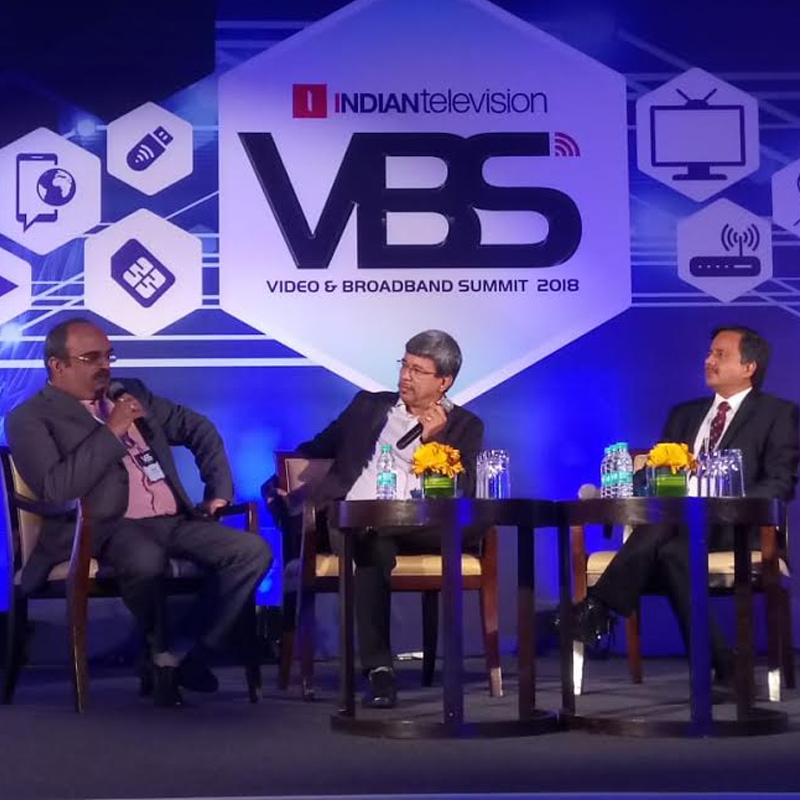
GOA: With the emergence of a large number of OTT platforms and cord-cutting phenomenon globally, the future of pay-TV has often been questioned. The talk of the town seems to be about the how pay-TV industry will continue to thrive in such an environment. Moreover, the new tariff order (NTO) in India is also set to overhaul the entire value chain, leading to some uncertainty.
Against this backdrop, Video and Broadband Summit 2018 held an intense discussion on the “future of pay TV in India”. Travelxp CEO Prashant Chothani and Doordarshan additional director general Sunil participated in the session which was moderated by Indiantelevision.com founder and CEO Anil Wanvari. The session had viewpoints from two entirely different players as Chothani provides a niche premium offering to viewers, while Sunil is responsible for public service which caters to the masses.
Travelxp works on a B2B2C model despite having 100 per cent original content. Chothani, who is very passionate about linear TV, does not share his content with any OTT platform other than Netflix in North America. He thinks it is extremely crucial to protect linear business as much as possible.
Chothani, talking about the NTO, said that DPOs are in existential crisis. He thinks DD FreeDish is the biggest challenge for distribution platform operators (DPOs) as the former offers over 100 free to air channels to consumers for free and the latter has to charge Rs 130 for the same as per the NTO.
“FreeDish is your biggest competitor. Where do you think these 30 or 40 million homes have come from? They go to a large part of north India, UP, Bihar and lot many other markets, where the customer is not willing to pay even Rs 99. There comes the cord cutting in favour of DD FreeDish because this population is satisfied whatever channels come to them for free,” he commented.
While there are already technological disruptors like Hotstar, Netflix, Amazon threatening linear TV’s growth, consumers, who don’t wish to pay for the channels, can turn to DD FreeDish, said Sunil endorsing Chothani’s view.
From the audience, Doordarshan director general Supriya Sahu added that DD FreeDish is not only used by a marginal section of the society but the service is quickly evolving as an alternative option which clearly indicates that it could be a potential threat for DPOs.
When asked if DD FreeDish would partner with broadcasters, Sunil said he was open to the idea of collaboration. Rather than making money, the pubcaster’s aim is to let the system grow, he said.
“We have to work on a business model on that front and it is very difficult to answer this question at this point of time because the call has to be taken by the government. But yes cable operators and broadcasters are a part of this system. They are always welcome to partner with us,” he added later.
He also thinks NTO will be a big game changer as the difference in price between small LCOs and bigger ones has been taken away by TRAI regulations. He also believes that the future of pay-TV is threatened by TRAI regulations. Customers will watch what they want, where they want and when they want and will only pay for that purchase, he added.
Chothani also added that India is a very price sensitive market. Even in Serbia where currency value is weaker than India’s, Coke is priced the same as in Germany but in India, it is offered at a much cheaper rate. This nature does not fade away when it comes to entertainment.
“We content creators got greedy. We thought why would you pay 50-60 per cent money with DPOs and do B2B2C business why not B2C. If you see RIOs of some broadcasters, you will see their B2C offering subscription on their apps is cheaper than they are giving to LCOs or DPOs. Why? Because OTT apps are not regulated,” said Chothani.
“So, this regulation is also going to take away a lot of customers from traditional DPOs unless they play smart. Broadcasters have been playing this game for too long and will keep on playing for times to come. But DPOs need to rethink now. This is a golden opportunity for them. So, they need to get behind and think how they can make consumers pay for content while DD FreeDish is offering so many channels for free,” he added.
The experts believe that though the future of pay-TV has a few challenges, the NTO offers opportunities to restructure the industry and make the business profitable for all.
BENGALURU: The Sameer Manchanda-led Indian cable distribution network and broadband internet services (broadband) provider Den Networks Ltd reported 5.3 percent drop in consolidated operating revenue numbers for the quarter ended 30 September 2018 (Q2 2019, quarter or period under review) as compared to the corresponding year ago quarter (y-o-y, Q2 2018). Though revenue based on a quarter on quarter (q-o-q) basis and some other numbers were lower, the company’s operating profit or EBITDA in Q2 2019 was better than Q1 2019. The company said in Q1 2019 that it had tried to cut down costs, and it has managed to do that, but its consolidated content costs during the quarter under review increased by almost Rs 16 crore y-o-y, at but the same time have declined by almost Rs 2 crore q-o-q.
Den Network’s operating profit (EBITDA) declined 37.9 percent y-o-y during the period under review to Rs 50.63 crore (16.1 percent of operating revenue) from Rs 81.55 crore (26 percent of operating revenue) but increased 9.9 percent q-o-q from Rs 57.84 crore (18 percent of operating revenue) as mentioned above.
The company’s losses – after taxes (net loss) as well as total comprehensive loss (TCL) have increased y-o-y as well as q-o-q in the period under review. The company reported a net loss of Rs 28.54 crore during Q2 2019 and a loss of Rs 27.98 crore for Q1 2019 as compared to a net profit (PAT) of Rs 1.11 crore in Q2 2018. Den reported TCL of Rs 28.34 crore for Q2 2019, TCL of Rs 27.75 crore in Q1 2019 as compared to total comprehensive income of Rs 1.31 crore in Q2 2018.
Segment numbers
Den has two segments – cable distribution networks (Cable) and broadband. Both segments reported lower y-o-y revenues, but in the case of broadband, Den reported a slight q-o-q increase in revenue for Q2 2019.
Cable segment revenue reduced 4.6 percent y-o-y in Q2 2019 to Rs 293.86 crore from Rs 307.99 crore in Q2 2018 and reduced 1.6 percent q-o-q from Rs 298.59 crore in Q1 2019. Den reported that the segment had an operating loss of Rs 5.82 crore as compared to an operating profit of Rs 27.75 crore in Q2 2018 but the loss in the quarter under review was lower than the operating loss Rs 8.26 crore in Q1 2019.
Den Networks reported 16.6 percent y-o-y decline in operating revenue for its broadband segment in Q2 2019 at Rs 16.51 crore as compared to Rs 19.80 crore in Q2 2018 but 5.9 percent more than the operating revenue of Rs 15.59 crore in Q1 2019. The segment’s operating loss reduced slightly to Rs 6.16 crore in Q2 2019 from an operating loss of Rs 8 crore in Q1 2019 and an operating loss of Rs 8.93 crore in Q2 2018.
Let us look at the numbers reported by Den Networks for Q1 2019
Den Networks' consolidated revenue from operations in Q2 2019 was Rs 310.37 crore, Rs 314.18 crore in Q1 2019 and Rs 327.79 crore in Q2 2018. Consolidated total revenue including consolidated other income declined 5.9 percent y-o-y and 2.5 percent q-o-q in Q2 2019 at Rs 315.05 crore from Rs 334.90 crore in Q2 2018 and from Rs 322.98 crore in Q1 2019.
Consolidated total expenditure for the quarter under review increased 11.9 percent y-o-y in Q2 2019 to Rs 336.78 crore (107.3 percent of operating revenue) from Rs 326.12 crore (103.8 percent of operating revenue) in the corresponding quarter of the previous year but declined 1.3 percent q-o-q from Rs 347.07 crore (110.59 percent of operating revenue).
As mentioned above, the company has seen a y-o-y rise in content cost in actual value as well as in terms of percentage of operating revenue. Consolidated content cost increased 11.9 percent y-o-y in Q2 2019 to Rs 148.23 crore (47.2 percent of operating revenue) as compared to Rs 132.47 crore (42.2 percent of operating revenue) in Q2 2018 but declined 1.3 percent q-o-q from Rs 150.12 crore (47.8 percent of operating revenue). Consolidated placement fees increased 3 percent y-o-y in Q2 2019 to Rs 11.02 crore (3.5 percent of operating revenue) from Rs 10.70 crore (3.4 percent of operating revenue) and increased 9.7 percent q-o-q from Rs 10.05 crore (3.2 percent of operating revenue).
Den Networks' consolidated employee benefits expense during the period under review declined 13.7 percent y-o-y to Rs 23.64 crore (7.5 percent of operating revenue) from Rs 27.38 crore (8.7 percent of operating revenue) in Q2 2018 but increased 0.8 percent q-o-q from Rs 23.45 crore (7.5 percent of operating revenue). Consolidated other expenses in Q2 2019 increased 1.3 percent y-o-y to Rs 76.65 crore (24.4 percent of operating revenue) in Q1 2019 from Rs 75.69 crore (24.1 percent of operating revenue) in the corresponding quarter of the previous year but reduced 8.9 percent q-o-q from Rs 84.16 crore (26.8 percent of operating revenue).
Strategic investments in Den by Reliance Industries Ltd
On 17 October 2018, the Mukesh Ambani-led Reliance Industries reported to the bourses that it has decided to make strategic investments thought a primary investment of Rs 2,045 crore through a preferential issue under SEBI regulations and secondary purchase of Rs 245 crore from the existing promoters for a 66 percent stake in Den. Reliance also said that it would make a primary investment of Rs 2,940 crore through a preferential issue under SEBI regulations for a 51.3 percent stake in Hathway Cable and Datacom Ltd (Hathway) of the Rajan Raheja group.
BENGALURU: Indian multi-system operator and internet service provider GTPL Hathway Ltd (GTPL) reported 13.8 percent increase in total income for the quarter ended 30 September 2018 (Q2 2019, quarter or period under review) as compared to the corresponding year ago quarter (y-o-y) Q2 2018. GTPL’s Total Income in Q1 2019 was Rs 317.40 crore, for the corresponding year ago quarter it was Rs 278.88 crore.
GTPL has two segments – cable TV business and internet service. Cable TV business operating result increased 82.1 percent y-o-y to Rs 15.99 crore in Q2 2019 from Rs 8.78 crore in the corresponding quarter of the previous year. Operating revenue of GTPL’s cable TV business increased 15.6 percent y-o-y to Rs 276.69 crore from Rs 239.32 crore.
GTPL’s unternet service operating revenue in Q2 2019 was almost flat – it increased 0.3 percent y-o-y to Rs 35.75 crore from Rs 35.64 crore. Internet service segment’s operating results for Q2 2019 declined by 99.6 percent y-o-y to just Rs 0.01 crore from Rs 3.67 crore in the corresponding quarter of the previous year.
GTPL’s consolidated profit after tax (PAT) increased 28.5 percent y-o-y in Q2 2019 to Rs 16.01 crore from Rs 12.45 crore in Q2 2018. Consolidated total comprehensive income for the period increased 33.8 percent y-o-y to Rs 16.79 crore from Rs 12.55 crore. Consolidated operating profit (EBITDA) excluding other income increased 11.5 percent y-o-y in Q2 2019 to Rs 85.20 crore (27.3 percent of operating or op revenue) from Rs 76.39 crore (27.8 percent of op revenue) in the corresponding quarter of the previous fiscal.
Let us look at the other numbers reported by GTPL Hathway
Consolidated total expenditure increased 15.7 percent y-o-y during the quarter under review to Rs 294.74 crore from Rs 254.81 crore in Q2 2018. Pay channel cost in Q2 2019 increased 20.4 percent y-o-y to Rs 132.33 crore from Rs 109.89 crore in the corresponding quarter of the previous year. Other operational costs reduced 10.6 percent y-o-y in Q2 2019 to Rs 20.98 crore from Rs 23.46 crore in Q2 2018.
Employee benefits expense in Q2 2019 increased 9.5 percent y-o-y to Rs 35.81 crore from Rs 32.70 crore in the corresponding quarter of the previous fiscal. Finance costs increased 68.8 percent y-o-y during the quarter under review to Rs 17.91 crore from Rs 10.61 crore. Other expenses in the period increased 17.2 percent y-o-y to Rs 38.12 percent in Q2 2019 from Rs 32.52 crore in the corresponding quarter of the previous year.