Category: Local Cable Operators

  • Hathway back on growth trajectory, reports consolidated profit of Rs 68 cr in Q3

    Hathway back on growth trajectory, reports consolidated profit of Rs 68 cr in Q3

    MUMBAI: After facing consecutive losses, Hathway Cable and Datacom has reported a consolidated profit of Rs 68.18 crore in the third quarter of the financial year 2019-20. The multi-system operator (MSO) had posted consolidated loss of Rs 57.87 crore in the corresponding quarter of the last financial year.

    The cable network improved his revenue from operations by 12.3 per cent to Rs 450.82 crore in Q3 of FY20 as compared to Rs 401.43 crore in a corresponding quarter of last year.

    Whereas, the consolidated total income for the December-ended quarter rose by 23.2 per cent to Rs 512.61 crore compared to Rs 416.07 crore in the corresponding quarter of the last financial year.

    The company reported consolidated EBITDA of Rs 128.8 crore up by 52 per cent against Rs 84.5 crore in the corresponding quarter last financial year. Meanwhile, the EBITDA margin grew by 29 per cent against 8 per cent in the same quarter of FY19.

    In the segment revenue, the broadband business grew by 2.8 per cent to Rs 143.2 crore and cable television grew by 15.4 per cent to Rs 307.62 crore in the December-ended quarter of FY20.

    The subscription revenue grew by 18 per cent to 354.8 crore against Rs 300.8 cr whereas activation revenue shrunk by 8 per cent to Rs 14.7 crore compared to Rs 16 crore and placement revenue also slumped by 6 per cent to Rs 74.7 crore versus Rs 79.1 crore in Q3 last financial year.

  • LCOs and new tariff order challenges

    LCOs and new tariff order challenges

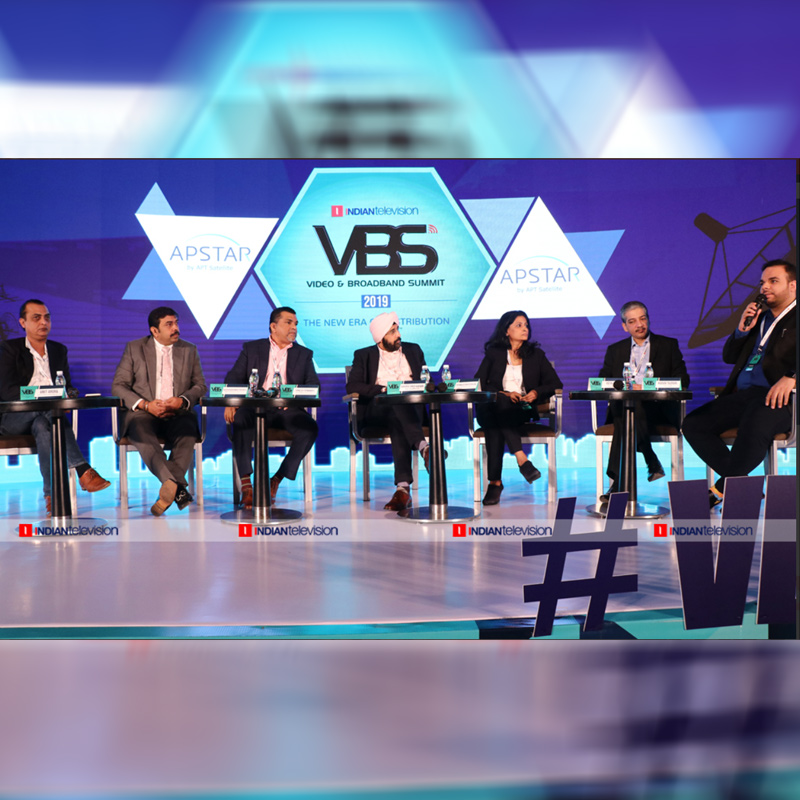
    MUMBAI: With the evolution of television, cable industry has gone through various challenges from competing with DTH operators to digitisation to NTO. Although implementation of NTO was the biggest challenge for the cable industry, it managed to overcome all the challenges they came across. Going ahead LCOs are also gearing up for challenges with OTT apps with its Hybrid boxes. The industry experts gathered to discuss how has the role of the LCO changed under the new regulatory framework and its significance going forward at VBS 2019.

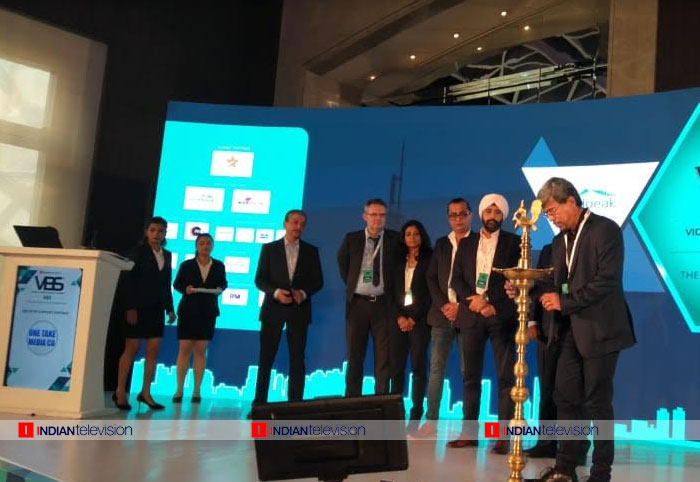
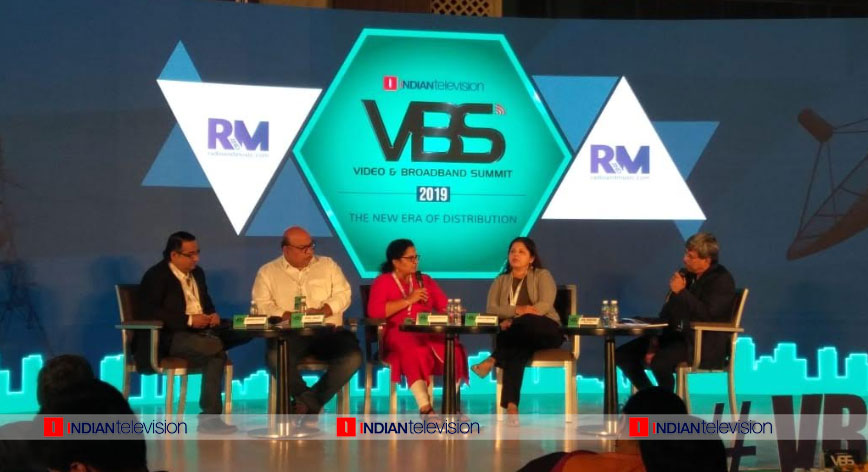
    Video and Broadband Summit 2019 orgainised by Indiantelevision.com on11 December gave the platform to the DPOs, MCOs and LCOs to discuss the issues faced by them. One of the panel discussions of VBS 2019 highlighted the role of LCOs post NTO where the experts discussed the impact of NTO on cable industry, technical challenges they came across, customer churns in the transition period of NTO, and importance of educating LCOs on bouquets and a la carte prices. 

    The panel was moderated by One Take Media co-founder and chief executive officer Anil Khera. On the panel were IndusInd Media & Communication Ltd. chief operating officer N K Rouse; ABS Group of Companies MD & chairman Atul Banwarila Saraf; Maharashtra Cable Operators Federation (MCOF) president Arvind Ramesh Prabhoo; UCN Cable Network Pvt Ltd head – operations Debashis Mohanty and Ashwini Cable Santosh Yadav. 

    Khera set the tone of the discussion by briefing the audiences on the challenges faced by LCOs till date and how they have overcome all those challenges successfully. NTO was the biggest challenge for the industry, Rouse explained that the new NTO, for his company was not a new tariff order, but was a new technical order and his company had to face lot of technical challenges to implement the new NTO. 

    “In the initial stage there was a lot of confusion. With the top five broadcasters, for 335 bouquets or packs, we have more pay channels and DPO packs. Customers were confused as they were not sure what to select. We had challenges in convincing the customers as everything was new. But as things settled down, the viewership pattern had changed with lots of ups and downs but still packages keep coming and going,” he said. 

    “There was a saying that content is the king and distribution is the God. The time has come that content remains the king, but God has changed. Now customer chooses the God. We all have to come and work together and ensure that we take care of the customer’schoice. Challenges will keep coming and there will be amendments in NTO, but things will settle down. I look forward for collaboration with the stakeholders and I am sure things will turn positive,” he opined.

    There has been 15 to 20 per cent of customer churn in the transition period of NTO. Saraf said in the last six to eight months, he has observed that people in small towns are still using TV and there is a trend of using two or three TVs in one house. To get these customers back, LCO needs to be educated, but MSOs are not able to educate these customers as the customers themselves are not ready to educate themselves.

    Saraf also said, “Though operators and MSOs like us are not much happy post NTO, we are able to compete with big MSOs at the same cost. We do not deny entry to the new areas as our preposition of expansion is different and we can expand our business.” He further added that there are lots of things which small MSOs can build among their LCOs, as compared to big MSOs. For big MSOs, it is difficult to control 10 – 15 thousand of LCOs. A limited number of LCOs can be controlled and good business can be built post NTO.

    Prabhoo believes that transformation has already started but is unaware of how much the MSOs are assisting FTH with the transformation. He added that the network is operated and owned by the last mile owner and it will be the responsibility of the last mile owner to upgrade the network.

    The panellists also agreed that they have to make sure to reach platforms like Netflix or Amazon and for that LMOs have to immediately upgrade to DTHs and then MSOs will be able to help them to launch a wide OTT platform. Once this happens, cable networking can be similar to that of an OTT platform.

    Mohanty said, “As per the customer’s perspective, there is a demand for content. Customers will return to MSOs, if MSOs come up with OTT content and provide a number of services as per the customer’s choice. Most of the time, LCOs have 50 per cent digital connection, so they have enough manpower to upgrade their network. Once MSOs upgrade their network, it can provide services as per the customer’s demand.”

    He also informed that they have started hybrid boxes. Once the hybrid boxes are installed at the customer’s place, customers can view both offline and online content.

    Saraf said that five years back the market was not up with the hybrid boxes and LCOs were not ready toinvest in it. Now from last 2 – 3 years we have OTT platforms and hybrid boxes. Now FTTH will create something which will influence the customers and LCOs to invest in hybrid boxes.

    Yadav replied to Khera’s question of cable collaborating with broadband, “NTO implementation has been big for the LCOs and there has been increase in the operating cost of the LCO. So LCO has to provide additional services like broadband. LCO can tie up with the MSOs and go ahead with the existing costumers. I believe that all LCOs do not have their 100 per cent base and so they already have chosen for their cableservices. They can advertise and can assure that they can provide good services by upgrading their infrastructure.”

    On NTO Prabhoo commented, “I am not sure if the NTO’s image’s in true spirit has been implemented or not or if the customers have understood that what NTO has started to provide them. During the pre-digitisation era the NTO was under declaration by the LMOs. When digitisation came in, each and every set-up box was accounted with LMOs and with MSOs. He said he is unaware if broadcasters benefited from that. But in the post NTO there has been 15 to 20 per cent drop in the subscriber base, but ARPU has increased in a particular rate.”

    Rouse commented, “When NTO was implemented few broadcasters thought that there will be a drop in the base. There was a massive fall from DTH or videos but I am sure we could retain some customers. More transparency is required as customers have made a choice, for which some laws have to be implemented.” 

  • TiVo to merge with Xperi Corp

    TiVo to merge with Xperi Corp

    MUMBAI: Late last week, Xperi Corp  and TiVo Corp announced that they have entered into a definitive agreement to combine in an all-stock transaction, representing approximately $3 billion of combined enterprise value. The transaction creates a leading consumer and entertainment technology business and one of the industry’s largest intellectual property (IP) licensing platforms with a diverse portfolio of entertainment and semiconductor intellectual property.

    The merger agreement provides for a 0.455 fixed exchange ratio, which implies a 15 per cent  premium to TiVo’s shareholders based on each of Xperi’s and TiVo’s 90-day volume-weighted average share prices. At close, Xperi shareholders will own approximately 46.5 per cent  of the combined business, and TiVo shareholders will own approximately 53.5 per cent.

    The deal is expected to close during the second quarter of 2020, subject to regulatory approvals, the approval by the shareholders of each company, and other customary closing conditions.

    Compelling Benefits of Combining Two Innovative Product and IP Licensing Leaders

    This transaction combines two technology pioneers who have shaped how millions of consumers access and experience entertainment content, and whose innovations are found in billions of devices around the world. Serving hundreds of businesses ranging from content providers to consumer electronics and automotive manufacturers, the combined entity will provide an amazing entertainment platform for tens of millions of individual consumers and create a powerful platform for the discovery, delivery, and monetization of content.

    The volume of entertainment content has exploded, with more ways than ever before to access it. TiVo’s leading content aggregation, discovery, and recommendation capabilities enable viewers to more easily find, watch, and enjoy entertainment. When coupled with Xperi’s strong presence and product capabilities in the home, automotive, and mobile device ecosystems, the combined company will have a unique industry platform to address an ever-increasing consumer desire to enjoy entertainment anywhere, anytime, on any device.

    Additionally, the combination will create an intellectual property licensing platform that spans a number of the largest addressable markets in entertainment content, consumer electronics, and semiconductors. With more than 10,000 patents and applications between the two companies and minimal licensee overlap, the combined IP business will be one of the largest licensing companies in the world. Further, the combined business will benefit from greater research and development capabilities, as well as customer diversification.

    “This landmark combination brings together two highly complementary companies poised to set the industry standard for user experiences across the digital value chain,” said Xperi CEO Jon Kirchner. “Together, we will be able to integrate TiVo’s leading content aggregation, metadata, discovery, and recommendation capabilities with our home, automotive, and mobile technology solutions to help our customers create experiences that excite and delight consumers. Additionally, the combined company will continue to unlock the value of our strategic and sizable patent portfolios by bringing together our deep industry expertise and powerful innovation engines. Through greater scale and diversity, we will deliver attractive and sustainable long-term cash flow and shareholder value.”

    “There is more content, and more ways to enjoy that content, than ever before,” said TiVo CEO David Shull. “In a rapidly expanding and fragmenting digital universe, consumers want and need to be able to easily find and enjoy the content that matters to them. TiVo has always been the company that brings entertainment together. Now, we can significantly expand our mission. With Xperi’s annual licensing of more than 100 million connected TV units, and complementary relationships with major content providers, consumer electronics manufacturers, and automotive OEMs, our combined company will transform the home, car, and mobile entertainment experience for the consumer.”

    Long-Term Vision and Value Creation

    The first step in the combined company’s value creation plan will focus on integrating the companies’ respective product and IP licensing businesses. Together, the companies expect to benefit from a larger and stronger platform to drive growth and innovation, accelerate time-to-market, and improve IP licensing monetisation and outcomes. The product business expects to pursue substantial cross-selling opportunities especially in its home and automotive markets.

    The new company had $1.09 billion in TiVo revenue and Xperi billings and more than $250 million in operating cash flow on a pro forma basis for the twelve months ended 30 September, 2019. The combined company expects to deliver revenue synergies by bringing new, innovative solutions to consumer electronics and automotive companies to help address the massive shift in media and entertainment distribution and consumption.

    Additionally, the companies expect to achieve at least $50 million of annualised run-rate cost savings by year-end 2021 through the integration of their respective product and IP licensing businesses, the majority of which are expected within the first twelve months after closing. These cost savings are incremental to those that are expected as a result of TiVo’s ongoing cost-transformation plan.

    In light of the business combination, TiVo has suspended its near-term plans to separate its product and IP businesses. Upon closing of the transaction, each company’s respective product and IP businesses will be integrated and operated as separate IP licensing and product business units. This will facilitate a potential separation of the combined businesses at a later date.

    Added David Shull: “TiVo’s management team and board have engaged in a comprehensive review of TiVo’s businesses over the past year, and we are confident that this combination with Xperi is the right path forward for all our stakeholders. While we previously planned to separate our product and IP licensing businesses in April 2020, we believe today’s combination with Xperi will enable us to create even more value for our shareholders in both the near and long term by allowing each to go to market with greater financial and operational scale.”

    Transaction Details

    Under the terms of the merger agreement, the shares of TiVo and Xperi stockholders will be converted into the shares of the new parent company based on a fixed exchange ratio of 0.455 Xperi share per existing TiVo share. Upon completion of the merger, Xperi stockholders will own approximately 46.5 share and TiVo stockholders will own approximately 53.5 share of the new parent company on a fully diluted basis.

    In connection with the transaction each company’s debt will be refinanced on a combined basis. To meet this objective, the companies have secured $1.1 billion of committed financing from Bank of America and Royal Bank of Canada.

    Management and Board of Directors

    Following the completion of the transaction, Xperi’s chief executive officer Jon Kirchner, will serve as chief executive officer of the new parent company and Xperi’s CFO, Robert Andersen, will serve as chief financial officer. TiVo’s chief executive officer, David Shull, will continue as a strategic advisor to ensure a successful integration.

    The board of directors of the new parent company will consist of seven directors, including Xperi CEO Jon Kirchner, in addition to three directors appointed by Xperi and three directors appointed by TiVo. The chair of the board will be selected by the independent directors of the board.

    The new parent company will assume the Xperi name but will continue to provide entertainment services under the TiVo brand, alongside Xperi’s premium DTS®, HD Radio®, and IMAX® Enhanced brands. The company will be headquartered in San Jose, California.

  • Convergence, consolidation & collaboration to fuel growth of cable, broadcast & OTT sectors

    Convergence, consolidation & collaboration to fuel growth of cable, broadcast & OTT sectors

    MUMBAI: In 2019, the Indian cable, broadcast and OTT industry witnessed many fundamental changes from digital dynamics to behavioural change of broadcasters moving from B2B to B2C model to industry stakeholders adjusting to the new tariff order (NTO). Indiantelevision.com’s VBS 2019 provided a platform to the industry experts to discuss and address the key issues faced them. Industry doyens revealed that convergence, consolidation and collaboration are the three 'C's to fuel the growth of the industry.

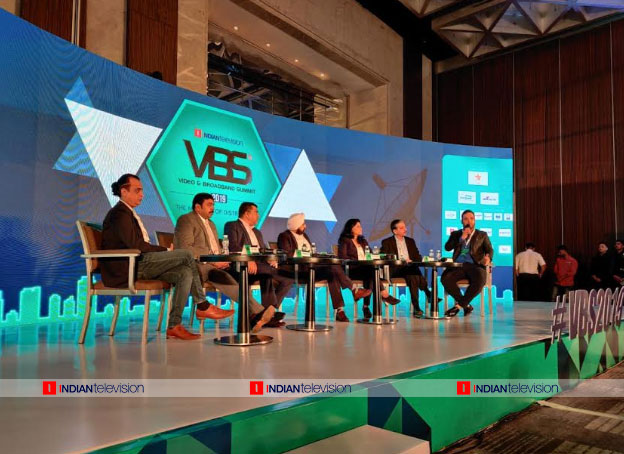
    VBS 2019’s panel discussions on ‘Transforming the sector to fuel growth’ included Elara Capital VP-research analyst Karan Taurani, Shemaroo Entertainment chief operating officer Kranti Gada, BBC Global News South Asia distribution head Sunil Joshi, PwC India partner and leader- media, entertainment Raman Kalra along with moderator SBICAP Securities equity research head Rajiv Sharma.

    Sharma set the tone of the discussion by briefing the audience on the major issues faced by the industry's stakeholders like cable, DTH, broadcasters, OTT, consumers and regulators in 2019.

    Kalra said, “We have been talking about convergence for a very long time and consolidation will keep on happening if we are willing to provide relevancy to the consumer. In the entertainment media space it is important to find a model which is relevant at scale. But how do you make relevant at scale? The relevancy for scale will trigger the consolidation because it leverages number on the financial statements and on the balance sheets of the company. It brings about so many synergies to the business models to run profitable, long term and sustainable business.”

    Taurani shared his view on consolidation in the cable space. He said, “Firstly it is important to highlight that business dynamics are changing completely. Broadcasters have been used to the B2B model since inception but now we are moving to B2C kind of a model. Basically everyone is well aware that if we really want to move to next level on digital, scalability is a very big factor and OTT platforms just offering about 10, 15, 20 movies will not help. So, to achieve that scale we need to invest in content. Apart from driving the partnership with other DTH cos or MSOs, achieving the scale on the digital part is needed. So I think it would take some more for them to understand the market and move to the next level.”

    Gada believes it is a great time for the media industry. With the emergence of OTT, the industry has added one and a half hours of screen time on digital front along with the television screen. Therefore the engagement of the end consumer with the content or with media or films has increased multifold.

    Gada says, “With deep-pocketed players cost goes haywire because short-term profitability is not their outlook, maybe their content is not their mainstay investment. It is sometimes just for consumer stickiness."

    Joshi said that convergence is the mantra of the day. “We have broadcasters, DTH, cable, OTT, consumers and a regulator who are the stakeholders of the value chain. If we look at post NTO and market dynamics, OTT is being discussed so widely because of its crispness and on-point approach to the consumers. Most of the broadcasters have direct consumer reach on their OTT to take care of and keep the stickiness on the linear also both compliments.”

    “Going forward, television needs to learn from OTT on what is been offered. So that on a quality level, both competes and at the operational level both collaborate. We have seen the collaboration of distribution platform and OTT because of their synergy and potential to exploit the potential consumers. Though they are competing at some level they are collaborating as well,” added Joshi.

    The panellists also elaborated on the digital monetisation model. They believe that there are three ways to monetise on digital platforms. The first is the business model, second is consumer centricity and third is the experience. Consumer centricity focuses on investing in knowing consumers. The second point of experience focuses on delivering the right experience. With respect to the business model, one has to experiment with multiple business models.

    The panellists also dwelled on the importance of the subscription model as AVOD does not lead to profitability because of the delivery cost, customer acquisition cost etc.  

    Stating an example of TataSky's binge initiative, Gada urged MSOs to become digital distributors and come up with aggregated and discounted offering for the consumer and make it convenient for those who are struggling with five to eight OTT apps. Gada asked MSOs to apply similar principles they used to offer TV channels to come up with bouquets of digital channels.

    The panel also highlighted the surge in term of telcos spending towards OTT. The new emerging game-changers today are e-commerce, smart TV and VMC.

    Sixty per cent of the money on digital advertising spent between Facebook and Google network. But now that is changing and the share is moving more towards OTT. The panel discussion ended on a positive note expecting that share of digital advertising will be 20-30 per cent whereas video advertising will be 40 per cent plus.

  • VBS 2019: Broadcast industry dwells on TRAI consultation paper, NTO impact and way forward

    VBS 2019: Broadcast industry dwells on TRAI consultation paper, NTO impact and way forward

    MUMBAI: The new consultation paper on broadcast tariffs is only seeking to address some infirmities in the earlier New Tariff Order (NTO) and will not bring any fundamental changes to the regulatory framework, said TRAI advisor Arvind Kumar at VBS 2019. His comment hinted that there might be some changes in the regulatory framework, which will bring NTO 2.0.

    The first panel discussion at VBS 2019 organised by Indiantelevision.com and its production division ITV2.0 focused on ‘NTO-The future roadmap.’

    The panel was moderated by Elara Capital VP- research analyst (media) Karan Taurani among the panelists IndiaCast Media Distribution president Amit Arora, Star India Distribution and international business president and head Gurjeev Singh Kapoor, Metro Cast Network India promoter Nagesh Narayandas Chhabria, The Remediation Company founder & partner Shyamala Venkatachalam, IndusInd Media & Communications chief executive officer Vynsley Fernandes and GTPL Hathway vice-president Yatin Gupta.

    The objective of the NTO was to bring transparency, freedom of choice, level playing field in the industry and rationalising the consumers’ cost. The panelists agreed that the dust of the new tariff order has settled down but the NTO 2.0 period might impact pricing again. With the new consultation paper Gupta expected that there would be price capping on bouquets and a la carte.

    Said Kapoor: “Very fairly the NTO has allowed consumers to exercise the power of choice. For DPOs the level playing field has come out very clearly. For the first time broadcasters were allowed to go with their understanding on pricing and packaging. We collaborated with all the stakeholders and ensured that smooth transition of the NTO happens. It wouldn't have been possible without the entire ecosystem coming together. I appreciate that MSOs and LCOs came together and were able to manage this really well. Post NTO has been good learning and deep understanding from Star’s perspective.

    Whereas Arora said, “NTO has brought us closures as partners. There have been cases where platforms had designed packages and shown them to us for feedback. We don’t have the expertise of forming packages but we understand consumers as well as the retail price, which is feasible for my market. I don't understand the concept that the consumer has to pay less. I believe the consumers pay for value and content. As we move forward the challenge is going to be how do we make consumers pay more revenue for the content he/she watches. It’s between me and the platform to work together on how do we get him to buy."

    National MSO GTPL Hathway’s Gupta said, “Any industry is always resistant to changes especially if it's technology based. One important thing is how do regulators ensure that it benefits the consumers but not at the cost of industry. There has been a lot of effort that went into building the new regulatory framework. As we see in the past few months, industry has begun to settle down and it's about to grow again. Looking at the tectonic shift, the cable industry is not just here to stay but to grow.”

    “Most of the LCOs have settled down and they have adopted the new structure. They have been able to maintain and grow their business. Over the period of time various MSOs and various platforms have taken different views,” said Fernandes.

    Taurani opined that 60 to 70 per cent of subscribers who cut the cord on cable TV have moved to DTH. It was an important change that has been observed. This was due to various reasons: MSOs not being able to implement the NTO in effective ways, delays on the MSOs’ front in coordination, etc.

    On the same Venkatachalam commented, “On the DTH side, they already had established backend systems, the NTO just gave them a jump to make the transition process even easier. For the MSOs, it took them some time to put all the things in place.”

    The panelists also shared their perspective on norms of 15 per cent capping on bouquet and FTA channels moving behind a pay wall and their expectations from the consultation paper released by TRAI to review NTO.

    Gupta said, “With NTO 2.0 we are expecting the price capping of a la carte. The discounts being offered today range from 10 per cent to 70 per cent, so there should be some capping on that which can help consumers to make intelligent choices."

    Agreeing with Gupta’s comment, Venkatachalam said that NTO 2.0 will impact the pricing.

  • VBS 2019: Industry stalwarts discuss NTO second phase issues

    VBS 2019: Industry stalwarts discuss NTO second phase issues

    MUMBAI: The sixteenth edition of the Video and Broadband Summit (VBS) organised by Indiantelevision.com has brought together industry doyens under one roof to discuss and understand the impact of the new tariff order (NTO) on the television broadcasting and distribution sector. VBS 2019 marked the presence of leaders from DTH, cable and broadband, broadcast, regulatory bodies and technology segments to discuss the state of the industry, key issues and finding solutions.

    Indiantelevision.com CEO, founder and editor-in-chief set the tone for the day with his welcome speech. "It is the best time for TV industry today. We are in the midst of uncertain times but uncertain times bring a lot of opportunities to build the business and explore the new way of building the cable-TV industry." He also emphasised on initiating a discussion on best practices, case studies on better execution and way forward towards a healthy television ecosystem.  

    The one-day conference began with a special address by TRAI advisor Arvind Kumar. He briefed the audience on the reason behind releasing the consultation paper to review NTO within few months of the regulatory framework. He informed that the consultation paper is only to address some infirmities in the NTO and will not bring any fundamental changes to the regulatory framework.

    “Broadcasters should rest assured that the new consultation paper will not seek to decide their channel prices. The only objective of the new consultation paper is to open a debate on how the NTO is impacting the industry and to address some of the infirmities in the NTO. The main objective of the industry was transparency and to create a level-playing field for everyone. NTO has empowered the consumer by giving him choice,” he said.

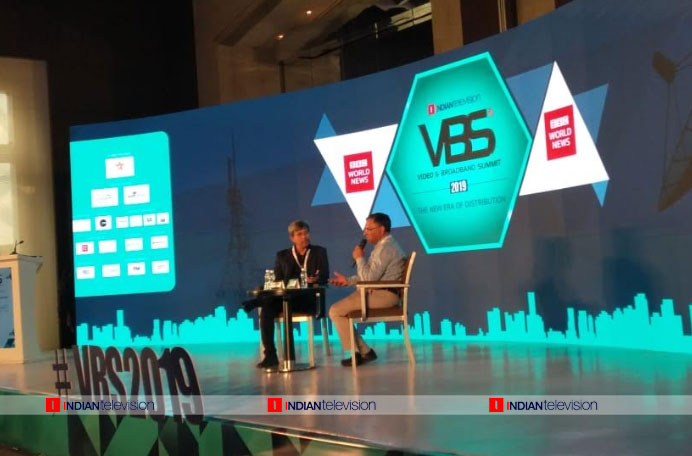
    In a fireside chat with Anil Wanvari, JioFiber president Anuj Jain elaborated on the company's plan and partnership.  He says, "Cable is a global technology and our intent is not to bring disruption in the market but add value to the industry. We have to see that television and OTT complement each other and the value that we bring is broadband. With broadband, we bring OTT content and voice services. There is enough space for everyone, there is nothing called overlap. "

    The session was followed by BARC India’s presentation on ‘TV viewership trends-post NTO era’ by chief operating officer Romil Ramgarhia. 

    The first panel discussion of VBS 2019 focused on NTO-The future roadmap. The panel was moderated by Elara Capital VP- research analyst (media) Karan Taurani with panellists IndiaCast Media Distribution president Amit Arora, Star India Distribution distribution and international business president and head Gurjeev Singh Kapoor, Metro Cast Network India promoter Nagesh Narayandas Chhabria, The Remediation Company founder & partner Shyamala Venkatachalam ; IndusInd Media & Communications chief executive officer Vynsley Fernandes and GTPL Hathway vice president Yatin Gupta.

    The objective of the NTO was to bring transparency, freedom of choice and level playing field in the industry. The panellists shared their perspective on the impact of NTO on the media and entertainment ecosystem, pricing, bouquet and ala carte price, and recently released consultation paper to review NTO.  The panellists agreed that the dust of new tariff order has settled down but the NTO 2.0 period might impact pricing again. With the new consultation paper, Gupta expects that there would be price capping on bouquets and ala carte. 

    The next panel discussion highlighted the advertisers’ take on the dynamic pay-TV landscape and how AdEX is likely to fare going forward with more changes anticipated to NTO. The panel ‘The Advertisers’ View’ was moderated by Anil Wanvari. ITC Ltd head media and PR Jaikishin Chhaproo, Havas Media Group West & South managing partner Kunal Jamuar, Godrej Consumer Products VP and head media services Subha Sreenivasan Iyer and Madison Media vice president Vandana Ramkrishna were the panellists.

    After that, Broadpeak business development manager Hervé Creff gave a presentation on ‘Keeping control of HDMI1 with Android TV operator Teir – the ‘super – aggregator’ approach’.

    The first half of VBS 2019 successfully ended with a panel discussion on ‘Transforming the sector to fuel growth’. Elara Capital VP research analyst (media) Karan Taurani, Shemaroo Entertainment chief operating officer Kranti Gada, BBC Global News South Asia distribution head Sunil Joshi and PwC India media, entertainment and sports advisory –partner and leader Raman Kalra were the panellists. The session was moderated by SBICAP Securities equity research head Rajiv Sharma.

    For more updates from post-lunch sessions stay tuned.

  • VBS 2019: Media industry leaders to discuss challenges facing the industry

    VBS 2019: Media industry leaders to discuss challenges facing the industry

    MUMBAI: The much-anticipated Video and Broadband Summit (VBS) 2019 will be held today in Mumbai with participation from prominent media networks, broadcast distributors, media and advertising agencies, consultancy services, OTT platforms, media monitoring firms, as well as government regulatory bodies.

    Among the prominent media networks who will be participating in the summit are Sony Pictures Network, Star India, 9x Media, Enterr10 TV, BBC Global News, IN10 Media, Shemaroo and Zee. From the distributors side DEN Network, Maharashtra Cable Operators Federation, Fastway Transmissions, GTPL Hathway, Tata Sky, SITI Networks, UCN Cable and Ashwini Cable will be participating in the one-day summit at Hyatt Regency, Mumbai.

    Representatives of India’s prominent media agencies like IndiaCast Media, MediaKind, The Remediation Company, IndusInd Media and Communication, One Take Media, Madison Media will be participating in the event held in the shadows of TRAI’s February 2019 New Tariff Order (NTO) and amidst expectations and fears of further changes to the months-old act, described by many as one of the most significant reform in Indian media broadcast industry.

    There will be representation from auditing firms like PwC and KPMG as well. Since broadband service providers are now key to video distribution, there will be representation from Google, Reliance Jio Fiber, Reliance Jio and Win Broadband.

    TRAI advisor (broadcasting and cable services) Arvind Kumar will also address the gathering of industry leaders and there will also be a special presentation from BARC India COO Romil Ramgarhia.

    Bringing together industry leaders from all sectors of the media industry, the summit will discuss various issues at the heart of the NTO, how it’s impacting broadcasters and distributors, changes proposed to it and why broadcasters are unhappy with TRAI for floating a new consultation paper within six months of NTO.

    After a keynote address by Anil Wanvari, founder Indiantelevision.com, IndiaCast Media Distribution president Amit Arora, Star India Distribution president Gurjeev Singh Kapoor, IndusInd Media and Communications CEO Vynsley Fernandes, GTPL Hathway VP Yatin Gupta, The Remediation Company founder Shyamala Venkatachalam and Bhima Riddhi Digital Services promoter Nagesh Narayandas Chhabria will debate the TRAI consultation paper on tariffs in a panel discussion to be moderated by Elara Capital VP Karan Taurani.

    To give the perspective of distributors on how the NTO, and the expected amendments to it, affects their businesses, there will be a panel discussion in which SITI Networks CEO Anil Malhotra, GC member of SCTE India Shaji Mathews, Fastway Transmissions Consultant Peeush Mahajan and Bhima Riddhi Digital Services Promoter Nagesh Narayandas Chhabria will participate.

    Advertising industry is at the other end of the spectrum, the other big sector that had to adjust to post NTO environment. To discuss the advertisers' view and their take on the dynamic pay-TV landscape, there will be Godrej head media services Subha Sreenivasan Iyer, ITC PR and media head Jaikishin Chhaproo and Havas Media Group managing partner West & South Kunal Jamaur. They will participate in a panel discussion to be moderated by Castle Media CEO Ru Ediriwira.

    There will be a presentation from BROADPEAK business development manager Hervé Creff, on "Keeping control of HDMI1 with Android TV Operator Tier – the "super-aggregator" approach."

    This will be followed by a panel discussion on how to transform the TV broadcast sector to fuel growth – what are the key issues facing the industry and how can more transparency and discipline be injected into it? PwC partner and leader Raman Kalra, Elara Capital VP – research analyst (media) Karan Taurani, KPMG India partner Girish Menon and BBC News head of distribution – South Asia Sunil Joshi will participate in a panel discussion to be moderated by SBICAP Securities head of equity research Rajiv Sharma.

    Local cable operators also constitute an important link in the TV broadcast value chain in India. Despite the presence of strong DTH players like Tata and Bharti Airtel and the rise of OTT, as much as 65 per cent of TV homes in India are still connected through these local cable operators, as per TRAI estimates. Maharashtra Cable Operators Federation (MCOF) president Arvind Ramesh Prabhoo and IndusInd Media and Communication COO Rouse Koshy will participate in a panel discussion on how has the role of the LCO changed under the new regulatory framework and its significance going forward.

    The rise of some of the Free to Air (FTA) channels in the post NTO environment has been another prominent feature of 2019. To discuss the roadmap ahead for FTA channels, there will be a panel discussion in which SAB Group CEO Manav Dhanda, Enterr10 TV MD – Fakt Marathi Shirish Pattanshetty, IN10 Media COO Akul Tripathi, 9X Media chief revenue officer Pawan Jailkhani and Shemaroo Entertainment COO Kranti Gada will participate.

    To discuss the role of the internet in the broadcast industry, there will be a fireside chat between Anil Wanvari and Jio Fiber president Anuj Jain. The summit will end with a panel discussion on the role of the internet in video distribution in which Google Industry head media and entertainment Sandeep Ramesh, Jio VP – advertising and strategy Mohit Kapoor, COAI Director General Rajan S Mathews, ZEE5 chief revenue officer and business head Taranjeet Singh and MediaKind head of marketing – APAC Chiranjeev Singh will participate.

  • MCOF’s Arvind Prabhu on post-NTO era, LCO concerns, OTT regulation

    MCOF’s Arvind Prabhu on post-NTO era, LCO concerns, OTT regulation

    The cable and broadcasting ecosystem started the year 2019 with a disruption – the new tariff order (NTO). With the implementation of NTO, the most dissatisfied section of the ecosystem was local cable operators (LCO) as they found the revenue-share business model would make their survival difficult which caused massive protests from LCOs. As months passed, the turmoil settled, but the ecosystem is yet to benefit from NTO, according to Maharashtra Cable Operators Foundation (MCOF) president Arvind Prabhu.

    In an interview with Indiantelevision.com, Prabhu spoke on major challenges faced by the ecosystem after NTO, how the industry evolved post-NTO, how LCOs can survive in the future with upgradation in technologies amid OTT onslaught, etc. Prabhu will also share his insights on the current state of industry at Indiantelevision.com's Video and Broadband Summit 2019, India's definitive Pay-TV and video distribution get together. 

    Edited excerpts:

    Has the industry settled down after the NTO was implemented?

    The industry has settled down but not the benefits of the NTO as envisaged by TRAI within the ecosystem. Consumers are not getting the benefits of the NTO. So the actual implementation of NTO is still found pending.

    What are the major changes you noticed post-NTO?

    What we would like to highlight is that because of the lack of proper implementation, the consumer is still not getting his choice of channels. There has been an increase in the monthly rates and we still feel the transparency is not there. The transparency which was required is still not there. Also, earlier there were two TV sets in households. Now, the second TV is still not active in post- NTO era. Only the primary TV set has been activated in the new tariff order. So, almost 20-25 per cent of our connections have still not activated.

    Initially, local cable operators showed strong disagreement to the revenue sharing model with MSOs. Has the situation changed?

    The situation has still not changed. The local cable operators (LCOs) are still not happy, especially with the network capacity fee (NCF) factor. We are still demanding the entire NCF should be given to LMO. So, the sharing with the broadcasters, the sharing of 80-20 is still not agreeable to us. There was an open-house discussion recently where lots of suggestions were given, therefore we are awaiting that to come.

    If the model does not change, have you thought of alternatives to prevent the loss?

    The revenue share model has to change. It looks like the broadcasters are going to be reducing the charges. Earlier, we thought broadcasters inflated their charges. From Rs 19 to they have gone down to Rs 12. Obviously, the ARPU is going down. If the ARPU is going down, then the revenue share also needs to be relooked and everyone in the ecosystem has to survive. If the cable operators do not get their fixed price, then they would not be able to survive. We are seeing a lot of cooperative head-ends coming up, a lot of infrastructure-sharing happening. But traditional TV is also now aligning with telcos. BSNL has opened its doors to providing its services as also Reliance Jio. There is going to be a little bit of turmoil in the market. The traditional linear viewing is changing.

    What are the other major concerns of LCOs?

    ,One of the major problem is who is the owner of the set-top box. Even today, the set-top box is given by the MSOs to LCO at Rs 1,150 or Rs 1,200. The receipt they are giving is the installation charge. As per TRAI, the installation charge is Rs 300 and registration charge is Rs 100. So, they cannot charge more than Rs 400 at any case. But they are giving the box at Rs 1,150 and saying it's installation charge. This is a violation of GST they are doing and the ultimate ownership of the box is still a question mark because the Multi-System Operators (MSOs) are taking money from LMOs, keeping the money to themselves, getting the depreciation themselves and also not paying GST.

    Also, the grievance is we are not given the choice to choose the channel that a consumer wants. As a consumer, I should have freedom of choice. But the DPOs are selling their packs, broadcasters selling their packs. I have no mechanism where I can sell my own packs. So, these all are part of NTO that was supposed to happen and that has not happened and the  tariff has gone up. So, now we are at a cross-roads.

    If you ask me whether NTO is a good thing, I will say NTO is a very good thing. It is bringing a lot of transparency, it gives equitable revenue to everyone but broadcasters and MSOs both are flouting the rules. Broadcasters are still doing fixed fee deals and MSOs are still not giving the actual audits. TRAI had also mentioned consumers be offered both prepaid and postpaid options. Now, as an LMO, LCO I am a consumer to the DPO. I have only got a prepaid option whereas my consumer is postpaid. So, what has happened is the entire liquidity of cable operators goes into prepaid mode whereas when the MSOs have to make the content  payment they make, they are easily getting three months of payment difference. So, basically MSOs are sitting on  cash. They are under-reporting to broadcasters, they have done fixed fee deals, they are not paying broadcasters also on time but they are taking prepaid from cable operators for the entire universe. The MSOs are benefitting more than anybody else.

    During the first phase of NTO implementation, a large number of consumers complained against LCOs for not giving a-la-carte channels? Why did this occur?

    Again, there was no awareness then. LCOs cannot give a-la-carte channels. Who gives a-la-carte channels? It is an MSO who has to facilitate the LCO to pass on the a-la-carte channels. MSOs are not giving a-la-carte channels, only DPO packages or the broadcaster packages. Earlier consumers were not getting that facility. Now, consumers thought the LCOs were not giving. Unfortunately, MSOs were not doing their duties and cable operators were facing the wrath of customers.

    As LCOs work on-the-ground, they are generally aware of consumer feedback. Do they think consumers are happy with the new price regime?

    Few consumers are very very dissatisfied because we are forcing packages on them and the prices have increased. Few of them – who were very very smart and educated and understood –  are very very happy with what is happening. A lot of awareness needs to happen. True pictures will emerge when we allow  consumers to select the a-la-carte channels. By and large, the ratio is 50-50.

    There are other changes in the ecosystem as well. How the OTT onslaught is affecting LCOs?

    OTT is making a lot of inroads. That is one of the points we are trying to make to TRAI that they have to bring OTT under this ambit. Because you are seeing a channel which is Rs 90 on cable or IPTV or DTH, on OTT it's available for free. And most of the people are now watching on their handheld devices. If they are getting all their entertainment and sports on an OTT platform that is not charged, it is not fair. It has to be charged and it has to be brought under regulation.

    Has Jio’s entry impacted the LCOs?

    Not much. Because they are struggling to reach a critical point. The pricing they have done also is quite affordable for LCOs to match and at Rs 699 for their basic internet charges, you know only cable operators can match those. Not much but it can be a threat.

    Why did LCOs lose a huge amount of subscribers during this phase?

    25-30 per cent of second  TV set owners may have gone to OTT or IPTV or they are not just renewing. They are finding it a luxury. Earlier they could get two TV sets coonections in Rs 300-400. Now, it's going to Rs 800-1000.

    With all the changes in technology, the emergence of new players, how do you foresee long-term future of LCOs?

    Those LCOs who upgrade themselves and do FTTH, will survive in the long run. Those LCOs who are not upgrading and think they will only do what they were doing and not invest in infrastructure, they will vanish. 

  • GTPL Hathway posts consolidated revenue of Rs 4,470 mn in Q2 2020

    GTPL Hathway posts consolidated revenue of Rs 4,470 mn in Q2 2020

    MUMBAI: Gujarat-based multi system operator (MSO) GTPL Hathway has posted consolidated revenue of Rs 4,470 million (ex EPC contract) for the quarter ended 30 September, which increased 41 per cent year-over-year. While the cable TV subscription revenue stood at Rs 2,608 million, broadband revenue stood at Rs 398 million.

    The company posted a consolidated net profit (ex EPC contract) of Rs 195 million for the quarter and the EBITDA increased 5 per cent to Rs 1,156 million . Subscription revenue reached Rs 2,608 million, up 47 per cent year-over-year.

    “GTPL continued to demonstrate superior business and financial performance in the second quarter of FY20. GTPL’s cutting edge technology allows us to expand our CATV business in other regions without any major CAPEX. Our robust cash flow will not only support our capital expenditure plan that is required but also will help us in reducing our debts,” GTPL Hathway MD Anirudhsinhji Jadeja commented on the performance.

    GTPL Hathway seeded 200,000 STBs during the second quarter FY20, taking total seeded STBs as on 30 September to 9.90 million. Digital paying subscribers as on 30 September 2019 stood at 7.25 million, increased by 150,000.

    During Q2 FY20, the company added 260,000 home pass taking it to total 2.92 million as of 30 September. The MSO added 15,000 net broadband subscribers during Q2 and 11,000 FTTX subscribers while the broadband average revenue per user (ARPU) for Q2 FY20 was maintained at Rs 415.

  • GTPL Hathway appoints Anil Bothra as CFO

    GTPL Hathway appoints Anil Bothra as CFO

    MUMBAI: GTPL Hathway Ltd has appointed Anil Bothra as its chief financial officer with effect from 14 October 2019.

    Bothra is a chartered accountant, company secretary and a cost accountant who brings with him rich experience in finance & commercial domain across different industries. Bothra has successfully managed diverse and challenging assignments across the career spanning 24 years and brings expertise in driving accounts, taxation, commercial, corporate finance, cost control, budgeting, internal control & audit, investors relations, merger and acquisitions, due diligence and corporate planning.

    Bothra has worked with Atul Ltd, Shell Hazira, Adani Enterprises, Aditya Birla Group (Grasim / Hindalco & Ultratech) and Lloyds Steels. Prior to joining GTPL, Bothra was associated with Grasim Industries Ltd.

     “I am delighted to welcome Anil Bothra as our CFO. Bothra carries deep knowledge in all areas across finance & commercial and his experience will be very valuable for the Company. He will be a great addition to the leadership team, and he will play a pivotal role in our growth journey,” GTPL Hathway managing director Anirudhsinh Jadeja said.

     “I am delighted to be a part of the amazing growth story of GTPL Hathway, one of India’s largest multi system operator. I look forward to being part of the GTPL Hathway’s journey to enhance stakeholders’ value,”  Bothra commented.