Category: Local Cable Operators

  • Video and Broadband Summit 2021: The 5G genie & the future of legacy distribution systems

    Video and Broadband Summit 2021: The 5G genie & the future of legacy distribution systems

    NEW DELHI: The video ecosystem has never had it better. Consumption, which skyrocketed during the early days of the Covid2019 pandemic, has found its level and that is much higher than it's ever been before. Cable TV, DTH, FTA, streaming services, wireless broadband and wired fixed broadband have all seen unimaginable uptake as digitisation has been accelerated with viewers and consumers being asked to be homebound for their safety.

    But in this period key questions have arisen: What is the future for legacy distribution systems for TV like cable TV, DTH, and FTA? With 5G knocking on our doors, will the traditional modes of delivery have the same relevance? How to capitalise on the booming user generated content space? These are some of the themes which will be discussed at the Video and Broadband Summit 2021.

    Running in its seventeenth year, the summit is going virtual this time and will bring together stalwarts from television, broadcasting, internet and distribution sectors to take a deep dive into the dynamic trends and vital issues prevalent in the sector at present.

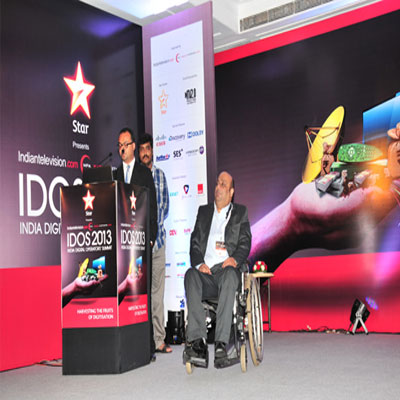
    Over the last one-and-a-half-decades, VBS (earlier IDOS) has grown to become India’s definitive pat-TV and video distribution get together. However, this year’s summit is critical given that 2020 has witnessed some of the most fundamental changes in the industry – from the NTO 2.0 directive, a resurgent FTA segment, to the rise and rise of the over-the-top platforms.

    Key sessions in the summit will be:

    ·        2:30 – 2:40 pm: Introduction

    ·        2:40- 2:50 pm: Welcome Note by Anil Wanvari, founder, CEO & editor-in-chief of Indiantelevision.com

    ·        2:50 – 03:50 pm: The leaders peak laying out a profitable future

    ·        3:50 – 04:35 pm: Future proofing DPOs on video delivery solutions

    ·        4:35 – 4:55 pm: Virtual fireside chat with Anuj Jain, president – Jio Fiber

    ·        4:55 – 05:45 pm: Customer First!

    ·        05:45 – 05:50 pm: Closing Remarks

    To discuss all these relevant subjects, the summit has also lined up a distinguished panel of speakers. Among them are:

    ·        Amit Arora, President – Indiacast Media Distribution

    ·        Anuj Jain, President – Jio Fiber

    ·        Anil Malhotra, Chief Executive Officer- SITI Networks Pvt Ltd

    ·        Anil Wanwari, Founder, CEO & Editor-in-chief- IndianTelevision.com

    ·        Anurag Nigam, DGM Strategy- SITI Networks Pvt Ltd

    ·        Gurjeev Singh Kapoor, President TV Distribution -India & International – Star and Disney India

    ·        MN Vyas, Founder Director- Planetcast Media Services

    ·        Prem Ojha, Group Chief Executive Officer- Fastway Transmissions Pvt Ltd & Netplus Broadband

    ·        Prashant Chothani, Founder and Chief Executive Officer -Travelxp 4K

    ·        Raman Kalra, Partner- PwC India

    ·        RU Ediriwira, Group Chief Technology Officer- NXTDigital

    ·        Salil Thomas, Vice President & Head Technology- Asianet Satellite Communications Ltd

    ·        Sandeep Gupta, COO – Broadcasting Business-Shemaroo Entertainment Ltd.

    ·        Vynsley Fernandes, Media Group Chief Executive Officer, NXTDIGITAL Limited

    ·        Xavier Leclercq, Vice President Business Development- Broadpeak

    ·        Yatin Gupta, Senior Vice President – GTPL Hathway Ltd.

    Come join us for stimulating conversations, incisive insights and deliberations on the future roadmap of the industry at the Video and Broadband Summit 2021 on 5 March at 2:30 pm. Register now at https://www.indiantelevision.com/micro/vbsnew/index.html#

  • LCOs fire back at TRAI for ‘conduits’ remark before Bombay HC

    LCOs fire back at TRAI for ‘conduits’ remark before Bombay HC

    KOLKATA: Local Cable Operators (LCOs) appear to be agitated with industry regulator Telecom Regulatory Authority of India (TRAI) for portraying them as ‘conduits’ between the multi-system operators (MSOs) and subscribers. According to sources, TRAI has overlooked the role played by LCOs as last mile owners in a reply to ongoing litigation against NTO 2.0 in the Bombay high court.

    The Maharashtra Cable Operators Federation (MCOF) is of the view that it might lead to subscriber ownership transferred to the MSO. While the TRAI may indicate it is not concerned about LCO’s revenue, it also portrays LCOs as mere recharge operators in the mobile business.

    “TRAI has worsened our situation by making assertive statements going against our interests,” the MCOF said in a memo.

    In another statement, TRAI has conferred the credit for creating infrastructure to the MSOs. Despite putting lakhs of kilometres of a network together, the LCOs may stand to lose over Rs 1,00,000 crore worth of infrastructure due to the incorrect statement, the MCOF asserted.

    According to the federation, TRAI has overlooked the imbalance where benefits flow to broadcasters and MSOs at the cost of LCOs regardless of whether the subscriber pays more or less than pre-NTO days under compulsion to justify its judgemental errors. The unsubstantiated justification for reducing NCF on additional STB completely discounts the fact that most of the STBs are serviced by the LCO who incurs per visit costs that are not billed for.

    The federation has urged the operators to raise their voices and protest the statement to make TRAI file a revised affidavit before the high court.

  • Airtel has perfected the LCO model for home broadband, says Gopal Vittal

    Airtel has perfected the LCO model for home broadband, says Gopal Vittal

    KOLKATA: Bharti Airtel (Airtel) is going head-to-head with archrival Jio in the home broadband segment by putting pedal to the metal on its expansion plans. While the company has seen record subscriber addition in September, it will keep focusing on LCO partnership model.

    In an earnings call after Q2 results, Bharti Airtel India and South Asia MD & CEO Gopal Vittal declared the company has “perfected” the LCO model. Vittal said that the model has done well after being tested for seven-eight months using several different approaches in a handful of different cities. Hence, the company is scaling up the model now and has rolled it out in 29 more towns in Q2.

    Under this model, the company has a standard toolkit where it is able to go out and actually work with the local cable operator in a particular town. Airtel gives them a revenue share for laying the last mile fibre and maintaining it. On the other hand, the router, the billing system, the plan and customer relationship is managed by Airtel.

    Read more news on Airtel

    Vittal has credited work from home, surge in streaming and online education for spurring growth in  the home broadband sector. He also mentioned that the price reduction in wired broadband sector would also help in overall growth. However, the impact of the price correction would be noticeable in the next quarter.

    In the quarter ended September 30, Airtel has added 129,000 new consumers along with a million homes passes, which is amongst the highest that it has seen in any quarter.

    Other than its core telecom business, Airtel has registered a gradual growth in the DTH business as well. “We are pleased with the progress that we have made on DTH – adding more than half a million customers. Primarily that is because we are able to synergise our distribution systems of mobility and DTH. Mobility has a distribution system that’s almost 25 times that of DTH. In places like Bihar, UP, Rajasthan, we are getting significant synergistic effort by eventually finding the right model to synergise but yet keeping enough focus on DTH business,” Vittal commented.

    Bharti Airtel India and South Asia chief financial officer Badal Bagri added that most of the acquisition in the DTH segment has come in the later part of July. While July, August are softer months in terms of recharges and addition, the company has seen the traction picking up in September. Bagri is optimistic that the trend will hold.

    A recent Crisil report stated that DTH broadcasting, which accounts for 37 per cent of total television (TV) subscribers in India, is set to buck the economic downturn and log a revenue growth of 400-600 basis points (bps) to Rs 22,000 crore this fiscal, because of healthy subscriber additions.

    Airtel has struck content partnerships with all major OTT platforms lately. Vittal acknowledged that content can be a differentiator for telecom players, while also mentioning that he has not seen any compelling evidence to suggest that general entertainment content is a strong differentiator. However, he added that topical events like sports work quite well.

  • MCOF’s Prabhu sounds the alarm for cable TV fraternity

    MCOF’s Prabhu sounds the alarm for cable TV fraternity

    KOLKATA: Although linear television remains the primary mode of viewing for most Indian households, cableTV  operators still face numerous challenges – what the rapid uptake of OTT services and the inflexible pricing regulations set by the regulator. And the situation is not getting any better for the tribe, says Maharashtra Cable Operators Foundation (MCOF) president Arvind Prabhu.

    He claims that matters took a grim turn with Covid2019 causing a 25-30 per cent drop in subscribers for the cable TV trade operators in the first four months of the crisis,

    mainly due to lack of fresh TV content, labour migration and the closure of commercial establishments. He further projects that only 5-10 per cent of these subscribers might come back.

    While a lot the of users had moved to OTT during the beginning of the pandemic, Prabhu says there are fewer chances of them returning  to TV as the platforms are already offering linear TV content, streaming live sports events.

    Read more news on MCOF

    How far is normalcy?

    There had been a challenge at the operational level too with the onset of this pandemic. However, the situation is normalising inch by inch, thanks to the stage by stage unlocks, and it is comparatively easier at this moment, says Prabhu. However, 60-65 per cent of workers are not coming to offices regularly.

    Given that cable TV is an essential service, the government should have looked at insurance for its staff, insists Prabhu. Moreover, vendor supplies have also slowed down. The scene is a little different in rural areas, where manpower is available but getting equipment is an issue. Hence, it would take another month or so to reach normalcy, he expresses.

    Due to restrictions in movement, the MSOs have been demanding online payments. While others claim that 70-80 per cent of subscribers have shipped out,  Prabhu dismisses these figures. He says it is the subscribers of the MSOs that is the cable TV operators themselves who have moved to digital payments; not the end subscribers. So far, cable TV operators have been collecting payments traditionally from 50-60 per cent of their subscriber bases.

    What are the long-term challenges?

    Putting aside the challenges imposed by Covid2019, cable TV operators have been in distress for a while now. With the Telecom Regulatory Authority of India (TRAI) introducing a cap on NCF under NTO 2.0, their worries have only increased. Prabhu claims that TRAI did not take into consideration the suggestions that were given following the NTO consultation paper. He goes on to add that MSOs manipulated NTO 1.0 and it failed to bring end-to-end transparency.

    However, the MCOF president acknowledges that former TRAI chairman RS Sharma did his best to help small cable TV operators. “If the new chairman (PD Vaghela) does not quickly help us to revive the overall economic situation, we will be in dire straits. What we ask of the new chairman is to look at all the correspondence sent by cable TV operator associations. He will immediately realise that there has been a serious breach of regulations,” says Prabhu, and he urgesVaghela to call a meeting of all stakeholders at the earliest so they can figure out a solution together.

    Way to a sustainable future:

    Prabhubelieves that there is a way for cable TV operators to stem the loss of subscribers to OTTs: provide broadband services as that would help them to survive in a changing ecosystem, and integrate the billing for those with cable TV. He also mentions that many operators have already started offering android boxes. On the cable TV side, operators are trying to reduce subscriber loss with long-term packages. Hence, they have requested MSOs to offer some discounts on those.

    Going forward, cable TV operators who focus on futuristic services like broadband and hybrid boxes will be able to sustain themselves, says Prabhu. He is optimistic that the new boxes will go beyond urban areas and see good traction in tier II, tier III cities. While these boxes are expensive at the moment, the cost is predicted to come down once demand picks up, leading to increased adoption in rural areas too. Prabhu also highlights that the industry needs government intervention, such as providing loans to the last mile players for investing in new technology.

    But broadband and hybrid boxes are not a sure-shot road to success. With the entry of deep-pocketed players in the segment, operators are worried about not having a level playing field. “It is important to find out how to control the big brother coming and taking away everybody’s job. Even if it takes over everything, there should be some alternative modes for us,” says Prabhu.

    Need of the hour:

    Alongside the long-term strategies, the operators are facing short-term issues as well. “First and foremost, there should be a signing of model interconnect agreements. Nobody has signed a model interconnect agreement, whatever was signed was two-three years ago. The ownership of a set-top box needs to be defined. If a consumer is buying then it is his property; if a cable operator is buying to give it to consumers it belongs to him.; if it is being rented or leased, then it is owned by MSOs. Clarity on that is needed,” he states.

  • Shiv Cable Sena asks cable operators to ban Republic channels in Maharashtra

    Shiv Cable Sena asks cable operators to ban Republic channels in Maharashtra

    KOLKATA: Amid rising political tension in Maharashtra,  the Shiv Cable Sena, an affiliate to Shiv Sena, has asked the cable TV operators to ban Republic Media Network in the state. 

    According to reports, the Shiv Cable Sena has issued a letter which is signed by Sanjay Raut’s brother Sunil Raut.  The letter sent to major operators claims that Republic has violated journalistic ethics and guidelines by repeatedly using the non-respectful language for CM Uddhav Thackeray, home minister and holding a ‘parallel court’.

    Following the letter, the network has issued a statement. “This is an attack and an attempt to plunder the fourth pillar of democracy. the Shiv Sena wants us to squirm before them, they want to snatch our fundamental right to report. Under Article 19(1)A of the Constitution of India, Uddhav Thackeray, you have no right to do this. Our coverage speaks truth to power. The people of India did not stand for Emergency in 1975, and they will not stand for what the Sonia Sena is doing right now,” it said in a statement.

    The network has also released a petition #CantBlockRepublic on Twitter "appealing to the people of India to come forward and join the fight for the right to report in a free democratic country."

  • MCOF raises questions on Hathway, Den pushing existing STBs under Jio brand

    MCOF raises questions on Hathway, Den pushing existing STBs under Jio brand

    KOLKATA: Maharashtra Cable Operators’ Foundation (MCOF) has flagged off several unethical practices in the television distribution segment. In a letter written to the Telecom regulatory authority of India (TRAI), it has alleged that some multi system operators (MSOs) are violating rules and taking the unethical route of business. 

    MCOF has expressed concern about Den Networks and Hathway for imposing replacement of existing STBs by STBs under Jio brand in the last six months. The federation has claimed that the two MSOs have not replaced the expired standard interconnection agreement (SIA) with the model interconnection agreement (MIA) without offering any explanation for the rebranding.

    “The LCOs who resist the imposition are made to toe the line by disabling their access to the Prepaid Portal resulting in service interruptions ton the subscribers. In addition to the arm-twisting, the MSOs have lined up numerous dummy operators to replace the existing LCOs who usurp their business and assets,” the letter added.

    MCOF stated that Jio is not a registered MSO nor has it signed interconnection agreement (ICA) with LCOs. Moreover, Hathway and DEN continued to rely upon expired SIA overlooking repeated requests to adopt MIA. 

    It has also claimed that BRDS provides signal feed to its network in Kolhapur and connected areas but deploys InCable STBs. InCable has been alleged of providing feed to Sampark Network (Powai Mumbai and Bhiwandi Area) through STBs that the latter has deployed. 

    “We fail to understand as to how auditors have overlooked the mismatch between CAS, STB inventory and conflicting branding, head-ends can be used as pass-through pipes for signals from another MSO, random off-site checks by broadcasters through watermarking have not detected the malpractices,” it added.

    Against this context, MCOF has asked copies of ICA between Jio and Broadcasters and status of MSO License to Den and Hathway. It has also called for clarification on whether a mere share purchase deal allows the buyers to change brands and automatically subrogate the company whose shares it buys. 

    It has also requested the industry watchdog to share the steps it is taking to prevail on MSO to sign up fresh ICA with LCOs by mutual consensus rather than arm-twisting via Prepaid Portal Access denial. MCOF has also asked directions for the course of actions that LCOs should take to safeguard against likely disabling of STBs that are drawing signals from third party head-end or suspension of feed sharing between MSOs. 

  • NXTDIGITAL reaches out to new consumers

    NXTDIGITAL reaches out to new consumers

    KOLKATA: As the country gears up to welcome Lord Ganesha, NXTDIGITAL, the media arm of the Hinduja Group, has launched a consumer connect program – ‘Ganpati Bappa Morya’ to spread the message of joy and safety amidst the global pandemic. 

    As part of this initiative, NXTDIGITAL would encourage consumers, to shoot their Ganpati celebrations at home (their decoration, sthapna and aarti) on their mobile phones and upload it to NXTDIGITAL at https://ganpatibappamorya.nxtdigital.in. Select participants will get a chance to feature on the television channels of INDigital and NXTDIGITAL network as a part of this video contest.

    Video entries will be judged and the top three videos in the category of ‘Best Ganpati Idol’, ‘Best Ganpati Decoration’ and ‘Best Eco-Friendly Ganpati’ stand a chance to win attractive gifts by answering a simple question. Home Theatre System, Wonderchef Tandoor and Wonderchef Non-stick cookware are some of the exciting prizes up for grabs for the winners of this contest.

    Commenting on this initiative, NXTDIGITAL brand and marketing head Rajdeep Rudra said “The ongoing pandemic of coronavirus has impacted the economic, social and mental wellbeing of people across the world. As we approach one of the most revered, loved and celebrated festivals of India – Ganesh Chaturthi, we want to help our audience celebrate their love for Lord Ganesha with the same faith and dedication, as they do each year. As caring brands, through this program, we want to create awareness amongst our audience about taking necessary safety precautions while they celebrate this festival from the comfort of their homes. Our objective is to capture this celebratory mood and engage with consumers as we try and build a safe environment for them.”

    Shortlisted videos will also be edited and broadcast on INDigital and NXT DIGITAL (HITS) channels from 22  Aug to 1 Sep 2020 i.e. the entire Ganesh Utsav.

  • SPN’s distribution team brings cheer to Maharashtra LCOs through ‘Nukkad LIVE’

    SPN’s distribution team brings cheer to Maharashtra LCOs through ‘Nukkad LIVE’

    KOLKATA: The Covid2019 pandemic has had a seismic effect not only on the way businesses run but also on several other aspects of people's lives. The cable industry, the unsaid essential service, has played a major role in the current environment keeping people entertained and informed. While a majority of the population was under a shelter-at-home directive, last mile operators kept working on-ground risking their lives to provide seamless services to their subscribers. SPN was the first network to salute these unsung heroes through its ‘Happy Hero’ campaign. Taking the relationship with the operators forward and to bring some cheer , excitement to the last mile operators, Sony Pictures Networks India (SPN) undertook a novel initiative of virtual event, ‘Nukkad LIVE.’ 

    Through ‘Nukkad LIVE’ last mile operators, more commonly known as LCOs, get to enjoy specially curated acts as well as interact with the artists & key protagonists of various SPN channel shows. 

    "The new normal in our day to day to work life has shifted to the digital interface. We have always believed in staying connected with our trade partners & we enjoy excellent partnerships with MSOs across the country. The ‘Nukkad LIVE’ initiative is really about going a step further & creating opportunities for interaction for SPN’s well known show artists with the last mile, namely the LCOs. They are really the unsung heroes who are risking their lives every day to keep the pipeline of entertainment flowing and alive. After seeing the huge success of ‘Nukkad LIVE’ in Maharashtra with the likes of DEN and GTPL, we will soon be extending this format to the Hindi GEC & sports genres,” said Sony Pictures Networks (distribution business) EVP Sales and Marketing, Makarand Palekar. 

    SPN has initiated the first leg of this digital collaboration in the Maharashtra market bringing actors from Sony Marathi and leading operators from the state together. Samir Choughale, Vishakha Subhedar and Vanita Kharat, all well-known names from the Marathi entertainment industry, are part of this campaign to meet operators on the ‘Nukkad LIVE’ platform. 

    While Kharat holds the meet-up together by anchoring it, Choughale is interviewing Subhedar and the latter gets humorously offended. The fun banter ends with the stars thanking the operators for their relentless support and service to keep the show on during the lockdown period as operators made sure all the viewers got uninterrupted signals for their daily dose of entertainment. The 40-minute meet ended with both the actors interacting with the trade fraternity by answering their questions.

    Although both broadcasters and distributors are dependent on each other to run their businesses, during this crisis period, such collaborations can help to keep the touch points on both sides alive and lighten the burden of social distancing, on everyone. 

    What do the partners think?

    “Good initiative by the Sony Marathi & distribution team to connect & engage our business partners using the virtual platform. Spreading a smile is very important in the present situation where people are facing a lot of hardship. All the best to the Sony team,”  GTPL Hathway Ltd promoter and managing director Aniruddhsinh Jadeja said. 

    “This unique initiative by Sony team to bring the last mile operators together, added a new dimension to strengthen relationship between broadcaster, MSO & LCO. It helps the industry to work towards a common goal of inclusiveness by involving the last mile which further encourages them to provide better services,”  DEN Satellite director Rajeev Gavi shared. 

    “Brilliant programme! The execution of the event was seamless despite the dependency on technology. Inviting the LCOs to this event and mentioning the special relationship that Den Satellite and Sony shares further strengthens the bond between stakeholders. Artists were really entertaining and it was thoroughly enjoyed by our partners,”  DEN Satellite director Ravishankar Singh said. 

  • GTPL Hathway reports higher subscription revenue, improved numbers for Q1-2021

    GTPL Hathway reports higher subscription revenue, improved numbers for Q1-2021

    BENGALURU: GTPL Hathway Ltd (GTPL) reported 19.3 percent growth in revenue for the quarter ended 30 June 2020 (Q1-2021, quarter or period under review) and 8.9 percent growth in the operating profit for its cable TV business (CATV business) as compared to the corresponding year ago quarter Q1 2020. The company’s consolidated revenue from operations for the quarter under review grew 10.8 percent year on year (y-o-y) while consolidated total income expanded 10.1 percent in Q1 2021 as compared to Q1 2020. Consolidated profit after tax grew 39.8 percent to Rs 46.47 crore in Q1 2021 as compared to Rs 33.23 crore in Q1 2020. All the three major segments of the company had operating profits.

    GTPL reported consolidated revenue from operations at Rs 495.46 crore in Q1 2021 as compared to Rs 447.22 crore in Q1 2020. Consolidated total income for the period was Rs 502 crore as compared to Rs 456.05 crore in the corresponding year ago quarter. CATV business revenue was Rs 412.53 crore in Q1 2021 as compared to Rs 345.91 crore in Q1 2020. CATV business reported operating result of Rs 50.17 crore for the period under review as compared to Rs 46.06 crore for Q1 2020. ARPU or Q1 2021 was up by Rs 7 to Rs 422 from Rs 415 in the previous year’s corresponding quarter.

    The company’s internet services business (Ex-EPC Project numbers) revenue grew 34 percent to Rs 52.65 crore in Q1 2021 from Rs 39.29 crore in Q1 2020. The segment reported an operating profit of Rs 5.34 crore in Q1 2021 as compared to an operating loss of Rs 0.18 crore in the corresponding year ago quarter. The company had been awarded Package B of the prestigious Bharat Net Phase-II project from the Gujarat Fibre Grid Network Ltd under Digital India Initiative (EPC Project) last year. GTPL reported revenue of Rs 30.28 crore an operating profit of Rs 2.01 crore from the EPC Project.

    GTPL reported revenue (Ex EPC Project) of Rs 471.7 crore, which was 20 percent more y-o-y. The company says in an earnings release that its CATV subscription revenue increased seven percent y-o-y to Rs 265.3 crore. EBITDA Ex EPC Project increased 14 percent y-o-y to Rs 126.1 crore.

    On the operational front, GTPL says that it has seeded 100,000 STBs but at the same time, it has lost 300,000 digital paying subscribers in Q1 2021. The company says that it had 72 lakh (7.2 million, 0.72 crore) digital paying subscribers as on 30 June 2020.

    Company Speak

    GTPL managing director Anirudhsinh Jadeja said, “GTPL Hathway delivered another strong quarter. The highlight of the quarter was strong profitability anddebt reduction. Our Q1 FY21 consolidated revenue, EBITDA and PAT grew by 10 percent, 11 percent and 39 percent respectively. During the quarter, we have reduced our gross debt by Rs 368 million (Rs 36.8 crore). During the current financial year, we plan to launch a Hybrid box, which will enable us to provide multiservice product that will have Broadband, OTT and Cable service at an attractive price point. Our CATV Business expansion in Maharashtra, Tamil Nadu, Andhra Pradesh and Telengana is on track and it will gain momentum in the coming quarters.”

    Let us look at the other numbers reported by GTPL

    Consolidated total expenditure increased 9.5 percent during the quarter under review to Rs 444.48 crore from Rs 405.74 crore in Q1 2020. Pay channel cost in Q1 2021 increased 24.8 percent to Rs 226.98 crore from Rs 181.92 crore in the previous year. Other operational costs increased 48.9 percent to Rs 31.85 crore from Rs 21.39 crore.

    Employee benefits expense in Q1 2021 decreased 11.4 percent to Rs 31.28 crore from Rs 35.29 crore in the correspond period of the previous fiscal. Finance costs reduced 33.9 percent during the quarter under review to Rs 8.23 crore from Rs 12.45 crore. Other expenses in the period increased 26.2 percent to Rs 55.46 percent from Rs 43.93 crore in the corresponding quarter of the previous year.

  • Siti Networks reports improved numbers for FY 2020

    Siti Networks reports improved numbers for FY 2020

    BENGALURU: The Essel group’s MSO major Siti Networks Limited reported 5.3 percent higher consolidated simple EBIDTA for the year ended 31 March 2020 (FY 2020, year or period under review) as compared to the previous year FY 2019. The company reported a 12.2 percent increase in operating revenue for the period under review as compared to the previous year. All numbers mentioned in this report are consolidated unless stated otherwise.

    The company has managed to reduce its major expenses, but for Pay Channel, Carriage Sharing & Related Costs (pay channel costs) in FY 2020 which increased 29 percent as compared to the previous year. Overall expenses increased 7.7 percent on account of these pay channel costs. In a note to the financial statements, Siti has explained that its operating revenue includes broadcaster share of subscription revenue, hence it has shown the broadcasters share in its pay channel costs as an expense.

    In its earnings release, Siti says that Subscription Revenue for Q4 2020 grew 25.3 percent y-o-y to Rs. 2,842 million. For FY 2020, Subscription Revenue surged 21.3 percent to Rs.11,567 million.

    The consolidated operating revenue figures reported by Siti are Rs 1,618.59 crore and Rs 1,442.13 crore for FY 2020 and FY 2019 respectively, hence a growth of 12.2 percent as mentioned above. Simple EBIDTA as calculated by the author for FY 2020 was Rs 340.64 crore (21 percent of operating revenue) and for FY 2019 it was Rs 323.61 crore (22.4 percent of operating revenue). Loss for the year under review reduced to Rs 188 crore from Rs 264 crore in the previous year.

    For Q4 2020, Siti’s consolidated operating revenue was Rs 27.8 percent higher y-o-y at Rs 408.29 crore as compared to Rs 415.06 crore in Q4 2019. Simple EBIDTA for Q4 2020 as calculated by the author increased 22.1 percent to Rs 81.58 crore (20 percent of operating revenue) from Rs 66.78 crore (20.9 percent of operating revenue). Loss for the quarter was lower at Rs 70.30 crore as compared to a loss of Rs 123.93 for Q4 2019.

    CEO of Siti CEO Anil Malhotra mentioned: “SITI Networks continued its consistent growth focus while maintaining a strict control on operational efficiencies during FY 2020. Our subscription revenue for Q4 2020 grew by 25.3 percent y-o-y, while our total revenue grew by approximately 23 percent y-o-y. Even for FY 2020, our total revenue jumped by 15.3 percent to Rs. 16,354 million. Our constant mantra of improving operational efficiencies while improving monetization helped us to deliver strong operating EBITDA at INR 3,538 million, in FY 2020, a surge of 1.2 times. Our response to COVID-19 pandemic has been widely appreciated. Our teams and partners have left no stone unturned to ensure that our customers get the best services."

    Let us look at the other numbers reported by Siti

    Total expense in FY 2020 increased 7.7 percent to Rs 1,781,33 crore from Rs 1,654,21 crore in the previous year. Amongst the major expense heads, Pay Channel, Carriage Share & Related Costs increased 29 percent in FY 2020 to Rs 843.96 crore from Rs 654.14 crore in FY 2019. Finance costs in FY 2020 declined 7.6 percent to Rs 157.68 crore from Rs 170.72 crore in FY 2019. Employee benefits expense in FY 2020 declined 8 percent to Rs 74.78 crore from Rs 81.32 crore in the previous year. Other expenses in FY 2020 declined 5.6 percent to Rs 357.70 crore from Rs 378.79 crore in FY 2019.

    Total expense in Q4 2020 increased 16.7 percent to Rs 451.03 crore from Rs 386.39 crore in Q4 2019. Amongst the major expense heads, Pay Channel, Carriage Share & Related Costs increased 47.9 percent in Q4 2020 to Rs 212.82 crore from Rs 143.94 crore. Finance costs in Q4 2020 declined 20.5 percent to Rs 35.52 crore from Rs 44,66 crore in the corresponding year ago quarter. Employee benefits expense in Q4 2020 declined 9.4 percent to Rs 16.95 crore from Rs 18.71 crore in the corresponding quarter of the previous year. Other expenses in Q4 2020 increased 9.1 percent to Rs 96.53 crore from Rs 88.44 crore in Q4 2019.