Category: Local Cable Operators

  • Assam cable ops face pole problems

    Assam cable ops face pole problems

    MUMBAI: As many as 40,000 cable operators in Assam await a final decision on the issue of monthly payment for using electric poles to lay cable wires.


    It was in September that the Assam Power Distribution Company Limited (APDCL) sent out its first circular, making it mandatory for cable operators in the state to pay Rs 25 per electric pole per month, with the deadline being 7 October.


    The APDCL notice stated that all cable wires should be removed from electric poles. It further said: “Those using poles (will have to) pay Rs 25 per pole per month for services and also comply with safety measures as notified by the board,” according to Greater Guwahati Cable TV Operators’ Association (GGCTOA) general secretary Md Iquebal Ahmed.


    Significantly, while 80 per cent of the electric poles are used by cable operators, the remaining 20 per cent are used by telecom and broadband operators as well as the Assam police. Close to 31,000 electricity poles are being used by cable operators in Guwahati alone.


    Says Ahmed: “When we received the notice, even APDCL authorities were not aware of the safety guidelines that needed to be followed. Also, we were not too happy with the amount we were asked to pay. So we requested for an extension in the deadline for complying with the notice,” and added that the GGCTOA proposed holding a meeting with the APDCL chairman to present its viewpoint.


    Accordingly, a meeting was held on 22 October with 12 cable operators from across Assam, the APDCL chairman and other state heads.


    “Through the meeting, we communicated our concern over paying the Rs 25 per pole per month to APDCL. Considering that APDCL will earn revenue from many other service providers who are using the electric poles, we requested them to lower the rate. We also proposed licensing for cable operators, which will allow only those cable operators with proper documents to be given licenses to lay down cables on electric poles,” Ahmed reveals.


    It is learnt the Assam-based cable operators have suggested three options for payment: one – Re 1 per pole per month; two – slab system, where a cable operator will pay Rs 500 for 50 poles with an increase of Rs 300 per additional 50 poles used and three – the Meghalaya model which uses the slab system.


    “The process is already in place in Meghalaya for the past six years. There was an agreement between the board and cable operators to use the pole. The agreement has been so worked out that on an average – every operator pays Rs 5-6 per pole per month. Moreover, they are also being provided electricity for Rs 50,” said Ahmed.


    On APDCL’s part, a committee has been constituted to decide the rate. “Though we had fixed it at Rs 25 per pole per month, after the cable operators’ association applied for a revision in rate, we are now working on the final fee that they have to pay for using the electric pole,” expresses APDCL public relations officer Chandra Mudoi.


    Asked about the criteria that are to be used to decide the final rate, Mudoi highlighted that the effort was on to “compare the electric pole fee from other states, like Meghalaya.”


    But what led to the decision levying this fee on cable operators in the first place? “The cable wires strung over electric poles can cause electrical accidents. So we asked the cable operators to remove these, which they didn’t and so we asked them to pay rent. Also, other states take money from cable operators for using electric poles. And so it makes sense for us to charge them for using electric poles without any permission or even without safety measures,” elucidates Mudoi.


    With the committee expected to announce the new fee in the next few weeks, Mudoi is quick to point out that: “If the operators do not agree to the new rate, we will ask them to remove the cable wires from the poles.”


    Meanwhile, Ahmed says: “We have tried to explain to the committee that there are smaller operators whose area of business is smaller with lesser number of subscribers. And there are the bigger operators as well. The committee cannot have equal policies for both. Though currently we are in the status quo mode, we are using the electric poles like before and await the final decision.”


    Will their pleas be heard or will Assam Power short circuit them?
  • LCOs challenge TRAI DAS order in High Court By Seema Singh

    LCOs challenge TRAI DAS order in High Court By Seema Singh

    MUMBAI: The Gujarat Cable Operators Association (GCOA) has approached the High Court of Gujarat against the Telecom Regulatory Authority of India (TRAI), the central government of India and state government against the ruling on digitisation.


    In the petition submitted to the HC, the petitioner has challenged the legality of Telecommunication (Broadcasting and Cable) Services Tariff and the Telecommunication (Broadcasting and Cable Services) Interconnection Regulations.


    In the current scenario, as defined by the regulator, the revenue share ratio between the MSOs and LCOs is 55:45 for free-to-air channels and 65:35 with respect to pay channels. The LCOs in Gujarat find it discriminatory and prejudicial to their interest.


    “We have challenged all the notifications passed by TRAI. This includes revenue share, consumer application forms (CAFs) and billing,” informs Gujarat Cable Operators Association president Pramod Pandya. The laws, according to Pandya are complicated and aim at completely removing the presence of LCOs from the cable industry. “We feel that every order passed till date with regards to digitisation is one-sided. All the laws have been drawn up against the LCOs,” he adds.


    The association on 2 September 2013 moved to the Supreme Court with the matter. The SC then ordered them to address the issue to the High Court first. “We then filed a petition to the Gujarat HC on 10 September,” he informs.


    The court during its 13 November hearing has asked the TRAI and government to declare the reasons for formulating the existing laws pertaining to tariff and interconnection in the next 15 days.


    “I don’t understand the basis of these laws. It is the LCOs who build the customer base and now all of a sudden we have been asked to transfer our rights to the MSOs,” says Pandya.


    The LCOs also feel that the issues relating to digitisation have never been discussed with the registered 60,000 cable operators.


    “None of the state cable operator associations were called before the process of digitisation was enforced.”


    The cable operators in Gujarat, say they are only asking for their rights. “If I don’t have a right, then why should I collect revenue or collect CAFs from consumers? We have built the customer base for all these years. The MSO give us the signal, for which we pay them a rent and then bill the customer. How can government all of a sudden ask us to not do the billing?” questions Pandya.


    According to the petition filed, of which indiantelevision.com has a copy of, the members of the petitioning association under the said provisions work under the MSOs as their revenue collecting agents while at the same time provide maintenance and services to the subscribers on behalf of the MSOs at their own cost since the entire cable network has been laid down by them over a number of years.


    The association has some 2500 cable operators as its members. “We are not targeting MSOs…they are only following what the TRAI has asked them to do.”


    The LCOs feel that their roles have been reduced to mere commission agents.


    “We are being forced to depend on the MSOs,” opines Pandya. Under digitisation, it is mandatory for the LCOs to collect and submit CAFs. “This is harsh and oppressive since it would compel the LCOs to share their subscriber’s base with the MSO’s making them more vulnerable,” says Pandya.


    He is clear that till there is no clarification on the notifications passed by TRAI, the cable operators in Gujarat will not even seed set top boxes. When asked if the operators will meet the CAF deadline he says, “It is a court case now. We have challenged every aspect of digitisation. So till this is resolved and the court passes an order on this, there will be no CAF collection or billing in Gujarat.”


    The association had in the beginning of DAS phase II approached the High Court, which had then given a stay order for 16 days for implementation of DAS. “The process of digitisation started only from 16 April in Gujarat. So far only four cities of Gujarat: Surat, Baroda, Ahmedabad and Rajkot have moved ahead on this,” he concludes.

  • New technology simplifies collection for cable ops

    New technology simplifies collection for cable ops

    MUMBAI: Even as industry prepares for phase III of digitisation, here comes a technology that is likely to get more than a warm welcome from cable operators.

    UPASS, a front-end automation for the cable sector and mobility solutions provider, has announced that it has successfully integrated with the subscriber management system of Media Nucleus; a development set to change the collection system. While Kottayam-based Star Vision Cable Networks is the first LCO to use the integrated solution, Media Nucleus is in talks with three other operators for installing the solution to their systems.

    It was at the recently concluded SCaT that the collaboration took place. “We finished the integration and also showcased a part of it during SCaT,” informed Media Nucleus director Santosh Nair. He explained the working of the solution as: “Each subscriber will have an ID, subscriber number or name that will be stored in the subscriber database. Once the subscriber pays the monthly fees, the collection agent will type it on the mobile phone that has all the details relating to the package etc. Also, there is a Bluetooth printer connected to this device, which will help him print a receipt immediately.  The same data will also be sent to the database, which clears the subscriber’s outstanding amount.”

    Technically speaking, UPASS’s cloud model acts as data bridge between the mobile device and the SMS server. There is an option for collection entries to be made either in cash or cheque and the relevant data is passed on to the SMS server in real-time.

    UPASS managing director Ravindra Deshmukh said: “We are excited that Media Nucleus and UPASS are collaborating to help operators overcome the challenges of billing and collection hurdles by providing data in real-time as trusted and actionable information. Our system benefits end users quickly and with self-service, regardless of data volumes and variety, or whether the data is on-premise or in the cloud.”

    The advantages of the solution are three-fold. One, it will make the collection process easier. Two, it will make the system more transparent and help MSOs with instant data on subscribers and revenue collected per day. Three, it is more economical, since it can be used even on a simple Rs 500 mobile phone.

    Nair said every operator had collection issues and with this system in place, “MSOs will just have to follow up on the data. They will get instant information, unlike earlier, when LCOs would collect data and sometimes, not even reveal it. The information will give an upper hand to MSOs as well, who can show it to their investors.”

    The new solution will help both the MSOs and LCOs by making collection easier, says Santosh Nair

    Explained Media Nucleus director technology and delivery Rajiv Tomer: “We had been providing the core solution of subscriber management solution and were looking at integration services to enable collection at the ground level become a part of our solution to our clients.  UPASS, having an industry benchmark solution, gave us the right option to be a go-to-market, providing end-to-end technology with a single integrated platform. We have enabled it in such a way that operators can provide the basic handset to the collection agents, which gets integrated with our SMS.”

    The solution will be available to operators at a one-time investment of Rs 2500. This apart, “the operator will have to pay less than Re 1 per transaction per month,” informed Nair, adding, “We will be meeting operators from Pune next week. We have been getting a good response for the technology.”

    Maharashtra Cable Operators Federation president Arvind Prabhoo said the technology would address the biggest problem of digitisation, which is collection. “The cost of collection for the operator is approximately Rs 25. Also, there is a huge process involved with it- right from collecting money from each subscriber to putting the data on computer etc. The solution will reduce this burden and make the system more transparent.”

    “Rs 2500 is just 10 customers for an operator, so it is very economical for them. Also, getting two-three handhelds will also reduce their burden. As for the MSO, they have for long wanted a transparent system, which they can achieve through this,” Prabhoo said.

    The UPASS solution claims that it provides customer data capture and STB activation in real time, channel/package activation from the LMO phone as well.

  • TRAI meets MCOF’s Prabhoo on LMO issues

    TRAI meets MCOF’s Prabhoo on LMO issues

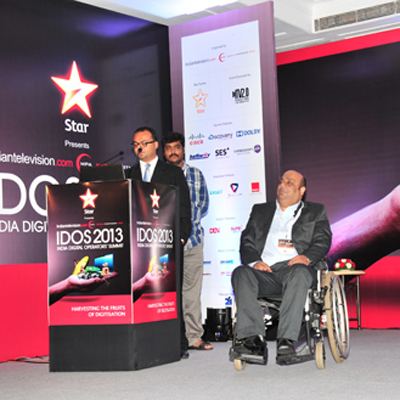
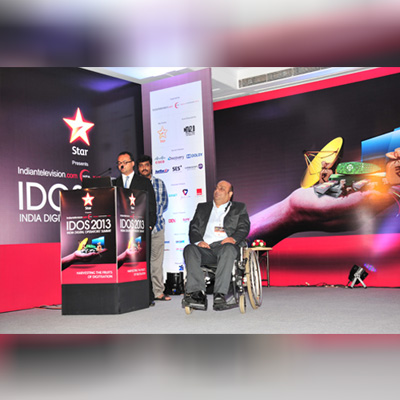
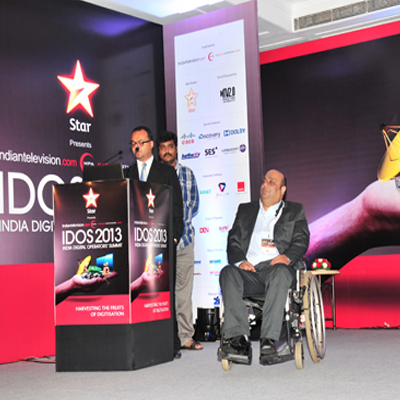
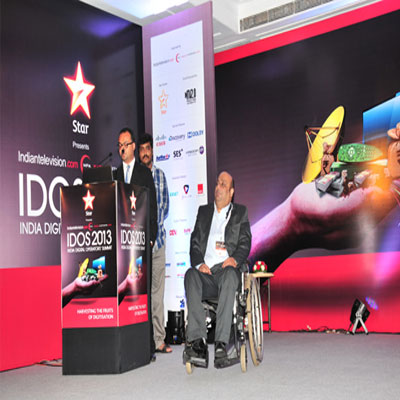
    MUMBAI: It was at indiantelevision.com & MPA’s (Media Partners Asia) India Digital Operators Summit (IDOS) that Mumbai-based cable TV heavyweight and MCOF (Maharashtra Cable Operators Federation) president Arvind Prabhoo first presented to India’s cable, DTH, regulatory and broadcast leaders the local cable TV operators’ perspective. Everyone was impressed including Telecom Regulatory Authority of India (TRAI)’s advisor N. Parameswaran, who said the regulatory body would like him to come and present at its headquarters in Delhi.

    The wheelchair bound Prabhoo did exactly that three days ago on 6 November when he presented the LMO’s viewpoint once again before the TRAI’s N Parmeshwaran, Wasi Ahmed, S K Singhal and G S Kesarwani.

    Prabhoo once again highlighted the issues that are bothering the LMOs and the role they can play in phase III and phase IV of digitisation.

    “There is a crisis in DAS I and II areas regarding LMO-MSO relationship,” says Prabhoo, adding that it was important to address the problems. Prabhoo has told TRAI that his major concern was the MSO-LMO-subscriber relationship. Subscribers belong to LMOs who collect money from them and give it to the MSOs who in turn pass it on to broadcasters. However, the MSOs believe that subscribers belong to them and not to the LMOs.

    Prabhoo also raised the issue of uneven pricing of packages in cities like Mumbai. He wants all MSOs to have similar packages so that it is convenient for a subscriber to migrate and that will even make money collection easier. At the same time, clarity on a-la-carte channels is missing even today.

    He also brought to fore the issue regarding the ownership of set top boxes (STBs). He thinks it is a big bone of contention. “On one hand, customers think they own the STBs, while the MSOs think that STBs are their property,” he remarks. “This disallows customers from migrating from one provider to another using the same STB when he shifts to a new place with a new provider and if he does, the LCO is held responsible for it. Because of this, many subscribers are shifting from cable to DTH, as it seems to be more convenient.”

    Since there’s no fixed revenue sharing deal between the MSOs and LMOs, Prabhoo came up with few solutions. He suggested that for an FTA (Free to Air) channel the sharing between MSO and LMO can be 20:80, while for pay channels it can be 75:25.

    He also suggested that the price of a STB can be reduced and a free basic broadband service be given to communicate by mail. Another suggestion was to rename the LMOs as Horizontal Connectivity Provider Agency (HCPA).

    Prabhoo also brought to TRAI’s notice the issue of entertainment tax. The 42B licenses of LMOs have not been renewed since two to three years and yet the tax is being collected from them. TRAI seemed to be unaware about the issue and has told to get in touch with the chief secretary of Maharashtra soon. They also said that as a regulator they had done everything they could.

    “There needs to be more interaction between LMO, MSO, broadcaster and TRAI if we need a proactive solution to address all our concerns,” concludes Prabhoo.

  • Howrah’s DAS travails

    Howrah’s DAS travails

    KOLKATA: To DAS or not to DAS? That is the question in West Bengal’s Howrah.
    Howrah, which is among those regions that are under phase II of DAS, has seen the implementation of DAS in only around 40 per cent of the million or so cable TV connections that dot the district.

    The remaining 60 per cent continues to be stuck watching analogue cable TV services. Subscribers have been loathe to pick up a set top box (STB) as local cable TV operators have clearly assured them that they fall under Howrah district and not Howrah city.

    A Howrah resident Rohan Das when contacted says: “I don’t mind buying the set top box (STB) but my operator has informed that it is not necessary to buy now.”

    Sources further add that not enough is being done to monitor or police how cable TV is making the transition to digital in Howrah. Cable Operators Digitisation Committee of the Association of Cable Operators convener Swapan Chowdhury confirmed that there is slackness in the DAS rollout.

    Manthan director Sudip Ghosh pointed out that things are doing well in “Howrah city which has around five lakh cable TV connections; most of these have been digitized. More over the CAF collection has also been completed by many, while some are doing it now.”

    Manthan has installed 20-25 per cent STBs in the region out of the four to five lakh STBs. Ghosh clarified that “Howrah district and Howrah city are different.”

    SitiCable Kolkata director Suresh Sethia also confirmed that the company has completed the work as mandated by TRAI. He however added, “TRAI has to define whether the border of Howrah falls under phase II or not. The regulator has to clarify the DAS area.”

    SitiCable controls a sizeable chunk of cable TV viewers in the region. It should be noted that broadcast regulator TRAI has extended the deadline for collection of Consumer Application Forms (CAF) in phase II cities including Howrah by MSOs to 15 November from its previous deadline of 30 September. MSOs operating in Howrah vicinity confirm that they will meet the deadline.

  • SitiCable sets sights on the East

    SitiCable sets sights on the East

    KOLKATA: In a bid to expand its reach, SitiCable Network plans to launch seven to eight server-based TV channels in the eastern region. Of which, a devotional 24-hour Hindi channel is likely to premiere in the next 20-25 days, with plans afoot for a massive marketing campaign in Kolkata.

    While the name of the newbie hasn’t been revealed, we’ve learnt it will include the word ‘Bhakti’.

    Speaking to indiantelevision.com, SitiCable Kolkata director Suresh Sethia reveals: “We would be launching a 24-hour Hindi bhakti channel in the next 20-25 days. We aim at other channels as per local requirements.”

    The MSO plans to launch its other server-based channels in locations including Patna and Guwahati.

    Among the other channels, Sethia said SitiCable was looking at events – one for round the clock telecast of happenings across the city. “It can be any occurrence. Whether it is a function at Netaji Indoor Stadium or any accident or event organised by any company, the channel will cover it,” he said.
    Without divulging the amount of investment, Sethia said the MSO had been spending for the past couple of years for exclusive content and would reap the benefits by airing the same.

    “We are also acquiring content now. We are working with our partners as well,” he added.

    A few months ago, SitiCable had also started the first Bengali devotional channel called Srijan TV: Spiritual and Cultural TV Channel. The Hindi devotional channel is possibly another effort in the same direction.

    However, city-based media planners lauded the initiative saying the Hindi bhakti channel would do well in Kolkata as many non-Bengali devotees would be benefitted from it and going forward, it would also cater to a niche clientele in terms of both content and advertisements.

  • Ortel to focus on last mile; to expand in regional markets

    Ortel to focus on last mile; to expand in regional markets

    KOLKATA: Odisha-based multi-system operator, Ortel Communications Limited is looking at investing in expansion of its existing network as well as to new locations in the region. But it stays focused on last mile connectivity.

    The cable television service provider engaged in distribution of analogue and digital cable television services, high speed broadband services and VoIP services, plans to launch various new product lines including High Definition (HD) services to its subscribers.
    Our network is ready for digital services and we will have no difficulty in migrating to full Digital services believes Ortel CEO Bibhu Prasad Rath

    Going forward, apart from increasing its broadband subscriber base and penetration of digital services, the company is eyeing acquisition of MSOs and LMOs for expansion.

    To fund the above growth, the company is exploring various fund raising options including raising equity close to Rs 100 crore.

    Most of our markets are in phase III and IV of digitisation process. We are already active and increasing our digital penetration. Our network is ready for digital services and we will have no difficulty in migrating to full Digital services,” said Ortel CEO Bibhu Prasad Rath.

    It currently offers up to 215 digital channels. The channels on digital services are tiered to offer customers’ option to chose and pay for it.

    The pricing of our digital services is based on a differential pricing for subscribers choosing to avail different services. Currently, the monthly subscription varies from Rs 122 to Rs 305 per month including taxes. In addition to this, we also offer various genres based packages as add on as well as channels on a-la-carte basis,” added Rath.

    Ortel Communications at present has around five lakh subscribers including more than 50,000 broadband retail customers and more than 70,000 digital service users, rest being analogue service users.

    “As a conscious decision, we have preferred the depth model with focus on a given geographical market, control of last mile and full retention of subscription revenue. A major part of our revenue comes from subscriptions and we are comparatively less dependent on carriage fee,” he concluded.

    The business of Ortel is focused in the states of Odisha, Chhatisgarh, Andhra Pradesh and West Bengal. While the network is operational in 39 locations and the services are offered in 53 towns with more than 25,000 kilometers of cables, 35 analogue head ends and six digital head ends.

  • Maharashtra’s LMOs to blackout TV on 2 Oct

    Maharashtra’s LMOs to blackout TV on 2 Oct

    MUMBAI: A mid- week holiday is always welcome and is a good time to catch up with friends and family as well as your favourite TV shows and channels. However, this Gandhi Jayanti will see a different type of revolt on television in the west Indian state as the Maharashtra Cable Operators Federation (MCOF) has decided to put their foot down on the alleged “harassment” that they have been facing from the MSOs.


    From 6:00 pm to 9:00 pm tomorrow, 2 October, about 3,000 cable operators under the MCOF have decided to blackout their screens opposing the ‘high-handed’ behavior that MSOs have adopted towards LMOs (Last Mile Operators), as MCOF president Arvind Prabhoo puts it. This includes the areas of Mumbai, Pune, Pimpri-Chinchwad, Nasik and Indore in MP where DAS I and II have been implemented. Approximately 15-20 lakh customers in Maharashtra alone will not get to see their favourite shows during prime time. LMOs in Gujarat have also been approached and a response is awaited from them.
    Arvind Prabhoo feels that it is time to start treating LMOs as equals and respect their demands


    The federation says that its intention is not to harass customers but just demonstrate that cable operators are united and it is high time MSOs give them their due credit in the cable TV chain. Communications to customers have already started in the form of SMSes and emails as well as leading papers – both English and Marathi – are being used to inform people about the flash blackout.


    “If the MSOs and broadcasters sit and talk with us there is no need to do this but no one is listening to us,” stresses Prabhoo. He does not even feel that the two will reach out to the LMOs before evening of tomorrow. Initially the plan was to shut it down for a whole day but due to legal regulations, it was reduced  to three hours.


    This isn’t the end as well. If nothing comes out of this then more such days will see blackouts with increased hours especially during festive times.


    There is a possibility that MSOs may take legal action against MCOF for this move but it is ready to fight the biggies. “This is exactly what we are opposing. When an MSO switches off channels on its own, no one questions its decision but the local guy is questioned. No legal action is taken but we have to bear all the brunt from both the MSOs as well as the customers,” adds Prabhoo. Recently, InCable had decided to switch off signals to all sports channels, right before the Champions Trophy T20, a way to bully the LMOs to cough up more cash, claims the federation.


    The issues that LMOs have been grappling with are many. Prabhoo points out that last minute decisions taken by MSOs lead to chaos which has to be resolved by local operators. This happened during DAS Phase I when STBs (Set Top Boxes) were being installed in homes. Unending trips to customers to fill forms is a burden on them as well, discloses Prabhoo. MSOs have the power to switch off signals to channels arbitrarily as well as make channels unavailable on a-la-carte rates so that only packages exist. “They should talk business, not superiority or inferiority,” adds Prabhoo.


    For now, the impending blackout is on the cards for tomorrow. Unless discussions take place soon, cable TV viewers in Maharashtra could well be in for more evenings of just looking at a blank TV set or one with a flickering static-riddled picture.

  • MCOF to hold seminar for LMOs

    MCOF to hold seminar for LMOs

    MUMBAI: With Last Mile Operators (LMOs) viewing digitisation as a threat and legal tussles between them and Multi System Operators (MSOs) on the rise, the Maharashtra Cable Operators Federation (MCOF) has organised an educational and business seminar on ‘challenges and opportunities post DAS’ to address their growing concerns.

    To be held on 23 November at the Prabhodhankar Thakarey Krida Sankool in Vile Parle, Mumbai, the seminar will see the who’s who of the industry educate LMOs about the kind of business opportunities lying in wait.

    Addressing operators from Maharashtra, Andhra Pradesh, Gujarat and Goa will be Castle Media director Vynsley Fernandes, who will speak on ‘global industry standards and trends’; HSBC Securities (Telecom and Media) lead analyst Rajiv Sharma, who will touch upon the financial aspects; former Sun group CEO Tony D’Silva, who will discuss HITS (Headends in the Sky) technology, UPASS managing director Ravindra Deshmukh and PING Network founder Prashanto Das, who will talk about global trends in broadcasting.

    Also among the invitees are small scale industries and the State Bank of India (SBI) regional head.

    Says MCOF president Arvind Prabhoo: “There is a lot of confusion about digitisation and LMOs feel the business is going out of their hands but if you understand what digitisation is and how to go about it as well as reorient yourself to the changing scenario, then you don’t look at it as a challenge but as an opportunity. I want LMOs to know that digitisation is not a threat and remove the fear factor from their mind.”

    A few women cable operators are also expected to attend the seminar that will be conducted in both Hindi and English. Nearly 500 to 600 LMOs are likely to participate with registration fees fixed at Rs 500 per head. Leading Marathi and Gujarati newspapers will be carrying advertorials tomorrow and day after to promote the event.

    Apart from challenges and opportunities post DAS, the seminar will also cover topics such as maximizing broadband penetration, optimised network architecture in DAS and future proof, Value Added Services (VAS), identifying right equipment and spares, supply tie ups and employee training.

  • CODA to push ahead with Maharashtra ent tax issue this week

    CODA to push ahead with Maharashtra ent tax issue this week

    MUMBAI: The ongoing struggle, regarding the entertainment tax, between the Cable Operators & Distributors Association (CODA) and the Maharashtra State government has reached the next level. After postponing the decision to blackout all Hindi, English and Marathi news channels on state revenue minister Balasaheb Thorat’s request a couple of weeks ago, the organisation met with him last week.

    “He has asked us to give a detailed presentation about the current cable TV scenario in the state, the revenue generation in the current tax regime and also compare it with what will happen when entertainment tax on subscribers and set top boxes will be brought down,” confesses Anil Parab.

    The Maharashtra regime currently levies entertainment tax on cable TV subscribers at the rate of Rs 45 per sub; CODA has been imploring and lobbying with the government to scale this down to Rs 15 or Rs 20 as is the practice in many other states and cities.

    According to Parab, the current rate is too high considering that transparency in the cable TV sector has really gone up and leakages have reduced with the introduction of set top boxes and digitisation. “The only only reason we had agreed to a hike to Rs 45 per sub was because there was under-declaration in the ecosystem and hence a perceived loss to the state exchequer. But with declarations of cable TV subs by cable operators and MSOs more than doubling, rate needs to be brought down as the burden on the industry is crippling us and really hurting our viability,” he reveals.

    CODA is slated to meet the minister this week and make its presentation. As of now, Delhi’s rate is Rs 20 while in other cities it is less than five per cent. “The current rate is too much. We would be happy with anything between Rs 15 and Rs 20,” says Parab.