Category: Local Cable Operators

  • DAS & the LCO fightback for survival

    DAS & the LCO fightback for survival

    It’s the festival of lights. And for many the festival of noise courtesy exploding fireworks. In the hope of reducing the number of those belonging to the latter tribe, we, at indiantelevision.com, decided to put a display of firecracker articles for visitors this Diwali. We have had many top journalists reporting, analysing, over the many years of indiantelevision.com’s existence. The articles we are presenting are representative of some of the best writing on the business of cable and satellite television and media for which we have gained renown. Read on to get a flavour and taste of indiantelevision.com over the years from some of its finest writers. And have a happy and safe Diwali!

    Written By Seema Singh


    (Seema today is senior manager – PR & Communication at the Broadcast Audience Research Council. She wrote this article in 2013.)


    Posted on : 05 Dec 2013 09:45 pm


    MUMBAI: With no one giving them any guarantees about their long term survival under the government-mandated DAS regime, small time local cable operators (LCOs) are banding together as cooperatives in pockets nationally, agglomerating funds, and setting up their own headends. From Bengaluru to Kolkata to smaller towns, this is being mirrored across the country.  Digitisation has spurred a new wave of entrepreneurialism in the cable TV business.

    “Analogue cable TV spread like wildfire in the 80s and early 90s thanks to small time business men who invested and toiled away to deliver satellite TV via cable to homes,” says a cable TV industry observer.

     “Now digitisation in its current form is designed to kill those very last mile operators, big or small,” points out  Maharashtra Cable Operators Federation (MCOF) president Arvind Prabhoo.

    “Some have given up and have joined hands with the MSOs, fearing the huge investments needed for digitisation and the backlash from the national MSO,” says the cable TV industry observer. “But don’t expect all the guys who have built the cable TV industry to what it is today to yield without a fight; hence the new wave of entrepreneurialism.”

    Take the case of the Bengaluru boys.  70 independent cable TV operators got together to set up their own cable TV headend and distribution infrastructure in March 2013.

    Explains one of the members – Sagar E Technologies’ executive director Sudhish Kumar: “There were two reasons: digitisation and revenue share. We had at several instances raised voice against the MSOs with regards to billing, ownership of set top boxes (STBs) and ownership of consumers. The TRAI suggested revenue share model showed that the revenue shared between the LCOs and MSOs will be 35:65 or 40:60. We were being given a small pie. The same was the case as far as cable TV carriage, placement fees or value added fees. We were to get nothing.”

    Branded as Mirai Communication, the consortium is registered as a private limited company and has 10 directors. Its headend is located in Electronics City, Bengaluru. It is through this that the operator provides feeds across Bengaluru. “In Bengaluru we cover areas like: Central Bengaluru, Central Railway Station, Whitefield and ITPL among others,” informs Kumar.

    And Kumar says its headend is future-ready technologically. “We have a Harmonic headend, costing Rs 3 crore, with a carrying capacity of 500 channels.” 

    Some 50,000 STBs imported from DTM, China with CAS from NSTV and SMS from Magnquest, have been seeded amongst its subscribers and the plan is to take the number to one lakh soon. Since some of the LCOs in the joint venture were link operators for the major MSOs in Bengaluru, their boxes have been replaced with the Mirai Communication STBs.

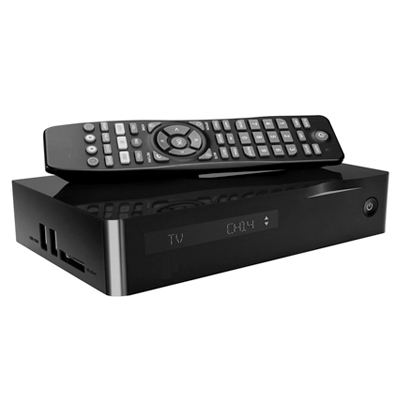
    “These are standard definition high quality MPEG4 boxes with one GB of DVR,” informs chief technology officer Sriram. The price tag of each box is between $16 and $19 (around Rs 1200). The final cost works out to Rs 2000- 2500. This includes CAS, cost of headend, import duty and the cost of STB.” 

    Issues with DAS implementation and revenue share got us together to setup our own headend says Sudhish Kumar

    The company has spent close to Rs 30 crore on the whole setup, which includes infrastructural help from Tata Teleservices, using the optical fibre it has laid across the garden city. “Though we have our own hybrid fiber-coax (HFC), we are using almost 400 km of Tata Teleservices underground OFC, since maintaining the network across the city is a huge task. It has given us drops at several points across the city through which the signal is made available to homes,” says Kumar.

    So what are the challenges the group has faced? “Well, the current 10 directors got along to form a team. We then proposed what we were planning to do to others in the city. It was a challenge to bring everyone to come together, but it has worked out well since,” he informs.

    Each of them was asked to choose between acting as a collection agent by becoming a link operator for a national MSO  becoming an owner by becoming a part of Mirai Communication. “Though it earlier seemed like a herculean task, with 70 operators coming together, we realised that we had to pay only Rs 2000-2500 per box. We were anyways paying Rs 1000-1500 to the MSOs for seeding boxes. So, now by paying extra Rs 1000-1500, we could own the STB and also keep our consumers intact,” explains Kumar.

    It was the Hyderabad based Fibre Optics that offered a one-stop solution and the challenge has not yet ended.  “It is an ongoing task. We have managed to get feeds from all broadcasters.  We are paying them for one lakh subscribers, when currently we have 50,000 subscribers. But, we hope to seed more boxes soon,” adds Kumar.

    What is the revenue share between the 70 cable ops who have formed the consortium? “Well! It is simple. The operator gets a share against the active boxes which are part of his own subscriber network,” he informs. Mirai Communication has started generating bills. “The revenue has started rolling out now,” he informs.

    Bengaluru’s operators are not the only ones, who have come together to setup their own headend. Following their footsteps are the 100 cable operators from Kolkata that recently announced the setting up of ‘Bengal Broadband’. As reported by Indiantelevision.com, the new entrant will be functional from FY2015 (LCO’s form ‘Bengal Broadband’ to be effective from FY15).

    Says Prabhoo, “LMOs all over India like in Bengaluru and Kolkata must group together and form a co-operative model in such a way that even the smallest LMO can survive and sustain. LMOs must register under small scale industry so that they can avail of collateral free bank loan up to Rs 1 crore.”

    We have seeded standard definition high quality MPEG4 boxes with one GB of DVR, informs Sriram
    While the State Bank of India already is providing such facilities, MCOF is also in talks with IDBI Bank and Canara Bank to offer the same. 

    “Time is running out for the MSOs and if they do not learn to act fairly soon enough then many co-operative headends will come up in most cities of India. One may find another 100-200 headends coming up with 200-300 different cooperatives formed and that will continue for a year or two and then there will be consolidation. And I see it happening. These are large cooperatives with a 500,000 or million universe,” adds Prabhoo.

    Kumar points out that they are already in talks with both independent MSOs across India and also LCOs in Mumbai, Delhi, Nasik, Kerala, Chennai, Hyderabad and Gujarat for setting up more such co-operative headends. “We are in talks with independent MSOs and asking them to collectively set up one headend for the entire country,” he concludes. 

    Change as we say is the only constant. Even in cable TV land. 
  • Close Kolkata LCOs appeal to MIB for 10 year license

    Close Kolkata LCOs appeal to MIB for 10 year license

    KOLKATA: Since the time the process of cable TV digitisation started, if any faction has been really troubled, it’s the local cable operators (LCOs). To make their future secure, they have raised their voice time and again.

    In an attempt to form a united front and take up the common issues troubling them, around 8,000 Kolkata LCOs, who claim that mandatory digitisation has adversely affected their livelihood, are requesting the Parliamentary Standing Committee of Information Technology for 10-year license from the Ministry of Information and Broadcasting (MIB).

    One of the reasons that worry the LCOs the most is that they are registered with the post office and get only a year’s license at a time.

    “But the Multi System Operators (MSOs) get a 10-year license from the MIB,” says Cable & Broadband Operators Welfare Association (CBOWA) general secretary Swapan Chowdhury, who thinks that the present condition of licensing is unfair and is making LCOs uncertain about their future.

    “We have requested the authority to recommend the licensing provisions made in the ‘Recommendations on Restructuring of Cable TV Services’ dated 25 July, 2008 to be implemented for LCOs and MSOs,” he adds.

    The body has also appealed to Member of Parliament and Member of Parliamentary Standing Committee of IT, Tapas Paul to review the arbitrary rule and act of Digital Addressable System (DAS) in order to protect the cable operator’s fundamental rights of livelihood.

    Chowdhury thinks that the current revenue sharing model between the MSOs and LCOs is not viable for the cable operators and in due course of time it may even compel the LCOs to quit the business. In the current scenario, as defined by the regulator, the ratio of revenue sharing between MSOs and LCOs is 55:45 for free-to-air (FTA) channels and 65:35 for the pay channels. “The business model should be reconsidered to protect the livelihood of lakhs of people,” says Chowdhury and adds that CBOWA believes that the model is discriminatory and thus they have put in a request for that as well.

    Another thing that is bothering the LCOs is that the MSOs are not executing the terms in the agreement even though DAS has been implemented since February this year. CBOWA has also put in a request about this so that these issues can be addressed in the winter session.

    A cable TV analyst, Namit Dave thinks that the digitisation process is a massive exercise and requires all stakeholders – broadcasters, MSO and LCOs to work in collaboration. “It would be difficult to execute the herculean task if any of these parties don’t cooperate,” he concludes.

  • LCOs may decrease in number in the next three years

    LCOs may decrease in number in the next three years

    KOLKATA: Lately,  indiantelevision.com  has done a series of reports about local cable operators (LCOs) being unhappy with the process of digitisation. A critical area of concern being the Telecom Regulatory Authority of India’s (TRAI) ruling on consumer application forms (CAFs) and billing, which according to LCOs, makes multi system operators (MSOs) the owners of their hard-won subscribers.

    On the back of these reports comes another disturbing finding: experts say LCOs in the city’s DAS area – currently pegged at 7,000 to 8,000 – will drastically decrease in numbers in the next three years.

    Says Mrinal Chatterjee, who runs Akash Sutra, a cable network in Bangur and its adjoining areas: “During analogue times, the share between the MSOs and us used to be 20:80 but after DAS, it has come down to 65:35. The business model is not at all lucrative enough. A major number of operators might look at other options for existence.” Many others are thinking of ways to ‘only exist’ in the cable TV business, wherein they have invested nearly 20 years of their life; he adds.

    Whereas, Suresh Sethia, Siticable Kolkata director says: “Small operators will become a part of larger networks but will still be in business.” Asked to define the term ‘small operators’ Sethia goes on to explain that LCOs with 100-150 subscribers are small while those with 2,000 and more customers are big. “There are groups of LCOs having more than 10,000 subscribers that are considered large,” he says.

    Sources however say that in Kolkata, most cable ops are yet to sign revenue-sharing agreements with their MSOs.

    An MSO says while the company has asked affiliated LCOs to educate subscribers about the different packages on offer, LCOs are not doing their work. “Secondly, the LCOs did not pay us for each connection in the analogue regime. But with installed set top boxes and the number of connections transparent, LCOs are not supporting us properly implement the new system,” he says.

    By contrast, an LCO who is part of the recently formed Bengal Broadband initiative (GIVE LINK TO OUR STORY) argues: “A multi system operator may provide cable TV services directly to subscribers. They don’t need our services and we are not mere collection agents. So, I will try to become a MSO.”

    Another cable op questions: “Filling up forms to gather information about viewers’ preferences coupled with sharing of network could result in monopoly of MSOs. Where are we in the system?”


    According to Swapan Chowdhury, convener of the Cable Operators Digitalisation Committee of the Association of Cable Operators, the authorities must do something in favour of operators. But he is quick to assure that people who have spent years in this industry will be here and ‘nothing will change’.

    Corpus Media consultant GK Viswanath corroborates Chowdhury’s view and says: “LCOs will not leave the industry. They’ve spent time and money here. LCOs will be the franchisees or payment collectors.” Going forward, he feels the small LCOs will merge with the MSOs and not with big LCOs.

  • MCOF to meet MSOs to discuss billing issues

    MCOF to meet MSOs to discuss billing issues

    MUMBAI: The easier a process becomes, the better it is. It seems this is the process that Maharashtra Cable Operators’ Foundation (MCOF) has opted for in order to make the entire digitisation process a smooth ride. In a new initiative, the apex body of cable operators in Maharashtra has sent a letter to all the MSOs inviting them to a meeting where they would discuss about the proper implementation of digitisation.


    In the letter, of which Indiantelevision.com has a copy, the MSOs have been requested to schedule the meeting in the coming week.


    When both the parties meet, they are expected to discuss issues related to: interconnect agreement, billing, Consumer Application Form (CAF), package activation, a la carte channels choice, disconnection of set top boxes (STBs) without notice, misleading and false  information given about the LMO to the customer over call center, ownership of STB and uniform rates.
    We are making an effort from our side to meet each MSO separately, says Arvind Prabhoo


    The letter has come out a day after the Telecom Regulatory Authority of India (TRAI) gave the MSOs the final deadline of 15 December to submit the duly filled CAFs and also implement gross billing by December.  “CAF is not the only issue, there are issues related to service tax and billing,” says MCOF president Arvind Prabhoo.  “There is no clarity on whether the consumers will be billed on the service provided by the MSO or on the MRP of the package that the subscriber opts for,” he adds.


    The meeting has been called to discuss the issues concerning both the MSOs and the LMOs.


    “We are making an effort from our side to meet each MSO separately. In the meeting, we will try and understand the system of billing devised by the MSO and make suggestions, if required. If not, we will go hand-in-hand with MSOs, provided our legal status is maintained,” informs Prabhoo.


    The apex body which comprises more than 1500 LMOs is also unsure about the settlement mechanism between the MSO and the LMO once the billing is done. “The MSOs so far haven’t spoken to the LMOs on how they will pay the LMO for the customer it bills,” points out Prabhoo.


    Expressing concern on the 15 December deadline set for submitting CAFs, Prabhoo says, “If 50 per cent CAFs have been filled in one year on an average, how does TRAI expect the remaining 50 per cent to be filled in next three weeks? Also, with the holiday season coming in, is TRAI looking at switching off STBs, if the deadline is not met?”


    With TRAI pushing MSOs to start gross billing from December, Prabhoo comments, “The issue relating to entertainment tax is subjudiced. So when the MSO says it will start gross billing from next month, is it looking at levying entertainment tax as well?”


    It should also be noted that the Nasik Cable Operators Association has moved the Telecom Disputes Settlement and Appellate Tribunal (TDSAT) on billing. While TRAI was supposed to respond to it on 22 November, the tribunal has granted time till 23 January to the regulator to respond. “So when both entertainment tax and billing is subjudiced, why is TRAI pushing cable operators for contempt of court?” he questions.


    On the issue of TRAI asking the MSOs to either convince the LMOs to start billing or do it themselves, Prabhoo sternly says, “They can do it, if they want. We are not going to be delivery boys. We are owners of our own businesses. And we have the right to bill our own consumers and that is what we are fighting for.”

  • 100 Kolkata LCOs group to set up a new headend

    100 Kolkata LCOs group to set up a new headend

    KOLKATA: One would imagine that cable operators would be a happy lot, considering the country is on the threshold of the last two phases of digitisation. However, the truth is LMOs (last mile operators) or LCOs are unhappy with the Telecom Regulatory Authority of India (TRAI) ruling on consumer application forms (CAF) and billing, which according to them, makes multi system operators (MSOs) the owners of consumers.

    Earlier this week, indiantelevison.com reported how a group of LCOs and independent MCOs met the Parliamentary Committee on Information and Technology in New Delhi to put forth their views on the subject.

    The latest, sources reveal, is that around 100 Kolkata-based LCOs – some affiliated with Siticable, others with Manthan – have come together and invested between Rs 2 and Rs 3 crore toward setting up a headend and accompanying infrastructure at Salt Lake College More in the city.

    This group is believed to be in the process of setting up a cooperative venture and is eager to start its own services. With the LCOs’ rising concern over MSOs becoming the owners of their hard-won subscribers, the development does not come as a surprise to the industry.

    However, “MSOs are creating hurdles for these LCOs,” sources added, without divulging any details.

    Swapan Chowdhury, convener of the Kolkata Cable Operators Digitalisation Committee of the Association of Cable Operators confirmed that this new cooperative had indeed been formed and that the LCOs might name the service Bengal Brand. “It is a difficult time for LCOs in Kolkata as the MSOs are not allowing them to go ahead with their plans,” he said.

    Rajiv Sharma, lead analyst (telecom and media), HSBC Securities, opined: “The local cable operators are also thinking of becoming MSOs by coming together… Not good news for the stock prices of existing MSOs which have raised funds from the public even if LCOs fail eventually.”

    Namit Dave, cable TV analyst, stated that bunching together was probably a good option for smaller operators. “A 200 channel headend costs nearly Rs 1 crore; a smaller operator with subscribers running into a few thousands would not find the investment profitable in a small town. However, if operators were to get together, it could end up being a profitable venture,” he pointed out.

    Kolkata-based Manthan Broadband Services director Sudip Ghosh sees more cable ops coming together in east India. Says he: “Players with a subscriber base of more than 500,000 may not consolidate headends. But Kolkata can see the consolidation of players with others having a subscriber base of around 300,000-400,000.

  • LCOs demand access to SMS from MSOs

    LCOs demand access to SMS from MSOs

    KOLKATA: The process of shifting from analogue to digital feed is not without its share of problems; a key issue being the resultant tug-of-war between local cable operators (LCOs) and multi system operators (MSOs) over access to the subscriber management system (SMS).

    The Digital Addressable Cable TV Systems (DAS) requires MSOs to establish a subscriber management system (SMS), where details of all subscribers, along with their choice of services including channels and bouquets, are maintained.

    While cable and entertainment analysts feel, “This brings in addressability and consequently, complete transparency in the whole system,” LCOs have a different take on the matter. They are of the opinion that once MSOs start billing consumers directly, they may end up losing control over their hard-won subscribers. Hence, they’re now asking MSOs to allow them access to the SMS to avoid such an eventuality.

    Says Rajiv Sharma, lead analyst (telecom and media), HSBC Securities: “LCOs are worried about losing control over their subscribers if MSOs bill directly. They are of the view that MSOs should allow LCOs access to subscriber management systems, which are similar to what is being done for airline ticketing.”

    A city-based cable op told indiantelevision.com, on condition of anonymity, that he had worked very hard for the last 20 years and it would be very unprofessional if his business and database were to go out of his hand and to the MSO whom he would then have to depend on totally.

    Meanwhile, an MSO questioned as to how he could allow LCOs access to the SMS which his company had spent a few crores on. Typically, it’s the MSOs that invest in infrastructure including network, encryption, ERP, call centers and SMS.

    Director Manthan Broadband Services pointed out the benefits of SMS as enabling subscribers exercise their choice of services and budget their bills accordingly. “It also helps us in managing their accounting and billing of the services rendered effectively in the long term,” said he.

    Cable analyst Namit Dave suggested that MSOs and LCOs should work hand-in-hand for mutual benefit. While Sharma pointed out that the battle between MSOs and LCOs was sending out wrong signals to the investor community. “Gross billing remains a deterrent for MSOs and we anticipate some delay as we don’t expect clarity on the entertainment tax issue anytime soon,” he said. News is Hathway has suggested it expects to move to gross billing not before phase I i.e. the fourth quarter of the current fiscal.

  • Kolkata cable ops to meet FM

    Kolkata cable ops to meet FM

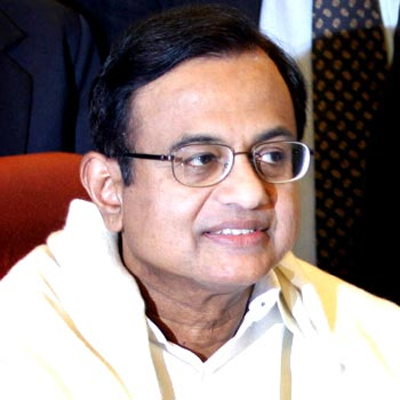
    KOLKATA: With cable operators liable to pay 12.36 per cent of the subscription amount collected per month from customers as service tax to the government, 12 cable ops met the finance minister P Chidambaram in the city today to talk on Voluntary Compliance Encouragement Scheme (VCES).


    Two months ago, indiantelevision.com was the first to report issuing of summons to over 350 city-based cable ops for evasion of service tax for the past five years. We had also reported how service tax officials conducted two raids to probe into alleged financial irregularities of two MSOs.


    This, despite the government having introduced the VCES on 10 May. VCES is a one-time amnesty scheme for paying service tax dues for the said five-year period from 1 October 2007 to 31 December, 2012, without any interest or penalty.
    Cable Operators Digitalisation Committee of the Association of Cable Operators convener Swapan Chowdhury, confirmed the news saying: “We will discuss the voluntary service tax with the minister.”


    A key issue the cable ops plan to discuss is the government’s U-turn on the proposed service tax waiver for operators with turnover of less than Rs 10 lakh per annum. With authorities now saying that as cable ops are selling brands like Manthan and Siticable, they are liable to pay service tax, irrespective of the turnover shown in books, Chowdhury stressed: “We requested the government not to include operators below Rs 10 lakh turnover for service tax payment.”


    As the secretary of Cable and Broadband Operators’ Welfare Association, Chowdhury also informed the finance minister that after implementation of DAS in the city, consumers have had to wait for bills and upon not receiving them, remained unwilling to pay service tax to the LCOs.


    About the amnesty scheme, which Chidambaram has been urging service tax defaulters to take advantage of, tax consultant Namit Dave said: “By giving up interest, the government wants people to clear their dues.”
    Meanwhile, an industry analyst opined that MSOs which have evaded service tax to the tune of Rs 15 crore to Rs 20 crore in the past four years, now have a chance to pay their dues without penalty and prosecution.

  • LCOs, independent MSOs unhappy with digitisation

    LCOs, independent MSOs unhappy with digitisation

    MUMBAI: Back in 2012, when India kicked-off the process of digitisation, local cable operators (LCOs) were an unhappy lot; approaching state high courts for respite from what they perceived as a threat to their business.


    Today, one would imagine cable ops to be happy, considering the first two phases of DAS are almost complete and India is on the threshold of the final phases (III and IV) of the big switch (analogue to digital feed).


    However, the truth is: cable ops are not happy with the Telecom Regulatory Authority of India (TRAI) ruling on consumer application forms (CAF) and billing, which according to LCOs, makes multi system operators (MSOs) owners of consumers. In this connection, a group of LCOs and independent MSOs met the Parliamentary Committee on Information and Technology in New Delhi and put forth their views.


    ABS 7 Star CMD Atul Saraf told the committee: “The ownership of the consumers should be with the LCOs and not with the MSOs. The TRAI and the Information and Broadcasting Ministry (I&B Ministry) should amend the DAS rules keeping in mind the interest of all stake holders.”
    Almost 90 per cent of the STBs are imported from China, we propose that 70 per cent of the STBs should be Indian, says Atul Saraf


    Saraf pointed out that though there were 60,000 LCOs and 8,000 MSOs across the country, the task force formed for the process did not include a single LCO or MSO. “A new task force should be formed with all stake holders and not a couple of MSOs and broadcasters who are in vertical monopoly,” he remarked.


    Drawing attention to the low quality of the Chinese set top boxes (STBs) being used, he said cable ops who had already spent close to USD 4 billion in the first two phases would be forced to spend another USD 4-5 billion in the last two phases of DAS. “Currently, most of the STBs being seeded are Chinese. The boxes which are of low quality may have to be replaced in the next couple of years, which means more cost for the operators,” Saraf said, cautioning against implementing phases III and IV before the completion of the first two phases.


    “There should be a Broadcast Act to monitor broadcasters. Also, only after both the consumers and cable operators reap the benefits of DAS phase I and II, phase III and IV should be implemented,” he said.

    Increasing import duty on STBs will discourage the MSOs from importing STBs from China, points Arvind Prabhoo


    On behalf of the cable op community, Saraf demanded: “We want the committee to question the government as to why these loopholes were not looked at before importing such STBs,” pointing toward the growing need for indigenous box manufacturing. “Currently, almost 90 per cent of the STBs are imported from China; we propose that 70 per cent of the STBs should be Indian,” said he.


    He proposed that while the current import duty on STBs is 10 per cent, it should be raised to 50 per cent. “Wasn’t digitisation meant to uplift Indian STB manufacturers and also create more jobs for them? What I fail to understand is how the TRAI and I&B Ministry did not see these loopholes before implementing digitisation,” Saraf questioned.


    Seconding Saraf on the hike in import duty as well as indigenous manufacture of STBs was Maharashtra Cable Operators Federation president Arvind Prabhoo. “Of course, importance should be given to the national STB manufacturers. If the import duty is increased, it will surely discourage the MSOs from importing STBs from China and also encourage Indian manufacturers. That digitisation should have helped generate revenue and employment for Indians, are issues the government should have thought about,” he said.
    We plan to go and meet the members of parliament once the winter session commences,says Pramod Pandya


    He opined that the government had been misled at some point. “I think that a certain section of the industry presented a wrong picture to the government. But, I am sure they will work on it now.”


    Gujarat Cable Operators Association president Pramod Pandya wanted to know if any consumer survey had been conducted before implementing digitisation. “I do not understand the need to force the implementation of DAS, if the country doesn’t have infrastructure to support it,” he thundered, pointing out that cable ops are hopeful the Broadcast Bill will be proposed during the winter session of the Parliament. “We plan to go and meet the members of parliament once the winter session commences,” he rounded off.

  • MCOF seminar aims to educate LMOs

    MCOF seminar aims to educate LMOs

    MUMBAI: Constituted just over a year ago to protect cable operators and safeguard their business, the Maharashtra Cable Operators’ Federation (MCOF), today organised its first business and education seminar in Mumbai.


    Held in Hindi and English,around 400 Last Mile Operators (LMOs) travelled from neighbouring states like Gujarat, Andhra Pradesh, Goa and Karnataka for it.


    The first session was to educate LMOs about the importance of customer care and enhancing the quality of service. Vishwamangal Education CEO Suman Keluskar who deals in soft skills highlighted the need for LMOs to be well groomed as well as train their subordinates to be the same to make customers feel good.
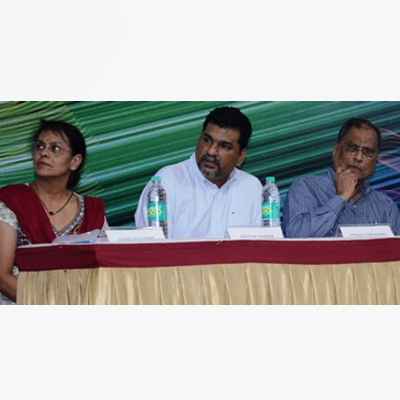
    Suman Keluskar, Vynsley Fernandes and Tony D’Silva spoke about customer care, global trends in cable TV and the upcoming HITS technology respectively


    “The reason why customers welcome a Pizza Hut boy is because he is nice to them,” she said, stressing that customers today were ready to pay for good service but for that to happen, LMOs needed to know the opportunities available to them as well as what customers were demanding. “Innovate in your production. Use the internet to advance yourself,” she said.


    Session two discussed how while LMOs across the globe have learnt to monetise their business, back home, it continues to be a loss-making one. Addressing the session, Castle Media director Vynsley Fernandes, started off by describing how developed countries such as the US, UK and Taiwan had faced the same issues that India is currently facing. But the cable ops dealt with them through innovation and have today grown to last mile digital system providers.


    “From the time the Gulf War happened and everybody wanted to watch TV, things are much different now. Multi-screen viewing is what is happening now,” he said.
    Citing the example of the US, where operators have increased their revenues despite a drop in the number of TV homes, and are expecting the ARPU to go up to $40 from $21 currently in the next five years, Fernandes reasoned this was because they had adapted to using TV along with the Internet and were offering viewers a multi-screen experience.


    He pointed out that concepts like Hybrid Broadband TV, second screen, catch up TV, time shift TV, TV on mobile etc. had already penetrated the US markets and helped cable operators exponentially.


    “Think long term as to whether you can monetise your product. Whenever you are investing in a technology, what is its future road map?” he urged, saying that the only challenge would come from OTT services such as Netflix and Hulu where movies and channels will go directly on the Internet without the need for an MSO or LMO. However, he was quick to add that this hasn’t met with much success in India, yet.

    While advertisers are approaching LMOs to target specific demographics on TV, the STBs taken up by LMOs are not so advanced, Fernandes said. Pointing out that in the US, LMOs provide a posse of services including entertainment, home monitoring, automation comfort, energy management and wellness assisted living, in India too, “an LMO should be the one-stop digital services’ stop for customers,” he concluded.


    Drawing upon his experience in broadcast and DTH to present his project on Headends in the Sky (HITS), former Sun TV CEO Tony D’Silva said this was a good prospect for LMOs to think about.


    D’Silva said that most consumers watch not more than 12 to 15 channels and so, it was necessary to create such packages and device-shifting technologies for the future.


    “You are at the threshold of a game change. Our main threat is the DTH players and we need to be above them and have a robust system,” he said, stressing that HITS was a much better option for LMOs than taking signals from MSOs. Under HITS, the agreements are directly with broadcasters, there are no carriage fees, and it would yield higher revenue (Rs 108) as compared to dealing with an MSO (Rs 59.5) or even independently (Rs 85).


    “The biggest cable company in the world today is Comcast. 17 million out of Comcast’s 22 million subscribers get supply services from HITS and Comcast gives its customers all the benefits that Fernandes spoke about,” said D’Silva, urging LMOs to adopt HITS through which they could choose and demand things as well as insert local channels, the revenue from which would be completely theirs.


    A local cable operator from Goregaon, Bernadette Dsouza, said: “I have come for the seminar to know about new opportunities as well as how to save my business from MSOs’ domination.”

    The good news is MCOF plans to hold such seminars in other states as well in the coming months.

  • LCOs give their views to parliamentary committee on IT

    LCOs give their views to parliamentary committee on IT

    MUMBAI: If one thought that the local cable operators (LCOs) would give up without a good fight for their rights, one was surely mistaken. When around 10 LCOs from across states met the Parliamentary Committee on Information and Technology today in New Delhi, they ensured that their voices were heard on digital addressable systems (DAS). The meeting that went on for two and half hours was attended by 20 members of parliament.


    While each LCO was heard by the committee, it was ABS 7 Star CMD Atul Saraf who said that the LCOs were not against digitisation, but against mandated digitisation. “Digitisation should be voluntary,” he said in the meeting.


    The LCOs represented the trials and tribulations of the cable TV consumer to the committee. “We spoke on consumer interest and what they had gained with digitisation,” informed Cable Operators Federation of India president Roop Sharma. The operators opined that the consumer should be able to choose his set top box (STB).


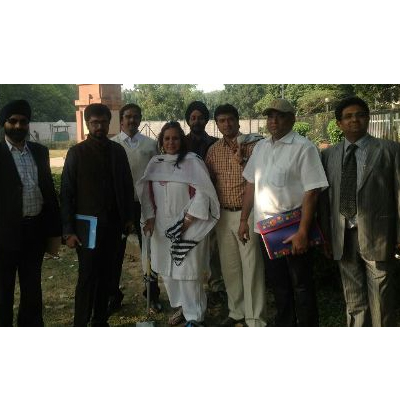
    Apart from Saraf and Sharma, the others who were a part of the committee included: Pramod Pandya, Swapan Chowdhary, Jeevan Khanna, Ajeet Singh, Sudhish Kumar, GS Oberoi, Gaurav Gupta, Chandradeep Bhatia and Paramjit Singh.


    “The consumer should be able to buy portable STBs which gives him access to internet, video-on-demand and other facilities. Why should every consumer be burdened with the same quality of STB. There should be a provision that if someone wants to buy an expensive STB they should be able to do so,” said Sharma.


    The operators also suggested that since it is the consumer who pays for the STB, they should be allowed to own it. “Also consumer should have the option to change STBs and his service provider. Currently if Hathway seeds a STB in a consumer’s house, they cannot switch to another MSO,” said Sharma to the committee.


    The LCOs also raised concern over their own existence. Many in the meeting felt that the LCOs have been left at the mercy of the MSOs. They also said that the process of billing and the power to switch off STBs should be with the LCOs and not MSOs.


    The operators put a point stating that TRAI should first successfully complete digitisation of phase I and II and then start the work in phase III and IV.


    On the issue of entertainment tax, the LCO representatives opined that there should be uniformity in taxation throughout. “Also we told them that entertainment tax should be collected per household and not per TV set,” informed Sharma.


    The MPs asked the LCOs for solutions to the issues with digitisation, to which the LCOs suggested that the long pending Broadcasting Bill and the DTH Act needs to be brought in to regulate and control the  the broadcasters and DTH players respectively.


    Also a point on implementation of vertical monopoly and cross media holding on immediate basis, before going ahead with further digitisation was made.
    The committee will also be meeting Information and Broadcasting Minister Manish Tewari in a couple of days, after which they will come out with a recommendation which will be submitted to the I&B Ministry.