Category: Local Cable Operators

  • LMOs unite to form pan-India platform

    LMOs unite to form pan-India platform

    MUMBAI: The last mile owners (LMOs) will no longer be a fragmented body. This arm of the cable TV chain has decided to finally form a pan-India platform. The move comes after the national multi-system operators (MSO) formed the MSO Alliance, the direct to home (DTH) players got together to form DTH Operators Association of India and the broadcasters formed the Indian Broadcasting Foundation (IBF).


    No formal name has still been shortlisted; however, it will be during the upcoming cable TV exhibition in Hyderabad that the LMO association from across the country will meet to decide the name and the board members of the pan-India platform.


    The name would be kept under wraps until the body gets a confirmation from society registrar.


    Currently, six state cable TV associations from West Bengal, Maharashtra, Andhra Pradesh, Karnataka, Gujarat and Madhya Pradesh have come together to be a part of this pan-India platform. More state associations are expected to join the platform in the upcoming exhibition, which will be attended by LMO associations from Kerala, Tamil Nadu, Karnataka and Maharashtra amongst others.


    “LMOs at the grass root level have never been taken into consideration. A pan-India platform will give us proper representation and power. It will also help us take our views to the government,” says Maharashtra Cable Operators Federation (MCOF) president Arvind Prabhoo.


    “It is in Hyderabad that we will decide on the functional constitution body of this platform,” he adds.


    So why come up with this association now? Answers Prabhoo, “We learn from our mistakes. In the past 20 years we have never had one voice. While even the domestic servants have an association, LMOs have never had a strong pan-India association, but individual voices. With digitisation, operators have understood what is in store for them, and so also understood that an united voice was much needed.”

  • NSTPL to use Volicon’s Observer Monitoring Technology to support HITS platform

    NSTPL to use Volicon’s Observer Monitoring Technology to support HITS platform

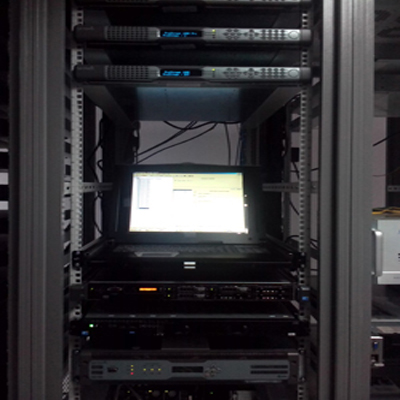
    MUMBAI: Volicon today announced that NSTPL (Noida Software Technology Park Limited), part of India’s Jain TV Group, is using the Volicon Observer® Media Intelligence Platform™ digital video monitoring and logging system to enable efficient, effective compliance and quality of service (QoS) monitoring for over 200 channels being aggregated, processed, and uplinked via the company’s Headend-in-the-Sky (HITS) platform, JAINHITS. This platform, the first of its kind in India, offers cable operators across India a straightforward and cost-effective means of meeting the country’s mandatory shift from analog to addressable digital systems.


    “JAINHITS makes it easy and affordable for cable operators to move to digital operations while complying with all legal, regulatory, and content requirements, and the Volicon Observer Media Intelligence Platform plays a critical role in assuring these requirements are met,” said Mr. Rakesh Gupta, Head, JAINHITS. “Using this reliable and highly scalable monitoring system, we can record all of the channels we provide and very easily review and confirm the quality and availability of that content — thus ensuring the highest quality of service to JAINHITS customers across India at all times.”


    NSTPL, already an established provider of TV broadcasting, newsgathering, and video up-link services, launched JAINHITS in October 2012 to help cable operators meet the December 2014 digitization deadline set by the Indian Parliament. Through this platform, the company downlinks content from different broadcasters, processes the signals, and uplinks them via satellite for download by its customers and cable operators across India.


    The Observer Media Intelligence Platform continuously captures and stores this content, enabling NSTPL to maintain a visual record of the content that has been processed and uplinked. Through an intuitive Web-based interface, the Volicon system also provides easy access both to live streams and recorded media. Monitoring staff and other users at the desktop can thus monitor the content going out to customers or go back days or months to find and provide proof that uplinked content met all appropriate regulations, standards, and quality parameters.


    “As a flexible and intuitive solution for monitoring, recording, accessing, and reviewing audio and video, the Observer Media Intelligence Platform serves as a powerful tool for service providers such as NSTPL,” said Gary Learner, Chief Technology Officer at Volicon. “Equipped with the Observer Media Intelligence Platform, the company can assure that its innovative services meet compliance and QoS standards, thus giving cable operators an affordable and worry-free route for providing quality digital services.”


    Information about Volicon and the company’s products is available at www.volicon.com.

  • SC directs ETV and MAA TV to provide signals to JAINHITS

    SC directs ETV and MAA TV to provide signals to JAINHITS

    MUMBAI: The Supreme Court of India has refused the request of ETV and MAA TV to give stay on the order of the Telecom Disputes Settlement & Appellate Tribunal’s (TDSAT) dated 14 March 2014 which had directed the two channels to provide signals to the Headend In The Sky (HITS) operator JAINHITS.


    Moreover, the Apex court has directed ETV and MAA TV, in the interim, to provide signals within two-days on pan-India basis to the HITS player.


    “Noida Software Technology Park Limited (NSTPL) has been trying to get signals for JAINHITS from various broadcasters for the past two years, but have been denied the same on various grounds. It was only in October last year that broadcasters started providing signals, after orders were passed by the Tribunal. However ETV and MAA TV still were reluctant to provide signals thus necessitating NSTPL to approach TDSAT,” informed NSTPL counsel Vivek Chib. 


    According to the Tribunal’s 14 March 2014 order that comprised TDSAT chairperson Justice Aftab Alam and Kuldip Singh, ETV and MAA TV could not refuse to grant signals to JAINHITS on the grounds that certain defaulter local cable operators (LCOs) or multi system operators (MSOs) may approach NSTPL for signals.


    The Tribunal held that the respondents i.e. ETV and MAA TV had not furnished the name of a single MSO or LCO that might have been held to be its defaulter by a court or competent authority and to whom the petitioner might supply the signals. Undeniably, the petitioner itself was not in any default in payments to the respondent for the simple reason that they were not in any business relationship earlier. Thus looked at from any angle, the prohibition of the provision to regulation 3.2 of the Telecommunication (Broadcasting and Cable Services) Interconnection Regulations, 2004 was not applicable to this case.


    Both ETV and MAA TV had preferred appeals challenging the Tribunal’s orders in the Supreme Court showing unwillingness to provide signals to NSTPL’s JAINHITS.


    As a result of this interim order passed in favour of NSTPL, JAINHITS consumers would now be able to subscribe to ETV and MAA TV.

  • MCOF conclave stresses on importance of broadband for LMOs

    MCOF conclave stresses on importance of broadband for LMOs

    MUMBAI:  It has been touted as one of the leading get together of the last mile owners (LMOs) in Maharashtra. The Maharashtra Cable Operators Federation (MCOF) National Conclave on Broadband and Cable (NCBC) 2014 saw its president Arvind Prabhoo put his best foot forward in trying to get the LMOs to buy into his vision of a digitised cable TV India where they are also prospering. Apart from formally launching Synergy Cable Operators Private Limited (SCOPE), the first Cable Virtual Networks Operator (CVNO), Prabhoo and a handful of industry vets and consultants, stressed on the importance of broadband and how LMOs could increase their business five-fold, using this tool.


    Prabhoo pointed out that number of active broadband subscribers in India is expected double in the next two to three years according to a Telecom Regulatory Authority of India report.  In Mumbai alone, the figure is expected to go up from the current 1.2 million to 4.5 million in the next couple of years. “Broadband will grow, and we need to utilize this opportunity,” Prabhoo said.


    Drawing comparisons with the US where 50 per cent of broadband services are provided by cable operators, he said, “We need to implement the same in India. As things stand, only a fraction of the broadband subscriber base is delivered by cable operators.”


    Apart from the emphasis on broadband, day one of NCBC 2014 saw heated debate over the existing three models i.e. MSO:LMO, HITS and the newly-minted CVNO, which seeks to provide white label cable TV services to smaller operators in phase III and phase IV.


    Presided over by indiantelevision.com founder, CEO and editor-in-chief Anil Wanvari, the session had all parties putting forth their points of view. The panel comprised Kulbhushan Puri of BR Cable Network, Atul Saraf of ABS Seven Star, Vynsley Fernandes of Castle Media, and Prabhoo.


    During the discussion, Wanvari expressed the view that the full rewards of digitisation have yet to trickle down to the broadcaster, MSO or LMO – as they viewed each other with suspicion, though things have improved in recent times. “There is a need for greater communication and understanding among the stakeholders,” said Wanvari. “The LMOs and MSOs need to understand that broadcasters are investing in content and they need to recoup that investment.  Broadcasters need to understand MSOs are investing in setting up infrastructure and that LMOs want a sustainable future. The cable ecosystem also needs to understand that broadband can be extremely rewarding as compared to simple video signals where subscribers tend to be wary of price increases.”


    To this, Prabhoo invited all stakeholders to come together to discuss issues and take the industry forward while benefitting everyone. “Proper constructive pricing model can be worked out if broadcasters, MSOs and LMOs discuss issues on the same platform,” he said.


    Fernandes, who is involved in the upcoming HITS project of the Hinduja Group, said, “Packaging of content should be in the hands of the LMOs. Additionally, the LMOs need to invest in set top boxes which they will deliver to their subscribers so that ownership stays with them. And this is what the HITS project is set to do.”


    Prabhoo said that while there will be areas covered by the CVNO in phase III and IV of DAS called Headend on the Ground (HOGS), there would be some covered by HITS (Headend In The Sky). “There could also be areas where HITS and HOGS can work together to take digitisation forward,” proposed Prabhoo.


     Saraf said the future of DAS phase III and IV lay in MPEG4 and not MPEG2 STBs that were currently being seeded by operators. On the issue of low ARPUs in phase I and II, he said, “ARPUs can go up only by introducing value added services like Video on Demand (VOD), Movie on Demand and YouTube. We need hybrid STBs, which can provide both cable and internet services.”

  • LCOs list grievances for new government to address

    LCOs list grievances for new government to address

    NEW DELHI: Hurt by the manner in which they have been forced to adapt to digital access systems without proper safeguards for their minimum incomes, organisations of cable television operators have sought a review of digitisation and action against the people involved in creating large media monopolies from all the political parties.


     In a letter sent to all the main political parties in the fray for the forthcoming general elections, the National Cable and Telecommunication Association (NCTA) and Cable Operators Federation of India (COFI) on behalf of 60,000 local cable operators have listed certain demands that should be considered by all the political parties.


     They have sought extension of the cable TV digitisation process by allowing analogue transmission of about basic 30 to 36 TV channels including all Doordarshan services. This step is for avoiding any black-outs.


    The government should also instruct the Telecom Regulatory Authority of India (TRAI) to ensure a level playing field for all the stake holders in the distribution value chain with a prescribed revenue share arrangement on non discriminatory terms. “It should also fix reasonable and affordable prices for the Pay TV channels and ensure that the advertisement cap for the pay TV channels should be lowered to maximum six minutes in an hour,” said the letter.


     The letter also highlighted the issue of the 10+2 advertisement cap regulation for FTA (free to air) channels. “It must be made mandatory,” the letter stated.


    Apart from this, there were also demands like finalising strict guidelines on cross media holdings and checking monopoly in the cable TV industry. “The Government should implement phase III and phase IV of digitisation only if there is adequate supply of Indian Set Top Boxes (STB), and the industry should get a subsidy on the excise and VAT till digitisation is achieved 100 per cent in the country.”


     The government should abolish entertainment tax levied by the various state governments and TV viewing should be termed as an essential information service.


    The memorandum have been sent to major political parties and leaders like Narendra Modi of BJP, Rahul Gandhi of Congress and Arvind Kejriwal of Aam Aadmi.


    According to NCTA president Vikki Choudhary and COFI president Roop Sharma, the new Union government should conduct an enquiry on the implementation of mandatory digitisation of cable TV.

  • Jaipur LCOs to form cooperative, set up own headend

    Jaipur LCOs to form cooperative, set up own headend

    MUMBAI: Local cable operators (LCOs) feel threatened with compulsory digitisation of cable TV services. LCOs own the end subscribers, but do not have the bargaining power with broadcasters and also access to funding.


    This has led to an increasing trend towards LCO consolidation, if not through the mergers and acquisitions route then through formation of associations and unions, especially in Gujarat, Maharashtra, Kerala and Karnataka, states the FICCI-KPMG media and entertainment industry report 2014.


    Now, nearly 220 of the about 250 LCOs in Jaipur, Rajasthan have decided to come together to protect their business. The LCOs are looking at forming a cooperative and setting up their own headend.


    The move comes as many LCOs are unhappy with the monopoly of the multi-system operators with the progressing digitisation.


    “It is at a nascent stage, but we are tired of the MSO monopoly here in Jaipur and hence looking at setting up a cooperative and converting into an independent MSO,” says a cable operator from Jaipur who is currently taking feeds from Hathway Cable & Datacom.


    The cooperative has been set up under the banner Jaipur Cable Operators Welfare Society. The LCOs are meeting regularly to finalise details.


    While the initial investments will be made by the LCOs, they will also approach banks for loans to meet the investment demands. “We are unhappy with the way things are moving in the state. Neither the Telecom Regulatory Authority of India nor the Ministry of Information and Broadcasting is ready to listen to us. And so we have decided to take this move,” says the LCO.


    As of now, four lakh set top boxes have been seeded in the state. “The Jaipur cable operators are in talks with us as they are looking at setting up a cooperative. We will be meeting in April in Mumbai to discuss further,” informs Maharashtra Cable Operators Federation (MCOF) president Arvind Prabhoo.


    It is not only in Jaipur that the LCOs are coming together to form cooperatives. While earlier such cooperatives were set up in Chennai, Delhi, Bengaluru and Kolkata, now LCOs are coming together in Mumbai, Jaipur, Jodhpur and parts of Madhya Pradesh to set up their own headends.

  • Resolution in sight for Guwahati electricity pole charge dispute

    Resolution in sight for Guwahati electricity pole charge dispute

    MUMBAI: The Assam Power Distribution Company Limited (APDCL) and Greater Guwahati Cable TV Operators’ Association (GGCTOA) are finally coming to a resolution over payment of a fee for use of electricity poles in Guwahati.


    The issue first cropped up in September 2013, after the APDCL decided to charge cable TV operators in Guwahati for using electric poles to lay cable wires.


    The first step towards resolution of the issue was taken on 6 March, when representatives from APDCL and GGCTOA met and agreed to together conduct a survey to ascertain the number of electricity poles in the Guwahati region.


    It can be recalled that when GGCTOA moved the Guwahati High Court on the issue of APDCL’s decision to levy a charge for use of electricity poles, the court had asked the GGCTOA to pay Rs 10 per electricity pole per month for the period 22 January to 28 February.

    The last date for the payment of the fee as directed by the high court was 26 February.


    APDCL had thereafter said cable operators are using a total of 33,000 electricity poles in Guwahati. The GGCTOA challenged APDCL’s claim and demanded that a joint survey be conducted on the number of electricity poles being used by cable operators.


    Even after the court directive, the settlement of the dispute was not a smooth affair. The GGCTOA paid Rs 1 lakh of the Rs 3 lakh that they had to pay the APDCL in compliance with the HC order. The association, however, threatened to disconnect cable TV signals on 25 February to press for a survey of electricity poles in Guwahati. Assam’s power minister Pradyut Bordoloi intervened and also granted more time for the association to pay the balance charges to APDCL as directed by the court.


    “We now have time until 15 March to clear the electric pole fee,” informs GGCTOA general secretary Md Iquebal Ahmed.


    APDCL and GGCTOA will start a joint survey from Monday, 10 March to ascertain the number of electricity poles being used by cable operators.


    “In the meeting that was held on Thursday, we have suggested two rates to the APDCL: Rs 10 per electric pole, where we will have exclusive collection rights to collect electric pole fee from the cable operator and also the other players including the telecom and ISPs or Rs 6 per electric pole, in which we will not have any such exclusive right and will pay to the APDCL for using the electric pole for laying cable TV wires,” said Ahmed.


    The GGCTOA has also requested the APDCL to come out with payment modalities for the association. “APDCL expects us to collect the fee from the cable operators. For all this, we will need to deploy a work force. We have asked the electricity board to work out a formula which will help us pay wages to these members involved in survey and collection of electric pole fee,” he said.


    The association has agreed to pay electricity pole charge for 10,000 poles on adhoc basis for the month of March until the joint survey is completed.


    Not only this, the APDCL also needs to specify the safety measures the cable operators’ association needs to take. “While they have asked us to bear the expenses of the safety equipments needed for the safety and security of the electrical wires, we have asked them to provide us the specifications of the design and the estimated expense. We will decide on whether we will alone bear the expense or will share the expenses with APDCL, after they give us the estimates,” said Ahmed.

  • Ministry seeks data on impact of digitisation from IBF, NBA

    Ministry seeks data on impact of digitisation from IBF, NBA

    NEW DELHI: Digitisation of cable TV in the top four metros has resulted in 20-25 per cent fall in carriage fees paid and a 200-300 per cent rise in subscription charges earned by broadcasters, said Ministry of Information and Broadcasting (MIB) joint secretary-broadcasting, Supriya Sahu.


    Sahu said the impact of phase I digitisation on the revenues of broadcasters was based on a report submitted by the News Broadcasters Association (NBA) for 10 news broadcasters.


    But, Sahu was quick to also add, that while the broadcasters have given the report for phase I, they have expressed that the result in phase II of digitisation in 38 cities has not been too good.


    “We have asked both the IBF (Indian Broadcasters Foundation) and the NBA to give us reports for phase II. Broadcasters need to share their data with the ministry to help us understand if the carriage fees have gone down or not,” said Sahu.”And to assess better the effectiveness of our digitisation programme.”


    Sahu was addressing CASBAA India Forum 2014,  in New Delhi, an annual event to explore the Indian cable and broadcasting markets in the context of the global economy and challenging regulatory regime. She emphasised that everyone involved in the TV value chain has gained – broadcasters, MSOs, local cable operators, and even state governments – thanks to the digitisation drive the government has enforced over the past 18-24 months.


    Making an extremely detailed presentation replete with statistics and numbers, she pointed out that the tax collected by the Delhi government from phase I digitisation areas was three-times the pre-digitisation level. “While in August 2012 the tax revenue collected by government was Rs 55 lakh, in August 2013, the revenue collected is close to Rs 3 crore,” informed Sahu.


    According to data received by the ministry from one of the national multi-system operator, the carriage fee received by it per channel from broadcasters in Delhi has fallen to Rs 3.79 lakh after digitization from Rs 12.33 lakh in the pre-digitisation era. In Mumbai, the carriage fee per channel has fallen to Rs 2.16 lakh from Rs 6.51 lakh in pre-digitisation ear.


    Similarly, the subscription fee paid to broadcasters by the MSO in Delhi has gone up to Rs 597.06 lakh from Rs 438.57 lakh before digitisation. In Mumbai, the subscription fee paid to broadcasters by the MSO rose to Rs 183.13 lakh from Rs 116.79 lakh before digitisation.

    She pointed out that only 10 broadcasters have come forward o share data about the impact of digitisation on their business and beseeched more of them to do so.


    Summarising the total number of cable TV homes, Sahu said, “As per 2011 census, the total number of cable TV homes is 11.65 crore. The total number of set top boxes required, after adding 20 per cent for multiple TVs in houses and TVs in offices and shops, a total of 14 crore STBs are needed. While a total of 3 crore STBs have been seeded in phase I and II collectively, more 11 crore STBs are needed for phase III and phase IV.”


    Sahu acknowledged that there could be tough times in digitisation of cable TV homes in phase III and phase IV markets. “77 per cent of the phase III and phase IV falls in 10 states like Tamil Nadu, Andhra Pradesh, UP, Maharashtra, Kerala, etc. The MIB will initially focus on these 10 states. If this is achieved, achieving the deadline for digitising phase III and phase IV will be easy,” she said. “There are a lot of learnings we have got from the first two phases; there are roadblocks we have understood we need to overcome. All our learnings wlll be put to practical use as we move into phase III and phase IV in a serious manner.”


    The ministry is also looking at conducting an impact assessment survey to study the how digitisation has affected the local cable operators. “We will start this in the next couple of months,” concluded Sahu.


  • Mahesan Kaisarajan appointed Arasu TV MD

    Mahesan Kaisarajan appointed Arasu TV MD

    BENGALURU: The Tamil Nadu government today announced the transfer and appointment of Mahesan Kaisarajan as the Director of Information and Public Relations and Managing Director of Arasu Cable TV Corporation.


    Kaisarajan has also been posted as ex-officio Additional Secretary to Government, Tamil Nadu Development and Information Department.


    Kaisarajan, who was previously Director of Sugar and Managing Director of Tamil Nadu Sugar Corporation, replaces J Kumaragurubaran, who held the post of Director of Information and Public Relations and Ex-officio Joint Secretary to Government, Tamil Nadu Development and Information Department.


    Kaisarajan, an Indian Administrative Service office, is a post graduate in commerce, a cost accountant and a graduate in law.

  • Gujarat HC to hear LCOs petition against TRAI, govt, MSOs next week

    Gujarat HC to hear LCOs petition against TRAI, govt, MSOs next week

    MUMBAI: The Gujarat Cable Operators Association (GCOA) has all the reasons to rejoice. The Gujarat High Court on 30 January had given a final notice to the Union Government, the Telecom Regulatory Authority of India (TRAI) and Multi System Operators (MSOs) in the state to respond to the petition filed by the GCOA, but all the three respondents did not file their responses in the court with the deadline ending today.


    “Today was the last day for the government, the TRAI and the MSOs to respond to the court’s notice, but none of them responded,” informs Gujarat Cable Operators Association president Pramod Pandya.


    Pandya the court will being hearings in the case next week.


    GCOA had filed a petition in the high court in September, challenging the legality of the Telecommunication (Broadcasting and Cable) Services Tariff and the Telecommunication (Broadcasting and Cable Services) Interconnection Regulations. The court had asked the three respondents to file reasons for formulating the tariff and interconnection regulations.


    “We have been fighting for our fundamental rights. It is a one-sided regulation. Why is everything being taken away from me and being given to the MSO? We are not against DAS. It is a fight for our right and our ownership of the consumers. We now wait for the case to go up for hearing the next week,” concludes Pandya.