Category: Local Cable Operators

  • Hinduja’s NXT Digital signs Hansen Technologies for billing solution

    Hinduja’s NXT Digital signs Hansen Technologies for billing solution

    MUMBAI: Hinduja Group’s new Headend in the Sky (HITS) platform NXT Digital will be using Hansen’s ICC billing solution.


    The Hinduja Group has signed a multi-year licence agreement for Hansen’s ICC Customer Care and Billing.


    “With a potential target market of more than 100 million subscribers, we needed the leverage of a globally recognised firm with the expertise to move us forward. The implementation of our HITS platform will allow local cable operators to provide high-quality digital TV services to customers within their specific regions,” said Grant Investrade managing director Tony D’silva.


    India is currently going through a government-mandated digitisation programme and it is expected that over 110 million TV homes will make the transition from analogue to digital over the next 17 months.


    Hansen ICC has the strength and flexibility to support HITS by giving control to the parent organisation while allowing the individual businesses to operate independently.


    “Businesses that run distributed models like HITS require the flexibility to balance the needs of the overall organisation with each of the independent operating units. The HITS business hierarchy requirements are highly complex; our Pay-TV solution enables NXT Digital to provide multi system operators (MSOs) and last mile owners (LMOs) a scalable solution from a single deployment,” added Hansen Technologies CEO Andrew Hansen. 


    The company was selected by GIL after a rigorous four-stage evaluation process conducted by Castle Media, which is also the technology programme manager for the HITS service, responsible for design to delivery of the $100 million project.


    “Hansen exhibited the functionality and features that are required for an extremely complex multi-tier operation. With its pedigree and experience in the global Pay-TV space, it is certainly the appropriate partner for such a high-value project,” said Castle Media executive director Vynsley Fernandes.

  • Cable operators urge Delhi CM Arvind Kejriwal to reduce entertainment tax

    Cable operators urge Delhi CM Arvind Kejriwal to reduce entertainment tax

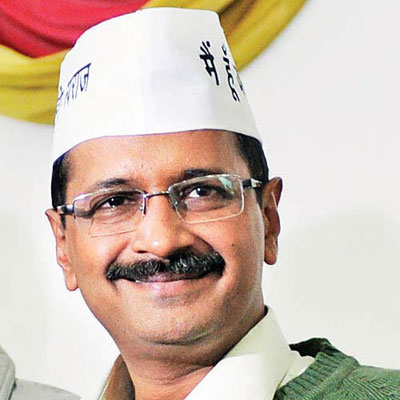
    NEW DELHI: The Cable Operators Welfare Federation (COWF) has been assured by Delhi Chief Minister Arvind Kejriwal that he would examine their grievances including the recent hike in entertainment tax by the Delhi government.


    In a meeting that lasted more than an hour, Kejriwal heard the 30-member delegation led by its president Surjeet Singh on various issues.


    COWF convenor Ramesh Zadoo later told indiantelevision.com that the meeting was “positive, fruitful and favourable for local cable operators” and the CM promised to protect the interest of cable operators.


    Kejriwal promised a study of entertainment tax within seven days and said if the demand of the LCOs of reducing the tax to Rs 20 is possible, the government will consider a roll back of the recent hike.


    COWF suggested to the CM that he could offset the loss on account of entertainment tax by increasing the tax on DTH to Rs 50 as that is aimed at the upper class. They also complained about supply of inferior Set Top Boxes by multi-system operators. They also referred to VAT & tax evasion by MSO and broadcasters. The COWF also apprised Kejriwal about the harassment and switching off STB/ disconnecting line without notice by MSOs, thus inconveniencing the public.

  • Ortel Communications makes below par debut on bourses

    Ortel Communications makes below par debut on bourses

    BENGALURU: Ortel Communications Limited (Ortel) debuted at Rs 160.05 per share on the National Stock Exchange (NSE), about 11.6 per cent below its listing price or Rs 181 per share on 19 March. The company had issued its shares at Rs 181 each early this month in its initial public offer (IPO), which was under subscribed by about 25 per cent.


    The high for the day was Rs 168.05 and it closed at Rs 162.25 on the NSE. Close to 26520 shares traded on the NSE at traded value of about Rs 43.90 lakh. 


    Note: 100,00,000 = 100 lakh = 10 million = 1 crore. 


    On the Bombay Stock Exchange (BSE), the stock breached the lower circuit of Rs 171.95 with a turnover of Rs 5.11 lakh and a total traded quantity of 2964 shares.


    Financial industry sources explain that though the company is in the last mile connectivity business, its performance over the last few years has been dismal and hence the poor opening.


    The Ortel IPO opened on 3 March, 2015 for up to 1.2 crore (12 million) equity shares of face value of Rs 10 each including a share premium per equity share. The price band was fixed from Rs 181 to Rs 200 per equity share. The issue constituted 39.25 per cent of Ortel’s fully diluted post-issue paid up equity share capital and included up to 60 lakh fresh issue shares and 60 lakh shares by the selling shareholder NSR-PE Mauritius LLC. Facing a lukewarm response, the company had to cut the offer size by 36.7 lakh shares, pruning the NSR component from the IPO to that extent.


    The company had allotted 25.57425 lakh equity shares (28.416 per cent of QIB portion) at the rate of Rs 181 per share aggregating Rs 46.29 crore to Axis Mutual Fund and ICICI Prudential Life Insurance, before the IPO opened.


  • Ortel IPO opens amidst buoyant stock market conditions

    Ortel IPO opens amidst buoyant stock market conditions

    MUMBAI: The Ortel Communications issue opened on 3 March. At  the price band of Rs 181-200, the cable TV last mile operator (LMO) is offering 9.5 million shares to the public. National Stock Exchange data showed that the issue had been subscribed 0.15 times by end of day one of the offer. The company plans to use the money  raised through the issue to deepen the penetration of its cable TV and broadband offering in the geographical regions it is present i.e. Odisha, Chhattisgarh, Andhra Pradesh and West Bengal ; increasing digitisation of its cable TV subscriber base (currently 20 per cent of its analogue universe has been digitised), upgrading technology for its broadband service; buying out of local cable operators and networks, and leasing fibre infrastructure to corporates.

    At the time of writing, the IPO had received a mixed response from the investing community and research analysts. While one group says the price band is too high, another bunch has expressed that the Ortel stock has long legs and could go far. 

    Says a bullish observer: “The Ortel IPO offer is at 10 times EBIDTA for FY 2015. That’s pretty fair compared to 17 times EBIDTA for Hathway Cable & Datacom and seven times EBIDTA for DEN Networks,” says a research analyst. “We see the share appreciating after listing.”

    However, a bear stated that Hathway was quoting in the Rs 60-65 range, while DEN was in the Rs 120 band. “The Ortel price is too high when you compare it to what these stocks have notched up,” she said. “We expect to pick up Ortel after listing when we believe the overpricing will get corrected.”

    An ICICI Direct IPO review pointed out that Ortel’s low subscriber base of 0.5 million cable TV homes puts it at a competitive disadvantage against national MSOs such as DEN and Hathway which have 12 million subscribers each. 

    But another industry expert  points out that Ortel owns most of its subscriber base, aka as the last mile, which means it will reap the digital dividend and the moolah will straightaway accrue to its top line, and bottom line as it digitally connects more of them.

    He also points out to the low floating stock of Ortel that is on offer, which is likely to keep the price buoyant.

    At the time of writing, a positive sentiment had been ruling on the stock market with the National Stock Exchange Nifty  crossing an important threshold that of the 9,000 barrier which it did during intraday trading only to fall back to 8996 by close.

    The anchor investors for the IPO are Axis Mutual Fund (900,000 shares) and ICICI Prudential Life Insurance (1.657 million shares), while Kotak Mahindra Capital is managing the issue.

    The next two days (the issue is slated to close on 5 March) will throw clarity on which sentiment will hold its sway on investors during Ortel’s offering. 

  • Axis Mutual, ICICI Life are anchor investors for Ortel IPO; allotted 28.42% of QIB portion

    Axis Mutual, ICICI Life are anchor investors for Ortel IPO; allotted 28.42% of QIB portion

    BENGALURU: In its Red Herring Prospectus Ortel Communications had mentioned that out of the 90 lakh shares that form the QIB (qualified institutional bidders) portion of its IPO that opens tomorrow, up to 54 lakh equity shares (60 per cent of QIB portion) would be allotted to anchor investors on the anchor investment bidding date in consultation with the book running lead manager. Further, of the remaining 36 lakh equity shares of the QIB portion, at least 1.8 lakh shares would be allocated to mutual funds.


    The anchor investor bidding date was today – 2 March, 2014. The company has allotted 25.57425 lakh equity shares (28.416 per cent of QIB portion) at the rate of Rs 181 per share aggregating Rs 46.29 crore to Axis Mutual Fund and ICICI Prudential Life Insurance. It may be noted that the allotment is at the lowest price of the price band.


    The breakup of the anchor allotment is as follows: Axis Mutual Fund’s (Midcap Fund scheme) was allotted six lakh shares (23.46 per cent); Axis Mutual Fund (Small Cap Fund scheme) was allotted three lakh shares (11.73 per cent) and ICICI Prudential Life Insurance Co Ltd was allotted 16.57425 lakh shares (64.81 per cent) aggregating to 25.57425 lakh shares.


    Ortel Communications Limited (Ortel) IPO that is to open tomorrow, March 3, 2015, is for up to 1.2 crore (12 million) equity shares of face value of Rs 10 each including a share premium per equity share. The price band is fixed from Rs 181 to Rs 200 per equity share. The issue constitutes 39.25 per cent of Ortel’s fully diluted post-issue paid up equity share capital and includes up to 60 lakh fresh issue shares and 60 lakh shares by the selling shareholder NSR-PE Mauritius LLC.


    The funds raised through the IPO would be utilized for expansion of its network for providing video, data and telephony services; capital expenditure on development of digital cable services; capital expenditure on development of its broadband services; and general corporate purposes.

  • Sangram Committee to support Patna LMOs

    Sangram Committee to support Patna LMOs

    KOLKATA: Kolkata-based Cable Operators Sangram Committee – has extended its helping hand to last mile owners (LMOs) in Patna. The city boasts of approximately 2.5 – 3 lakh digitised cable TV homes in the DAS II area. However, the LMOs are a ‘unhappy lot’ as they neither get proper bills and receipts nor full payment from customers.


    Going forward Sangram Committee, which currently is active in Kolkata, aims to spread its operation in the eastern region including Assam, Tripura and Jharkhand and plans to address the grievances of all the LMOs in the eastern region to the authorities jointly.


    More than 450 LMOs in Patna met with the Sangram Committee affiliated LMOs and discussed the ground problems faced by the LMOs while operating in their respective zones.


    Speaking to Indiantelevision.com, Cable Operators Sangram Committee general secretary Apurba Bhattacharya said, “We will place our demand to all the MSOs operating in Patna and request them to operate as per the Telecom Regulatory Authority of India (TRAI) guidelines. LMOs are neither getting the bills nor the receipts.”


    It should be noted that Patna has around eight lakh cable TV homes, of which 2.5-3 lakh that fall under DAS II area are all digitised. While another five lakh homes are expected to be digitised in the later phases.


    Multi-system operators like Siti Cable, GTPL, Patna-based Darsh and DEN Networks mostly operate here.


    “Since customers are not getting the bills, they are not ready to do full payment. Apart from this we are also not getting any receipt from the MSO,” said Kumar Nilesh, a LMO affiliated to GTPL.


    While Rakesh Kumar Singh, a LMO affiliated to Siti Cable said, “Most cable operators have not yet signed revenue-sharing agreements with their MSOs.”


    Another LMO when asked about the popular package, said that people mostly go for packages below Rs 300 here.


    Explaining further, an LMO said that if a customer has chosen a package of Rs 240, he will have to pay Rs 240+Rs 15 (amusement tax) plus an additional 12.36 per cent service tax. “But some customers are just paying Rs 240, so do we pay their service tax and amusement tax?” he questioned.


    “Customers were expecting to get bills and now when they don’t get their bills, they are upset. Some are not willing to pay the monthly rental also,” he further added.


    On other hand, MSOs have a different picture to present.


    Darsh Digital Network director Sushil Kumar said that the MSOs can see that even after collecting payment from the consumers, LMOs are not paying the respective MSOs. “If there is a backlog of three to four months in payment, how can we survive?” Kumar avers.


    “Television has become an inseparable part of our lives. So not only MSOs and LMOs but consumers too have to think in a mature way and all other stakeholders should act as per the norms, for the smooth rollout of DAS,” concluded an expert.

  • Tamil Nadu cable ops go on strike; demand increase in analogue cable TV tariff

    Tamil Nadu cable ops go on strike; demand increase in analogue cable TV tariff

    MUMBAI: More than 1.25 crore analogue cable TV homes in Tamil Nadu (except Chennai) will not be able to watch their favourite programmes on 24 January, thanks to the strike by the Tamil Nadu Cable Operators.


    The strike, which began at 9 am on 24 January will end at 9 pm tonight. The reason stated for the move is the low cable TV tariff. Currently the analogue cable TV households in Tamil Nadu pay Rs 70 to the local cable operators, of which Rs 20 goes to the government.


    “The LCOs are bleeding. While the prices of all goods and services have gone up, it is only the cable TV service whose tariff has come down,” said Chennai Metro Cable Operators Association general secretary MR Srinivasan.


    The cable operators are also requesting the government to increase the subscription from Rs 70 to Rs 150 for analogue cable TV services.


    “The government hasn’t done any investment on ground for the setting up cable TV system in the state, they are only paying the broadcasters for the pay channels. And without making any investments they are dictating the LCOs to collect only Rs 70 from consumers,” he added.


    According to Srinivasan, the multi system operators (MSOs) haven’t been given any compensation for the infrastructure, which went free to the government.


    “Even after the Telecom Regulatory Authority of India (TRAI) giving clear guidelines on the tariff on the free to air channels, the government in Tamil Nadu hasn’t adhered to it,” he informed.  


    While the representatives have met government officials, no decision has been taken as yet.

  • Government should set aside Rs 10,000 crore for cable modernisation: Arvind Prabhoo

    Government should set aside Rs 10,000 crore for cable modernisation: Arvind Prabhoo

    MUMBAI: The seed of the dream of seeing a ‘Digital India’ was sown by Prime Minister Narendra Modi, as he took charge to make India a better and developed country. And now to make this dream come true are the cable TV operators, who are looking at achieving this through cable TV transformation.


    In keeping with this, Maharashtra Cable Operators Foundation (MCOF) president Arvind Prabhoo has already sent a presentation to the Information and Broadcasting Ministry (I&B) to not only update them of the needs of the industry, but also how the government could help push the agenda.


    According to Prabhoo, the sector needs regulatory support. This includes cable Internet Service Provider (ISP) licence on soft terms, last mile cable operator licensing, price control on content and level playing field for domestic voice over IP (VoIP). The MCOF president has also requested the Ministry for infrastructure support including long haul fibre and BSNL networking sharing, innovative per customer/month fees and cable modernisation fund. With the industry moving to a whole new system of cable TV viewing, the industry needs re-skilling and incentives for innovations.    


    MCOF in its proposition to the I&B has also said that the government needs to become the national data pipe in order to act as a digital courier. “Set one country, one service, one price,” informed Prabhoo. 


    Not only this, the government should look at setting aside a cable modernisation fund of around Rs 10,000 crore. Of this, according to Prabhoo, Rs 4000 crore will be used in set top box (STB) financing at Rs 300 per SD STB, Rs 5500 crore at Rs 600 per home passed will be used in infrastructure upgrade and Rs 500 crore will be used towards technology R&D. “The Ministry could fund the industry for a tenure of five years. With this funding, the government will be the biggest beneficiary as it would be collecting taxes on the funds,” opined Prabhoo.


    Cable TV currently reaches to close to 60 per cent homes (12 crore) of which around 9 crore are in DAS phase III and IV areas. “The sector which has a workforce of close to 300,000, has the potential to serve some 50 crore data users,” he added.


    In the presentation to the Ministry, MCOF has also highlighted the challenges faced by the digital India. These include the high customer acquisition cost, resulting in unavailability of basic data services, shortages in last mile local loop and predominance of concrete in civil structures which is eroding fidelity of wireless services.


    “We had sent the presentation to the Ministry for a robust cable TV industry, but have not heard from them so far,” concluded Prabhoo.

  • Hinduja Venture’s HITS project to rollout by April 2015

    Hinduja Venture’s HITS project to rollout by April 2015

    MUMBAI: Hinduja Ventures’ Headend in the Sky (HITS) project will soon see the light of day. While the platform will start the field testing in January-February 2015, the actual rollout will take place between March-May 2015.

    “We are working as per the plan and are on schedule,” informs IMCL MD and group CEO Tony D’silva to indiantelevision.com.

    The platform is in talks with several independent MSOs and LMOs.  “By the time we launch, we will have close to 8-10 million consumers being serviced through our HITS platform,” he says.

    In order to gauge the interest level of the operators in the HITS project, Hinduja conducted a major research in nine states including four states from the south, Maharashtra, Rajasthan, Gujarat, West Bengal and others. “The study was done by an outside agency and involved close to 1000 operators,” informs D’silva who is elated with the results.

    According to D’silva, the research shows that the operators are happy with the cash and carry model being offered by Hinduja’s HITS model. This apart, the study revealed that the operators are also excited about the customised packaging and bundling at a charge which is 50 per cent lower than what they would pay for this kind of setup.

    While the study also shows that the operators are excited about the launch, D’silva says that he doesn’t want to launch it in a hurry. “We want to test our services and make sure that the set top boxes (STBs) are of top quality. There have been a lot of issues with the boxes all across the country and so we want to subject the STBs to all kinds of heat, cold, dust etc test,” he adds.  

    The operators are also happy to do a small Annual Maintenance Contract (AMC) for the boxes, probably at the cost of Rs 5 per subscriber per month, so that replacement of STBs becomes easier.

    As for the licence clearance from the Information and Broadcasting Ministry, D’silva says that the process is moving smoothly. “We will get the final licence in hand only after we are ready for the rollout and pay Rs 40 crore as bank guarantee. Licence will not be an issue any more,” he says.

    D’silva claims that the platform has got the best products and four vendors have been roped in to provide the STBs.  “While no indigenous STB manufacturers are currently onboard, we are still looking at them. We want MPEG4 boxes at the same commercial terms as others. But, we haven’t got any positive feedback from them as yet,” informs D’silva.  

    As for the name of the platform, D’silva says that the research for the name is on. “I think, while brand name is good for us to build but at this point, HITS as a concept is more understood by the LMOs and so we do not want to confuse them at this stage,” he adds.  

    No agreements will be signed between the MSO or LMO and HITS, but a MoU could be signed before the HITS project is launched. “We cannot sign an agreement before the launch, since we will get the licence only after the rollout, but we may enter into MoUs.”

    The marketing campaign about the new launch will commence from middle or end of January. “We are providing a very competitive service to fight any competition, with value added services etc. We are also providing HD STBs to operators at the cost of SD boxes. We are entering the market looking at the future and not today,” signs off D’silva.


  • “We are looking at funding options and are actively engaged with investors”: JK Jain

    “We are looking at funding options and are actively engaged with investors”: JK Jain

    Cable TV industry in the country has been the hub of the action for the past one year, especially with the government pushing through digitisation of cable TV homes. An important player in the industry is the headend in the sky (HITS) player JAINHITS, which did face some initial hiccups in being accepted by the broadcasters and local cable operators (LCOs), but has now finally made in-roads in several homes pan-India.


    And leading the HITS platform from the front is Dr. Jinendra Kumar Jain, who is not only a surgeon, a former member of parliament, but also the founder chairman of Jain TV Group.  


    He pioneered the satellite TV era in India by launching the country’s first round-the-clock satellite television service in Indian languages. JAINHITS is his latest initiative to serve the national goal of digitisation. 


    The HITS platform proposes to distribute 200 to 500 digital channels via satellite to the existing ground networks of cable operators. It is designed to integrate broadcasting and broadband services and thus, help bridging the digital divide in one go all over the country.


    Jain’s leadership, innovative ideas in the ICT sector and entrepreneurial initiatives have led to establishment of several successful businesses, including: Video on Wheels (Vow), a countrywide network of mobile video and health service vans, Noida Software Technology Park Limited (NSTPL), India’s first private teleport that provides both fixed (FSS) as well as mobile (MSS) satellite services, Medical Communication Network (MCN) whose publications include the Indian edition of FIGO Journal, IJGO (International Journal of Gynecology and Obstetrics) and the Population Reports for John Hopkins University, National Broadcasting Academy (NBA), a graduate and post graduate educational programme providing degrees in Management and Communication fields.  


    While the eyes are fixed on the soon-to-be launched HITS platform from Hinduja, Indiantelevision.com’s Seema Singh spoke to Jain on the platform’s performance, the struggle in getting accepting, his future plans and much more….


    Excerpts…


    How did you think of launching a HITS platform in a market which was dominated by multi system operators (MSOs)? How long did it take from planning to finally launching the service?


    We were the very first company that explained the headend in the sky (HITS) strategy to deliver digital signals to the cable operators. It was somewhere in the year 2003 that the then Minister Sushma Swaraj declared the decision of digitisation. They had obviously not done any homework and officials in her Ministry were willing to learn the technological aspects of the task. I had an opportunity to explain Anil Baijal, the then additional secretary in the Ministry about HITS. He liked the idea and I agreed to submit a detailed project report with all the relevant information.  The Government issued us the permission letter to deliver HITS services from our Teleport which had already been set up. In the beginning, there was no market and therefore we did not show any hurry. In fact, Citi Networks also got the similar permission and even started HITS based services without waiting for finalisation of rules and regulations. They arrived in the market before time but we waited for the right time and that is how they closed their shop without waiting for the market conditions to ripe and our timely decision is now giving us full benefits. Today we are the market leader in this sector. 


    Was it a task to get the broadcasters onboard? How did they initially react to the HITS model?


    Yes it was quite a task to get the broadcasters onboard. This became possible only with the help of judicial intervention. The big monopoly houses of the Indian cable industry have been offering resistance at every step of our journey. Nobody doubts the fact that cable digitisation will be a game changer in India. The cable distribution market is flourishing and millions of people in India watch TV via cable. Digitisation is certainly good news for broadcasters and tax authorities because subscriber numbers will be reported accurately and transparently.  Even the subscriber shall benefit from itemised billing detail so that they will be charged only for the channels that they wish to subscribe.


    It is true that the vertical chain of the industry stands divided between big and small players.  But, the game is turning in favour of small cable operators and their victory would mean the success of HITS platform.


    While a lot of the issues have been resolved with the court ruling in your favour, how have you dealt with the issues the broadcasters were raising, that of piracy?


    We have deployed best technology solutions to prevent piracy related issues.  As a company we take ‘Piracy’ very seriously. We have our own anti-piracy teams who look into such piracy issues.


    We also work in tandem with our business partners- broadcasters, LCOs, and distributors and take inputs from them to fight back the malice of Piracy. At present, during the audits conducted by the broadcasters they have found our systems working efficiently and exceeding industry standards. 


    How big is the company today, in terms of number of offices, employees, ground stations, revenue?


    NSTPL is a Public Ltd. profit making company. The business of the company is divided across three verticals:


    NSTPL Infra

    NSTPL Broadband

    JAINHITS


    The company has presence across the country with its own offices as well as distribution partners spread across India. NSTPL that operates India’s only National Cable and Broadband Platform called JAINHITS, operates teleports in Greater Noida and Hyderabad, serving 70 broadcasters. The Teleport is duly authorised & licensed by various regulatory bodies such as Ministry of Information & Broadcasting and Ministry of Communications, Government of India.


    When you started, what was the initial investment that was made into the company? Who were the partners? How have you grown the company over the years?


    NSTPL is a closely held Limited Company with fully paid up share capital of Rs 30 crore. 86.66 per cent of its shares are held by  Ankur Services Growth Fund, 13.33 per cent is held by Jain Studio and 0.002 per cent is held by individuals. We have invested approximately Rs 150 crore in JAINHITS since the concept initiation i.e. from April 2012.


    The response to JAINHITS has been extremely encouraging and thus, in a short span of one year we have signed up with over 300 cable operator partners across India.


    How many TV channels does the platform have currently? How many homes do you reach to and in which regions?


    We have around 254 channels today. Out of which 7 channels, namely, Disney, Cartoon Network, Pogo, Discovery, History, TV18, Animal Planet and Nickelodeon have dual audio feeds. Our services are available pan-India.


    How will digitisation benefit JAINHITS? What are the steps that are being taken to reap the maximum benefits of digitisation?


    Owing to pressure from DTH and on account of the digitisation law, all cable operators have to go digital. JAINHITS provides most cost-effective digitisation solution for such cable operators across India. Any cable operator across India can go completely digital and be fully DAS compliant with mere investment as low as Rs 5-10 lakh, while retaining full control of their business. They also have a chance to enhance their monthly Average Revenue Per User (ARPU) by offering additional value added services like Triple Play Services throughout India – Video, Data & Voice, Broadband Services.


    We keep announcing consumer friendly schemes so that our business partners i.e. the cable operator community have the best to offer to its customers. We conduct LCO meets in every state almost once a quarter. This is a platform where partner LCOs along with potential prospective cable operators come face to face and get their concerns addressed. We participate in industry events and expos to reach more and more cable operators.


    What are the services that the platform provides to its consumers?


    JAINHITS provides a platform of 254 SD channels at present. Very soon we will introduce HD platform and additional value added services like Triple Play Services– Video, Data & Voice, Broadband Services throughout India.


    How do you think HITS platform will play a major role in phase III and IV of digitisation? Will you be competing with DTH and MSOs? What’s the strategy?


    Phase III & IV of digitisation covers over 1350 Municipal Corporation and 597,464 Villages (as per Census 2011) spread in the far flung areas across India. These are the areas where the reach of cable TV is at its lowest level on account of non-availability of adequate infrastructure. For the land based networks and MSOs, this vast area in phase III & IV is the most difficult to reach.


    Only and most effective method of reaching this area is through HITS platform. JAINHITS allows all cable operators in these phase III & IV markets to go digital at a miniscule cost of Rs 5 lakh. The platform also provides these cable networks to offer broadband services to their consumers in these far flung areas. Above all, it is the only platform in the country, offering complete empowerment and ownership to even the smallest LCO by making him a leader & cable owner and an ISO (Independent Service Operator). It provides a simple “Plug & Play cost effective digitisation solution” to cable operators.


    Recently, MSOs have been facing issues with a few broadcasters like Star and Zee. Also with TDSAT ruling that Star channels will be available on RIO, does that impact JAINHITS in any way? What’s your take on the judgment?


    We have most of our content available on RIO basis and accordingly we offer our viewers a choice wherein they can opt for A-la-Carte choice of content to meet their individual needs.


    Per say this Judgment, really doesn’t affect our business models.


    While the cable TV industry in phase I and II are still struggling with packaging and billing, what’s the scenario with the HITS platform?


    HITS services were envisaged with an inbuilt SMS & CAS system. Accordingly, we at JAINHITS have also sensitized our partners- ‘the need’ of different types of packaging that may be required based on the area they will service. Accordingly, we have created different types of packs that serve the needs of large cross-section of people in India. Billing is automated and done through SMS platform.


    Are you looking for funding to go ahead with your plans? Any plans for IPO?

    We are indeed looking at funding options and are actively engaged with investors interested in the Indian cable & broadband market.