Category: Local Cable Operators

  • Probe Punjab ‘cable mafia,’ demands minister, Fastway refutes charges

    MUMBAI: Punjab minister Navjot Singh Sidhu has alleged that the private TV cable company Fastway Transmission Private Limited, under the “patronage” of the previous Akali government, had caused a loss of around Rs 6840 million to the state exchequer. Because of the political patronage, only Fastway monopolised the cable TV business in Punjab, he said, PTI reported.

    The state government last Friday ordered a tax evasion notice to be slapped on the Fastway Cable which is said to be Punjab’s biggest TV transmission multi-system operator (MSO). FastWay, however, rejecting the charges, said that the company had permissions from all the departments concerned such as PWD, forest department, canal department, and railways etc. :The company is regular in payment of entertainment tax and there are no outstanding taxes due to tax theft by the company, Fastway CEO Peeush Mahajan said in a statement.

    Sidhu meanwhile demanded a separate investigation into the alleged under-reporting of TV connections and cable operators engaged by Fastway. Of over 8,000 cable operators in the state, 6,500 were working for Fastway, he alleged. He demanded vigilance inquiry from the chief minister Amarinder Singh against what he called the “cable mafia”.

    The local bodies minister said Fastway started with a paid-up capital of Rs 25 lakh, but earned a whopping Rs 30 crore profit in the first year itself. He alleged that only 1.25 lakh cable connections were shown in Punjab state as against the actual figure of 80 lakh — this was done to evade taxes, PTI added.

    For 10 years, the state exchequer did not get even a penny in taxes, he said. No fee or tax was paid to the civic authorities, no entertainment tax was paid to the state or the Central government, he alleged. It is a unique case where the ruling family violated all government rules, he said in the state assembly.

    Fastway MD Gurdeep Singh Kohli said the allegations of tax dues or under-reporting subscriber base were false. Most of the cable operators fall in the income bracket of less than Rs one million, and so were are exempt from paying service tax, he added. “The entertainment tax at the rate of Rs 15,000 that the government alleged we did not pay, is payable by cable operators, and not by MSOs like us,” Kohli said.

  • LCOs to get unique TRAI number to ensure fair deals, says advisor Gupta

    NEW DELHI: Despite claims of major achievements in all parts of the country in digital addressable system, a meet held recently in Chandigarh presented a dismal picture with many local cable operators complaining that the switching off of analogue had badly affected their business.

    In the seminar organised by the Telecom Disputes Settlement Appellate Tribunal, even Tribunal chairman Justice Shiva Kirti Singh said the operators should approach the government for solutions.

    Information and broadcasting ministry joint secretary (broadcasting) Manoj Kumar Pingua talked about the achievements of digitisation and referred to the transparency leading to greater tax collections by the centre as well as state governments.

    The seminar, on ‘Digitisation: Achievements Issues and the Way Forward’, was attended by the judges of different courts, lawyers, multi-system operators broadcasters and LCOs.

    Telecom Regulatory Authority of India principal advisor S K Gupta said there was a plan to issue a unique number to each LCO and keep a track of his Interconnection Agreements to ensure he gets a fair deal.

    One LCO from the Chamba in Himachal Pradesh said that he had lost all his business because broadcasters had switched off analogue signals and multisystem operators were not prepared to supply him digital signals.

    Another LCO from Punjab said his investments of Rs seven million in a HITS headend and STBs have gone waste as Jain HITS has closed its business. The government has made no policy to compensate cable operators in such conditions. He said that HITS was not working in the present circumstances as broadcasters create hurdles in providing content.

    Earlier, Zee HITS had also closed down. Now only NeXT Digital of Hindujas is operating but he said LCOs were losing faith in the technology.

    Another LCO said MSOs were not giving signed copy of the Interconnection Agreement to LCOs and exploited them every now and then by raising subscriptions. He said there is no security in the business, and since all regulations are challenged in the courts, even the regulator is unable to help.

    While GST had been cleared and Cable and DTH services will attract 18% tax and STBs and other digital equipment will be taxed at 28%, the speakers said they were worried about the negative impact of GST on the business as neither ‘Make in India’ will succeed nor the dream of a ‘Digital India’ will be fulfilled.

  • Furnish details of cable connections, Delhi Govt asks operators, MSOs wary of cascading effect

    MUMBAI: The Delhi government has ordered cable operators to furnish the number of subscribers, an attempt which seems to be driven by the idea of increasing entertainment tax collection. Cable operators generally pay entertainment tax based on the number of their connections. It is unclear whether the government plans to claim tax from retrospective effect or not, and what is the period it is claiming tax for.

    Speaking to www.indiantelevision.com, the country’s apex body for digital multi-system operators (MSOs) All-India Digital Cable Federation (AIDCF) secretary-general Saharsh Damani agreed that he had come across reports of local cable operators (LCOs) receiving tax notices. If the government were to demand and recover entertainment taxes from LCOs for the last 4-5 years, Damani opined, it would become difficult for the operators to survive commercially. If the LCOs were severely affected, it would obviously have had a cascading severe effect on the MSOs, he added.

    A written communication has reportedly been sent to multi-system operators (MSOs) to submit details of their local cable operators and cable connections at the earliest, according to the entertainment tax department. However, Den Networks CEO SN Sharma, speaking to www.indiantelevision.com, denied receiving any communication so far. Damani also replied in the negative.

    The department has reportedly asked MSOs, around 20 in Delhi, to provide details of their cable connections with each local cable operator (LCO). The department has also sought details of addresses and phone numbers of local cable operators under them, an official said. The decision has been taken to increase tax collection, the official said.

    According to the department, the government had collected Rs 160.72 crore in taxes in the financial year 2014-15, while it increased to Rs 261.94 crore in the fiscal 2015-16.

    The Delhi High Court had recently held that MSOs and LCOs distributing television signals to subscribers directly are liable to collect and pay entertainment to the government. The court’s decision came on pleas filed by four MSOs – Hathway Cable and Datacom Ltd, DEN Networks Ltd, IndusInd Media and Communications and SITI Cable Network Ltd. They had moved the court challenging the levy of entertainment tax and vires of the Delhi Entertainment and BettingTax Rules.

    The four had sought quashing of the Delhi government’s 17 December, 2012, circular and show cause notices issued in January 2014 directing them to deposit tax beginning April 2013. Delhi had threatened to halt cable TV transmission of the MSOs by closing their headends. The government had stated that the assessment of the MSOs bared that they had been indulging in tax fraud in crore since April 2013. 

    A bench of justices Sanjeev Sachdeva and Badar Durrez Ahemed, however, quashed the Delhi government’s December 2012 circular and show-cause notices served by its Department of Entertainment Tax asking the MSOs to to pay entertainment tax or face action.

    Also Read:

    Entertainment tax: MSOs & LCOs must collect & pay, HC halts Delhi ‘action’

    Subhash Chandra hails GST, seeks new tax system & ease of doing biz

  • Fiber optics market worth US$ 5 bn by ’21, A-Pac largest

    MUMBAI: Fiber optics global market by cable type is estimated to be valued at USD 3.13 billion in 2016, and is projected to reach US$ 5 billion by 2021 expanding at a CAGR of 9.8%.

    The global Fiber Optics Market has a large number of players; however the market is led by some of the major players, such as Corning Inc. (U.S.), Prysmian Group (Italy), AFL Global (U.S.), Finisar Corporation (U.S.), Leoni AG (Germany), YOFC (Shanghai) Co. Ltd. (China), Sumitomo Electric Industries Ltd. (Japan), Furukawa Electric Co., Ltd. (Japan), Optical Cable Corporation (U.S.), and Hitachi Cable Ltd. (Japan), among other.

    Asia-Pacific is projected to be the largest market for fiber optics from 2016 to 2021. Factors contributing to the market growth in this region are the rise in demand for the Internet from emerging countries, growing industrialisation, and the growing telecom industry. These factors, along with the upcoming infrastructure projects in energy, transport networks, institutional sites, and residential projects are expected to drive the fiber optics market across various applications in the region. Large-scale investments along with the increasing standards of living provide opportunities for infrastructure development, and are thus expected to lead to the high growth of the fiber optics market.

    A report “Fiber Optics Market by Cable Type (Single mode, and Multi-mode), Optical Fiber Type (Glass and Plastics), Application (Telecom, Premises, Utility, CATV, Military, Industrial, Sensors, Fiber Optic Lighting, Security, Metropolitan) – Global Forecast to 2021” has been published by MarketsandMarkets.

    Rising end-use applications such as telecom, CATV, premises, and sensors are driving the market for fiber optics. Along with these, increasing demand from Internet applications such the Internet of Things, over-the-top content, and video streaming are also driving the market.

    Cable Antenna Television (CATV) segment to be the fastest growing market for fiber optics: The CATV segment is projected to be the fastest growing application from 2016 to 2021, owing to its rapid growth in the Asia-Pacific. Factors such as rising disposable incomes; changing consumer preferences towards the use of high definition content; flexible government taxation policies; rapid technological advancements in products & product offerings, by major international and domestic players, at competitive prices; are a few of the major factors driving the market for the CATV application.

    Single mode cable type projected to account for the largest market share: Single mode optical fiber is estimated to have accounted for the largest market share in 2016 and is projected to continue to lead throughout the forecast period. Efforts to increase the penetration of telecom services in the emerging nations of the Asia-Pacific are attributed to the increasing demand for single mode cable in the region.

    Glass optical fiber type to be the fastest growing optical fiber type in fiber optics market: Glass optical fiber type is projected to exhibit the fastest growth from 2016 to 2021. Factors such as rapidly expanding telecom applications in emerging economies, efforts being taken by governments of various economies to increase network connectivity, and changing consumer preferences are expected to drive the fiber optics market.
    Asia-Pacific to be the largest market for fiber optics.

  • Economical digital headend solution: VideoPropulsion to start shipments for cable TV

    Economical digital headend solution: VideoPropulsion to start shipments for cable TV

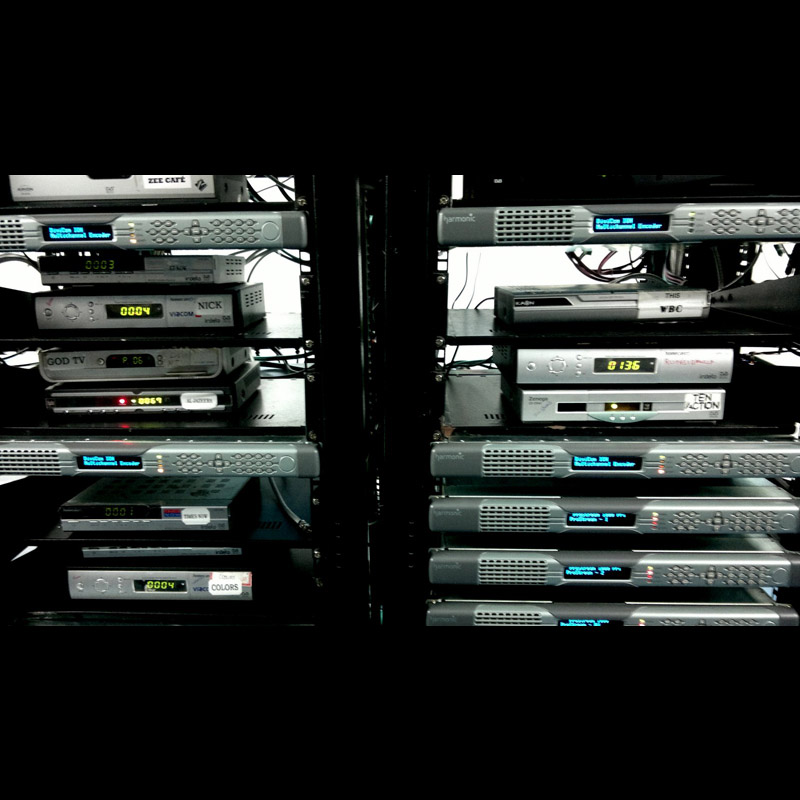
    MUMBAI: Wisconsin-based VideoPropulsion® Interactive Television, Inc. OTCVPTV and New Delhi-based MultiVirt India Pvt Ltd are now demonstrating a new, low-cost headend system for Local Cable television Operators (LCOs) in India.

    MultiVirt India as a company was established in 1995 to cater to the growing markets of broadcast, cable and multimedia in India. MultiVirt’s core competency has been consultancy, systems integration and turnkey project execution for broadcast, Cable and OTT, mobile and web-media. VideoPropulsion has been a world leader in hardware and software for high performance, low cost per stream, digital content manipulation, and has established a reputation for providing unique HDTV, VoD, and IPTV products.

    The two companies announced their collaboration early in 2015, and are now ready to deliver an inexpensive, innovative digital headend solution tailored specifically for the Indian digital CATV market.

    The partners’ premier offering is a MultiVirt integrated headend appliance capable of selectively receiving up to 200 channels of Free to Air (FTA) programming via DVB-S2 satellite, and then re-modulating the programs over QAM on a COAX network to DVB-C Set Top Boxes (STB). The single 4U chassis employs VideoPropulsion’s preeminent, high-density DVB-C QAM modulator (ITU-T J.83 Annex A) PCIe cards.

    The system has been designed for the LCO to optionally merge up to 40 of its own local programs into the COAX cable plant multiplex via an ethernet port on the appliance. The locally supplied content is encoded into MPEG2 or H.264, then transmitted to the VideoPropulsion QAM where it is combined with up to 200 FTA channels for delivery over the cable network to the subscribers’ STBs. This makes for a very affordable 240 Channel headend, ideal for small, remote operators.

    Additional options and upgrades include the ability to do hardware transcodes of any of the programs to or from MPEG2 or H.264, as well as the ability to encrypt any of the programs using a variety of conditional access schemes such as Conax, Novel-SuperTV, Cryptoguard, Irdeto, and others.

    “Our new VPro-S Headend represents an exciting new opportunity for us to provide a large segment of CATV markets in India with a powerful and affordable solution,” said MultiVirt founder & director Rakesh Gupta. “We are gratified to offer this high-density, low-priced product in support of the final phases of the digitation of television services in India.” VideoPropulsion and Multipart will demonstrate the Vpro-S Headend on Booth E12 Hall12A at Convergence India 2017 (8-10 February) in New Delhi.

    “Our ongoing partnership with MultiVirt showcases our ability to solve large-scale digital television problems quickly and cost-effectively,” said VideoPropulsion founder, chairman and chief scientist Carl Pick. “We are delighted to participate in India’s ambitious future.”

  • Cable operators seek exemption in entertainment at par with fuel & medical services

    Cable operators seek exemption in entertainment at par with fuel & medical services

    MUMBAI: Although demonetisation of high-demonination currency is largely seen as a boon for a thriving economy marred by a legacy of unaccounted money and corruption, it is a proving to be a bane for the common man. The only basic entertainment that a layman has access to is television which is suffering owing to a severe shortfall of small denomination currency.

    Though the government insists on having made arrangements for dispensing cash in new currency through ATMs and banks, the measures are inadequate for the serpentine queue-avoiding office-goer, a shop-keeper, a commoner and especially a ruralite who hardly has access to financial institutions/institutionalised lenders in India.

    Seven Star Satellite Cable Network founder and chief Atul Saraf said they have been accepting cheques since a long time. However, some of their franchisees were facing difficulties in collecting cash from the subscribers owing to demontisation.

    Generally, around 65-70 per cent of collection in the business is in cash, and the remainder is through cheque. Saraf said they have now made arrangements for online payments from 1 January, 2017.

    Saraf lamented that there was a slowdown in collections owing to cash crunch due to demonetisation. The situation would take at least 3–4 months to come to normal.

    To a question, Saraf said that installation of STBs had picked up pace as a natural progression of digitisation under Phase III and Phase IV in September and October, but it has slowed down again. “Customers are not willing to shell out whatever little cash they have for STBs; rather they would like to use it for buying essentials,” Saraf bemoaned.

    “I have written to the prime minister Narendra Modi to extend the date of exchanging old currency with new by 2-3 months beyond the 31 December deadline,” said Gujarat Cable Operators Association president Pramod Pandya.

    Pandya expects the government to be considerate with the plight of the common man especially in rural India. “Entertainment must also be exempt from immediate adherence to the new currency norms as in casewith fuel and emergency medical services,” said Pandya who is the honorary Gujarat state cable operators’ representative at the
    information and broadcasting (I&B) ministry.

    Customers in the rural areas under DAS Phase IV neither have cheques nor the new currency at all to pay the cable operators. “Approximately 4000 villages in Gujarat that fall under the purview of Phase IV digitisation do not have access to banks or ATMs; where would they fetch the new currency,” Pandya retorted.

    Digicable Network (India) Pvt. Ltd CEO Jagjit Singh Kohli sought to put on record that they have been accepting cheques and online payments since a long time. MSOs have never been averse to receipt of cheques. However, as far as LCOs are concerned, only 20-25 per cent subscribers preferred paying their cable bills through cheques. He parried a question on the status and installations of STBs.

    “We have been accepting cheques and issuing bills since CAS came into the picture around November 2012. But, lately, we have started issuing itemised bills,” said Maharashtra Cable Association Federation chief Arvind Prabhoo said, welcoming demonetisation during the period of transparency and digitisation. A majority of subscribers (around 70-80 per cent) living the areas serviced by operators who owe allegiance to MCOF have been paying trough cheques. “We also started accepting online payments last year,” Prabhoo said.

    “Neither cheque nor cash, however, is a compulsion. We are not insisting on a particular mode of payment,” Prabhoo said. But, subscribers, of course, were facing a shortage of cash, and it would take around 10 more days for things to normalise, he added. To a question on digitization and installation of STBs, Prabhoo said that there had been some reports of increase in STB sale which could be due to good monsoon.

    Since, there was a temporary shortage of cash, Prabhoo said, people were not too keen on buying a STB worth Rs 1500-2000. “The Phase III is stuck due to various court cases, and Phase IV could be delayed by a couple of months as it covers a vast geographical expanse. But, it (DAS III & IV) will happen for sure,” he remarked.

    “The situation in Tamil Nadu is grave as subscribers are neither willing to pay through cheque nor do they have ready cash due to demonetisation,” said Chennai Metro Cable Operators Association general secretary MR Srinivasan.

    The subscription rate is as low as Rs 100 per month in most of the areas (districts) in the state. But, owing to shortage of low-denomination notes, around 1.4 million subscribers in the state are not paying the cable operators.

    “Subscribers offer us old notes of Rs 500, and expect Rs 400 change from us. So, even while we are willing to exchange old notes in the bank, where do we get the change from,” Srinivasan seemed puzzled. And, the subscribers are not willing to pay five months’ advance subscription to tide over the temporary problem.

    “The central government is not effective on digitisation in Tamil Nadu as most of the state, except Chennai, is served by cable companies (directly or indirectly) owned by the incumbent government,” Srinivasan alleged.

    In Chennai, he said, STBs have been installed only in around 10 per cent of the four million (40 lakh) households. Due to court cases against digitisation also, the progress of modernisation is stuck.

    As in case of medical services and petrol pumps etc, Srinivasan expected the government to allow old Rs 500 notes for cable services as well. “At least, for the number of subscribers which have been accounted for, the operators should be allowed to accept that many (old) notes,” he said.

    One may be happy about the cable modernisation and demonetisation to stem the economic decay in the larger interest of the country, there seems to be no denying the fact that it will cause of a lot of tug-of-wars, transition and loss of business and lives, heartburns, political upheavals, dilly-dallying and legal wrangles before we move ahead.

  • Cable operators seek exemption in entertainment at par with fuel & medical services

    Cable operators seek exemption in entertainment at par with fuel & medical services

    MUMBAI: Although demonetisation of high-demonination currency is largely seen as a boon for a thriving economy marred by a legacy of unaccounted money and corruption, it is a proving to be a bane for the common man. The only basic entertainment that a layman has access to is television which is suffering owing to a severe shortfall of small denomination currency.

    Though the government insists on having made arrangements for dispensing cash in new currency through ATMs and banks, the measures are inadequate for the serpentine queue-avoiding office-goer, a shop-keeper, a commoner and especially a ruralite who hardly has access to financial institutions/institutionalised lenders in India.

    Seven Star Satellite Cable Network founder and chief Atul Saraf said they have been accepting cheques since a long time. However, some of their franchisees were facing difficulties in collecting cash from the subscribers owing to demontisation.

    Generally, around 65-70 per cent of collection in the business is in cash, and the remainder is through cheque. Saraf said they have now made arrangements for online payments from 1 January, 2017.

    Saraf lamented that there was a slowdown in collections owing to cash crunch due to demonetisation. The situation would take at least 3–4 months to come to normal.

    To a question, Saraf said that installation of STBs had picked up pace as a natural progression of digitisation under Phase III and Phase IV in September and October, but it has slowed down again. “Customers are not willing to shell out whatever little cash they have for STBs; rather they would like to use it for buying essentials,” Saraf bemoaned.

    “I have written to the prime minister Narendra Modi to extend the date of exchanging old currency with new by 2-3 months beyond the 31 December deadline,” said Gujarat Cable Operators Association president Pramod Pandya.

    Pandya expects the government to be considerate with the plight of the common man especially in rural India. “Entertainment must also be exempt from immediate adherence to the new currency norms as in casewith fuel and emergency medical services,” said Pandya who is the honorary Gujarat state cable operators’ representative at the
    information and broadcasting (I&B) ministry.

    Customers in the rural areas under DAS Phase IV neither have cheques nor the new currency at all to pay the cable operators. “Approximately 4000 villages in Gujarat that fall under the purview of Phase IV digitisation do not have access to banks or ATMs; where would they fetch the new currency,” Pandya retorted.

    Digicable Network (India) Pvt. Ltd CEO Jagjit Singh Kohli sought to put on record that they have been accepting cheques and online payments since a long time. MSOs have never been averse to receipt of cheques. However, as far as LCOs are concerned, only 20-25 per cent subscribers preferred paying their cable bills through cheques. He parried a question on the status and installations of STBs.

    “We have been accepting cheques and issuing bills since CAS came into the picture around November 2012. But, lately, we have started issuing itemised bills,” said Maharashtra Cable Association Federation chief Arvind Prabhoo said, welcoming demonetisation during the period of transparency and digitisation. A majority of subscribers (around 70-80 per cent) living the areas serviced by operators who owe allegiance to MCOF have been paying trough cheques. “We also started accepting online payments last year,” Prabhoo said.

    “Neither cheque nor cash, however, is a compulsion. We are not insisting on a particular mode of payment,” Prabhoo said. But, subscribers, of course, were facing a shortage of cash, and it would take around 10 more days for things to normalise, he added. To a question on digitization and installation of STBs, Prabhoo said that there had been some reports of increase in STB sale which could be due to good monsoon.

    Since, there was a temporary shortage of cash, Prabhoo said, people were not too keen on buying a STB worth Rs 1500-2000. “The Phase III is stuck due to various court cases, and Phase IV could be delayed by a couple of months as it covers a vast geographical expanse. But, it (DAS III & IV) will happen for sure,” he remarked.

    “The situation in Tamil Nadu is grave as subscribers are neither willing to pay through cheque nor do they have ready cash due to demonetisation,” said Chennai Metro Cable Operators Association general secretary MR Srinivasan.

    The subscription rate is as low as Rs 100 per month in most of the areas (districts) in the state. But, owing to shortage of low-denomination notes, around 1.4 million subscribers in the state are not paying the cable operators.

    “Subscribers offer us old notes of Rs 500, and expect Rs 400 change from us. So, even while we are willing to exchange old notes in the bank, where do we get the change from,” Srinivasan seemed puzzled. And, the subscribers are not willing to pay five months’ advance subscription to tide over the temporary problem.

    “The central government is not effective on digitisation in Tamil Nadu as most of the state, except Chennai, is served by cable companies (directly or indirectly) owned by the incumbent government,” Srinivasan alleged.

    In Chennai, he said, STBs have been installed only in around 10 per cent of the four million (40 lakh) households. Due to court cases against digitisation also, the progress of modernisation is stuck.

    As in case of medical services and petrol pumps etc, Srinivasan expected the government to allow old Rs 500 notes for cable services as well. “At least, for the number of subscribers which have been accounted for, the operators should be allowed to accept that many (old) notes,” he said.

    One may be happy about the cable modernisation and demonetisation to stem the economic decay in the larger interest of the country, there seems to be no denying the fact that it will cause of a lot of tug-of-wars, transition and loss of business and lives, heartburns, political upheavals, dilly-dallying and legal wrangles before we move ahead.
  • Newsy expands to Cable via Fioptics

    Newsy expands to Cable via Fioptics

    MUMBAI: Scripps’ subsidiary Newsy is now available to the cable television audiences through a partnership with Cincinnati Bell’s Fioptics. The over-the-top news network will feature news live.

    Newsy offers analysis and perspective on the day’s top stories, spanning world and national news, policy, culture, science and technology.

    “Cable is still the most powerful television viewing platform in the world,” said Newsy GM Blake Sabatinelli. “Partnering with Cincinnati Bell allows us to deliver our award-winning news coverage to an
    audience hungry for a new perspective.”

    “As we continue to expand the Fioptics channel lineup, we’re committed to providing our subscribers with the best content. Newsy provides a fresh take on news coverage that our customers will embrace,” added Cincinnati Bell director of content and consumer product marketing strategy Michael Morrison.

    The partnership marks Newsy’s first carriage with a cable TV network. In the last 18 months, Newsy has added distribution on services including Sling TV, Roku, Watchable from Comcast and Apple TV.

    E.W. Scripps, the storied owner of 19 local television stations and daily newspapers in 13 markets across the U.S., announced that it has acquired Newsy, a digital video news platform, for $35 million in
    cash. Newsy will become a subsidiary of Scripps

  • Newsy expands to Cable via Fioptics

    Newsy expands to Cable via Fioptics

    MUMBAI: Scripps’ subsidiary Newsy is now available to the cable television audiences through a partnership with Cincinnati Bell’s Fioptics. The over-the-top news network will feature news live.

    Newsy offers analysis and perspective on the day’s top stories, spanning world and national news, policy, culture, science and technology.

    “Cable is still the most powerful television viewing platform in the world,” said Newsy GM Blake Sabatinelli. “Partnering with Cincinnati Bell allows us to deliver our award-winning news coverage to an
    audience hungry for a new perspective.”

    “As we continue to expand the Fioptics channel lineup, we’re committed to providing our subscribers with the best content. Newsy provides a fresh take on news coverage that our customers will embrace,” added Cincinnati Bell director of content and consumer product marketing strategy Michael Morrison.

    The partnership marks Newsy’s first carriage with a cable TV network. In the last 18 months, Newsy has added distribution on services including Sling TV, Roku, Watchable from Comcast and Apple TV.

    E.W. Scripps, the storied owner of 19 local television stations and daily newspapers in 13 markets across the U.S., announced that it has acquired Newsy, a digital video news platform, for $35 million in
    cash. Newsy will become a subsidiary of Scripps

  • GST: Both good and bad for the Indian cable TV sector

    GST: Both good and bad for the Indian cable TV sector

    MUMBAI: India’s most ambitious indirect tax reform, the Goods and Service Tax (GST) got the green flag from the Lok Sabah on 8 August.

    While, taxation rates under the GST regime are yet to be finalised, an indicative figure of 18 per cent is being talked of in various circles.

    Indiantelevision.com has already postulated that DTH companies like Dish TV could be beneficiaries when GST goes live. Broadcasters, however, could be slapped on their wrists as GST is likely to result in their tax payment going up.

    However, cable TV distribution sector is going to benefit like its country cousin – the DTH segment. Estimates are that multisystem operators could end up saving around five to 10 per cent in taxes in many Indian states. However, in some the tax payouts could likely go up courtesy GST.

    MSOs operating in states like Punjab (with up to Rs 15000 annual entertainment tax), and Gujarat (Rs 6 per cable TV sub per month), Harayana (no tax), Kerala (Rs 5), Orissa (Rs 3) are going to be impacted negatively with their tax bill climbing up once GST becomes applicable. Other states like Maharashtra (Rs 45 per month subscriber), Jharkhand with Rs 30-50 per month per subscriber, Rs 20 in Delhi, Bihar Rs 15 per month per subscriber, will see a lightening of their tax burden.

    Says a cable TV industry observer: “Cable operators normally maintain three sets of books. One for the tax folks, one for the content providers, and one which has the real facts about their business. Many of them are not tax payers at all. Under the new regime, they will have to clean up their acts, get their registration done, get their subscriber information all in order. And then pay their GST. That’s even if their margins keep coming under pressure on account of this.”

    Keep watching this space for further updates!