Category: Local Cable Operators

  • Hathway in the red due to higher expenses, forex loss in second quarter

    Hathway in the red due to higher expenses, forex loss in second quarter

    BENGALURU: In the first quarter of the previous fiscal, restructuring at Indian multi system operator (MSO) Hathway Cable and Datacom Ltd (Hathway) had brought for it a positive bottomline. The pared company reported a profit of Rs 2.716 crore (including an exceptional item –gain from the sale of shares of Rs 1.713 crore) for the quarter ended 30 June 2017 (Q1 2018). The company improved its performance in the second quarter of the previous fiscal (Q2 2018) and reported profit after taxes of Rs 14.01 crore. However, in the quarter ended 30 September 2018 (Q2 2019, quarter under review), the company reported a loss of Rs 5.90 crore as compared to a loss of Rs 2.63 crore in the immediate trailing quarter (Q1 2019).

    Higher expenses which included higher finance costs and higher forex losses were chiefly responsible for the loss, besides of course, the fact that the Jio juggernaut has steamrolled all kinds of broadband internet service providers. The company reported almost same operating revenue (0.5 percent lower) for Q2 2019 at Rs 130.55 crore as compared to Rs 131.15 crore in Q2 2018. Due to higher other income of Rs 7.63 crore in the quarter under review as compared to Rs 5.93 crore in Q2 2018, Hathway’s total income was 0.8 percent more y-o-y at Rs 138.18 crore as compared to Rs 137.08 crore.

    Operating EBITDA during Q2 2019 at Rs 46.58 crore (35.6 percent of operating revenue) was 11.5 percent down y-o-y as compared to Rs 52.66 crore (40.2 percent of operating revenue).

    Let us look at the other numbers reported by Hathway

    Total expenditure in Q2 2019 was 144.08 crore or 110.4 percent of total income, 17.1 percent more than the Rs 123.07 crore (93.8 percent of operating revenue). Operating expenses in Q2 2019 was 5.4 percent lower y-o-y at Rs 31.10 crore (23.8 percent of operating revenue) as compared to Rs 32.89 crore (25.1 percent of operating revenue).

    Employee benefits expense for the quarter was Rs 11.29 crore (8.6 percent of of operating revenue) which was 7.2 percent higher y-o-y as compared to Rs 10.53 crore (8 percent of of operating revenue). Finance costs in Q2 2019 at Rs 32.22 crore (24.7 percent of operating revenue) was 32.2 percent higher y-o-y than Rs 20.19 crore (15.4 percent of operating revenue) in Q2 2018.

    Other expenses at Rs 41.48 crore (31.8 percent of operating revenue) was 18 percent higher y-o-y than Rs 35.07 crore (26.7 percent of operating revenue). Other expenses included a higher forex loss of Rs 7.2 crore in Q2 2019 as compared to a forex loss of Rs 1.28 crore in Q2 2018.
  • Indian DTH equipments worth Rs 7.83 cr seized by Pakistan authorities

    Indian DTH equipments worth Rs 7.83 cr seized by Pakistan authorities

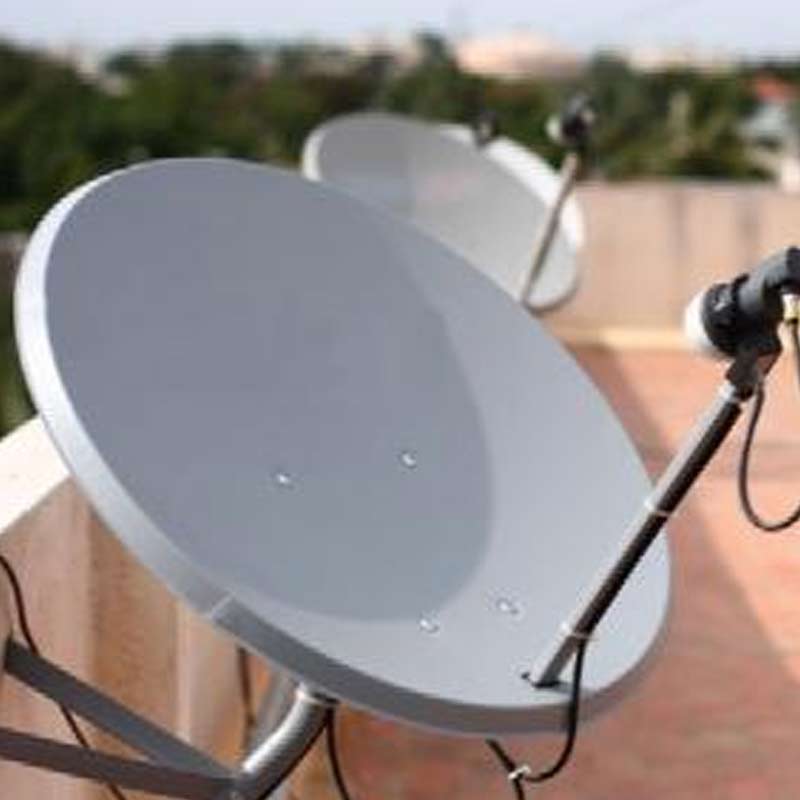
    MUMBAI: Pakistan authorities have seized a large quantity of smuggled Indian direct-to-home (DTH) equipment worth Rs 7.83 crore from various markets in a countrywide crackdown against illegal devices according to a report published by dawn.com. The report, in line with a suo motu case relating to easy availability of Indian DTH or magic box in the Pakistani market, was submitted to the Supreme Court on Wednesday.

    The Customs Department and the Federal Investigation Agency (FIA) arrested 39 people and 30 FIRs had been lodged during the crackdown and was informed to a two-judge bench headed by Justice Ijaz-ul-Ahsan.

    The report was furnished before the apex court through Additional Attorney General Nayyar Abbas Rizvi, stating that the nationwide enforcement operations has ended the commercial sale and availability of smuggled DTH equipment in the local markets.

    The apex court had constituted a committee during the last hearing, which consists of member (customs), the FIA's additional director general and a member of the Pakistan Electronic Media Regulatory Authority (PEMRA) to find out the source of smuggled goods and to take steps to curb the smuggling.

    The report recalled that the Federal Board of Revenue (FBR) has also enhanced enforcement measures adopted by the customs field formations which resulted in seizures of goods and other contraband items, including DTH equipment worth Rs 2480 crore during 2017-18.

    However, the report conceded that mere enforcement measures would not be sufficient to completely root out the transportation or availability of DTH equipment used for illegal broadcasting of Indian content in the country. Therefore, a holistic strategy needs to be worked out by all agencies/regulators to address this issue.

    The report pointed out that, in the absence of local DTH, the subscribers were opting for other illegal means, which include Indian DTH services. However, the report called for support from the Pakistan Telecommunication Authority for blocking the internet protocols addresses of the websites which were either running the illegal C-Line/CC-CAM or advertising the illegal Indian DTH in Pakistan. 

  • Indian pay TV revenue to touch $16 bn by 2023: MPA

    Indian pay TV revenue to touch $16 bn by 2023: MPA

    MUMBAI: As per a new report by Media Partners Asia (MPA), the pay TV revenue in Asia will top $56 billion in 2018. This will continue to grow at 3 per cent CAGR till 2023 and likely to exceed $66 billion by then. Pay TV revenue consists of subscription fees and local and regional advertising sales.

    Over the next five years, the biggest gains will come from China, where pay-TV revenues are projected to grow at a 3 per cent CAGR to reach $25 billion by 2023, and the more accessible and commercial India market, where pay-TV revenue is set for a whopping 8 per cent CAGR to reach $16 billion by 2023. That makes India the highest growing and most scalable pay-TV market in Asia Pacific. At the same time, South Korea will grow at a 3 per cent CAGR to reach $7.4 billion in revenue by 2023, according to MPA forecasts, while pay-TV revenue in Japan will climb at a meagre 1 per cent CAGR to touch $7.1 billion over the same time-frame.


    Elsewhere, pay-TV momentum will moderate in Indonesia and the Philippines, two of Southeast Asia’s biggest growth economies, according to MPA, while Australia, Hong Kong, New Zealand, Malaysia, Singapore and Thailand will register revenue declines ranging between a -1 per cent to a -6 per cent CAGR over 2018-23.

    Commenting on the findings from the Asia Pacific Pay-TV Distribution report, MPA executive director Vivek Couto said, “Pay-TV stakeholders are adjusting to new realities as the industry shifts to IP-based distribution. The growth of high-speed broadband and online video is driving fundamental changes in content consumption and investment across key markets. This, together with piracy, will continue to adversely impact pay-TV industry growth. There will be more fixed broadband subs than pay-TV subs across much of Asia Pacific by 2021, while the gap between the mobile broadband subs base and pay-TV & fixed broadband subs will further widen as mobile networks emerge as a major means for mass content distribution, accelerating the shift in content consumption from households to individuals. M&A activity for the Asia Pacific broadcasting and pay-TV sectors for 2017 and the first half of 2018 reached $10.5 billion in aggregate, with the biggest deals taking place in Australia, India and Korea. More M&A and consolidation is likely in these markets with Southeast Asia likely to join the action over 2019-20.”

    MPA analysis indicates that the pay-TV subscriber base in Asia Pacific will grow by 3 per cent in 2018 to reach 645 million subs, representing 57 per cent of TV homes with at least one pay-TV service. The Asia Pacific pay-TV subs base will grow at a 2 per cent CAGR between 2018-23 to reach ~696 million by 2023, according to MPA projections. Pay-TV penetration by 2023 will fall to 55 per cent of TV homes when adjusted for multiple subscriptions, largely due to an acceleration in cable cord cutting in China.

    Ex-China, net customer additions across Asia Pacific will significantly slow from 10.4 million in 2017 to 6.5 million in 2018. India will account for 47 per cent of the growth in 2018, followed by Indonesia (12 per cent), the Philippines (12 per cent), Korea (10 per cent), Pakistan (7 per cent) and Sri Lanka (3 per cent). The pay-TV base ex-China will grow from 267 million subs in 2018 to 288 million subs by 2023, representing a 2 per cent CAGR, with adjusted pay-TV penetration remaining flat at 57 per cent of TV homes.
     

  • IMCL aspires to hit 7 mn subscribers in a year

    IMCL aspires to hit 7 mn subscribers in a year

    MUMBAI: At a time when the face of India’s multi-billion dollar cable industry is changing rapidly with the emergence of new players, IndusInd Media & Communication Ltd (IMCL), one of the oldest players in the industry, has announced a new offering ‘I Am Mumbai, I Am InDigital’. Consisting of premium 22-channel bouquet of ad-free content, the initiative is aimed at providing viewers with a 360-degree experience. The digital distribution platform standing with almost 5 million subscriber base predicts to reach 7 million subscribers over next four quarters.

    The newly announced expansive range of content under the “NXT Services” brand is available to InDigital customers as well as NXT Digital customers across India. From rhymes, cartoons and movies for kids to dubbed movies in regional languages, cooking, music, the bouquet has content from various genres. However, pricing for the ad-free premium channels has not been decided yet.

    “While we have technology pushing our bouquet and opening our channels, we have realised that we have to give people what they want, not what we want them to have. So we cater to each and every age group. Overall this has been our endeavour to upgrade our approach for our city of Mumbai,” IMCL CEO Vynsley Fernandes said.

    To cater to every customer based on their different requirement and affordability, InDigital has also presented a range of next-generation set-top boxes (STBs). The new products include Standard Definition (SD) Zapper, High Definition (HD) Zapper, HD basic hybrid, HD Dual Tuner, HD Advanced Hybrid, 4K Android Hybrid and along with OTT device from group company ONE Fiber with prices ranging from Rs 1000 to Rs 5000.

    For the OTT box, it has partnered with streaming platform Viu. Speaking about more tie-ups, ONEOTT iNTERTAINMENT LTD(OIL) CEO Yugal K Sharma said that more partnerships are in the pipeline. “As far as I can see today, there will be 10 more strategic alliances I have to do. We are not into the internet business anymore; it is called CDCA (Connectivity, Devices ecosystem, Content and Applications),” Sharma said.

    “The whole industry is now shaping up and moving towards intertainment (entertainment moving on to the internet). I firmly believe that all the Ps are given – product, pricing, placement, promotion, packaging and people strategy which is 97 per cent the same for everyone. We already had our underground fibre systems in Mumbai and all the major metros, which was built for cable TV. Now, we are leveraging that for broadband as well. We have fibre system ready in 32 cities. We have a slight edge over Reliance Jio because we started rolling out our 1 GB plans about two months back,” Sharma commented while asked about competition with Reliance Jio.

    While in broadband segment Jio FTTH is a prime competitor, DTH players pose a challenge to traditional cable players. However, IMCL is not losing confidence owing to its Headend-in-the-Sky(HITS) technology. The HITS platform is on C-band keeping it unaffected from any weather change. But DTH platforms being on the KU band are susceptible to any change in weather. Moreover, the channels provided under HITS technology are priced at low cost. Hence, the company claims HITS as the direct competitor of DTH services.

    Through the HITS services, the company also wants to grow a subscriber base in rural areas. However, other than pure penetration, the company is focusing on managed service business. The smaller MSOs, last mile owners who are keen to embrace digital distribution can migrate by using the technology, rather than making own investment. Even IMCL can take the existing technology and repurpose it.

    Other than technological changes, the new TRAI tariff order is going to disrupt the broadcast and cable industry. Though the matter is still sub judice in the apex court, Fernandes thinks technology readiness to provide so many packages is going to be a challenge for distributors. Moreover, as content preference varies from region to region, smart packaging and segmentation are going to be driving factors.

    Though IMCL is putting high focus on new technologies, the in-house engineering team has come up with innovative designs using minimal capex, even less than 100k. In the next one year, it will definitely like to target the sale of over 2 million STBs.

  • ACT Fibernet seeks funding; discloses financials

    ACT Fibernet seeks funding; discloses financials

    MUMBAI: In its prospectus with SEBI, ACT Fibernet submitted the financial details and is looking for fund-raising to expand the business across India. ACT Fibernet reported revenue of Rs 1,217 crore and EBITDA of Rs 211.67 crore in fiscal 2017.

    In the six months ended 30 September 2017, the revenue was Rs 684 crore and EBITDA was Rs 286 crore. In fiscal 2016, ACT Fibernet posted revenue of Rs 874 crore and EBITDA of Rs 323 crore. Moreover, in fiscal 2015, it registered the revenue of Rs 618 crore and EBITDA of Rs 468 crore.

    According to the reports, ACT Fibernet had approximately 1.28 million wired broadband internet customers and 0.71 million cable TV customers as at 31 December 2017. It reported a monthly ARPU of Rs 813 in fiscal 2017, Rs 756 in fiscal 2016 and Rs 684 in fiscal 2015 from retail wired broadband internet business.

    The wired broadband internet market is expected to grow from 18.1 million subscribers as at 31 December 2016 to 24 million by 31 December 2021, according to a study by MPA.

    Revenue from wired broadband internet service business accounted for 82.77 per cent, 90.31 per cent, 91.61 per cent and 91.38 per cent of total income for fiscals 2015, 2016 and 2017 and the six months ended 30 September 2017 respectively.

    Revenue from cable TV service business accounted for 11.86 per cent, 6.13 per cent, 4.61 per cent and 5.21 per cent of total income from operations for fiscals 2015, 2016 and 2017 and the six months ended 30 September 2017 respectively.

    Standing at the third largest position across the wired broadband internet service provider in India, the company bags the market share of 6.9 per cent as at 30 September 2017 according to MPA. Its fibre broadband network covers 5.4 million plus residential homes in the markets in which it operated as at 30 September 2017, according to MPA.

    ACT Fibernet said it invested significantly to develop fibre broadband network. The majority of the fibre network utilises an advanced Metro Ethernet Active FTTX technology. It also utilises GPON technology in certain parts of the network.

  • Hathway to target existing users for new OTT, cable hybrid STBs

    Hathway to target existing users for new OTT, cable hybrid STBs

    MUMBAI: Indian consumers are not losing interest in linear TV anytime soon but one can’t be too wary given the OTT burst. To stay ahead of the game, Hathway has unveiled two new products – an OTT set-top box and a cable hybrid box. Both of the boxes have been priced at Rs 2999.

    80 per cent of Hathway’s target will be existing users who can upgrade to the new hybrid box while 20 per cent will be new customers. As on 30 June, it had 7.2 million cable TV subscribers. Overall, the company is hoping to sell 100,000 STBs each month. The box production capacity is the same as before for now but if the volume of response explodes, it can even double it.

    The newly introduced boxes will be available to the local cable operators from 15 October and consumer registrations will start by 1 November.  For initial rollout, the company will work closely with local cable operators.

    Hathway Play Box, the OTT set-top box is based on Google’s Android TV. The remote carries a dedicated YouTube, Netflix and Google Play button. It will also have voice-enabled Google assistant and inbuilt Chromecast. The hybrid cable box named as Hathway Ultra Smart HUB combines linear TV with Play services in HDR quality along with easy navigation. It will enable users to download apps from the Google Play store also.

    “When we developed Ultra Smart Hub, the most important aspect has been listening to our customers to understand their needs regarding their TV viewing. We see a clear shift in consumption in content today compared to earlier. Indian consumers today want a mix of traditional linear television viewing combined with on-demand or streaming services. With the Smart Hub we have a product that meets their expectations,” Hathway Cable and Datacom MD Rajan Gupta said.

    There is a slight difference in the usage of both. The cable hybrid boxes can be made available in areas where Hathway has its cable infrastructure while the OTT has an advantage. It can reach areas where there’s no cable but Hathway’s broadband service is offered.

    The new boxes can lead to the company’s ARPU growth also. He hopes top 25 per cent of consumers will go for OTT services. “In general, any OTT service providers will be more than happy to do such tie-ups because it will help them increasing reach,” he also added.

    “Starting 1 December we will have a TVC for this product. Our marketing team is working on a 360-degree marketing campaign. Creating awareness, right from metros, mini metros to rural will be the key. We will also be working closely with our LCO partners. In fact, we will be rolling out first with them and apart from TVC we will also take help from them to create awareness,” he added.

    In the previous investors call from the Q1 financial result, Gupta mentioned the necessity of an innovative model, bundling IoT, cable with current pay TV and OTT. He had said that the company is working on it and would announce something soon.

    "We are pleased to be working with Hathway and look forward to leveraging their extensive broadband and cable network to enable more exciting and useful Android TV experiences for consumers," Android, Chrome & Play Business Development head India Pranab Mookken commented.

  • Carriage fees have dropped in 2018 : Chrome Carriage Optimizer Report

    Carriage fees have dropped in 2018 : Chrome Carriage Optimizer Report

    BENGALURU: Carriage fees have dropped by approximately 5 per cent for existing deals and by about 7 per cent for new channel launches is one of the highlights of the seventh edition (R7) of the Chrome Carriage Optimizer Annual Report (CCO) by Chrome Data Analytics & Media (Chrome DAM).
    CCO gives headend wise average carriage fee spends for placing channels across individual cable networks. It takes into account the footprint of individual cable networks and co-relates the same to the average carriage fee spend for a particular band/frequency on that particular network. Chrome DAM says that the CCO report entails region-wise, market-wise and MSO wise carriage fee spends further broken down to individual cable operator level across the country.Chrome DAM claims that CCO is a tool actively used by broadcasters to indicate the carriage fee return on investments across cable networks in 3300 plus cities of India.
    Chrome DAM CEO Pankaj Krishna said, “While all three leaders uphold divergence against RIO, the verdict will take some more time to see the light. Even phase IV attributed much less alteration against what was anticipated, as the carriage trend continues to be where it was in FY 2016 to 17. As per the Chrome CCO R7, the carriage fees have dropped by an average of ~7 per cent nationally over the last one year with the CCO Cost per Subscriber (CPS) coming down from Rs 7.17 to Rs 6.75 – (which as per TRAI was to ideally be a CPS of 20 paisa). With rural gaining more significance and emerging as a tie breaker on the viewership front, the need is to understand the structure of the deals to optimise the distribution investments, and hence the Chrome Carriage Optimiser – R7 to map the headend wise carriage fee spends for placing channels across individual cable networks, the objective of which is to empower the broadcasters with an independent audit across cable networks in 3300+ cities of India”.
    The highlights of CCO R7 include:

    1. The carriage fees have dropped by about 5 per cent for existing deals and approximately 7.per cent for the new launches.
    2. As compared to R6, the CCO Cost per Subscriber (CPS) has come down from Rs 7.17 to Rs 6.75 – (As per TRAI the CPS was to be 20 paisa)
    3. North has emerged as the costliest region in terms of carriage fee/deals.
    4. The gap between CCO for existing and new launches has reduced over the years owing to digitization and increase in bandwidth of the networks.
    5. DEN commands the highest CCO amongst national MSOs, followed by Siti and GTPL.
    6. Coverage of networks in R1 to R7 has grown by 1509 per cent (from 200 to 3218).

    Top lines 1) National Top lines
    a. Top MSOs – Subs* vs. CPS** – Ranking

    b. Top MSOs – Subs vs. CPS – %Gain/Drop

    According to Chrome DAM R7: 2) Top 2 MSOs across metros
    a. Delhi
    i. Subs – DEN & Hathway
    ii. CPS – DDC & DEN
    b. Mumbai
    i. Subs – Hathway – & IN Cable
    ii. CPS – DEN & YOU
    c. Kolkata
    i. Subs – Siti & GTPL
    ii. CPS- GTPL & Siti
    d. Chennai
    i. Subs – SCV & TCCL
    ii. CPS – SCV & TCCL
    e. Bangalore
    i. Subs – Hathway & Siti
    ii. CPS – DEN & Hathway
    f. Hyderabad
    i. Subs – Hathway & Siti
    ii. CPS – Siti & IN
    (Source: Chrome Carriage Optimizer, Round 7, June 2018)
    3) Top 2 MSOs across Regions
    a. North
    i. Subs – Den & Fastway
    ii. CPS – Fastway & DEN
    b. East
    i. Subs – Siti & GTPL
    ii. CPS – Ortel & GTPL
    c. West
    i. Subs – GTPL & Hathway
    ii. CPS – DEN & GTPL
    d. South
    i. Subs – ARASU & Siti
    ii. CPS – SCV & TCCL
    e. Central
    i. Subs – SR & Siti
    ii. CPS – DIGI & Hathway
    (Source: Chrome Carriage Optimizer, Round 7, June 2018)
    4) Genre-wise Carriage Index
    a. News – 100 per cent
    b. GEC – 82 per cent
    c. Music – 88 per cent
    d. Movies – 86 per cent
    (Source: Chrome Carriage Optimizer, Round 7, June 2018)
    Subs* – Active Subscribers attached to network
    CPS** – Cost per Subscriber by network

  • ZEEL announces new TV channel prices ahead of deadline

    ZEEL announces new TV channel prices ahead of deadline

    MUMBAI: Ahead of 31 August 2018 deadline for publishing TV channel prices in a new format and a day before the Supreme Court hears a case relating to TRAI’s new tariff regime, Zee Entertainment Enterprises Ltd  (ZEEL) has made public its channel prices as suggested by the regulator in 2016, setting an example for owners of other TV channels.

    All ZEEL channels will be available on a-la-carte basis, as required by regulations, and the consumers will also have the option to choose from specifically created bouquets for Hindi speaking markets (HSM) and different regional language markets like Marathi, Bangla, Odia, Bhojpuri, Tamil, Telugu, Kannada and Malayalam, an official statement from ZEEL said on Monday evening.

    The Punit Goenka-led ZEEL’s initiative to be first off the blocks with a-la-carte pricing could very well put pressure on other broadcasters to follow the example. Goenka also happens to be the president of the Indian Broadcasting Foundation, an industry body that claims its members manage 350+ TV channels and about 90 per cent of television viewership across the country.

    [[{“fid”:”836178″,”view_mode”:”default”,”fields”:{“format”:”default”,”alignment”:””,”field_file_image_alt_text[und][0][value]”:”graph”,”field_file_image_title_text[und][0][value]”:”graph”},”link_text”:null,”type”:”media”,”field_deltas”:{“1”:{“format”:”default”,”alignment”:””,”field_file_image_alt_text[und][0][value]”:”graph”,”field_file_image_title_text[und][0][value]”:”graph”}},”attributes”:{“alt”:”graph”,”title”:”graph”,”height”:266,”width”:624,”class”:”media-element file-default”,”data-delta”:”1″}}]]

    Meanwhile, according to ZEEL, for each market, there will be multiple bouquets available to consumers across the country at different price points. Each bouquet would constitute a mix of channels of different genres, including general entertainment, movies, news, infotainment and music. The starting bouquet (B1) is likely to exclude English entertainment and English movie channels whereas the premium bouquet would include all channels offered by Zee.

    ZEEL is likely to keep the prices of Hindi language bouquets from Rs. 45 upwards. For other languages, bouquet prices will be higher in those markets where Zee has multiple offerings and lower in other cases. For the discerning high definition (HD) consumers, Zee is creating additional bouquets that will make it convenient for various operators to offer to their respective subscribers, the statement said. The Hindi language HD bouquets are likely to be priced Rs. 60 upwards.

    ZEEL has decided to offer all its News channels along with its other popular channels like Zee Anmol, Big Ganga and Big Magic as part of these pay bouquets. As a result, these channels would not be available in the FTA pack.

    In a related development, the Supreme Court is scheduled to hear a case filed by Star India and Vijay TV against Madras High Court clearing regulator TRAI’s new tariff regulations, which were first announced middle 2016 but has been in suspended animation since late 2016 due to various legalities.

  • GTPL Hathway to promote 40 Mbps broadband speed to masses

    GTPL Hathway to promote 40 Mbps broadband speed to masses

    MUMBAI: As wireline broadband business is emerging as a sector full of growth opportunities, several cable operators, as well as MSOs, are increasing their investment in the segment. GTPL Hathway, the Gujarat based cable and broadband player, is ready to lower its ARPU in the broadband segment to get more customers. Reliance Jio’s entry has got companies worried about losing subscribers and many of them are revising prices while others are ready to lower subscription costs.

    GTPL Hathway’s capex allocation shows the increased importance of broadband business for the company. While in Q1 2019, the capex stood at Rs 21 crore (almost equal to Rs 24 crore capex for cable TV business), in Q4 FY 2018 Rs 8 crore was the broadband capex. For entire FY 2019, the company will invest Rs 50-60 crore on broadband.

    The company’s plan is to make 40 Mbps a mass product for which the ARPU stands at Rs 388 to Rs 450 per month. One of the main reasons for emphasising on this particular range is to control churn rate of subscribers as attracting more customers with high speed and high volume will make a loyal user base. Churn is happening more on the side of lower speed, where the company is providing 5 Mbps or 8 Mbps speed due to the wireless competition. Even for the 40 Mbps plan, the cost has already come down.

    “We are pushing this (40 Mbps) for mass, so we are looking forward that the numbers will start coming from this quarter and next quarter we will see a surge in the number,” chief strategy officer Piyush Pankaj commented on the broadband segment revenue in an earnings call. The company has targetted broadband revenue for this financial year to be at Rs 160-170 crore.

    Though overall the company witnessed only 10,000 new broadband subscriber addition despite creating 230,000 home passes, its logic revolves around the basic formula of supply and demand. “In this quarter if you see our FTTH implementation on the ground for the home pass is around 65-70 per cent complete and then you see the home pass is increased,” Pankaj added. According to company guidance, it is going to add around 100,000 net subscribers this year.

    The Jio rampage is likely to cause havoc in the broadband sector too. Pankaj said that the company is waiting for other players to come into the market with new pricing to make any decision on whether or not to scale down investment. For now, the capex guidance for broadband business would remain same.

    “The decision like investment in broadband cannot be based on one quarter pricing of any particular player. We expect the market to expand considerably,” GTPL Hathway chairman and non-executive director Rajan Gupta said.

    While GTPL has a huge fibre network available in Gujarat, it is not rolling out fibre to home or building because of low demand. There is a very limited demand for 100mbps and 40mbps in those markets.

    “With large players coming in investing there and that is where is the whole demand will build up and GTPL already has a huge infra, so pricing is one play, but more than pricing it is about revenue from a particular area and the overall size of the pie. Frankly, there are multiple factors needs to be evaluated, which will be clearer over the next two to three quarters,” Gupta added.

    In terms of its traditional cable business, the company expects phase three and phase four ARPU increase in this quarter and next quarter while phase one and phase two ARPU increased in the last quarter.

    “For phase two we are going to take the hike (10 per cent hike) in Q4 of FY 2019. Phases three and phase four we have already taken the hike in Q2 that is from July onwards,” Pankaj said. “Current Q1 ARPU we will see the 10 per cent jump for phases three and four, but you will see the full 10 per cent increase in two quarters’ time in Q2 and Q3,” he added further.

    Though the company had Rs 126 crore content cost in Q1, it is now confident that it won’t exceed Rs 500-510 crore until some big acquisition happens. However, the company has indicated it is looking forward to some of the acquisitions which could increase the content cost further as well as the revenue.

  • DEN Networks aims for 70,000 broadband subscribers by Q1 2020

    DEN Networks aims for 70,000 broadband subscribers by Q1 2020

    MUMBAI: Way before Jio’s announcement of its broadband GigaFiber venture, MSO DEN Networks revealed its plan to explore the opportunities in the market. Following the rollout of broadband service in 28 cities by end of Q1 of this fiscal year as a part of its 100 cities plan, it has also signed up the agreement with 48 more cities. In terms of rolling out the service, the company is adding 20 more cities in Q2.

    Talking to investors in an analyst call, DEN Networks CEO SN Sharma informed that cable partners are investing equally well with the same kind of enthusiasm. After the launch of Jio GigaFiber, the company mentioned it would be working with LCOs. Sharma was asked about the impact of this on the partners on ground to which he debunked the possibility of ant negative impact on LCOs. “The announcement of the telco has further brought in standards you see that has helped us in regularising this tenders and qualities to be followed by the gentlemen, i.e., our cable partners and that is helping the entire business environment,” he said. In addition to that, he also mentioned that hardly 6.7 per cent of the penetration level has been achieved in the market as of now.

    Emphasising on the enthusiasm in the industry, he also said, “I am also surprised with the kind of enthusiasm that I am coming across and very soon we will be signing up with another 40-50 odd partners and then followed by LCOs and in Q2 we are supposed to deliver another 20 cities and I am quite confident that my team will give and overdo whatsoever assigned to them but that will be it is better that we talk at the end of Q2.”

    As DEN Networks has recently rolled out its service, it will still now take time to pick up due to the lengthy process. Going through LCOs to approach subscribers and then the subscriber coming back for the wired service takes a long time. In that context, rather than giving a high prediction, Sharma said the company hopes to deliver close to 40,000 to 50,000 subscribers by March 2019 and by the end of Q1 of next year to touch close to 70,000 subscribers. He predicts a ramped growth in FY 2020 as then penetration level will reach to 10 per cent. MSOs enable the homes where cable fibre already exists.

    “In the 28 new cities we have actually enabled one million home passes which are already there with us on the cable front so we are already reaching there but how many of those would actually get converted would depend on the interest levels. The moment the interest level comes in we obviously hook them up. We have already hooked up 8500 customers till now so we should be able to ramp it up,” DEN Networks CFO Himanshu Jindal said. For the 100 cities under the plan, 5 million set top box installations will be done.

    DEN’s 100 cities model is based on Rs 500-550 ARPU while in the existing 28 cities, it is capturing an ARPU of Rs 562. Sharma denied commenting on the upcoming tariff war as the pricing model from telcos is still not revealed. But indicating the price could go down, he mentioned that DEN can easily sustain till Rs 500 ARPU. It is only in metropolitan cities like Mumbai and Delhi that consumers are already experiencing 100 MB data speed. There are cities where the speed being demanded is 5MB, 20MB, 50MB. So there’s a large chunk of broadband-deprived internet users across the country.

    “So in any case the ARPU of Rs 500 where you are delivering 50MB speed and unlimited data is not a very conservative figure, I would say it is a very aggressive ARPU that we have put across and we should be able to justify it as things unfold and as times will come, we will handle the situation. In any case, the LCO partner is quite confident and they are coming forward and investing so that also adds the positivity with us,” Sharma’s tone reflected the preparedness for upcoming battle.

    However, the company has claimed to undertake a very low capex based plan. In the current year, the company will not spend more than Rs 30 crore unless it experiences more than the expected rush of this subscriber base which could mean some minor changes in the network.