Category: DAS

  • DAS: Andhra seeks extension even as MIB warns

    DAS: Andhra seeks extension even as MIB warns

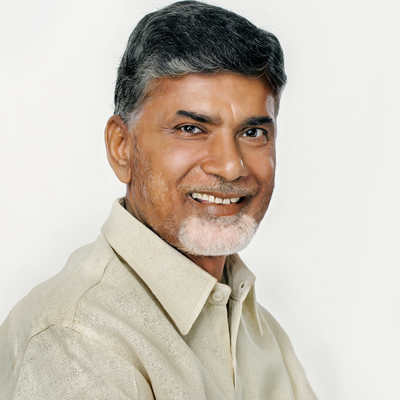
    MUMBAI: As cable digitisation deadline gets over today, the Andhra Pradesh chief minister N Chandrababu Naidu has written to the central government seeking extension of cable TV digitisation deadline up to December 2017. However, on 30 March, reiterating the switch-off of analogue signals of cable television from 1 April 2017, all broadcasters, MSOs and local cable operators were warned by the central government that action would be taken against defaulters.

    The CM has explained the significance of extension of the deadline, the Hans India reported. The state government has already made plans to provide internet facility, cable TV through its Fiber Grid project.

    The projects works are under construction and said that works would be completed by December this year. If the government would extend the deadline for Fiber Grid project, it would benefit to people of state and the government. The infrastructure for this project has been readied, he stated, adding that the distribution work was under way.

    Indiantelevision.com had reported on 19 December about Chandrababu Naidu’s letter to the union minister of urban development , information and broadcasting, housing and urban poverty alleviation M Venkaiah Naidu seeking extension of deadline for digitalisation of Cable TV services in the state he governs — Andhra Pradesh.

    In the letter dated 3 December, 2016, the chief minister stated: Under A.P. Fiber Grid Phase-I Project, a state-wide high speed Optical Fiber Network Infrastructure has been setup across the 13 Districts of the State leveraging the assets of the Electricity Department. A 24-Core ADSS Optical Fiber Cable has been laid for a length of around 23,000 Kms. over the electrical poles with its back-end electronic systems set up as the Points of Presence (PoPs) at 2445 identified locations. mainly electrical sub-stations. A state-wide control and command centre for this entire network has been commissioned at Visakhapatnam as a Network Operations Centre (NOC).

    The services from AP Fiber Grid will be delivered by the Andhra Pradesh State FiberNet Limited (APSFL) to the end-users i.e. households. offices / enterprises in partnership with the Multi System Operators (MSOs) and Local Cable Operators (LCOs) etc, the letter stated.

    (Around) 13,325 LCOs and MSOs have been registered so far with APSFL as business partners to provide last mile services. The works of AP Fiber Grid have been completed and at present the infrastructure is ready for delivering the intended Triple Play Services to the households / offices. Services are being provided successfully on a pilot/test basis to identified households/offices and the commercial Public services are planned to be launched in December 2016, Chandrababu’s letter added.

    The digitalisation of Cable TV services is not yet completed in Andhra Pradesh. To accelerate this process. APSFL has initiated procurement of Customer Premises Equipment Boxes (GPON basic box+ IPTV box with WiFi) for enabling expeditious spread of AP fiber triple pay services in A.P. The CPE boxes will be seeded to the households through the APSFL’s last mile business partners i.e., MS0s/LCOs, the letter added.

    Also Read :

    MIB warns MSOs, LCOs against analogue TV signals from 1 Apr

    Extend DAS deadline to Dec ’17 for fiber expansion, Andhra CM writes to MIB


  • Analogue signals: MIB to take action against defaulters

    NEW DELHI: Reiterating the switch-off of analogue signals of cable television from 1 April 2017, all broadcasters, MSOs and local cable operators were today warned by the Indian government that action would be taken against defaulters.

    Issuing a notice, Ministry of Information and Broadcasting (MIB) instructed all stakeholders to ensure that no analogue signals are transmitted over the cable networks in phase IV areas after 31 March 2017.

    The notice said the Cable Television Networks (Regulation) Amendment Act 2011 had made it mandatory for switch-over of the existing analogue Cable TV networks to Digital Addressable System (DAS) in four phases. Digital switch-over has already taken place in phases I, II and III.

    The Ministry by notification of 23 December 2016 last had extended the cut-off date for phase IV of cable TV digitisation to 31 March 2017.

    Also Read:

    Final phase STB seeding is 35% even as deadline nears

    DAS deadline extension ruled out, govt claims 66% seeding done

    TV industry gives mixed reaction to MIB’s DAS III & IV extension

    DAS 4 deadline extended to 31 Mar

  • Smart STB: Videocon d2h partners SonyLiv

    MUMBAI: Videocon d2h, one of the fastest growing DTH service provider in India, has signed a deal with SonyLIV for its HD Smart Connect Set Top Box. This partnership will enable Videocon d2h’s HD Smart Connect Set Top Box customers to access a seamless broad selection of content available on SonyLIV app.

    SonyLIV, which is the first premium Video On Demand (VOD) service by Sony Pictures Networks’ (SPN), will enrich Videocon d2h’s customers with an array of movies, strong line-up of events across all sports, shows, music, TV Shows and much more.

    SonyLIV can be accessed through all Web Apps button on Videocon d2h’s HD Smart Connect Set Top Box. The Smart Connect Set Top Box works on connectivity management platform to deliver a variety of connected services that leaves the customer with wide choice for entertainment.

    HD SMART Set top Box (Connected Set top box) converts any existing TV into a Smart TV besides showing you 650 Channels & services in High Definition and Standard Definition. The DTH service allows one to watch their favourite channels in SD and HD, the Connected set top box allows one to browse content from applications residing on STB. These Applications will enhance the pleasure of accessing content on a bigger screen thus making it a family event rather than solo watching on a smaller screen. HD Smart Set Top Box will work as a tool for personalization, engagement and new customer experiences and with internet connectivity, one can convert one’s TV into a smart TV using it.

    Videocon d2h executive chairman Saurabh Dhoot said, “This collaboration would strengthen the entertainment apps available on our HD Smart Connect and provide our customers with a large range of entertainment.’’

    Videocon d2h CEO Anil Khera said, “Our partnership with Sony LIV is yet another step towards creating the highest-quality consumer experience. Innovative products like HD Smart Connect and rich entertainment content available delights next generation users. Our focused approach strives for delivering exceptional content and customer delight.’’

    Sony Pictures Networks India EVP and Head – Digital Business Uday Sodhi said, “Through this synergistic association, we will be entertaining and engaging the audience with the rich content portfolio that SonyLIV showcases. The partnership allows us to deliver a superior entertainment experience to Indian audiences across genres and multiple screens, and live up to our brand promise of ‘We LIV to Entertain’.”

  • Final phase STB seeding is 35% even as deadline nears

    NEW DELHI: Even as the country has set a deadline of 31 March this year for full digitisation of cable TV, a Parliamentary Committee has been told that only 35 per cent seeding of set-top boxes (P-IV) has been achieved in rural India though the Parliament was told last week that 66.79 per cent (P III & IV) seeding had been achieved in the last two phases minus Tamil Nadu.

    Admitting that digitisation in the first phase is total minus Chennai, the Parliamentary Standing Committee on Information Technology which also examines issues relating to the information and broadcasting ministry has been told that digitisation has also not been done in one city – Coimbatore – of Phase II in view of court cases though the other 37 cities having more than one million population and spanning 14 states and one union territory had been covered.

    The committee recommended that the I and B Ministry follow up the issue of financial and technical viability in rural and remote areas, promote and increase share of iCAS (Indian Conditional Access System) to leverage ‘Make in India’ programme, popularise Doordarshan Free Dish in small town/cities/rural and remote areas, address the legitimate concerns of domestic STB producers and rigorously pursue interoperability of STB with the Telecom Regulatory Authority of India.

    The committee therefore expressed the hope that the I and B Ministry will be able to meet the targets of cable TV digitisation as almost all the pending cases have now been dismissed and there is no stay in any case except in case of Chennai and Coimbatore.

    Cable TV Digitisation in Phase III and Phase IV areas was to be achieved by 31 December 2015 and 31 December 2016 respectively, now extended to 31 January 2017 and 31 March 2017.

    Interoperability: TRAI working with IIT Bombay

    It was told that technical interoperability, as envisaged in the existing Direct to Home Guidelines has so far not proved to be effective due to various techno-commercial issues. The TRAI has decided to collaborate on the issue of technical interoperability with the Department of Electrical Engineering of Indian Institute of Technology, Bombay (IIT-B).

    To ensure commercial interoperability TRAI has notified tariff orders and this has been challenged by a couple of DTH operators in the Telecom Disputes Settlement and Arbitration Tribunal and the matter is sub judice.

    The Committee was given to understand that after the roll out of iCAS in January 2016, about 10 million STBs have been installed by multi-system operators out of which about 300,000 are with iCAS, which gives a market share of about 3%.

  • DAS deadline extension ruled out, govt claims 66% seeding done

    NEW DELHI: The Government reiterated today that there was no question of extension of the final phase of digital addressable systems for cable television in the country.

    Minister of state for information and broadcasting Rajyavardhan Rathore told the Parliament that Phase I, II & III of the Cable TV Digitisation have been completed successfully except in Tamil Nadu state, which is pending due to court cases.

    The fihal phase covering the Rest of India had originally been fixed for 31 December 2014 and later modified to 31 December 2016. It had now been further modified to 31 March 2017 on disposal of court cases.

    At the outset, he said Cable TV digitisation in the country is being implemented in four phases according to a Ministry notification of 11 November 2011 which had laid down the phase wise timelines which were subsequently amended.

    Phase I covering the Metro cities of Delhi, Mumbai, Kolkata and Chennai was originally slated for 30 June 2012 and modified to 31 October 2012. The second phase covering 38 cities (with population more than one million) was slated for 31 March 2013.

    The third Phase was to cover all other urban areas (Municipal Corporations/ Municipalities) and was originally slated for 30 September 2014 and modified to 31 December 2015.

    He said this cut-off date could not be achieved due to stay/extension granted by some Courts. On the disposal of the court cases in December 2016 and in order to provide time for transition of those subscribers who had not switched to digital mode of transmission, the Ministry allowed time upto 31 January 2017.

    For Phases I and II 100% requirement of set top boxes has been met except in Tamil Nadu. For Phase III & IV, the Ministry had developed a MIS online software for collection of seeding status of STBs. Since the area of Phase III & IV overlap, the combined state wise seeding progress for these two phases is 66.79 per cent minus Tamil Nadu.

  • No going back on DAS despite difficulties in P-IV: MIB

    No going back on DAS despite difficulties in P-IV: MIB

    NEW DELHI: Even as he admitted the fourth phase of digital addressable system for cable television was the most difficult, advisor (DAS) in the information and broadcasting ministry Yogendra Pal has said there is “no going back on the deadline of 31 March 2017.”

    Pal said that there were difficulties because several MSOs were reluctant to set up headends in far out rural areas, as the fourth and final phase only covers rural areas. He said the 60-plus cases pending in Delhi High Court relating to Phase III had been disposed of with the exception of three which challenged section 4A of the Cable Television Networks (Regulation) Act 1995, and all stay orders had been vacated.

    However, Pal admitted that a new case had been filed in Telengana to the effect that while there was clear reference to switching to DAS in Section 4A, there was no reference to switching off analogue signals. He said this case had been filed by a party not involved with the cable TV business.

    However, cable TV veteran Lt. Colonel V C Khare (retired) who chaired the session on ‘DAS implementation – miles to go before we sleep?” claimed that just around 22 per cent seeding of set-top boxes had been achieved in the third phase as against government claims of almost total seeding.

    Siticable Networks CEO V D Wadhwa also agreed that there were ‘gaps’ in Phase III, and Siticable had yet to seed another 2,50,000 STBs. But, he welcomed DAS, though he felt monetisation was still a challenge.

    Wadhwa said that while the objective of the consumer getting channels of his choice had been achieved, the industry was cable of overcoming soon the problems about SMS or receipts not being issued which had been raised by Khare in a presentation earlier in the day when he showed various loopholes in the DAS legislation.

    Khare had also pointed out that DAS in effect was aimed at involving only the broadcaster and the multisystem operator, conveniently keeping out the LCO who had built the industry.

    Other speakers in the session were unanimous that the cable TV industry had achieved in four years something that the direct to home industry had not been able to do in twelve years.

    In a session on “Business Model and Regulations”, there was general unanimity that the industry needed regulation but it did not have to come from a government regulator. The speakers favoured industry-led regulation.

    Eminent lawyer Kaushik Moitra of TMT Practice who moderated the session said that the Telecom Regulatory Authority of India (TRAI) had been given the additional burden of broadcasting only till a Broadcasting Regulatory Authority of India is set up but this had not happened. He said there was a certain need to move towards self-regulation. He also raised the question of whether TRAI was working to unite the LCOs.

    However, he applauded the growth of the industry with the last five years showing the growth of the highest number of television channels.

    Indiacast EVP Amit Arora said regulation was welcome, but it should not mean “jumping in at all times – this kills enterprise”. Even as no other country had achieved the kind of growth that local cable operators had shown in India, the regulator had to show greater responsibility towards the last mile operator. He also wondered why the MSOs and LCOs could not handle broadband while dealing with cable TV.

    Prag News CMD Sanjive Narain said that the regulator was only mean t to “ease movement” and not strictly regulate. It should solve problems before waiting for them to arise. He said that though TRAI consulted stakeholders, everything was often’pre-decided’.

    He said the primary problem before the industry was one of revenue sharing. Once that was out of the way, things would move smoothly.

    VuClip consultant Sisir Pillai said a regulator is needed, particularly in view of newer technologies like OTT. Referring to the growth of OTT, he said that the aim was to deliver content in whatever manner the subscriber wanted and find revenue for this.

    Answering a question later, he said that wired delivery was still the best medium even if video had to be sent to mobiles or other platforms.

    InDigital senior VP – operations and head of regulatory Subhashish Mazumdar said there was no regulator when the LCO began with VCRs and built the industry. This meant that the last mile operator and multi-system should be capable of solving their own problems. The industry was now geared up for this, he said.

    Agreeing that the primary problem was one of revenue sharing, Mazumdar said that the issue of unity among stakeholders to solve such problems had to come from the top.

    Earlier, Dr A K Rastogi of Aavishkaar which was among the organizers said that the primary problem was one of unity among stakeholders and a step had been taken in this direction with the formation of the Media Club of India.

    A session later on “Significance of wireline operation in Digital India” moderated by Castle Media ED Vinsley Fernandes was unanimous that there was no better technology than wireline.

    The session was addressed by Cisco CTO Gulshan Khurana, Siti Networks COO Anil Malhotra, Ortel Communications President and CEO Bibhu Rath, Suresh Sethiya of ICNCL of Kolkata, and StoreSay founder and CEO Raman Kalra.

  • DAS P-III deadline crossed: No court stay, only three cases pending

    DAS P-III deadline crossed: No court stay, only three cases pending

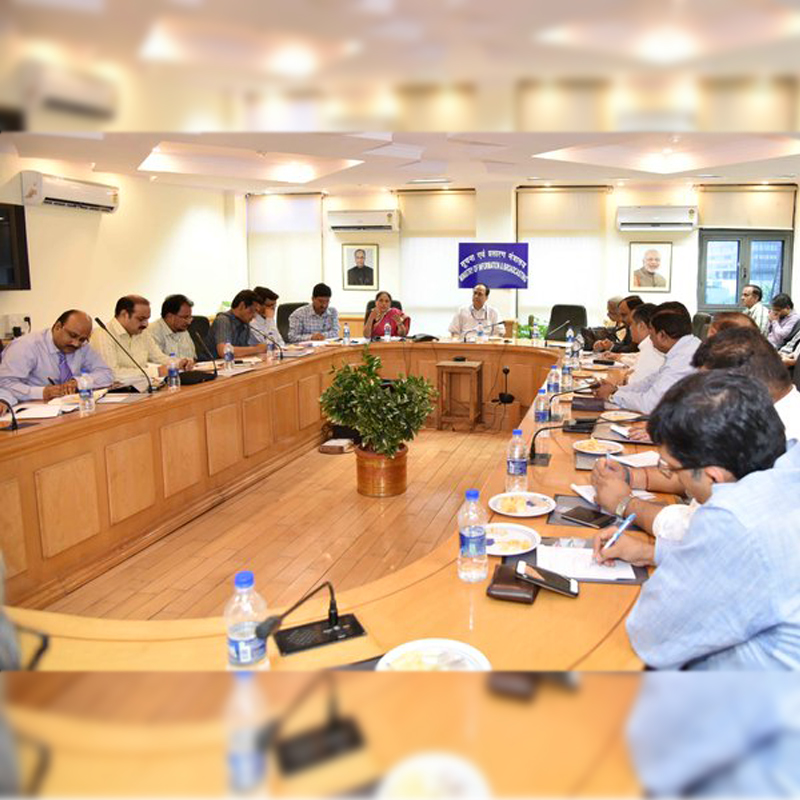
    NEW DELHI: Only 32 per cent seeding of set-top boxes had taken place in Phase IV areas of cable digitisation and ‘is not very encouraging.” However, adviser (DAS, MIB) Yogendra Pal said that digitisation had been completed in nearly 100 per cent areas for which the extended deadline was 31 January 2017.

    Speaking at the 20th DAS Task Force meeting on 18 January 2017, he said the actual seeding data would be much more, may be up to 50 per cent, as some MSOs have not been filling seeding data in spite of repeated requests and some MSOs are not filling full data.

    Information and broadcasting ministry additional secretary Jayashree Mukherjee who chaired the meeting said she had visited a big MSO in Hyderabad who had stated that he had seeded 1.7 million STBs whereas the Ministry’s website shows that he had seeded only 100,000 STBs. In this regard it was decided to write to all Nodal Officers as well as State Governments for these discrepancies. The concerned Associations were requested to ensure their members faithfully enter the correct details to avoid any discrepancies.

    Regarding the Court cases, Pal said only three Phase III cases were pending and all other cases had been disposed of by Delhi High Court and there is no stay. He said the cut-off date for Phase IV has been extended to 31 March.2017.

    Mukherjee said there are no roadblocks now and enough quantity of STBs are available. She said that the seeding should also accelerate.

    In view of the analogue signals being switched off in Phase III areas for 31 January 2017 it was deciding that broadcasters will ensure that they have provided separate IRDs for Phase III and Phase IV areas; broadcasters will ensure that they do not have any analogue agreements with any MSO for Phase III areas. In case they are having any existing analogue agreements with any MSO for Phase III area, they will inform the concerned MSO that the existing agreement is not valid after 31 January 2017. Broadcasters would also carry out monitoring at the ground level to ensure that no MSO, with whom they have Interconnection Agreement, is supplying analog signal in Phase III area

    The representative of CEAMA stated that demonetization and reduction of import duty to zero from ASEAN countries is affecting the requirement of indigenous STBs from the service providers. He added that they are still in the planning mode of raising the demand of STBs from indigenous manufacturers.

    He hoped that some medium and small sized players would place orders after 31 January 2017 when Phase III Digitisation is over. The Ministry’s Joint Secretary (B-I) mentioned that a huge demand is expected due to the large number of households remaining to be covered in phase IV.

    The representatives from the State Governments outlined their readiness and action being taken by them with regard to successful implement of Digitization. They said they are holding meetings with stakeholders. The Representative from Odisha mentioned that the Principal Secretary had a meeting on 25 November 2016 and reviewed the progress of Digitisation. They have prepared district wise data for the registered MSOs, unregistered MSOs, MSOs who are seeding data and those who are not seeding. Chairperson appreciated the efforts being made by the Odisha Government and desired that similar steps may be taken by other States. She directed that measures taken by Odisha Governmentmay be shared with all the States. Nodal Officer from Odisha was asked to send a note on the steps being taken by them for circulation to all the States.

    Subhashish Mazumdar of In-Cable Net stated that progress in Phase IV areas can be better if infrastructure sharing is allowed. He said there is an issue of connectivity in remote areas such as Assam. However, he was of the opinion that since there are clear cut direction for implementation of Phase III, therefore, the progress of STBs installation will gear up in Phase IV areas.

    Anil Malhotra from SITI Cable said there are some connectivity problems in far flung areas of Phase IV. He requested that infrastructure sharing may be permitted and added that TRAI is already having consultation in this regard. He requested that they are required to carry all channels on Fibre Network in remote areas. Thus the cost of carries of channels is very high.
    He suggested that MSOs should be allowed to take 80 channels from the DD FreeDish. The chairperson has asked them to send a proposal to the Ministry for consideration.

    Malhotra also raised the issue of Andhra Pradesh State FiberNet Limited which has been providing Cable TV services on the Optical Fibre Network Infrastructure. He mentioned that State Governments has issued directions for removal of Cables by the cable operators from all the electricity poles. He added that all MSOs are afraid of the same and that they may not be able to provide cable services.

    Ajay from Hathway stated that though there are some problems in Andhra Pradesh, they are seeding the boxes in Phase IV areas and will be able to accelerate the seeding in the month of February and March 2017. He added that they are monitoring the process on weekly basis.

    Shaji Mathew from GTPL said the situation in Gujarat is very good and now they are seeding in Phase IV area but the position in other States is not so good though they are making efforts. He complained that some of the broadcasters, especially STAR, are still providing analogue IRDs and no separate IRDs have been provided for Phase III and Phase IV areas to the MSOs. Broadcasters should be asked to give profession IRDs for carrying of digital signals for Phase III as well as Phase IV areas. He also stressed the need of infrastructure sharing pointing out that TRAI should make an early recommendation on it. He mentioned that according to the terms and conditions mentioned in the Ministry’s MSO registration letter no infrastructure sharing is possible since a separate own headend is required by the MSOs. The chairperson asked the MSOs that a request with regard to sharing of infrastructure may come to the Ministry in writing.

    The MSOs asked that it should be possible to share SMS. The Ministry’s representative pointed out that Entertainment Tax Department of UP Government had complained that MSOs do not provide them the data from the SMS.

    Vaibhav representing Den pointed out that a representative of UP Government wanted User ID and Password and not the SMS output which cannot be provided.

    A Sony India representative said they have already issued directions to switching off analog signals in Phase III areas from 1 February 2017. He asked how the signals to Arasu Cable for Phase III areas could be stopped since they have been providing analogue signals in Tamil Nadu. In this regard, Pal said according to the Madras High Court directions, analog signals of Arasu Cable cannot be disturbed till Ministry decide on their MSO registration applications.

    Some of the representatives raised the issues of a Hong Kong based company, called ABS technologies, whose teleport is outside India, is able to provide DTH services. The boxes of this company are freely available in the market. It is showing free to air channels of broadcasters. BARC has captured this data. The chairperson has sought examining of this issue.

    One MSO pointed out about a letter from District Administration in Aurangabad, Maharashtra, which has directed the local MSOs not to stop analog. The chairperson asked the Ministry to get details in this regard.

    MSOs felt that in at least 20 per cent  of rural and remote/hilly areas cable TV digitization may not be financially and technically viable even though analogue may be working there. These remote areas are best served by DTH. It was learnt that some DTH operators have packages only for FTA channels but they actually do not offer the same to the public. Th chairperson directed that DTH operators should examine the issue and come out with cost effective packages especially for remote and inaccessible areas where it is not possible for MSOs to provide digital cable services.

    Also Read:

    No DAS III extension beyond 31 Jan, reiterates MIB

    MSO registrations remain slow even as DAS deadlines approach

    Is DAS III optional in AP, Telangana? HC seeks Govt answer by 31 Jan

  • DAS P-III deadline crossed: No court stay, only three cases pending

    DAS P-III deadline crossed: No court stay, only three cases pending

    NEW DELHI: Only 32 per cent seeding of set-top boxes had taken place in Phase IV areas of cable digitisation and ‘is not very encouraging.” However, adviser (DAS, MIB) Yogendra Pal said that digitisation had been completed in nearly 100 per cent areas for which the extended deadline was 31 January 2017.

    Speaking at the 20th DAS Task Force meeting on 18 January 2017, he said the actual seeding data would be much more, may be up to 50 per cent, as some MSOs have not been filling seeding data in spite of repeated requests and some MSOs are not filling full data.

    Information and broadcasting ministry additional secretary Jayashree Mukherjee who chaired the meeting said she had visited a big MSO in Hyderabad who had stated that he had seeded 1.7 million STBs whereas the Ministry’s website shows that he had seeded only 100,000 STBs. In this regard it was decided to write to all Nodal Officers as well as State Governments for these discrepancies. The concerned Associations were requested to ensure their members faithfully enter the correct details to avoid any discrepancies.

    Regarding the Court cases, Pal said only three Phase III cases were pending and all other cases had been disposed of by Delhi High Court and there is no stay. He said the cut-off date for Phase IV has been extended to 31 March.2017.

    Mukherjee said there are no roadblocks now and enough quantity of STBs are available. She said that the seeding should also accelerate.

    In view of the analogue signals being switched off in Phase III areas for 31 January 2017 it was deciding that broadcasters will ensure that they have provided separate IRDs for Phase III and Phase IV areas; broadcasters will ensure that they do not have any analogue agreements with any MSO for Phase III areas. In case they are having any existing analogue agreements with any MSO for Phase III area, they will inform the concerned MSO that the existing agreement is not valid after 31 January 2017. Broadcasters would also carry out monitoring at the ground level to ensure that no MSO, with whom they have Interconnection Agreement, is supplying analog signal in Phase III area

    The representative of CEAMA stated that demonetization and reduction of import duty to zero from ASEAN countries is affecting the requirement of indigenous STBs from the service providers. He added that they are still in the planning mode of raising the demand of STBs from indigenous manufacturers.

    He hoped that some medium and small sized players would place orders after 31 January 2017 when Phase III Digitisation is over. The Ministry’s Joint Secretary (B-I) mentioned that a huge demand is expected due to the large number of households remaining to be covered in phase IV.

    The representatives from the State Governments outlined their readiness and action being taken by them with regard to successful implement of Digitization. They said they are holding meetings with stakeholders. The Representative from Odisha mentioned that the Principal Secretary had a meeting on 25 November 2016 and reviewed the progress of Digitisation. They have prepared district wise data for the registered MSOs, unregistered MSOs, MSOs who are seeding data and those who are not seeding. Chairperson appreciated the efforts being made by the Odisha Government and desired that similar steps may be taken by other States. She directed that measures taken by Odisha Governmentmay be shared with all the States. Nodal Officer from Odisha was asked to send a note on the steps being taken by them for circulation to all the States.

    Subhashish Mazumdar of In-Cable Net stated that progress in Phase IV areas can be better if infrastructure sharing is allowed. He said there is an issue of connectivity in remote areas such as Assam. However, he was of the opinion that since there are clear cut direction for implementation of Phase III, therefore, the progress of STBs installation will gear up in Phase IV areas.

    Anil Malhotra from SITI Cable said there are some connectivity problems in far flung areas of Phase IV. He requested that infrastructure sharing may be permitted and added that TRAI is already having consultation in this regard. He requested that they are required to carry all channels on Fibre Network in remote areas. Thus the cost of carries of channels is very high.
    He suggested that MSOs should be allowed to take 80 channels from the DD FreeDish. The chairperson has asked them to send a proposal to the Ministry for consideration.

    Malhotra also raised the issue of Andhra Pradesh State FiberNet Limited which has been providing Cable TV services on the Optical Fibre Network Infrastructure. He mentioned that State Governments has issued directions for removal of Cables by the cable operators from all the electricity poles. He added that all MSOs are afraid of the same and that they may not be able to provide cable services.

    Ajay from Hathway stated that though there are some problems in Andhra Pradesh, they are seeding the boxes in Phase IV areas and will be able to accelerate the seeding in the month of February and March 2017. He added that they are monitoring the process on weekly basis.

    Shaji Mathew from GTPL said the situation in Gujarat is very good and now they are seeding in Phase IV area but the position in other States is not so good though they are making efforts. He complained that some of the broadcasters, especially STAR, are still providing analogue IRDs and no separate IRDs have been provided for Phase III and Phase IV areas to the MSOs. Broadcasters should be asked to give profession IRDs for carrying of digital signals for Phase III as well as Phase IV areas. He also stressed the need of infrastructure sharing pointing out that TRAI should make an early recommendation on it. He mentioned that according to the terms and conditions mentioned in the Ministry’s MSO registration letter no infrastructure sharing is possible since a separate own headend is required by the MSOs. The chairperson asked the MSOs that a request with regard to sharing of infrastructure may come to the Ministry in writing.

    The MSOs asked that it should be possible to share SMS. The Ministry’s representative pointed out that Entertainment Tax Department of UP Government had complained that MSOs do not provide them the data from the SMS.

    Vaibhav representing Den pointed out that a representative of UP Government wanted User ID and Password and not the SMS output which cannot be provided.

    A Sony India representative said they have already issued directions to switching off analog signals in Phase III areas from 1 February 2017. He asked how the signals to Arasu Cable for Phase III areas could be stopped since they have been providing analogue signals in Tamil Nadu. In this regard, Pal said according to the Madras High Court directions, analog signals of Arasu Cable cannot be disturbed till Ministry decide on their MSO registration applications.

    Some of the representatives raised the issues of a Hong Kong based company, called ABS technologies, whose teleport is outside India, is able to provide DTH services. The boxes of this company are freely available in the market. It is showing free to air channels of broadcasters. BARC has captured this data. The chairperson has sought examining of this issue.

    One MSO pointed out about a letter from District Administration in Aurangabad, Maharashtra, which has directed the local MSOs not to stop analog. The chairperson asked the Ministry to get details in this regard.

    MSOs felt that in at least 20 per cent  of rural and remote/hilly areas cable TV digitization may not be financially and technically viable even though analogue may be working there. These remote areas are best served by DTH. It was learnt that some DTH operators have packages only for FTA channels but they actually do not offer the same to the public. Th chairperson directed that DTH operators should examine the issue and come out with cost effective packages especially for remote and inaccessible areas where it is not possible for MSOs to provide digital cable services.

    Also Read:

    No DAS III extension beyond 31 Jan, reiterates MIB

    MSO registrations remain slow even as DAS deadlines approach

    Is DAS III optional in AP, Telangana? HC seeks Govt answer by 31 Jan

  • Is DAS III optional in AP, Telangana? HC seeks Govt answer by 31 Jan

    Is DAS III optional in AP, Telangana? HC seeks Govt answer by 31 Jan

    MUMBAI: A high court division bench has directed the Centre to respond to a PIL questioning the coercive manner in which the authorities were trying to bring in digital transmission of television programmes. Posting the case to 31 January, the bench has directed Central Government to clarify the issue.

    The bench of the Hyderabad High Court of justice Shameem Akther and acting chief justice Ramesh Ranganathan directed the Central Government to respond to the public interest litigation questioning the manner in which the authorities were trying to bring in digital transmission even in small towns in Telangana and Andhra Pradesh in place of transmission through cable television mode, the Hindu reported.

    The bench was hearing a case filed by the Citizens Welfare Society of Hyderabad. The court was told that, though an Act has made digital transmission mandatory, the explanation said it was optional. Meanwhile, the Society argued, citizens were being coerced. Two phases of digital addressable system (DAS) were completed whereby major cities were covered.

    The Centre now had started the third phase of DAS covering small towns in the two states (and across India). Government officials, the Society argued, had been threatening that after 1 February, television sets without (digital) set top boxes would not get signals.

    Also Read:

    DAS petitions challenging constitutional provisions listed for 3 November   

    DAS Phase III stay extended in Uttar Pradesh, Telangana and Andhra Pradesh

    Govt claims almost 100 percent STB seeding in DAS III areas despite cases     

    Telangana state government sets up committees to track the television sector

  • Is DAS III optional in AP, Telangana? HC seeks Govt answer by 31 Jan

    Is DAS III optional in AP, Telangana? HC seeks Govt answer by 31 Jan

    MUMBAI: A high court division bench has directed the Centre to respond to a PIL questioning the coercive manner in which the authorities were trying to bring in digital transmission of television programmes. Posting the case to 31 January, the bench has directed Central Government to clarify the issue.

    The bench of the Hyderabad High Court of justice Shameem Akther and acting chief justice Ramesh Ranganathan directed the Central Government to respond to the public interest litigation questioning the manner in which the authorities were trying to bring in digital transmission even in small towns in Telangana and Andhra Pradesh in place of transmission through cable television mode, the Hindu reported.

    The bench was hearing a case filed by the Citizens Welfare Society of Hyderabad. The court was told that, though an Act has made digital transmission mandatory, the explanation said it was optional. Meanwhile, the Society argued, citizens were being coerced. Two phases of digital addressable system (DAS) were completed whereby major cities were covered.

    The Centre now had started the third phase of DAS covering small towns in the two states (and across India). Government officials, the Society argued, had been threatening that after 1 February, television sets without (digital) set top boxes would not get signals.

    Also Read:

    DAS petitions challenging constitutional provisions listed for 3 November   

    DAS Phase III stay extended in Uttar Pradesh, Telangana and Andhra Pradesh

    Govt claims almost 100 percent STB seeding in DAS III areas despite cases     

    Telangana state government sets up committees to track the television sector