
Category: DAS

  • Neo Sports’ Mautik Tolia opens up on the Impact of DAS

    Neo Sports’ Mautik Tolia opens up on the Impact of DAS

    DAS (digital addressable system) is here to stay. Despite the shortcomings, the hiccups in the implementation of the first two phases, the government has announced that it will not extend the deadlines of December 31, 2015 for phase III areas and December 31, 2016 for phase IV, when the entire country is expected to be digitised. After complete switchover, cable TV services will be available only through set top boxes in India.

     
    We, at the Indiantelevision.com are starting a new section – ‘The Impact of DAS’ through which thought leaders, experts from the television ecosystem will share their thoughts, ideas, and say their piece on the subject. We are beginning with the impact of DAS on the sports broadcasting ecosystem. 

     
    Our expert for the section is Neo Sports EVP programming Mautik Tolia.


    Excerpts:


    How big an impact has phase I and II digitization made when it comes to subscription revenue?


    Digitization has been a big step forward not just in terms of revenue but in providing secular access to viewers to more sports events, apart from just cricket. As India moves more and more to a multi-sport fan universe, digitization will continue to play in important role in increasing the popularity of all sports. Combined with the increasing market share of DTH platforms, which in turn enhances the reach of sports networks without whimsical interruptions (which were a constant feature in the analog domain) we at neo sports see other sports climbing to a 40 per cent share of revenue universe in 3 years time.


    From sports broadcaster’s point of view are you happy with the two phases of digitization?


    Doubtless there have been roll out issues and delays in implementation but on balance digitization has been a positive. It will be some time before more sophistication is achieved in packages and tiers, which will steadily take us to a CPS billing norm. Transparency in billing remains a challenge but we believe that too will be resolved in the next 2-3 years.


    Is the sports broadcasting industry in a subscription positive scenario? Or we are still ad dependent?


    From a 90:10 ad: subscription ratio 10 years back, the sports broadcast industry has probably moved to a 70:30 maybe even 65:35 ratio. This may even be 60:40 or 55:45 in the case of some networks. Due to significant ad spend on cricket, especially IPL this ratio will inch its way to maybe 50:50 in 3 years for the industry as a whole.


    Are sports like Football, Badminton which are hugely popular but have very little room for advertisement profitable assets for broadcasters?


    Aside of Cricket, the dominant sports are football, tennis, golf, hockey, badminton and motor sport. Except for Football and Badmnton, others have adequate ad break potential. At Neo Sports we believe that it is more a question of focus, ability and experience when it comes to monetizing sports other than cricket.


    With phase III and IV scheduled do you see a substantial inclination in subscription revenue?


    We see further momentum in subscription revenues, reach and secular access for all sports in phase 3 and 4.


    How can a non cricket sport or a sport with least ad room turn profitable for broadcasters in India?


    The profitability conundrum is more a function of irrational acquisition prices and lack of focus on monetizing all sports. We have seen at least one sports broadcaster recently pay over the top for rights that were being jettisoned by another and for which there may well have been no other takers. Ill informed and panic buying has resulted in lack of profitability for some. At Neo Sports we believe that intense discipline is required both with acquisitions as well as in monetizing assets. Wise spending may not make a sports broadcaster no 1 but there are plenty of sports rights constantly available, the universe of sports fans is rapidly expanding, advertisers are increasingly willing to spend on sports other than cricket and affiliate platforms understand that tens of millions of viewers are tuning into other sports – hence there is room for multiple sports networks and increasing opportunity for revenue and viewership expansion.
  • Impact of DAS on Sports Ecosystem: Rajesh Sethi

    Impact of DAS on Sports Ecosystem: Rajesh Sethi

    DAS  (digital addressable system) is here to stay. Despite the shortcomings, the hiccups in the implementation of the first two phases, the government has announced that it will not extend the deadlines of December 31, 2015 for phase III areas and December 31, 2016 for phase IV, when the entire country is expected to be digitised. After complete switchover, cable TV services will be available only through set top boxes in India.
     
    We, at the Indiantelevision.com are starting a new section – ‘The Impact of DAS’ through which thought leaders, experts from the television ecosystem will share their thoughts, ideas, and say their piece on the subject. We are beginning with the impact of DAS on the sports broadcasting ecosystem. 
     
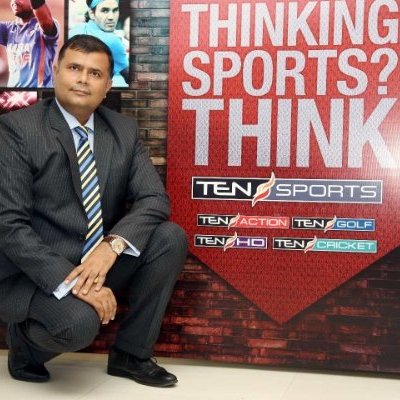
    Our expert for the section is Ten Sports Network CEO Rajesh Sethi.


    Excerpts: 


    How big an impact has phase I and II digitization made when it comes to subscription revenue?


    Phase I and phase II digitization has made a positive impact as far as the subscription revenue is concerned for the industry and given the trend we expect increase in the revenue once phase III and IV is completed. Ten Sports has also experienced the upside of subscription revenue which can be seen from our increased ARPU.  The addressability has improved but a lot still needs to be done. We believe that as the digitalization matures & packaging is implemented on ground by the operators, we will be able to achieve complete benefits of digitalization.
     

    From sports broadcaster’s point of view are you happy with the two phases of digitization?
     
    Although the implementation of two phases of digitization had been slow as compared to expectations, the completion of the two phases has facilitated increased subscription revenues and more accountability in the industry. From a sports broadcaster’s perspective, it will provide Ten Sports an opportunity to introduce new products based on the type and preference of consumers and provide enhancements like multi camera action, on demand services etc. We as asports broadcaster are keen to enhance the consumer experience and are interested in working with operators to fully reap the benefits of digitalization.


    Is the sports broadcasting industry in a subscription positive scenario? Or we are still ad dependent?


    The sports broadcasting industry in India is still evolving and ad revenue contributes significant part of revenues and will continue to remain the same in foreseeable future for main streamsports content. However, as digitization is still not complete, there is a high potential of increased subscription revenue and lesser dependency on ad revenues. We expect the niche sports offering to move towards subscription driven revenue model. As a sports broadcaster, we believe that the industry is moving in the right direction and once phase III and IV is complete there will be a possibility for this industry to be in a subscription positive scenario.


    Are sports like Football, Badminton which are hugely popular but has very little room for advertisement profitable assets for broadcaster?


    There has been increased interest from consumers for non-cricket sports in India in the last few years. Football and Badminton have gained traction in an industry which is preliminary dominated by cricket. It’s a step forward in right direction and we have seen advertisement revenue picking up for non-cricket content, the most recent example being Kabaddi. With regards to football and badminton being a profitable asset for a broadcaster, profitability is a function of revenue potential and content cost. Though the revenue potential and content cost presently is limited, it is expected to rapidly grow for these products. This makes it a good opportunity for a broadcaster to obtain future profitability on these content.
     
    With phase III and IV scheduled do you see a substantial inclination in subscription revenue?


    Phase III and IV is all about getting to remote areas of India. It provides an opportunity for thesports broadcasters to bring local content which connects & relates to the audiences residing in these towns. We see positive growth in subscription revenue as the number of HH’s in these towns provide a growth opportunity from the existing very low ARPU levels.


    How can a non cricket sport or a sport with least ad room turn profitable for broadcasters?


    The subscription revenue and ad revenue are the two key revenue source for a sports broadcaster. However, profitability for a content not only depends on revenue but also on the cost. The sportswhich has least room for ad revenues would depend on increased subscription revenue which we expect to increase once phase III and IV digitization is completed. At Ten Sports, as part of innovation drive, our team analyzes the potential of content across various genres which might not be currently popular in India and then builds it up for the consumers. We see increased traction for non-cricket content in recent years which translates into higher revenue potential and eventually a profitable content.


  • Impact of DAS on Sports Ecosystem

    Impact of DAS on Sports Ecosystem

    DAS  (digital addressable system) is here to stay. Despite the shortcomings, the hiccups in the implementation of the first two phases, the government has announced that it will not extend the deadlines of December 31, 2015 for phase III areas and December 31, 2016 for phase IV, when the entire country is expected to be digitised. After complete switchover, cable TV services will be available only through set top boxes in India.


    We, at the Indiantelevision.com are starting a new section – ‘The Impact of DAS’ through which thought leaders, experts from the television ecosystem will share their thoughts, ideas, and say their piece on the subject. We are beginning with the impact of DAS on the sports broadcasting ecosystem. 


    Our first expert for the section is Sony Six and Sony Kix Business Head Prasana Krishnan. Sony Six and Sony Kix are a part of the Sony Pictures Network (earlier known as Multi Screen Media Network.) 


    Excerpts:


    How big an impact has phase I and II digitisation made when it comes to subscription revenues?


    Digitisation is a very significant and essential step for unlocking the true subscription potential.  It is designed to benefit all stakeholders including content owners, broadcasters, distributors and consumers as it brings addressability and transparency into the system.  We are still in early stages of this and full addressability is still some time away but the overall impact on subscription revenues has been very positive. 


    From a sports broadcaster’s point of view are you happy with the two phases of digitisation?


    The first two phases of digitisation have primarily focused toward catering to the change in the 4 metro’s and households in cities with over 1 million in population.  The experience and progress has been quite positive as the consumer in India is today getting unprecedented access to sports content.  The analog regime had some capacity limitations which often meant prioritisation of sports and ignoring niche interests.  Digitisation has been a key factor behind the growth of non-cricket sports viewership in the country as it has enabled access to such content on a consistent basis.  While the overall progress in these markets is very positive, the full potential is still to be unlocked and a lot still remains to be done in terms of full addressability, channel packages, etc.   


    Is the sports broadcasting industry in a subscription positive scenario? Or we are still ad dependent?


    Globally, sports broadcasting is primarily driven by subscription and in some cases, it can be even as high as 90 per cent of total revenues.  In India, dependence on ad spends is still very high and I think it will continue to be so in the foreseeable future.  But the share of subscription revenues has seen a good increase in recent years with the advent of DTH sector and digitisation and will hopefully continue to grow. 


    Are sports like Football, Badminton which are hugely popular but attract limited advertising profitable assets for a sports broadcaster?


    With spur in economic developments and maturing viewership preferences, sports viewership in the country has moved from a single sport to a multi-sport consumption. Compelling alternate sports have now taken a step ahead, and we are seeing their popularity permeate down amongst the Indian audiences leading to increased overall demand for alternate sports.  While certain sports like cricket are extremely advertiser friendly due to their format, others like football, badminton, etc have higher limitations in terms of advertising.  But these sports can be profitable especially with the advent of digitisation and the improving subscription market.


    With phase III and IV scheduled do you see a substantial upward growth in subscription revenues?


     Digitisation is clearly beneficial for sports broadcasting and some of the benefits are already visible from the first two phases.  Phase III and phase IV will help in continuing this growth and would be clearly positive for the industry.


    How can a non-cricket sport or a sport with limited ad room turn profitable for broadcasters?


    We are currently in a very exciting decade for sports consumption with viewership patterns and preferences showing a particular change over the previous years.  Non-cricket sports have been at the forefront of growth in the country and fans are increasingly connecting with these sports.  Eventually, profitability is clearly a factor dependent on viewer acceptance besides costs.  It is not possible to have a generic answer that applies for all non-cricket sports as it would be a case specific.  If a particular sport has found strong viewer acceptance, profitability will definitely follow irrespective of advertising inventory constraints.

  • Asean, Casbaa, USPTO heighten awareness of broadcast IPR

    Asean, Casbaa, USPTO heighten awareness of broadcast IPR

    MUMBAI: The Asean Secretariat and US Patent and Trademark Office (USPTO), with the support and assistance of the Cable and Satellite Broadcasting Association of Asia (Casbaa), today launched a high-level, two-day seminar focusing on best practices in anti-piracy enforcement and intellectual property (IP) rights in broadcasting.

    The seminar marked the first time the Asean Secretariat, Casbaa and the USPTO have combined resources, bringing together government officials with pay-TV industry executives, local and international cable operators, content creators, regional regulators and IPR experts.

    Robert L. Stoll, Director, Office of Enforcement (USPTO) said, “A robust regulatory framework is crucial for protecting and promoting the flow of creative work of all of the individuals and companies in the broadcast business.”

    Rohazar Wati Zuallcobley, Deputy Director General, Malaysian Intellectual Property Office speaking on behalf of the Asean Working Group on Intellectual Property Cooperation said, “The television industry has enormous potential for growth in many Asean economies. However, we must act with urgency to strengthen the protection and enforcement of IP rights to fully realise that potential.”

    “We are pleased to support the USPTO and the Asean Secretariat in this joint initiative,” said Marcel Fenez, the Chairman of Casbaa. “Cooperation between government and the private sector plays a significant role in reducing piracy and driving the pay-TV sector’s contribution to economic progress within Asean countries.”

    Casbaa recently released estimates showing that annual losses from illegal pay-TV connections will reach US$1.13 billion in 2006.

    Key issues addressed at the forum included how to the structure regulatory regimes to successfully protect IP in broadcasting, the latest developments in anti-piracy technology and the challenges posed by new delivery platforms such as mobile TV and web casting.

  • Bedi’s Kaleidoscope to develop TV, mobile content; announces Rs 200 mn strategic investment by ABP

    Bedi’s Kaleidoscope to develop TV, mobile content; announces Rs 200 mn strategic investment by ABP

    NEW DELHI: The Bobby Bedi promoted entertainment company Kaleidoscope Entertainment Pvt Ltd (KEPL) has announced a strategic partnership with leading Indian media conglomerate – ABP Pvt. Ltd.

    The ABP-Kaleidoscope partnership will capitalise on both companies’ strengths to create original content across media by producing high quality content for filmed entertainment, TV, mobile and Internet.

    ABP will pump in Rs 200 million to kickstart Kaleidoscope’s foray into new media, primarily focused at TV and mobile content development.

    A rapid scale up of operations is envisaged to establish a broad and deep presence as a provider of premium content for this space.

    “The paradigm of entertainment today has evolved beyond conventional definitions. The new media and digital content segment is growing in excess of 50 per cent annually and we envisage an acceleration driven by the ever widening consumer base for technology products,” Kaleidoscope Entertainment Pvt Ltd MD Bobby Bedi said.

    He also said that Kaleidoscope is “privileged” to join hands with the ABP Group, a blue chip media house in India, to leverage the best resources and expertise of both companies, offering rapid access to the fast growing entertainment industry, while also enabling us to quickly gear up to create and supply the mushrooming demand for technology driven entertainment content.
    According to ABP Pvt Ltd MD and CEO Pramath Raj Sinha, “A conglomeration of Kaleidoscope (one of India’s leading entertainment companies) and the ABP Group (one of the best in the business of media across genres) this enterprise is a win-win partnership for both the companies. This marks our foray into entertainment.”

    KEPL claimed it’s India’s first production house to follow an international approach in filmmaking and is an internationally recognised film and television production house with critically acclaimed films like Bandit Queen, Saathiya, Maqbool and Mangal Pandey – The Rising to its credit.

    The ABP Group has, today, evolved into one of the foremost media conglomerates in the country, with twelve premier publications, two 24-hour national TV news channels, two leading book publishing businesses, several mobile and Internet properties and a radio channel in the offing.

  • Zone Reality offers viewers a look at the other side of human nature

    Zone Reality offers viewers a look at the other side of human nature

    MUMBAI: Zone Reality, which focusses on real life programming will present two special day events and five new shows.

    Zone Romantica and Zone Reality Asia marketing manager Flecka Picardo says, “It has always been our consistent endeavour to introduce programmes
    which explore new facets of human life. Our new shows this month reiterate the fact that every situation encountered by human beings is interpreted at a subjective level.”

    America’s Dumbest Criminals kicks off on 4 September. This is a light hearted show which humorously depicts the pitfalls which criminals
    and offenders create for themselves and hence get trapped by law enforcement agencies. Actual surveillance camera footage is interspersed
    with dramatic reactions of criminals.

    Inside the Parole Board kicks off on 2 September. This tracks convicted prisoners’ desperate last grasps for freedom and the victims’ last chance to be heard. But as the offenders seize their final opportunity and plead innocent and the victims forcefully voice the grievances they suffered
    what is really interesting to observe is not whether their arguments are right or wrong, but the sheer force of their conviction.

    The single-minded desire for freedom and justice makes their arguments so convincing and powerful that it becomes almost difficult to believe that these same people were the perpetrators of crime. In the victim’s case it is a transformation from a powerless entity to someone who has the power to determine the fate of another individual.

    Medical Mavericks premiers on 16 September. This is another serial which shows that if the subjective aspect comes into play it can cause people to drastically alter their mindset about normally accepted things. This show looks at a trauma surgeon who crusades against violence
    after the gang related death of his younger brother.

    Storm Stories whichyu ckicks off on 11 September features true stories of ordinary people caught in extraordinary circumstances. It has footage of extreme weather and is a true account of how human beings trapped in these situations have survived. The show aims to celebrate the
    resilience of the human spirit.

    Tthere are also three special event days scheduled this month. Each day will have a specific programme theme and will feature some of the best shows of Zone Reality under that theme. For instance Classic Cheaters Weekend on 9 and 10 September will include all the special shows on
    Cheaters. Prison Nightâ on 2September will feature various shows which are either directly or indirectly involved with criminals.
    Totally Outrageous Night on 3 September will bring together some of the shows which entailed very outrageous programming styles.

  • Casbaa & Fifa take legal action against unlicensed airing of World Cup ’06

    Casbaa & Fifa take legal action against unlicensed airing of World Cup ’06

    MUMBAI: The Cable and Satellite Broadcasting Association of Asia (Casbaa) has announced that the Fédération Internationale de Football Association (Fifa) and Hong Kong Cable Television Limited have instituted legal proceedings against a number of public venues for allegedly airing unlicensed pay-TV broadcasts of the World Cup 2006 matches.

    Speaking on behalf of the plaintiffs and 110 companies engaged in the regional pay-TV industry, Casbaa confirmed that writs had been served on five high-profile bars along with cease and desist letters served on an unspecified number of public venues across Hong Kong, informs an official release.

    Thus, Fifa, Hong Kong Cable along with Casbaa are seeking monetary damages for the copyright infringements.

    Casbaa CEO Simon Twiston Davies said, “Although the industry reached out to the Hong Kong food and beverage industry in the run up to the World Cup, stating that pay-TV signal theft is not to be tolerated by government or industry, many bars blatantly screened unlicensed pay-TV broadcasts. We have had no choice but to take the matter to the courts.”

    As an indication of the pay-TV industry’s commitment to the Hong Kong sporting community, Davies noted that the plaintiffs and Casbaa would donate any proceeds received from the defendants after costs to local sports charities. Casbaa believes it is important to return the funds to where they belong – the support of sports development.

    “The issue of intellectual property rights protection requires concerted efforts on all fronts between the government, industry, bar and club owners and the general public, especially as we run up to other global events such as the Beijing Olympics in 2008 and recurring high value events such as the English Premier League. The sports leagues who stage major events need a fair return on their investment,” adds Davies.

    The release also states that under Hong Kong law, bars and clubs may only display pay-TV channels under an appropriate subscription from Hong Kong licensed pay-TV operators such as Hong Kong Cable, now Television and TVB Pay Vision. For several years Casbaa has urged that the distribution of satellite-based pay-TV services from overseas should be given the same criminal protection as signals illegally tapped from local pay-TV operators.

    Overseas pay-TV operators such as Dream of the Philippines, MultiChoice of South Africa and UBC True of Thailand are authorised to offer pay-TV subscriptions in their respective jurisdictions but they cannot, and indeed do not, offer subscriptions in Hong Kong. The display of overseas pay-TV channels in Hong Kong by bars and club owners, using special decoders is illegal, adds the release..

  • Dish TV inks deal with BVITV for MoD service

    Dish TV inks deal with BVITV for MoD service

    MUMBAI: The direct-to-home Dish TV has added Walt Disney movies to its movie-on-demand (Mod) offering besides providing Bollywood movies.

    For this, DishTV has entered into an agreement with the international television distribution arm of The Walt Disney Company -Buena Vista International Television-Asia Pacific (BVITV-AP) to air the latest blockbuster movies on its value added service.

    Subscribers of the Mod pay-per-view service will have access to a slate of box office hit features from Walt Disney Pictures, Touchstone Pictures, Miramax and Jerry Bruckheimer Films including The Chronicles of Narnia: The Lion, The Witch and The Wardrobe, Disney’s highest grossing film to date, Casanova, Cinderella Man, Herbie: Fully Loaded, Dark Water, and Flight Plan, informs an official release.

    Speaking about the tie-up, Dish TV CEO Sunil Khanna said, “Strategic alliances of this magnitude and nature are very important for any operator in any market. We are happy to tie up with BVITV at a juncture when the Mod services for Hindi movies has already been launched and now Dish TV is all set to launch the same service for English movies as well. With this move, we will be able to offer this service to more than 1.2 million subscribers of Dish TV spread across the country”.

    The movie can be ordered through SMS, phone or by logging on to www.dishtvindia.in. The consumer can watch the movie for 24 hours at his/her own convenience at a cost of Rs. 50 per movie.

  • Crutchfield develops website ahead of Fifa for Spaniards

    Crutchfield develops website ahead of Fifa for Spaniards

    MUMBAI: The integrated marketers of consumer electronic productsCrutchfield is on a full-speed breakaway towards 2006 Fifa World Cup Germany. Crutchfield is in the process to develop its Spanish-language website at http://www.crutchfieldenespanol.com to ensure that its Spanish-speaking customers will be able to enjoy the World Cup games in HDTV.

    Soccer remains the world’s favorite sport, played by over 240 million players on 1.4 million teams throughout the world. Bigger than the Super Bowl and the Winter Olympics, this year’s World Cup will be the most-watched sporting event in the world, and for the first time it will be aired in high definition in the United States.

    With more than 40 million Spanish-speaking people living in the United States, including some of the most knowledgeable and dedicated soccer fans in the world, US viewership of this year’s World Cup is expected to reach record numbers, informs an official release.

    This year, with the games being broadcast in high-definition for the first time on ABC, ESPN HD, and ESPN2 HD, millions of soccer fans here in America will be able to watch every minute of their premier event unfold in unparalleled viewing quality.

    The Fifa World Cup has the biggest television audience of any sports event in the world. During World Cup 2002, a cumulative audience of over 1 billion people in 215 countries watched the matches. The estimated cumulative audience for the 2006 event is expected to be in excess of 32 billion hours of television viewing. Millions of those expected viewers will be Spanish-speaking fans in the US.

    “According to the Consumer Electronics Association, nearly 50 per cent of HDTV buyers cite high-definition sports programming as their primary motivation for upgrading their old analog television to an HDTV,” said Crutchfield senior home audio/video editor Steve Kindig. “Major sporting events like the Olympics and the Super Bowl present perfect opportunities to get the latest in viewing technology, and with the upcoming World Cup games to be broadcast in high-def for the first time, Crutchfield is stocking up on some of the best HDTVs on the market.”

    Shopping for a new HDTV is now even easier with Crutchfield’s own TV Fit Finder. The TV Fit Finder, available through Crutchfield.com and Crutchfieldenespanol.com, enables consumers seeking a new television to quickly and easily identify every television that will fit within their existing entertainment center.

    “Crutchfield’s Spanish-speaking Sales Advisors, who are available by phone, email, and online chat, will ensure that customers buy the right HDTV for his or her needs, and that the HDTV is in their home, installed, working properly, and delivering HD-quality colors and realistic images well in advance of the June 9, 2006 start. Acting now will ensure that on game day your favorite striker will be captured in ‘striking’ detail,” Kindig added.

  • DirecTV signs deal for Viacom’s new jazz channel

    DirecTV signs deal for Viacom’s new jazz channel

    MUMBAI: US media conglomerate Viacom’s subsidiary Bet is launching a jazz channel Bet J.

    Bet has signed a deal with US pay-TV platform DirecTV for carriage. The broadcaster says that jazz, the purest and oldest form of American music, has both chronicled and celebrated the African-American journey. Today jazz is seen, heard and felt in a number of related genres including blues, soul, R&B, Caribbean and neo-soul music.

    Bet chairman and CEO Debra L. Lee says, The African-American community looks to Bet to reflect the culture, and in doing so they have come to expect innovation and diversity in programming under our Bet Networks brand. We are happy to respond and to evolve to meet their needs.

    Bet Digital Networks executive VP and GM Paxton Baker says, Our new chapter under Bet J will be even more exciting, enticing and multicultural. In fact, the J in our new network name is now more indicative of the complete musical and cultural Journey rather than only jazz.

    DirecTV is launching Bet J to continue its tradition of providing the most exciting and unique programming for its customers. Bet J is available on Channel 330 on DirecTVs Total Choice Plus programming package. MTV Networks negotiated this carriage agreement as part of its affiliate sales and marketing representation of Bet Networks.

    With the DirecTV launch, Bet J has built a total distribution platform that reaches approximately 21 million homes. In addition to DirecTV, other distributors already carrying Bet J, will now offer the revamped channel for viewers include Charter Communications, Cablevision, Comcast, Cox Communications and Time Warner Cable.