Category: Cable TV

  • Frodoh tunes into Cloudtv to amplify India’s connected ad landscape

    Frodoh tunes into Cloudtv to amplify India’s connected ad landscape

    MUMBAI: In a move set to reshape India’s connected TV (CTV) ad space, Frodoh, the fast-rising adtech innovator, has joined forces with Cloudtv, the country’s fastest-growing smart TV operating system, to bring sharper, data-led advertising experiences to millions of living rooms.

    With over 12 million viewers across 250 TV brands, Cloudtv offers one of India’s largest smart TV footprints and now, through Frodoh’s programmatic expertise, that screen time could soon turn into prime ad time. The partnership promises to help brands bridge the widening gap between the broad reach of traditional television and the precision of digital campaigns.

    “CTV advertising unifies fragmented audiences and brings brands closer to where viewers are most engaged on their smart TVs,” said Frodoh founder and CEO Russhabh R Thakkar. “Together with CloudTV, we’re setting the stage for advertisers to explore new levels of visibility and relevance.”

    Echoing that vision, Cloudtv COO and co-founder Abhijeet Rajpurohit said, “Our mission is to redefine the CTV ad landscape in India. Partnering with Frodoh strengthens this mission by combining our OS ecosystem with their deep understanding of CTV demand.”


  • TRAI extends deadline for comments on draft broadcasting interconnection rules

    TRAI extends deadline for comments on draft broadcasting interconnection rules

    NEW DELHI: The Telecom Regulatory Authority of India (TRAI) has extended the deadline for stakeholder comments on its draft Telecommunication (Broadcasting and Cable) Services Interconnection (Addressable Systems) (Seventh Amendment) Regulations, 2025 to 14 October 2025.

    The draft, issued on 22 September 2025, was initially open for feedback until 6 October. Following requests from several stakeholders seeking more time to respond, the regulator granted a short extension but made it clear that no further requests would be entertained.

    Comments can be submitted electronically to advbcs-2@trai.gov.in and jtadv-bcs@trai.gov.in. For queries or clarifications, stakeholders may contact Deepali Sharma, advisor (B&CS), or Sapna Sharma, joint advisor (B&CS), at +91-11-20907774 or +91-11-26701418.

  • TRAI  gives smaller cable operators a break on mandatory audits

    TRAI gives smaller cable operators a break on mandatory audits

    NEW DELHI: India’s telecom regulator has proposed easing compliance burdens on smaller cable television operators whilst tightening audit procedures for the rest of the industry under draft amendments released on 22  September. 

    The Telecom Regulatory Authority of India (TRAI) plans to make annual system audits optional for distribution platform operators (DPOs) serving fewer than 30,000 active subscribers. The move follows complaints from smaller operators about the disproportionate cost of mandatory audits, which can consume a significant share of their revenues.

    The proposed draft Telecommunications  (Broadcasting And Cable) Services Interconnection  (Addressable Systems) (Seventh Amendment ) Regulations, 2025 state  that larger operators would still face stricter requirements. They must complete audits for the preceding financial year and share reports with broadcasters by 30 September each year, replacing the current calendar year framework.

    The draft also introduces new provisions for infrastructure sharing between operators. Where multiple DPOs share encoding equipment, the infrastructure provider would insert watermark logos at the encoder level whilst individual operators add their logos through set-top boxes. However, TRAI proposes limiting screen clutter by allowing only two logos—the broadcaster’s and the last-mile distributor’s—to appear simultaneously.

    The regulator has addressed longstanding industry disputes over audit challenges. Under new procedures, broadcasters questioning audit reports must cite specific discrepancies with evidence within 30 days. If unsatisfied with auditor responses, they can request special audits but must bear the costs.

    “The audit of systems is necessary to ensure that the systems deployed by a DPO are addressable as per regulatory requirements,” TRAI stated in its explanatory memorandum. “Proper and accurate subscription reports are very important as the settlement of charges between service providers is based on such reports.”
    The draft regulations also mandate that auditors provide independence certificates confirming they have no conflicts of interest with the entities being audited.

    Industry stakeholders have until 6 October to submit comments on the proposals. The amendments are scheduled to take effect from 1st April 2026.

    The move reflects TRAI’s broader effort to reduce regulatory burden on smaller operators whilst maintaining oversight of the Rs 70,000 crore broadcasting and cable services sector. The authority previously made certain compliance requirements optional for operators with fewer than 30,000 subscribers in quality-of-service regulations issued in July 2024.

    However, some industry players have criticised the proposals. Broadcaster associations argue that exempting smaller operators from mandatory audits could increase under-reporting of subscriber numbers, whilst some cable operators contend that even the revised procedures remain too burdensome.

    The draft comes as India’s television distribution industry grapples with declining subscriber bases and increased competition from digital platforms. Many smaller operators have struggled with compliance costs, particularly annual audit fees that can range from Rs 50,000 to several lakhs depending on system complexity.
    TRAI’s proposals also address technical requirements for infrastructure sharing arrangements, mandating separate data instances for each operator using shared subscriber management and conditional access systems to prevent cross-contamination of subscriber data.

    The regulator emphasised that the 30,000-subscriber threshold for audit exemptions would be reviewed periodically based on market conditions.

  • TRAI orders monthly, quarterly compliance reports from TV distributors

    TRAI orders monthly, quarterly compliance reports from TV distributors

    NEW DELHI: India’s broadcast regulator has ordered all distribution platform operators (DPOs) — including DTH, cable (MSOs), headend in the sky (Hits)  and IPTV players — to file performance monitoring reports every month and quarter, in a bid to sharpen oversight of the sector.

    The Telecom Regulatory Authority of India (TRAI), acting under section 12 of its 1997 Act, said the move was aimed at ensuring compliance, protecting consumer interests and fostering orderly growth of the TV distribution industry.

    Until now, only DTH firms were required to furnish quarterly reports, a rule dating back to 2008 and expanded in 2019 to cover MSOs and Hits)  operators. The new order updates formats to reflect changes in tariff, interconnection and quality-of-service rules.

    From now, operators must file monthly reports within ten days of month-end, and quarterly reports within 15 days of each quarter’s close. Smaller DPOs with fewer than 30,000 subscribers may skip the quarterly filing.
    The order marks another tightening of regulatory screws on a sector under pressure from both rising consumer expectations and surging competition from streaming platforms.

  • Cable TV lobby urges tax cut to 5 per cent as sector reels under strain

    Cable TV lobby urges tax cut to 5 per cent as sector reels under strain

    NEW DELHI:The All India Digital Cable Federation (AIDCF), the apex body of cable operators, has petitioned information and broadcasting minister Ashwini Vaishnaw and finance minister Ashwini Vaishnaw  to slash goods and services tax on cable television from 18 per cent to 5 per cent.

    The appeal rides on prime minister Narendra Modi’s push for “next-generation GST reforms” and a two-rate structure. The federation argues that cable remains the cheapest mass medium, reaching 64 million households and sustaining 10–12 lakh jobs, yet is under siege from rising costs and unregulated OTT rivals.

    Powered by 852 multi-system operators and 1.6 lakh local cable operators—mostly small entrepreneurs—the sector was even recognised as an “essential service” during the pandemic. But the economics are dire. Broadcaster fees have surged nearly 600 per cent, pushing up subscription costs by 35–40 per cent. With consumers balking at higher tariffs, margins are collapsing.

    “Market dynamics have become unfair for MSMEs in cable TV, as they are bound by tariff regulations while OTTs operate without comparable oversight,” AIDCF wrote.

    The lobby claims a GST cut would restore affordability for households, ease working capital pressures, enable fresh broadband investment under Digital India, and protect lakhs of jobs.

    AIDCF secretary general Manoj P Chhangani urged the government to table the matter at the next GST Council meet: “A reduction will safeguard the viability of MSOs and LCOs and preserve cable’s role in inclusive connectivity.”

    Industry watchers caution that while OTT is growing fast, cable still dominates in small towns and villages. A tax reprieve, they say, could decide whether it remains India’s broadcast backbone—or fades into obsolescence.

  • Cable TV lobby slams TRAI’s DTH licence fee waiver call

    Cable TV lobby slams TRAI’s DTH licence fee waiver call

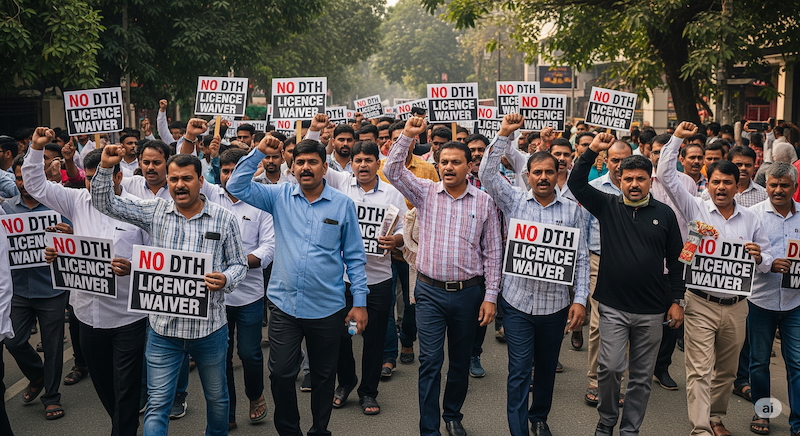
    NEW DELHI – India’s top cable lobby has sounded the alarm over TRAI’s proposal to slash and eventually scrap licence fees for Direct-to-Home (DTH) operators, warning it could wreck the delicate balance in the country’s broadcast distribution ecosystem.

    In a strongly-worded representation to the information and broadcasting ministry, the All India Digital Cable Federation (AIDCF) – which represents over 880 multi-system operators (MSOs) and 1.6 lakh local cable operators (LCOs) – said the move would “deepen regulatory inequality” and “threaten over 10 lakh livelihoods” linked to the cable TV industry.

    The AIDCF accused TRAI of tilting the scales in favour of DTH players who already enjoy “cost-free, administratively allocated spectrum” while cable operators continue to bleed under high Right of Way (RoW) charges and hefty underground infrastructure investments.

    “A DTH licence fee waiver will distort competition and violate regulatory neutrality,” an AIDCF spokesperson said, adding that any cut would hasten subscriber churn from cable to satellite platforms. The body flagged other disruptors like Free Dish, OTTs, Fast TV and digital DPOs as further stress points for the struggling cable sector.

    Rather than easing licence costs for satellite platforms, AIDCF wants the government to implement a fair cost recovery mechanism across distribution platforms, reflecting the true commercial value of spectrum. It has urged the ministry to junk TRAI’s recommendation in favour of a level playing field that safeguards the sector’s long-term viability.

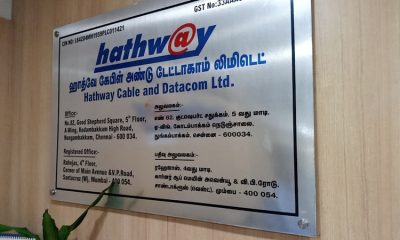
  • Hathway Bhawani stays tuned in with steady Q1 despite revenue static

    Hathway Bhawani stays tuned in with steady Q1 despite revenue static

    MUMBAI: Even in the choppy waters of cable and broadband, Hathway Bhawani has kept its wires untangled. Hathway Bhawani Cabletel & Datacom Ltd reported a modest consolidated net profit of Rs 0.82 lakh for the quarter ended June 30, 2025, according to its unaudited financial results approved by the board on July 14. This marks a sharp dip from Rs 29.03 lakh in the previous quarter, but a turnaround from a net loss of Rs 11.41 lakh in the corresponding quarter last year.

    While revenue from operations inched up marginally by 1 per cent year-on-year to Rs 60.91 lakh, total income for the quarter stood at Rs 61.17 lakh. The company’s share of profit from its joint venture, Hathway Bhawani NDS Network Ltd, contributed Rs 0.27 lakh to the bottom line this quarter.

    Operating expenses remained broadly stable, with feed charges at Rs 22.29 lakh, employee benefit expenses at Rs 11.55 lakh, and other expenses slightly lower year-on-year at Rs 17.10 lakh. However, deferred tax and a short provision of Rs 1.46 lakh for earlier years dragged down the profit after tax to a net loss of Rs 0.77 lakh. The company also recorded a minor actuarial gain of Rs 0.05 lakh from remeasurement of benefit plans.

    On the standalone front, the picture remained similar revenue matched the group’s performance at Rs 60.91 lakh, but net loss widened slightly to Rs 1.04 lakh due to the same tax adjustments.

    The company also addressed long-standing telecom licensing fee demands totalling Rs 4,130.38 lakh from the Department of Telecommunications, reaffirming its legal confidence and reiterating that no provision was necessary based on legal opinion.

    While the earnings per share stood at a flat Rs (0.01), the company closed the quarter with stability on most operating metrics. In a sector where volatility often rules the screen, Hathway Bhawani continues to keep the static at bay even if the signal isn’t quite booming just yet.

    (If you are an Anime fan and love Anime like Demon Slayer, Spy X Family, Hunter X Hunter, Tokyo Revengers, Dan Da Dan and Slime, Buy your favourite Anime merchandise on AnimeOriginals.com.)

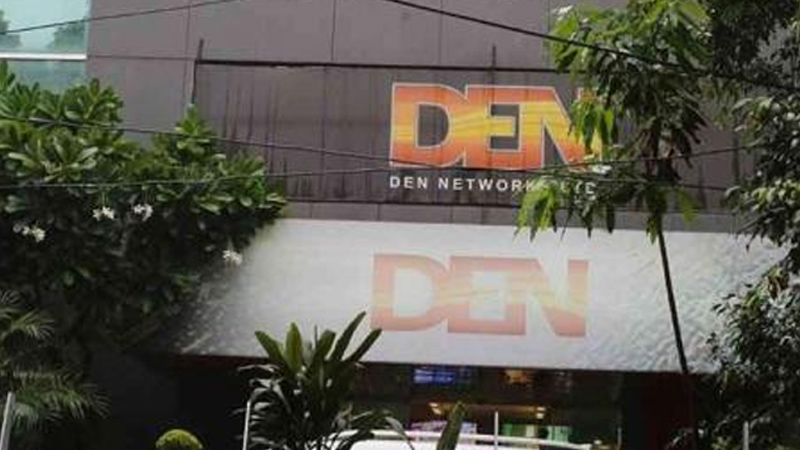
  • Den Networks Q1 profit jumps 41 per cent to Rs 508 million despite flat sales

    Den Networks Q1 profit jumps 41 per cent to Rs 508 million despite flat sales

    MUMBAI: Den Networks may have seen revenues tread water this quarter, but profits took the express lane. Den Networks has posted a standalone profit after tax (PAT) of Rs 508.2 million for the quarter ended 30 June 2025, marking a 41 per cent year-on-year jump from Rs 359.3 million in the same period last year even as total revenue growth stayed modest at just 6 per cent.

    According to the company’s unaudited financials approved by the board of directors on 14 July 2025, total income for the quarter stood at Rs 3,150.8 million, up from Rs 2,959.6 million in Q1 FY24. This includes revenue from operations at Rs 2,456.1 million and other income largely investment returns at Rs 694.8 million.

    Cost-consciousness appears to have paid off. Total expenses declined 3.5 per cent sequentially to Rs 2,566.1 million. Notably, Den reduced its placement fees from Rs 484.1 million in Q4 FY25 to Rs 361.3 million this quarter. Content costs held steady at Rs 1,487.9 million.

    While finance costs remained negligible at Rs 5.5 million, a sharper tax outgo up 113 per cent year-on-year to Rs 76.6 million chipped at the bottom line, although it didn’t stop PAT from soaring past Rs 500 million. Earnings per share (EPS) came in at Rs 1.07, up from Rs 0.75 in Q1 FY24.

    Den’s consolidated results which include its 24 subsidiaries and five associate entities also painted a strong picture. Consolidated PAT stood at Rs 536.4 million, while total income was pegged at Rs 3,119.5 million. The group’s broadband business, however, saw a dip in revenue to Rs 104.6 million from Rs 121.2 million a year ago.

    The cable distribution segment continues to be the mainstay, accounting for Rs 2,353.1 million of gross revenue this quarter. Interestingly, other income (largely interest and investment income) surpassed Rs 700 million on the consolidated books, nearly 23 per cent of total income.

    Even as broadband and cable network operations posted minor operating losses, the group’s strong treasury returns and cost containment measures seem to have steadied the ship.

    Den Networks, now a part of the Reliance Industries-backed media ecosystem, continues to operate with healthy cash reserves. As of June 30, 2025, total consolidated assets stood at Rs 42,246.3 million, up from Rs 40,084.5 million in Q1 FY24, signalling long-term stability despite a flattish top line.

    For now, while India’s cable industry battles disruption from OTT and broadband wars, Den’s Q1 scorecard shows that fiscal discipline and high-yield investments can still keep the books in the black.


  • GTPL Hathway navigates challenging quarter, eyes future growth

    GTPL Hathway navigates challenging quarter, eyes future growth

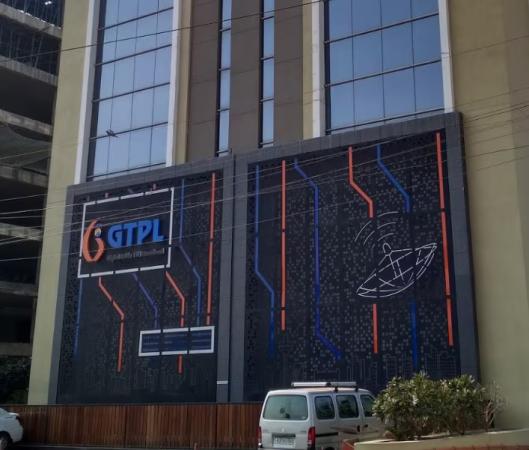
    MUMBAI: GTPL Hathway has unveiled its unaudited financial results for the first quarter ended 30 June 2025, revealing a mixed bag for the entertainment and broadband major. While the company saw an uptick in its top line, profitability faced a squeeze during the period.

    The consolidated revenue from operations for Q1 FY26 stood at Rs 5,946.79 million, a healthy increase from Rs 5,359.94 million reported in the same quarter last year. Total income also reflected this growth, climbing to Rs 5,990.20 million from Rs 5,432.95 million year-on-year. On a consolidated basis, total income for the quarter reached Rs 9,091 million, marking a 7 per cent rise year-on-year and a 1 per cent increase quarter-on-quarter.

    However, the spotlight falls on the company’s profitability. Net profit after tax (Pat) saw a significant decline, coming in at Rs 56.25 million for Q1 FY26, a stark contrast to Rs 150.23 million in Q1 FY25. Consolidated PAT was Rs 105 million, consistent with the previous quarter but down from Rs 143 million in Q1 FY25. Consolidated earnings before interest, taxes, depreciation, and amortisation (EBITDA) was recorded at Rs 1,123 million, with an EBITDA margin of 12.4 per cent. This is a decrease from Rs 1,205 million and a 14.2 per cent margin in the corresponding quarter of the prior fiscal year.

    Operationally, GTPL Hathway continues to expand its reach. The cable television business maintained a strong subscriber base, with 9.60 million active set-top boxes and 8.90 million paying subscribers as of Q1 FY26. The broadband segment also showed progress, reaching 1.05 million active subscribers and a home-pass count of 5.95 million. Average data consumption per customer soared to 410 GB per month, a 17 per cent increase year-on-year, while average revenue per user (ARPU) held steady at Rs 465..

    In a strategic move, the board of directors approved the re-appointment of Anirudhsinh Jadeja as managing director for a further three-year term, effective from 8 December 2025.

    The company also highlighted a contingent liability related to a demand from the Department of Telecommunications (DOT) for licence fees totalling Rs 9,754.15 million. GTPL Hathway remains confident in its legal position and has not recognised any provision for this matter.

    (If you are an Anime fan and love Anime like Demon Slayer, Spy X Family, Hunter X Hunter, Tokyo Revengers, Dan Da Dan and Slime, Buy your favourite Anime merchandise on AnimeOriginals.com.)

  • AIDCF elects new leadership: GTPL’s Anirudhsinh Jadeja takes the helm

    AIDCF elects new leadership: GTPL’s Anirudhsinh Jadeja takes the helm

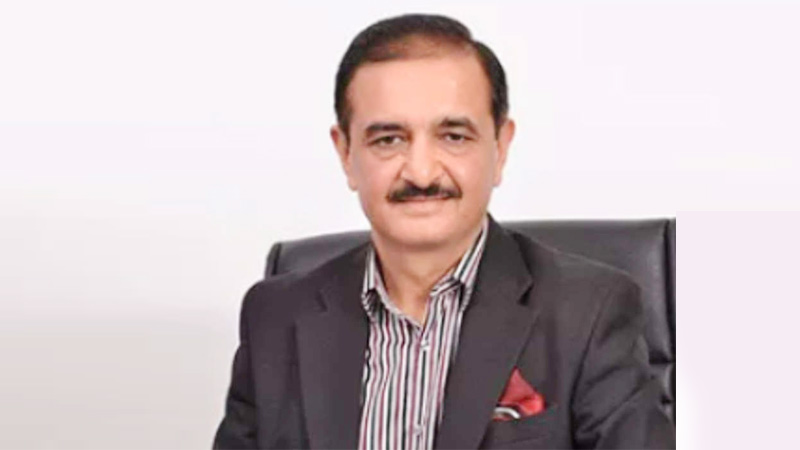
    MUMBAI: The All India Digital Cable Federation (AIDCF), the apex lobby for digital cable operators in India, has named a new leadership team — with GTPL Hathway boss Anirudhsinh Jadeja stepping in as president, replacing outgoing DEN Networks chief executive S.N. Sharma.

    Joining Jadeja at the top are Sankaranarayana, vice chairman of Asianet Satellite Communications, as vice president, and Sanjay Goyal, group CFO at Fastway Transmissions, as treasurer.

    The outgoing Sharma said it was a “privilege” to lead the federation during a transformative phase. “I’m proud of the strides we’ve made in voicing the sector’s concerns with clarity and conviction,” he noted, while wishing the new team “continued success.”

    AIDCF secretary general Manoj Chhangani echoed the sentiment, calling Jadeja and his colleagues a “dynamic and experienced team” poised to strengthen the Federation’s role as the industry’s collective voice.

    A first-generation entrepreneur, Jadeja has over three decades of experience and is credited with building India’s largest multi-system operator. Sankaranarayana, an IIT-IIM alumnus, has steered Asianet since 2006, bringing a blend of engineering prowess and business strategy to the table. Goyal, meanwhile, has worn multiple hats across Jio, Siti Networks and Vishal Retail, and is known for his sharp financial acumen and transformation playbook.

    With this new lineup, AIDCF appears ready to recalibrate its priorities and reassert its relevance in an increasingly streaming-dominated media landscape.