
Cable TV
145 days to go….are you ready for CAS?


There is a lot of talk within the CATV industry currently on Analogue and Digital and different perceptions floating around as to the advantages and disadvantages in both types of technology together with how these different technologies will affect the cable operators and broadcasters alike.
From spending the last few years here in the Indian market, I can say that there is definitely a perception that digital is more secure than analogue. What is it about digital that makes it more secure? It’s not, as thought by many, the transmission medium i.e. the fact that digital transport streams are sent down the line. In fact, it is the way in which the data and video is encrypted, Digital scrambling. It is a fact that there are many digital systems which have been pirated and hacked today as well as many analogue systems. Therefore you can only say that there are some secure digital systems and some secure analogue systems.
Unfortunately there are many other disadvantages that go with a typical digital system/network that are particular to the current Indian scenario.
1. The cost of the Set Top Box. – the cost of the STB will have a huge effect on Cable operators and Broadcasters as ultimately this will result in slower penetration and will force the franchises to break away due to the lack of funds that will be required to upgrade the Last Mile. With a more expensive STB, the consumer will probably be forced to cut down on the monthly subscriptions because of the initial outlay.
Of course, the cheaper analogue boxes will rollout much faster, leave the subscriber with more money to spend on subscriptions, allow the franchises to continue running as they are with current last mile networks and provide the franchisee a key role to play in the deployment and installation process needed for CAS.
2. The Cable Operator will be forced to invest more in headend equipment resulting in longer returns on investments especially in an industry where technology can change quickly. There will be the need for further upgrades to the existing networks to enable 100% digital transmission to each and every subscriber.

The investment needed for analogue headends are atleast 20% of that needed for the digital, ensuring faster returns on investments and almost no upgrading of current networks.
3. One main advantage of using digital technology is to introduce Value Added Services. Most these VAS’s require return path networks meaning not only more upgrades for the Cable network but also new expensive STBs for the consumer. The low cost digital boxes which are being floated around the operators are very simple, no frill STBs with no middleware and the only way to upgrade these boxes is to refurbish the actual STB back in a factory. Of course the other factor which must be taken into consideration is how many subscribers will actually pay for these VAS.
Since the subscriber will almost certainly have to change STB when he wants these VAS it makes more commercial sense to offer the cheaper analogue box which will create faster revenues that will in turn give you the time and money needed for the upgrading of networks and VAS. Many VASs are also possible on the analogue networks it is just that more bandwidth is needed.
4. Today in India, there is not one single Digital headend and most of the technical personnel have only limited experience and product knowledge about digital technology. All Cable operators are also looking for the cheapest solution, especially in digital and this generally can only be achieved by using different manufacturers and suppliers for the headend equipment, STB and CA provider. This in turn can has huge potential in causing problems when the system fails as each manufacturer will blame the next person.
Most analogue systems provide a turnkey solution and therefore are more likely to respond to any problems that may arise not to mention the thousands of headends that are currently only running analogue networks.
5. Most people are also under the impression that digital gives a much better picture, which is true but you also have to take into consideration that the digital system is less tolerant to cable conditions and will either give you a good picture, a freezing picture or no picture.
The analogue network is much more robust and tolerant of all cable conditions. For the subscriber who is currently getting a good quality picture from the analogue network is happy and for those subscribers who are getting very poor quality picture from the existing networks are the ones whom will ultimately get the freezing or worst still, NO picture from the digital system.
All said, it is equally important to realise that the basic analogue boxes, especially around the price range that the previous I & B minister has been quoting (1500 Rs), have also major disadvantages to the industry although most come down to the single case about piracy or hacking. There are many ways in which you can pirate a system from the reverse engineering of sync suppression analogue systems to simply making duplicate smart cards for the digital systems. The difference of a “Hack” is when the source code has been broken. The results though are the same in each case and that being that ultimately the subscriber has the option to watch all channels for free therefore defeating the object of PAY-TV.
It is a fact that 80% of cable networks world wide are still using analogue. Of the other 20%, 75% of those cable networks charge more than $25/month in subscription revenues.
DALVI uses the best from both worlds incorporating digital scrambling with the robustness of the analogue transmission system. We use only embedded software defeating the option of duplicate smart cards, we use cut and rotate video encryption which is considered the best form of video encryption and combine it with many highly secure high Bit algorithms that protects our encryption and software. This together with our other key advantages makes it one of the best solutions for the Indian market.
We have carried out successful extensive tests on all types of local networks over the last two years and are confident that our product is the best solution for all cable operators in India. We are currently active in over 25 countries world-wide and have extensive experience in Conditional Access Systems which can not be bypassed overnight.
I think it only fair to say that I am not saying that there is no place in the Indian market for Digital as the future is digital. What I am saying is that the future of digital is not on, or before July 14, 2003; it is clear that for digital to be successful in India it will take longer maybe another 18 months – two years, maybe longer. In the meantime, all cable operators, large and small, must comply with government regulations and have their Conditional Access Systems in place and turned on by July or risk the option of losing their subscriber to a cable operator who is ready and turned on. DALVI is also finalising its digital solution that will enable a smooth upgrade from analogue to digital for those consumers who wish to migrate. We will of course be using as much of the same equipment as possible for this transition.
Time is ticking and orders need to be placed just to make sure that delivery of the system can be with you in time, installed and deployment started.












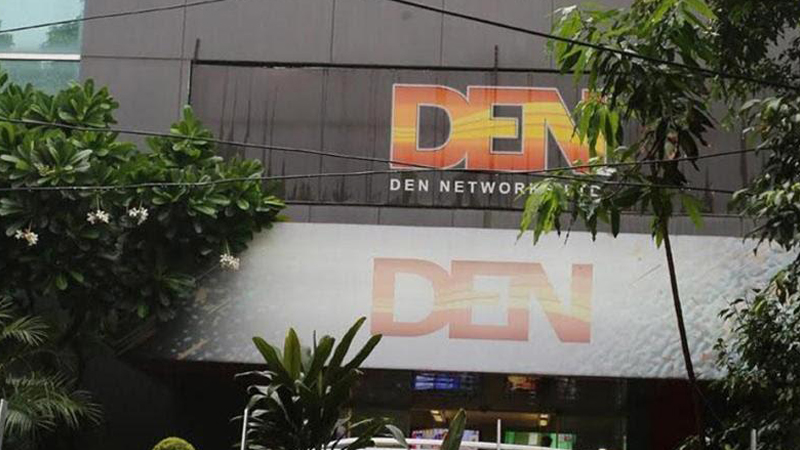
MUMBAI: When margins wobble, liquidity talks and in Q3 FY25-26, cash did most of the talking. Den Networks Limited closed the December quarter with consolidated revenue of Rs.251 crore, marginally higher than the previous quarter but down 4 per cent year-on-year, even as profitability stayed resilient on the back of strong cash reserves and disciplined cost control.
Subscription income softened to Rs.98 crore, slipping 3 per cent sequentially and 14 per cent from last year, while placement and marketing income offered some cheer, rising 15 per cent quarter-on-quarter to Rs.148 crore. Total costs climbed faster than revenue, up 7 per cent QoQ to Rs.238 crore, driven largely by higher content costs and operating expenses. As a result, EBITDA dropped sharply to Rs.13 crore from Rs.19 crore in Q2 and Rs.28 crore a year ago, pulling margins down to 5 per cent.
Yet, the bottom line refused to blink. Profit after tax stood at Rs.40 crore, up 15 per cent sequentially and only marginally lower than last year’s Rs.42 crore. A healthy Rs.57 crore in other income helped cushion operating pressure, keeping profit before tax at Rs.48 crore, broadly stable quarter-on-quarter despite the tougher cost environment.
The real headline-grabber, however, sits on the balance sheet. The company remains debt-free, with cash and cash equivalents swelling to Rs.3,279 crore as of December 31, 2025. Net worth rose to Rs.3,748 crore, while online collections accounted for 97 per cent of total receipts, underscoring strong cash discipline across operations, including subsidiaries.
In short, while Q3 showed signs of operating strain, the financial backbone remains solid. With zero gross debt, steady profits and a formidable cash war chest, the company enters the next quarter with flexibility firmly on its side proving that in uncertain markets, balance sheet strength can be the best growth strategy.
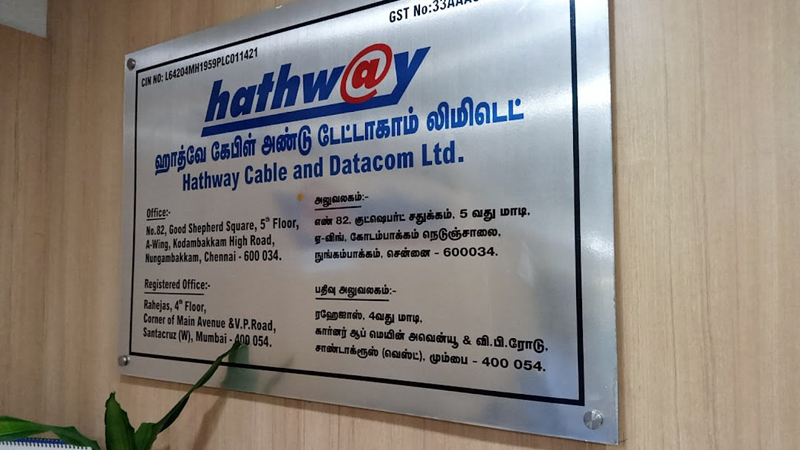
MUMBAI: In a quarter where staying connected mattered more than moving fast, Hathway Cable and Datacom kept its signal steady. The cable and broadband major reported a net profit of Rs 21.7 crore for the December 2025 quarter, marking a clear improvement from Rs 13.6 crore a year earlier, even as pressures persisted in parts of its operating portfolio.
For the quarter ended December 31, 2025, revenue from operations stood largely flat at Rs 536.6 crore, compared with Rs 511.2 crore in the same period last year. Including other income of Rs 21.1 crore, total income rose to Rs 557.7 crore, reflecting incremental gains despite a competitive media and connectivity landscape.
Profitability improved on the back of disciplined cost control and higher contribution from associates. Profit before tax increased to Rs 28.2 crore, up from Rs 19.1 crore in Q3 FY25, aided by Rs 3.9 crore in share of profit from associates and joint ventures. After tax, earnings for the quarter climbed nearly 60 per cent year-on-year.
Over the nine months ended December 31, 2025, Hathway reported a net profit of Rs 71 crore, compared with Rs 57.7 crore in the corresponding period last year. Total income for the nine months came in at Rs 1,677.3 crore, up from Rs 1,599.8 crore, while profit before tax rose to Rs 94.7 crore from Rs 84.2 crore.
A closer look at the segments shows a familiar split story. The cable television business remained under pressure, reporting a segment loss of Rs 11.4 crore for the quarter, though this narrowed sharply from the Rs 16.6 crore loss seen a year ago. In contrast, the broadband business returned to the black, delivering a modest but positive contribution of Rs 4.2 crore, helped by associate income. Dealing in securities continued to be a bright spot, generating Rs 14.7 crore in quarterly profits.
Costs stayed broadly contained. Pay channel costs, the single largest expense, rose to Rs 287.4 crore, while depreciation and amortisation stood at Rs 74 crore. Finance costs remained negligible at Rs 0.2 crore, keeping leverage risks in check.
Hathway’s earnings per share for the quarter improved to Rs 0.12, up from Rs 0.08 a year ago. The company maintained a strong balance sheet, with total assets of Rs 5,302.4 crore and total liabilities of Rs 848.9 crore as of December 31, 2025.
While structural challenges persist in the traditional cable business, the numbers suggest Hathway is slowly recalibrating its mix trimming losses where needed, leaning on associate income, and keeping the broadband engine ticking. For now, the company may not be racing ahead, but it is clearly staying tuned in to profitability.
MUMBAI: In telecom, even the strongest signals face interference and Tejas Networks Limited’s latest numbers show just how noisy the airwaves remain. The Tata Group-backed networking firm reported unaudited standalone revenue of Rs 305.72 crore for the quarter ended December 31, 2025, up sequentially from Rs 261.37 crore in the September quarter, but sharply lower compared with the Rs 2,642.05 crore clocked in the year-ago period. The topline recovery, however, was overshadowed by a pre-tax loss of Rs 303.20 crore, widening from a Rs 473.03 crore loss in the previous quarter, and reversing a Rs 211.06 crore profit reported in the December 2024 quarter.
After tax, the company posted a loss of Rs 196.89 crore for Q3 FY26, compared with a loss of Rs 307.17 crore in Q2 FY26 and a profit of Rs 165.42 crore a year earlier. For the nine months ended December 31, 2025, Tejas Networks reported revenue of Rs 769.02 crore and a loss after tax of Rs 697.97 crore, a sharp swing from a Rs 512.67 crore profit in the corresponding nine-month period last year. The numbers reflect a year marked by execution challenges rather than demand collapse.
Costs remained the dominant spoiler. Total expenses for the December quarter stood at Rs 616.50 crore, driven by elevated material costs, employee expenses and provisioning. The company also flagged several one-offs and adjustments: a Rs 9.85 crore provision linked to the implementation of new labour codes, ₹24.35 crore in warranty provisions, and reversals related to inventory obsolescence. Earlier quarters had already absorbed heavy charges tied to contract manufacturing losses, design changes and write-downs, the hangover from which continues to weigh on profitability.
Tejas reiterated that it operates as a single reportable segment focused on telecom and data networking products and services, offering little insulation from sector-wide volatility. While revenue momentum has stabilised sequentially, the contrast with the previous financial year remains stark. For context, the company closed FY25 with audited standalone revenue of Rs 8,915.73 crore and a profit after tax of Rs 450.66 crore, underscoring how sharply the operating environment has shifted in FY26.
The results were reviewed by the audit committee and approved by the board on January 9, 2026, but they leave investors with a familiar question: when does recovery turn structural rather than episodic? For now, Tejas Networks appears to be in reset mode, balancing execution clean-up with cost discipline. In a sector where margins can be as fragile as fibre strands, the next few quarters will matter as much as the signals the company sends to the market.



MIB sets OTT accessibility rules, mandates captions and audio description

Boney Kapoor acquires remake rights of Tamil political satire Thalaivar Thambi Thalaimaiyil

Netflix India names Rekha Rane director of films and series marketing

Zabeen signs off from TV9 after shaping the network’s public voice

Dhawan steps up to bat for Delhi’s grassroots sports push

Orient Beverages pops the fizz with steady Q3 gains and rising profits

Cheekatilo shines in the dark with record debut on Prime Video

Swiggy Instamart’s GOV surges 103 per cent year on year to Rs 7,938 crore

These ’90s fashion trends are making a comeback in 2017
The final 6 ‘Game of Thrones’ episodes might feel like a full season
According to Dior Couture, this taboo fashion accessory is back
File sharing services infringing copyright: US Supreme Court

ATN International brings ATN Bangla to Canada
The old and New Edition cast comes together to perform
MIB sets OTT accessibility rules, mandates captions and audio description
Boney Kapoor acquires remake rights of Tamil political satire Thalaivar Thambi Thalaimaiyil
Netflix India names Rekha Rane director of films and series marketing
Zabeen signs off from TV9 after shaping the network’s public voice
Dhawan steps up to bat for Delhi’s grassroots sports push
Orient Beverages pops the fizz with steady Q3 gains and rising profits
Cheekatilo shines in the dark with record debut on Prime Video
-
 e-commerce1 month ago
Swiggy Instamart’s GOV surges 103 per cent year on year to Rs 7,938 crore
-
 iWorld1 year ago
Kuku TV transforms India’s OTT space with vertical microdrama boom
-
 News Headline1 year ago
TRAI puts a ‘stop’ to unsolicited calls and messages
-

 News Headline2 months ago
From selfies to big bucks, India’s influencer economy explodes in 2025
-
 Comedy2 years ago
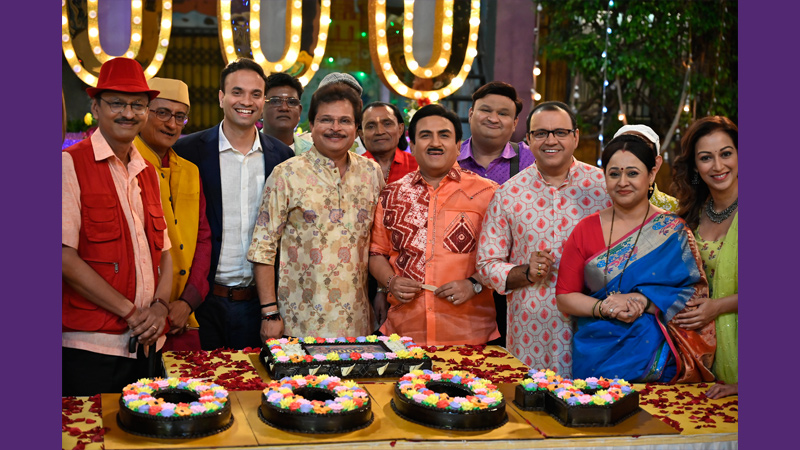
Taarak Mehta Ka Ooltah Chashmah celebrates 4,000 episodes
-
 MAM2 years ago
OpenAI joins C2PA steering committee
-
 News Headline2 years ago
Odisha to host Ultimate Kho Kho Season 2 from December 24
-
 News Headline1 year ago
Abhishek Bachchan joins as co-owner of European T20 Premier League


