Author: indiantelevision.com Team

  • Lacoste serves up festive flair with its new court of light collection

    Lacoste serves up festive flair with its new court of light collection

    MUMBAI: This festive season, Lacoste is acing the fashion game quite literally. With its new campaign Court of Light, the French fashion-sport icon transforms the tennis court into a stage of celebration, where elegance meets energy and the festive spirit rallies in full swing.

    The campaign arrives alongside the launch of the Lacoste Sleeveless Jacket, created exclusively for the Indian market. Designed for effortless styling, the jacket pairs perfectly with Lacoste’s knitted kurtas, signature polos, crisp shirts, or laid-back tees making it a versatile addition to every festive wardrobe. It’s sport-chic with a cultural twist, a serve that’s both stylish and seasonal.

    Rooted in Lacoste’s tennis heritage, Court of Light reimagines a festive soirée set on a tennis court friends and family gather under fairy lights, dining, laughing, and rallying through friendly matches. The visual storytelling captures the motion and joy of Indian festivity, blending it seamlessly with Lacoste’s understated sophistication.

    From iconic polos, shirts, dresses, and skirts to footwear and premium accessories, the campaign showcases Lacoste’s full festive line-up. The knitted kurta, already a hit among Indian fans returns this year, now joined by the newly launched sleeveless jacket, adding a modern edge to timeless celebration wear.

    “Festive moments in India are rich with tradition, emotion, and expression and Lacoste is proud to be part of that cultural rhythm,” said Lacoste India managing director and CEO Rajesh Jain. “With the Court of Light campaign and the new exclusive sleeveless jacket, we bring together the brand’s timeless French elegance and India’s vibrant festive spirit. It’s about celebrating refinement and joy with effortless sophistication.”

    Available across Lacoste boutiques in India and online at www.lacoste.in, the collection embodies the best of both worlds French polish and Indian passion.

    Because this season, fashion isn’t just about what you wear, it’s about how brightly you play your part on the Court of Light.


  • Nutrica lights up Diwali with a dash of joy, love, and everyday magic

    Nutrica lights up Diwali with a dash of joy, love, and everyday magic

    MUMBAI: Diwali may be about lights, but Nutrica’s new festive film proves it’s the laughter that truly sparkles. With a blend of nostalgia, warmth, and playful mischief, Nutrica by BN Group has rolled out a campaign that celebrates the festival not through grandeur, but through those perfectly imperfect, joy-filled moments that define an Indian home during the holidays.

    The video captures the heartbeat of modern Indian celebrations, kids running barefoot with sparklers, parents sharing a laugh while tackling festive chores, and grandparents passing down treasured traditions. It’s the kind of film that smells faintly of home-cooked sweets and echoes with the laughter of generations coming together.

    What makes the campaign stand out is its gentle reminder that Diwali doesn’t have to be a balancing act between duty and delight. From prepping the kitchen to setting the table, Nutrica turns everyday moments into emotional fireworks showing how the smallest gestures of care can light up the biggest celebrations.

    “Diwali is about preserving traditions for future generations while allowing for enjoyable and carefree times,” said Nutrica by BN group director and business head for FMCG Sparsh Sachar. “Our goal with Nutrica is to honour both tradition and contemporary family life while making these festivities simpler and joyful.”

    In essence, the film celebrates the choreography of a modern Indian Diwali where everyone has a role to play, and the magic lies in the mess, the multitasking, and the shared laughter. Whether it’s the father teaching his child to light a diya or a mother sneaking a bite of mithai before guests arrive, Nutrica’s lens finds beauty in the everyday.

    The campaign now live across Nutrica’s social media handles, including Instagram and LinkedIn encourages viewers to relive the festival’s golden moments and share their own stories of joy and togetherness.

    Because in Nutrica’s world, Diwali isn’t just about shining bright, it’s about glowing together.


  • Sanjay Dutt gives digital payments a Vega boost with Getepay launch

    Sanjay Dutt gives digital payments a Vega boost with Getepay launch

    MUMBAI: When Sanjay Dutt says something’s “solid,” you know it packs a punch. And this time, the star wasn’t talking about a movie but about Vega, the indigenously developed payment switch from Getepay that promises to change how India transacts.

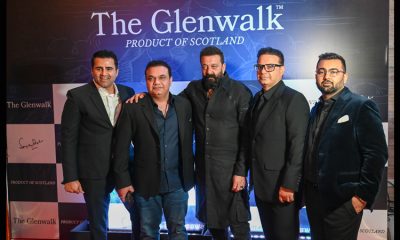
    At a glittering launch event at Taftoon Lounge, BKC, Mumbai, Dutt joined hands with Pravin Sharma, founder and managing director of Getepay, to unveil Vega, a homegrown, next-gen payment switch that’s as fast as it is secure. Headquartered in Jaipur, Getepay has steadily built its reputation as a digital payments enabler, and with Vega, it’s now aiming for the big league.

    “I’ve always believed in backing things that are real, solid, and made with heart and that’s exactly what Vega is,” Dutt said, cheering for a platform designed to empower India’s entrepreneurs, from local shopkeepers to small-town retailers. “This is about giving every entrepreneur the confidence to go digital. That’s the Bharat I want to cheer for.”

    Built on a microservices-based architecture, Vega delivers high-speed, high-volume transaction processing while ensuring real-time settlements and automated reconciliation. Think of it as the invisible engine powering India’s cashless ambitions routing transactions seamlessly even when networks are jammed.

    For Getepay’s Sharma, the launch marks a milestone moment. “Vega is not just a technological leap, it’s a bridge for millions of micro and small entrepreneurs powering India’s economy. With Vega, we aim to simplify digital payments for banks and merchants alike,” he explained. “Sanjay Dutt was the perfect fit, he represents strength, resilience, and relatability, just like our users across Bharat.”

    Under the hood, Vega connects banks and fintechs through a future-ready framework, ensuring compliance with Indian regulatory standards while maintaining top-notch reliability. Its modular design enables faster deployment, giving financial partners a smooth upgrade to modern infrastructure without business disruption.

    Beyond its tech prowess, Vega underscores Getepay’s commitment to Make in India, financial inclusion, and digital empowerment. The company envisions a future where even the smallest entrepreneur whether a tea stall owner or a kirana shop operator can accept digital payments with the same ease and confidence as a corporate giant.

    In a digital economy where speed, trust, and scalability are everything, Vega may well be the switch that powers Bharat’s next leap. And with Sanjay Dutt playing cheerleader, the digital revolution just found its blockbuster moment.


  • Google gets festive with smarter searches through new AI Mode

    Google gets festive with smarter searches through new AI Mode

    MUMBAI: Move over Khans and Kapoors, there’s a new star making its big-screen debut this festive season, and it answers to Hey Google. As India dives head-first into Diwali chaos and cinematic emotions, Google’s AI Mode on Search arrives like a filmy hero with perfect timing armed not with dance moves, but with data.

    Picture this: instead of scrolling through a dozen links, you toss Google a question that’s as layered as a family drama and out comes a full-blown, conversational answer that ties it all together. That’s AI Mode for you: your all-knowing, never-judging, eternally patient sidekick who remembers everything you say. Think of it as the Jeeves to your Kabhi Khushi Kabhie Gham moments.

    And because no Indian launch is complete without a dose of filmi flair, Google has rolled out a two-part digital film campaign conceptualised by the clever minds at Bare Bones Collective, the same team behind the viral GenZ Chudail and Gangoogly campaigns. This time, they’ve turned everyday dilemmas into high drama with a tongue-in-cheek tribute to the Bollywood tropes we love (and love to laugh at).

    The first film, released just as the country entered festive overdrive, follows a young man on a mission to win over his girlfriend’s father, every rom-com’s biggest villain-turned-softie. When his attempts at decorating the house flop harder than a box-office dud, he turns to AI Mode for step-by-step guidance. With its clever prompts, he transforms the chaos into a picture-perfect home, earning both the father’s nod and a new nickname: Festihul Tyohari.

    The second film flips the script with a “heroine ki entry” moment worthy of a Karan Johar production. Enter Riya, who lights up a festive party with a dazzling look all curated with help from AI Mode. From outfit inspo to accessory suggestions, Google plays stylist, ensuring her grand entrance is nothing short of a blockbuster reveal.

    Then comes the delightful cameo nobody saw coming: Farah Khan. In a hilariously meta moment, the choreographer-filmmaker trades banter with veteran actor Dilipji, only to have AI Mode jump in and “manage” the kitchen chaos better than any sous-chef. If only all family gatherings came with that feature.

    Launched right as India plunges into the most chaotic, colourful, and emotionally charged time of year, the campaign cleverly reimagines Google Search as the go-to problem-solver for the season helping users plan smarter, shop faster, decorate better, and celebrate calmer. From “how to impress an angry father” to “best last-minute Diwali gifts,” AI Mode doesn’t just give you answers, it gives you peace of mind (and a cinematic sense of timing).

    Bare Bones Collective nails the tone playful, self-aware, and oh-so-desi while giving Search the spotlight it deserves. The films blend humour with heart, showing how technology can keep up with India’s most dramatic, high-stakes, and glitter-coated time of year.

    Because when it comes to over-the-top emotions and even more over-the-top solutions, let’s be honest no one does drama quite like us. And this Diwali, Google’s AI Mode is ready for its hero shot.


  • Top-Rated Smartwatches to Buy During the Festive Sales

    Top-Rated Smartwatches to Buy During the Festive Sales

    The festive season in India isn’t just about lights and sweets; it’s the perfect time to level up your style and reward yourself with something that looks premium, performs brilliantly, and still fits your budget.

    For the young and restless audience, boAt smartwatches are not just gadgets. They’re companions that sync with your rhythm. This festive season, if you’re planning to score one of the top-rated smartwatches without crossing the ₹4,000 mark, boAt’s lineup deserves a closer look.

    Why are boAt Smartwatches Taking Over the Festive Market?

    What sets boAt apart in the sea of smartwatch brands is its ability to combine style with smart features, at prices that make sense. Every watch in their collection (Chrome Endeavour or Lunar Discovery Pro) offers a unique blend of features that appeal to today’s youth.

    You’ll find everything from metal design and AMOLED displays to health sensors and AI-driven insights, all neatly packed into sleek, statement-making designs. With IP-rated durability across the range, every boAt smartwatch doubles up as a reliable waterproof smart watch, perfect for active lifestyles.  

    What’s even better is that the entire collection is easily available online. Whether you’re exploring festive discounts on the official boAt website or major marketplaces, there’s always a deal waiting to be grabbed.

    Let’s explore a few boAt favourites that are currently ruling the smartwatch sales!

    boAt Chrome Endeavour

    The boAt Chrome Endeavour is for those who don’t like to settle, whether it’s their fitness goals or daily grind. It’s not just an Android smartwatch with fancy tracking; it’s a lifestyle coach on your wrist. What makes it truly next-gen is its AI Coach, which offers guided support, making workouts more tailored and effective.

    The AI-powered morning and evening summaries add a thoughtful touch. You start your day knowing what’s ahead, and end it reflecting on your progress. The personalised nudges are another clever addition, adapting to your routine instead of spamming your wrist with every notification. With auto-activity detection, your progress is well-accounted for, whether you’re cycling or running.

    It also monitors key health metrics like heart rate, SpO2, HRV, VO2 Max, sleep patterns, and stress, helping you understand your body in a better way. The 1.96” AMOLED display makes every notification, metric, or watch face vivid and easy to read. Its turn-by-turn navigation ensures you never lose your way on a run, hike, or city commute.

    All this comes in a sleek metal design and an IP68 Rating that’s resistant to splashes, sweat, and dust. Priced competitively under ₹4,000, it’s a perfect mix of brains and style for young Indians who value fitness and flair.

    boAt Lunar Discovery Pro

    The Lunar Discovery Pro is one of boAt’s best-selling watches. It’s bold, elegant, and effortlessly blends performance with sophistication.  

    The all-new metal design instantly gives it a premium touch. It’s a head-turner: sleek enough for a boardroom and tough enough for a morning jog. The HD display brings everything to life with crystal clarity, whether you’re reading texts under the sun or checking your workout summary post-gym.

    It comes with Bluetooth calling, letting you take calls directly from your wrist without reaching for your phone. The QR tray feature adds convenience for quick payments. Fitness enthusiasts will appreciate the multiple sports modes, which track a variety of activities, from running to yoga. Along with fitness tracking, it continuously monitors your heart rate, SpO₂ (blood oxygen levels), sleep quality, and stress. You can stay aware of how your body’s really doing throughout the day.

    What makes it truly stand out among smart watches for men (and women who prefer a bolder aesthetic) is that it doesn’t compromise on toughness or technology. For under ₹4,000, it feels like you’re wearing something way more premium.

    Choosing the Right boAt Smartwatch for You

    Finding your ideal smartwatch depends on what drives you. If you’re into fitness and need that extra push, Chrome Endeavour will become your personal trainer in disguise. If design and everyday versatility are more your thing, the Lunar Discovery Pro is unbeatable in its segment.

    For those who like experimenting, boAt’s Enigma series offers several top-rated smartwatches that cater to every mood, from minimal and classic to bold and futuristic. Since all of them connect seamlessly to Android devices, you’ll never have to compromise between compatibility and coolness.

    Style That Moves With You

    boAt’s smartwatch range doesn’t just tick boxes; it redefines what wearable tech can feel like for young Indians. They’re affordable without feeling cheap, fashionable without losing function, and smart enough to keep up with your most chaotic days.

    This festive season, as the smart watch sale wave hits every shopping platform, go for a watch that speaks your language. Check out the full collection of smart watches for men and women at boAt. Bring home a smartwatch that makes your work way easier.   
     

  • IAS launches AI-driven brand safety for Meta Threads

    IAS launches AI-driven brand safety for Meta Threads

    MUMBAI: Integral Ad Science (IAS), the global ad verification powerhouse, has stitched together a new layer of protection for advertisers by launching AI-driven brand safety and suitability measurement on Meta’s fast-growing platform, Threads. The move marks the first time advertisers get third-party, independent brand safety checks on Threads, giving marketers peace of mind as they scroll through their media plans.

    Backed by its clever total media quality (TMQ) tech, IAS isn’t just skimming the surface. It’s digging deep into video, audio, images and text, frame by frame, to give advertisers crystal-clear content analysis at scale. So, whether a post has a cheeky meme, a trending video or a suspicious-sounding voiceover, IAS’s AI is watching (and listening).

    “IAS’s AI-driven content-level analysis enables advertisers to drive performance and confidently scale their investments with trusted, third-party, independent measurement,” said IAS CEO Lisa Utzschneider. “We continue to innovate and deepen our relationships with global partners like Meta to provide end-to-end campaign support for advertisers across every screen and channel.”

    Threads isn’t just another platform in the Meta empire, it’s a rising star, now boasting over 400 million monthly active users globally as of August 2025. With this new IAS integration, advertisers can finally breathe easy as their campaigns reach wider audiences. The new solution offers third-party validation to ensure ads appear next to safe and suitable content on Threads, with detailed content-level insights available through the IAS Signal dashboard. Advertisers can access industry-aligned classification across risk categories, customise suitability preferences, and assess the performance of Meta inventory filters. Uniquely, IAS’s multimedia tech analyses content at the frame-by-frame level, blending video, image, audio, and text signals, making its classification impressively precise. Even better, it works across 34 languages, giving brands truly global peace of mind.

    IAS and Meta have been on a bit of a roll lately. This Threads launch follows a string of brand safety milestones, including content block lists introduced in October 2024 and misinformation safeguards rolled out across Facebook and Instagram earlier this year.


  • Different modes of transportation covered in marine insurance

    Different modes of transportation covered in marine insurance

    You shipped a batch of high-value machinery overseas. However, on its way, a high wave crashes into the vessel mid-ocean, damaging not only the hull but also soaking your entire consignment. A few days later, you despatch the consignment again, but this time, the truck carrying the cargo from the port meets with an accident, damaging your goods. Now, as your cargo suffers loss after loss, you must be wondering which insurance to purchase. The answer is marine insurance, which extends coverage to various transportation modes.

    Different modes of transportation under marine insurance

    The three different modes of transportation that marine insurance covers are: 

    Sea transportation 

    Sea transportation involves the movement of cargo via ships and vessels across oceans and seas. Businesses prefer sea routes for international shipments, particularly for goods such as electronics or commodities, due to their cost-effectiveness and suitability for transporting large quantities. Under marine insurance for sea transportation, the insurer covers the following:

    •    The policy covers hull damage from grounding. That means if the vessel accidentally hits the seashore and results in a dent or misalignment of the hull structure, the insurer will pay for repairs.

    •    If the insured ship collides with another vessel and damages the cargo, navigation system, or hull under the third-party liability coverage provision in the policy, the insurer will compensate for the loss.

    •    If a fire breaks out on board due to faulty wiring, combustion of goods, or machinery overheating, the insurer will compensate for the resultant loss to the engine room, deck, and adjacent containers. However, a claim will only be approved if the cause of the fire is found to be unintentional and without negligence.

    •    While delay alone is not covered, if it causes perishable goods to deteriorate and the delay is because of a covered peril, such as a collision or a storm, the insurer compensates for the loss.

    •    During trans-shipment, when the cargo is moved from one ship to another, and incidents like container slippage, damage due to misaligned lifts, or exposure of cargo to seawater occurs, the insurer will offer compensation.

    Air transportation 

    Air transportation involves using aircraft to move goods from one place to another. Although costly, it is ideal for time-sensitive deliveries where speed is crucial. It is also perfect for transporting perishable goods. The marine insurance for air transportation covers the following situations:

    •    The policy covers damage that occurs during the loading and unloading of goods from the aircraft, including cases involving broken conveyor belts, misaligned loaders, or mishandling by ground staff. However, it does not cover damage caused by poor packing of the cargo.

    •    If the aircraft carrying your shipment diverts mid-route due to technical or weather issues and the delay causes perishable cargo to spoil, the insurer will pay for the incurred losses. 

    •    The event of pilferage, also known as partial theft by ground staff or baggage handlers, is covered. To qualify for such claims, it is essential that the cargo be properly inspected and verified and that the results are documented.

    •    If the airline mistakenly ships your cargo to the wrong destination and it gets lost, stolen, or damaged in the process, marine insurance will compensate for the value of the goods.

    •    If cargo is stolen from secure airport storage areas or while awaiting customs clearance, the policy compensates the declared value of the shipment. The coverage extends to thefts occurring inside bonded terminals.

    Land transportation 

    Land transportation is ideal for delivering goods within domestic borders and involves vehicles such as trucks, lorries, vans, and even railways. If you have purchased marine single transit insurance for such transportation, the policy will cover the following:

    •    The policy covers damage to cargo during transit caused by collisions, overturns, and crashes. However, if the damage is intentional or the goods being transported are illegal, no compensation will be provided.

    •    If cargo is stolen or forcibly taken from the vehicle while in transit, the insurer compensates for the loss. This applies to both highway thefts and hijackings, where goods are forcibly removed.

    •    The policy covers accidental damage to goods during loading or unloading processes at warehouses, depots, or roadside stops. The coverage extends to damage caused by mishandling, dropping, or crushing incidents during the loading and unloading process.

    •    If the goods spoil or become worthless due to unavoidable delays, such as those caused by accidents or strikes that block transit routes, the insurer will cover the loss.

    •    The policy covers damage during inspections, customs checks, or government-authorised examinations en route.

    Conclusion

    Marine insurance covers sea, air, road, and land transport. The policy extends coverage to incidents like collisions, theft, fire, pilferage, and accidental damage during loading or delays. Whether your cargo travels across oceans, flies in the air or moves by road within the country, marine insurance ensures your goods are financially protected at every step of the journey. 
     

  • Bite-sized dramas are about to swallow the streaming world whole

    Bite-sized dramas are about to swallow the streaming world whole

    CANNES: Forget your boxsets. Forget your hour-long dramas. Audiences are ditching long-form television for something far more intoxicating: episodes that fit in your pocket and demand your full attention in under ten minutes.

    Microdramas—those addictive mini-narratives designed for mobile consumption—are redefining entertainment. And the numbers are staggering. According to Omdia, the consultancy that presented its findings at Mipcom, Cannes, this genre will nearly double the revenue of Fast channels, which are projected to pull in just $5.8bn next year.

    “Viewers are willing to pay for content that captures them emotionally in seconds,” said María Rua Aguete, head of media and entertainment at Omdia. “Microdramas demonstrate that attention spans may be shorter, but engagement is deeper and more valuable.”

    The monetisation model is brutally simple: hook viewers with free episodes, then charge them through subscription or pay-per-episode channels. This approach accounts for more than 60 per cent of total revenue. The payoff is formidable. Average revenue per user can reach $20 per week—or up to $80 per month—making microdramas extraordinarily profitable.

    China dominates the space, generating 83 per cent of global revenue, fuelled by a colossal audience and a mobile-first culture. Beyond China, the US claims half of international revenue, with Japan, South Korea, the UK and Thailand emerging as hungry new markets.

    “Microdramas are redefining what it means to tell premium stories in the digital age,” Aguete said. “They combine the immediacy of social media with the emotional depth of dramatic television. They are short, addictive, and irresistible.”

    This isn’t a fad. As consumer habits shift inexorably towards mobile and short-form content, microdramas are poised to become the centrepiece of digital entertainment—a seismic fusion of social video and traditional storytelling that will reshape how the world consumes drama. The wave is here. And it’s only just begun to crest.

  • IPL’s  surging IPL valuation slides back as gambling ban and media merger collide

    IPL’s surging IPL valuation slides back as gambling ban and media merger collide

    MUMBAI: The Indian Premier League, the commercial behemoth that has redefined cricket economics, is experiencing something unprecedented: contraction. After years of relentless upward momentum, the IPL’s valuation has plummeted to Rs 76,100 crore in 2025—a staggering Rs 16,400 crore collapse over two years. The league that once seemed destined to become sport’s most valuable franchise now faces an altogether different reality: the era of exponential growth has ended.

    Two seismic forces have conspired to puncture cricket’s golden goose. First, India’s crackdown on real-money gaming has eviscerated the advertising market, stripping an estimated Rs 1,500–2,000 crore from annual sponsorship revenues. Second, the 2024 merger of Disney Star and Viacom18 into JioStar eliminated the competitive media rights bidding war that had inflated valuations for over a decade. Together, these shocks have shattered the financial architecture upon which the IPL’s boom was built.

    Fantasy and gaming platforms were the IPL’s most profligate sponsors, lavishing Rs 1,500–2,000 crore annually across league, franchise, and broadcaster deals. Dream11’s Rs 358 crore national jersey sponsorship exemplified this era: premium pricing underpinned by what amounted to speculative betting cash. Then the Promotion and Regulation of Online Gaming Act descended like a guillotine. The gaming sponsors evaporated overnight, leaving franchises scrambling to replace lost revenue with comparatively cheaper deals from fast-moving consumer goods, banking, and electric vehicle makers.

    The vacuum revealed an uncomfortable truth: gaming sponsorship wasn’t additional revenue flowing into cricket’s ecosystem. It was unsustainable froth, inflating numbers on spreadsheets rather than building durable commercial value. When it disappeared, so did the illusion of inexhaustible growth.

    For years, competing broadcasters—Star Sports, Sony, Amazon, others—bid ferociously for IPL rights, each convinced that exclusive access to India’s cricket audience justified premium prices. In 2023, with two strong bidders and whispers of global tech giants entering the fray, valuations soared to Rs 92,500 crore. But the promised tech invasion never materialised. Netflix, Amazon, and Apple pivoted away from sports streaming. Disney and Viacom18 merged, eliminating one bidder entirely. The competitive tension that had driven rights auctions simply evaporated.

    D&P Advisory managing partner Santosh N summarised the revised reality: media rights will no longer deliver the 40–50 per cent appreciation once confidently projected. The IPL’s “fundamentals remain strong,” he insisted, but “the pricing environment will remain under pressure.” Translation: viewers will watch, advertising inventory will sell, but sponsors will pay less.

    The Women’s Premier League, still in its formative years, has already buckled. Its ecosystem value fell 5.6 per cent to Rs 1,275 crore in a single year. Unlike the IPL’s entrenched commercial machinery, the WPL lacks pricing resilience. Dream11’s sponsorship withdrawal and the gaming ban have left the BCCI scrambling to secure title sponsors before the next season—a predicament that would have been unthinkable two years ago.

    Amidst the financial carnage, audience enthusiasm remains robust. The 2025 IPL season crossed a billion cumulative viewers, with digital viewership surpassing television for the first time. JioStar recorded 1.19 billion unique viewers and 514 billion minutes watched. Stadium attendance remained strong; travel searches spiked across Bengaluru, Mumbai, and Lucknow during matches. In short, Indians remain obsessed with cricket. They’re simply less willing—or able—to pay premium prices for the privilege.

    The road forward demands what the boom years never required: structural innovation. Subscription bundles, regional packages, commerce integrations, and renewed competitive tension from global streaming platforms must replace the twin engines of gaming sponsorship and auction-driven bidding wars. 

    If they don’t materialise, the IPL faces not terminal decline but permanent diminishment: a mature, cash-generative business rather than the exponential growth machine it once promised to be. For a league built on the premise that tomorrow would always dwarf today, that’s a bitter recalibration indeed.
     

  • Zee bets Rs 15 crore on startup incubation play

    Zee bets Rs 15 crore on startup incubation play

    MUMBAI: Zee Entertainment is doubling down on diversification. Fresh from reporting a 63 per cent collapse in quarterly profit, the company has approved a Rs 15 crore injection into Ideabaaz Tech Pvt Ltd, a fledgling startup incubator incorporated a mere ten weeks ago. The move grants Zee a 20 per cent stake in the venture—a modest bet, perhaps, but a revealing one.

    Ideabaaz operates across three verticals: show, platform, and exhibition. The pitch is seductive: empower entrepreneurs across India with a particular focus on tier two and tier three cities where capital and mentorship remain scarce. It’s the sort of feel-good mission that plays well in investor presentations and corporate social responsibility statements.

    The investment carries no related-party baggage and requires no regulatory approvals. 

    Ideabaaz may prove visionary. Tier two and tier three cities represent genuine opportunity, and media-plus-entrepreneurship could be a compelling cocktail.