Author: indiantelevision.com Team

  • Bingo! chips away at Its past with a bold new bite

    Bingo! chips away at Its past with a bold new bite

    MUMBAI: Now that’s how you take the chips on your shoulder and turn them into a punchline. Bingo! potato chips has flipped the script on its “Big No” phase with a hilariously self-aware new campaign that sees the brand roast itself before making a fiery comeback.

    Known for its trademark wit and quirky energy, Bingo! has never shied away from humour, and this time, it’s using it to reclaim its snack throne in north and west India. In the new campaign film, the brand cheekily admits it wasn’t quite everyone’s first pick before declaring, “Yes, we were a Big No. But not anymore!”

    The bold relaunch features a complete makeover, right from edgy, gothic-inspired pack designs to two flavour-packed innovations, butter garlic, the garlic-bread-in-a-chip experience, and Himalayan pink salt, a refined twist on a timeless classic. With six striking packs that blend art, attitude and appetite, Bingo! is betting on curiosity, confidence and serious crunch.

    “Humour has always been in Bingo!’s DNA,” said ITC Foods VP & head of marketing, snacks, noodles & pasta Suresh Chand. “This isn’t just a comeback, it’s a new energy, a new attitude, and a brand that’s owning its journey.”

    Echoing that sentiment, Ogilvy senior executive creative director Rohit Dubey added, “When mischief and marketing meet in the right spot, magic happens.”

    With this self-roasting, high-flavour reboot, Bingo! isn’t just back on the shelves, it’s back in the conversation. And this time, the answer to Bingo! is a loud, crunchy “YES.”

  • Rangeela rolls again in 4K 90s magic gets a new frame of mind

    Rangeela rolls again in 4K 90s magic gets a new frame of mind

    MUMBAI: It’s time to put on those dancing shoes again Rangeela is ready to paint theatres in technicolour nostalgia. Three decades after Aamir Khan, Urmila Matondkar, and Jackie Shroff set the screen ablaze, Ram Gopal Varma’s cult classic is making a grand comeback. The 1995 musical will hit cinemas once again on 28 November 2025, exactly 30 years after it first redefined Bollywood cool.

    The re-release isn’t just a replay; it’s a revival. Presented in a 4K HD restored version with immersive sound, the film promises razor-sharp visuals, richer colours, and a sonic polish worthy of A.R. Rahman’s iconic soundtrack. The restoration comes courtesy of Ultra Media, under its Ultra Rewind initiative, a project devoted to bringing India’s cinematic gems back to the big screen, one frame-perfect classic at a time.

    When it first released, Rangeela was nothing short of revolutionary, a vibrant cocktail of melody, ambition, and Mumbai masti that marked a turning point for Hindi cinema in the 90s. From Rahman’s foot-tapping “Tanha Tanha” to the breezy “Yaaron Sun Lo Zara,” the soundtrack redefined Bollywood music, while Urmila’s star-making turn and RGV’s kinetic storytelling gave Hindi cinema a fresh, stylish edge.

    Reflecting on the film’s enduring legacy, Ram Gopal Varma said, “Rangeela embodied the spirit of aspiration, showing that ordinary people can also dare to dream big. Its success demonstrated that rule-breaking cinema is often the most unforgettable.”

    Ultra Media CEO Sushilkumar Agrawal added, “For many, Rangeela is a nostalgic trip back to the golden era of Bollywood. With Ultra Rewind, we’re bringing this beloved classic to modern audiences in a stunning 4K format, ensuring that its timeless charm continues to mesmerise audiences for years to come.”

    Rangeela is the second project under Ultra Rewind, following the Guru Dutt Centenary Retrospective earlier this year on 8 July. That initiative saw the re-release of gems like Pyaasa, Sahib Biwi aur Ghulam, Kagaz Ke Phool, and Chaudhvin Ka Chand in 4K glory. The studio now plans to restore and re-release many other classics across languages, keeping India’s cinematic heritage alive and looking sharper than ever.

    So, come November, the big screen will once again shimmer with Rahman’s rhythms, RGV’s storytelling swagger, and Urmila’s electric charm. Because some films don’t just age, they replay beautifully.

  • Uber shifts gears with Rituraj Chaturmohta in the driver’s seat

    Uber shifts gears with Rituraj Chaturmohta in the driver’s seat

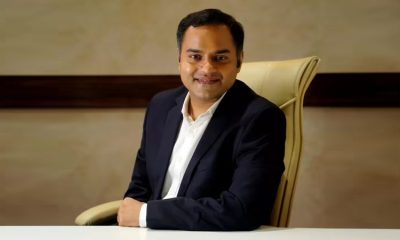
    MUMBAI: Uber for Business is cruising into a new chapter, and it’s Rituraj Chaturmohta taking the wheel. The enterprise arm of Uber has appointed him as senior country manager for India and South Asia, a move aimed at fuelling its next phase of growth across the region’s bustling corporate mobility landscape.

    From boardrooms to backseats, Rituraj’s mission is clear: strengthen partnerships, build smarter enterprise travel solutions, and keep innovation firmly in the fast lane. With over a decade of experience across two-sided marketplaces and platform businesses, he’s no stranger to navigating complex ecosystems.

    Before joining Uber, Rituraj led sales and business development at Airbnb, where he managed teams across supply and demand balancing the platform’s dynamic growth on both ends. A former entrepreneur in India’s hyper-local delivery space, he brings a sharp understanding of what drives both businesses and consumers in one of the world’s most competitive markets.

    Welcoming him aboard, Uber regional general manager and of Uber for Business head for APAC Eric Lee, said, “We are delighted to have Rituraj join our leadership team to drive Uber for Business’ growth and partnerships in India and South Asia. His experience in scaling platform businesses and understanding the Indian market will be instrumental in strengthening our enterprise offering.”

    Excited about the road ahead, Rituraj said, “I am thrilled to join Uber for Business to lead India and South Asia, one of Uber’s most dynamic growth markets. Uber for Business is reimagining how businesses move with scale, sustainability, and customer centricity at the core. My focus is to deepen Uber’s relationships with business clients, build tailored mobility solutions that drive measurable ROI, and make Uber for Business a growth partner for every company in this region.”

    Globally, Uber for Business powers mobility for over 200,000 organisations, helping them manage employee travel, meals, and commute programmes through Uber’s trusted platform. In India alone, more than 8,000 organisations are already on board, using its solutions for business travel, daily commutes, and employee shift transport.

    With Rituraj in the driver’s seat, Uber for Business seems ready to chart new routes merging convenience, technology, and enterprise efficiency into one smooth ride.


  • India’s shining stars gear up for CNN-News18’s Indian of the Year

    India’s shining stars gear up for CNN-News18’s Indian of the Year

    MUMBAI: Who runs the world? Indians do and CNN-News18 is here to prove it once again. The news network is rolling out the red carpet for the 15th edition of its flagship awards, Indian of the Year (IOTY), a celebration of the nation’s most inspiring achievers who’ve turned dreams into revolutions and talent into timeless influence.

    Over the years, the IOTY stage has seen everyone from Shah Rukh Khan to Neeraj Chopra and Virat Kohli walk away with the honour. Now, in its 15th year, the awards return with even greater sparkle, ready to spotlight India’s brightest minds and boldest spirits across nine categories like Entertainment, Sports, Rising Sports Star, Business, Youth Icon, Global Indian, Iconic Woman Achiever, Influencer, and Climate Warrior.

    Each category boasts five stellar nominees who’ve left an indelible mark this year. The Sports category is packed with champions like D Gukesh, Shubman Gill, Avinash Sable, Smriti Mandhana, and Manpreet Singh, while the Rising Sports Star segment features up-and-coming powerhouses Suruchi Phogat, Kush Maini, Vaibhav Suryavanshi, Pooja Singh, and Divya Deshmukh.

    In Entertainment, expect a clash of charisma between Rashmika Mandanna, Mohanlal, Laxman Utekar (Chhaava), Arijit Singh, and Jaideep Ahlawat. Meanwhile, the Youth Icon list brims with dynamism from Ananya Panday and Ishaan Khatter to comedian Zakir Khan and naval trailblazers Lt. Cdr Dilna K and Roopa A.

    Online sensations get their due in the Influencer category with Raj Shamani, Kamiya Jani, Khan Sir, Parul Gulati, and Revant Himatsingka leading the charge. The Business nominees include entrepreneurial giants like Falguni Nayar (Nykaa), Albinder Dhindsa (Blinkit), Rajesh Jejurikar (Mahindra & Mahindra), Roshni Nadar Malhotra (HCLTech), and Baba Kalyani (Bharat Forge).

    Fighting the good fight for the planet, the Climate Warrior nominees Garvita Gulhati, Aditya Mukarji, Morningstar Khongthaw, Vidyut Mohan, and Vinay Manchala — are being recognised for turning sustainability into a movement. Meanwhile, the Iconic Woman Achiever list celebrates the grit and grace of Dr Sanghamitra Pati, Ashwini Bhide, Chhonzin Angmo, Radha Bahin Bhatt, and K Kamini Maheshwari.

    And proving that the Indian spirit knows no borders, the Global Indian category shines on the world stage with Payal Kapadia, Leena Nair, Manish Malhotra, Hanumankind, and Chef Vijay Kumar.

    The winners will be chosen by an elite jury panel featuring names as illustrious as Sanjiv Goenka, DY Chandrachud, Indu Malhotra, Prasoon Joshi, Mahesh Jethmalani, Santishree Dhulipudi Pandit, Amitabh Kant, Shefali Shah, Sanjeev Bikhchandani, Gagan Narang, and Lara Dutta, a line-up that’s as stellar as the nominees themselves.

    Reflecting on the milestone Network18 CEO of english & business news Smriti Mehra said, “The 15th edition of CNN-News18 Indian of the Year is a special milestone for all of us. It’s an opportunity to celebrate individuals whose passion, resilience, and creativity inspire millions across the country and beyond.”

    Adding to that, CNN-News18 managing editor Zakka Jacob said, “This year, we’re introducing three new awards to reflect the changing world better whether it’s Indians making a global impact, influencers reshaping conversations, or extraordinary women breaking barriers.”

    Backed by partners including the RPSG Group (Presenting Partner), and Polycab, HDFC Securities, and Reliance (Associate Partners), the grand finale in November 2025 promises a celebration of spirit, strength, and stories that continue to shape modern India.

    Because in a nation bursting with brilliance, choosing one Indian of the Year might just be the toughest job of them all.

  • Transbnk taps Amar Bhartia to drive global product vision

    Transbnk taps Amar Bhartia to drive global product vision

    MUMBAI: Transbnk is cashing in on global experience to turbocharge its product game. The next-gen transaction banking platform has appointed Amar Bhartia as global product head, marking a strategic move as it gears up for international expansion.

    A Deutsche Bank veteran, Amar brings over a decade of expertise in cash management, treasury solutions and fintech partnerships. At Deutsche Bank, he played a key role in rolling out Payment Acceptance across the APAC region, working with regulators, payment aggregators and fintech innovators.

    “I’m excited to join Transbnk at such an exciting phase in its journey,” said the newly minted global product head Amar Bhartia. “The intersection of banking, fintech and digital infrastructure offers a rare chance to reimagine how institutions transact globally. I look forward to shaping world-class products and delivering real value for clients.”

    Co-founder and CEO Vaibhav Tambe, welcomed the appointment, calling it a timely boost for Transbnk’s global ambitions. “Amar’s proven ability to scale banking-grade platforms will be vital as we expand our reach. With our recent Series B raise and Amar’s leadership, we’re powering ahead towards building a unified transaction-banking operating system for banks and enterprises,” he said.

    The appointment follows Transbnk’s successful 25 million dollars Series B funding round led by Bessemer Venture Partners. The fresh capital will help strengthen its tech and product teams while driving expansion into Southeast Asia and the Middle East.

    With Amar at the helm of product strategy, Transbnk seems ready to turn its global growth plans into a blockbuster sequel, one transaction at a time.


  • Diljit’s got the right Aura as fans inspire his global groove

    Diljit’s got the right Aura as fans inspire his global groove

    MUMBAI: When Diljit Dosanjh talks music, even silence feels like a rhythm waiting to drop. In a candid and characteristically cheeky chat on Gal Baat with Spotify, the global Punjabi superstar revealed that his latest album and world tour Aura owes its name to his fans. “They’d say they felt a special energy at my shows, that’s how Aura happened,” he smiled.

    Dosanjh, who’s been effortlessly blending bhangra beats with pop swagger across continents, spoke about how India’s soundscape is a musical buffet. “Indian music is so diverse,” he said, “but Punjabi music… it just dominates the world.” The statement, delivered with his signature grin, was less brag and more truth considering his sold-out arenas from Vancouver to Wembley.

    Amid all the spotlight and studio sessions, the Lover hitmaker admitted that his creative fuel often comes from quieter, humbler places. “I don’t get much time in my schedule, so whenever I find an escape, I go to this park where people sing free music and sometimes I just join them,” he shared. It’s a glimpse of the artist beyond the stage lights, someone who finds melody in the everyday.

    Reflecting on the roots that anchor his global fame, Diljit also paid tribute to Punjab’s musical legends. “Chamkila’s beats stay unmatched,” he said, nodding to the folk icon whose raw storytelling continues to echo through contemporary soundscapes.

    Through his easy humour and grounded wisdom, Diljit offered more than just anecdotes, he gave fans a peek into the soul of an artist who’s rewriting what it means to be desi and global at once. From farm fields to festival stages, his Aura clearly resonates far beyond language or borders.

    Watch the full Gal Baat on Spotify.
     

  • How Indian brands hit the festive marketing jackpot in 2025

    How Indian brands hit the festive marketing jackpot in 2025

    MUMBAI: If there’s anything we Indians look forward to as much as our morning chai and newspaper, it’s the festive season. Homes come alive with the glow of diyas, embodying the victory of good over evil; floors bloom with rangoli and laxmi charans; the air fills with laughter, and the sweet aroma of mithai. And amid all this joy, brands flood algorithms, billboards, and social media timelines, eager to strengthen their customer base or build one from scratch. It’s the most lucrative time of the year for brands, with marketers pulling out all stops to win over audiences. For instance, international brands go all out to strike a chord with their Indian diaspora. Who would’ve thought we’d ever see a Diwali Barbie draped in a Anita Dongre lehenga choli? With cultural resonance ticked off and fair representation for the brown community, this isn’t just festive marketing, it’s festive marketing on steroids.

    Back home, Indian brands aren’t far behind, leaving no stone unturned during the peak festive season. The festive marketing report card for India’s FMCG sector is glowing. This year, the festive season didn’t just light up homes; it set marketing budgets ablaze. With recent GST cuts lowering costs and boosting consumer sentiment, brands rolled out campaigns that evoke creativity, value, and cultural relevance.

    For instance, launching gold scheme campaigns is fairly common in the retail jewellery industry, but Tanishq changed the script altogether. The House of Tata brand launched a campaign, headlined by former cricketer Sachin Tendulkar, encouraging households to repurpose existing gold, estimated at 25,000 tonnes in homes, into new designs. This reduces dependence on gold imports, which account for nearly 99 per cent of India’s annual requirement. By highlighting locally sourced and recycled gold, the campaign shifts the focus toward Indian production and sustainability, while still tapping into the cultural significance of gold during festivals.

    Meanwhile, it’s no news that the concert economy in India is booming. Recently, celebrated rapper and singer Travis Scott brought his Circus Maximus World Tour to India. Bookmyshow’s new campaign ‘Travis Wali Diwali’ shows how some brands can make the most of such moments and bring in attention from their target audience. Set in a vibrant Delhi household, the film shows how young Indians blend tradition with contemporary flair, from Travis-inspired rangolis and cactus-themed décor to stylish fusion outfits. The film captures the true spirit of a generation that embraces global trends while staying rooted in India’s festive culture.

    Squidjc founder Siddharth Jalan believes that last year’s post-pandemic, bargain-heavy approach is giving way to “premium storytelling” that taps into culture and identity rather than just price. He noted that consumers aren’t hunting for deals as much as they are looking to feel “part of the broader narrative.” For instance, “People don’t want a brand or a product, they want the story. Can I buy into the story? That’s when I’ll purchase your product,” he added.

    Meanwhile, Abhay Group managing director and co-founder Apurv Modi points out that the ad-spend boom is being fuelled by newer platforms and formats. The rise of quick commerce, precise digital targeting and interactive hoardings is enabling brands to be everywhere i.e physical stores, social media platforms, and even hyperlocal outdoor screens.

    The two leaders find common ground in noting how digital-out-of-home (DOOH) and hyperlocal advertising are gaining traction as outdoor screens become programmatic and locally tailored. At the same time, brands are diversifying across channels such as quick commerce, social media apps like Whatsapp, and precision-targeted digital spaces, reflecting how today’s consumers shop and engage. Modi added that experiential rewards and bundled offers are replacing simple markdowns, creating stronger perceived value.

    On similar grounds, Jalan emphasises that Gen Z and emerging consumers are drawn to campaigns that lean into sustainability, inclusivity and regional identity, rather than just discount tags.

    Influencer marketing has become another critical avenue. “Budgets are increasingly moving toward micro-influencers and mixed-use influencers who can authentically connect with niche audiences. Consumers are inspired by brands that integrate culture and identity into their messaging,” he explained.

    Other notable industry moguls said this year marked a clear shift towards campaigns that marry value, emotion, and innovation: a trinity that made festive marketing more personal and purposeful than ever before. And with recent GST cuts lowering costs and lifting consumer sentiment, brands across the country are rolling out campaigns that club all these factors.

    “This year, festive marketing is becoming even more value, and emotion driven. Compared to
    previous years, we’re seeing a greater emphasis on regional relevance, personalisation, and
    deeper engagement, rather than just top-of-the-funnel campaigns,” said Hyfun Foods head of marketing Vincent Noronha. “The recent GST rate cuts, especially packaged foods, have certainly freed up some marketing budgets. This provides both established and emerging brands, particularly regional players, an opportunity to increase visibility during the busy festive window.”  

    The brand recently launched its campaign “Hyfun Khao Sona Pao,” offering a direct incentive of winning gold to its customers. The campaign taps into the Indian tradition of auspicious gold purchases during festivals, creating an immediate call-to-action beyond the product itself. By strategically combining OOH advertising in Bengaluru and Delhi NCR with digital ads and quick commerce platform banners, the brand has orchestrated a cohesive, high-recall marketing blitz to leave a lasting imprint on consumers.

    In a similar vein, for skincare brand Joy Personal Care (RSH Global), GST cuts and rising disposable incomes are driving broader festive engagement. CMO Poulomi Roy notes, “Economic stability, along with government measures such as GST rate reductions and tax exemptions up to ₹12 lakh, has boosted consumer confidence and purchasing power. Coupled with renewed optimism and increasing disposable incomes, these conditions are encouraging brands to invest more actively in festive campaigns.” Consumers now seek fresh looks and meaningful brand experiences, prompting brands to maintain engagement throughout the season via targeted offers, new product launches, and regional content, she added.  

    Roy predicts that with rising disposable incomes leading to greater affluence, certain FMCG and food categories might witness the first wave of increased consumption particularly dairy, cheese, biscuits, sauces, condiments, and instant food products. In the personal care segment, stronger traction for larger pack sizes in everyday categories such as lotions and shampoos is anticipated.

    Whereas, incense sticks manufacturer and supplier Zed Black’s director Ankit Agrawal pointed out, “Lower GST rates bring cost flexibility, allowing us to reinvest in regional activations and consumer engagement.” The brand unveiled an experiential campaign featuring an eight-foot Durga idol made of incense sticks during Pujo in Kolkata, illustrating the shift from generic festive greetings to immersive storytelling. Premiumisation is a key driver, with consumers upgrading to aesthetically appealing, long-lasting products, from masala agarbatti to white-stick series.

    However, Jalan offered a measured view, “GST reductions are more of a motivator than a game-changer. Consumers may feel happier, but purchasing habits haven’t shifted dramatically. For brands, the opportunity lies in leveraging the festive moment effectively and delivering value without compromising brand equity.”  

    He also identified key categories seeing an uptick in festive campaigns. “Beauty, fashion, and footwear are booming, along with niche segments like spices and seeds. There’s a post-pandemic appetite for premium, culturally resonant, and exotic products, giving brands more room to innovate and engage.”

    There has been another consequential observation being made around the industry during this festive season: the resurgence of OOH and DOOH campaigns, but with a twist.

    The role of outdoor advertising has evolved. Hyperglocal business head Sumit Taneja, observed that “brands are investing heavily in OOH and point-of-purchase branding to build stronger festive visibility.” Large-format sites, high-street displays, and transit zones, combined with in-store décor and last-mile activations, are converting awareness into purchase. Real-time data, automation, and immersive displays ensure campaigns reach consumers where they shop, travel, and celebrate.

    Meanwhile, The Stone Sapphire India managing director & CEO Shobhit Singh had a lot to add regarding the surge of DOOH campaigns. “In an over-crowded and noisy digital environment, outdoor media delivers scale, visibility, and credibility, especially in high footfall locations like malls, shopping areas, and residential developments. For purchases in gifts for the home and toys, where sight and gift-giving are very important experiential elements to OOH, such as interactive displays, augmented reality billboards, and 3D displays, are connecting the offline life with digital storytelling. OOH is no longer stagnant; it is establishing itself as a dynamic storytelling opportunity, activating festive sentiment and impulse purchases,” he opined.

    Roy offered a slightly different perspective. “While traditional OOH may not always directly drive engagement, formats that encourage interaction and enhance the overall experience are proving to be more effective. Interactive setups near shopping hubs and digital OOH enhanced with augmented AI can deliver stronger engagement and create more memorable brand experiences, both during the festive season and beyond.”  

    Jalan also agreed on the fact that DOOH is seeing a resurgence. “Outdoor is evolving. Digital billboards are no longer prohibitively costly, and even smaller startups can leverage them for short bursts of highly targeted campaigns. Hyperlocal digital outdoor, near points of sale, is increasingly being used to drive sales with a higher ROI,” he said.  

    Personalisation and technology are also playing a key role. “There’s tracking software that allows brands to analyse movement around a billboard and even create interactive afterimages in real time. While this isn’t widespread yet in India, it’s an example of how innovation is shaping engagement,” he added.

    Similarly, Roy also shed some light on emerging technologies influencing festive campaigns. “Martech continues to be strong. Brands are using data analytics and audience insights to better understand purchase intentions, personalize festive messaging, and deliver more relevant consumer experiences across digital and offline touchpoints,” she opined.

    What stands out this festive season is how brands are pushing beyond conventional campaigns to create experiences that truly resonate with consumers. From hyperlocal DOOH activations and interactive outdoor displays to storytelling rooted in culture, identity, and emotion, marketers are finding innovative ways to capture attention and engagement. Technology, personalisation, and cultural insight are no longer optional, they are essential tools in connecting with audiences in meaningful ways.


  • Whatsapp message boom rings alarm bells for mobile operators

    Whatsapp message boom rings alarm bells for mobile operators

    MUMBAI: Looks like Whatsapp is about to have the last word quite literally. A new study by Juniper Research predicts that over-the-top (OTT) business messaging will leap from 390 billion messages in 2025 to more than 560 billion by 2027, powered by WhatsApp’s cutthroat pricing play.

    Juniper’s latest A2P & Business Messaging Market 2025–2030 report finds that Whatsapp’s authentication rates 50 to 90 per cent lower than traditional A2P SMS one-time passcodes are helping it corner a sizeable slice of the enterprise communication pie. With prices this low, businesses are flocking to Whatsapp for their verification and alert needs, edging telecom operators out of the conversation.

    “By first securing authentication traffic, Whatsapp is laying the groundwork to move into higher-value business messaging,” said Juniper Research senior research analyst Molly Gatford. “Once enterprises are onboarded for authentication, WhatsApp must upsell to marketing use cases, where termination fees are far higher and the real revenue opportunity lies.”

    That’s not good news for mobile network operators, who are already losing ground in the lucrative business messaging arena. Juniper Research warns that if operators don’t adapt, OTT platforms could completely dominate enterprise communication in just a few years.

    The report suggests that to keep up, operators must rethink their pricing strategy moving from flat SMS rates to use case-based pricing across SMS and RCS (Rich Communication Services). This, analysts say, will help enterprises understand the added value of RCS and prevent further migration to OTT channels.

    To pull this off, telcos will need to partner with technology providers capable of using AI-driven tools and behavioural analysis to classify messages by use case at scale ensuring fair and accurate billing. “By adopting a use case-based pricing strategy that is consistent across SMS and RCS, operators will enable enterprises to better assess RCS’s added value over SMS,” Gatford explained.

    Juniper’s new market suite offers one of the most detailed assessments yet of the A2P and business messaging landscape, with over 146,000 datapoints across 61 countries. And the big takeaway? The future of business messaging may not be in your inbox, it’s already in your Whatsapp chats.


  • Munawar’s back in action with First Copy S2

    Munawar’s back in action with First Copy S2

    MUMBAI: He’s back to steal the spotlight, and maybe a few hearts along the way. Munawar Faruqui returns as Arif in the high-octane teaser for First Copy Season 2, unveiled by Amazon MX Player. The much-loved crime thriller that took audiences deep into Mumbai’s 90s film piracy underworld is revving up for a darker, more dangerous comeback.

    The teaser hints at Arif’s turbulent return, a man once on top of the game, now haunted by the ghosts of his past. As ambition clashes with betrayal, old alliances crumble and new enemies emerge, leaving viewers with one burning question, can Arif reclaim his empire, or will his empire consume him?

    Alongside Munawar, the ensemble cast features Krystle D’Souza, Gulshan Grover, Saqib Ayub, Ashi Singh, Meiyang Chang, Inam Ul Haq, Raza Murad and newcomer Nawab Shah. The trailer is set to drop on 29 October, setting the stage for the show’s grand return.

    Following its breakout first season, First Copy has cemented itself as one of India’s most-watched crime dramas. Season 2 will soon stream for free across Amazon MX Player, the MX Player app, Prime Video, Fire TV and Airtel Xstream, ensuring fans can dive back into Arif’s world wherever they are.

    With its gritty storyline, sharp writing and star-studded cast, First Copy Season 2 looks set to reclaim its throne as the kingpin of India’s streaming thrillers.


  • Rannvijay shifts gears with Madcap Luxe lunch

    Rannvijay shifts gears with Madcap Luxe lunch

    MUMBAI: Fasten your seatbelts, luxury just hit the fast lane. Rannvijay Singha, along with co-founders Arvind Balan and Rohit Jha, has launched Madcap Luxe Travel Experiences, India’s first cultural powerhouse that merges motorsport, heritage, and high-end adventure into one roaring movement.

    Born from the thrill of the open road, Madcap Luxe redefines travel as an emotion rather than an itinerary. The brand blends self-drive expeditions with world-class hospitality, taking travellers from private F1 paddocks and Dakar rally zones to royal palaces and Michelin-starred dining tables, all wrapped in an unmistakable spirit of Indian luxury.

    “Madcap Luxe is not about itineraries, it’s about emotion engineered,” says Rannvijay Singha. “It’s for those who live boldly and want to drive their own legend.”

    The venture also introduces a second vertical, Madcap Lifestyle & Adventure IPs, with its debut property, Blackout 40, India’s first 40-hour non-stop biker festival in the deserts of Rajasthan. Designed as an immersive cultural celebration, it unites bikers, artists, and adventurers in a heady mix of music, craftsmanship and desert soul.

    “We are creating formats that go beyond festivals, these are cultural movements,” says Arvind Balan. “Blackout 40 celebrates India’s roots and modern identity in one frame.”

    Powered by experiential marketing giant Maxperience, the creative force behind 500 plus campaigns for Porsche, Hyundai, and Royal Enfield, Madcap Luxe is positioning itself as a global experiential brand built in India for the world.

    The 2026 global luxe drive calendar revs up the experience with curated international expeditions, from the Saudi Grand Drive – Dakar Edition to the Grand American Drive – Route 66 Centennial Edition. With its bespoke “Curate Your Own” journeys and “Rare Experiences” offering everything from F1 laps at Monza to desert glamping in Arabia, Madcap Luxe is redefining how India travels, where adrenaline meets elegance, and every mile tells a story.