
Executive Dossier
“We have a multi-headed monetization approach for Viu”- Vishal Maheshwari

In January 2016, emerging markets OTT service Vuclip – operated by Hong Kong based PCCW – appointed former Yahoo executive Vishal Maheshwari as country manager, India, close to the launch date of its Indian product. The Viu launch went through successfully three months later under his supervision. Since then the FMCG, telco and digital veteran has stealthily steered the service towards an enviable subscriber base of four million plus.
Viu’s has been a no-nonsense-back-to-basics roll out in the country; it had none of the frills and bells and whistles that are associated with launches.
Maheshwari has his task cut out for him. The OTT market is getting crowded with every one including his uncle, aunt and cousin believing that they could make a success of their streaming entertainment apps.
But Maheswari believes that Viu is being built bit by bit, content piece by content piece, and customer by customer. And that it is on the right track.
Maheshwari was part of Indiantelevision.com’s second edition OTT conference Vident 2017 and he took part in a one on one conversation with founder, CEO and editor in chief Anil Wanvari. Excerpts:

What is your view of India as a VOD market?
We believe that this market is not a single homogeneous market, as a lot of people like to believe. We believe this a three tiered market. There is a bottom of the pyramid market which is called the mass market. There is a mid-market, which is being typically being catered to by mobile consumption and by apps. And then there is the top end of the pyramid, that we have yet to see evolve over here. We think that eventually will happen. We are here to participate in the broad spectrum of the market. Currently we have offerings in the bottom of the pyramid in terms of the B2B mass market offering . We have been so far been in the mid-market as we like to call It for a year and a half. – the B2B offering
I believe you have got a massive war chest. Apparently, Nickhil was quoted saying that he spent about 100 million dollars so far since PCCW came in. So how big is the war chest in India, if you would like to disclose that. If you don’t want to talk about the initiative in terms of local content, making sure you’ve distributed well across different devices whether it’s handsets or being inbuilt into Telco, apps etc.
I think it is futile trying to talk about numbers in terms of millions of dollars of investments in so and so. It i suffices to say that this is a game of really deep pockets. I have always maintained that OTT is a very easy market to get into. Because I think the common understanding is that all you need is a little bit of content, slap on some technology, some vendors lurking around in Hyderabad and Bangalore who you can hire and get for cheap and you can get into the market.
But OTT is a very very difficult market to stay in. And a lot of players who were there in this market are beginning to sort of understand that. The key and the bottom line over here is you need very deep pockets to fundamentally stay in this game. I wish I new how long you need to sustain it; I wish I was a clairvoyant.
Needless to say, I maintain that this is not a P&L business. It’s a balance sheet business. And you really got to have deep pockets and a very entrepreneurial attitude in terms of trying to win this market. If you try to play by the known rules of how these businesses are built, then there’s only one thing going to happen – you are gonna lose! Given that, we have our own game plan in terms of this market.
I believe in terms of content, people expect a very different set of content from a premium OTT player. So there is UGC and the YouTube type content at one side and then there is TV broadcasting and cinema on the other side. What consumers expect of an OTT play is really something in the middle. They want content that is high quality, that is potentially cinematographic, in terms of finish, look and feel. And more importantly for the target audience that we are after, which is frankly the millennials, they want content which is real. They want content which reflects their aims, aspirations etc. So, I think you got to be very very careful in terms of how you go about executing your content game. I would say the mantra is being fresh and contemporary. Secondly, we believe regional is really an important play. We were actually the first ones to launch Telugu regional content a couple of months back and that I think pretty much took the industry by storm. That’s because the content put in over there was very high quality. The content that we produced along with Annapurna Studios, was original – Pilla and Pelli Gola.
And what sort of traction did you get for those shows?
I am not going to drop numbers again but let me tell you what we did. It was really interesting. Our entire philosophy towards this game of OTT is that it isn’t like a ‘one night stand.’ It is a hare and a tortoise game, but with a little bit of a difference. We don’t believe that ‘slow and steady’ is going to make us win. We believe ‘smart and calibrated’ is going to make you win.
So when we actually launched our first suite of originals in the month of April, people were surprised, there was no brand campaign? There was no full page in The Times of India?
What we actually did over here was very simply put the content into the market, used all organic means to sort of see what the traction on the content was, ran that content frankly for a 10 week period, which is when we actually released our content and came back absolutely beaming in terms of the results. The traction numbers that we were seeing over there were completely mind boggling as far as we were actually concerned. And if this year proof of the pudding is in the eating, we’ve actually come in and post that have commissioned another eight originals.
When do we see these eight originals rolling out? Are they with the same production studios or are they with new studios?
If it ain’t broke, why fix it? Yes, Vikram Bhatt did a couple of products with us. After Gehraiyaan and Spotlight, we have commissioned him again for another two products that will be out in the fourth quarter of this year. And you will see this new suite rolling out from the month of September onwards. We will continue to sharpen our focus on the regional market, we will be adding regional markets to our suite, we will continue our focus on Telugu and you will see some really high quality content coming for those regional markets.
You were mentioning that you were actually going to do dual language production? Is it going to go beyond dual language, while doing a Hindi show?
It is part of our overall DNA of experimenting. In our first round, what we actually did was create content specifically for Telugu, create content for Hindi, we have done dubs, we have done crossovers, we are actually studying how that market reacts, what their uptake on that sort of content is. And in the next phase what we are getting into is doing bilingual productions. It could make sense from an advertiser point of view. It could make sense from a marketing economics point of view. So I think like any good old internet company we are really open to lot of experimentation and bilingual production is one of them. I don’t think the die is set as yet, we are still sort of in discovery mode on these types of things.
Some numbers on your (monthly active users) MAUs and (daily active users) DAUs? Downloads?
We hate downloads because downloads is a bought number. Actually anyone can go out and buy those numbers. As company we are very focused on the metrics that can not be bought and the type of metrics we really focused on UVs (unique viewers), minutes per UV and returning users.
I think these are the three sets we are absolutely concerned about. Those metrics you can not buy and you have to earn those metrics from the consumers.
I think with all these three we are on top of the chart in terms of these numbers.
We have minutes of usages in excess of 100 minutes a month. We have people coming back to us at least six to seven times in a month to view content and that is with the limited suite of the kind of content we have right now.
Those are some very important numbers we look at and we think that, as content depth fundamentally expands, those numbers are actually going to go up. I think all indicators we are currently capped on these two consumption metrics by the volume of depth we have available with us on our platform. So that’s the reason we are looking at large volumes of content getting commissioned because once that goes up we know the guy is going to come back to us.
You mentioned there are four and half million active users a month?
Yes, that’s the number we had in the month of April in India.
So the number has gone up?
The number has moved up very significantly because April was when we started out with the original content. Those numbers are significantly north.
Somebody who has visited once month is your active user?
Everybody has got their own definition. We sort of tried to stick to the most acceptable definition that somebody at least consumed the video once a month and somebody who has come in and just opened your app. We are sort of pretty clear in terms of the type of standard apply to us in terms of measurement. Honestly BARC coming in is going to be really very interesting.
What lessons have you learnt in terms of distribution, the customer’s propensity to pay, content creation, technology. Sometimes acquiring a customer is not worth it that what some players are discovering. So the acquisition cost can go haywire and set your entire gameplan haywire.
Our philosophy in terms of distribution is to go with where the customer is and therefore what we really followed has been a really multi-headed distribution strategy where we had content housed on our apps, we had content housed on our browser. We incidentally believed that the browser still have a very important role to play especially for certain types of content and specifically for certain types of devices. We have also got the Viu video audience network where we collaborated with a bunch of like minded sites who ingest our player. For instance, we have What the duck 2 today which is a cricketing product which runs on Cricbuzz also. We have a strategy in terms of YouTube, Facebook where we don’t hesitate to put our full form of original content. Therefore the strategy for distribution is very clear – go where the customer is.
In terms of relationship, we have a very deep relationship with Samsung, where every Samsung device that has been shipped out since November 2016, the Viu SDK ingested in every device as part and parcel of the my Galaxy 2.0 product. So, it’s a bit of a Trojan strategy that we are present on the best Android device that is out there. The underlying philosophy is don’t pull them in, go also where they are that is the strategy we are going to continue.
Coming to your questions of acquisition and acquisition cost, it’s a fairly bloody game at this particular point of time. Let’s face it, your economics are going to tend to infinity and the only way any OTT player can counter that is frankly focus on the depth of engagement that he actually got.
So there are two philosophies that drive us over there. Either I get you here and make sure that you stay with me for a prolonged period of time and you keep coming back to me. So the strategy of a sustained-content-release calendar works really well. Or I get you in and make you consume as much you can within a short period of time because I really can’t stop you from going. And I think that’s where a binge consumption strategy works really well.
So from us what you will really see is a combination of sustained content release and binge watching strategy and that’s going to be very powerful in terms of trying to maximize the lifetime value of the customer as he comes in. And in terms of recouping your acquisition cost over there. Obviously, I think as we get a lot more brand visible, as brand Viu becomes known, and we expect those costs to move southwards. I think a combination of these two strategies will help us to turn the corner in terms of starting to break even at a unit economics.
So what is the sweet spot for the price that customer can pay? You’re charging Rs99 apart from the free content that you are giving out to a premium subscriber. So is that a sweet spot or is the Amazon price a sweet spot, Rs 40-45 when they announced. What’s the sweet spot?
Sweet spot is like saccharine, if you have too much of it is going to be very bitter. Our belief over here is customer are going to pay you for value.
Indians paid Rs 350 crore a few months back to watch a man beat up his daughters to make them wrestlers. And that’s Dangal. People do pay for content.
We think the fundamental point is it’s not about whether customer is willing to pay or not, it’s about the value he is seeing from what you are actually giving to him and we want to keep that power to choose and decide in the hands of the customer.
Our strategy is out and out a freemium pricing strategy. We believe that we will continue to give the customer the best possible value in terms of content. He can come and continue it without any barriers, as long as he does not have a problem to get somebody else to pay for him doing it via advertising. We believe we have to make advertising as non-obstrusive as possible. A bunch of initiatives we have taken over there. We collaborate extensively with Facebook and Google to ensure that advertising delveries should be non- obstrusive as possible. We are innovating in terms of ad monetization models. Native is a much abused word but we have taken it very seriously in terms of what are we doing while building our entire ad ecosystem and ad model around.
At the end of it if we able to give enough value to that customer and he decides that he actually doesn’t want to see your advertising, he will come and pay us. So we have the patience to sort of wait for customer to graduate from a free service to a paid service.
Is that happening, the graduation?
Honestly, at this point of time I don’t care. The one number I don’t look at is what is my free to paid conversion. I think it’s too early and anybody trying to build a castle on subscriptions from day one I think you are walking on broken glass and it’s going to be very tough.
On advertising side you have done some deals with DBS and you got some other partners on board?
We got success with What The Duck 2 where we got DBS Yes we have DBS and Hike coming in as sponsors on the content. I think that’s a very good example of what the philosophy has been in terms of getting the advertisers to participate as natively as possible in your content. We have recently done a show with McDowell’s known as Yaari No 1 which has Rana Dagubatti over there. It is like a Koffee with Karan kind of a show in Telugu which runs on Gemini TV. A very interesting product where we actually have gone OTT plus TV simulcast at the same time with an advertiser like McDowell’s actually coming in and sponsoring that particular product. And you will see a lot more disruption over here in terms of the type of models we are looking at, they could be ad inventory based, those could be sponsorship based, branded content based or TV to OTT. So it’s going to be multi headed in terms of the monetization approach.








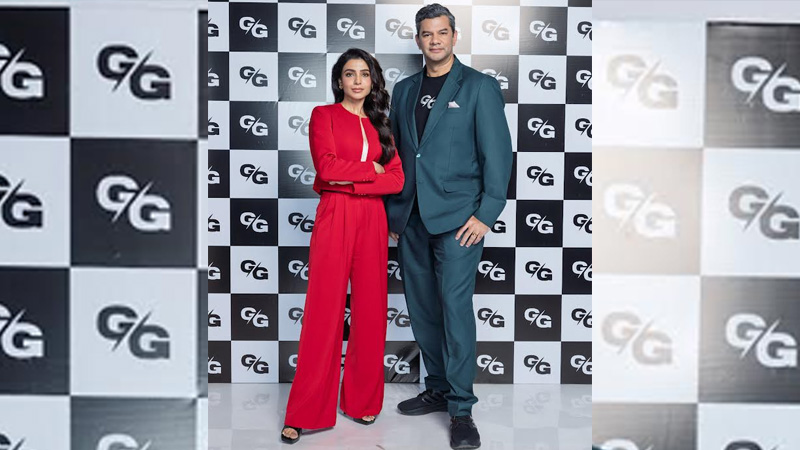
MUMBAI: Game faces on, pressure high India’s gaming ambitions are levelling up. Good Game, billed as the world’s first as-live global gaming reality show, has officially launched in India with a bold mission: to crown the country’s first Global Gaming Superstar.
Blending esports with mainstream entertainment, the show brings together competitive gaming, creativity and on-camera performance in a format that tests more than just joystick skills. Contestants will be judged on gameplay, screen presence and their ability to perform under pressure, reflecting how gaming has evolved from pastime to profession and pop culture currency.
Fronting the show are three high-profile ambassadors: actor and entrepreneur Samantha Ruth Prabhu, Indian cricket star Rishabh Pant, and gaming creator Ujjwal Chaurasia. The winner will take home Rs 1 crore ($100,000) among the largest prize pools for any Indian reality show along with the chance to represent India on a global stage.
Backed by a planned annual investment of up to Rs 100 crore, Good Game is also courting brand partners, promising a minimum reach of 500 million among India’s core youth audience. The creators position the show as a bridge between entertainment and interactive culture, offering long-format content, community engagement and commercial scale.
Auditions are now open to Indian citizens aged 18 and above, inviting amateur and professional gamers, creators and performers alike. Shortlisted candidates will be called for in-person auditions in Mumbai on 14 and 15 February, and in Delhi on 28 February and 1 March 2026.
With big money, big names and even bigger ambition, Good Game signals a shift in how India views gaming not just as play, but as performance, profession and prime-time spectacle.
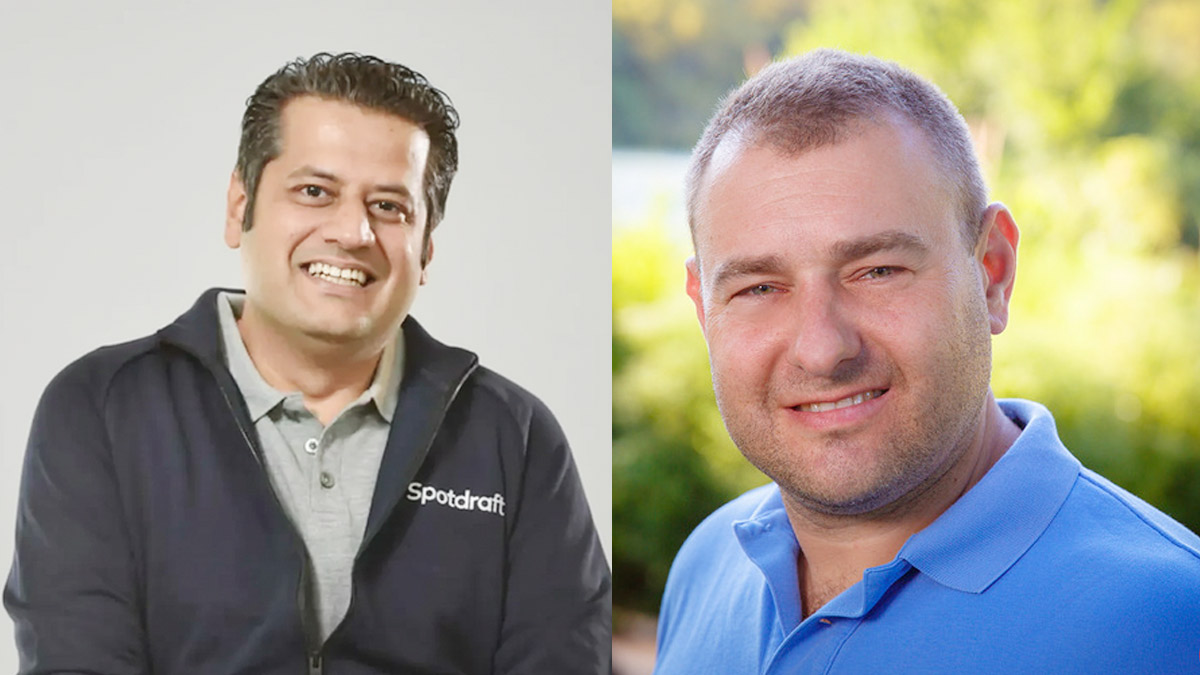
INDIA: SpotDraft has strengthened its senior ranks as it gears up for faster global expansion, naming Alon Waks as chief marketing officer and Amit Sharma as chief financial officer. The appointments follow the firm’s $54 million Series B round earlier this year and mark a push to scale across the Americas, EMEA and India.
The AI-powered contract-lifecycle-management platform has posted 100 per cent year-on-year growth in customer acquisition, counting Apollo.io, IPSY, Mixpanel, Oyster and Panasonic among its global clients. The firm processes more than one million contracts annually, with volumes up 173 per cent and nearly 50,000 monthly active users.
Waks, a veteran of Kustomer, Bizzabo, CreatorIQ, LivePerson and ZoomInfo, will steer global marketing and category positioning as legal teams adopt AI-driven tools. Sharma, who has led finance across scaling tech firms since 2016, will guide financial strategy, investor relations and market expansion.
Both hires aim to sharpen SpotDraft’s bid for a larger slice of the fast-growing legal-tech market, expected to exceed $63 billion by 2032. Co-founder and chief executive Shashank Bijapur said the company is focused on scaling go-to-market operations in the Americas, deepening leadership in EMEA, and accelerating AI capabilities for general counsels and legal-operations leaders.
Clients report shorter deal cycles and better alignment between legal and business teams. “What used to take weeks now happens in days,” said Abnormal Security senior legal operations manager Susan Koenig. DeepL head of legal operations André Barrow, said SpotDraft has helped reframe legal “from a cost centre to a generator of revenue”.
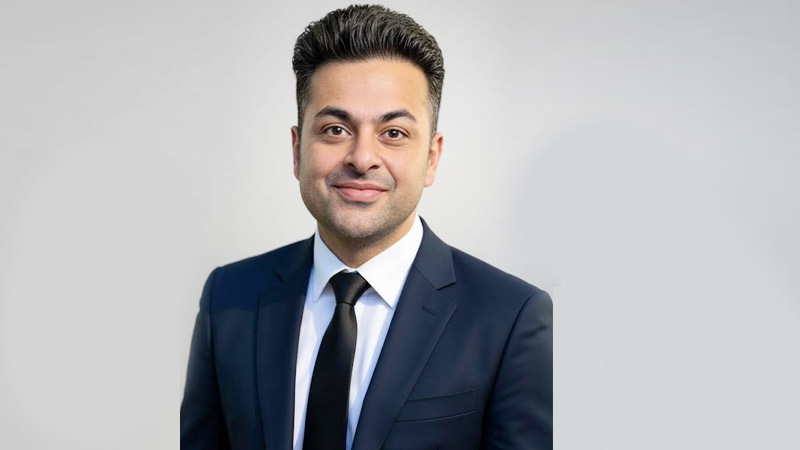
MUMBAI: Out-of-home ads were once the wallflowers of marketing seen by everyone, noticed by few. But in an age where attention has become the world’s most fought-over currency, even billboards are getting a brain upgrade. Enter LOC8, OSMO’s AI-powered attention engine, quietly reshaping the old OOH playbook by measuring not just who could have looked at an ad, but who actually did. The shift is subtle but seismic: impressions are out, impact is in and data, not gut instinct, is calling the shots.
In a landscape where marketers question every rupee spent outdoors, LOC8 is turning lampposts, flyovers and traffic islands into precision-mapped attention laboratories. By crunching dwell time, visibility zones, perceptual size and real-world obstructions, the platform is dragging OOH into a future where creativity meets computer vision and where the best ideas aren’t just eye-catching, but eye-measured. From automotive facelifts to FMCG novelty and real estate trust-building, the message is clear, outdoor has stopped shouting and started listening. Indian Television Dot Com explores more about it in an Interview interview with OSMO co-founder Nipun Arora.
On how OSMO is shifting outdoor advertising from a visibility-led medium to an attention-led one through LOC8.
Traditional OOH has long been measured by visibility and impressions i.e how many people could see an ad. OSMO, through its proprietary AI platform LOC8, is shifting that narrative more towards likelihood of being noticed. Using computer vision and machine learning, LOC8 analyzes real-world video data to measure visibility zones, obstructions, dwell time and perceptual size; bringing precision to how attention is quantified outdoors. It moves the focus from mere impressions to quality of impressions, making OOH a data-verified, attention-led medium comparable to digital in accountability.
On how marketers can use LOC8’s dwell-time, visibility and perception insights to craft more effective, emotionally resonant OOH campaigns.
LOC8 helps brands understand how people truly experience outdoor media how long they look, from what distance, and under what conditions. By quantifying dwell time, visibility duration, and perceptual size; marketers can plan campaigns that align with real human viewing behavior. This empowers creative and strategy teams to design emotionally resonant storytelling where messaging, visual hierarchy and placement are optimized for how people actually notice and process OOH creatives.
About what LOC8 has revealed through campaigns like Renault Triber and Namaste India on how categories such as auto, FMCG and real estate use attention metrics to drive outcomes.
Each category uses attention data differently but all share one common goal: to convert outdoor visibility into measurable engagement.
• Automotive | Renault Triber
For the new Renault Triber facelift, bold creative met data-led planning through LOC8. By analyzing on-ground video data, LOC8 measured real audience attention across placements factoring in visibility zones, obstructions, traffic speed and perceptual size. This enabled Renault to identify corridors that delivered maximum reach, saliency and engagement, optimizing media efficiency and ROI.
• FMCG | Namaste India
In OOH, innovation is the hook and assets are the bait. But bait often hides the hook. With Loc8’s attention metrics, we ensured the bait wasn’t a hurdle, rather it became the perfect stage for innovation to deliver its full impact! The insight proved that creative novelty, when validated by attention data, drives deeper engagement and measurable brand lift.
• Real Estate
For luxury and real estate campaigns targeting HNI/UHNI audiences, attention patterns differ especially between front and rear passengers, who are often the core audience segment for premium sites. LOC8’s ability to distinguish rear vs. front visibility plays a critical role here. It helps identify sites that offer longer viewing windows and stronger perceptual dominance from the rear seat where decision-makers are most likely seated making it a key differentiator for premium and trust-led categories. Together, these insights prove that auto optimizes for impact, FMCG for recall, and real estate for trust visibility showing how attention metrics adapt to category goals while ensuring measurable outcomes.
On how attention analytics will shape the future of brand storytelling and media planning as OOH becomes more digitised and data-driven.
As outdoor digitizes, attention analytics will inform not just where to advertise but how stories are told in public spaces. This evolution transforms OOH from a static broadcast channel into a dynamic attention ecosystem, where creativity is optimized through evidence-based insight.
On how LOC8’s data-led framework helps marketers quantify OOH impact and make outdoor a more accountable, ROI-driven medium.
LOC8 bridges the gap between intuition and evidence. By quantifying metrics like visibility duration, attention opportunity index, and visual saliency rank, it allows brands to benchmark site performance and justify investment. This data-led approach brings transparency, comparability and ROI measurement to a medium historically driven by perception.
On how OSMO ensures AI and computer vision enhance creativity rather than reduce it to numbers.
OSMO believes that technology should enhance creativity, not overshadow it. LOC8’s attention models reveal what naturally draws the human eye helping creative teams refine design cues, contrast, and visual hierarchy for greater impact. By merging art and science, LOC8 empowers creativity with intelligence.
About the creative best practices and design cues LOC8 has uncovered regarding what truly captures consumer attention outdoors.
LOC8’s visual cognition analysis has surfaced clear patterns across campaigns:
• High contrast and minimal messaging outperform cluttered designs.
• Motion cues draw significantly longer dwell times.
• The first two seconds are critical, creatives must establish focus instantly.
• Contextual alignment between the creative and its environment increases attention by over 30%.
These learnings offer a scientific foundation for creative effectiveness helping brands design OOH that’s visually magnetic and emotionally memorable.
On how attention metrics will integrate into omnichannel planning where OOH, digital and social work together for unified brand impact.
Attention can become the unifying KPI across OOH, digital and social to creates seamless storytelling continuity, where outdoor triggers digital engagement. The future of omnichannel planning lies in attention-led integration ensuring that campaigns don’t just reach audiences everywhere but truly capture and hold their focus.


MIB sets OTT accessibility rules, mandates captions and audio description

Boney Kapoor acquires remake rights of Tamil political satire Thalaivar Thambi Thalaimaiyil

Netflix India names Rekha Rane director of films and series marketing

Zabeen signs off from TV9 after shaping the network’s public voice

Dhawan steps up to bat for Delhi’s grassroots sports push

Orient Beverages pops the fizz with steady Q3 gains and rising profits

Cheekatilo shines in the dark with record debut on Prime Video

These ’90s fashion trends are making a comeback in 2017

Swiggy Instamart’s GOV surges 103 per cent year on year to Rs 7,938 crore
The final 6 ‘Game of Thrones’ episodes might feel like a full season
According to Dior Couture, this taboo fashion accessory is back
The old and New Edition cast comes together to perform
Phillies’ Aaron Altherr makes mind-boggling barehanded play
Uber and Lyft are finally available in all of New York State
MIB sets OTT accessibility rules, mandates captions and audio description
Boney Kapoor acquires remake rights of Tamil political satire Thalaivar Thambi Thalaimaiyil
Netflix India names Rekha Rane director of films and series marketing
Zabeen signs off from TV9 after shaping the network’s public voice
Dhawan steps up to bat for Delhi’s grassroots sports push
Orient Beverages pops the fizz with steady Q3 gains and rising profits
Cheekatilo shines in the dark with record debut on Prime Video
-
 e-commerce4 weeks ago
Swiggy Instamart’s GOV surges 103 per cent year on year to Rs 7,938 crore
-
 News Headline2 months ago
From selfies to big bucks, India’s influencer economy explodes in 2025
-
 iWorld1 year ago
Kuku TV transforms India’s OTT space with vertical microdrama boom
-
 News Headline2 years ago
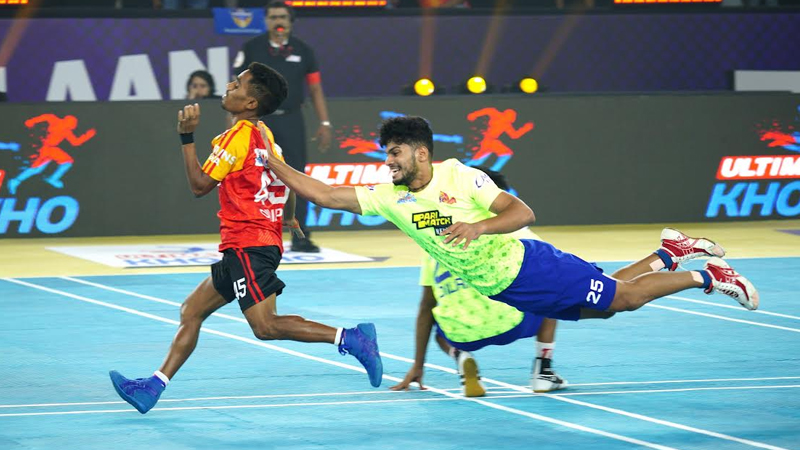
Odisha to host Ultimate Kho Kho Season 2 from December 24
-
 MAM2 years ago
Ultimate Kho Kho raises valuation, secures a series-A PE funding from UK-based BNP group
-
 News Headline2 months ago
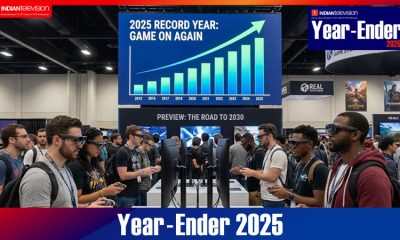
Game on again as 2025 powers up a record year and sets the stage for 2030
-
 News Headline2 months ago
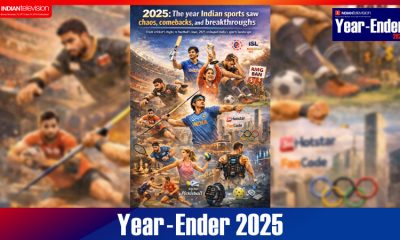
2025: The year Indian sports saw chaos, comebacks, and breakthroughs
-
 iWorld6 months ago
Billions still offline despite mobile internet surge: GSMA


