
Brands
Tanishq: Should brands buckle to trolls & boycotts?


NEW DELHI: Last week, #BabaKaDhaba went viral and showed the positive impact social media can have when used constructively. However, this week the internet was once again caught in a digital storm, divided on an ad posted by Titan Group’s Tanishq. The popular jewellery brand recently launched a new ad titled Ekatvamto celebrate “unity in oneness.”
The 45-second Tanishqspot, released ahead of the festive season, showed a baby shower being thrown by a Muslim family for their daughter-in-law, who is a Hindu. In the video, the young woman, realising that the ceremony has been organised conforming with Hindu traditions, anxiously asks her mother-in-law: "Par yeh rasam toh aapke ghar mein nahi hoti hai na? (But this ceremony is not observed at your place, is it not so?)," to which the latter replies, "Bitiya ko khush karne ki rasam toh har ghar mein hoti hai na? (The ceremony to make the daughter happy is held in every house, isit not so?)"
The description of the Tanishq commercial is as follows: “She is married into a family that loves her like their own child. Only for her, they go out of their way to celebrate an occasion that they usually don’t. A beautiful confluence of two different religions, traditions, and cultures.”
No sooner was the ad posted than it met with vicious trolling and expletives by a section of social media users who alleged that it promoted ‘love jihad’ and began trending the hashtag #BoycottTanishq.
However, another section of users on Twitter also supported India’s most trusted jewellery brand, lauding its effort to highlight that interfaith marriages can work and upholding the idea of a secular India.

Taken aback by the controversy, Tanishq pulled down the spot, tweeting, “One as a Nation. One as Humanity.’ That is what Ekatvam stands for,” to reiterate the message of communal harmony in the film.
Tanishq has officially withdrawn their ad after being trolled viciously. Here's why this is a very sad state of affairs, and context from other such ads that were trolled (and some, withdrawn) https://t.co/Nb0cSiTPHX pic.twitter.com/sn3IMBqdmC
— Karthik (@beastoftraal) October 13, 2020
Yesterday, it once again gave a lengthier explanation on Twitter why it took the extreme step: “The idea behind the Ekatvam campaign is to celebrate the coming together of people from different walks of life, local communities and families during these challenging times and celebrate the beauty of oneness. This film has stimulated divergent and severe reactions, contrary to its very objective. We are deeply saddened by this inadvertent stirring of emotions and withdraw this film, keeping in mind the hurt sentiments and well-being of our employees, partners and store staff.”
— Tanishq (@TanishqJewelry) October 13, 2020
Which once again got the trollers annoyed, who stated the boycott Tanishq campaign would continue as the brand had insinuated that the trollers would resort to strong arm tactics, showing “Hindus” in poor light.
Various brands in India have faced a similar situation where they had to buckle to the collective pressure on social media. But should brands bow down to these attacks?
Brand expert N. Chandramouli says that brands that have attempted to take a brave moral stance should anticipate recoil from those on social media. "The portents are not good if a brand takes a step back, as it shows a lack of courage, conviction, and spine."
He further says that a brand may do away with an ad under various circumstances, and not all of them are due to boycott calls. “Sometimes there are certain calls that may get made that pressurise the management. Sometimes, of course, the boycott calls are so vociferous, that the brand does so on its own. However, in both cases, the brand’s image gets tarnished due to the pull-back.”
Brand-nomics MD Viren Razdan has a different take on the issue, when he asks: "If the ad has been pulled down, did Tanishq not foresee any such issues? Or were they okay with the controversy it would kick up? If it’s the latter then it’s really a new brand direction for them.”
Nevertheless, this is not for the first time that a creative product has been brutally trolled for portraying Hindus and Muslims doing things out of the ordinary with each other. In 2019, just before the festival of Holi, Surf Excel had released an wherein a Hindu girl respects a young Muslim boy dressed all in white (going for his prayers) and prevents her friends from spraying him with coloured water. She then rides him to the mosque on her cycle, giving him a shield of protection all the way. Apparently, the film evoked a severe reaction on social media for promoting love jihad and for describing the colours of Holi as daag (stain).
Around the same time, Brooke Bond too got called out on Twitter for “portraying Kumbh Mela in a bad light” and “hurting the sentiments of Hindu pilgrims.”
Boycott karne se pehle dekh lena khareedne ki aukaat hai bhi ya nahi! #tanishq
— ruchi kokcha (@ruchikokcha) October 12, 2020
I am ashamed to have been a customer of @TanishqJewelry ..
I hereby vow never to make a single purchase from this @tatatrusts brand which wants hindu daughters sacrificed at altar of their profits.#BoycottTanishq https://t.co/XvIPYIsuGV— Ritu (सत्यसाधक) #EqualRightsForHindus (@RituRathaur) October 12, 2020
Even after producing brilliant creatives and thought-provoking ads, the question that arises in light of the Tanishq episode is: whether advertisers have any space for experimenting or going bold or touching grey areas while expressing oneselfcreatively?
Chandramouli says that owing to the current state of affairs in the country, social media has become highly polarised. Trolls who have seen their actions yield ‘results’ resort to the tactics of provocation and outrage to drive negative sentiment against whatever challenges their biased views. “It must be remembered that when a big brand pulls back, it further encourages the trolls, and sets an incorrect impediment for other brands attempting to venture to do something bold.”
Mirum India director of brand strategy and client services Mohit Ahuja also agrees that Tanishq’s fearful reaction has set a wrong precedent. "It not only bows to the pressure tactics of trolls who get braver by actions like these but also encourages similar action by other brands. It will make communication as a whole poorer. If advertising does not foster love and inclusivity, what will? Is communication like this not the main reason that most of us remain in advertising?"
Using religion and politics in advertising is a ticking time bomb, as it requires a nuanced understanding of how the people of India, beyond one's Facebook friends, think.
Scarecrow M&C Saatchi founder Raghu Bhatt opines that an ad is supposed to create goodwill and sales, not rancour and a product boycott.“If an ad is offending people, every brand will be sensible about it, apologise, and withdraw. The people who are criticising Tanishq for its action have nothing to lose. Unlike brand creators, brands can't have egos. Tanishq is sending a message that it doesn't want to hurt anyone's feelings,” he asserts.
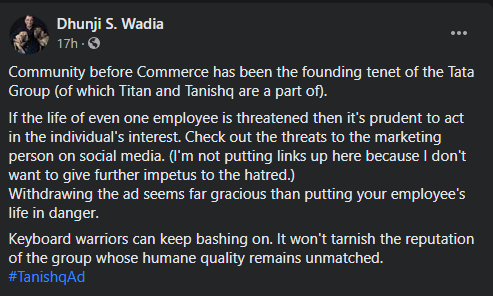
Rediffusion Y&R former president Dhunji S. Wadia wrote on his Facebook page: “Community before commerce has been the founding tenet of the Tata group (of which Titan and Tanishq are a part). If the life of even one employee is threatened then it's prudent to act in the individual's interest. Check out the threats to the marketing person on social media. Withdrawing the ad seems far gracious than putting your employee's life in danger. Keyboard warriors can keep bashing on. It won't tarnish the reputation of the group whose humane quality remains unmatched, #TanishqAd".
Taproot Dentsu chief creative officer and co-founder Santosh Paddy declares that it’s high time that the industry stood together on issues such as these. “Why is our industry being targeted every single time? Creativity is the core of our business and we cannot be pushed in the corner every single time. We are the soft targets as brands are involved. It’s high time we give a hard push back, to theauthorities for this biased behaviour. It’s creative freedom for some and beating for some?”
Why are you showing a Hindu "daughter in law" to a muslim family and glorifying it?
Why dont you show a Muslim daughter in law in your ads with a Hindu family?
Look like you are promoting #LoveJihad & favouring a particular Faith only…#BoycottTanishq
— khemchand sharma #IStandWithFarmersBill (@SharmaKhemchand) October 12, 2020
Thank you for making us notice the beautiful #tanishq ad dear trolls ! pic.twitter.com/Wev3VSaiCw
— shamina shafiq (@shaminaaaa) October 12, 2020
It's really sad to watch what kind of country we are turning into. An ad uniting two religions has to be taken down in the country which used to be called secular since forever.#tanishq pic.twitter.com/8E7UDl7PeH
— Nilesh Chhanga (@ChhangaNilesh) October 13, 2020
 indiantelevision.com has compiled a list of ads which have faced criticism in the recent past: –
Anouk Myntra
The ad with the tagline 'Bold is Beautiful' by Anouk fashion brand under Myntra was applauded as well as criticised for taking on the sensitive topic of homosexuality. The ad featured a lesbian couple preparing to break the news to one set of parents.
Kalyan Jewellers
In 2018, Kalyan Jewellers withdrew an ad featuring Amitabh Bachchan and his daughter after it came under attack for creating 'distrust' in the banking system. People threatened to sue the brand for accusing it of "casting aspersion and hurting the sentiments of millions of personnel" through the advertisement.
Amazon
The e-commerce company found itself in the midst of a controversy for allegedly selling products like slippers, doormats, and toilet seat covers with the pictures of Hindu gods and goddesses. The pictures were widely circulated on social media and Amazon was roundly criticised for hurting the sentiments of Hindus. People expressed their displeasure on social media and raised calls to boycott the e-tailer.
Gillette
The brand launched a commercial asking men to be better versions of themselves, which sparked a debate about whether companies should simply stick to promoting their products or sell social causes.
Ola
Ride-hailing app, Ola rolled out an ad a few years back to promote the affordability proposition for its Micro service. The ad featured a young couple out shopping on the streets. The boyfriend, who is paying for his better half, eventually says: “My girlfriend costs Rs 525 per Km but Ola Micro costs just Rs 6 per km". The underlying message was that using an Ola Micro is cheaper than dating a woman. The campaign was attacked on social media for being sexist and was withdrawn by the company.










Brands
Netflix India names Rekha Rane director of films and series marketing
Streaming giant bets on a seasoned marketer who helped build Amazon and Netflix into household names
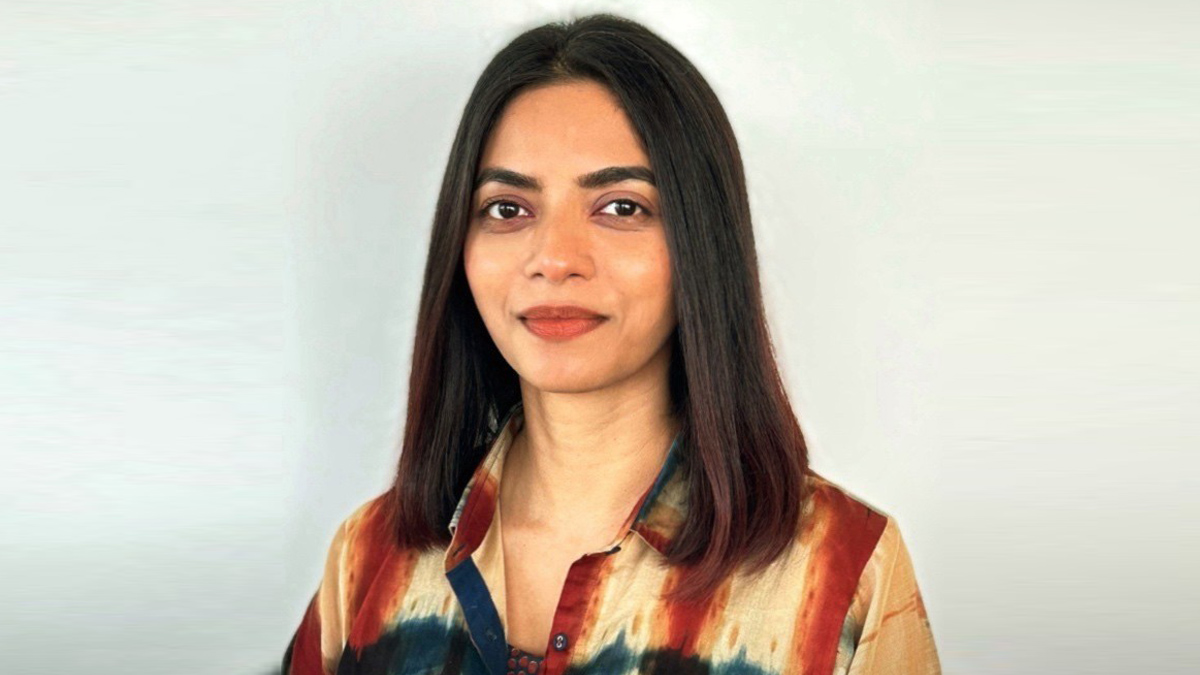
MUMBAI: Netflix has put a proven brand builder at the helm of its films and series marketing in India, naming Rekha Rane as director in a move that signals sharper focus on audience growth and cultural cut-through in one of its most hotly contested markets.
Rane steps into the role after seven years at Netflix, where she has quietly shaped how the platform sells stories to India. Her latest promotion, effective February 2026, crowns a run that spans brand, slate and product marketing across originals, licensed content and new verticals such as games.
A strategic marketing and communications professional with roughly 15 years’ experience, Rane has spent much of her career building technology-led consumer businesses and new categories, notably e-commerce and subscription video on demand. She was part of the early push that introduced Amazon.in, Prime Video and Netflix to Indian homes, then helped turn them into everyday brands.
At Netflix, she most recently served as head of brand and slate marketing for India from March 2024 to February 2026, leading teams across media and marketing for global and local content portfolios. Before that, as manager for original films and series marketing, she led IP creation and go-to-market strategy for titles including Guns and Gulaabs, Kaala Paani, The Railway Men* and The Great Indian Kapil Show, spanning both binge and weekly-release formats.
Her earlier Netflix roles covered product discovery and promotion in India and integrated campaign strategy to drive conversations around the content slate, product awareness and brand-equity metrics.
Before Netflix, Rane logged more than three years at Amazon in brand marketing roles in Bengaluru. There she handled national and regional campaigns for Amazon.in, worked on customer assistance programmes in growth geographies and contributed to the go-to-market strategy for the launch of Prime Video India.
Her career began well away from streaming. At Reliance Brands in Mumbai, she worked on retail marketing for Diesel and Superdry. A stint at Leo Burnett saw her work on primary research for P&G Tide, mapping Indian shoppers’ paths to purchase. Earlier still, at Orange in the United Kingdom, she rose from sales assistant to store manager, running a team and owning monthly P&L for a retail outlet.
The arc is telling. As global streamers fight for attention in a crowded Indian market, executives who understand both mass retail behaviour and digital habit-building are prized. Rane’s career sits at that intersection.
For Netflix, the bet is simple: in a market spoilt for choice, sharp marketing can still tilt the screen. And with Rane now leading the charge, the streamer is signalling it wants not just viewers, but fandom.
Brands
Orient Beverages pops the fizz with steady Q3 gains and rising profits
Kolkata-based beverage maker reports stronger revenues and profits for December quarter.
MUMBAI: A fizzy quarter with a steady aftertaste that’s how Orient Beverages Limited, the company that manufactures and distributes packaged drinking water under the brand name Bisleri closed the December 2025 period, as the Kolkata-based drinks maker reported improved revenues and a healthy rise in profits, signalling operational stability in a competitive beverage market.
For the quarter ended December 31, 2025, Orient Beverages posted standalone revenue from operations of Rs 39.98 crore, up from Rs 36.42 crore in the previous quarter and Rs 33.53 crore in the same quarter last year. Total income for the quarter stood at Rs 42.24 crore, reflecting consistent demand and stable pricing across its beverage portfolio.
Profit before tax for the quarter came in at Rs 3.47 crore, a sharp improvement from Rs 1.31 crore in the September quarter and Rs 0.39 crore a year ago. After accounting for tax expenses of Rs 0.79 crore, the company reported a net profit of Rs 2.68 crore, nearly three times the Rs 0.99 crore recorded in the preceding quarter.
On a nine-month basis, the momentum remained intact. Revenue from operations for the period ended December 31, 2025 rose to Rs 117.66 crore, compared with Rs 106.95 crore in the corresponding period last year. Net profit for the nine months climbed to Rs 5.51 crore, more than double the Rs 2.18 crore reported in the same period of the previous financial year.
The consolidated numbers told a similar story. For the December quarter, consolidated revenue from operations stood at Rs 45.06 crore, while profit after tax came in at Rs 2.06 crore. For the nine-month period, consolidated revenue touched Rs 133.57 crore, with net profit of Rs 4.49 crore, underscoring the group’s improving profitability trajectory.
Operating expenses remained largely controlled, with cost of materials, employee benefits and other expenses broadly aligned with revenue growth. The company continued to operate within a single reportable segment beverages simplifying its cost structure and reporting framework.
The unaudited financial results were reviewed by the Audit Committee and approved by the Board of Directors at its meeting held on 7 February 2026. Statutory auditors carried out a limited review and reported no material misstatements in the results.
In a market where margins are often squeezed by input costs and competition, Orient Beverages’ latest numbers suggest the company has found a reliable rhythm not explosive, but steady enough to keep the fizz alive.
Brands
BCCL profit jumps 53 per cent in FY25 as tax bill shrinks
Revenue rises 4.3 per cent to Rs 10,209.33 crore while deferred tax gain lifts bottom line sharply
NEW DELHI: Bennett, Coleman and Company (BCCL) has posted a sparkling set of financial results for the year ended 31 March 2025, proving that there is still plenty of ink and gold left in the ledger.
Revenue from operations climbed a steady 4.3 per cent, reaching Rs 10,209.33 crore compared to Rs 9,786.44 crore the previous year. When you sprinkle in other income, which rose 8.9 per cent to Rs 949.36 crore, the total income for the media behemoth hit a healthy Rs 11,158.69 crore.
While the income grew at a modest pace, the bottom line tells a far more dramatic story. The real headline is the 53 per cent surge in annual profit. How did they pull off such a feat? While Profit Before Tax (PBT) saw a gentle nudge upward of 2.7 per cent to Rs 1,610.00 crore, it was a vanishing act by the taxman that really did the trick.
Total tax expenses plummeted by 32.4 per cent, dropping from Rs 468.76 crore down to Rs 316.97 crore. This was largely thanks to a swing in deferred tax, moving from an expense of Rs 156.02 crore in FY24 to a benefit of Rs 39.44 crore this year.
Total income rose from Rs 10,658.55 crore in FY24 to Rs 11,158.69 crore in FY25, marking a 4.7 per cent increase. Total expenses grew at a slower pace, up 3.0 per cent from Rs 9,306.06 crore to Rs 9,581.45 crore. Profit before tax inched up 2.7 per cent, moving from Rs 1,567.02 crore to Rs 1,610.00 crore. However, the standout figure was net profit, which jumped sharply by 53.0 per cent, climbing from Rs 1,042.03 crore in FY24 to Rs 1,594.73 crore in FY25.
Despite the rising costs of doing business across the globe, BCCL kept a tight grip on the purse strings. Total expenses rose by just 3.0 per cent to Rs 9,581.45 crore. By keeping costs lower than the rate of income growth, the company ensured that the final figure, a net profit of Rs 1,594.73 crore, was nothing short of a front-page sensation.
In a world of shifting digital tides, it seems the BCCL ship is not just steady, but sailing into significantly wealthier waters.


MIB sets OTT accessibility rules, mandates captions and audio description

Boney Kapoor acquires remake rights of Tamil political satire Thalaivar Thambi Thalaimaiyil

Netflix India names Rekha Rane director of films and series marketing

Zabeen signs off from TV9 after shaping the network’s public voice

Dhawan steps up to bat for Delhi’s grassroots sports push

Orient Beverages pops the fizz with steady Q3 gains and rising profits

Cheekatilo shines in the dark with record debut on Prime Video

These ’90s fashion trends are making a comeback in 2017
The final 6 ‘Game of Thrones’ episodes might feel like a full season
According to Dior Couture, this taboo fashion accessory is back
The old and New Edition cast comes together to perform
Phillies’ Aaron Altherr makes mind-boggling barehanded play
Uber and Lyft are finally available in all of New York State
Disney’s live-action Aladdin finally finds its stars
MIB sets OTT accessibility rules, mandates captions and audio description
Boney Kapoor acquires remake rights of Tamil political satire Thalaivar Thambi Thalaimaiyil
Netflix India names Rekha Rane director of films and series marketing
Zabeen signs off from TV9 after shaping the network’s public voice
Dhawan steps up to bat for Delhi’s grassroots sports push
Orient Beverages pops the fizz with steady Q3 gains and rising profits
Cheekatilo shines in the dark with record debut on Prime Video
-

 News Broadcasting1 week ago
Mukesh Ambani, Larry Fink come together for CNBC-TV18 exclusive
-

 News Headline1 month ago
From selfies to big bucks, India’s influencer economy explodes in 2025
-

 iWorld2 weeks ago
Netflix celebrates a decade in India with Shah Rukh Khan-narrated tribute film
-

 Hollywood5 days ago
The man who dubbed Harry Potter for the world is stunned by Mumbai traffic
-
 I&B Ministry3 months ago
India steps up fight against digital piracy
-
 MAM3 months ago
HoABL soars high with dazzling Nagpur sebut
-
 iWorld12 months ago
BSNL rings in a revival with Rs 4,969 crore revenue
-
 iWorld3 months ago
Tips Music turns up the heat with Tamil party anthem Mayangiren
