
Box Populi
Capping ticket prices could be the blockbuster move India needs

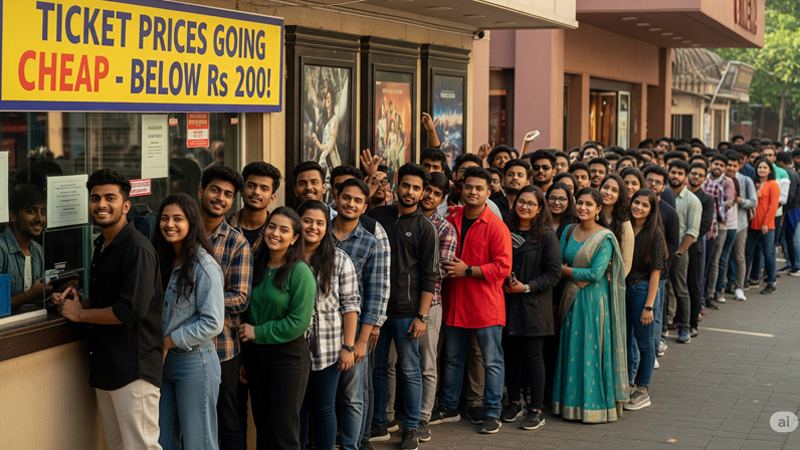
MUMBAI: Lights, camera… exit? For many Indian cinemagoers, that’s the current script thanks to ticket prices that have crept from “reasonable” to “ridiculous.” With average Hindi movie tickets hovering around Rs 203, a family outing to the movies now rivals a restaurant bill. It’s no surprise then that India’s total cinema footfalls in 2023 dropped to 88.3 crore, down six per cent year-on-year despite record-breaking hits.
Now compare that to states that have capped ticket prices. In Karnataka, a Rs 200 ceiling (inclusive of taxes) has been formally introduced across all formats, aiming to widen access and stabilise footfalls. Tamil Nadu continues to enforce an effective price limit of Rs 150 (excluding GST), especially for regional films. Andhra Pradesh has a structured pricing framework where regular seats are capped at Rs 177 and recliners at Rs 295, with special government permissions needed for hikes. Meanwhile, Telangana sets Rs 295 as the multiplex cap, but with a softer hand that allows occasional hikes.
These capped states, many of which are strongholds for south Indian cinema actually offer a crucial insight. Despite lower average ticket prices (ATP- as low as Rs 94–Rs106 for Telugu and Tamil films), these industries continue to deliver some of India’s highest-grossing films. Pushpa, RRR, and Leo weren’t powered by premium pricing they were powered by massive turnout. Volume over margin, and accessibility over exclusivity, has been the winning formula.
Now contrast that with the Hindi film industry’s ATP of Rs 203. While Bollywood does see big openings, the high price point restricts repeat viewing and deters casual audiences. When a movie ticket costs nearly as much as a one-month OTT subscription, families weigh their choices and increasingly choose the sofa.
A nationwide cap of Rs 150 for regular seats, Rs 200 for premium, across all languages wouldn’t just level the playing field, it could dramatically boost footfalls for Hindi films, which continue to rely heavily on urban, multiplex markets. Lowering the barrier to entry could reopen the gates to India’s vast middle-class audience. Let’s not forget: a single Rs 100 ticket sold to 1,000 people earns more than a Rs 300 ticket sold to 200.

Even with a cap on ticket prices, theatres and multiplexes can continue to thrive by shifting focus from high-margin tickets to high-volume footfalls and diversified revenue streams. More affordable prices draw in larger crowds, especially families and repeat viewers, creating consistent occupancy rates across weekdays and not just weekends. Multiplexes can optimise profits through premium experiences charging modest surcharges for IMAX, recliner seats, or 4DX formats while also driving revenue through food and beverage sales, branded partnerships, and on-screen advertising.
Additionally, bundled offers, loyalty programmes, and dynamic pricing during off-peak hours can further boost margins. With lower pricing unlocking access to wider audiences, the overall revenue pie can grow not shrink by getting more bums in more seats, more often.
An excellent case in point is Saiyaara, the breakout romantic drama that is shattering expectations at the box office not by charging more, but by charging smart. Yash Raj Films rolled out discounted pricing strategies from day one, offering Buy 1 Get 1 free deals, Rs 99 weekday tickets, and up to 50 per cent off on early bookings, particularly targeting youth and family audiences. Far from cannibalising revenue, this pricing hack did the opposite Saiyaara earned over Rs 105 crore in just four days, with weekday occupancy soaring to 80 per cent in some centres, a rare feat for non-franchise films.
The promotional pricing widened the film’s reach beyond urban cinephiles to first-time and return viewers alike. It proved that lower prices didn’t shrink earnings, they supercharged them. Instead of relying on premium ticket margins, Saiyaara leaned on volume, accessibility, and buzz making a powerful case for why affordable cinema might just be the industry’s best blockbuster strategy.
Hindi films once thrived in single screens packed with cheering crowds. But rising costs and shifting consumption habits have turned cinema into a weekend indulgence rather than a weekly ritual. Reintroducing affordability could revive that mass magic, bringing back the audiences who made the movies matter.
The numbers don’t lie: when tickets are cheaper, people come in droves. And that’s a happy ending the Indian film industry desperately needs.







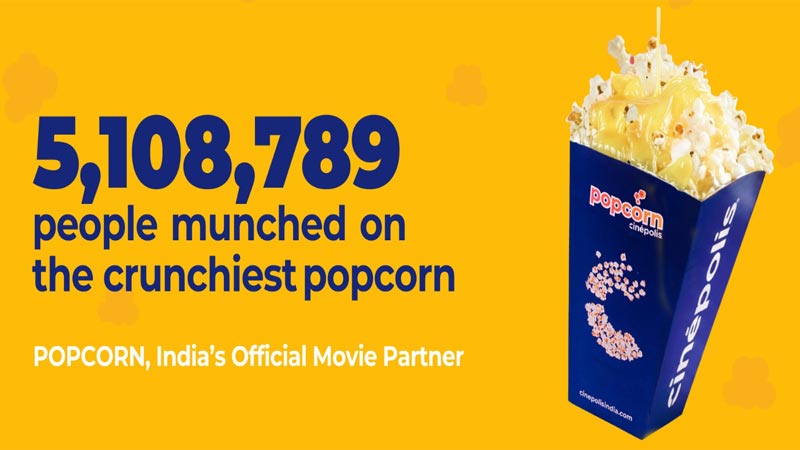
MUMBAI:If there is a soundtrack to cinema-going, it is the crackle of popcorn and in 2025, audiences at Cinépolis India clearly couldn’t get enough of it. The multiplex chain has revealed its annual popcorn consumption data, showing that moviegoers across its network devoured close to five million tubs of popcorn last year. Broken down, that works out to around 570 tubs every hour, or roughly 10 tubs disappearing every single minute, enough to keep the kernels popping almost non-stop.
In sheer volume terms, Cinépolis sold around 12,000 tonnes of popcorn during the year, underlining just how central the snack has become to the big-screen ritual. Long after the opening credits roll and before the end credits fade, popcorn remains the constant companion.
To celebrate National Popcorn Day on January 19, 2026, the cinema chain is now turning the spotlight on the snack itself. From January 20 to January 31, Cinépolis will run a nationwide “Popcorn Happy Hour”, offering a buy one get one free deal on popcorn across its locations. The limited-period promotion is designed to add a little extra crunch to the moviegoing experience, without adding to the bill.
“Popcorn is the official movie partner, and at Cinépolis, it is the sensory anchor of the cinema experience,” said Cinépolis India managing director Devang Sampat. “With the Popcorn Happy Hour offer, we are making it easier for audiences to add that to their visit, without compromising on quality.”
Sampat added that the consumption data is more than just a fun statistic. Tracking what patrons buy and when they buy it helps the chain refine its food and beverage offerings and shape the overall in-cinema experience. “Our 2025 data helps us understand what patrons are choosing, so we can keep improving the menu and the experience,” he said.
The popcorn push sits within Cinépolis India’s broader Foovies framework, an in-house strategy that treats food and beverages as a core part of cinema-going rather than a side order. The approach focuses on curated menus, value-led campaigns and data-driven decisions, using consumer behaviour to guide what lands at the concession counter.
As theatres continue to compete not just with streaming platforms but with every other leisure option vying for attention, the numbers suggest one thing remains rock-solid: when the lights dim, popcorn still rules the aisle. And with millions of tubs already behind it, Cinépolis is betting that the humble kernel will keep audiences coming back for another bite and another show.
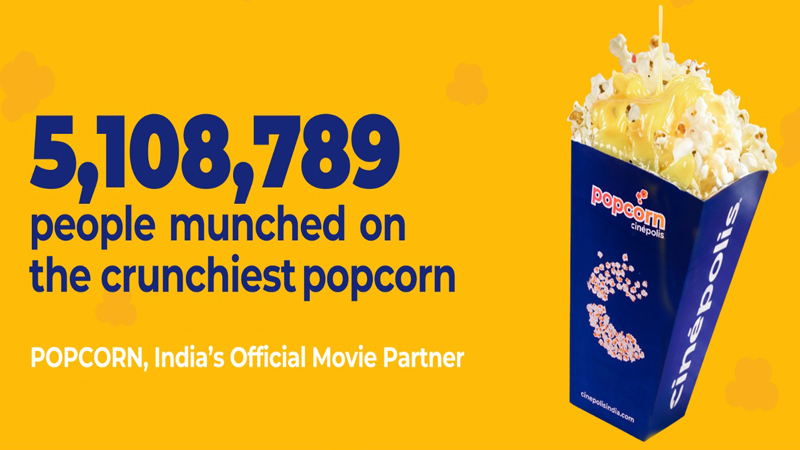
NEW DELHI: Cinépolis India sold nearly five million popcorn tubs in 2025, roughly one every six seconds, underscoring how firmly snacks are stitched into the cinema experience. Data released by the multiplex chain shows patrons bought around 570 tubs an hour, or 10 a minute, translating into 12,000 tonnes of popcorn consumed across its theatres last year.
To capitalise on the numbers and mark National Popcorn Day on January 19, Cinépolis will sell select popcorn variants at Rs 19 across all locations and showtimes, subject to availability. The push will roll into a longer “Popcorn Happy Hour” from 20 to 31 January, offering a buy-one-get-one-free deal nationwide.
Cinépolis India managing director Devang Sampat, said popcorn remains the “sensory anchor” of the big-screen experience and that value-led offers were designed to make it easier for audiences to add food to their visit without diluting quality. He added that proprietary food-and-beverage data helps the chain refine menus and improve the overall cinema experience.
The campaign sits within Cinépolis India’s Foovies strategy, which treats food and beverage not as an add-on but as a core driver of footfalls and consumption, backed by data-led menu development and targeted value promotions.
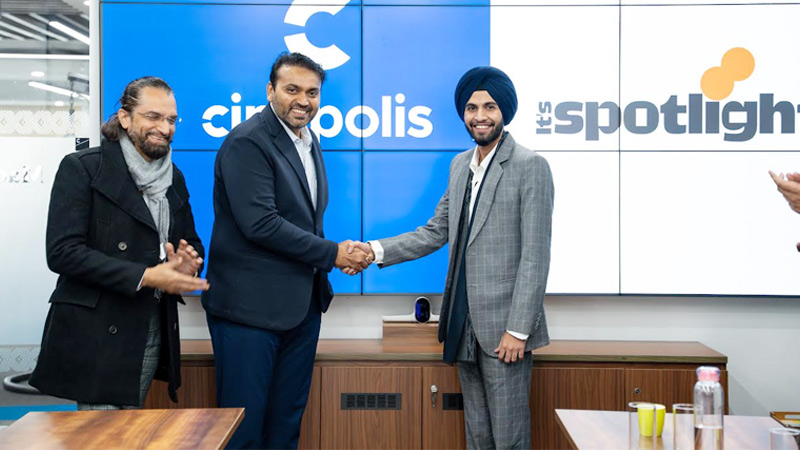
NATIONAL: Cinépolis India is moving decisively into cinema advertising, rolling out a nationwide network of digital screens across its multiplex lobbies in a partnership with dooh specialist It’s spotlight.
The deal will see more than 350 led screens, video walls and digital displays switched on across 101 Cinépolis properties in 63 cities and 23 states and union territories, creating one of the largest in-cinema advertising networks in the country.
Under the arrangement, It’s spotlight will operate and commercialise the inventory, giving brands access to programmatic buying, real-time optimisation and performance metrics such as impressions, audience profiles and footfall data.
“Cinema environments offer advertisers access to audiences in a focused, lean-forward setting which is distinct from outdoor and transit media,” said Cinépolis India managing director Devang Sampat. As dooh gathers momentum and brands look beyond cluttered social and digital platforms, he said, cinemas offer a sharper way to reach young and urban consumers.
The timing is deliberate. India’s out-of-home advertising market was worth Rs 5,920 crore in 2024, according to the EY-Ficci M&E report, with digital OOH expected to rise from 12 per cent to 17 per cent of total revenues by 2027.
It’s spotlight founder and director Virkaran Singh, said cinema screens sit “at the intersection of attention, intent and experience”, offering advertisers premium, highly engaged audiences at national scale through a single buy.
With 449 screens already under its Cinépolis, Cinépolis VIP and Fun Cinemas brands, the exhibitor is betting that its lobbies can become as valuable to advertisers as its auditoriums, turning footfall into a high-impact media channel.


Hamdard honours changemakers at Abdul Hameed awards

Why the Best Campaigns Today Start With Insights, Not Ideas

Ahmad Muneeb elevated to VP – HR centre of excellence at Zepto

Fans Take Centre Stage as Zee Cine Awards Turns the Spotlight Around

GUEST COLUMN: How content leaders decide what gets greenlit

The man who dubbed Lord of the Rings in 50 languages is stunned by Mumbai traffic

Dell names Aishwarya Sudhakar director of marketing intelligence

These ’90s fashion trends are making a comeback in 2017
The final 6 ‘Game of Thrones’ episodes might feel like a full season
According to Dior Couture, this taboo fashion accessory is back
The old and New Edition cast comes together to perform
Phillies’ Aaron Altherr makes mind-boggling barehanded play
Uber and Lyft are finally available in all of New York State
Disney’s live-action Aladdin finally finds its stars
Hamdard honours changemakers at Abdul Hameed awards
Why the Best Campaigns Today Start With Insights, Not Ideas
Ahmad Muneeb elevated to VP – HR centre of excellence at Zepto
Fans Take Centre Stage as Zee Cine Awards Turns the Spotlight Around
GUEST COLUMN: How content leaders decide what gets greenlit
The man who dubbed Lord of the Rings in 50 languages is stunned by Mumbai traffic
Dell names Aishwarya Sudhakar director of marketing intelligence
-

 News Broadcasting5 days ago
Mukesh Ambani, Larry Fink come together for CNBC-TV18 exclusive
-
 I&B Ministry3 months ago
India steps up fight against digital piracy
-

 iWorld1 week ago
Netflix celebrates a decade in India with Shah Rukh Khan-narrated tribute film
-
 iWorld3 months ago
Tips Music turns up the heat with Tamil party anthem Mayangiren
-
 MAM3 months ago
HoABL soars high with dazzling Nagpur sebut
-
 iWorld12 months ago
BSNL rings in a revival with Rs 4,969 crore revenue
-

 MAM5 days ago
Nielsen launches co-viewing pilot to sharpen TV measurement
-

 Film Production1 week ago
UFO Moviez rides high on strong Q3 earnings
