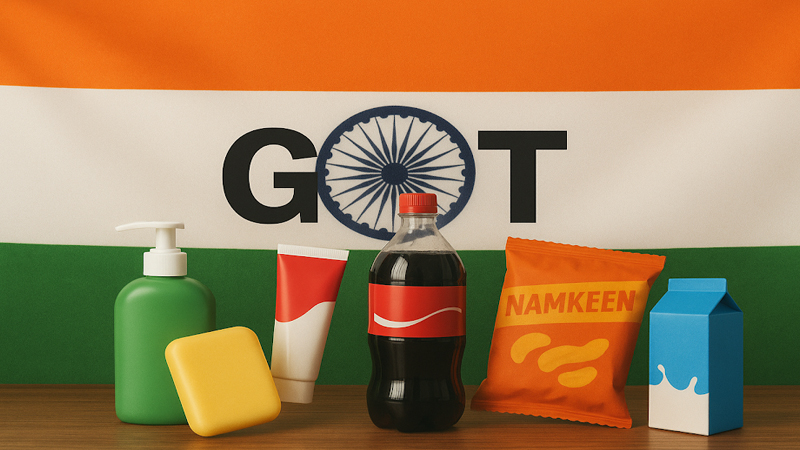
MUMBAI: The FMCG aisle just got a tax wash, and shoppers may finally come out smelling of roses. With the government’s GST 2.0 reform collapsing the maze of 5 per cent, 12 per cent, 18 per cent and 28 per cent slabs into a neat trio of 5 per cent, 18 per cent and a frothy 40 per cent, the everyday essentials that power India’s consumption story have been given a welcome scrub.
Soap, toothpaste, shampoos, toothbrushes and shaving cream once languishing at 18 per cent now gleam under the 5 per cent bracket, a move that analysts say could spark a volume surge of 8–12 per cent in FMCG sales in Q4 2025. For households tightening belts, and for rural India where every rupee pinches, that’s a tax break with real bite.
Food has also found its sweet spot. Ghee, nuts, bottled water, namkeen and dairy staples have been moved to 5 per cent, with paneer and UHT milk made entirely GST-free. The dairy sector alone is expected to lap up a Rs 11,400 crore boost, with giants like Amul and Britannia licking their lips. Even indulgences like ice-cream and butter now come with a lighter 5 per cent tag.
It isn’t just the kitchen basket that’s cheering. Tractors, pumps and fertilisers all at 5 per cent promise lower farm costs and higher rural income, feeding directly into FMCG consumption. Add cheaper packaging materials, and margins for companies like HUL, Dabur and Marico may fatten by 100–150 basis points.
But it isn’t all sugar and spice. Premium and discretionary products still find themselves in the bitter bracket. Aerated drinks, colas, energy beverages and luxury chocolates continue to fizz under 18 per cent or the punishing 40 per cent sin rate, leaving players like Coca-cola and Pepsi nursing flat outlooks. The GST Council may have thrown a party for soaps and shampoos, but sodas are still paying for the hangover.
On the compliance front, the industry is racing to reprint price tags and rejig invoices before the 22 September 2025 roll-out, with old stock adjustments threatening short-term headaches for distributors. Yet, with GST audits now mandatory only above Rs 10 crore turnover, smaller FMCG outfits can breathe easier.
The broader script is clear: this reset is pro-rural, pro-consumption and pro-MSME, even if it means the exchequer takes a knock – with the Global Trade Research Initiative warning of a Rs 10,664 crore revenue shortfall from import-linked IGST alone.
Still, for an industry fuelled by volume, the GST reboot couldn’t have been better timed. As festive season shelves stack up, FMCG finds itself freshly polished, priced to move, and perfectly poised to turn tax relief into a consumption carnival.
Leave a Reply