MUMBAI: When Netflix arrived in India ten years ago, the streaming giant wasn’t just entering a new market, it was stepping into a nation obsessed with stories. From cricket to cinema, India has always lived in 16:9 emotion. A decade later, as Netflix celebrates its 10th anniversary here, it has become more than just a platform, it’s a pop-culture mood board, a social mirror, and occasionally, the nation’s favourite debate topic over dinner.
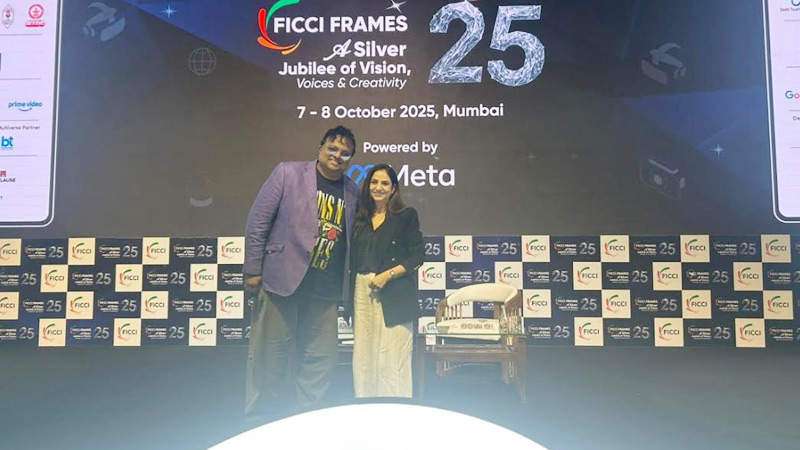
At FICCI Frames 2025, Netflix India, vice president of content Monika Shergill revisited the platform’s decade-long journey not as a corporate milestone, but as a cultural chronicle. “It’s been ten years of discovering stories that surprise even us,” she said with a smile. “India has taught us that there’s no such thing as one audience.”
Shergill’s words carried weight. In 2016, when Netflix launched in India, data plans were expensive, the idea of binge-watching was alien, and cable television ruled the roost. Yet, as she pointed out, “audiences were already hungry for something different, they just didn’t know where to find it.” That ‘something different’ soon arrived in the form of gritty, genre-bending originals like Sacred Games and Delhi Crime, titles that not only redefined Indian streaming but also caught the attention of global viewers.
“Shows like Delhi Crime proved that our stories don’t have to be diluted for global audiences,” Shergill noted. “They resonate precisely because they are authentic, rooted, and unapologetically Indian.”
Over the years, Netflix’s slate has stretched from the heartlands to the Himalayas, serving up thrillers, romcoms, docuseries, and biopics that mirror the country’s diversity. From Kota Factory’s monochrome melancholy to Khufiya’s cloak-and-dagger intrigue, every title seems to tap into a different emotion, language, and landscape proof that India doesn’t just contain multitudes, it streams them too.
But as Shergill highlighted, the real game-changer has been regional storytelling. “Tamil, Telugu, Malayalam, and Bengali stories are not just finding local audiences, they’re travelling globally,” she said. “When you keep the essence local, you end up going global.” Indeed, viewership of Indian regional content on Netflix has shot up by more than 60 per cent in the past three years, while global viewing of Indian titles has doubled.
Beyond the data, there’s a shift in creative dynamics. Netflix’s approach to nurturing over 200 Indian writers, directors, and creators has created what Shergill calls “a sandbox for fearless storytelling.” Unlike theatrical cinema, where success is often measured by box-office numbers, the streaming space has allowed creators to focus on experimentation, representation, and emotional truth.
“Streaming has democratised creativity,” she said. “You could be a first-time director from Shillong or a veteran from Mumbai, your story gets the same chance to be discovered.”
That discovery is also increasingly shaped by technology. Shergill spoke of how algorithms, AI tools, and personalisation engines have made every viewer’s journey unique. “We often joke that no two people have the same Netflix,” she said. “But the magic lies in how tech quietly helps stories find the right audience, not the other way around.”
Of course, Netflix’s decade in India hasn’t been without its plot twists from the rise of fierce competition (DisneyPlus Hotstar, Prime Video, JioCinema, Zee5, SonyLiv, and more) to debates on pricing, censorship, and content localisation. Yet, as Shergill pointed out, these challenges have only sharpened the industry’s creative instincts. “Healthy competition means better stories,” she said. “It’s proof that the audience is winning.”
As India becomes one of Netflix’s fastest-growing markets, the company is doubling down on localisation not just through language, but through themes that reflect real India. Small-town aspirations, gender fluidity, generational conflict, and cultural nostalgia are no longer niche; they’re mainstream. “The stories that come from the heartland are the ones making it to hearts worldwide,” Shergill quipped.
The conversation also drifted to how streaming has blurred the lines between entertainment and experience. “Today, entertainment is no longer consumed,” she observed. “It’s lived, shared, and replayed. When people cry over a character or cheer for a show, they’re not just viewers, they’re participants.”
As FICCI Frames explored the theme of India’s creative economy, Shergill’s reflections summed up a decade where the screen became both a stage and a storyteller. “Streaming is not just about algorithms and recommendations,” she said. “It’s about emotion, connection, and the thrill of seeing your story on a global map.”
For Netflix, that map is only expanding. With new content partnerships, investments in regional studios, and a growing slate of originals, the next chapter seems poised for even more ambitious storytelling.
Ten years on, the red N has gone from being an app icon to an emotional bookmark in India’s entertainment story. And as Shergill reminded the audience, “Our best stories are still buffering and that’s the most exciting part.”
Leave a Reply