
Brands
Hindustan Unilever’s profits flatten as margins take a beating

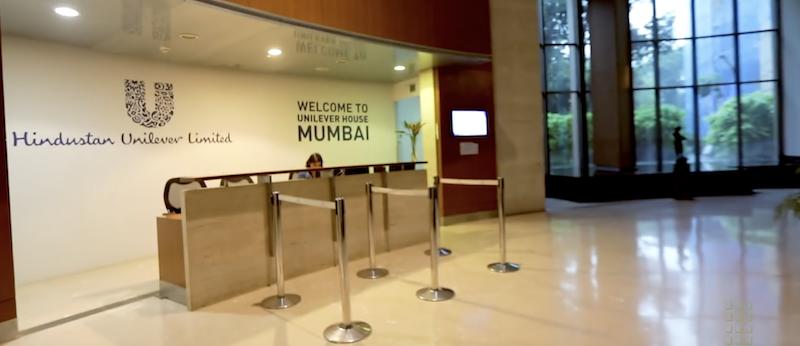
MUMBAI: Hindustan Unilever limped through the September quarter with anaemic growth and shrinking margins, a performance that underscores the headwinds buffeting India’s consumer-goods bellwether. The maker of Dove soap and Surf detergent eked out a mere two per cent rise in sales whilst profit after tax before exceptional items slipped four per cent.
Revenue from operations nudged up to Rs 16,034 crore for the quarter ended 30 September 2025, compared with Rs 15,703 crores in the year-ago period. But the real story lay in the margins: EBITDA margin contracted a painful 90 basis points to 23.2 per cent, down from 24.1 per cent last year. The culprit? Surging raw-material costs, which jumped 15 per cent year-on-year to Rs 5,746 crore.
Profit after tax before exceptional items came in at Rs 2,482 crore, down from Rs 2,594 crore in the September 2024 quarter. But here’s where it gets interesting: exceptional items swung the needle dramatically. A one-off Rs 273-crore windfall from resolving tax disputes between UK and Indian authorities turned what would have been a profit decline into a four per cent gain. Reported PAT stood at Rs 2,694 crore versus Rs 2,595 crore last year.
The half-year picture proved equally tepid. For the six months ended September, sales rose just four per cent to Rs 32,330 crore from Rs 31,200 crore. EBITDA for the period came in at Rs 7,539 crore with margins at 23.3 per cent. Profit after tax before exceptionals at Rs 4,960 crore marked a five per cent decline from Rs 5,201 crore in the first half of the previous year.
Segment performance revealed a mixed bag. Home Care, the company’s largest division with Rs 11,441 crore in half-year sales, saw operating profit slip to Rs 2,212 crore from Rs 2,250 crore. Beauty & Wellbeing proved the bright spot, with sales surging 10 per cent to Rs 7,363 crores, though operating profit dipped marginally to Rs 2,060 crore. Personal Care posted a robust four per cent sales growth whilst Foods, contributing Rs 7,885 crore saw profits decline 10 per cent to Rs 1,281 crore.

The company’s acquisition spree added fresh complications. Purchase consideration for business combinations totalled Rs 2,661 crore during the half-year, primarily related to the Minimalist skincare brand acquisition completed in April. This aggressive M&A activity, whilst positioning HUL for future growth, weighed on near-term cash flows and contributed Rs 38 crore in acquisition-related costs.
Managing director and chief executive officer Priya Nair faces a delicate balancing act. The board declared an interim dividend of Rs 19 per share, maintaining shareholder payouts even as profits sputtered. Meanwhile, the proposed demerger of the ice-cream business into Kwality Wall’s (India) Limited awaits regulatory clearances—a restructuring that could reshape HUL’s portfolio but added Rs 51 crore in expenses this quarter.
Cash generation remained robust despite operational headwinds. Operating cash flows for the half-year stood at Rs 6,267 crores, though down from Rs 6,657 crore last year. The company deployed Rs 5,639 crore in dividend payments whilst splashing Rs 617 crore on capital expenditure.
Earnings per share for the quarter came in at Rs 11.43, up marginally from Rs 11.03 last year, though this flattered the underlying performance due to exceptional gains. For the half-year, EPS stood at Rs 23.16 versus Rs 22.14, a five per cent increase that masked the compression in core profitability.
The September quarter’s travails suggest India’s consumption story has lost some fizz. With costs climbing faster than pricing power allows and competition intensifying across categories, HUL’s playbook of premiumisation and market-share gains faces a stern test. The Rs 273-crore tax bonanza provided cosmetic relief this quarter, but the underlying business needs more than accounting alchemy to regain its mojo.











MUMBAI: Zepto has elevated Ahmad Muneeb to vice president – HR centre of excellence, placing him at the helm of the company’s total rewards, executive compensation and organisational effectiveness as the quick-commerce firm powers through a high-growth phase.
The move follows his stint as senior director of the HR COE, where he played a central role in preparing the company for IPO readiness while scaling its people analytics capabilities. During this period, Muneeb helped align complex performance management structures with more streamlined and scalable employee experience frameworks.
In his new role, he will steer the design of total rewards strategies, executive compensation planning and organisational design, while also overseeing performance management, employee experience initiatives and people analytics programmes.
Before joining Zepto, Muneeb spent nearly three years at Meesho, where he held multiple rewards and HR business partner roles. Earlier in his career, he worked as a senior rewards consultant at Mercer, advising high-tech clients on compensation benchmarking, pay structures and talent-focused reward frameworks.
He began his hr journey at Cognizant, where he supported compensation programmes for nearly two lakh employees across India and worked on m&a compensation alignment and skill-based pay initiatives. Prior to moving into HR, Muneeb started his career as a software engineer at Netcracker, bringing a technical grounding to his people strategy work.
With a mix of consulting rigour, start-up agility and enterprise-scale experience, Muneeb’s elevation signals Zepto’s continued focus on building robust people systems as it races towards its next phase of growth.

INDIA: Dell Technologies is doubling down on artificial intelligence in marketing. The company has elevated Aishwarya Sudhakar to director of marketing measures and intelligence engineering, tasking her with building an enterprise-wide framework for AI-led measurement and customer intelligence.
In the role, Sudhakar will oversee unified data strategy, advanced modelling and context engineering: areas increasingly central to how large technology firms link marketing performance to business outcomes. Her remit includes shaping scalable systems that support Dell’s next phase of AI deployment across marketing functions.
Sudhakar steps into the position after holding a series of senior roles at Dell, including AI lead for marketing orchestration, senior manager, and senior data scientist in customer insights. Across these roles, she led global teams working on large-scale machine learning models, data pipelines and customer analytics.
Before joining Dell, she began her career at Tata Consultancy Services as a systems engineer and later founded Oclor, a shopping discovery start-up, where she built end-to-end technology platforms. The combination of enterprise-scale data work and entrepreneurial experience has shaped her focus on product-led, engineering-first innovation.
As technology companies seek sharper attribution and intelligence in an AI-saturated market, Dell’s move underscores the growing importance of marketing measurement as an engineering discipline rather than a reporting function.
GURUGRAM: Adidas has appointed Gaurav Pathak as director of key and field accounts, bringing back an executive who began his leadership career at the company.
In the role, Pathak will be responsible for deepening strategic partnerships and expanding key, field and export accounts, with a mandate to accelerate growth across the Indian market. The appointment marks a return to Adidas after nearly a decade across premium retail and footwear brands.
Pathak most recently served as head of retail and business development at Ecco, where he focused on partner-led growth, market risk mitigation and operational scale. Before that, he spent eight years at House of Anita Dongre Limited, rising to general manager and leading regional operations across western and southern India.
His earlier career includes a stint as regional sales manager for Karnataka at United Colors of Benetton India and a six-year run at Adidas, where he held sales leadership roles.
With competition intensifying in India’s lifestyle and footwear market, Pathak’s brief will centre on strengthening field execution while aligning large accounts with Adidas’s broader commercial priorities.


Hamdard honours changemakers at Abdul Hameed awards

Why the Best Campaigns Today Start With Insights, Not Ideas

Ahmad Muneeb elevated to VP – HR centre of excellence at Zepto

Fans Take Centre Stage as Zee Cine Awards Turns the Spotlight Around

GUEST COLUMN: How content leaders decide what gets greenlit

The man who dubbed Lord of the Rings in 50 languages is stunned by Mumbai traffic

Dell names Aishwarya Sudhakar director of marketing intelligence

These ’90s fashion trends are making a comeback in 2017
The final 6 ‘Game of Thrones’ episodes might feel like a full season
According to Dior Couture, this taboo fashion accessory is back
The old and New Edition cast comes together to perform
Phillies’ Aaron Altherr makes mind-boggling barehanded play
Uber and Lyft are finally available in all of New York State
Disney’s live-action Aladdin finally finds its stars
Hamdard honours changemakers at Abdul Hameed awards
Why the Best Campaigns Today Start With Insights, Not Ideas
Ahmad Muneeb elevated to VP – HR centre of excellence at Zepto
Fans Take Centre Stage as Zee Cine Awards Turns the Spotlight Around
GUEST COLUMN: How content leaders decide what gets greenlit
The man who dubbed Lord of the Rings in 50 languages is stunned by Mumbai traffic
Dell names Aishwarya Sudhakar director of marketing intelligence
-

 News Broadcasting4 days ago
Mukesh Ambani, Larry Fink come together for CNBC-TV18 exclusive
-

 iWorld1 week ago
Netflix celebrates a decade in India with Shah Rukh Khan-narrated tribute film
-
 MAM3 months ago
HoABL soars high with dazzling Nagpur sebut
-

 MAM4 days ago
Nielsen launches co-viewing pilot to sharpen TV measurement
-
 iWorld12 months ago
BSNL rings in a revival with Rs 4,969 crore revenue
-
 I&B Ministry3 months ago
India steps up fight against digital piracy
-
 iWorld3 months ago
Tips Music turns up the heat with Tamil party anthem Mayangiren
-

 Film Production1 week ago
UFO Moviez rides high on strong Q3 earnings
