
Kids
World Television Day: An ode to the 2000s tween-show era

MUMBAI: Under the era of Youtube, Netflix and along with it the access to a lot of international and hyper local content, is buried a little piece of our tween and teenage self which used to wait for the 6 pm marathon of Disney, Channel V, MTV shows. The 6-7 pm slot was our prime time, when homework and household chores came to a standstill and the world of Miley Stuart (Hannah Montana), Alex Russo (Wizards of Waverly Place), Zack and Cody (The Suite Life of Zack, Cody), the Jonas Brothers (Jonas Brothers) became our own.
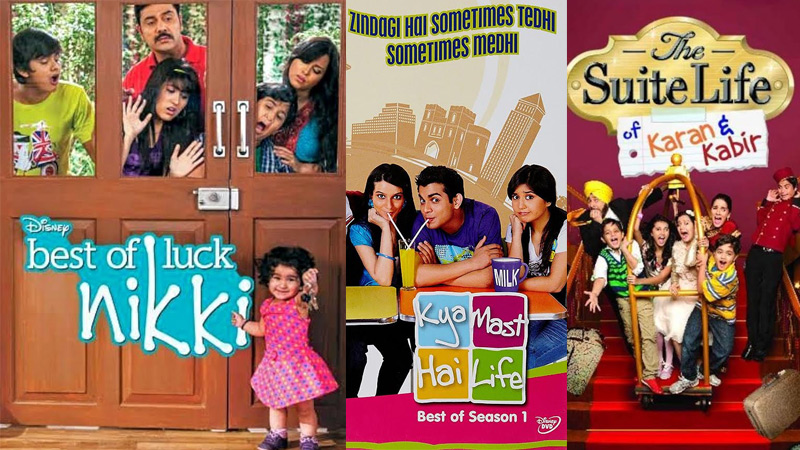
Woven from the same thread, were some homegrown favourites such as Shararat Ki Shararat, Karishma ka Karishma, Kya Mast Hai Life, Humse se hai life, Dil Dosti Dance, Dil Mil Gaye, Cambala Investigation Agency, Dhoom Machao Dhoom, Miley Jab Hum Tum, The Suite Life of Karan and Kabir, Best of Luck Nikki, Art Attack, M.A.D which gave birth to a new era of tween and teenage content.
Today’s tweens, the Gen Alphas, are watching shows like Stranger Things and Wednesday, which are built on bigger budgets. There was something undeniably special and captivating about the early 2000s shows. Budgets were tighter, sets were smaller and the wardrobe comprised stripes, shapes and every colour in the crayon box. And yet, the eccentric Y2K fashion, glitter eyeshadows and wired headphones are all making a comeback, as the 90s and 2000s still have a massive chokehold on today’s Gen Z and Gen Alpha aesthetics.
Indian tween shows, however, are in a prolonged slumber, becoming relics of a particular cultural moment. Why did this entire category fade away? Was it the exposure to more adult-leaning content at a younger age? The dominance of social media influencers who now serve as the “relatable content” that TV once offered? Or the shift in economics, where kids’ programming no longer promises the same advertising returns?
Disney and Nickelodeon still exist, but mostly for nostalgia-wrapped reruns, serving more as comfort viewing for young adults than destination content for actual tweens.
To throw some light into why this type of content hasn’t seen the light of day since 2012, actor Varun Vazir, who played Manu in The Suite Life of Karan and Kabir, talked about how the downfall isn’t due to lack of demand, but a change in our lifestyle and the way kids consume content these days.
“There’s been a major shift in how content is consumed. Back in the 2000s, television was the only form of entertainment for kids. Today, they’re watching YouTube, and OTT all at once. The landscape has completely changed. The attention span has reduced. Content is shorter, snappier, watched vertically on phones. We never imagined people would watch the shows vertically now it’s normal.”
Today’s kids have grown up around devices and the social media savvy environment, whereas the 90s and 2000s kids grew up with Pokemon and WWE cards, Disney themed sippers and pencil boxes, board games, beyblades, yoyos, iPods and the sony MP3 players.
“Children are growing up before their age. An eight-year-old today is already watching content meant for 13-year-olds. Earlier, there was innocence in the shows and in the audience. That innocence is missing now,” he added.
“The characters weren’t extravagant. They were real families and real kids dealing with simple problems in a fun, warm way. That’s why people connected to them,” Varun recalled. “It wasn’t superheroes and VFX. It was storytelling at its purest.”
Vazir explained that the way these shows were made reflected the same heart.
“So much love and passion went into those shows. Now everything is about ROI and virality. Back then, the foundation was storytelling.”
Shows like The Suite Life of Karan and Kabir and Best of Luck Nikki, were shot like classic sitcoms: multi-camera, sync sound, minimal post-production.
“We didn’t dub anything. No retakes for sound. Whatever you did on set went straight to the screen and that gave the show a certain honesty you rarely see today,” he recalled.
Perhaps the most conspicuous shift is this: the idea of “tweenhood” itself has changed. Where we lingered in that space for years — our childhoods were slower, simpler and shielded from the noise of the online world — today’s kids leap across it quickly. They mimic teen behaviour earlier, consume mature content earlier, and pick up digital-world cues earlier. In that acceleration, the demand for gentle, goofy, aspirational tween content has quietly disappeared.
What remains is a collective memory: one built on shows with laugh tracks, school crushes, matching friendship bands, and theme songs that still live rent-free in our minds.









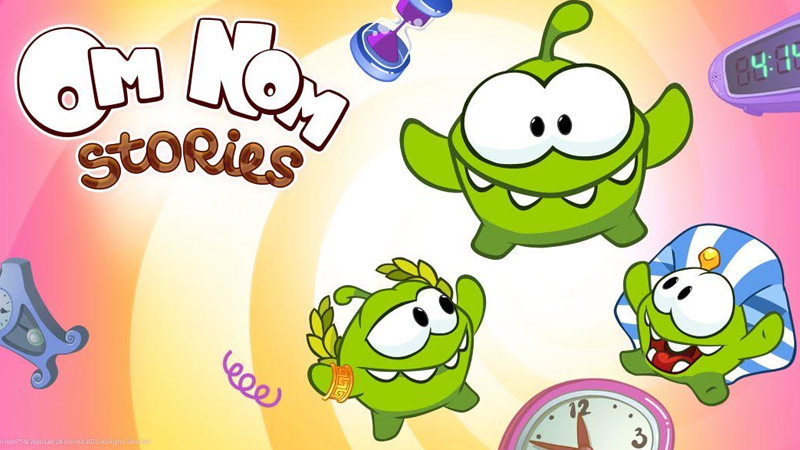
MUMBAI: The little green hero is making a big leap east. Zeptolab has struck a major distribution deal with Warner Bros. Discovery, bringing its hit animated series Om Nom Stories to audiences across the Indian subcontinent.
Under the agreement, Warner Bros. Discovery has acquired the series for exclusive Pay TV broadcast and non-exclusive digital streaming in India, Pakistan, Bangladesh, Bhutan, Nepal and Sri Lanka. The move marks a significant expansion for Zeptolab as it pushes one of its most successful original IPs into one of the world’s fastest-growing entertainment markets.
As part of the deal, all 26 seasons of Om Nom Stories will be rolled out across Cartoon Network, Pogo, Discovery Kids and Discovery+, offering both linear and digital access to the franchise’s slapstick humour and expressive, dialogue-free storytelling.
“We’re incredibly excited to partner with Warner Bros. Discovery to bring Om Nom Stories to the Indian subcontinent,” said Zeptolab executive producer Manaf Hassan, noting that the broadcaster’s reach and legacy make it a strong fit for the series’ growing global fanbase.
Warner Bros. Discovery, meanwhile, sees the acquisition as a natural addition to its children’s portfolio. Warner Bros. Discovery head of factual entertainment, lifestyle and kids for South Asia Sai Abishek, said the series aligns with the network’s focus on cheerful, imaginative and universally appealing content for families across the region.
The timing adds an extra layer of significance. The expansion coincides with Om Nom’s 15th anniversary, underlining the franchise’s staying power and its evolution from a mobile game character into a global animation brand. With this latest bite at the Indian subcontinent, Om Nom’s adventures look set to find a whole new generation of fans.
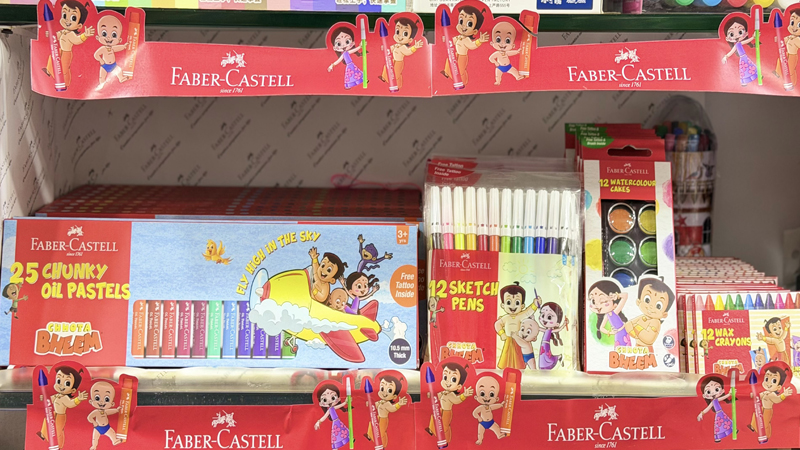
MUMBAI: If childhood memories had a colour palette, Chhota Bheem would likely be right in the middle of it and now, quite literally, in children’s pencil boxes too. Green Gold Animation has announced a landmark licensing partnership with Faber-Castell India, marking the global stationery major’s first-ever licensed character collaboration. The association brings Chhota Bheem to a specially curated range of student art and creative products, blending everyday learning tools with one of India’s most recognisable homegrown characters.
The move is a notable expansion of Chhota Bheem’s footprint beyond screens, reinforcing the character’s status as a multi-generational IP that has steadily grown from a television favourite into a cultural constant. For Green Gold Animation, the partnership signals a sharpened focus on extending its intellectual property into daily touchpoints, where entertainment meets education and habit.
In its first phase, the collaboration will roll out Chhota Bheem-themed products across key student art categories, including watercolour cakes, wax crayons, poster colours, sketch pens, oil pastels and creative bundling kits. The range is aimed squarely at school-going children, tapping into Bheem’s strong emotional connect while encouraging imagination, creativity and hands-on expression.
Green Gold Animation founder and CEO Rajiv Chilaka noted that Chhota Bheem’s journey has long moved beyond episodic storytelling. He said the partnership reflects a deliberate attempt to embed the character into moments of learning and creativity, while building a more purpose-led licensing ecosystem around Indian IP through collaboration with a globally established brand.
From Faber-Castell India’s perspective, the tie-up marks a strategic first. Faber-Castell India director marketing Sonali Shah said the collaboration opens a new chapter by pairing the brand’s long-standing reputation for quality and safety with a character that already commands trust and affection among Indian children. The aim, she added, is to make creativity more engaging and relatable without diluting product standards.
The launch will be backed by a 360-degree promotional push, spanning digital campaigns, social media storytelling, creative usage content and on-ground retail activations across select markets. Both companies have confirmed that this is only the starting point, with additional Chhota Bheem-themed products across new categories planned in the months ahead.
Headquartered in Hyderabad, Green Gold Animation continues to scale its ambition of building globally competitive Indian IPs, with Chhota Bheem leading the charge. This latest collaboration suggests that the brand’s next phase of growth may be less about what children watch and more about what they create.
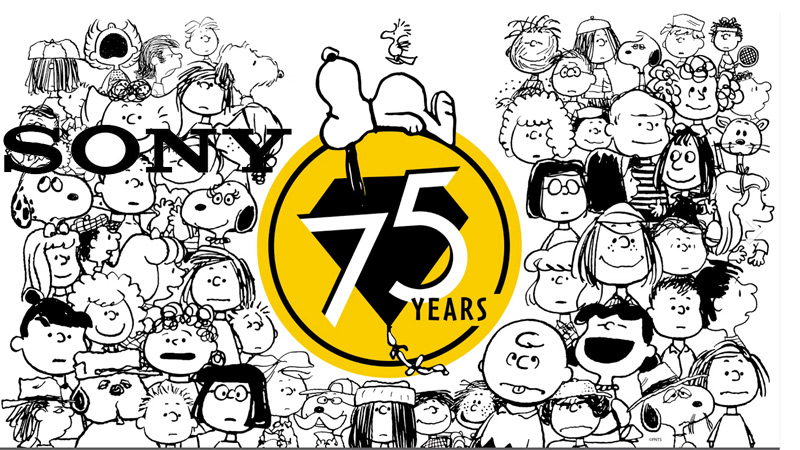
JAPAN: Sony has doubled down on the power of legacy brands, snapping up a majority stake in the Peanuts intellectual property in a late-year deal valued at about $457 million.
Sony Pictures Entertainment and Sony Music Entertainment Japan have acquired the roughly 41 per cent holding in Peanuts Holdings LLC previously owned by Canadian children’s entertainment company WildBrain. The move lifts Sony’s ownership to 80 per cent, with the Schulz family retaining the remaining 20 per cent.
The deal brings one of pop culture’s most durable franchises, home to Charlie Brown, Snoopy and the rest of the Peanuts gang, firmly under the Sony umbrella. The characters were created by Charles M Schulz, whose daily comic strip ran for half a century before ending in 2000.
Sony had already been a long-time partner in the business. The latest transaction consolidates control and sharpens the group’s hand as it looks to keep the characters front and centre across film, television, music and consumer products.
President and group ceo of Sony Music Entertainment Japan, Shunsuke Muramatsu, said the additional stake would allow Sony to further elevate the Peanuts brand by drawing on the group’s global reach and creative expertise, while preserving the legacy of Schulz and his family.
President and ceo of Sony Pictures, Ravi Ahuja, said the combined ownership gives Sony the ability to protect and shape the future of the characters for new generations, expanding their relevance without diluting their charm.
Peanuts long ago escaped the confines of the comic strip, cementing its place in popular culture through perennial television specials such as A Charlie Brown Christmas and It’s the Great Pumpkin, Charlie Brown. More recently, WildBrain kept the franchise active with animated series including Snoopy in Space and The Snoopy Show.
Now, with Sony firmly in control, the message is unmistakable. In an industry obsessed with the next big thing, nostalgia still sells and Sony is betting big on a doghouse that refuses to age.

Netflix celebrates a decade in India with Shah Rukh Khan-narrated tribute film

Delhivery chairman Deepak Kapoor, independent director Saugata Gupta quit board

Meta appoints Anuvrat Rao as APAC head of commerce partnerships

Brnd.me enters Europe as haircare brands power global expansion

TechnoSport taps quick commerce with launch on Slikk’s 60-minute platform

Jitendra Singh joins Reliance Industries as senior vice president, special projects

Tinder brings real-world dating experiences to North East India

These ’90s fashion trends are making a comeback in 2017
The final 6 ‘Game of Thrones’ episodes might feel like a full season
According to Dior Couture, this taboo fashion accessory is back
The old and New Edition cast comes together to perform
Phillies’ Aaron Altherr makes mind-boggling barehanded play
Uber and Lyft are finally available in all of New York State
Disney’s live-action Aladdin finally finds its stars
Netflix celebrates a decade in India with Shah Rukh Khan-narrated tribute film
Delhivery chairman Deepak Kapoor, independent director Saugata Gupta quit board
Meta appoints Anuvrat Rao as APAC head of commerce partnerships
Brnd.me enters Europe as haircare brands power global expansion
TechnoSport taps quick commerce with launch on Slikk’s 60-minute platform
Jitendra Singh joins Reliance Industries as senior vice president, special projects
Tinder brings real-world dating experiences to North East India
-
 iWorld3 months ago
Tips Music turns up the heat with Tamil party anthem Mayangiren
-
 iWorld12 months ago
BSNL rings in a revival with Rs 4,969 crore revenue
-
 I&B Ministry3 months ago
India steps up fight against digital piracy
-
 MAM3 months ago
HoABL soars high with dazzling Nagpur sebut
-

 MAM2 months ago
Best Lightweight Sunscreens for Daily Use in India
-

 AD Agencies1 month ago
Divya Parkhi steps into client lead role at WPP Media
-

 Brands3 months ago
Casio times it right for modern love this wedding season
-
 Brands3 months ago
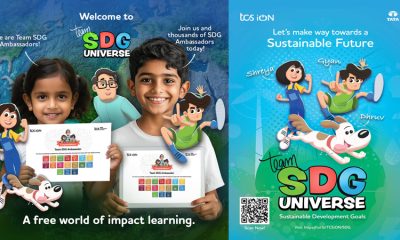
TCS unveils Team SDG Universe for young learners