
Distribution
Telcos scream unfair over Prasar Bharti’s direct to mobile technology clearance

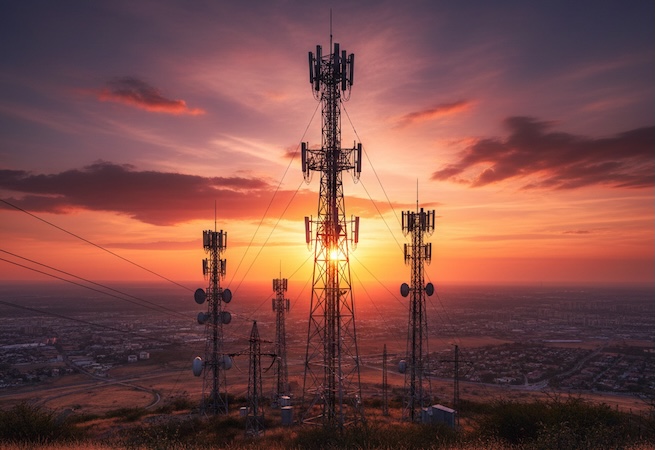
NEW DELHI: The air waves are crackling with tension. India’s telecom operators are demanding a do-over of technical trials for Direct-to-Mobile (D2M) broadcasting, even as tests commissioned by state broadcaster Prasar Bharati conclude the technology poses no threat to mobile networks. The spat reveals a deeper battle over spectrum, sovereignty and the future of content delivery in the world’s most populous nation, according to media reports.
According to a study by the Indian Institute of Technology Kanpur, D2M technology operating in the 470–582 MHz frequency band neither interferes with 4G and 5G networks nor causes abnormal heating in smartphones. The findings, certified by Bengaluru-based Aracion Technology, a government-accredited testing facility, were meant to settle months of speculation. Instead, they’ve lit a fresh fire.
The Cellular Operators Association of India (COAI), whose members include Reliance Jio, Bharti Airtel and Vodafone Idea, isn’t buying it. The industry body claims the trials were conducted behind closed doors, without involving telecom operators, device manufacturers or chipset vendors—the very stakeholders whose networks and businesses could be upended by widespread D2M deployment.
“Direct-to-Mobile broadcasting has far-reaching implications for spectrum, networks, devices and consumer safety,” says S P Kochhar, the association’s director general. “Any national-level technical evaluation of such a technology must be transparent, inclusive and technology-neutral.”
The operators’ beef isn’t just procedural. COAI argues that the evaluation was narrowly focused on a single technology standard—ATSC 3.0, the American broadcast format—whilst ignoring cellular-based broadcast alternatives used globally. The tests, conducted on 14 November at a facility operated by Aracion Technology, used a Tejas Networks smartphone and a 40-watt broadcast radio head. COAI says this limited scope fails to reflect India-specific spectrum allocations and real-world network conditions. The association wants the government to conduct a fresh, technology-neutral assessment with clearly defined terms of reference, participation from all affected parties, and a structured public consultation led by the department of telecommunications and the Telecom Regulatory Authority of India.
D2M technology allows smartphones to receive live television, video and multimedia content directly from terrestrial broadcast towers—no SIM card, no mobile data required. Proponents see it as a democratising force: a tool for mass content delivery, emergency broadcasting and bridging the digital divide. Sceptics worry about spectrum conflicts, device compatibility and, perhaps most importantly, the commercial implications for telecom operators whose data revenues could take a hit if users start streaming content for free over broadcast networks.
The timing is delicate. India’s information and broadcasting ministry had directed in September that any D2M evaluation must include all relevant stakeholders and consider parallel technology options. COAI says it submitted detailed inputs for such an assessment but was blindsided by the release of the IIT Kanpur report. The operators are calling for the evaluation to be realigned with the principles discussed at that September meeting.
What’s at stake extends beyond the technical minutiae of frequency bands and thermal behaviour. This is a fight about who controls the pipes—and the content flowing through them. Telecom operators have invested billions in 4G and 5G infrastructure. They’re understandably wary of a broadcast technology that could bypass their networks entirely. Prasar Bharati, meanwhile, sees D2M as a way to reassert relevance in an age of streaming giants and on-demand viewing.
For now, the outcome hangs in the balance. COAI has urged policymakers to anchor decisions in transparent, inclusive processes that safeguard consumer interests, network integrity and efficient spectrum use. Whether the government heeds that call—or pushes ahead with D2M based on the existing tests—will determine whether India’s airwaves become a battleground or a shared resource. One thing’s certain: in the race to deliver content to 1.4 billion people, nobody wants to be left holding a dead signal.





New Delhi: Prasar Bharati has thrown open applications for fresh capacity on DD Free Dish, signalling a timely opportunity for broadcasters looking to expand reach without long-term lock-ins. The public service broadcaster has issued a dual notice for its 95th and 96th online e-auctions, aimed at filling vacant MPEG-2 and MPEG-4 slots on a pro-rata basis for February and March 2026.
The two auctions are tentatively scheduled to begin on January 27, with allotments valid from February 1, 2026. Applications for both auctions close on January 21 at 3 pm, giving channels a narrow window to get their bids in.
The 95th e-auction will cover vacant MPEG-2 slots, while the 96th will focus on MPEG-4 capacity. Participation is limited to satellite television channels holding valid downlinking and uplinking permissions from the ministry of information and broadcasting. International public broadcasters cleared by the ministry are also eligible.
As with previous rounds, channels have been grouped into buckets based on genre and language, with sharply differentiated reserve prices reflecting reach and demand.
For the MPEG-2 auction, Hindi and Urdu general entertainment channels sit at the top of the pile. The starting reserve price for bucket A+ in the first round is Rs 2,63,48,000. Movie, music and sports channels in Hindi and Urdu follow in bucket A at Rs 2,10,14,000. Bhojpuri channels and other Hindi and Urdu genres, excluding devotional content, fall under bucket B with a reserve of Rs 1,78,62,000. Hindi and Urdu news channels in bucket C start at Rs 1,33,27,000, while bucket D, which includes regional language channels, English news and devotional or spiritual channels, begins at Rs 1,13,96,000.
The MPEG-4 auction comes in at a far leaner price point. News and current affairs channels in Hindi, English or pan-India languages, grouped under bucket G1, start at Rs 13,41,000. Non-news genres under bucket G2 have a reserve of Rs 8,80,000. Regional languages such as Marathi, Punjabi and Gujarati in bucket R2 begin at Rs 4,84,000. Southern language channels in Tamil, Telugu, Kannada and Malayalam, grouped under bucket R1, start at Rs 81,000, the same reserve price set for other scheduled 8 regional languages in bucket R3.
Prasar Bharati has underlined that compliance will be closely watched. Broadcasters must ensure that at least 75 per cent of their monthly programming, excluding advertisements, aligns with the declared genre and language. Any deviation could trigger show-cause notices or even removal from the DD Free Dish platform.
For channels chasing reach in a crowded market, the message is clear. The window is brief, the prices are set and the audience is waiting. On DD Free Dish, visibility still comes cheap, but only for those ready to move fast.

MUMBAI: India’s Acro Engineering will nationally distribute the products of the newly launched professional computer hardware company ProLab Design. The company aims to provide the ultimate price to performance ratio for products like cabinets (Mid-tower, full-tower, super-tower, rackmounts, workstation cases and more), cooler (AIO coolers and air coolers for HEDT CPUs), PSUs (ATX 3.1, PCIe 5.1 compliant, 80+ gold or platinum and cybernetics certified) and in future professional esports grade peripherals and more.
The brand is built by a community of professionals from various domains, including content creators (videographers, photographers, editors, and composers), developers, AI, data science, medical, and science. They noticed a paradigm shift in the PC hardware market, observing how the demand moved away from flashy gaming PCs towards purpose-built systems designed to maximise hardware performance. ProLab Design has been built from the ground up to meet these specific hardware requirements.
With the Nvidia Blackwell Generation upon us, the first category that the brand is launching is PSUs. With the ATX 3.1 and PCIe 5.1 certified 12v 2×6 connector, the brand’s XPower lineup of PSUs eliminates the user errors that plagued the 40 Series Cards and early adaptors of ATX 3.0 standards.
The next category of products that the company plans to launch is its AI lineup of cabinets, which cater to a wide range of needs, from mid-tower to full-tower and super-tower models, making them ideal for workstations, home and business servers, multi-GPU servers and workstations, DIY NAS setups, and gaming PCs. Followed by this category is the brand’s AI lineup of all-in-one liquid coolers.
“Our future plan is to expand ProLab Design into a full-blown computer accessories and peripherals brand, and with our tagline Precision Redefined, our sole focus will be on performance, without any compromise to the product quality,” said a representative from the company.
The products will be initially available via e-commerce and with ProLab’s system integrator partners across India, before they are rolled into the mass computer market.
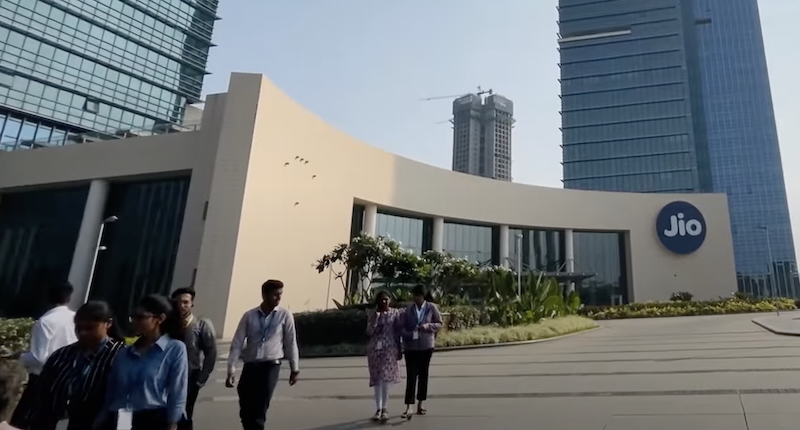
MUMBAI: Three days from today and a whole new bunch of TV sets with a new type of operating system are slated to launch. Reliance Jio, the technology arm of Indian conglomerate Reliance Industries, has unveiled JioTele OS, a new operating system for affordable smart televisions, which will hit stores on 21 February.
The platform, designed specifically for Indian viewers, will debut through partnerships with television manufacturers Thomson, Kodak, BPL and JVC. Jio says the system will offer artificial intelligence-powered content recommendations and support multiple Indian languages.
The company’s president of technology claims the platform will deliver lag-free 4K streaming and seamless integration of television channels, streaming apps and cloud gaming services. A unified remote control will manage all content sources.
This launch follows Jio’s recent merger of JioCinema with Disney+ Hotstar to create JioHotstar, expanding its streaming content library. The platform is expected to integrate JioGamesCloud, allowing users to access high-end games without requiring powerful hardware.
The announcement comes amid growing demand for connected television services in India, with approximately 35 million households currently using smart TVs. Jio plans to roll out regular software updates to maintain compatibility with new apps and enhance security features.
Additional television manufacturers are expected to adopt the platform later in 2025, though specific pricing details remain under wraps until the official launch next week.

Netflix celebrates a decade in India with Shah Rukh Khan-narrated tribute film

Delhivery chairman Deepak Kapoor, independent director Saugata Gupta quit board

Meta appoints Anuvrat Rao as APAC head of commerce partnerships

Brnd.me enters Europe as haircare brands power global expansion

TechnoSport taps quick commerce with launch on Slikk’s 60-minute platform

Jitendra Singh joins Reliance Industries as senior vice president, special projects

Tinder brings real-world dating experiences to North East India

These ’90s fashion trends are making a comeback in 2017
The final 6 ‘Game of Thrones’ episodes might feel like a full season
According to Dior Couture, this taboo fashion accessory is back
The old and New Edition cast comes together to perform
Phillies’ Aaron Altherr makes mind-boggling barehanded play
Uber and Lyft are finally available in all of New York State
Disney’s live-action Aladdin finally finds its stars
Netflix celebrates a decade in India with Shah Rukh Khan-narrated tribute film
Delhivery chairman Deepak Kapoor, independent director Saugata Gupta quit board
Meta appoints Anuvrat Rao as APAC head of commerce partnerships
Brnd.me enters Europe as haircare brands power global expansion
TechnoSport taps quick commerce with launch on Slikk’s 60-minute platform
Jitendra Singh joins Reliance Industries as senior vice president, special projects
Tinder brings real-world dating experiences to North East India
-
 iWorld3 months ago
Tips Music turns up the heat with Tamil party anthem Mayangiren
-
 iWorld12 months ago
BSNL rings in a revival with Rs 4,969 crore revenue
-
 I&B Ministry3 months ago
India steps up fight against digital piracy
-
 MAM3 months ago
HoABL soars high with dazzling Nagpur sebut
-
 iWorld2 days ago
Netflix celebrates a decade in India with Shah Rukh Khan-narrated tribute film
-
 News Broadcasting6 months ago
Wion marks Independence Day with global showcase of India’s spirit
-
 iWorld3 months ago
The Night Manager returns with new secrets, new spies and old scars
-
 I&B Ministry2 months ago
Centre drafts OTT rules to boost access for hearing disabled