
Hardware
CES 2026 puts AI centre stage, from robots to smart homes

LAS VEGAS: The future of home technology is arriving faster than expected. At CES 2026, smart homes decisively moved past apps and voice commands, signalling a shift towards systems that anticipate behaviour, act autonomously and blend invisibly into daily life. From mobile robots and adaptive sleep tech to AI-driven wildfire protection, these are not distant concepts. All are slated to reach consumers this year.
Exhibitors made it clear that intelligence, not connectivity alone, is now the defining feature of home tech. Devices are learning routines, adjusting environments in real time and, increasingly, taking decisions without human prompts.
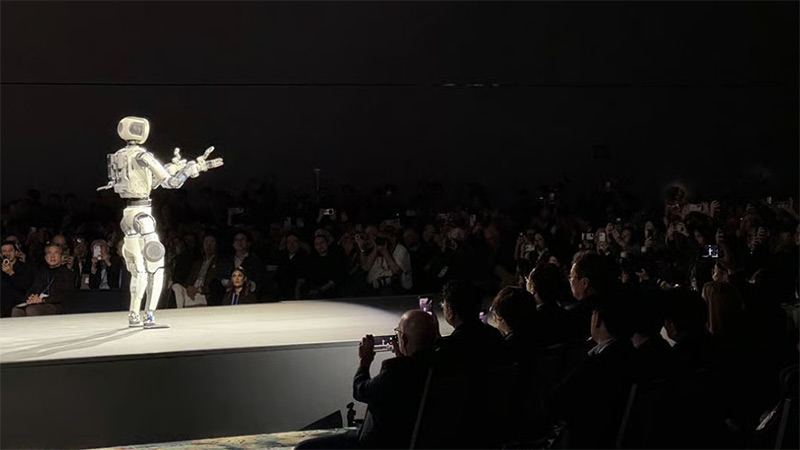
Hyundai motor group used CES 2026 to unveil an AI robotics strategy aimed at making humanoid robots central to industrial work, signalling a shift from automation to what it calls “human-centred” physical AI. Anchored by its partnership with Boston dynamics, the plan spans co-working robots for hazardous and repetitive tasks, an end-to-end robotics value chain, and tie-ups with global AI firms.

The group plans to mass-produce the Atlas humanoid and deploy it across factories from 2028, starting with parts sequencing and scaling to assembly by 2030, positioning humanoids as the fastest-growing segment of the physical AI market.
TCL set the tone on the entertainment front with the X11L SQD-Mini LED 4K TV, which uses super quantum dot technology to deliver brighter whites, deeper blacks and sharper contrast. Unlike conventional RGB panels, the display relies on quantum dots illuminated by pure white light. Available in 75-, 85- and 98-inch variants, the 85-inch model is already up for preorder at $7,999.99.
LG’s AI Home Robot pushed the idea of the smart assistant off the counter and onto wheels. Designed as a mobile hub for the household, the robot navigates autonomously, responds to voice commands, monitors indoor conditions and connects with smart appliances. Crucially, it recognises household routines and adjusts settings based on presence and context, going well beyond today’s static voice assistants.

Sleep technology emerged as a major theme. The Sleepal AI Lamp combines lighting with sleep science, tracking sleep patterns, dynamically adjusting colour temperature through the night and waking users in sync with their sleep cycles. Over time, it learns individual responses rather than relying on fixed schedules, creating a personalised sleep environment.
Ceragem took the concept further with its Youth Bed featuring an AI health concierge. The bed monitors posture, sleep quality and physiological signals, then actively adjusts support and temperature. The integrated system also offers health recommendations, repositioning the bed as an active wellness platform rather than passive furniture.

Home security also received an intelligence upgrade. Lockin’s AI Smart Lock uses behavioural patterns and AI-based recognition to identify residents, flag unusual activity and adapt to daily routines. The aim is frictionless access paired with constant, background vigilance—security that operates quietly rather than reactively.
CES also delivered its share of playful innovation. GameSir’s Swift Drive Racing Gamepad features a compact steering wheel embedded at its centre, connected to a high-precision Hall effect encoder and a direct drive motor for force feedback. Haptic triggers simulate effects such as ABS braking, bringing console-style realism closer to professional racing rigs. Pricing and availability are yet to be announced.

Perhaps the clearest sign of how far smart homes have evolved came from outside the living room. The Home Wildfire Defence System uses sensors, AI monitoring and automated sprinklers to seal vents, dampen surroundings and protect properties from approaching fires. It reframes smart home technology not as a convenience layer, but as a potentially life-saving infrastructure.
Collectively, HP’s CES 2026 line-up spans three HyperX Omen gaming laptops (Omen 15, Omen 16 and Omen Max 16), four gaming monitors ranging from the entry-level Omen 24 G2 IPS to high-refresh QD-Oled panels including the Omen Oled 27q, Oled 27qs and the ultrawide Oled 34, alongside eight HyperX peripherals.

These include four gaming keyboards under the Origins 2 series, three audio products: Cloud Earbuds III, III S and a forthcoming Neurable-powered EEG headset and the Clutch Tachi arcade controller.
Intel’s CES 2026 announcements centred on the new Core Ultra Series 3 platform, spanning mobile and edge processors built on its US-made 18A process. The line-up introduces a new Core Ultra X9 and X7 class with integrated Intel Arc graphics, offering up to 16 CPU cores, 12 Xe-cores and 50 NPU Tops, alongside mainstream Intel Core variants for thinner, lower-cost laptops.

Beyond PCs, Series 3 processors are also certified for embedded and industrial deployments, targeting AI workloads across robotics, smart cities, automation and healthcare, with consumer laptops arriving from late January 2026 and edge systems following in the second quarter.
Lenovo announced a strategic tie-up with Nvidia to help AI cloud providers deploy data centres faster, as the world’s largest PC maker sharpens its push into artificial intelligence.

Alongside the partnership, the company unveiled a new AI platform, showcased multiple concept devices, revealed concept AI glasses, and previewed an AI assistant wearable under “Project Maxwell”. Lenovo also used the show to debut its first foldable smartphone under the Motorola brand, underscoring its ambition to extend AI beyond PCs into wearables, smart devices and cloud infrastructure.










New Delhi: Prasar Bharati has thrown open applications for fresh capacity on DD Free Dish, signalling a timely opportunity for broadcasters looking to expand reach without long-term lock-ins. The public service broadcaster has issued a dual notice for its 95th and 96th online e-auctions, aimed at filling vacant MPEG-2 and MPEG-4 slots on a pro-rata basis for February and March 2026.
The two auctions are tentatively scheduled to begin on January 27, with allotments valid from February 1, 2026. Applications for both auctions close on January 21 at 3 pm, giving channels a narrow window to get their bids in.
The 95th e-auction will cover vacant MPEG-2 slots, while the 96th will focus on MPEG-4 capacity. Participation is limited to satellite television channels holding valid downlinking and uplinking permissions from the ministry of information and broadcasting. International public broadcasters cleared by the ministry are also eligible.
As with previous rounds, channels have been grouped into buckets based on genre and language, with sharply differentiated reserve prices reflecting reach and demand.
For the MPEG-2 auction, Hindi and Urdu general entertainment channels sit at the top of the pile. The starting reserve price for bucket A+ in the first round is Rs 2,63,48,000. Movie, music and sports channels in Hindi and Urdu follow in bucket A at Rs 2,10,14,000. Bhojpuri channels and other Hindi and Urdu genres, excluding devotional content, fall under bucket B with a reserve of Rs 1,78,62,000. Hindi and Urdu news channels in bucket C start at Rs 1,33,27,000, while bucket D, which includes regional language channels, English news and devotional or spiritual channels, begins at Rs 1,13,96,000.
The MPEG-4 auction comes in at a far leaner price point. News and current affairs channels in Hindi, English or pan-India languages, grouped under bucket G1, start at Rs 13,41,000. Non-news genres under bucket G2 have a reserve of Rs 8,80,000. Regional languages such as Marathi, Punjabi and Gujarati in bucket R2 begin at Rs 4,84,000. Southern language channels in Tamil, Telugu, Kannada and Malayalam, grouped under bucket R1, start at Rs 81,000, the same reserve price set for other scheduled 8 regional languages in bucket R3.
Prasar Bharati has underlined that compliance will be closely watched. Broadcasters must ensure that at least 75 per cent of their monthly programming, excluding advertisements, aligns with the declared genre and language. Any deviation could trigger show-cause notices or even removal from the DD Free Dish platform.
For channels chasing reach in a crowded market, the message is clear. The window is brief, the prices are set and the audience is waiting. On DD Free Dish, visibility still comes cheap, but only for those ready to move fast.
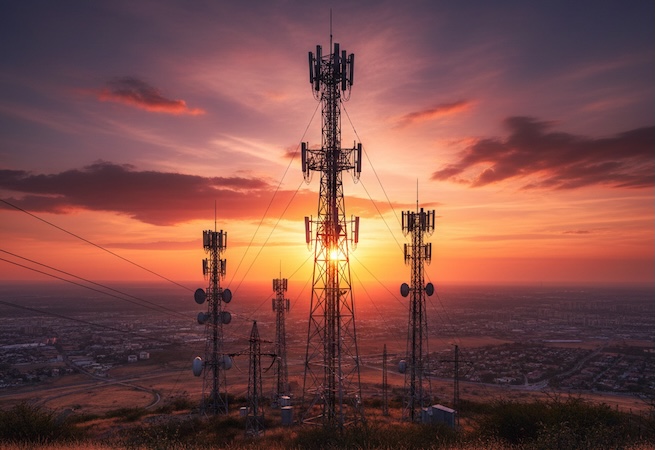
NEW DELHI: The air waves are crackling with tension. India’s telecom operators are demanding a do-over of technical trials for Direct-to-Mobile (D2M) broadcasting, even as tests commissioned by state broadcaster Prasar Bharati conclude the technology poses no threat to mobile networks. The spat reveals a deeper battle over spectrum, sovereignty and the future of content delivery in the world’s most populous nation, according to media reports.
According to a study by the Indian Institute of Technology Kanpur, D2M technology operating in the 470–582 MHz frequency band neither interferes with 4G and 5G networks nor causes abnormal heating in smartphones. The findings, certified by Bengaluru-based Aracion Technology, a government-accredited testing facility, were meant to settle months of speculation. Instead, they’ve lit a fresh fire.
The Cellular Operators Association of India (COAI), whose members include Reliance Jio, Bharti Airtel and Vodafone Idea, isn’t buying it. The industry body claims the trials were conducted behind closed doors, without involving telecom operators, device manufacturers or chipset vendors—the very stakeholders whose networks and businesses could be upended by widespread D2M deployment.
“Direct-to-Mobile broadcasting has far-reaching implications for spectrum, networks, devices and consumer safety,” says S P Kochhar, the association’s director general. “Any national-level technical evaluation of such a technology must be transparent, inclusive and technology-neutral.”
The operators’ beef isn’t just procedural. COAI argues that the evaluation was narrowly focused on a single technology standard—ATSC 3.0, the American broadcast format—whilst ignoring cellular-based broadcast alternatives used globally. The tests, conducted on 14 November at a facility operated by Aracion Technology, used a Tejas Networks smartphone and a 40-watt broadcast radio head. COAI says this limited scope fails to reflect India-specific spectrum allocations and real-world network conditions. The association wants the government to conduct a fresh, technology-neutral assessment with clearly defined terms of reference, participation from all affected parties, and a structured public consultation led by the department of telecommunications and the Telecom Regulatory Authority of India.
D2M technology allows smartphones to receive live television, video and multimedia content directly from terrestrial broadcast towers—no SIM card, no mobile data required. Proponents see it as a democratising force: a tool for mass content delivery, emergency broadcasting and bridging the digital divide. Sceptics worry about spectrum conflicts, device compatibility and, perhaps most importantly, the commercial implications for telecom operators whose data revenues could take a hit if users start streaming content for free over broadcast networks.
The timing is delicate. India’s information and broadcasting ministry had directed in September that any D2M evaluation must include all relevant stakeholders and consider parallel technology options. COAI says it submitted detailed inputs for such an assessment but was blindsided by the release of the IIT Kanpur report. The operators are calling for the evaluation to be realigned with the principles discussed at that September meeting.
What’s at stake extends beyond the technical minutiae of frequency bands and thermal behaviour. This is a fight about who controls the pipes—and the content flowing through them. Telecom operators have invested billions in 4G and 5G infrastructure. They’re understandably wary of a broadcast technology that could bypass their networks entirely. Prasar Bharati, meanwhile, sees D2M as a way to reassert relevance in an age of streaming giants and on-demand viewing.
For now, the outcome hangs in the balance. COAI has urged policymakers to anchor decisions in transparent, inclusive processes that safeguard consumer interests, network integrity and efficient spectrum use. Whether the government heeds that call—or pushes ahead with D2M based on the existing tests—will determine whether India’s airwaves become a battleground or a shared resource. One thing’s certain: in the race to deliver content to 1.4 billion people, nobody wants to be left holding a dead signal.
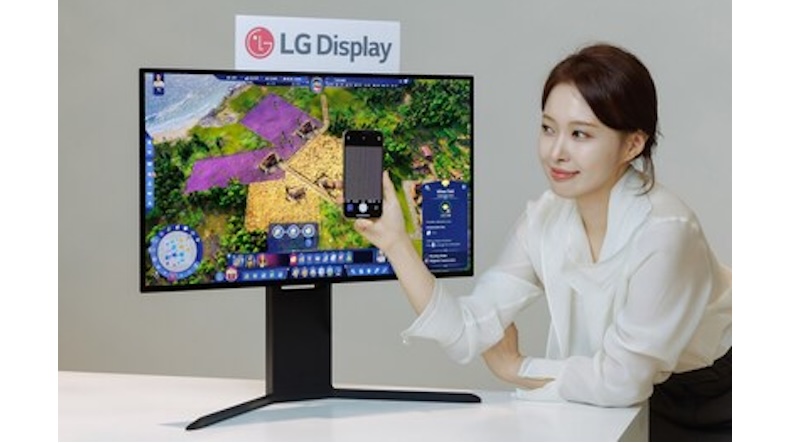
SEOUL: In the eternal battle between gamers demanding lightning-fast refresh rates and professionals craving pixel-perfect clarity, LG Display reckons it has found détente. The South Korean display titan is unveiling the world’s first 27-inch 4K OLED monitor panel that marries an RGB stripe structure with a blistering 240Hz refresh rate—a combination previously thought incompatible, like oil and water or fashion and function.
The breakthrough lies in how the pixels are arranged. RGB stripe structure lines up red, green and blue subpixels in neat rows, banishing the colour bleeding and fringing that plague lesser screens when you park your nose close to the display. It is the difference between reading crisp text and squinting at a rainbow-tinged mess. OLED panels using this method existed before, but they topped out at a sluggish 60Hz—fine for spreadsheets, useless for fragging opponents in first-person shooters.
LG Display’s engineering wizardry changes the game. By cranking the refresh rate to 240Hz whilst maintaining that pristine RGB stripe layout, the company has produced a panel that works equally well for colour-critical design work and twitchy gaming sessions. Better still, the panel incorporates Dynamic Frequency & Resolution technology, letting users toggle between ultra-high-definition at 240Hz and full-HD at a frankly ludicrous 480Hz. That is fast enough to make your eyeballs sweat.
The specs are suitably impressive: 160 pixels per inch for exceptional detail, optimised performance for Windows and font-rendering engines, and colour accuracy that should please the Photoshop brigade. LG Display achieved this by boosting the aperture ratio—the percentage of each pixel that actually emits light—and applying what it coyly describes as “various new technologies.” Translation: years of R&D and probably some sleepless nights.
Existing high-end gaming OLED monitors have relied on RGWB structures (which add a white subpixel) or triangular RGB arrangements. Both work, but neither delivers the sharpness that professionals demand. LG Display’s new stripe pattern is tailored specifically for monitor use, a recognition that staring at a screen from two feet away demands different engineering than watching telly from across the room.
The company is betting big on this technology, targeting the high-end monitor market where it already commands roughly 30 per cent of global OLED panel production. Among gaming OLED panels in mass production, LG Display claims world-leading specs across refresh rate, response time and resolution—a trifecta that sounds like marketing bluster until you check the numbers.
“Technology is the foundation of leadership in the rapidly growing OLED monitor market,” says LG Display head of the large display business unit Lee Hyun-woo. He promises to keep pushing “differentiated technologies compared to competitors”—corporate-speak for staying ahead of Chinese rivals snapping at LG’s heels.
The new panel will debut at CES 2026 in Las Vegas, where LG Display plans to woo customers and expand its lineup. Initial rollout targets high-end gaming and professional monitors, the sweet spot where people actually pay premiums for superior screens rather than settling for whatever came with their laptop.
Whether this technology reshapes the monitor market or remains a niche luxury depends on two things: pricing and production scale. But for now, LG Display has pulled off something rare—a genuine technical leap that solves a real problem. Gamers get their speed, designers get their clarity, and LG gets bragging rights. In the cutthroat world of display tech, that counts as a win.

Netflix celebrates a decade in India with Shah Rukh Khan-narrated tribute film

Delhivery chairman Deepak Kapoor, independent director Saugata Gupta quit board

Meta appoints Anuvrat Rao as APAC head of commerce partnerships

Brnd.me enters Europe as haircare brands power global expansion

TechnoSport taps quick commerce with launch on Slikk’s 60-minute platform

Jitendra Singh joins Reliance Industries as senior vice president, special projects

Tinder brings real-world dating experiences to North East India

These ’90s fashion trends are making a comeback in 2017
The final 6 ‘Game of Thrones’ episodes might feel like a full season
According to Dior Couture, this taboo fashion accessory is back
The old and New Edition cast comes together to perform
Phillies’ Aaron Altherr makes mind-boggling barehanded play
Uber and Lyft are finally available in all of New York State
Disney’s live-action Aladdin finally finds its stars
Netflix celebrates a decade in India with Shah Rukh Khan-narrated tribute film
Delhivery chairman Deepak Kapoor, independent director Saugata Gupta quit board
Meta appoints Anuvrat Rao as APAC head of commerce partnerships
Brnd.me enters Europe as haircare brands power global expansion
TechnoSport taps quick commerce with launch on Slikk’s 60-minute platform
Jitendra Singh joins Reliance Industries as senior vice president, special projects
Tinder brings real-world dating experiences to North East India
-
 iWorld3 months ago
Tips Music turns up the heat with Tamil party anthem Mayangiren
-
 iWorld12 months ago
BSNL rings in a revival with Rs 4,969 crore revenue
-
 I&B Ministry3 months ago
India steps up fight against digital piracy
-
 MAM3 months ago
HoABL soars high with dazzling Nagpur sebut
-

 MAM2 months ago
Best Lightweight Sunscreens for Daily Use in India
-

 MAM3 months ago
Kapil Sethi joins Network18 as head of technology
-

 Digital2 months ago
Webinar unpacks how influencers turn attention into action
-

 Brands2 months ago
SRK’s shade upgrade as D’YAVOL X unveils first luxury eyewear line