
Hollywood
Picture This Oscars 98 Opens the Floodgates to a 201 Film Free for All


MUMBAI: Hollywood’s awards season has officially yelled “action”, and this time the cast list is unusually crowded. The Academy of Motion Picture Arts and Sciences on Thursday unveiled a list of 201 feature films eligible for Best Picture consideration at the 98th Academy Awards, setting the stage for what is shaping up to be one of the most wide-open Oscar races in recent memory. The ceremony is scheduled for March 15, to be held at the Beverly Hilton, with Conan O’Brien returning as host.
While the Best Picture field alone runs deep, the scale is even broader. The Academy confirmed that 317 films are eligible across all categories, underlining the sheer volume of theatrical releases that met qualification standards in 2025. Nominations across 24 categories will be announced on January 22, following a voting window for Academy members that runs from January 12 to January 16. The Academy had already released eligibility lists for Best Documentary, Animated Feature and International Feature Film in November, but Thursday’s announcement marked the most expansive reveal.
To make the cut, films were required to open theatrically during calendar year 2025 in at least one of six major US markets Los Angeles County, New York City, the San Francisco Bay Area, Chicago, Dallas-Fort Worth or Atlanta and complete a minimum seven-day consecutive run in the same venue. As always, only feature-length titles with a running time of over 40 minutes were eligible, a rule that continues to separate cinematic releases from the swelling tide of streaming-first content.
The resulting best picture eligibility list is a cinematic sprawl. Big-ticket franchises such as Avatar: Fire and Ash, Mission: Impossible – The Final Reckoning, Superman, Jurassic World Rebirth and Zootopia 2 sit alongside prestige dramas, documentaries, animated features and international titles. Indian cinema also makes its presence felt, with films including Kantara: A Legend – Chapter 1, Mahavatar Narsimha and Tanvi the Great among those in contention, reflecting the Academy’s increasingly global theatrical net.
What this list does not do is predict favourites. Oscar history suggests that eligibility is merely the starting line, not a verdict. Many films will fade quietly from the conversation, while a handful will gather momentum through guild awards, critics’ prizes and word of mouth. With the field this large, the race is less about survival of the loudest and more about endurance, consistency and timing.
For now, the Academy’s announcement serves as a reminder of cinema’s scale in a year where theatres fought for relevance and filmmakers chased attention in a fractured marketplace. With 201 Best Picture hopefuls and counting, the road to Oscar night has officially begun, crowded, competitive and, if history is any guide, full of late-breaking plot twists.
Here is the full list of movies eligible for best picture at the 2026 Oscars:
The Accountant 2
The Actor
After the Hunt
All of You
All That’s Left of You
The Alto Knights
The Amateur
Americana
Anaconda
Anemone
Anniversary
The Assessment
Audrey’s Children
Avatar: Fire and Ash
The Bad Guys 2
Ballad of a Small Player
The Ballad of Wallis Island
Ballerina
The Baltimorons
Bau, Artist at War
Becoming Led Zeppelin
Belén
A Big Bold Beautiful Journey
Black Bag
Black Phone 2
Blue Moon
Bob Trevino Likes It
Bone Lake
Bring Her Back
Brownsville Bred
Bugonia
The Carpenter’s Son
Caught Stealing
The Choral
Christy
The Chronology of Water
Companion
The Conjuring: Last Rites
Dead Man’s Wire
Death of a Unicorn
Demon Slayer: Kimetsu no Yaiba Infinity Castle
Die My Love
Dog Man
Don’t Let’s Go to the Dogs Tonight
Downton Abbey: The Grand Finale
Dust Bunny
East of Wall
Echo Valley
Eddington
Eden
Eephus
Eleanor the Great
Elio
Ella McCay
Eternity
Everything’s Going to Be Great
F1
Fackham Hall
Fairyland
The Fantastic Four: First Steps
Father Mother Sister Brother
Final Destination: Bloodlines
Five Nights at Freddy’s 2
Folktales
40 Acres
Frankenstein
Freakier Friday
Freaky Tales
The Friend
Friendship
Gabby’s Dollhouse: The Movie
Good Boy
Good Fortune
Goodbye June
Guns & Moses
Hamnet
Hedda
Hell of a Summer
Highest 2 Lowest
Him
The History of Sound
A House of Dynamite
The Housemaid
How to Train Your Dragon
I Wish You All the Best
If I Had Legs I’d Kick You
Is This Thing On?
It Was Just an Accident
It’s Never Over, Jeff Buckley
Jane Austen Wrecked My Life
Jay Kelly
Jurassic World Rebirth
Kantara: A Legend – Chapter 1
Karate Kid: Legends
Keeper
Kiss of the Spider Woman
The Knife
La Grazia
Last Breath
Left-Handed Girl
The Legend of Ochi
The Life of Chuck
Lilly
Lilo & Stitch
Little Amélie or the Character of Rain
The Long Walk
The Lost Bus
Love Hurts
Love Me
The Luckiest Man in America
Magazine Dreams
Mahavatar Narsimha
The Man in My Basement
Marty Supreme
Materialists
M3GAN 2.0
Mickey 17
A Minecraft Movie
Mission: Impossible – The Final Reckoning
The Monkey
My Dead Friend Zoe
The Naked Gun
No Other Choice
Nobody 2
Nouvelle Vague
Novocaine
Now You See Me: Now You Don’t
Nuremberg
Oh, Hi!
On Becoming a Guinea Fowl
On Swift Horses
One Battle After Another
100 Nights of Hero
One of Them Days
One to One: John and Yoko
Opus
Orwell 2+2=5
Paddington in Peru
Peter Hujar’s Day
The Phoenician Scheme
The Plague
Plainclothes
Preparation for the Next Life
Presence
Prime Minister
Rebuilding
Regretting You
Relay
Rental Family
Resurrection
Roofman
Rosemead
The Roses
Rule Breakers
The Running Man
The Ruse
Scarlet
The Secret Agent
Sentimental Value
She Rides Shotgun
Sheepdog
Shelby Oaks
The Shrouds
Sinners
Sirāt
Sister Midnight
Sisu: Road to Revenge
Sketch
The Smashing Machine
Song Sung Blue
Sorry, Baby
Soul on Fire
Sovereign
Spinal Tap II: The End Continues
Splitsville
Springsteen: Deliver Me From Nowhere
Steve
The Summer Book
Superman
Tanvi the Great
Tetami
The Testament of Ann Lee
Thunderbolts*
Together
Tourist Family
Train Dreams
Trifole
Truth & Treason
28 Years Later
Twinless
The Ugly Stepsister
Urchin
The Voice of Hind Rajab
Wake Up Dead Man: A Knives Out Mystery
Warfare
Weapons
The Wedding Banquet
Wicked: For Good
Wolf Man
The Woman in the Yard
Zootopia 2




Hollywood
A memoir of Moira: Catherine O’Hara passes away at 71, leaving behind a legacy of laughter
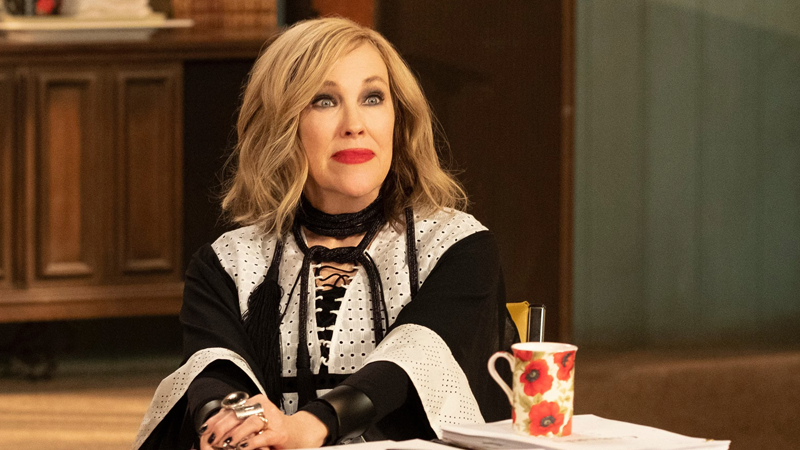
LOS ANGELES: The world of stage and screen feels a little quieter, and certainly less colourful, following the news that Catherine O’Hara has passed away at the age of 71. A performer of singular wit and boundless imagination, she died on 30 January 2026 at her home in Los Angeles after a brief illness.
While the official cause of death has not yet been disclosed, O’Hara’s long-standing health condition had been publicly known. She was born with a rare congenital condition called dextrocardia with situs inversus, in which the heart is positioned on the right side of the chest and other major organs are arranged in a mirror-image layout. Though the condition typically does not cause serious medical complications or symptoms, it remained a notable aspect of her medical history.
Her departure marks the end of an era for comedy, leaving behind a legacy that transformed the awkward, the eccentric, and the absurd into something profoundly human.
The world knew Catherine O’ Hara by many names: Moira Rose, the wildly dramatic and delightfully out-of-touch matriarch of the Rose family; Kate McCallister, the forgetful yet fiercely loving mother who crossed continents for her child; Delia Deetz, Tim Burton’s tragically stepmother chic with a flair for the bizarre; and Sally, forlorn yet quietly hopeful.

O’Hara’s characters were never perfect; they were messy, flawed, painfully human, and deeply empathetic. Through them, she showed us that motherhood doesn’t always look warm and doting, but it is steadfast in moments that matter most. She reminded us that it’s okay to be unhinged, unapologetically imperfect, and still accountable because that’s what makes people real.

Though comedy was her natural home, O’Hara possessed remarkable range. From her haunting turn as a grieving therapist in Season 2 of HBO’s dystopian drama The Last of Us to breathing life into a host of wonderfully strange characters across Tim Burton’s cinematic universe, she consistently left her mark.
From Toronto to the pantheon of greats
Born in Toronto in 1954, O’Hara was the sixth of seven children in a family where humour was not just a pastime but a necessity. Her career began in the fertile ground of the Second City improvisational troupe, where she worked alongside future icons such as Eugene Levy and John Candy. It was during the SCTV years that she established herself as a chameleonic force, creating characters that felt both impossibly strange and startlingly real. Her ability to inhabit a role entirely, from the frantic energy of Lola Heatherton to her razor-sharp celebrity impressions, set a new standard for ensemble comedy.
A career of iconic matriarchs
Her characters didn’t coddle. They stumbled into the room, said something wildly inappropriate, and somehow, against all odds, made you feel seen. In their chaos lived a quiet, stubborn devotion that felt more honest than any picture-perfect portrayal ever could. O’Hara’s characters taught us that being flawed wasn’t a flaw at all, it was the most human thing a person could be. Messy, unhinged, and empathetic: that was her signature.
While many actors spend a lifetime searching for one definitive role, O’Hara seemed to find them every decade. In 1988, she gave us the quintessential avant-garde snob Delia Deetz in Tim Burton’s Beetlejuice, a performance she revisited with characteristic panache in the 2024 sequel. To millions of families around the globe, however, she was Kate McCallister in Home Alone. She brought a genuine, frantic heart to the role of a mother desperately trying to reach her son, proving that she could anchor a slapstick blockbuster with real emotional weight.

Her collaborative work with Christopher Guest in mockumentaries like Best in Show and A Mighty Wind further showcased her genius. As Cookie Fleck or Mickey Crabbe, she navigated the thin line between caricature and character study, often finding the soul in the most ridiculous of circumstances.

She even brought her sharp wit to Seth Rogen’s biting Hollywood satire, playing Patty Leigh: a cutthroat studio executive unceremoniously ousted by her own underling. It was O’Hara doing what she does best: finding the humanity in power, and the absurdity in its collapse.

The Moira Rose renaissance
In the final chapter of her life, O’Hara experienced a cultural coronation that few performers enjoy so late in their careers. As Moira Rose in Schitt’s Creek, she created a masterpiece of television history. With her incomprehensible accents, a wardrobe of architectural wigs, and a vocabulary that required a dictionary to navigate, Moira became an instant icon. Yet beneath the feathers and the artifice, O’Hara found a woman who loved her family fiercely. Her sweep of the major acting awards in 2020 was a fitting tribute to a woman who had been the actor’s actor for nearly fifty years.

Even in her final year, she remained at the top of her craft, earning Emmy nominations for her work in The Last of Us and The Studio, proving that her creative fire had never dimmed.

A person of grace and humility
Beyond the wigs and the costumes, Catherine O’Hara was known as a woman of immense warmth and professional generosity. She remained married to production designer Bo Welch for over thirty years, a rarity in the industry, and raised two sons, Matthew and Luke, far from the glare of the tabloids. She was a collaborator who elevated every scene she was in, often stepping back to let others shine, though her presence was always the magnetic north of any production.

Her friend and lifelong collaborator Eugene Levy once remarked that she was the most naturally gifted person he had ever met. It was a sentiment echoed by the global outpouring of grief from colleagues and fans alike, who saw in her a rare kind of light, one that found joy in the weird and the dignity in the difference.

The final bow
Catherine O’Hara leaves behind a body of work that will be studied, quoted, and cherished for as long as people need a reason to laugh. She taught us that it is perfectly fine to be a little bit “off,” that family is found in the strangest of places, and that life, no matter how tragic or mundane, is always better with a touch of the theatrical.
The wigs have been boxed away and the lights have dimmed, but the laughter she sparked remains a permanent part of the atmosphere.
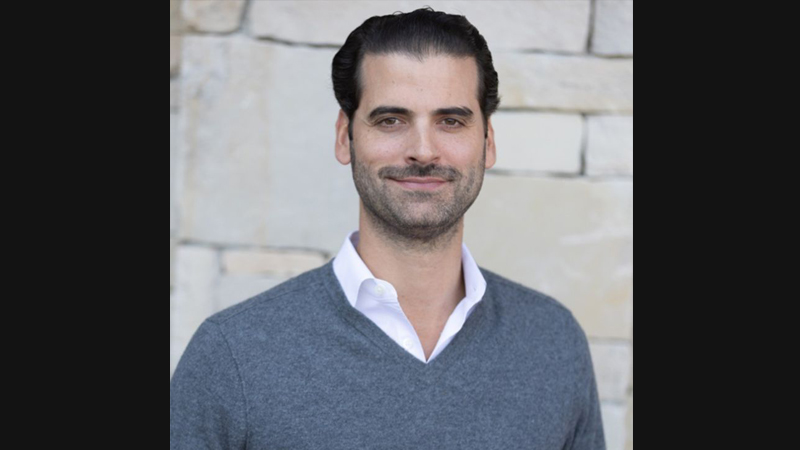
MUMBAI: From balance sheets to big screens, Paramount has made a decisive financial move. Paramount, a Skydance Corporation company, has appointed Dennis K. Cinelli as its chief financial officer, effective January 15, 2026, marking a significant leadership shift at the media giant.
Cinelli, who steps down from Paramount’s board to take on the executive role, brings heavyweight credentials from the technology and AI worlds. He previously played a central role in taking Uber public during his tenure leading its mobility business in the US and Canada, and most recently served as CFO at Scale AI, where he helped drive rapid revenue growth and strategic fundraising, including a landmark investment by Meta that valued the company at nearly $30 billion.
As CFO, Cinelli succeeds Andrew C. Warren, who has served as EVP and interim CFO since June 2025. Warren will remain closely involved as a strategic adviser. Paramount Chairman and CEO David Ellison said Cinelli’s experience across direct-to-consumer, media, industrial and AI-driven businesses makes him a natural fit as the company enters its next phase of growth and transformation.
Alongside the finance reshuffle, Paramount has also strengthened its board with the appointment of Andrew Campion as an independent director from January 13, 2026. Campion brings deep operational and strategic expertise from senior leadership roles at Nike and The Walt Disney Company, as well as board experience at Starbucks.
With a new finance chief and a seasoned board addition, Paramount appears keen to ensure that its next act is as tightly scripted financially as it is creatively.
CALIFORNIA: Hollywood’s annual pre-Oscar showcase returned with vengeance, spreading its accolades across film, streaming, and television in a strategic play to keep every major studio competitive heading into awards season.
Paul Thomas Anderson’s counterculture epic One Battle After Another and Netflix’s youth drama Adolescence emerged as the evening’s biggest winners, each claiming four trophies. Anderson secured his first-ever Golden Globe wins with best comedy or musical film, best director, and best screenplay.

Netflix’s Adolescence won best limited series alongside acting prizes for Stephen Graham, Owen Cooper and Erin Doherty. Writer Jack Thorne used his acceptance speech to frame the show as an indictment not of young people but of “the filth and the debris we have laid in their path”.

Big-ticket cinema was not shut out. The Shakespeare-inspired drama Hamnet won best drama film and best actress for Jessie Buckley, with producer Steven Spielberg praising director Chloé Zhao as the only film-maker who could have made it work.

Ryan Coogler’s period horror Sinners demonstrated its commercial might with wins for original score and box-office achievement.

Timothée Chalamet became the youngest winner of best lead actor in a comedy for Marty Supreme, while Rose Byrne took best lead actress in a comedy for the indie hit If I Had Legs I’d Kick You, which she joked was made for $8.50. Brazilian thriller The Secret Agent scored two wins, including best non-English language film and best actor in a drama for Wagner Moura — the first Brazilian to take the prize.
Television saw a generational shake-up. Hospital drama The Pitt won best drama series, with Noah Wyle named best actor, while Apple’s industry satire The Studio took best comedy series and a lead-actor win for Seth Rogen. Rhea Seehorn won best actress in a drama for Pluribus, and Jean Smart claimed her third Globe for HBO’s Hacks.


The ceremony also leaned into politics and culture-war signalling, with several stars wearing anti-ICE pins and the show introducing a new category for best podcast, won by Good Hang with Amy Poehler.

The Golden Globes 2026’s wildest, weirdest and most viral moments
Host Nikki Glaser opened by calling the ceremony “the most important thing happening in the world right now” before firing at targets ranging from George Clooney’s coffee habits to CBS News and the US justice department’s redacted Epstein files. Her Nicole Kidman cinema-ad parody and K-pop singalong kept the ballroom loose and social media buzzing.

Glaser also skewered Leonardo DiCaprio, turning his famously scrutinised dating history into one of the night’s biggest laughs. “The most impressive thing about Leo,” she joked, “is that he managed to do all that before his girlfriend turned 30.” She mock-apologised for the dig, calling it “cheap”, before adding, “But honestly, we don’t know anything else about you. Give us something to work with.”

The night’s emotional centre came early. Teyana Taylor completed the sweep with best supporting actress, delivering one of the night’s most powerful moments when she told “little brown girls watching tonight” that their softness and ambition needs no permission to exist.

A new Globes category — best podcast — also landed with a flourish. Good Hang With Amy Poehler took the inaugural prize, with Poehler wrapping Snoop Dogg in a celebratory hug before joking that NPR should “try harder” than simply letting celebrities phone it in. Backstage, she said her dream listener was Meryl Streep.

Timothée Chalamet became the youngest-ever winner of best lead actor in a comedy for Marty Supreme, raising eyebrows by thanking Shark Tank’s Kevin O’Leary—a playful nod to the Globes’ tendency to blend prestige with pop culture spectacle.

Netflix’s K-Pop Demon Hunters underlined its status as a commercial juggernaut by winning both best animated film and best song for Golden. The creators said they had simply poured everything they loved into the film and hoped to repeat the trick in a sequel, even if lightning rarely strikes twice.

Elsewhere, steamy TV breakout Heated Rivalry brought its fan-service straight onto the stage as stars Connor Storrie and Hudson Williams teased the audience while presenting, triggering whoops that would have been unthinkable at the Oscars.

Director Judd Apatow supplied the night’s sharpest industry critique, reminding the room that the Globes’ “comedy or musical” category once handed his Trainwreck a loss to The Martian. He joked that while the world had endured Covid and authoritarian drift since then, he was “still pretty focussed on this Martian thing”.
Melissa McCarthy and Kathryn Hahn delivered the slickest comic bit, flipping Hollywood’s gender politics by pretending men were an under-represented minority in film. “It’s about time,” McCarthy deadpanned, “that men finally got a seat at the table.”


Netflix celebrates a decade in India with Shah Rukh Khan-narrated tribute film

Delhivery chairman Deepak Kapoor, independent director Saugata Gupta quit board

Meta appoints Anuvrat Rao as APAC head of commerce partnerships

Brnd.me enters Europe as haircare brands power global expansion

TechnoSport taps quick commerce with launch on Slikk’s 60-minute platform

Jitendra Singh joins Reliance Industries as senior vice president, special projects

Tinder brings real-world dating experiences to North East India

These ’90s fashion trends are making a comeback in 2017
The final 6 ‘Game of Thrones’ episodes might feel like a full season
According to Dior Couture, this taboo fashion accessory is back
The old and New Edition cast comes together to perform
Phillies’ Aaron Altherr makes mind-boggling barehanded play
Uber and Lyft are finally available in all of New York State
Disney’s live-action Aladdin finally finds its stars
Netflix celebrates a decade in India with Shah Rukh Khan-narrated tribute film
Delhivery chairman Deepak Kapoor, independent director Saugata Gupta quit board
Meta appoints Anuvrat Rao as APAC head of commerce partnerships
Brnd.me enters Europe as haircare brands power global expansion
TechnoSport taps quick commerce with launch on Slikk’s 60-minute platform
Jitendra Singh joins Reliance Industries as senior vice president, special projects
Tinder brings real-world dating experiences to North East India
-
 iWorld3 months ago
Tips Music turns up the heat with Tamil party anthem Mayangiren
-
 iWorld12 months ago
BSNL rings in a revival with Rs 4,969 crore revenue
-
 I&B Ministry3 months ago
India steps up fight against digital piracy
-
 MAM3 months ago
HoABL soars high with dazzling Nagpur sebut
-
 iWorld2 days ago
Netflix celebrates a decade in India with Shah Rukh Khan-narrated tribute film
-
 News Broadcasting6 months ago
Wion marks Independence Day with global showcase of India’s spirit
-
 iWorld3 months ago
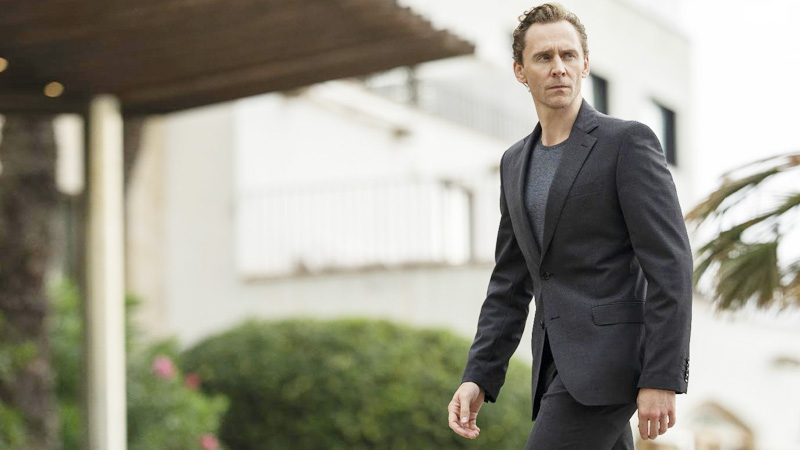
The Night Manager returns with new secrets, new spies and old scars
-

 News Headline2 months ago
Shaji Prabhakaran named chief advisor to GOAT India Tour – Messi