
MAM
As workplaces grow more chaotic, calm becomes leadership’s quiet power

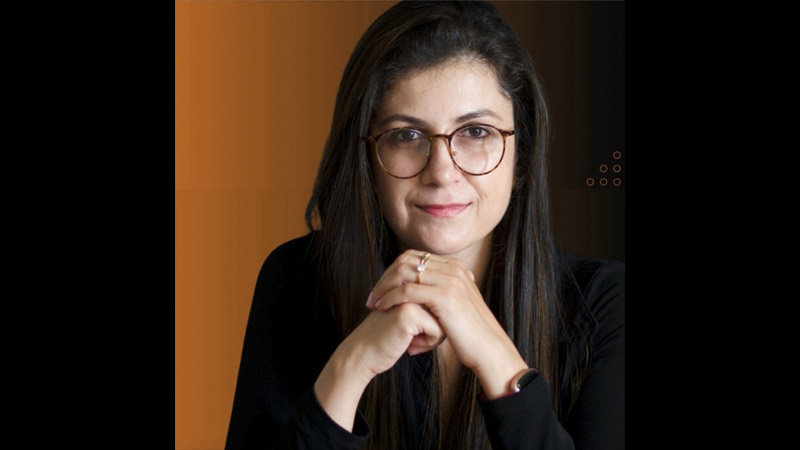
MUMBAI: In an era defined by constant pressure and perpetual urgency, a growing body of leadership thinking is challenging an old assumption, that speed equals strength. According to leadership coach and media veteran Shailja Saraswati Varghese, calm, not urgency, is fast becoming a competitive advantage.
For years, modern leadership has rewarded velocity. Rapid responses, instant decisions and an always-on posture were treated as markers of control. In boardrooms and war rooms alike, urgency passed for effectiveness.
That model, Varghese argues, is breaking down.
“When pressure becomes sustained rather than episodic, urgency starts to erode judgement,” she says. “Calm, on the other hand, preserves range, the ability to see options, patterns and consequences that disappear when adrenaline takes over.”
Varghese, who works at the intersection of inner mastery, leadership and storytelling, has spent over 25 years building large-scale content and partnership ecosystems across global media and advertising giants including Omnicom, WPP, Discovery Networks, National Geographic–FOX and Zee. Today, through her platform Unstoppable Network, she focuses on a different question altogether: what sustains leadership impact when growth, titles and visibility are no longer enough?
Her answer is deceptively simple and quietly radical.
“The calmest people in the room often understand the system best,” she observes. “Not because they’re disengaged, but because they’re regulated.”
This regulation, she stresses, is not passive composure or emotional detachment. It is an active, trained capacity that allows leaders to absorb before responding, to listen while others rush to speak, and to hold perspective when noise accelerates.
In high-pressure environments, the human nervous system defaults to threat responses: fight, flight or freeze. While these reactions may offer short-term momentum, they narrow cognitive bandwidth over time. Decision-making becomes reactive. Complexity is flattened. Nuance is lost.
“Urgency creates the illusion of movement,” Varghese says. “But under sustained stress, it often leads to poor calls made faster.”
This insight is increasingly resonating with senior leaders navigating volatile markets, organisational churn and relentless scrutiny. As global businesses grapple with geopolitical uncertainty, technological disruption and cultural change, the ability to remain steady has become a differentiator.
Leadership, in this framing, is no longer about outpacing the chaos, but about not being consumed by it.
Varghese’s work with founders and CXOs focuses on this inner capability, developing clarity under pressure and aligning decisions with values rather than impulse. An ICF-trained, PCC-level mindful self-leadership coach, she draws on long-standing practices in mindfulness and breathwork alongside narrative-led learning formats.
Her flagship podcast, Unstoppable Woman, now in its fourth season and ranked among India’s Top 100 on Spotify in its inaugural year, reflects this philosophy. The conversations move beyond visible success to explore the inner architecture of leadership, including identity, resilience, allyship and becoming.
This emphasis on inner state is rooted in Varghese’s earliest professional training as a radio drama artist with All India Radio, where voice, presence and listening were central long before digital platforms dominated communication. That foundation, she says, continues to shape how she designs leadership experiences today.
At its core, her argument reframes calm as a capability rather than a personality trait.
“Composure isn’t about being naturally unflappable,” she notes. “It’s a leadership skill that can be built, especially under pressure.”
As organisations rethink what effective leadership looks like in an age of constant acceleration, this perspective offers a counterintuitive edge. Speed still matters. But without steadiness, it becomes noise.
The real question, Varghese suggests, is not how fast leaders move when pressure rises, but what happens to their pace, judgement and presence when it does.
In today’s leadership landscape, staying calm may be the most strategic move of all.










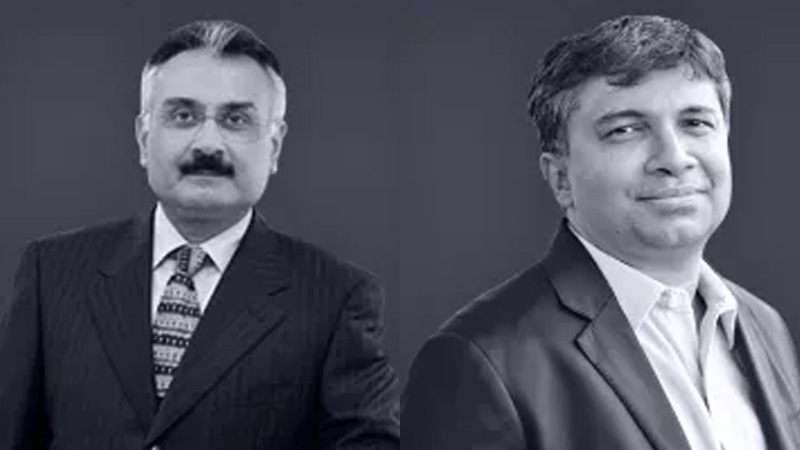
Gurugram: Delhivery’s boardroom is being reset. Deepak Kapoor, chairman and independent director, has resigned with effect from April 1 as part of a planned board reconstitution, the logistics company said in an exchange filing. Saugata Gupta, managing director and chief executive of FMCG major Marico and an independent director on Delhivery’s board, has also stepped down.
Kapoor exits after an eight-year stint that included steering the company through its 2022 stock-market debut, a period that saw Delhivery transform from a venture-backed upstart into one of India’s most visible logistics platforms. Gupta, who joined the board in 2021, departs alongside him, marking a simultaneous clearing of two senior independent seats.
“Deepak and Saugata have been instrumental in our process of recognising the need for and enabling the reconstitution of the board of directors in line with our ambitious next phase of growth,” said Sahil Barua, managing director and chief executive, Delhivery. The statement frames the exits less as departures and more as deliberate succession, a boardroom shuffle timed to the company’s evolving scale and strategy.
The resignations arrive amid broader governance recalibration. In 2025, Delhivery appointed Emcure Pharmaceuticals whole-time director Namita Thapar, PB Fintech founder and chairman Yashish Dahiya, and IIM Bangalore faculty member Padmini Srinivasan as independent directors, signalling a tilt towards consumer, fintech and academic expertise at the board level.
Kapoor’s tenure spanned Delhivery’s most defining years, rapid network expansion, public listing and the push towards profitability in a bruising logistics market. Gupta’s presence brought FMCG and brand-scale perspective during a period when ecommerce volumes and last-mile delivery economics were being rewritten.
The twin exits, effective from the new financial year, underscore a familiar corporate rhythm: founders consolidate, veterans rotate out, and fresh voices are ushered in to script the next chapter. In India’s hyper-competitive logistics race, even the boardroom does not stand still.
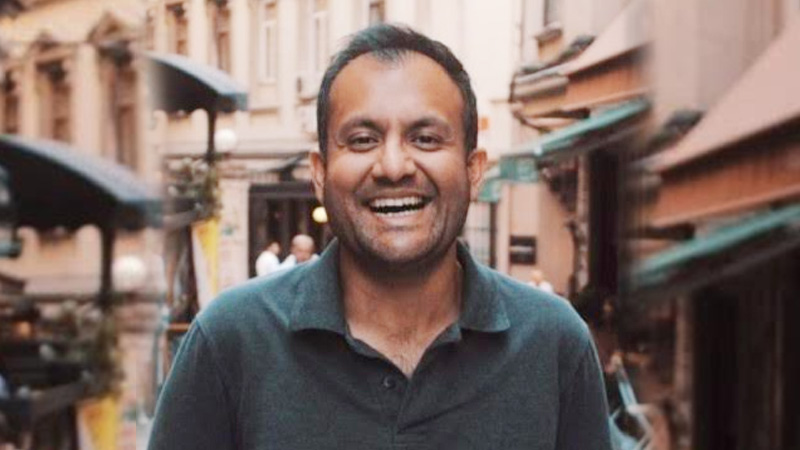
At Locofy.ai, Rao helped convert a three-year free beta into a paid engine, clocking 1,000 subscribers and 15 enterprise clients within ten days of launch in September 2024. The low-code startup, backed by Accel and top tech founders, is famed for turning designs into production-ready code using proprietary large design models.
Before that, Rao founded generative AI venture 1Bstories, which was acquired by creative AI platform Laetro in mid-2024, where he briefly served as managing director for APAC. Alongside operating roles, he has been an active investor and advisor since 2020, backing startups such as BotMD, Muxy, Creator plus, Intellect, Sealed and CricFlex through a creator-economy-led thesis.
Rao spent over eight years at Google, holding senior partnership roles across search, assistant, chrome, web and YouTube in APAC, and earlier cut his teeth in strategy consulting at OC&C in London and investment finance at W. P. Carey in Europe and the US.
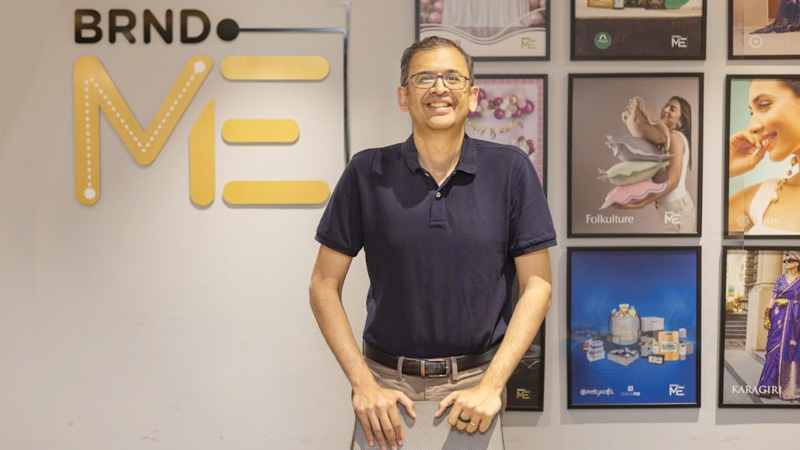
Bengaluru: Brnd.me, the global consumer brands company formerly known as Mensa Brands, has entered the European market following strong momentum across the Middle East, the United States and Canada.
The company has launched across the UK, Germany, France and Spain, with plans to expand into Italy, the Netherlands and Poland over the next year. The push is being led by its haircare and aromatherapy brands, Botanic Hearth and Majestic Pure, marking Brnd.me’s first structured expansion into Europe.
The European beauty market represents a total addressable opportunity of over $4 billion across haircare and aromatherapy, supported by high digital adoption and demand for accessible, performance-led products.
Brnd.me’s hair care and aromatherapy business currently operates at an annual run rate of around $6 million, with Botanic Hearth and Majestic Pure delivering roughly 10 per cent month-on-month growth, driven by expansion and rising repeat demand.
To support regional growth, the company has appointed a general manager based in Germany and is evaluating investments in warehousing and local team expansion.
Early traction has been strong. Within weeks of launch, Botanic Hearth’s rosemary hair oil ranked among the top five hair oils in Germany, signalling strong consumer pull in a competitive market.
Brnd.me founder and chief executive officer Ananth Narayanan, said Europe represents the next phase of the company’s international strategy. He added that the European business is expected to scale to a $10 million annual run rate by the end of 2026, with long-term ambitions to reach $60 million over the next six years.
The company’s Europe strategy centres on digital-first distribution, repeat demand and TikTok-led discovery, alongside direct-to-consumer expansion to strengthen brand equity and margins.
The move also aligns with growing EU–India trade engagement, supporting long-term sourcing and cross-border supply chains.

Netflix celebrates a decade in India with Shah Rukh Khan-narrated tribute film

Delhivery chairman Deepak Kapoor, independent director Saugata Gupta quit board

Meta appoints Anuvrat Rao as APAC head of commerce partnerships

Brnd.me enters Europe as haircare brands power global expansion

TechnoSport taps quick commerce with launch on Slikk’s 60-minute platform

Jitendra Singh joins Reliance Industries as senior vice president, special projects

Tinder brings real-world dating experiences to North East India

These ’90s fashion trends are making a comeback in 2017
The final 6 ‘Game of Thrones’ episodes might feel like a full season
According to Dior Couture, this taboo fashion accessory is back
The old and New Edition cast comes together to perform
Phillies’ Aaron Altherr makes mind-boggling barehanded play
Uber and Lyft are finally available in all of New York State
Disney’s live-action Aladdin finally finds its stars
Netflix celebrates a decade in India with Shah Rukh Khan-narrated tribute film
Delhivery chairman Deepak Kapoor, independent director Saugata Gupta quit board
Meta appoints Anuvrat Rao as APAC head of commerce partnerships
Brnd.me enters Europe as haircare brands power global expansion
TechnoSport taps quick commerce with launch on Slikk’s 60-minute platform
Jitendra Singh joins Reliance Industries as senior vice president, special projects
Tinder brings real-world dating experiences to North East India
-
 iWorld3 months ago
Tips Music turns up the heat with Tamil party anthem Mayangiren
-
 iWorld12 months ago
BSNL rings in a revival with Rs 4,969 crore revenue
-
 I&B Ministry3 months ago
India steps up fight against digital piracy
-
 MAM3 months ago
HoABL soars high with dazzling Nagpur sebut
-

 News Headline4 weeks ago
Preeti Sahni set to join TV9 Network in senior leadership role
-

 iWorld2 weeks ago
Jio shifts gears as 5G, homes and AI deals drive quarter momentum
-
 News Broadcasting5 days ago
Palki Sharma leaves Firstpost: Reports
-
 iWorld3 days ago
Netflix celebrates a decade in India with Shah Rukh Khan-narrated tribute film