
Regulators
CAS Ruling: MSOs now have the ammo to take on DTH

It was one piece of news that cable TV networks were waiting to hear for long, too long in actual fact!
Buffeted by potential competition from direct-to-home (DTH) operators, the timing of the Delhi High Court ruling that has ordered the government to enforce the rollout of conditional access system (CAS) in India within four weeks couldn’t have been more crucial. Tata Sky is preparing to launch in June and Dish TV, at present the only existing private sector DTH service provider, is expected to sort out programming contracts with Star India and SET Discovery by then.
Cable TV can take DTH head on with its digital service. It has the firepower to do so, having built a rich battery of last mile operators (LMOs) who have serviced consumers over the years.

Firstly, it can cobble together more channels than DTH can offer at the initial stage when the consumer is making the shift from analogue to digital. Already, some MSOs are making available a little under 150 TV channels. DTH operators, on the other hand, are limited by transponder space on satellite and can only ramp up under MPEG-4 compression technology.
Second, cable TV can bundle broadband and, with preparation in future, telephony services.
Third, it can develop interactive features with its fibre network.
Fourth, it has manpower in place which can be quickly energised to push digital set-top boxes (STBs).
Sure, MSOs and independent operators would have preferred the courts to have come up with the same verdict much earlier, after the government withdrew CAS in 2004. That would have given them a first mover advantage with a considerable time lag before DTH could kickstart operations.
But there was one issue which had still to be sorted out for an effective rollout: LMOs felt insecure and did not back the rollout of digital cable. With competition from DTH looming large, they now have the support of their franchisee operators.
But what if the verdict on CAS had come after Tata Sky’s launch and Dish TV’s content contracts had been stitched with Star and Sony? Cable TV operators would have been able to fight against DTH with two weapons in their armoury – analogue cable and voluntary digitalisation. On analogue cable, operators have the flexibility of dropping subscription fees drastically. With a price warrior in place through analogue service, digital cable could offer an alternate choice to consumers to combat DTH head on. On the flip side, the digital service would still remain unaddressable while DTH could provide consumers the choice of selecting channels and packages they want to pay for.
Under CAS, cable operators do not have the flexibility of delivering pay channels on their analogue network. Consumers will have to select between DTH and digital cable for receiving these channels. They will, in other words, have to buy either a DTH or a cable TV set-top box.
But delaying the direct knock-to-knock face-off between cable and DTH operators hardly serves any purpose. The business model for MSOs and independent operators can only get worse if no CAS is in place. Because the way out to stop DTH from invading into cable territory without a properly tiered and price-packaged digital service would have been possible only through rate drops. While LMOs would have been unaffected, the MSOs would have felt the pinch.
Retooling business strategies and organising the sector is in the commercial interest of the cable operators. The hour has come to change the mindset and bring in quality and service-oriented practices. It will be meaningless to wish away competition from DTH and later IPTV providers.
Several networks already have a stockpile of digital STBs. So far, they have been unable to place these boxes in consumer homes. Even Hathway Cable & Datacom, the more aggressive of the digital cable TV players, claims it has managed to distribute just 40,000 boxes. It would do better for operators to take a more positive view: that with CAS, digitalisation, either through cable or DTH or IPTV, would move faster.
After all, the market is too big and diverse for any single player to cover it all.
Ensuring a ramp up in supply of boxes, erecting a solid encryption system, and having a sound billing mechanism should be the focus areas. Also, it is crucial for operators to find more, better and premium content which can lure customers. They will also have to work out rental schemes and low up-front charges to subsidise the boxes in order to stay competitive with DTH.
Another hard lesson to be learnt from this is that investments on old technologies won’t help. For those who have put their money on analogue STBs, the chances of surviving the battle look grim. Yes, there is a market for free-to-air analogue service. But no, not for analogue STBs as that will limit the channel offerings at a time when supply is growing rapidly.
There will be competitive pressure for cable operators to upgrade their networks and services. Territorial monopolies will end and cable operators will also have to fight amongst themselves for retaining or acquiring subscribers.
DTH, of course, retains one advantage. It has a national footprint while CAS is limited to the four metros in the first phase. This will give DTH economies of scale, but then it will still face the big hurdle of drawing in consumers to buy a box in the non-CAS areas.
By bringing in CAS, the MSOs realise the entire business model changes in favour of them. Gaining control over the entire value chain across the network and having an addressable system will pump up valuation of cable companies and draw in global investors.
The green signal on CAS couldn’t have come at a riper time. If there is any year which can drive digitalisation forward, this is it. In June-July, ESPN Star Sports will show live the football World Cup. The other key properties on the roster are ICC cricket Champions Trophy in September and the cricket World Cup early 2007 (both events on Sony).










I&B Ministry
MIB sets OTT accessibility rules, mandates captions and audio description
Platforms get three years to add features for hearing and visually impaired
NEW DELHI: The government has asked OTT platforms to make their shows easier to watch and hear. A new set of accessibility guidelines from the Ministry of Information and Broadcasting requires streaming services to add features for viewers with hearing and visual impairments.
The move follows the Rights of Persons with Disabilities Act, 2016, and is meant to bring streaming closer to the promise of equal access. In simple terms, if a film or series is coming to an OTT platform, it should not arrive empty-handed. It should come with captions for those who cannot hear well and audio descriptions for those who cannot see clearly.
The guidelines ask platforms to provide at least one accessibility feature each for hearing-impaired and visually-impaired viewers. That could be closed captions, open captions, Indian Sign Language interpretation, or audio description. The aim is to make content understandable without turning the viewing experience into a technical chore.
There is, however, a long runway. Platforms have up to thirty six months from the date of the guidelines to ensure that all newly released content carries these accessibility features. Older titles in their libraries are not under strict timelines, but companies are encouraged to add features gradually.
The rules also go beyond the show itself. User interfaces, whether on mobile apps, smart TVs or websites, must be designed to work with assistive technologies. Accessibility labels such as CC for captions, AD for audio description and ISL for sign language must be displayed clearly so viewers know what to expect before pressing play.
Some content types get a free pass. Live events, music, podcasts, and short form content like ads are exempt because of practical challenges in real time captioning and description.
OTT publishers will also need to file accessibility conformance reports. The first report is due three years from now, followed by quarterly updates. Complaints from viewers will follow a three tier system, starting with the platform itself, moving to self-regulatory bodies, and finally reaching a government monitoring committee if needed.
For the streaming industry, the message is clear. Accessibility is no longer a nice extra tucked away in settings. It is fast becoming part of the main feature, and in a country where streaming audiences run into the hundreds of millions, that could make a very big difference to who gets to enjoy the show.
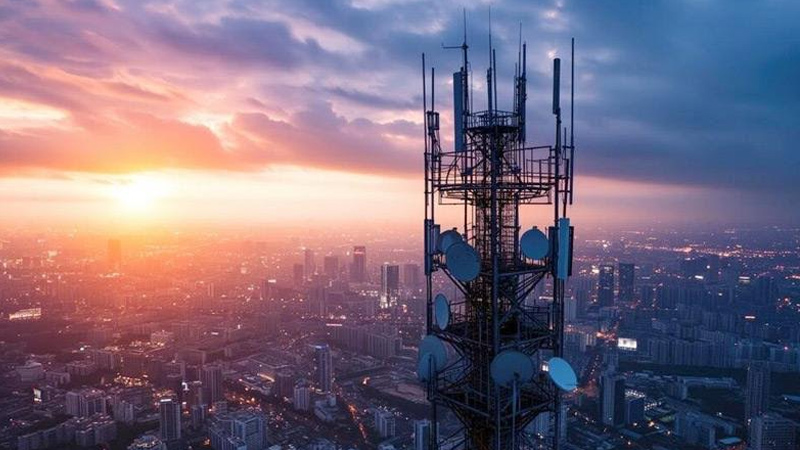
MUMBAI: A long audit trail just got a lot shorter. India’s broadcast audit regime is being rewired, with the Telecom Regulatory Authority of India rolling out the Telecommunication (Broadcasting and Cable) Services Interconnection (Addressable Systems) (Seventh Amendment) Regulations, 2026 to bring clarity, credibility and fewer déjà vu audits to the sector.
The changes come after persistent industry feedback flagged bloated audit cycles, repetitive checks on distributors of pay channels (DPOs), patchy accountability of auditors and gaps around infrastructure sharing. TRAI says the overhaul is designed to cut costs and disruption, without diluting oversight.
At the heart of the amendment is a firmer audit calendar. Audits will now be conducted on a financial-year basis, replacing the calendar-year system. Distributors must complete audits and submit reports to broadcasters by 30 September each year, setting a single, predictable deadline across the ecosystem.
Transparency has also been dialled up. Broadcasters are now permitted to depute representatives during audits. If discrepancies surface, broadcasters can seek clarifications from auditors through the DPO, with responses required within defined timelines. Should doubts persist, broadcasters may commission a fresh audit at their own cost, subject to the Authority’s approval. And if an audit report does not land by the September deadline, broadcasters can trigger an audit themselves.
In a nod to ease of doing business, TRAI has eased the load on smaller distributors. Annual audits at the distributor’s cost are now optional for DPOs with fewer than 30,000 subscribers, though broadcasters retain the right to get these entities audited at their own expense.
The amendment also plugs a long-standing grey area around infrastructure sharing. Subscriber Management Systems and Conditional Access Systems or DRM must meet requirements separately for each distributor, with distinct instances to allow entity-wise reconciliation. On branding, infrastructure providers must insert network logo watermarking for all pay channels at the encoder end, while seekers supply their logo via set-top equipment or middleware. To keep screens clean, TRAI suggests limiting visible logos to two.
Backing the regulatory changes is a tougher gatekeeping process for auditors. Following consultations and an open house, TRAI has strengthened technical proficiency norms, categorised auditors by experience and tightened accountability provisions through its empanelment framework issued in August 2025. An updated audit manual aligned to the new rules is expected shortly.
Taken together, the Authority believes the package will restore confidence in the audit process, curb repeat checks, lower compliance costs for both broadcasters and distributors, and ensure audits are completed on time. For an industry long tangled in audit fatigue, TRAI’s message is clear: fewer loops, clearer lines, and a cleaner bill of health.
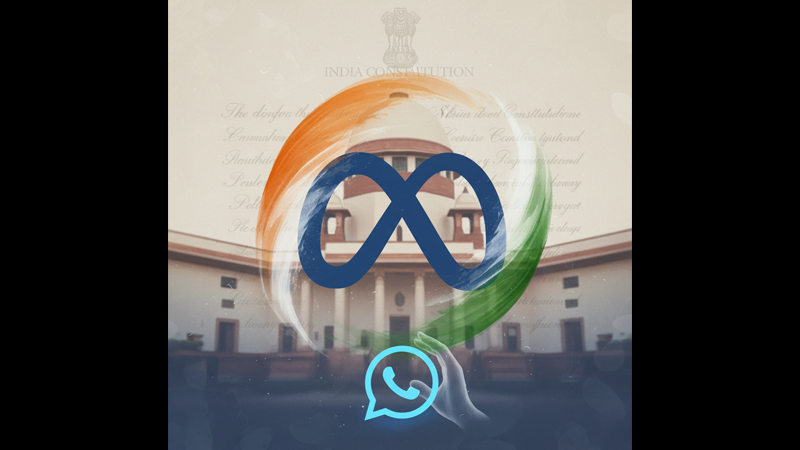
DELHI: India’s Supreme Court has delivered a stinging reality check to WhatsApp, making it clear that free messaging should not come at the cost of a user’s digital soul. In a heated hearing on Tuesday, the bench took aim at Meta’s 2021 privacy policy, describing the platform’s “take-it-or-leave-it” ultimatum as less of a choice and more of a digital shakedown.
The Court did not mince its words, famously characterising Meta’s data-harvesting tactics as a “decent way of committing theft” of private information. While the tech giant might see data as the new oil, chief justice Surya Kant suggested that the current method of extraction looks a lot like daylight robbery under the guise of an “Accept” button.
The bench was particularly unimpressed by the idea that users have a free choice in the matter. Likening the power dynamic to an agreement between a “Lion and a lamb,” the judges noted that WhatsApp’s massive market dominance effectively forces consent. For millions of Indians, opting out of the app isn’t a simple preference; it is a social and professional exile. The Court noted that users are effectively “addicted” to the service, making any consent gathered under these terms “manufactured” rather than genuine.
In a moment of high drama, the chief justice issued a blunt ultimatum: “If you cannot follow our Constitution, leave India.” The message was clear: commercial interests will not be permitted to bulldoze the fundamental right to privacy.
The Court also took a swipe at the “cleverly crafted” legalese found in the terms of service. It argued that a street vendor or a rural worker should not need a law degree to understand how their data is being traded. The justices dismissed the notion that WhatsApp is a charity, pointing out that while users do not pay in rupees, they pay a heavy price in personal information that Meta later monetises.
As it stands, the Court has handed Meta some serious homework with a very tight deadline. The company must file an affidavit by February 9, giving a firm promise that it will stop sharing user data across its various entities. For now, the message from Delhi is loud and clear: if WhatsApp wants to stay in the conversation, it needs to start respecting the boundaries.


MIB sets OTT accessibility rules, mandates captions and audio description

Boney Kapoor acquires remake rights of Tamil political satire Thalaivar Thambi Thalaimaiyil

Netflix India names Rekha Rane director of films and series marketing

Zabeen signs off from TV9 after shaping the network’s public voice

Dhawan steps up to bat for Delhi’s grassroots sports push

Orient Beverages pops the fizz with steady Q3 gains and rising profits

Cheekatilo shines in the dark with record debut on Prime Video

These ’90s fashion trends are making a comeback in 2017
The final 6 ‘Game of Thrones’ episodes might feel like a full season
According to Dior Couture, this taboo fashion accessory is back
The old and New Edition cast comes together to perform
Phillies’ Aaron Altherr makes mind-boggling barehanded play
Uber and Lyft are finally available in all of New York State
Disney’s live-action Aladdin finally finds its stars
MIB sets OTT accessibility rules, mandates captions and audio description
Boney Kapoor acquires remake rights of Tamil political satire Thalaivar Thambi Thalaimaiyil
Netflix India names Rekha Rane director of films and series marketing
Zabeen signs off from TV9 after shaping the network’s public voice
Dhawan steps up to bat for Delhi’s grassroots sports push
Orient Beverages pops the fizz with steady Q3 gains and rising profits
Cheekatilo shines in the dark with record debut on Prime Video
-

 News Broadcasting2 weeks ago
Mukesh Ambani, Larry Fink come together for CNBC-TV18 exclusive
-

 News Headline1 month ago
From selfies to big bucks, India’s influencer economy explodes in 2025
-
 iWorld5 months ago
Billions still offline despite mobile internet surge: GSMA
-

 Applications2 months ago
28 per cent of divorced daters in India are open to remarriage: Rebounce
-

 iWorld2 weeks ago
Netflix celebrates a decade in India with Shah Rukh Khan-narrated tribute film
-

 Hollywood1 week ago
The man who dubbed Harry Potter for the world is stunned by Mumbai traffic
-

 News Headline2 months ago
Game on again as 2025 powers up a record year and sets the stage for 2030
-
 I&B Ministry3 months ago
India steps up fight against digital piracy
