
Brands
IBS: Tapping into the D2C Opportunity

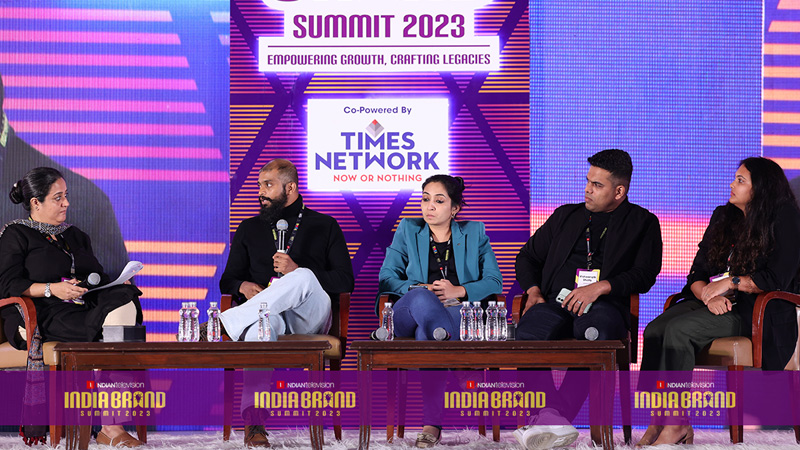
Mumbai: The India Brand Summit held on 28 November 2023 at The Lalit Mumbai, convened leaders, marketers, entrepreneurs, and experts to explore current trends, challenges, and opportunities in the dynamic brands and marketing arena.
The session delved into: Is D2C the correct way for businesses? How bright is the future? The session offers an in-depth exploration of the brands choosing the way of D2C and how that decision has impacted the success journey and contributed to their successful brand building.
The key highlights of this session were: Brands are turning to D2C for rapid revenue growth and enhanced customer loyalty. This shift, crucial in price-sensitive markets like India, overcomes distribution challenges. D2C not only bridges gaps but also utilizes data for personalized user journeys, ensuring quicker and more efficient consumer connections.
The panel was moderated by Boston Consulting Group partner and associate director Jyoti Narula Ranjan and had panelists including
Candere By Kalyan Jewellers head of marketing, brand experience & data Akshay Matkar, NIVEA India digital precision marketing manager Tanvi Amladi, Pocket Aces business head Vishwanath Shetty, Kaya VP & head of marketing Samyukta Ganesh Iyer.

The session began with Ranjan asking, “How do you as a brand, map the consumer journeys in this omni-channel D2C world? There is an aspect of marketing to these users in this digital world and there is a method of mapping the consumer journeys.”
Amladi answered, “ I think one for us was to really acknowledge that today consumer journeys are not linear. So we know consumers are exposed to so many different touchpoints, especially in a category like skincare. I think the first step for us when we talked about customer journey was to really acknowledge that fact and say then therefore What are these different ways in which I can reach my consumer? The second thing was actually understanding the consumer and therefore just making sense of who she is because we knew weren’t talking to someone who is just 18 to 22. That is someone who is just displaying a certain specific life she would within that she’s doing so many different things. She comes in with different, she’s at different stages in her skincare journey. So speaking, again specifically to the category that we play in, it was very important for us to even understand what is her category entry point. When she gets into skin care. Someone’s getting into it, at the age of 18, by the time she’s 22, she’s already super evolved in her journey. Someone is getting introduced to it only at the age of 25, maybe when she’s a little bit into her career. So, for us just understanding all these little nuances around how the consumer comes into the category and how kind of she plays around with it, in different in different ways. That was the starting point and that’s always been kind of the anchor around which we build a lot of what we do at NIVEA.
Commenting on the same, Ranjan said, “I think one thing which is probably coming out stronger is how over the long term period there were a lot of micro-moments that you’re probably capturing in how these consumers are entering the purchase journey or just the brand interaction journey.”
She then asked Matkar, “It would be very interesting to see how really as a brand to thrive in an environment where consumers are doing this omni channel touch point. How do the marketing teams really thrive using agile methodologies, both on preparing the back end, and getting the right touchpoints in place? How do you make that happen at the backend because one is knowing the consumer, but then how do you capture that touchpoint in a digital-first world?”
Matker replied, “I’ll break it into two parts. Part A is, how you look at the consumer area. So in our case, since we have an online store and also offline store. We look at it in four parts. Part A is, that the user has discovered the product online and purchased it offline. Part B is, consumers have discovered the product online and purchase is also happening online. Third and fourth is user has discovered the product offline and purchased it offline and the user has discovered the product offline and made the purchase online. So these are the four different types of consumer journeys that we look at. Hence our entire marketing spends, the teams, the way we operate, it shifted. We started our offline reading journey in 2022. Prior to that, it was completely online. What we do is, we have something created called our entire data warehouse, and we have something called a CDP like many brands do. The main problem in the digital space is that it’s not about collecting the data, it’s about how accurately your data you’re collecting and what are the data losses that are happening. So because we have multiple systems, we have CRM, we have a communication platform, we have personalisation tools, we have recommendation tool and then so many data points that we need to collect, we need to process and then we need to look at different data and based on that how do we actually split the entire marketing spends. So looking this journey into four halfs has helped us to make informed decision on which channel we need to invest more. Though, I think we can see that, our data pointers like 70 per cent of the consumers are discovering the product online. So though our CPA on the retail side would be lower, but our investments should be on the higher side on the digital space.”
Thereafter bringing Iyer into the conversation next, Ranjan asked, “How did you help these (Baskin Robbins & Kaya) brands find out the value proposition to the right consumer set mapping? And how did you really use digital media to drive this omnichannel existence for the brand?”
Iyer said, “One big thing I think we were discussing just before the panel right now in terms of saying that, today every brand, small, big otherwise needs to have a very strong presence both online and offline. So it’s no longer about whether I’m a D2C brand, or whether I have an offline brand. Everyone’s omnichannel today. Brands that were born on D2C have now started opening up stores offline in order to give consumers the experience that they’ve been craving because they don’t get that online. And vice versa, the convenience, the comfort of calling for things online is why even the large brands who registered for the longest time today are all there. A great case study would be what happened with CPR in, when we actually did one of the first collabs, that we drove with Swiggy where we actually did a 50/50 partnership in terms of making the ads, making all of the media buys including Hotstar Integration. For the very first time, two brands, one aggregator brand and one brand actually came together and it hit the nail on many boxes because one, a brand like Baskin-Robbins, which had been there in the Indian market for 26 years at that point in time, globally for 75 years, suddenly became relevant to millennials who had kind of played back to us saying ‘it’s my childhood friend, it’s a brand that I grew up having as a kid with my parents. After dinner, we would go for a walk, go to the nearest Baskin-Robbins parlor, and pick from their 31 flavours. But today it was not the brand of choice for millennials so there was a definite issue there. For Swiggy, they wanted a premium ice cream brand on their platform. So it kind of hit the nail on many, many boxes there. Second, it had also become irrelevant to the male audiences, perhaps because of the color pink it had become little alienating to the audience, that ice cream as a category is fairly gender agnostic otherwise. Third, there was also a problem of the brand not being easily available because ice cream, as a category, was not something that people were calling for online. So going live on IPL being there from, the first match to the last match, we did this fantastic innovation with Hotstar as well where you could just call for the ice cream while the gamification was happening. It has changed the landscape because suddenly the brand became relevant. The brand had fresh fruit ice cream flavors like Naturals and Ibaco and it also helped everybody. As I was saying it was a much larger connect because suddenly during the lockdown the brand was available and that would have never happened. I mean we could have never forced on. So I think why D2C matters, it kind of answers the question of the topic today, the brand is then available. Any brand of your choice is then available at your fingertips.”
Thereafter Ranjan asked Shetty, “What is the mantra for getting content right on social marketing and how do you advise brands to leverage content social media influencer marketing for building brands having that direct connect?”
Shetty replied, ”I feel knowing your customer is very important. Where is the customer? Are they on Instagram or are they on Facebook or on LinkedIn, That’s also really, really important. So content is a huge bucket where you can bifurcate its basis where your audience is. Interestingly, when the influencer wave started post-COVID. I think there was good traction initially. I remember basically when we started Skinsi which was direct competition to Kaya then and we largely were D2C, so we provided clinical services at home. So for us, I still remember we did drop challenge which was one of the first campaigns that I did for Skinsi back then and this was I think Woman’s Day. So there was a clear trend that we saw, globally whatever works on TikTok on Insta, in a week’s time it is to travel to India. So you always want to make your UGC content a success and everyone starts digging into what should we do. While it was very simple for what we saw, we executed in 10 days and we spent barely around 10-12 lacs. Interestingly, we didn’t get a lot of leads in such, but the consideration and the conversion doubled our business. So, I think influencer marketing is not just a big mark in a box, but you need to be very, very sure what will work for your brand and how your audience will take it and if you make it a very inclusive community campaign, budget doesn’t matter. It will work for your brand. So that’s influencer marketing and working and you don’t have to spend crores, but you can still leverage it using international trends or global trends. Indianise it, take one or two good influencer and make a UGC content, do a tactical campaign, and kick-off. So that’s how influencer marketing has really helped especially for a skincare category. So I think that’s a great example. But now what has happened is a lot of these influencers also don’t want to be called influencers, they want to be called creators. So if you go back to the influencers, tell them, ‘You know what here is a reel, a post, do one story, one reel’, they’ll charge you a bomb but instead if an Instagram influencer wants to do a podcast series on Spotify and as a brand you help him to do that, he will come at 1/3 the cost and he will do value ads like no one’s business. So when you start connecting with the creator, help him in his journey, is when the brand grows and then the creator will be happy to push extra stuff from his side.”









Brands
Netflix India names Rekha Rane director of films and series marketing
Streaming giant bets on a seasoned marketer who helped build Amazon and Netflix into household names
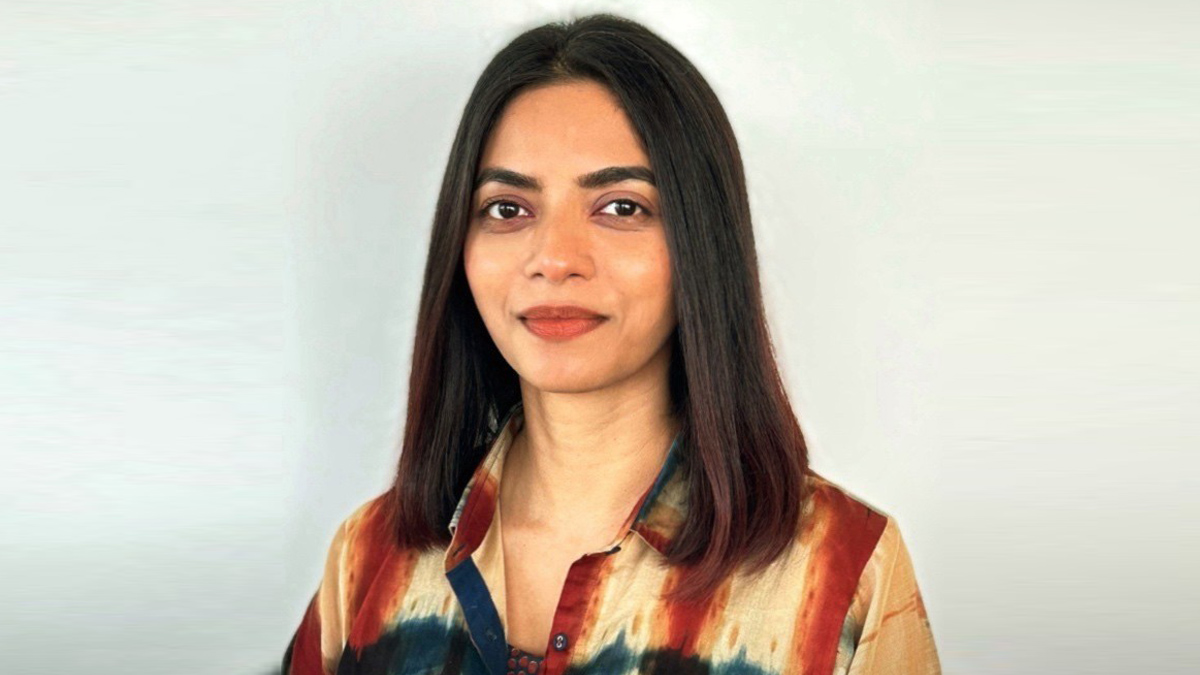
MUMBAI: Netflix has put a proven brand builder at the helm of its films and series marketing in India, naming Rekha Rane as director in a move that signals sharper focus on audience growth and cultural cut-through in one of its most hotly contested markets.
Rane steps into the role after seven years at Netflix, where she has quietly shaped how the platform sells stories to India. Her latest promotion, effective February 2026, crowns a run that spans brand, slate and product marketing across originals, licensed content and new verticals such as games.
A strategic marketing and communications professional with roughly 15 years’ experience, Rane has spent much of her career building technology-led consumer businesses and new categories, notably e-commerce and subscription video on demand. She was part of the early push that introduced Amazon.in, Prime Video and Netflix to Indian homes, then helped turn them into everyday brands.
At Netflix, she most recently served as head of brand and slate marketing for India from March 2024 to February 2026, leading teams across media and marketing for global and local content portfolios. Before that, as manager for original films and series marketing, she led IP creation and go-to-market strategy for titles including Guns and Gulaabs, Kaala Paani, The Railway Men* and The Great Indian Kapil Show, spanning both binge and weekly-release formats.
Her earlier Netflix roles covered product discovery and promotion in India and integrated campaign strategy to drive conversations around the content slate, product awareness and brand-equity metrics.
Before Netflix, Rane logged more than three years at Amazon in brand marketing roles in Bengaluru. There she handled national and regional campaigns for Amazon.in, worked on customer assistance programmes in growth geographies and contributed to the go-to-market strategy for the launch of Prime Video India.
Her career began well away from streaming. At Reliance Brands in Mumbai, she worked on retail marketing for Diesel and Superdry. A stint at Leo Burnett saw her work on primary research for P&G Tide, mapping Indian shoppers’ paths to purchase. Earlier still, at Orange in the United Kingdom, she rose from sales assistant to store manager, running a team and owning monthly P&L for a retail outlet.
The arc is telling. As global streamers fight for attention in a crowded Indian market, executives who understand both mass retail behaviour and digital habit-building are prized. Rane’s career sits at that intersection.
For Netflix, the bet is simple: in a market spoilt for choice, sharp marketing can still tilt the screen. And with Rane now leading the charge, the streamer is signalling it wants not just viewers, but fandom.
Brands
Orient Beverages pops the fizz with steady Q3 gains and rising profits
Kolkata-based beverage maker reports stronger revenues and profits for December quarter.
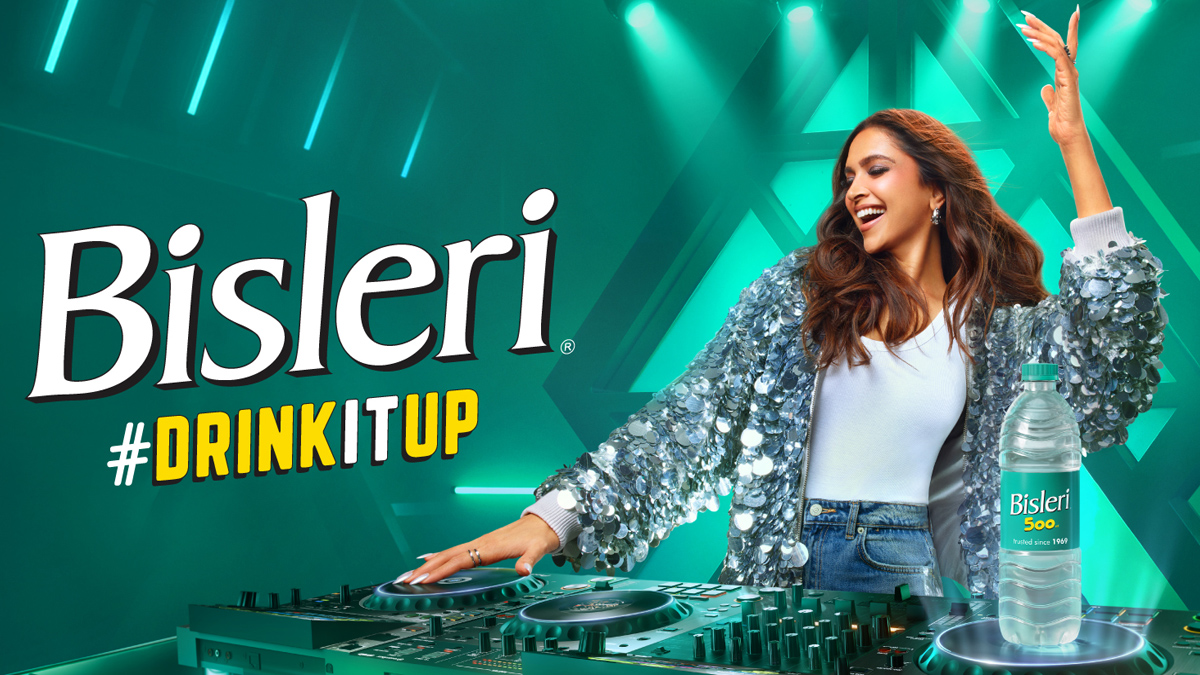
MUMBAI: A fizzy quarter with a steady aftertaste that’s how Orient Beverages Limited, the company that manufactures and distributes packaged drinking water under the brand name Bisleri closed the December 2025 period, as the Kolkata-based drinks maker reported improved revenues and a healthy rise in profits, signalling operational stability in a competitive beverage market.
For the quarter ended December 31, 2025, Orient Beverages posted standalone revenue from operations of Rs 39.98 crore, up from Rs 36.42 crore in the previous quarter and Rs 33.53 crore in the same quarter last year. Total income for the quarter stood at Rs 42.24 crore, reflecting consistent demand and stable pricing across its beverage portfolio.
Profit before tax for the quarter came in at Rs 3.47 crore, a sharp improvement from Rs 1.31 crore in the September quarter and Rs 0.39 crore a year ago. After accounting for tax expenses of Rs 0.79 crore, the company reported a net profit of Rs 2.68 crore, nearly three times the Rs 0.99 crore recorded in the preceding quarter.
On a nine-month basis, the momentum remained intact. Revenue from operations for the period ended December 31, 2025 rose to Rs 117.66 crore, compared with Rs 106.95 crore in the corresponding period last year. Net profit for the nine months climbed to Rs 5.51 crore, more than double the Rs 2.18 crore reported in the same period of the previous financial year.
The consolidated numbers told a similar story. For the December quarter, consolidated revenue from operations stood at Rs 45.06 crore, while profit after tax came in at Rs 2.06 crore. For the nine-month period, consolidated revenue touched Rs 133.57 crore, with net profit of Rs 4.49 crore, underscoring the group’s improving profitability trajectory.
Operating expenses remained largely controlled, with cost of materials, employee benefits and other expenses broadly aligned with revenue growth. The company continued to operate within a single reportable segment beverages simplifying its cost structure and reporting framework.
The unaudited financial results were reviewed by the Audit Committee and approved by the Board of Directors at its meeting held on 7 February 2026. Statutory auditors carried out a limited review and reported no material misstatements in the results.
In a market where margins are often squeezed by input costs and competition, Orient Beverages’ latest numbers suggest the company has found a reliable rhythm not explosive, but steady enough to keep the fizz alive.
Brands
BCCL profit jumps 53 per cent in FY25 as tax bill shrinks
Revenue rises 4.3 per cent to Rs 10,209.33 crore while deferred tax gain lifts bottom line sharply
NEW DELHI: Bennett, Coleman and Company (BCCL) has posted a sparkling set of financial results for the year ended 31 March 2025, proving that there is still plenty of ink and gold left in the ledger.
Revenue from operations climbed a steady 4.3 per cent, reaching Rs 10,209.33 crore compared to Rs 9,786.44 crore the previous year. When you sprinkle in other income, which rose 8.9 per cent to Rs 949.36 crore, the total income for the media behemoth hit a healthy Rs 11,158.69 crore.
While the income grew at a modest pace, the bottom line tells a far more dramatic story. The real headline is the 53 per cent surge in annual profit. How did they pull off such a feat? While Profit Before Tax (PBT) saw a gentle nudge upward of 2.7 per cent to Rs 1,610.00 crore, it was a vanishing act by the taxman that really did the trick.
Total tax expenses plummeted by 32.4 per cent, dropping from Rs 468.76 crore down to Rs 316.97 crore. This was largely thanks to a swing in deferred tax, moving from an expense of Rs 156.02 crore in FY24 to a benefit of Rs 39.44 crore this year.
Total income rose from Rs 10,658.55 crore in FY24 to Rs 11,158.69 crore in FY25, marking a 4.7 per cent increase. Total expenses grew at a slower pace, up 3.0 per cent from Rs 9,306.06 crore to Rs 9,581.45 crore. Profit before tax inched up 2.7 per cent, moving from Rs 1,567.02 crore to Rs 1,610.00 crore. However, the standout figure was net profit, which jumped sharply by 53.0 per cent, climbing from Rs 1,042.03 crore in FY24 to Rs 1,594.73 crore in FY25.
Despite the rising costs of doing business across the globe, BCCL kept a tight grip on the purse strings. Total expenses rose by just 3.0 per cent to Rs 9,581.45 crore. By keeping costs lower than the rate of income growth, the company ensured that the final figure, a net profit of Rs 1,594.73 crore, was nothing short of a front-page sensation.
In a world of shifting digital tides, it seems the BCCL ship is not just steady, but sailing into significantly wealthier waters.


MIB sets OTT accessibility rules, mandates captions and audio description

Boney Kapoor acquires remake rights of Tamil political satire Thalaivar Thambi Thalaimaiyil

Netflix India names Rekha Rane director of films and series marketing

Zabeen signs off from TV9 after shaping the network’s public voice

Dhawan steps up to bat for Delhi’s grassroots sports push

Orient Beverages pops the fizz with steady Q3 gains and rising profits

Cheekatilo shines in the dark with record debut on Prime Video

These ’90s fashion trends are making a comeback in 2017
The final 6 ‘Game of Thrones’ episodes might feel like a full season
According to Dior Couture, this taboo fashion accessory is back
The old and New Edition cast comes together to perform
Phillies’ Aaron Altherr makes mind-boggling barehanded play
Uber and Lyft are finally available in all of New York State
Disney’s live-action Aladdin finally finds its stars
MIB sets OTT accessibility rules, mandates captions and audio description
Boney Kapoor acquires remake rights of Tamil political satire Thalaivar Thambi Thalaimaiyil
Netflix India names Rekha Rane director of films and series marketing
Zabeen signs off from TV9 after shaping the network’s public voice
Dhawan steps up to bat for Delhi’s grassroots sports push
Orient Beverages pops the fizz with steady Q3 gains and rising profits
Cheekatilo shines in the dark with record debut on Prime Video
-

 News Broadcasting7 days ago
Mukesh Ambani, Larry Fink come together for CNBC-TV18 exclusive
-
 I&B Ministry3 months ago
India steps up fight against digital piracy
-

 iWorld2 weeks ago
Netflix celebrates a decade in India with Shah Rukh Khan-narrated tribute film
-
 MAM3 months ago
HoABL soars high with dazzling Nagpur sebut
-

 Hollywood4 days ago
The man who dubbed Harry Potter for the world is stunned by Mumbai traffic
-
 iWorld12 months ago
BSNL rings in a revival with Rs 4,969 crore revenue
-
 iWorld3 months ago
Tips Music turns up the heat with Tamil party anthem Mayangiren
-
 MAM7 days ago
Nielsen launches co-viewing pilot to sharpen TV measurement
