
Financials
STBs apart, industry feels left in the cold

 |
| STBs apart, industry feels left in the cold |
|
NEW DELHI/MUMBAI: While the 2008-09 budget has largely left the media and entertainment industry untouched, Finance Minister P Chidambaram announced some measures that are expected to benefit the cable, direct-to-home (DTH) and IPTV growth in the country. Mixed bag for DTH, Cable Dish TV MD Jawahar Goel feels the DTH industry has something to feel positive about. “At present there is zero duty on import of set top boxes. Now the Finance Minister has also removed duty on import of specified parts of STBs. This will provide leverage and opportunity for DTH players to evaluate the option of manufacturing STBs locally,” he says. Tata Sky MD and CEO Vikram Kaushik, however, doesn’t agree that there is too much for the sector. “The benefits are so insignificant that the impact will be almost homoeopathic,” he says. There is only a relaxation on some of the components for manufacture of the STBs. “We had expected much more, especially significant reduction on excise duty, which has been denied us,” Kaushik adds. The issue of double taxation, with the entertainment industry having to pay both entertainment as well as service tax, has been left unchanged.  Goel, however, gives a more detailed rationale behind being upbeat. He argues that since the CVD (countervailing duty) is reduced from 16 per cent to 14 per cent, the cost of the Consumer Premises Equipment (CPE) will go down and will benefit the DTH operator who are already providing considerable subsidies to consumers. The new provision introduced by FM in Service Tax, stating that any item being provided under the “Right to Use” to the customer but not covered under VAT, will now be covered under ‘right to use.’ This is a move towards the Goods and Service Tax (GST) regime, Goel points out. He says this will partly address the issue of multiple taxation on the DTH industry, where presently along with the service tax, VAT was also being charged on the CPE, though these were being given on rental or lease models. “This will help the DTH industry to give more options to the consumers to acquire the CPE on rental, which has been stipulated by Trai in its Quality of Service requirements. It will benefit the industry by taking the CENVAT credit of the service tax paid, thus positively impacting the cash flow of the capital intensive businesses,” Goel says. The multi-system operators (MSOs) are more cautious. Says Hathway Cable and Datacom MD and CEO K Jayaraman, “It is too early to see how the STB vendors respond to the duty waiver of some components and set up manufacturing bases in India. This will succeed only if the foreign vendors start producing here. Local manufacturers will also feel encouraged but they have to comply with the conditional access vendor.” The MSO Alliance is not happy with the way the demands of the industry have been ignored, especially on the issue of rationalisation of taxes. Says MSO Alliance secretary Avnindra Mohan, “There is marginal benefit on some STB components; it would be of some use only when Indian companies start producing STBs on a large scale. As it is, 90 per cent of the STBs are being imported today,” he holds. The Cable Operators Federation of India (COFI) is deeply dissatisfied with the budget, saying there is nothing in it for the local cable operators. Says COFI president Roop Sharma, “There is no provision of making digital headends cheaper. The marginal help to STB manufacturing would only be good for the DTH players and also of IPTV. But there are only 500000 STBs in the Cas (conditional access system) notified areas. So it hardly makes any difference to us. What the cable industry needed was incentives for digital headends.” Broadcasters feel digitalisation should get the push Broadcasters, on the other hand, feel the budget is positive in what little it has to offer. Says Star India CEO Uday Shankar, “The incentives provided for STB manufacture is a welcome sign. In fact, anything that goes towards digitalisation is good because this country is a victim of choked distribution pipes on analogue systems.” Agrees Global Broadcast News joint MD Sameer Manchanda, “The government has done something for the STBs and also for the convergence equipment. Since this is good for digitalization, it is also good for us as broadcasters.” Sums up INX Media founder and CEO Indrani Mukerjea: “The budget has provided an impetus for growth to the Digital revolution – by reducing the duty on certain specific components of STBs to nil. I am also happy that duty on convergence products related to the media and entertainment industry has been halved. Of course, I wish there had been a reduction in corporate tax rates for the industry too.” Film industry feels left in the cold The film industry has mixed feelings. Speaking for the multiplex operators, E-City Ventures MD Atul Goel has this to offer. “The impact on the entertainment industry would be limited, except for the customs duty reduction on equipment from 10 per cent to 5 per cent. However, we are happy to note, from the Cenvat reduction, that there is a direction towards convergence of indirect tax rates from the existing inefficient regime. We sincerely hope that the Empowered Committee of Finance Ministers recommend a substitution of entertainment tax levied on cinemas with GST (to be rolled out by 2010).” Prime Focus CFO Nishant Fadia feels the Indian film and entertainment industry should have liked special tax concessions and a reduction in corporate tax. But, on the positive side, he says, reduction of CENVAT in import duties and customs duty on equipments are steps in the right direction. Nothing for FM radio FM broadcasters feel the budget has nothing specific to offer to spur the sector’s growth. Says Big FM COO Tarun Katial, “The service tax needed to reduce, especially since the radio industry is at its infancy and has great employment and media opportunities in the semi-urban and rural markets.” Radio City CEO and AROI president Apurva Purohit believes reduction in base rate of excise duty from 16 to 14 per cent is positive for the industry overall. But there is little for the sector. She says, “Development and supply of content for use in advertising purposes has been brought under service tax net. This is likely to see an increase in advertising cost bringing a slowdown in advertisement revenues to broadcasters and print media which will ultimately be passed on to the consumer.” |





MUMBAI: It’s time to brief the markets: Page Industries is showing that even when regulations tighten, it can still keep its footing in the innerwear business. The Bengaluru-based apparel major has reported its financials for the quarter ended 31 December 2025, delivering a performance that remains steady and well put together.
The company’s top line showed plenty of elasticity this quarter. Revenue from operations stretched to Rs 1,38,675.71 lakhs, a healthy jump from the Rs 1,29,085.82 lakhs reported in the preceding quarter. Compared to the same period last year, which stood at Rs 1,31,305.10 lakhs, it’s clear the brand’s grip on the market isn’t loosening. Total income for the quarter, including other finance gains, reached a comfortable Rs 1,39,919.03 lakhs.
However, it wasn’t all smooth silk. The Government of India’s new unified Labour Codes, covering everything from wages to social security, officially kicked in on 21 November 2025. This regulatory shift forced Page Industries to account for a one-time “exceptional item” cost of Rs 3,500.42 lakhs to cover incremental employee benefits and related obligations. Despite this Rs 35-crore legislative snag, the underlying business remained robust. Profit before tax stood at Rs 25,625.35 lakhs after the exceptional hit, and without that one-off cost, the figure would have been a more muscular Rs 29,125.77 lakhs. Net profit for the quarter came in at Rs 18,953.64 lakhs.
Total expenses rose to Rs 1,10,793.26 lakhs, driven largely by raw material consumption of Rs 30,162.65 lakhs and employee benefits of Rs 23,310.66 lakhs. Even so, the company’s operational strength ensured the bottom line remained firmly stitched together.
For shareholders, the news is particularly “fitting.” The Board has declared a third interim dividend for 2025-26 of Rs 125 per equity share. The record date has been set for 11 February 2026, with the payment scheduled on or before 6 March 2026. This follows two previous interim dividends of Rs 150 and Rs 125 declared earlier in the financial year, reinforcing the company’s commitment to sharing the spoils of its success.
Looking at the nine-month stretch ending December 2025, Page Industries has amassed total income of Rs 4,04,090.59 lakhs, with total comprehensive income of Rs 58,231.49 lakhs. While the basic earnings per share for the quarter dipped slightly to Rs 169.93, compared to Rs 183.48 in the same quarter last year, the year-to-date EPS remains a solid Rs 524.57.
Auditors at S.R. Batliboi & Associates LLP have given the results a “limited review” thumbs up, reporting no material misstatements. It seems that, as far as Page Industries is concerned, the business remains as well-constructed as its famous Jockey briefs.
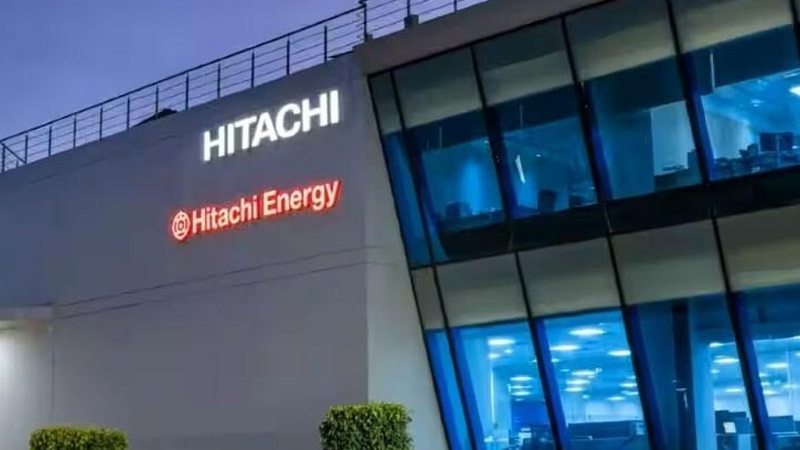
MUMBAI: Power flows may ebb and surge, but Hitachi Energy India Limited clearly had the current on its side in the December quarter. The energy and power technology major reported a sharp jump in profitability for Q3 FY26, riding strong revenue growth and improved operating margins, even as fresh order inflows moderated from last year’s highs.
For the quarter ended December 31, 2025, Hitachi Energy India posted revenue from operations of Rs 2,168 crore, up 29.6 percent year on year from Rs 1,672 crore in Q3 FY25 and 13.2 percent sequentially from Rs 1,915 crore in Q2 FY26. Including other income, total income for the quarter stood at Rs 2,168 crore, reflecting sustained execution momentum across projects and services.
Profitability surged far faster than topline growth. Profit before tax, before exceptional items, more than doubled to Rs 402 crore, compared with Rs 184 crore a year earlier. After accounting for an exceptional charge of Rs 54 crore linked to the impact of new labour codes, profit before tax came in at Rs 348 crore, still up nearly 89 percent year on year. Net profit for the quarter rose 90.3 percent to Rs 261 crore, compared with Rs 137 crore in the same period last year, even as it remained largely flat sequentially.
Margins told an equally strong story. PBT margin expanded to 16.0 percent in Q3 FY26 from 11.0 percent a year earlier, while profit after tax margin improved to 12.1 percent from 8.2 percent. Operating EBITDA jumped 100.4 percent year on year to Rs 338 crore, with margins expanding to 15.6 percent, signalling tighter cost control and operating leverage.
On a nine-month basis, revenue for the period ended December 31, 2025 rose to Rs 5,604 crore, up from Rs 4,520 crore in the corresponding period last year. Profit before tax for the nine months surged to Rs 878 crore, more than three times the Rs 270 crore reported a year earlier, while net profit climbed to Rs 657 crore, compared with Rs 200 crore in the previous period.
The only soft patch came on the order book. New orders in Q3 FY26 stood at Rs 2,478 crore, sharply lower than Rs 11,594 crore in Q3 FY25, when the company had benefited from a large one-off order win. Excluding that outsized contract, management noted that orders actually grew 73.7 percent year on year, underlining steady underlying demand. Sequentially, orders rose 11.7 percent from Rs 2,217 crore in Q2 FY26. For the nine months, total orders edged up to Rs 16,034 crore, broadly in line with Rs 15,983 crore a year earlier.
With revenues accelerating, margins widening and execution staying on track, Hitachi Energy India’s Q3 numbers suggest that while headline order comparisons may flicker, the business is firmly switched on when it comes to profits.

MUMBAI: Tata Motors Passenger Vehicles Limited (TMPVL) had a quarter of two very different moods. Back home, the showrooms were busy, the order books thick, and the festive glow lingered. Overseas, however, a cyber incident at Jaguar Land Rover pulled the plug on profits and dragged the group into the red.
For the third quarter of FY2026, Tata Motors posted a consolidated net loss of Rs 3,483 crore. A year ago, it had reported a profit of Rs 5,485 crore. Revenue also slipped sharply, down 25.8 per cent year on year to Rs 70,108 crore. Earnings before interest and tax fell into negative territory, with margins dropping to minus 4.7 per cent.
Strip away exceptional items and the picture still looked bruised. Profit before tax stood at a loss of Rs 3,136 crore, while earnings per share from continuing operations came in at minus Rs 9.47.
For the nine months to December, the company reported a net loss of Rs 7,255 crore from continuing operations, with revenue down 14 per cent year on year to Rs 2.3 lakh crore. Free cash flow for the quarter was also negative at Rs 17,900 crore.
Most of the damage came from Jaguar Land Rover. The luxury carmaker saw revenue plunge 39.4 per cent year on year to £4.5 billion. Ebit margins slid to minus 6.8 per cent, and profit before tax before exceptional items stood at a loss of £310 million.
The reasons were a perfect storm: a cyber incident that disrupted production, the wind-down of legacy Jaguar models, a weakening China market, and tariff pressures in the United States. The result was a free cash outflow of £1.5 billion for the quarter and net debt rising to £3.3 billion.
Still, the company has held on to its guidance, expecting Ebit margins of 0 to 2 per cent for the full year.
Back home, the domestic passenger vehicle business offered a more cheerful read. Revenue rose 24 per cent year on year to Rs 15,317 crore. Profit before tax before exceptional items stood at Rs 302 crore, while market share climbed to 13.8 per cent, securing the number two spot.
The company’s electric vehicle play also stayed strong, with a commanding 43.6 per cent share of the EV market and cumulative sales crossing the 2.5 lakh mark. The domestic unit ended the quarter with a net cash position of Rs 5,100 crore.
It was also a record quarter on the ground. Tata clocked its highest-ever quarterly wholesales at 171,000 units, up 22 per cent year on year, while retail sales crossed the 200,000 mark for the first time. The Nexon led the charge as the country’s best-selling model for the quarter, supported by the Punch and the newly introduced Sierra.
The quarter carried Rs 1,597 crore worth of exceptional losses. These included Rs 800 crore tied to the JLR cyber incident, Rs 400 crore linked to the new labour code, and another Rs 400 crore in stamp duty charges.
Yet on the restructuring front, the company booked a windfall. The demerger of the commercial vehicles business delivered an exceptional gain of Rs 82,616 crore. That helped push the nine-month net profit, including these gains, to Rs 76,767 crore.
Chief financial officer Dhiman Gupta called the quarter “challenging as anticipated” due to the cyber incident at JLR, while highlighting the domestic business’ revenue growth and margin improvement quarter on quarter. He added that performance is expected to improve significantly in the fourth quarter as JLR recovers.
JLR chief executive PB Balaji said production returned to normal by mid-November after the shutdown triggered by the cyber incident, and the company is now focused on rebuilding momentum.
Meanwhile, TMPVL managing director and CEO Shailesh Chandra pointed to record wholesales and strong festive demand as key drivers of the domestic business.
As of December 31, 2025, the group’s net debt stood at Rs 39,400 crore, with a debt-equity ratio of 0.61 times. Net worth was reported at Rs 1.07 lakh crore.
In short, Tata’s quarter read like a tale of two garages: one humming with orders and electric optimism, the other grappling with a digital breakdown. If the cyber clouds lift and the domestic engine keeps firing, the next quarter could look far less bumpy.


MIB sets OTT accessibility rules, mandates captions and audio description

Boney Kapoor acquires remake rights of Tamil political satire Thalaivar Thambi Thalaimaiyil

Netflix India names Rekha Rane director of films and series marketing

Zabeen signs off from TV9 after shaping the network’s public voice

Dhawan steps up to bat for Delhi’s grassroots sports push

Orient Beverages pops the fizz with steady Q3 gains and rising profits

Cheekatilo shines in the dark with record debut on Prime Video

These ’90s fashion trends are making a comeback in 2017
The final 6 ‘Game of Thrones’ episodes might feel like a full season
According to Dior Couture, this taboo fashion accessory is back
The old and New Edition cast comes together to perform
Phillies’ Aaron Altherr makes mind-boggling barehanded play
Uber and Lyft are finally available in all of New York State
Disney’s live-action Aladdin finally finds its stars
MIB sets OTT accessibility rules, mandates captions and audio description
Boney Kapoor acquires remake rights of Tamil political satire Thalaivar Thambi Thalaimaiyil
Netflix India names Rekha Rane director of films and series marketing
Zabeen signs off from TV9 after shaping the network’s public voice
Dhawan steps up to bat for Delhi’s grassroots sports push
Orient Beverages pops the fizz with steady Q3 gains and rising profits
Cheekatilo shines in the dark with record debut on Prime Video
-

 News Broadcasting1 week ago
Mukesh Ambani, Larry Fink come together for CNBC-TV18 exclusive
-

 News Headline1 month ago
From selfies to big bucks, India’s influencer economy explodes in 2025
-

 iWorld2 weeks ago
Netflix celebrates a decade in India with Shah Rukh Khan-narrated tribute film
-

 Hollywood5 days ago
The man who dubbed Harry Potter for the world is stunned by Mumbai traffic
-
 I&B Ministry3 months ago
India steps up fight against digital piracy
-
 MAM3 months ago
HoABL soars high with dazzling Nagpur sebut
-
 iWorld12 months ago
BSNL rings in a revival with Rs 4,969 crore revenue
-
 iWorld3 months ago
Tips Music turns up the heat with Tamil party anthem Mayangiren
