
MAM
Digital world should pave path for targeted ads


MUMBAI: While there is talk about the growth of digitisation in India, the fact is that advertisers are not getting the benefit of it in India. The reason: the insertion of ads on local cable networks is not being monitored.
If the Indian cable industry was to be digitised, targeted and interactive advertising would be more feasible. The industry can also make ads to target geographical areas.
These were some of the key points made at the session on ‘Vas Advertising and New Business Models‘ at the India Digital Pay-TV Summit organised by indiantelevision.com and MPA. The speakers were Madison Media Group CEO Punitha Arumugam, NDS director ad solutions Asia Pacific Darryn Rodricks, Amagi Media Labs co-founder K.A. Srinivasan, Lukup Media director Kalol Borah and IndusInd Media & Communications VP Subhashis.
Arumugham said advertisers look for targeting and interactivity in a digital environment. “We are not getting what we want. The options to reach scale are limited. DTH is still a one way dialogue.”
Rodricks noted that with NDS Dynamic, an advanced ad solution that offers geographical targeting, you do not need to have a two-way connect.
“The solution is deployed at a household level. The solution gives broadcasters information on the interactive services being used. The aim is to not to displace but to complement the existing ratings system. Broadcasters know which homes they should target,” Rodricks said.
Srinivasan said his platform has 500 advertisers most of whom are local. They can reach their audience in an affordable manner. “The aim going forward is to have both national and regional brands advertising. Now there is a situation where national brands want to go local. For them targeted advertising would be beneficial. The challenge is to create an ecosystem for a targeting ad solution to work.”
But the key issue is that of monitoring. Unless TV ratings agency TAM sets up different headends, this might be a challenge.
Advertising on local channels run by cable operators is not exploited to the full. “We can only push clients to a certain extent. Cable operators should come across as a consolidated whole like the broadcasters,” said Arumugam.
Subhashis noted that CVO, a cable movie channel, attracted ads but placement charges outstripped its earnings. The situation would improve if operators and MSOs tied up with agencies to work together. “In a digitised world, a cable operator would be able to offer a 1000 channels. You could have server-based channels. You can also tie up with foreign companies like Scripps,” he said.
Cable TV operators could work with a ratings agency abroad so that advertisers could know the benefit of running their ads on a cable channel.
Arumugam questioned the feasibility of more than one ratings system. TAM is unable to go into rural markets as the industry doesn‘t fund it.
Borah noted that Vas services in cable are different from DTH. “You do not need a two-way path. The key issue is that of digitisation. MVoD can serve up different ads in different cities,” he said.



MAM
Washington Post CEO exits abruptly after newsroom cuts spark backlash
Leadership change follows layoffs, protests and a bruising battle over trust.
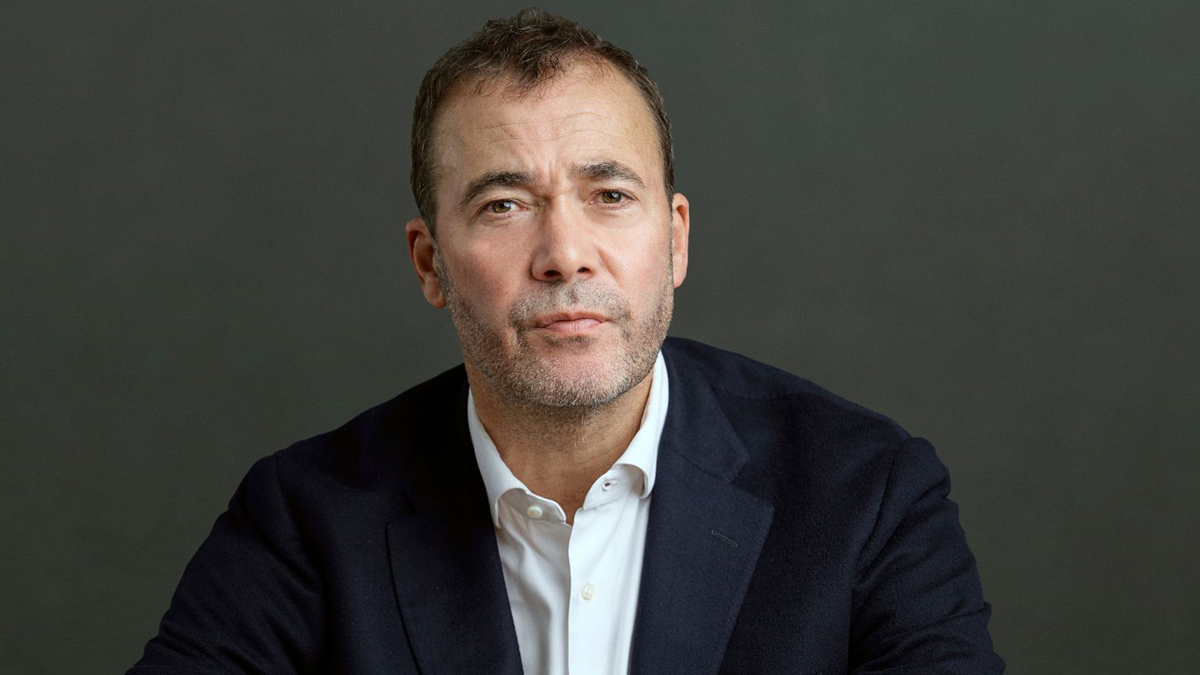
MUMBAI: When the presses are rolling but patience runs out, even the editor’s chair isn’t safe. The Washington Post announced on Saturday that its chief executive and publisher Will Lewis is stepping down with immediate effect, bringing a sudden end to a turbulent two-year tenure marked by financial strain, newsroom unrest and public backlash.
Lewis’s exit comes just days after the Bezos-owned newspaper announced sweeping job cuts that triggered protests outside its Washington headquarters and a wave of anger from readers and staff. While newspapers across the US are grappling with shrinking revenues and digital disruption, Lewis’s leadership had increasingly come under fire for how those pressures were handled.
The Post confirmed that Jeff D’Onofrio, a former Tumblr CEO who joined the organisation last year as chief financial officer, has taken over as CEO and publisher, effective immediately. In an email to staff, later shared by reporters on social media, Lewis said it was “the right time for me to step aside.”
The leadership change follows the announcement of large-scale redundancies earlier this week. While the Post did not officially confirm numbers, The New York Times reported that around 300 of the paper’s roughly 800 journalists were laid off. Entire teams were dismantled, including the Post’s Middle East bureau and its Kyiv-based correspondent covering the war in Ukraine.
Sports, graphics and local reporting were sharply reduced, and the paper’s daily podcast, Post Reports, was suspended. On Thursday, hundreds of journalists and supporters gathered outside the Post’s downtown office in protest, calling the cuts a blow to public-interest journalism.

Former executive editor Marty Baron described the moment as “among the darkest days in the history of one of the world’s greatest news organisations.”
Lewis defended his record in his farewell note, saying “difficult decisions” were taken to secure the paper’s long-term future and protect its ability to publish “high-quality nonpartisan news”. But his tenure coincided with growing scrutiny of editorial independence at the Post.
Owner Jeff Bezos faced criticism for reining in the paper’s traditionally liberal editorial page and blocking an endorsement of Democratic presidential candidate Kamala Harris ahead of the 2024 US election. The move was widely seen as breaking the long-standing firewall between ownership and editorial decision-making.
According to a Wall Street Journal report, around 250,000 digital subscribers cancelled their subscriptions after the paper declined to endorse Harris. The Post reportedly lost about $100 million in 2024 as advertising and subscription revenues slid.
While the wider newspaper industry continues to battle declining print advertising and the pull of social media, some national titles have stabilised. Rivals such as The Wall Street Journal and The New York Times have managed to build sustainable digital businesses, a turnaround that has so far eluded the Post despite its billionaire backing.
As Jeff D’Onofrio steps into the role, the challenge is stark, restore confidence inside the newsroom, win back readers who walked away, and prove that one of America’s most storied newspapers can still find its footing in a brutally competitive media landscape.
Brands
BCCL profit jumps 53 per cent in FY25 as tax bill shrinks
Revenue rises 4.3 per cent to Rs 10,209.33 crore while deferred tax gain lifts bottom line sharply

NEW DELHI: Bennett, Coleman and Company (BCCL) has posted a sparkling set of financial results for the year ended 31 March 2025, proving that there is still plenty of ink and gold left in the ledger.
Revenue from operations climbed a steady 4.3 per cent, reaching Rs 10,209.33 crore compared to Rs 9,786.44 crore the previous year. When you sprinkle in other income, which rose 8.9 per cent to Rs 949.36 crore, the total income for the media behemoth hit a healthy Rs 11,158.69 crore.
While the income grew at a modest pace, the bottom line tells a far more dramatic story. The real headline is the 53 per cent surge in annual profit. How did they pull off such a feat? While Profit Before Tax (PBT) saw a gentle nudge upward of 2.7 per cent to Rs 1,610.00 crore, it was a vanishing act by the taxman that really did the trick.
Total tax expenses plummeted by 32.4 per cent, dropping from Rs 468.76 crore down to Rs 316.97 crore. This was largely thanks to a swing in deferred tax, moving from an expense of Rs 156.02 crore in FY24 to a benefit of Rs 39.44 crore this year.
Total income rose from Rs 10,658.55 crore in FY24 to Rs 11,158.69 crore in FY25, marking a 4.7 per cent increase. Total expenses grew at a slower pace, up 3.0 per cent from Rs 9,306.06 crore to Rs 9,581.45 crore. Profit before tax inched up 2.7 per cent, moving from Rs 1,567.02 crore to Rs 1,610.00 crore. However, the standout figure was net profit, which jumped sharply by 53.0 per cent, climbing from Rs 1,042.03 crore in FY24 to Rs 1,594.73 crore in FY25.
Despite the rising costs of doing business across the globe, BCCL kept a tight grip on the purse strings. Total expenses rose by just 3.0 per cent to Rs 9,581.45 crore. By keeping costs lower than the rate of income growth, the company ensured that the final figure, a net profit of Rs 1,594.73 crore, was nothing short of a front-page sensation.
In a world of shifting digital tides, it seems the BCCL ship is not just steady, but sailing into significantly wealthier waters.
Brands
JioStar absorbs IndiaCast to streamline distribution
Merger creates one-stop hub for content, digital, and delivery

MUMBAI: In a move that proves JioStar isn’t just playing for the screen but for the entire stadium, the media behemoth has announced it is officially folding its distribution wing, IndiaCast, into the main mothership.
After the dust settled on the colossal Reliance-Disney marriage, the house that Mukesh built is tidying up the furniture. By absorbing IndiaCast, JioStar is effectively cutting out the middleman by becoming its own delivery boy.
IndiaCast has long handled the distribution of channel packs like Colors and MTV to cable and DTH operators. Now, instead of working as a separate company, it will be fully merged into its parent, JioStar.
The strategy is simple: less paperwork and more control. By merging under a fast-track scheme, the company is removing extra legal steps and administrative work that come with running two separate entities.
For viewers, the change may not be immediately visible, but behind the scenes it creates a one-stop shop for Indian entertainment. JioStar now controls the entire chain: it owns the content through channels like Star Plus and Colors, the digital platform through JioHotstar, and the distribution pipeline after absorbing IndiaCast, bringing everything under one roof.
According to regulatory filings, the merger is retrospective, dating back to April 2025. IndiaCast will eventually be dissolved without the messy drama of a formal winding-up. For the employees and assets, it is a same desk, different letterhead situation as everything transfers to the JioStar banner.
It is a classic bit of corporate housekeeping that ensures the new media kingpin is lean, mean, and ready to dominate your living room.


Washington Post CEO exits abruptly after newsroom cuts spark backlash

BCCL profit jumps 53 per cent in FY25 as tax bill shrinks

Zee Cine Awards 2026 set for fan-first celebration in Mumbai

JioStar absorbs IndiaCast to streamline distribution

Hamdard honours changemakers at Abdul Hameed awards

Why the best campaigns today start with insights, not ideas

Ahmad Muneeb elevated to VP – HR centre of excellence at Zepto

These ’90s fashion trends are making a comeback in 2017
The final 6 ‘Game of Thrones’ episodes might feel like a full season
According to Dior Couture, this taboo fashion accessory is back
The old and New Edition cast comes together to perform
Phillies’ Aaron Altherr makes mind-boggling barehanded play
Uber and Lyft are finally available in all of New York State
Disney’s live-action Aladdin finally finds its stars
Washington Post CEO exits abruptly after newsroom cuts spark backlash
BCCL profit jumps 53 per cent in FY25 as tax bill shrinks
Zee Cine Awards 2026 set for fan-first celebration in Mumbai
JioStar absorbs IndiaCast to streamline distribution
Hamdard honours changemakers at Abdul Hameed awards
Why the best campaigns today start with insights, not ideas
Ahmad Muneeb elevated to VP – HR centre of excellence at Zepto
-

 News Broadcasting5 days ago
Mukesh Ambani, Larry Fink come together for CNBC-TV18 exclusive
-
 I&B Ministry3 months ago
India steps up fight against digital piracy
-

 iWorld1 week ago
Netflix celebrates a decade in India with Shah Rukh Khan-narrated tribute film
-
 iWorld3 months ago
Tips Music turns up the heat with Tamil party anthem Mayangiren
-
 MAM3 months ago
HoABL soars high with dazzling Nagpur sebut
-
 iWorld12 months ago
BSNL rings in a revival with Rs 4,969 crore revenue
-

 MAM5 days ago
Nielsen launches co-viewing pilot to sharpen TV measurement
-

 Film Production1 week ago
UFO Moviez rides high on strong Q3 earnings
