
Hardware
Trai issues Tariff Orders for STBs/CPEs for DTH and cable TV operators

MUMBAI: The Telecom Regulatory Authority of India (TRAI) late last evening issued two tariff orders prescribing standard tariff package for set top boxes (STBs) for digital addressable cable TV systems (DAS) and Consumer Premises Equipments (CPEs) for Direct to Home (DTH) services. The prime objective of these tariff orders, TRAI says, is to ensure effective commercial interoperability.
The said tariff orders have been devised to make available STBs / CPEs at a reasonable price and, lucid and easy to understand, terms and conditions as well as to take care of the interests of the service providers. This would also promote healthy competition amongst the operators which would ultimately benefit all the stakeholders of the sector, including the consumers.The standard tariff packages for STB/CPE on rental basis are to be offered mandatorily by DTH and cable TV operators.
As per the two tariff orders issued and notified on 27 May, cable TV operators and DTH service providers will be in a position to provide four options to consumers with differing rental and security deposit plans. DAS service providers can provide the STBs at a monthly rent of Rs 55.66 or Rs 50.66 (excluding taxes) if the security deposit is Rs 400 and Rs 800 respecitvely. For DTH service providers, the monthly rent for the CPE has been mandated at Rs 71.75 and Rs 65.50 if the security deposit is Rs 500 and Rs 1000 respectively.
The entire security deposit will be refunded to subscribers at the end of three years and the STB or CPE will belong to the customer. Should the customer choose to clip the service earlier under these options, he will still get the entire STB security depost refunded.
 |
The tariff orders have also given options where the security depost is adjustable against the monthly rent. Thus DAS service providers can offer the STBs at a monthly adjustable rent of Rs 46.80 or Rs 32.93 if the security deposit is Rs 400 and Rs 800 respectively. And DTH service providers can provide STBs at a monthly adjustable rent of Rs 60.66 and Rs 43.32 if the security deposit is Rs 500 and Rs 1000. Under these options, should the customer choose to exit the DTH or CAS service, he will be entitled to a refund depending on the month he is discontinuing the service.
For instance, if he moves out in month twelfth of year one of the Rs 500 adjustable security deposit plan for DTH, he will be entitled to get a refund of Rs 370.18. If the exit takes place in month 24 the refund amount has been drawn up to be Rs 192.05.The TRAI has similarly drawn up tables which clearly spell out how much the refund would be. The two orders which clearly explain this are called The Telecommunication (Broadcasting & Cable) Services Sixth – (The Direct to Home Services) Tariff order 2013 and The Telecommunication (Broadcasting & Cable)Fifth – (Digital Addressable Cable TV Systems) Tariff Order 2013 TARIFF ORDER, 2013 and have been made available on the TRAI web site trai.gov.in.

To see the standard tariff plan for DTH Click Here
To see the standard tariff plan for DAS Click Here
The charges which have been mandated by TRAI include the installation fee, activation fee, smart card viewing charges, and repair and maintenance for three years.
The regulator has said that, while these packages are mandatory, service providers can also make other offers to subscribers.It has also stated that these specific packages are prescribed for “plain vanilla STBs/CPEs” and not for the exotic ones with recorders and HD and 3D STBs.
The Standard Tariff Package for Cable TV operators has been worked out on the basis of the following facts and figures as provided by the Industry stakeholders/ Associations:-
a) The total cost of STB has been taken as Rs 1750.
b) Life span of STB has been taken as three years.
c) The residual value has been taken as nil.
d) Rental per month is based on cost of STB on Equated Monthly Installment (EMI) Basis @15 per cent per annum (@1.25 per cent per month) for a period of 36 months.
The Standard Tariff Package for DTH operators has been worked out on the basis of the following facts and figures as provided by Industry stakeholders/ Associations;
a) The total cost of CPE has been taken as Rs 2250.
b) Life span of CPE has been taken as three years.
c) The residual value has been taken as nil.
d) Rental per month is based on cost of CPE on Equated Monthly Installment (EMI) Basis @15 per cent per annum (@1.25 per cent per month) for a period of 36 months.
In case of un-installation/discontinuance of service before the last day of the month, balance security deposit shown as refundable at the end of that month will be refunded on return of Customer Premises Equipment.
No installation charges or re-installation charges (except in case of shifting of connection) or activation charges or smartcard/ viewing card charges is to be levied by the DTH operator/or DAS service provider on the subscriber.











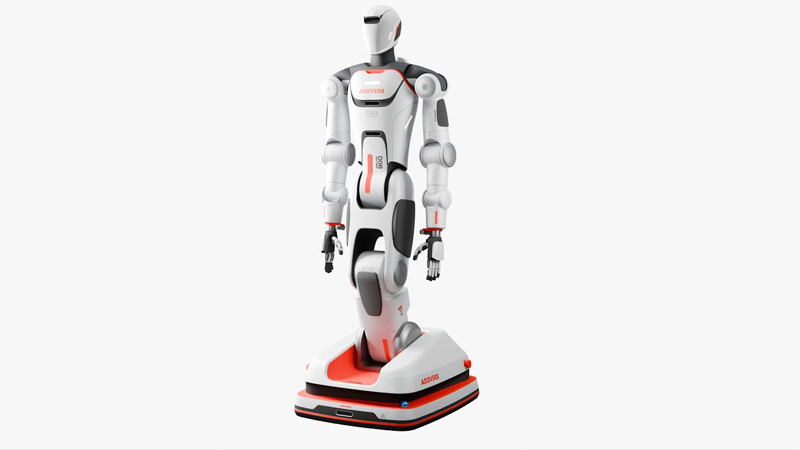
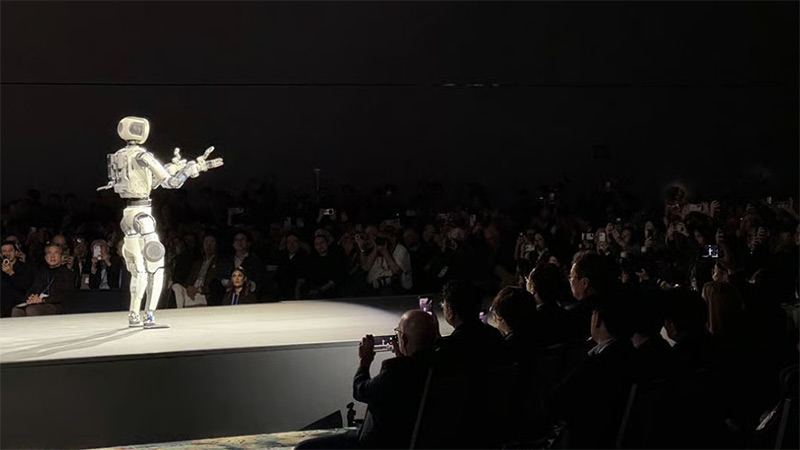
MUMBAI: Addverb has taken a decisive turn on the road to humanoid automation, unveiling its first wheeled humanoid robot, Elixis-W, at LogiMAT India 2026 in Mumbai. Built and manufactured in India, the robot signals the company’s push to make so-called physical AI a practical presence on the factory floor rather than a futuristic concept.
Unlike traditional fixed automation, Elixis-W is designed to move, think and work alongside people in dynamic industrial settings. The robot combines adaptive wheeled mobility with dual arms, each fitted with five-fingered dexterous hands, allowing it to handle tasks that demand precision as well as flexibility.
At its core sits a Physical AI-ready architecture, supported by dual Nvidia Jetson Orin and Thor computing units. This setup is intended to give the robot the ability to perceive, plan and adapt to changing environments, rather than simply follow pre-programmed routines.
According to Addverb CEO and co-founder Sangeet Kumar, the humanoid reflects the company’s long-standing belief in human-robot collaboration. He said the robot is designed to take on repetitive, risky or physically demanding tasks, freeing human workers to focus on higher-value decision-making roles.
Alongside the humanoid, Addverb also showcased two new intralogistics solutions. The Cruiser 360, a four-way pallet shuttle, is aimed at high-density storage environments where space and speed matter. The FlowT, an autonomous forklift, is designed to move materials safely in busy warehouses and factory spaces.
Visitors also saw Trakr, the company’s quadruped robot, navigating the exhibition floor, offering a glimpse of how legged machines could assist in future warehouse and industrial operations.
Addverb, which began as a warehouse automation specialist, has steadily expanded its global footprint across the United States, Europe, Australia and Asia. Its client list includes Reliance, HUL, PepsiCo, Maersk, Mondial Relay and DHL.
With the launch of Elixis-W, the company is steering towards a future where robots are not just bolted to the floor, but rolling, reasoning and working shoulder to shoulder with people on the shopfloor.
New Delhi: Prasar Bharati has thrown open applications for fresh capacity on DD Free Dish, signalling a timely opportunity for broadcasters looking to expand reach without long-term lock-ins. The public service broadcaster has issued a dual notice for its 95th and 96th online e-auctions, aimed at filling vacant MPEG-2 and MPEG-4 slots on a pro-rata basis for February and March 2026.
The two auctions are tentatively scheduled to begin on January 27, with allotments valid from February 1, 2026. Applications for both auctions close on January 21 at 3 pm, giving channels a narrow window to get their bids in.
The 95th e-auction will cover vacant MPEG-2 slots, while the 96th will focus on MPEG-4 capacity. Participation is limited to satellite television channels holding valid downlinking and uplinking permissions from the ministry of information and broadcasting. International public broadcasters cleared by the ministry are also eligible.
As with previous rounds, channels have been grouped into buckets based on genre and language, with sharply differentiated reserve prices reflecting reach and demand.
For the MPEG-2 auction, Hindi and Urdu general entertainment channels sit at the top of the pile. The starting reserve price for bucket A+ in the first round is Rs 2,63,48,000. Movie, music and sports channels in Hindi and Urdu follow in bucket A at Rs 2,10,14,000. Bhojpuri channels and other Hindi and Urdu genres, excluding devotional content, fall under bucket B with a reserve of Rs 1,78,62,000. Hindi and Urdu news channels in bucket C start at Rs 1,33,27,000, while bucket D, which includes regional language channels, English news and devotional or spiritual channels, begins at Rs 1,13,96,000.
The MPEG-4 auction comes in at a far leaner price point. News and current affairs channels in Hindi, English or pan-India languages, grouped under bucket G1, start at Rs 13,41,000. Non-news genres under bucket G2 have a reserve of Rs 8,80,000. Regional languages such as Marathi, Punjabi and Gujarati in bucket R2 begin at Rs 4,84,000. Southern language channels in Tamil, Telugu, Kannada and Malayalam, grouped under bucket R1, start at Rs 81,000, the same reserve price set for other scheduled 8 regional languages in bucket R3.
Prasar Bharati has underlined that compliance will be closely watched. Broadcasters must ensure that at least 75 per cent of their monthly programming, excluding advertisements, aligns with the declared genre and language. Any deviation could trigger show-cause notices or even removal from the DD Free Dish platform.
For channels chasing reach in a crowded market, the message is clear. The window is brief, the prices are set and the audience is waiting. On DD Free Dish, visibility still comes cheap, but only for those ready to move fast.
LAS VEGAS: The future of home technology is arriving faster than expected. At CES 2026, smart homes decisively moved past apps and voice commands, signalling a shift towards systems that anticipate behaviour, act autonomously and blend invisibly into daily life. From mobile robots and adaptive sleep tech to AI-driven wildfire protection, these are not distant concepts. All are slated to reach consumers this year.
Exhibitors made it clear that intelligence, not connectivity alone, is now the defining feature of home tech. Devices are learning routines, adjusting environments in real time and, increasingly, taking decisions without human prompts.
Hyundai motor group used CES 2026 to unveil an AI robotics strategy aimed at making humanoid robots central to industrial work, signalling a shift from automation to what it calls “human-centred” physical AI. Anchored by its partnership with Boston dynamics, the plan spans co-working robots for hazardous and repetitive tasks, an end-to-end robotics value chain, and tie-ups with global AI firms.

The group plans to mass-produce the Atlas humanoid and deploy it across factories from 2028, starting with parts sequencing and scaling to assembly by 2030, positioning humanoids as the fastest-growing segment of the physical AI market.
TCL set the tone on the entertainment front with the X11L SQD-Mini LED 4K TV, which uses super quantum dot technology to deliver brighter whites, deeper blacks and sharper contrast. Unlike conventional RGB panels, the display relies on quantum dots illuminated by pure white light. Available in 75-, 85- and 98-inch variants, the 85-inch model is already up for preorder at $7,999.99.
LG’s AI Home Robot pushed the idea of the smart assistant off the counter and onto wheels. Designed as a mobile hub for the household, the robot navigates autonomously, responds to voice commands, monitors indoor conditions and connects with smart appliances. Crucially, it recognises household routines and adjusts settings based on presence and context, going well beyond today’s static voice assistants.

Sleep technology emerged as a major theme. The Sleepal AI Lamp combines lighting with sleep science, tracking sleep patterns, dynamically adjusting colour temperature through the night and waking users in sync with their sleep cycles. Over time, it learns individual responses rather than relying on fixed schedules, creating a personalised sleep environment.
Ceragem took the concept further with its Youth Bed featuring an AI health concierge. The bed monitors posture, sleep quality and physiological signals, then actively adjusts support and temperature. The integrated system also offers health recommendations, repositioning the bed as an active wellness platform rather than passive furniture.

Home security also received an intelligence upgrade. Lockin’s AI Smart Lock uses behavioural patterns and AI-based recognition to identify residents, flag unusual activity and adapt to daily routines. The aim is frictionless access paired with constant, background vigilance—security that operates quietly rather than reactively.
CES also delivered its share of playful innovation. GameSir’s Swift Drive Racing Gamepad features a compact steering wheel embedded at its centre, connected to a high-precision Hall effect encoder and a direct drive motor for force feedback. Haptic triggers simulate effects such as ABS braking, bringing console-style realism closer to professional racing rigs. Pricing and availability are yet to be announced.

Perhaps the clearest sign of how far smart homes have evolved came from outside the living room. The Home Wildfire Defence System uses sensors, AI monitoring and automated sprinklers to seal vents, dampen surroundings and protect properties from approaching fires. It reframes smart home technology not as a convenience layer, but as a potentially life-saving infrastructure.
Collectively, HP’s CES 2026 line-up spans three HyperX Omen gaming laptops (Omen 15, Omen 16 and Omen Max 16), four gaming monitors ranging from the entry-level Omen 24 G2 IPS to high-refresh QD-Oled panels including the Omen Oled 27q, Oled 27qs and the ultrawide Oled 34, alongside eight HyperX peripherals.

These include four gaming keyboards under the Origins 2 series, three audio products: Cloud Earbuds III, III S and a forthcoming Neurable-powered EEG headset and the Clutch Tachi arcade controller.
Intel’s CES 2026 announcements centred on the new Core Ultra Series 3 platform, spanning mobile and edge processors built on its US-made 18A process. The line-up introduces a new Core Ultra X9 and X7 class with integrated Intel Arc graphics, offering up to 16 CPU cores, 12 Xe-cores and 50 NPU Tops, alongside mainstream Intel Core variants for thinner, lower-cost laptops.

Beyond PCs, Series 3 processors are also certified for embedded and industrial deployments, targeting AI workloads across robotics, smart cities, automation and healthcare, with consumer laptops arriving from late January 2026 and edge systems following in the second quarter.
Lenovo announced a strategic tie-up with Nvidia to help AI cloud providers deploy data centres faster, as the world’s largest PC maker sharpens its push into artificial intelligence.

Alongside the partnership, the company unveiled a new AI platform, showcased multiple concept devices, revealed concept AI glasses, and previewed an AI assistant wearable under “Project Maxwell”. Lenovo also used the show to debut its first foldable smartphone under the Motorola brand, underscoring its ambition to extend AI beyond PCs into wearables, smart devices and cloud infrastructure.



MIB sets OTT accessibility rules, mandates captions and audio description

Boney Kapoor acquires remake rights of Tamil political satire Thalaivar Thambi Thalaimaiyil

Netflix India names Rekha Rane director of films and series marketing

Zabeen signs off from TV9 after shaping the network’s public voice

Dhawan steps up to bat for Delhi’s grassroots sports push

Orient Beverages pops the fizz with steady Q3 gains and rising profits

Cheekatilo shines in the dark with record debut on Prime Video

These ’90s fashion trends are making a comeback in 2017

Swiggy Instamart’s GOV surges 103 per cent year on year to Rs 7,938 crore
The final 6 ‘Game of Thrones’ episodes might feel like a full season
According to Dior Couture, this taboo fashion accessory is back
The old and New Edition cast comes together to perform
Phillies’ Aaron Altherr makes mind-boggling barehanded play
Uber and Lyft are finally available in all of New York State
MIB sets OTT accessibility rules, mandates captions and audio description
Boney Kapoor acquires remake rights of Tamil political satire Thalaivar Thambi Thalaimaiyil
Netflix India names Rekha Rane director of films and series marketing
Zabeen signs off from TV9 after shaping the network’s public voice
Dhawan steps up to bat for Delhi’s grassroots sports push
Orient Beverages pops the fizz with steady Q3 gains and rising profits
Cheekatilo shines in the dark with record debut on Prime Video
-
 e-commerce4 weeks ago
Swiggy Instamart’s GOV surges 103 per cent year on year to Rs 7,938 crore
-
 iWorld1 year ago
Kuku TV transforms India’s OTT space with vertical microdrama boom
-

 News Headline2 months ago
From selfies to big bucks, India’s influencer economy explodes in 2025
-
 News Headline2 years ago
Odisha to host Ultimate Kho Kho Season 2 from December 24
-
 MAM2 years ago
Ultimate Kho Kho raises valuation, secures a series-A PE funding from UK-based BNP group
-
 News Headline2 months ago
Game on again as 2025 powers up a record year and sets the stage for 2030
-

 News Headline2 months ago
2025: The year Indian sports saw chaos, comebacks, and breakthroughs
-
 iWorld6 months ago
Billions still offline despite mobile internet surge: GSMA


