
Fiction
Balaji Telefilms television segment reports PAT for Q3-2014


BENGALURU: The blue eyed entity of the Indian media and entertainment industry Balaji Telefilms Limited (Balaji) Television content production segment reported a standalone PAT of Rs 1.66 crore for Q3-2014, more than double the Rs 0.80 crore for the immediate preceding quarter (Q2-2014), but a little less a third (33.5 per cent) of the Rs 4.94 crore which included a negative tax figure that added to the profit by Rs 1.18 crore during Q3-2013.
Television entertainment has been the foundation stone for Balaji Telefilms Limited (BTL). This segment saw a growth of 41.7 per cent in commissioned programming to 173 hours during Q3-2014 as compared to the 123 hours during the immediate trailing quarter and 18.5 per cent as compared to the 146 hours during Q3-2013. Revenue realised per hour dipped to Rs 21.18 lakh (100 lakh = 1 crore) for Q3-2014 from Rs 23.10 lakh during Q2-2014 and was 2.8 per cent lower than the Rs 21.79 lakh realised during Q3-2013.
With no movies released during the quarter, overall, the company reported a consolidated loss of Rs (-5.75) crore for Q3-2014, the sole contributor to the loss being its Motion Picture business Balaji Motion Pictures Limited (BMPL), with a loss of Rs (- 7.56 crore). Four movies, from the movies under production, are likely to be released between February and April 2014 – Shaadi Ke Side Effects, Raagini MMS 2, Main Tera Hero and Kuku Mathur Ki Jhand Ho Gayi. This segment had contributed Rs 11.81 crore to the Rs 12.32 crore PAT reported by Balaji during Q2-2014.

Balaji’s third revenue segment – BOLT Media Limited (BOLT) returned a PAT of Rs 0.14 crore during Q3-2014 as compared to a loss of Rs (-0.32) crore for Q2-2014.
Let us look at the other results declared by Balaji Telefilms
The company reported consolidated income from operations of Rs 43.22 crore for Q3-2014 as compared to the Rs 194.62 crore during the immediate trailing quarter and the Rs 46.6 crore reported for Q3-2013.
Increase in stock in trade by Rs 13.74 crore during Q3-2014 has seen total consolidated expenditure figures (on paper) dip to Rs 49.83 crore. During Q2-2014, decrease in stock in trade of Rs 93.77 crore had increased the total expenditure to Rs 185.09 crore during Q2-2014, while an increase in stock in trade of Rs 15.23 crore had reduced the total expenditure to Rs 40.88 crore during Q3-2013.
Production cost for movies and serials during Q3-2014 at Rs 51.49 crore was six per cent less than the Rs 54.82 crore during Q2-2014, but 14.5 per cent higher than the Rs 44.96 crore during Q3-2013. Marketing and distribution expense for Q3-2014 at Rs 1.09 crore was just a small fraction of the Rs 23.81 crore spent during Q2-2014 and two and a half times the Rs 0.5 crore spent during Q3-2013.
Revenue from operations from Balaji’s Television content production segment was up 50 per cent at Rs 37.80 crore for Q3-2014 as compared to the Rs 25.25 crore during Q2-2014 and 16.4 per cent more than the Rs 32.48 crore during Q3-2014. Total Operating revenue from this segment was Rs 38.75 crore for Q3-2014, Rs 30.33 crore for Q2-2014 and Rs 33.32 crore for Q3-2013.
Cost of production for the television segment during Q3-2014 was up 23.6 per cent at Rs 31.19 crore as compared to the Rs 25.25 crore during Q2-2014 and 25.2 per cent higher than the Rs 24.92 crore during Q3-2013.
BMPL reported operating revenue of Rs 1.13 crore for Q3-2013 as compared to the Rs 165.05 crore for Q2-2014 and Rs 13.25 crore during Q3-2013. BMPL’s expenditure for Q3-2014 was Rs 8.72 crore for Q3-2014, Rs 172.4 crore during Q2-2014 and Rs 29.73 crore during Q3-2013. As mentioned above this segment has reported a loss of Rs (-7.56 crore) during Q3-2014.
Balaji says that Production cost for this segment comprises of old films inventory amortisation, marketing and distribution expenses of future releases. Balaji’s two releases during the second quarter of 2014 – Lootera and Once upon a Time in Mumbai Dobaara were declared ‘Average’ and ‘Flop’ respectively at the Box Office.
BOLT reported revenue of Rs 3.37 crore and a total expenditure of Rs 3.33 crore during Q3-2014.
Click below for:-
Balaji Telefilms Investor Presentation











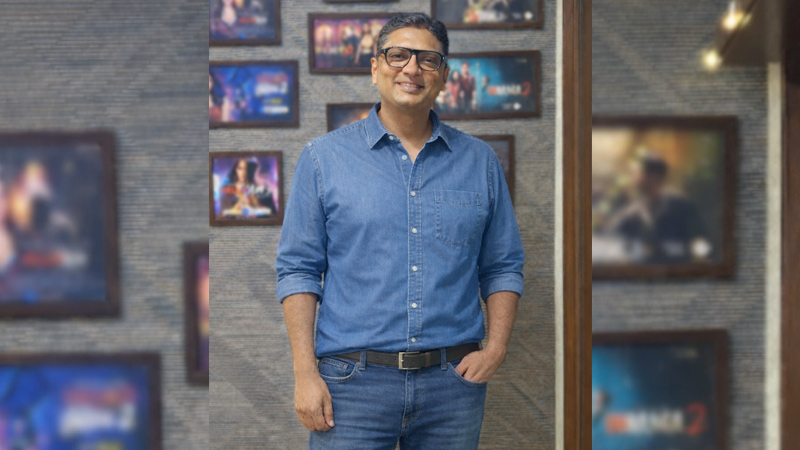
MUMBAI: As audiences spread across TV, OTT, and short-form platforms, deciding what gets greenlit has become more strategic than ever. Content leaders now weigh clarity of concept, platform fit, pacing, and distinctiveness to ensure a story connects with the right audience in the right format.
In this piece, Dhruv R Jain content head TV at Rose Audio Visuals, explains how greenlighting decisions are shaped by concept strength, platform behaviour, and the need for unique storytelling. Drawing from his experience at Rose Audio Visuals, he outlines how these factors influence which ideas move from pitch to production.
In recent times the Indian entertainment landscape has changed in many ways leading us to also modify our process in deciding what should be greenlit in terms of content. As the options for audiences to view content change from the traditional TV space to OTT and even social media the stories that are told on different platforms also differ. Multiple factors play a part in deciding not just the story told but also the way they will be told.
Firstly the primary filter in the process is the clarity of concept. Whenever content leaders approach a story they tend to simplify it in terms of it being written and told through the screen. The crew involved in making the story should have an inside out idea of all the factors of the story for it to resonate and be understood by the audiences. We dissect the story into the smallest components to spread it through the writing and format the story in a way that would build intrigue giving it hooks, drops points and defined execution. A concept that is executed properly with details will be understood and appreciated by the audience irrespective of its genre.
The content that is being chosen to be greenlit also highly depends on the platform it is being made for. Different mediums like TV channels, Ott platforms and short format apps etc have different sections of audiences that look for a specific kind of story to watch depending on multiple factors again. So while choosing a story for them one needs to study their audience, the structure that works for the platform, the pacing in which the story will be understood and the kinds of story that would fit the platform. While TV is a medium which is highly expository in its telling with slower pacing, on the other hand Ott platforms give us a space to tell a story with the approach of less is more with faster pacing of the story itself. This becomes an important factor in choosing stories and their way of telling.
Another factor that plays an important role is the distinctiveness of a concept. A concept with a unique approach, set up and characters bring freshness. At Rose we have always attempted to tell stories that stand out with our most recent Itti Si Khushi by setting up the show in a unique location like Kotachiwadi, a historic unique set up in the south of Mumbai that has not been shown on TV before we gave the already iconic Shameless an interesting Indian twist. At the same time the show in itself follows an unique storyline that brought something different to the medium of TV. So telling a different and unique story that stands out always brings in curious audiences which we sustain then with strong characters, hooks and plot points.
In addition to these factors many others become prominent in deciding what gets greenlit. It is on the content leaders to find the right time and space for the concept that they believe will be received well by the audiences. One needs to be a multitasker to understand, organise and execute a project properly.
Note: The views expressed in this article are solely the author’s and do not necessarily reflect our own.

PARIS & LILLE, FRANCE: Series Mania Forum has named the Republic of Korea as its first-ever Country of Honour, marking a major milestone for the European television industry gathering set to run alongside the Series Mania Festival in Lille in March 2026.
The announcement was made by Laurence Herszberg, founder and general director of Series Mania, underscoring Korea’s rising influence in global content creation and distribution.
As part of the initiative, the Korea Creative Content Agency (KOCCA) will bring a delegation of eight leading companies to the forum, including Channel A Corporation, CJ ENM, EO Content Group, KBS Media, MBC, SLL Joongang, Studio S and Whynot Media. The programme will feature dedicated sessions spotlighting upcoming Korean projects, high-level conference panels, networking events and industry showcases.
The move is backed by France’s CNC following a memorandum of understanding signed with Kocca at Series Mania 2024, aimed at strengthening co-production, investment and cultural exchange between the two countries.
The honour coincides with the 140th anniversary of diplomatic relations between France and Korea and follows last year’s Broadcast Worldwide event in Seoul, which highlighted France as its guest country.
Korea’s content market was valued at $43.169 billion in 2024, up 5.7 per cent from the previous year, ranking eighth globally. Demand for Korean series in France has surged, with Netflix reporting viewing time up more than 200 per cent year on year.
Herszberg said the initiative reflects Korea’s recognised excellence in film and television, while Kocca France general director Moonju Kim, said the partnership would deepen cooperation across production and investment.

CALIFORNIA: Disney has finally named its next ruler and slapped a glossy price tag on the throne.
Josh D’Amaro, heir to Bob Iger, steps into the chief executive role on a base salary of $2.5m, before the real money kicks in. His annual bonus target is set at a punchy 250 per cent of salary, with long-term stock awards worth $26.2m a year. Add a one-off incentive grant of $9.7m to mark the promotion and D’Amaro’s opening package lands at about $38m.
Dana Walden, the other front-runner, does not leave empty-handed. Elevated to president and chief creative officer under a contract running to March 2030, she will earn a $3.75m base salary, with a performance bonus targeted at 200 per cent. Annual stock awards are valued at $15.75m, topped by a one-time incentive of $5.26m. All told, her first-year take comes to roughly $24m.
The board’s decision ends a two-year succession drama that has hovered over Disney’s share price and morale. D’Amaro, previously in charge of parks and consumer products, gets the top job. Walden, until now co-chair of Disney Entertainment, is handed a newly minted creative super-role, reporting directly to him.
Both appointments take effect on March 18, at Disney’s annual meeting. Iger slides into the background as senior adviser and board member, before bowing out for good in December.
The message from Burbank is unmistakable. Continuity, creativity and a very expensive handover. In the House of Mouse, the magic still pays.



MIB sets OTT accessibility rules, mandates captions and audio description

Boney Kapoor acquires remake rights of Tamil political satire Thalaivar Thambi Thalaimaiyil

Netflix India names Rekha Rane director of films and series marketing

Zabeen signs off from TV9 after shaping the network’s public voice

Dhawan steps up to bat for Delhi’s grassroots sports push

Orient Beverages pops the fizz with steady Q3 gains and rising profits

Cheekatilo shines in the dark with record debut on Prime Video

Swiggy Instamart’s GOV surges 103 per cent year on year to Rs 7,938 crore

These ’90s fashion trends are making a comeback in 2017
The final 6 ‘Game of Thrones’ episodes might feel like a full season
According to Dior Couture, this taboo fashion accessory is back

ATN International brings ATN Bangla to Canada
The old and New Edition cast comes together to perform
Phillies’ Aaron Altherr makes mind-boggling barehanded play
MIB sets OTT accessibility rules, mandates captions and audio description
Boney Kapoor acquires remake rights of Tamil political satire Thalaivar Thambi Thalaimaiyil
Netflix India names Rekha Rane director of films and series marketing
Zabeen signs off from TV9 after shaping the network’s public voice
Dhawan steps up to bat for Delhi’s grassroots sports push
Orient Beverages pops the fizz with steady Q3 gains and rising profits
Cheekatilo shines in the dark with record debut on Prime Video
-
 e-commerce1 month ago
Swiggy Instamart’s GOV surges 103 per cent year on year to Rs 7,938 crore
-
 iWorld1 year ago
Kuku TV transforms India’s OTT space with vertical microdrama boom
-
 News Headline1 year ago
TRAI puts a ‘stop’ to unsolicited calls and messages
-

 News Headline2 months ago
From selfies to big bucks, India’s influencer economy explodes in 2025
-
 Comedy2 years ago
Taarak Mehta Ka Ooltah Chashmah celebrates 4,000 episodes
-
 MAM2 years ago
OpenAI joins C2PA steering committee
-
 News Headline2 years ago
Odisha to host Ultimate Kho Kho Season 2 from December 24
-
 News Headline1 year ago
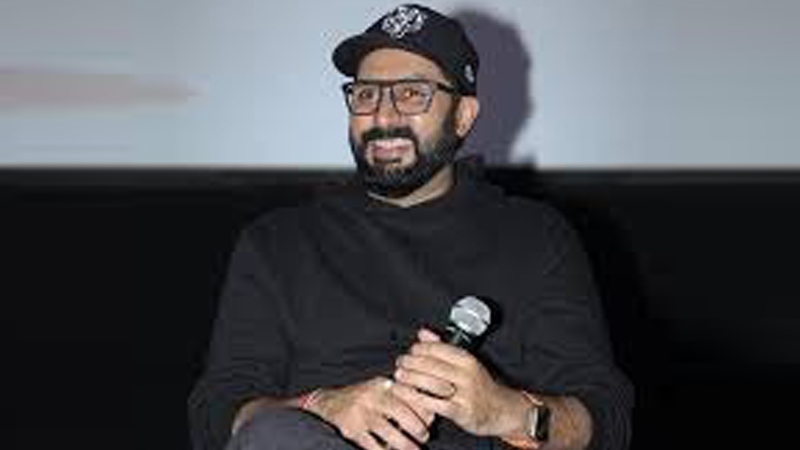
Abhishek Bachchan joins as co-owner of European T20 Premier League


