
Hindi
It came at the right time – in the birth centenary year of Dadasaheb Phalke: Gulzar

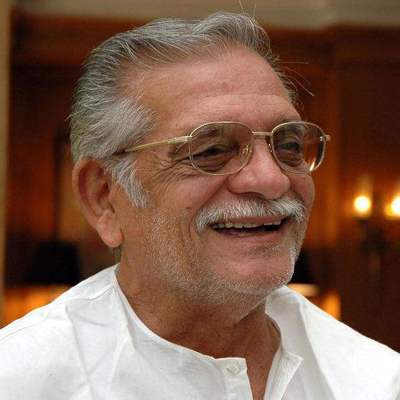
NEW DELHI: Later this year, eminent director-screen writer-lyricist Gulzar will be honoured with the prestigious Dadasaheb Phalke Award (2013) by President Pranab Mukherjee along with the National Film Awards (2013). Gulzar will be the third lyricist after Majrooh Sultanpuri (1994) and Kavi Pradeep (1998) to win the award.
According to Information & Broadcasting Ministry Secretary, Bimal Julka, the seven-member selection committee was unanimous in its recommendation of Gulzar for what is the nation’s highest award in cinema.
“I am particularly happy since the choice was made by an independent committee, though set up by the Government,” said Gulzar. While many feel the honour was bestowed on him rather late, he only said, “This was special, as it came at the right time- in the birth centenary year of Dadasaheb Phalke.”

An institution into himself, Gulzar has not only penned several Hindi film songs and dialogues but also directed a clutch of notable films. As one of the greatest authorities in the history of song in Indian cinema, he has given talks on the subject, both in India and abroad. Often accused of selecting other people’s novels/stories for adaptation, there’s no denying his talent for optimally adapting the same to Indian/Hindi film audiences.
Biography
Gulzar was born as Sampooran Singh Kalra to Makhan Singh Kalra and Sujan Kaur in Dina, Jhelum district, in undivided India, in what is now Pakistan. Sampooran started off as a car mechanic in a garage in Mumbai but went on to become a writer, assuming the pen name, Gulzar Deenvi. His father rebuked him for becoming a writer saying, “As a writer, you will have to depend on your brothers”. He started his film career as a lyricist, going on to write dialogues and screen plays, and later, even directing many critically acclaimed films.
Gulzar began as a songwriter with music director Sachin Dev Burman in the movie Bandini (1963) with the song, Mora Gora Ang Lai le picturised on Nutan. Gulzar’s most successful songs as a lyricist came out of his association with S D Burman’s son, Rahul Dev Burman, whom he described as the anchor in his life. Gulzar’s lyrics were special in that they formed part of the narrative. As a lyricist, he also had award-winning associations with music directors Salil Chowdhury (Anand, Mere Apne), Madan Mohan (Mausam) and more recently Vishal Bhardwaj (Maachis, Omkara, Kaminey), A. R. Rahman (Dil Se.., Guru, Slumdog Millionaire, Raavan) and Shankar–Ehsaan–Loy (Bunty aur Babli).
Some of Gulzar’s more notable songs are: Maine Tere Liye Hi from the film Anand; Bole Re Papihara Papihara from the film Guddi; Koii Hota Jisko Apna, a nostalgic number from Mere Apne; Aanewala Pal Janewala (Golmaal); Sun Sun Sun Didi (Khubsoorat); Ae Zindagi Gale Laga Le (Sadma); Roz Roz Aankhon Tale (Jeeva); Tum Aa Gaye Ho Noor and Tere Bina Zindagi Se from the film Aandhi; Saare ke saare gaama ko lekar gaate chale (Parichay); and Dil Dhoondhta hai (Mausam).
Gulzar won international fame when he was awarded the prestigious Oscar Award (with A R Rehman and Sukhwinder Singh) for writing the Best Original Song Jai Ho from the film, Slumdog Millionare. He was also honoured with the Grammy Award for Best Song Written for a Motion Picture, Television or Other Visual Media.
Apart from films, he has written ghazals for ghazal king (late) Jagjit Singh’s albums “Marasim” and “Koi Baat Chale”. Both albums were a great success.
For the peace campaign (Aman ki Asha) jointly flagged off by leading media houses from India and Pakistan, he wrote the anthem “Nazar Main Rehte Ho”, which was recorded by Shankar Mahadevan and Rahat Fateh Ali Khan.
Gulzar’s poetry is partly published in three compilations: Chand Pukhraaj Ka, Raat Pashminey Ki and Pandrah Paanch Pachattar (15-05-75).
Gulzar also wrote dialogues and screen plays for films like Aashirwad, Anand, Khamoshi and more. His short stories are published in Raavi-paar (also known as Dustkhat in Pakistan) and Dhuan (smoke). He has penned dialogues and lyrics for several Doordarshan serials including Jungle Book, Alice in Wonderland, Guchche, Hello Zindagi, Potli Baba ki and more recently, the children’s audio-book series, Karadi Tales.
Fluent in several languages and dialects, Gulzar has written in Braj Bhasha, Khariboli, Haryanvi and Marwari though he primarily writes in Hindustani (Hindi-Urdu) and Punjabi.
He forayed into direction with Mere Apne(1971). The film was a remake of Tapan Sinha’s Bengali film Apanjan (1969), where Meena Kumari played the lead role of Anandi Devi, an old widow caught between the local fights of unemployed and tormented youngsters. Anandi Devi’s death in one of the fights makes the youth realise the futility of violence. The film was rated “Above Average” at the Box Office.
He then directed Parichay and Koshish, with the former based on a Bengali novel Rangeen Uttarain by Raj Kumar Maitra and inspired by the Hollywood classic, The Sound of Music. Whereas Koshish, written by Gulzar, depicts the struggle of a deaf and dumb couple. Sanjeev Kumar won the National Film Award for Best Actor for his performance in the film. The year 1973 saw another directorial venture from Gulzar named Achanak, inspired by the real-life sensational 1958 murder case K M Nanavati vs State of Maharashtra. The story writer, Khwaja Ahmed Abbas, earned a Filmfare nomination for Best story.
Gulzar’s Aandhi, based on the Hindi novel “Kaali Aandhi” by the renowned writer Kamleshwar, told the story of a separated couple against the backdrop of politics and was often believed to be based on the story of Indira Gandhi though it was actually based on the life of Tarkeshwari Sinha. Along with various wins and nominations, the film also won the Filmfare Critics Award for Best Movie. During the emergency in 1975, the film was banned from theatres. Gulzar’s next, Khushboo, was inspired by Sharat Chandra Chattopadhyay’s Pandit Mashay. While his other film, Mausam, won the National Award for second Best Feature Film, Filmfare Best Movie and Filmfare Best Director awards, along with other six Filmfare nominations. It was loosely based on the story “Weather” from the novel, The Judas Tree, by A.J. Cronin. Sharmila Tagore for her roles of Chanda and Kajli received The Silver Lotus Award at the 23rd National Film Festival.
Gulzar’s 1982 film Angoor was taken from William Shakespeare’s play, The Comedy of Errors. In his Maachis, a young Punjabi boy becomes a terrorist only to realise the futility of it. While Hu Tu Tu dealt with corruption and one man’s fight against it. Flashback has been an important tool of narration in Gulzar’s films including Aandhi, Mausam, Ijaazat, Machis and Hu Tu Tu among others.
On the small screen, Gulzar created the popular series Mirza Ghalib and Tahreer Munshi Premchand ki among others.
Gulzar, who will turn 80 on 18 August this year, was awarded the Sahitya Akademi Award in 2002 and the Padma Bhushan in 2004. He has won a number of National Film Awards and 20 Filmfare Awards. In 2012, he received the Indira Gandhi National Integration Award.








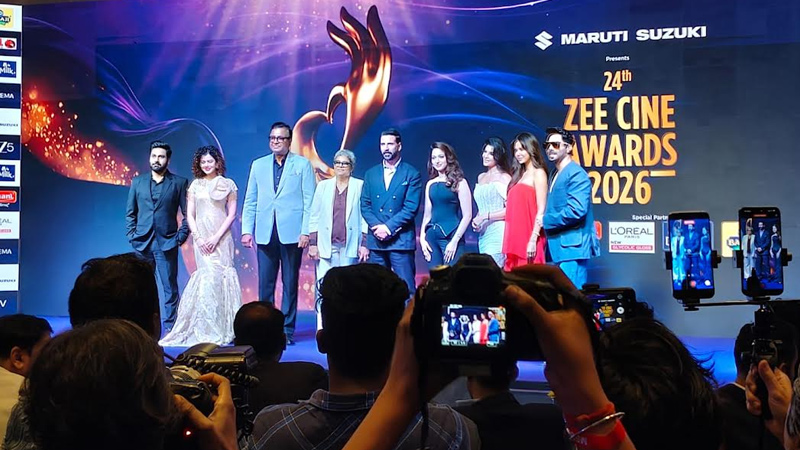
MUMBAI: When the applause gets louder than the dialogue, you know the fans have taken over. That was the unmistakable mood as Zee formally announced the Zee Cine Awards 2026, flipping the script to celebrate not just cinema’s stars, but the people who cheer them on the loudest.
The 24th edition of the awards marks a fresh chapter in Zee’s long-standing relationship with Hindi cinema, anchored in its fan-first philosophy, Fantertainment. This year’s theme, ‘Yeh Pal Hai Fans Ka’, reinforces a simple idea: cinema’s most powerful moments are shaped as much by audiences as by actors on screen. Presented by Maruti Suzuki, the awards aim to turn fandom into the main event.
The announcement, held in Mumbai, was anything but a routine press conference. Bollywood stars Akshay Kumar, Tamannaah Bhatia, Jacqueline Fernandez, Sonam Bajwa, Aparshakti Khurana, composer Mithoon and singer Palak Muchhal joined fans to kick off the celebrations, turning the launch into a high-voltage, participative spectacle.
Staying true to the theme, fans didn’t just watch the announcement, they drove it. Akshay Kumar took the lead, pulling fellow stars on stage and energising the room, before the unveiling of a live LED Fan Meter. Powered purely by audience cheers, the rising meter culminated in the reveal of the Zee Cine Awards 2026 ground event date, announced in unison with fans, blurring the line between performer and spectator.
The momentum continued as Tamannaah Bhatia, Jacqueline Fernandez, Sonam Bajwa and Aparshakti Khurana recreated iconic hook steps, joined by Mithoon and Palak Muchhal for music-led interactions. Games, spontaneous performances and playful banter kept the focus firmly on shared moments, underscoring the evolving bond between cinema and its audience.
Beyond the launch, the awards will roll out as a multi-platform journey across television, digital, print and fan-led experiences. The aim is sustained engagement from the first announcement to awards night cementing fandom as a cultural force rather than a footnote.
Commenting on the milestone edition Zee head of advertisement revenue, broadcast & digital Laxmi Shetty said the 24th Zee Cine Awards continue to draw strength from the network’s omni-channel ecosystem, reflecting how audiences consume content today across TV, digital and social platforms. She noted that long-standing brand associations, including Maruti Suzuki’s three-year partnership and support from brands such as Hell Energy, underline the platform’s scale, trust and cultural relevance.
As Zee Cine Awards 2026 gathers pace, one thing is clear: this year, the loudest cheers won’t just echo in the auditorium, they’ll shape the show itself.

MUMBAI: Prime Video has found its next feel-good original, and it comes with a healthy dose of heart, humour and youthful chaos. The streaming platform has announced Don’t Be Shy, a coming-of-age romantic comedy produced by Alia Bhatt and Shaheen Bhatt under their banner, Eternal Sunshine Productions.
Written and directed by Sreeti Mukerji, the film follows Shyamili ‘Shy’ Das, a 20-year-old who believes her life is neatly mapped out until it suddenly is not. What follows is a relatable tumble through friendship, love and the awkward art of growing up, when plans unravel and certainty gives way to self-discovery.
The project is co-produced by Grishma Shah and Vikesh Bhutani, with music composed by Ram Sampath, adding to the film’s promise of warmth and energy. Prime Video describes the story as light-hearted yet emotionally grounded, with a strong female-led narrative at its core.
Prime Video India director and head of originals Nikhil Madhok, said the platform was delighted to collaborate with Eternal Sunshine on a story that blends sincerity with humour. He noted that the film’s fresh writing, earnest characters and infectious music make it an easy, engaging watch for audiences well beyond its young adult setting.
For Alia Bhatt, Don’t Be Shy reflects the kind of storytelling Eternal Sunshine set out to champion. She said the film stood out for its honesty, its coming-of-age perspective and Mukerji’s passion, which she felt was deeply woven into the narrative. Bhatt also praised Prime Video for supporting distinctive voices and bold creative choices.
With its breezy tone and familiar emotional beats, Don’t Be Shy aims to charm viewers whether they are rom-com regulars or simply in the mood for a warm, unpretentious story about life refusing to stick to the plan.

MUMBAI: Tips Films struggled to find its rhythm in the final quarter of 2025, as a spike in production costs and a new regulatory burden pushed the Mumbai-based outfit deeper into the red. According to results released on Tuesday, January 27, 2026, the company posted a net loss of Rs 286.87 lakh for the quarter ended 31 December, despite a modest bump in total income to Rs 456.29 lakh.
The bottom line was hit by the introduction of India’s New Labour Codes, which forced a Rs 37.37 lakh catch-up payment for employee benefits. Production costs also proved a heavy lift, gobbling up Rs 318.48 lakh during the period. On a nine-month basis, the picture looks even bleaker; the company has racked up losses of Rs 1,237.61 lakh, a sharp reversal from the Rs 1,269.17 lakh profit it managed in the same period last year.
Investors will be looking for a script change as the company enters the final stretch of the financial year, with basic earnings per share now languishing at minus Rs 6.64. For now, Tips Films remains a single-segment player, pinning its hopes entirely on the volatile world of film production and distribution.


Hamdard honours changemakers at Abdul Hameed awards

Why the Best Campaigns Today Start With Insights, Not Ideas

Ahmad Muneeb elevated to VP – HR centre of excellence at Zepto

Fans Take Centre Stage as Zee Cine Awards Turns the Spotlight Around

GUEST COLUMN: How content leaders decide what gets greenlit

The man who dubbed Lord of the Rings in 50 languages is stunned by Mumbai traffic

Dell names Aishwarya Sudhakar director of marketing intelligence

These ’90s fashion trends are making a comeback in 2017
The final 6 ‘Game of Thrones’ episodes might feel like a full season
According to Dior Couture, this taboo fashion accessory is back
The old and New Edition cast comes together to perform
Phillies’ Aaron Altherr makes mind-boggling barehanded play
Uber and Lyft are finally available in all of New York State
Disney’s live-action Aladdin finally finds its stars
Hamdard honours changemakers at Abdul Hameed awards
Why the Best Campaigns Today Start With Insights, Not Ideas
Ahmad Muneeb elevated to VP – HR centre of excellence at Zepto
Fans Take Centre Stage as Zee Cine Awards Turns the Spotlight Around
GUEST COLUMN: How content leaders decide what gets greenlit
The man who dubbed Lord of the Rings in 50 languages is stunned by Mumbai traffic
Dell names Aishwarya Sudhakar director of marketing intelligence
-

 News Broadcasting4 days ago
Mukesh Ambani, Larry Fink come together for CNBC-TV18 exclusive
-

 iWorld1 week ago
Netflix celebrates a decade in India with Shah Rukh Khan-narrated tribute film
-
 MAM3 months ago
HoABL soars high with dazzling Nagpur sebut
-

 MAM4 days ago
Nielsen launches co-viewing pilot to sharpen TV measurement
-
 iWorld12 months ago
BSNL rings in a revival with Rs 4,969 crore revenue
-
 I&B Ministry3 months ago
India steps up fight against digital piracy
-
 iWorld3 months ago
Tips Music turns up the heat with Tamil party anthem Mayangiren
-

 Film Production1 week ago
UFO Moviez rides high on strong Q3 earnings
