
Comment
IPL 7: Ready, steady, Po!

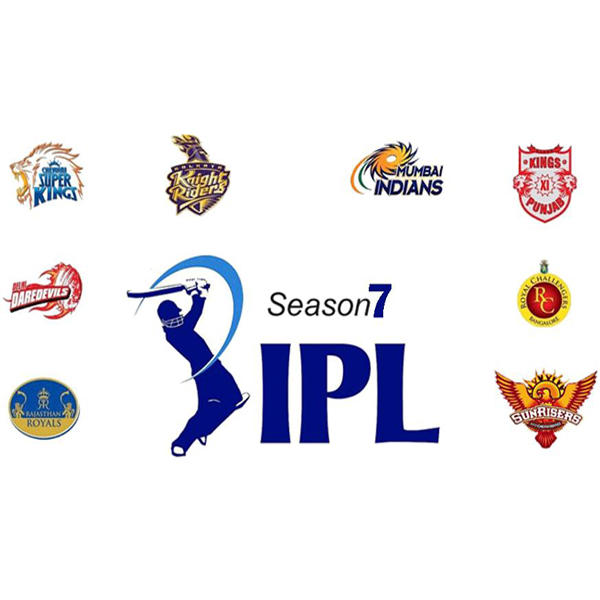
Just a day to go for that spectacle called the Indian Premiere League and already, the season has seen more than its fair share of twists and turns!
Apart from the fact that the upcoming tournament coincides with the 16th general elections – bringing back the ghost of IPL season two that had to be organised on South African shores because it collided with the polls here – there have been other changes as well. Right from the omission of Pune Warriors India as a franchise (earlier, Deccan Chargers and Kochi Tuskers Kerala faced termination as well) to N Srinivasan losing his chair to cricketing legend Sunil Gavaskar being appointed as the BCCI-IPL interim president on the order passed by the Supreme Court.
Also, IPL is down to eight teams just like it was when it first kicked off, with the number of matches down to 60, of which, the first 20 will be played in the UAE and the remaining ones back home beginning 2 May.
So before the action begins, here’s looking at some of the things the franchises need to make note of before they forge ahead:
Maintaining momentum
Back in 2009, when IPL had to shift to South Africa due to general elections, there were a lot of logistical issues that caused trouble for the franchises. While shifting to UAE this time round may look simpler because of the similarity in conditions, the teams will have to do some adjusting when they shift back to India in early May.
The return to India could be more a psychological blow for the teams because while there will be bigger crowds and greater support back home, migrating back to India from the UAE with wins under their belts may prove a daunting task for the teams.
They will have to make the psychological adjustment and rework their strategy to better suit Indian conditions. If any side gains momentum in the UAE, it is crucial that they win the first few games during the Indian leg to keep wheel of fortune turning. As far as the conditions go, it may become easier for the teams in India as the heat wouldn’t be as intense as that of the UAE. The pitches too would be a lot more familiar.
Thus, it would all boil down to how well a franchise returns and gets moving in India. It may be a challenge for the teams that are winning, but those who struggle in the UAE may welcome the return to home conditions and that could work in their favour. So buckle up for some high adrenaline action in the first week of May.
Sponsors fighting shy of IPL?
What began as a fledgling franchise in 2008 is today a world-renowned property with brand value pegged at $3.03 billion in 2013 and the highest at $4.13 billion in 2010.
But, 2014 seems to be a troubling year for IPL franchisees, what with the recent controversies, uncertainty about the fate of the tournament (this season), and the decision to take the first half to UAE having made sponsors put on their guard.
According to an American Appraisal India report of 2013, Chennai Super Kings and Mumbai Indians emerged as the most powerful brands valued at $72 million each; followed by Kolkata Knight Riders ($69 million) and Royal Challengers Bangalore ($51 million). Rajasthan Royals ($45 million) and Delhi Daredevils ($40 million) were somewhere in the middle, while Kings XI Punjab ($32 million) and Sunrisers Hyderabad ($25 million) sat at the bottom of the pile.
Each team is trying to claw its way back with operational improvements however, trust flows with stakeholders will eventually determine the health of IPL’s long-term liquidity and profitability. For the current eight teams to sustain, their short-term operational movements need to be aligned with their strategic plans for the tourney.
For example, Kings XI Punjab has had its number of sponsors come down to just two from 15 in 2013. Till last season, the franchise had NVD Solar as its title sponsor for three years, along with Arise Inverters and Batteries, Raindrops Basmati, Lux Cozi, ACC, USL and McDowell’s No. 1 as official team partners. But this season, it has only USL and TK Sports on board as sponsors with the tourney at the doorstep.
GMR group owned-Delhi Daredevils seems to have undergone a makeover this season with a new-look squad, new logo and new sponsor – Quikr. Till last year, the Muthoot Group was its title sponsor, but it did not wish to renew its contract and thus, it opened the doors for the e-commerce portal to step-in as the title sponsor for a period of three years. Apart from Muthoot, other premiere sponsors including Bajaj Allianz, Coca-Cola India, Matrix and consumer goods company Panasonic have also opted out of sponsorship deals this season.
Other franchisees such as Chennai Super Kings, Rajasthan Royals and Kolkata Knight Riders are facing a different challenge. While these teams have managed to get some sponsors on board, the sponsorship rates have taken a pounding. Delay in the announcement of the venue and the controversies surrounding the tourney have impacted business this year, according to most trade pundits.
So how are the teams facing up to these challenges?
With the playing field down to just eight teams, it will lead to intense battles on the field that will hopefully lead to great last over finishes, creating an enthralling experience for the fans.
Last season winners and maiden title holder Mumbai Indians, will square off with 2012 winners Kolkata Knight Riders on April 16 to kick-off the tourney at Sheikh Zayed Stadium, Abu Dhabi.
The league is scheduled to culminate on 1 June 2014, to crown the champions for season seven of the Pepsi Indian Premiere League. Here is a brief description of the teams competing for the coveted title this time around.
Chennai Super Kings (CSK)
Team (from): MS Dhoni (Captain), Suresh Raina, R Ashwin, Ravindra Jadeja, Dwayne Bravo, Faf du Plessis, Brendon McCullum, Dwayne Smith, Ashish Nehra, Mohit Sharma, Samuel Badree, Ben Hilfenhaus, Matt Henry, B Aparajith, Mithun Manhas, Ishwar Pandey, Pawan Negi, Vijay Shankar, Ronit More, John Hastings.
One of the most successful franchises in the league, having won the title twice (2010 and 2011) under the leadership of M S Dhoni (also captain of Team India); one of the major reasons for the success of CSK is the stability and collective effort in the team. They always have a chance to win the cup and this year is no different.
Royal Challengers Bangalore (RCB)
Team (from): Virat Kohli (Captain), Chris Gayle, AB de Villiers, Yuvraj Singh, Parthiv Patel, Albie Morkel, Mitchell Starc, Ashok Dinda, Ravi Rampaul, Muttiah Muralitharan, Nic Maddinson, Varun Aaron, Vijay, Sachin Rana, Yogesh Takawale, Abu Nechim Ahmed, Yuzvendra Chahal, Shadab Jakati, Sandeep Warrier, Harshal Patel, Tanmay Mishra.
The most flamboyant team among all, with the likes of Virat Kohli and Chris Gayle, but it hasn’t really used its resources well to conquer the league. The best result for the team was in 2011, when they came second to CSK. With some real match winners, and Kohli currently in top form, the Challengers need to really put the pedal to the metal (bat to the ball) from the word go this season.
Delhi Daredevils (DD)
Team (from): Kevin Pietersen (Captain), M Vijay, Dinesh Karthik, JP Duminy, Manoj Tiwary, Quinton de Kock, Mohammed Shami, Rahul Sharma, Saurabh Tiwary, Laxmi Ratan Shukla, Nathan Coulter-Nile, Shahbaz Nadeem, Ross Taylor, Milind Kumar, Wayne Parnell, HS Sharath, Jayant Yadav, Jaydev Unadkat, James Neesham, Kedar Jadhav, Mayank Agarwal, Rahul Shukla, Siddharth Kaul.
This is one team that has just drifted away after beginning strongly in the first two seasons. The team really needs to play to its strengths and take each match as it comes. The strategy needs to be very clear; first to reach the play-offs and then the semi-final and if the team plays to its strength, play the final. With the temperamental Pietersen at the helm of things, it will be interesting to see the approach of the team this season.
Kolkata Knight Riders (KKR)
Team (from): Gautam Gambhir (Captain), Sunil Narine, Jacques Kallis, Robin Uthappa, Yusuf Pathan, Shakib Al Hasan, Umesh Yadav, Vinay Kumar, Morne Morkel, Piyush Chawla, Manish Pandey, Veer Pratap Singh, Chris Lynn, Andre Russell, SS Mandal, Pat Cummins, Debabrata Das, Suryakumar Yadav, Manvinder Bisla, Ryan ten Doeschate, Kuldeep Yadav.
The Shah Rukh Khan-owned franchise, was lost till it found a leader in Gautam Gambhir and have stood by him. Under Gambhir, KKR lifted the cup in 2012 and can certainly be a strong contender for this season as well. The team banks on a good mix of youth and experience, with Kallis and Gambhir giving stability to the batting. If Sunil Narine can spin his web yet again and Yusuf Pathan along with new entrant Robin Uthappa create some magic, the Knight Riders may stand to repeat its 2012 feat yet again.
Rajasthan Royals (RR)
Team (from): Shane Watson (Captain), Ajinkya Rahane, James Faulkner, Stuart Binny, Sanju Samson, Brad Hodge, Steven Smith, Abhishek Nayar, Ben Cutting, Kane Richardson, Tim Southee, Unmukt Chand, Ankush Bains, Vikramjeet Malik, Rahul Tewatia, Ankit Sharma, Amit Mishra, Deepak Hooda, Rajat Bhatia, Kevon Cooper, Iqbal Abdulla, Dhawal Kulkarni, Pravin Tambe, Karun Nair, Dishant Yagnik.
The maiden champions will always be remembered for their 2008 tournament; from being the dark horse to really nudging every one out of the league to lift the cup. But since then, the team has not really done much to be noticed. Having been consistent and qualifying for the play-offs last season helps in keeping the team together, but it lacks the killer instinct which may be made up with the appointment of Shane Watson as captain. The team looks very balanced on paper and can give any team a run for its money any given day.
Sunrisers Hyderabad (SRH)
Team (from): Shikhar Dhawan (Captain), Dale Steyn, David Warner, Darren Sammy, Amit Mishra, Aaron Finch, Irfan Pathan, Ishant Sharma, Bhuvneshwar Kumar, Brendan Taylor, Moises Henriques, Venugopala Rao, Jason Holder, S Aniruddha, Manprit Juneja, KL Rahul, Amit Paunikar, Naman Ojha, Ricky Bhui, Ashish Reddy, Chama Milind, Parveez Rasool, Prashanth Parameshwaran, Karn Sharma.
Having the advantage of being the youngest franchise in the league, the Sunrisers Hyderabad, proved its mettle by qualifying to the play-offs in the 2013 season. The team really battled in some of the memorable matches of the season. Under the leadership of Shikhar Dhawan, the team looks poised to maintain its performance and do exceedingly well in season seven as well. With match winners like Dhawan, Warner, Steyn, Mishra and Sammy, this looks like the most balanced team among the lot.
Kings XI Punjab (KXIP)
Team (from): George Bailey (Captain), David Miller, Manan Vohra, Virender Sehwag, Mitchell Johnson, Cheteshwar Pujara, Shaun Marsh, Wriddhaman Saha, Thisara Perera, Glenn Maxwell, Rishi Dhawan, Anureet Singh, Sandeep Sharma, Akshar Patel, Beuran Hendricks, Karanveer Singh, Murali Kartik, Shivam Sharma, Shardul Thakur, L Balaji, Parvinder Awana, Gurkeerat Singh Mann, Mandeep Singh.
This team has never really proved its mettle right from season one down to season six; there have been constant changes in leadership and that has been detrimental to its performance as well. With George Bailey at the helm and support from ‘old hands’ like Sehwag, Johnson, Saha and Balaji, it’s yet to be seen if this season brings a change in fortunes for KXIP.
Mumbai Indians (MI)
Team (from): Rohit Sharma (Captain), Lasith Malinga, Kieron Pollard, Harbhajan Singh, Ambati Rayudu, Michael Hussey, Zaheer Khan, Pragyan Ojha, Corey Anderson, Josh Hazlewood, CM Gautam, Aditya Tare, Apoorv Wankhade, Marchant de Lange, Krishmar Santokie, Ben Dunk, Pawan Suyal, Sushant Marathe, Jasprit Bumrah, Shreyas Gopal, Jalaj Saxena.
The reigning champions of season six IPL 2013, have seen it all. The first two years having struggled to not even qualify for the play-offs; followed by standing runners-up in 2010 and then finally completing the journey last year. But this year the one big change will be, Sachin Tendulkar not figuring in the squad, having retired from all forms of cricket. The team looks good and well balanced to retain its title, only time will tell if it really can.








MUMBAI: 2025 will be remembered as the year India’s OTT industry stopped chasing scale for its own sake and began reckoning with how audiences actually consume content. Completion rates fell, patience wore thin and the limits of long-form excess became impossible to ignore. In this guest column, Pratap Jain, founder and CEO of ChanaJor, traces how micro-drama moved from the fringes to the centre of viewing behaviour, why short-form fiction emerged as a retention engine rather than a trend, and how platforms that respected time, habit and emotional payoff were the ones that truly grew up in 2025.
If there is one thing 2025 will be remembered for in the Indian OTT industry, it’s this: the industry finally stopped pretending.
Stopped pretending that bigger automatically meant better.
Stopped pretending that viewers had endless time.
Stopped pretending that scale without retention was success.
What began as a quiet reset in 2023 and a cautious correction in 2024 turned into a very visible shift in 2025. Business models matured. Content strategies tightened. And most importantly, platforms started aligning themselves with how Indians actually watch content, not how the industry wished they would.
At the centre of this shift was micro-drama—not as a trend, but as a behavioural inevitability.
When OTT finally understood the time problem
For years, long episodes were treated as a marker of seriousness. A 45–60 minute runtime was almost a badge of credibility. Shorter formats were pushed to the margins, labelled as “snack content” or “mobile-only.”
That belief quietly collapsed in 2025.
What platform data showed very clearly was not a drop in interest—but a drop in patience. Viewers weren’t rejecting stories. They were rejecting commitment.
Across platforms, the same patterns appeared:
* First-episode drop-offs on long-form shows kept increasing
* Completion rates continued to slide
* Viewers were sampling more titles but finishing fewer
At the same time, shows with episodes in the six to 10 minute range started showing the opposite behaviour: higher completion, higher repeat viewing, and stronger daily habit formation.
Micro-drama didn’t win because it was short. It won because it respected time.
Micro-Drama didn’t arrive loudly. It took over quietly.
There was no single moment when micro-drama “launched” in India. It crept in through dashboards and retention charts.
By mid-2025, it was clear that viewers were happy watching four, five, sometimes six short episodes in one sitting—even when they wouldn’t finish a single long episode. Romance, relationship drama, slice-of-life conflict, and grounded comedy worked especially well.
This wasn’t disposable content. It was compressed storytelling.
In shorter formats, there was no room for indulgence. Every episode had to move the story forward. Weak writing was punished faster. Strong writing was rewarded immediately.
Micro-drama raised the bar instead of lowering it.
Where ChanaJor naturally fit into this shift
ChanaJor didn’t pivot to micro-drama in 2025 because the market demanded it. In many ways, the platform was already built around the same viewing behaviour.
From the beginning, ChanaJor focused on short-to-mid-length fictional stories that felt close to everyday Indian life—hostels, rented flats, office romances, small-town relationships, young people figuring things out. Stories that didn’t need heavy context or cinematic scale to connect.
What worked in ChanaJor’s favour in 2025 was clarity:
* A clearly defined audience
* Tight episode lengths
* Storytelling that prioritised emotion and pace over spectacle
While several platforms rushed to copy global micro-drama formats, ChanaJor stayed rooted in familiar Indian settings and conflicts. That familiarity mattered. Viewers didn’t have to “enter” the world of the show—it already felt like theirs.
Why audiences started responding differently
One of the biggest misconceptions going into 2025 was that audiences wanted shorter content because their attention spans had reduced. That wasn’t entirely true.
What viewers actually wanted was meaningful payoff per minute.
On platforms like ChanaJor, episodes didn’t waste time setting the mood for ten minutes. Conflicts arrived early. Characters were recognisable within moments. Emotional hooks landed fast.
A typical consumption pattern looked like real life:
* One episode during a break
* Two more before sleeping
* A few the next day
This is how viewing habits are built—not through marketing spends, but through comfort and consistency.
Viewers came back not because every show was a blockbuster, but because they knew what kind of experience to expect.
2025 was also the year OTT faced business reality
The other big change in 2025 was on the business side. Subscriber growth slowed. Discounts stopped hiding churn. Customer acquisition costs rose.
Platforms were forced to ask harder questions:
* Are viewers finishing what they start?
* Are they returning without reminders?
* Is this content worth what we’re spending on it?
This is where micro-drama began outperforming expectations. A well-written short series could deliver sustained engagement without massive budgets. It didn’t peak for one weekend and disappear—it stayed alive through repeat viewing.
Platforms like ChanaJor benefited because they weren’t chasing inflated launch numbers. The focus was on consistency and retention, not noise.
Failures Became Visible Faster
2025 also exposed weaknesses brutally.
Several platforms assumed micro-drama was a shortcut—short episodes, quick shoots, instant traction. What they discovered was that bad writing fails faster in short formats than in long ones.
Viewers dropped off within minutes. Episodes were abandoned mid-way. Weak stories had nowhere to hide.
Micro-drama didn’t forgive laziness. It amplified it.
The platforms that survived were the ones that treated short storytelling with the same seriousness as long-form—sometimes more.
OTT Stopped Chasing Prestige and Started Chasing Habit
Perhaps the most important shift in 2025 wasn’t technical or creative—it was psychological.
OTT stopped trying to look like cinema. It stopped chasing validation through scale and awards alone. It began behaving like what it actually is in people’s lives: a daily companion.
Platforms like ChanaJor found their space here because that mindset was already baked in. The goal wasn’t to dominate a weekend launch. It was to quietly become part of someone’s everyday viewing routine.
That shift changed everything—from release strategies to how success was measured.
What 2025 Ultimately Taught the Industry
By the end of the year, three truths were impossible to ignore:
* Time is the most valuable thing a viewer gives you
* Retention matters more than reach
* Format must follow behaviour, not ego
Micro-drama didn’t take over because it was fashionable. It took over because it fit real life.
Looking Ahead
Micro-drama is not replacing long-form storytelling. It is redefining the baseline of engagement.
Longer shows will survive—but only when they earn their length. Short-form fiction will continue to evolve, becoming sharper, more emotionally confident, and better written.
Platforms like ChanaJor have shown that it’s possible to grow without shouting—by understanding the audience, respecting their time, and telling stories that feel real.
2025 wasn’t the year OTT became smaller. It was the year it became smarter.
Note: The views expressed in this article are solely the author’s and do not necessarily reflect our own.
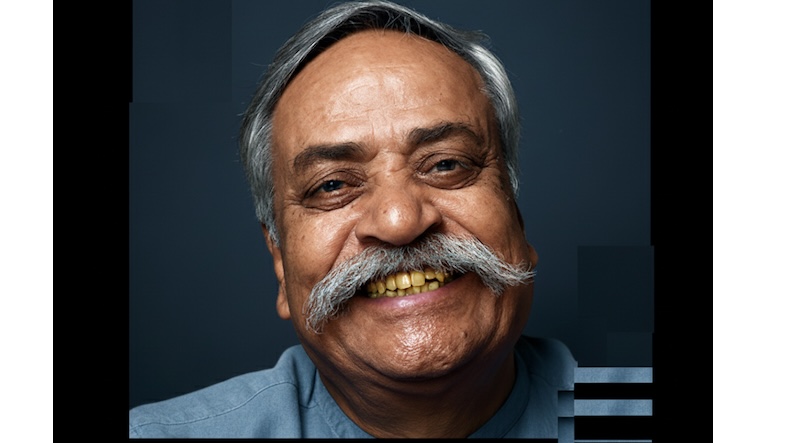
MUMBAI: The lights went out on Indian advertising this Diwali. Piyush Pandey, the wordsmith who turned bus rides and roadside tea into unforgettable campaigns, died on Friday aged 70. Just four months earlier, at the Emvies awards in Mumbai, veterans had touched his feet for blessings while young hopefuls queued for selfies. He looked frail but smiled through every encounter. Humility was his signature; genius was his secret.
Pandey never claimed special talent. His gift was simpler and rarer: he kept his eyes open. The famous Fevicol advertisement—a Jaisalmer bus groaning under passengers clinging to every inch—came from a real sighting. The magic was slapping a Fevicol poster on the back of the bus. “Keep your eyes open, keep your ears to the ground and have a heart willing to accept,” he told newcomers at Ogilvy. It wasn’t a slogan. It was scripture.

He joined Ogilvy & Mather in 1982 at 27, after failing at cricket, tea tasting and construction. When Mani Iyer, who headed the agency, introduced him to me as creative director in the late 1980s, Pandey’s deep, soft voice belied a fierce passion for the craft. Like Roda Mehta, who ran media at Ogilvy, he was generous with his time, patiently explaining the thought behind many a campaign to me. Those campaigns moved hundreds of thousands of crores worth of products off shelves over their lifespans.
His method was observation turned into emotion. The Dum Laga Ke Haisha Fevicol spot was originally made for a smaller brand called Fevitite. The Parekhs, who owned Pidilite, told him the ad was too good to waste. Reshoot it for Fevicol, they urged. He did. That single decision spawned a series of award-winning campaigns and turned Fevicol into the category itself.
His philosophy was disarmingly simple: love life. “Whether you are sipping tea from a roadside vendor or in a five-star hotel, whether you are travelling by second class or in a Mercedes-Benz,” he would say. Great ideas came from loving all of it—the chaos, the mundane, the sublime. “Be open to accepting ideas from the world. Be open to sharing ideas with the world. Learn to talk but most importantly also learn to listen.”
 Pandey despised lazy advertising. Technology for its own sake was pointless; celebrities without ideas were useless. “Many TVCs are pathetic these days when they use celebrities. They are made very lazily,” he once said. For him, the idea came first. Technology could enhance it; fame could amplify it. But without a core truth, it was just expensive noise.
He believed consumers, not suits or pony-tailed creatives, made advertising great. “It’s when he or she accepts the product and emotionally bonds with it, the product becomes a brand,” he said. His advice to brand managers was blunt: stop being salesmen. Build brands, not just products.
I lost touch with him for decades as I went about building the indiantelevision.com group and all its ancillary services. Journalism and writing as I used to practice when I was younger was relegated to the background. It was during the pandemic that I reached out to him and requested him to spare some time for an online interview. To my surprise, he remembered me and he readily agreed. It was an interesting conversation about how Ogilvy was serving clients during the pandemic and how its creative edge was being maintained. We had agreed we would speak for 30 minutes, but the conversation went on for an hour. It was peppered with Pandey-isms. But that was the last time we spoke at length to each other, though we said hello to each other at advertising industry get-togethers which I rarely attended. Sadly, for me.
The man who taught India to watch, listen and love has gone silent. But his voice echoes still—in every vernacular tagline, every slice-of-life commercial, every campaign that dares to see India as it truly is. Pandey didn’t just sell products. He gave an entire nation permission to speak in its own accent, to find poetry in the everyday, to believe that the roadside and the boardroom could meet and make magic.
The lights dimmed this Diwali, but the spark he lit—built on observation, fuelled by empathy, sustained by love—will burn for generations. That’s not advertising. That’s immortality.
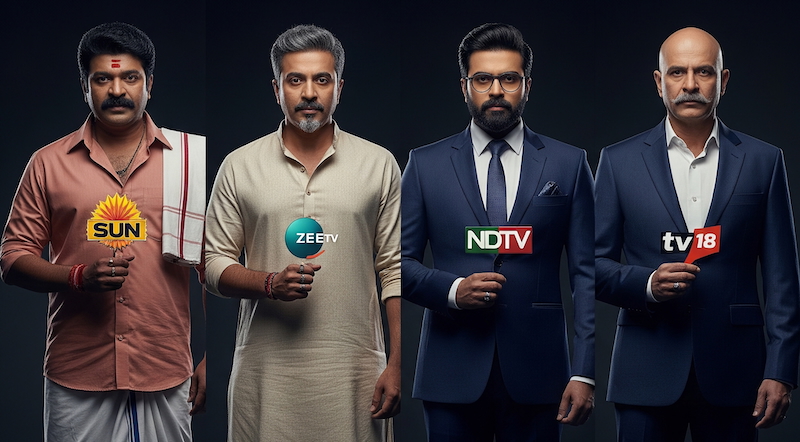
MUMBAI: Once, they blazed across the Indian media landscape with the swagger of pioneers. Entrepreneur-led behemoths like Subhash Chandra’s Zee Entertainment, Kalanithi Maran’s Sun TV, Prannoy Roy’s NDTV, and Raghav Bahl’s Network18 weren’t just market leaders — they were institutions, holding their own even as foreign giants circled hungrily.
Today, those stars are fading. Some have already fallen.
Network18 and TV18 are now firmly in the grip of Reliance Industries and Disney Star. NDTV, long a bastion of editorial independence, is under the control of the Adani Group. Its founders — Roy and Radhika — have exited stage left, their names now relics of an era that once prized journalistic idealism.
Zee, once the crown jewel of Indian broadcasting, is barely hanging on. The Chandra family — once majority owners — now clutch a meagre four-odd per cent stake. It’s a dramatic fall from grace fuelled by Subhash Chandra’s ill-advised adventures into infrastructure. To bankroll these forays, he pledged Zee shares, opening the gates to lenders who came calling. The result: a sharp dilution of promoter ownership and a credibility crisis. The failed merger with Sony’s Indian arm, Culver Max Entertainment, only added insult to injury — scuppered reportedly due to concerns about Zee’s financial hygiene. A company once viewed as squeaky clean had its reputation muddied.
Sun TV, the fourth of the old guard, is also showing cracks. Helmed with iron discipline by Kalanithi Maran, it long stood as a symbol of stability. But the facade is now under strain. A family feud has burst into public view, with brother Dayanidhi Maran accusing Kala of wresting control of Sun TV through backdoor share acquisitions. Legal notices have flown, regulatory filings issued, and the company insists all was above board. Still, some reputational damage has been done — and the gossip mills are churning.
The result is a media map being redrawn in real time. Where once these founders shaped the narrative, today they’re either sidelined, embattled, or ousted. And as corporate titans and conglomerates take over, the question is whether passion-led media can survive in an era of balance sheets, bottom lines, and boardroom power plays.
India’s media isn’t short on ambition. But nostalgia alone won’t stop the sun from setting on yesterday’s giants.

Mukesh Ambani, Larry Fink come together for CNBC-TV18 exclusive

Nielsen launches co-viewing pilot to sharpen TV measurement

Netflix celebrates a decade in India with Shah Rukh Khan-narrated tribute film

Delhivery chairman Deepak Kapoor, independent director Saugata Gupta quit board

Meta appoints Anuvrat Rao as APAC head of commerce partnerships

Brnd.me enters Europe as haircare brands power global expansion

TechnoSport taps quick commerce with launch on Slikk’s 60-minute platform

These ’90s fashion trends are making a comeback in 2017
The final 6 ‘Game of Thrones’ episodes might feel like a full season
According to Dior Couture, this taboo fashion accessory is back
The old and New Edition cast comes together to perform
Phillies’ Aaron Altherr makes mind-boggling barehanded play
Uber and Lyft are finally available in all of New York State
Disney’s live-action Aladdin finally finds its stars
Mukesh Ambani, Larry Fink come together for CNBC-TV18 exclusive
Nielsen launches co-viewing pilot to sharpen TV measurement
Netflix celebrates a decade in India with Shah Rukh Khan-narrated tribute film
Delhivery chairman Deepak Kapoor, independent director Saugata Gupta quit board
Meta appoints Anuvrat Rao as APAC head of commerce partnerships
Brnd.me enters Europe as haircare brands power global expansion
TechnoSport taps quick commerce with launch on Slikk’s 60-minute platform
-
 News Broadcasting3 days ago
Mukesh Ambani, Larry Fink come together for CNBC-TV18 exclusive
-
 iWorld6 days ago
Netflix celebrates a decade in India with Shah Rukh Khan-narrated tribute film
-
 MAM3 months ago
HoABL soars high with dazzling Nagpur sebut
-
 MAM3 days ago
Nielsen launches co-viewing pilot to sharpen TV measurement
-
 iWorld12 months ago
BSNL rings in a revival with Rs 4,969 crore revenue
-
 I&B Ministry3 months ago
India steps up fight against digital piracy
-
 iWorld3 months ago
Tips Music turns up the heat with Tamil party anthem Mayangiren
-
 News Broadcasting2 months ago
CNN-News18 dominates Bihar election coverage with record viewership

