
GECs
DTH could push HD penetration in next one year: MPA


MUMBAI: As the year comes to an end, the multi system operators (MSOs) have finally come out with their packages and the pricing module for the Star India channels, after the broadcaster decided to give its channels only on Reference Interconnect Offer (RIO) basis.
But according to Media Partners Asia (MPA) while Star has the right intent, it has to remain flexible on the incentives offered for better ground adoption. From the operator’s viewpoint, the Star scheme needs to address the following issues:
1. Despite availing of the maximum discount on the scheme, the content cost for operators remains higher than previous CPS deals, exacerbated as operators are not receiving any carriage fees.

2. The scheme does not factor in volume discounts on the basis of an absolute number of subscribers offered through a given operator network.
3. Channel pricing is based on filed RIO rates. These are not reflective of consumer preferences. For instance, Star Plus which enjoys 2x the viewership of Life OK, has a lower price than Life OK.
4. To generate higher discounts, the scheme demands carrying maximum channels with 90 per cent penetration. This will result in a rich basic pack offering which will disincentivise future upselling to an operator’s high value packages.
5. Even if operators are able to pass through content costs to subscribers, MSOs face the risk of paying more and collecting less as the current backend systems for operators are not robust and transparent enough to collect and pass on revenues for channels on an a-la carte basis.
6. The scheme does not factor in HD channels. MSO action plan and execution risk Star has been transparent on rates and discounts for its channels. Some national MSOs have accordingly started to work on their blueprint of tiering channels through a broad revenue share arrangement with local cable operators (LCOs). On the backend, according to MPA, the operators now critically need to have their technology systems in sync with consumer preferences, collected through KYC (Know Your Customer) forms. They will also need to decentralise control by extending their consumer databases to respective LCOs to enable the upgrading and downgrading of packages as per consumer choice. As backend systems get re-engineered, MSOs will need to concurrently conduct roadshows and training programmes for LCOs. MSOs will also need to undertake marketing campaigns to create awareness on a consumer’s need to make choices on revised cable packages.
MPA also feels that MSOs intend to pass their increase in net content cost to consumers by undertaking an average price hike of Rs 40-60 ($0.7-1) per month. Even if consumers accept the price increase, the risk to MSOs lies in collecting their legitimate share of incremental revenues from LCOs. In order to offset this, MSOs plan to shift to trade prepaid services, which should have positive consequences.
Long term implications for the Pay TV industry
Broadcasters: Currently, all broadcasters are looking to reduce carriage fees and bring it to parity with DTH in terms of total payout. A number of broadcast networks are taking a wait-and-see approach. Having already eliminated carriage in DAS markets, if Star manages to obtain reasonable viewership for its driver channels with a nominal growth in subscription revenues, MPA believes that others too will broadly follow Star’s approach.
According to MPA, non-carriage discounted rate schemes could become the template for future content deals. This will have direct implications on several advertisement-skewed and reach-dependent genres, such as news and music. Channels in such genres might then remain feasible by converting to free-to-air. Launching new channels will become difficult and as a result, the industry could see rebranding and a frequent change in the programming mix of existing channels.
MSOs: As carriage and placement revenues start to dry up, the priority for MSOs for the next 12 months will be to shift to establishing robust back-end systems for better subscription monetisation in phases I and II. Consequently, voluntary digitisation and reach expansion in phases III and IV could take a back seat. MPA in its report also points out that national MSOs have already invested and outsourced backend systems to renowned IT vendors, which need to now streamline the secondary point network in order to attain authenticated customer information and deliver strong customer support services.
“Critical is the increasingly important need to successfully rollout trade prepaid services and rationalising content cost by identifying active paying subscribers which will address the current cash flow crisis and determine the future feasibility of an MSOs business model.
As the industry shifts gears, we may see more consolidation of cable players which fail to invest and execute on establishing B2C processes,” says MPA.
DTH: Over the last 30 months, the DTH industry had implemented a 53 per cent increase in its base pack pricing. Just when it seemed that rate hikes on base packs had hit a ceiling, the price hikes implemented by MSOs provided the DTH industry with additional headroom to undertake further price increases. In addition, with tiering of channels on cable, the value gap in the form of realisation per channel between cable and DTH operators will narrow, feels MPA.
As per MPA, a lighter base pack for both cable and DTH will gradually result in the upselling of subscribers to high value packs, thereby boosting ARPU growth.
Moreover, Star’s entertainment and sports channels have been key drivers for HD in India.
MPA in its concluding remarks points out that acquiring Star’s HD channels on RIO makes it unfeasible for cable and thus enables DTH operators to push HD penetration aggressively for the next one year. Through attractive pricing and marketing, DTH operators could leverage HD to win some subscribers from cable.










CHENNAI: It appears there is still plenty of Sun to go around in the Indian broadcasting landscape, even if a few clouds have drifted across the financial horizon. Sun TV Network Limited, the Chennai-based behemoth that dominates airwaves across seven languages, has tuned into a steady frequency for the quarter ending 31 December 2025. While the numbers show a resilient revenue stream, the company’s latest broadcast reveals a few static-filled spots in its profit margins.
For the quarter in question, Sun TV’s total income climbed by approximately 3.31 per cent, reaching Rs 958.39 crores compared to Rs 927.66 crores in the same period last year. Revenue from operations also saw a healthy bump, rising 4.32 per cent to Rs 827.87 crores.
The real star of the show, however, was domestic subscription revenue, which surged by 8.86 per cent to Rs 472.99 crores. This growth highlights the enduring appetite for Sun’s diverse content, which spans everything from daily soaps in Tamil and Telugu to its burgeoning OTT platform, Sun NXT.
Despite the revenue growth, the picture quality of the profits was slightly blurred by rising costs. Eitda for the quarter stood at Rs 409.79 crores, a dip from the Rs 432.14 crores recorded in the corresponding 2024 quarter.
The profit after tax followed a similar downward trend, settling at Rs 316.44 crores against the previous year’s Rs 347.17 crores. Advertisers also seemed to have switched channels slightly, with advertisement revenues sliding to Rs 291.94 crores from Rs 332.17 crores.
Sun TV isn’t just playing on home turf; its sporting ambitions are becoming increasingly global. The network now owns three major cricket franchises: SunRisers Hyderabad in the IPL, SunRisers Eastern Cape in SA20, and SunRisers Leeds Limited in The Hundred (UK).
The foray into British cricket saw the company acquire a 100 per cent stake in Northern Superchargers Limited (now SunRisers Leeds) for approximately £100 million. While these franchises brought in Rs 14.61 crores this quarter, they also incurred corresponding costs of Rs 19.89 crores. Over the nine-month period, however, the cricket business is a major player, contributing Rs 487.64 crores in income.
The company’s bottom line took a minor hit from exceptional items, including a Rs 4.23 crore charge related to India’s new Labour Codes, which consolidated 29 existing labour laws. Additionally, the consolidated results reflect the amalgamation of Kal Radio Limited with Udaya FM, a move that became effective in May 2025 and required a restatement of previous figures.
To keep investors from reaching for the remote, the Board has declared an interim dividend of 50 per cent, that’s Rs 2.50 per equity share. This comes on top of earlier dividends of 100 per cent (Rs 5.00) and 75 per cent (Rs 3.75) declared in August and November 2025, respectively.
With a massive cash reserve and a dominant position in the South Indian market, Sun TV continues to shine, even if the current quarter required a bit of fine-tuning. For now, shareholders can sit back, relax, and enjoy the show.
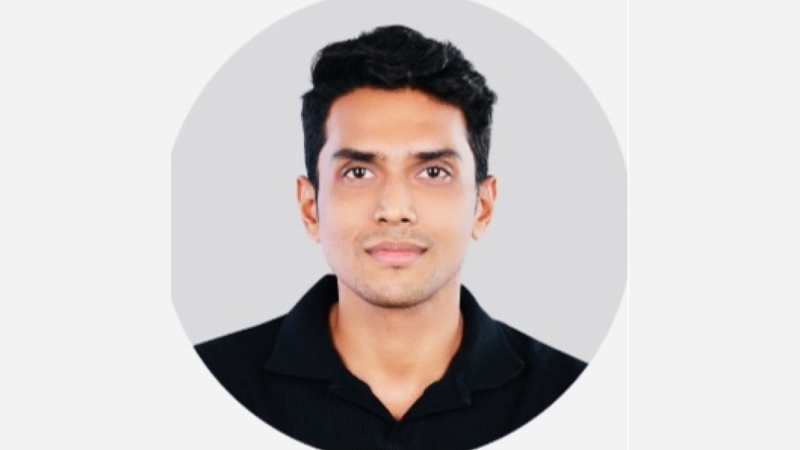
MUMBAI: Sony Pictures Networks India has hired Pradeep M to handle standards and practices for its southern market, bolstering its compliance bench as content rules tighten across platforms.
Pradeep, who has nearly 13 years in the entertainment media industry, takes on responsibility for content standards in a region that is both linguistically diverse and regulatorily sensitive. His brief spans television, OTT, sports and digital platforms.
He specialises in content review and compliance across shows, commercials, on-air promotions and international feeds, ensuring alignment with broadcast, OTT and advertising codes. He has also handled brand approvals and sponsorship integrations for heavily regulated categories—including online gaming, cryptocurrency, NFTs and lottery brands—offering guidance shaped by fast-evolving rules.
Before Sony, Pradeep worked at Jiostar as assistant manager for content regulation from November 2024 to January 2026. Earlier, he spent nearly seven years at Viacom18 Media, rising from senior executive to assistant manager in content regulation between 2018 and 2024. There he served as a key compliance touchpoint for the network.
His career began on the creative side. Between 2013 and 2018, he worked as executive producer on feature films and television shows, gaining hands-on exposure to production. He also had a stint as a non-fiction show director at Star TV Network in 2017. That mix of creative and regulatory experience gives him a dual lens—how content is made and how it must be managed.
As regulators, platforms and advertisers all tighten the screws, broadcasters are investing more in gatekeepers who can keep creativity within the lines. Sony’s latest hire shows where the industry is heading: in the streaming age, compliance is content’s quiet co-star.

MUMBAI: Colors Gujarati has unveiled two new prime-time shows as part of its push to strengthen culturally rooted storytelling for regional audiences. The channel will premiere the devotional saga Gangasati–Paanbai at 7.30 pm, followed by the romantic family drama Manmelo at 9.30 pm from February 2.
Inspired by Gujarat’s spiritual and literary heritage, Gangasati–Paanbai: Shyam Dhun No Navo Adhyay draws from the timeless bhajans and poetry of saint-poetesses Gangasati and Paanbai, weaving devotion and human values into a contemporary narrative aimed at younger viewers.
In contrast, Manmelo explores love and responsibility across social divides, tracing the lives of three middle-class sisters whose relationships with three affluent brothers reshape their futures. The show delves into ambition, emotional conflict and the realities of married life, offering a layered family drama.
A Colors Gujarati spokesperson said the new launches reflect the channel’s commitment to authentic Gujarati entertainment that blends cultural values with modern storytelling.



MIB sets OTT accessibility rules, mandates captions and audio description

Boney Kapoor acquires remake rights of Tamil political satire Thalaivar Thambi Thalaimaiyil

Netflix India names Rekha Rane director of films and series marketing

Zabeen signs off from TV9 after shaping the network’s public voice

Dhawan steps up to bat for Delhi’s grassroots sports push

Orient Beverages pops the fizz with steady Q3 gains and rising profits

Cheekatilo shines in the dark with record debut on Prime Video

These ’90s fashion trends are making a comeback in 2017

Swiggy Instamart’s GOV surges 103 per cent year on year to Rs 7,938 crore
The final 6 ‘Game of Thrones’ episodes might feel like a full season
According to Dior Couture, this taboo fashion accessory is back
The old and New Edition cast comes together to perform
Phillies’ Aaron Altherr makes mind-boggling barehanded play
Uber and Lyft are finally available in all of New York State
MIB sets OTT accessibility rules, mandates captions and audio description
Boney Kapoor acquires remake rights of Tamil political satire Thalaivar Thambi Thalaimaiyil
Netflix India names Rekha Rane director of films and series marketing
Zabeen signs off from TV9 after shaping the network’s public voice
Dhawan steps up to bat for Delhi’s grassroots sports push
Orient Beverages pops the fizz with steady Q3 gains and rising profits
Cheekatilo shines in the dark with record debut on Prime Video
-
 e-commerce4 weeks ago
Swiggy Instamart’s GOV surges 103 per cent year on year to Rs 7,938 crore
-

 News Headline2 months ago
From selfies to big bucks, India’s influencer economy explodes in 2025
-
 iWorld1 year ago
Kuku TV transforms India’s OTT space with vertical microdrama boom
-
 MAM2 years ago
Ultimate Kho Kho raises valuation, secures a series-A PE funding from UK-based BNP group
-
 News Headline2 years ago
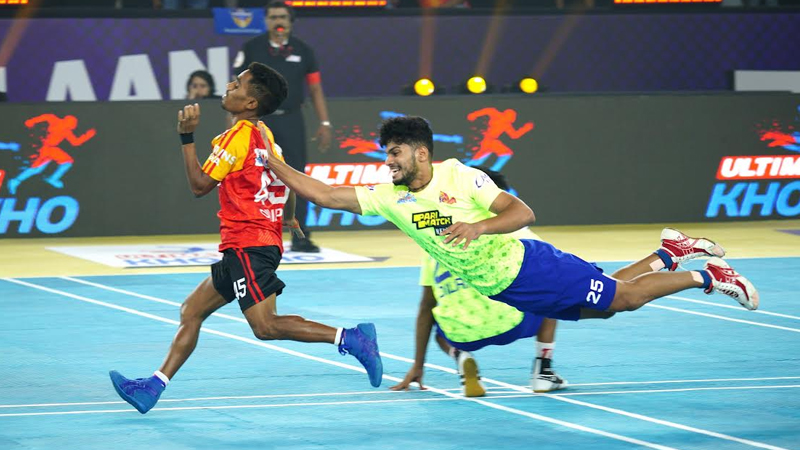
Odisha to host Ultimate Kho Kho Season 2 from December 24
-
 News Headline2 months ago
Game on again as 2025 powers up a record year and sets the stage for 2030
-
 iWorld6 months ago
Billions still offline despite mobile internet surge: GSMA
-

 News Headline2 months ago
2025: The year Indian sports saw chaos, comebacks, and breakthroughs


