
Comment
The epic journey of online-only mobile brands: A game changer

In the last 12 months or so, a number of mobile brands have adopted the online-only sales strategy and results indicate that consumers have taken a liking to this new approach.
In India, the online-only strategy was first embraced by Motorola with their then flagship product Moto G in partnership with India’s largest e-commerce marketplace, Flipkart. When Motorola first announced this approach, few market analysts would have expected the Moto G to sell out within 15 minutes of its first opening. While this event has been eclipsed by rival brands such as Xiaomi and OnePlus, in hindsight, it will forever be remembered as the beginning of a consumer trend that nobody had previously anticipated.
Now that this model has stood the test of time and has been adopted by a number of brands, reasons for its success are slowly coming to the fore.

Reaching target market in smaller cities
One very plausible reason why mobile brands such as Xiaomi and OnePlus have successfully entered the market through their online-only strategy is the reach that an online platform like Flipkart offers their product. By adopting an online-only strategy, these brands are able to reach consumers in smaller cities where the retail sector isn’t organised as well as it is in bigger cities. An online-only strategy actually allows these brands to give their products unprecedented visibility in tier 1 and tier 2 cities right from day one.
Another important factor why the online-only approach has worked is that with time, consumers have grown more comfortable with online buying. Consumer awareness of products has increased manifold compared to what it was a few years ago.
Offline buying is overrated
Consumer awareness and improved online buying experiences have also led mobile brands into believing that offline buying is overrated. These days, when consumers want to buy a new phone; they often resort to comparing the prices and specifications on offer from various brands before arriving at a decision. This process can be best executed online with a wide variety of brands for them to choose from when compared to the limited variety they might find at a retail store.
Also, the process of price and spec comparison has been made all the more simpler online thanks to leading price comparison websites like iSpyPrice.com, mysmartprice, smartprix etc and consumers don’t have to visit multiple physical retail outlets before they can finally zero in on their choice.
The ability to control prices
Perhaps the most important reason why brands like Xiaomi, OnePlus, and even new entrants like InFocus are using an online-only strategy is that this allows them to control the pricing strategy of their products.
Just like other consumer electronics goods, mobile brands have always had to go through the cumbersome distributor-retailer cycle to make their product accessible to the consumer. In the traditional offline model, mobile brands either build their own distribution network or strike a deal with one or more established distributors. And if you are a foreign brand looking to make inroads into a local market, this cycle gets further complicated.
In a market that changes every few months and has an incredible number of competitors, building one’s own distribution network is a hassle most foreign brands would ideally want to avoid. This is mainly because this is a time consuming process.
The other option for these brands is to opt for a national distributor. These national distributors will end up making a margin on the sale of each device, pushing the price of the device up. Then come the regional distributors, they also need to make a margin on the sale of each device, pushing the device’s price further up. Finally, it’s the turn of the retailers to make a margin on the sale of each device. By this time, the price of the device goes up by a fair notch.
If you think Xiaomi’s current flagship the Mi4s 16 GB version is a steal deal at Rs 19,999 consider adding another Rs 3,000-5,000, or maybe more, to that price and it doesn’t sound like a steal deal anymore, does it? That’s what the distributor-retailer cycle can do to the price of a device. Xiaomi and the likes can afford to give the consumer a favorable price because the online-only strategy allows them to do so.
This is also why you get to see different prices for the same devices on various e-commerce marketplaces. Mobile brands are able to pass the benefit of price saving to the consumer. The e-commerce brands also don’t need to save a margin from a sub-retailer. It’s a win-win situation for all parties involved.
A high success ratio
Motorola’s online-only strategy for the various versions of the Moto G and later the Moto E was such an incredible success that they ended up selling more than a million of these devices. Xiaomi followed suit and has done well with the sale of its Mi3, Mi4, and Redmi 1s devices. This strategy has paid rich dividends for Xiaomi as they are now among the top three smartphone brands in the world, third only to Apple and Samsung.
Earlier this year, the Micromax-owned Yu Televentures brand launched its first flagship product- the Yureka. They entered into a deal with e-commerce giants Amazon for the online sale of this device.
Brands such as Lenovo and Xolo have also decided to adopt this strategy. Lenovo has already announced its plans to take on the likes of Xiaomi with its online-only brand Shenqi. Brands like vivo are making a foray into the market taking advantage of this method.
Lava International’s smartphone brand Xolo has been in the news for building its own e-commerce platform which it intends to use for the purpose of reaching a wider consumer base for an online-only sub-brand it is building.
This still isn’t the right choice for everybody
While the online-only strategy may have many ups, it also offers no immediate reasons for bigger players to join the bandwagon. Huge brands like Apple Inc. aren’t likely to switch to this sales channel full-time anytime in the near future. They have no reason to do so. Apple’s sales are built upon brand value and standing in queue to buy an Apple iPhone is still very much a fan thing. Apple’s marketing makes the brand and its products desirable and that is why switching to an online-only model seems highly unlikely.
Then there is the South Korean behemoth Samsung. Samsung currently sells a large majority of its smartphones through the traditional model. It does offer select e-tailers exclusive deals where they can sell a particular Samsung mobile through their online marketplace, but by and large Samsung is a supporter of the traditional method and believes in this sales channel.
Some would argue that’s only two brands to take into consideration but the fact is these two are the current flag-bearers of the mobile industry, the top two smartphone makers in the world. And as long as they, and others like them, are convinced, the offline distributor-retailer cycle is likely to remain healthy in the foreseeable future.
The growth of e-commerce, Internet penetration and future prospects for the online-only strategy
While a number of these brands have taken to this approach, it is undeniable that there are other factors that have led to the success of this sales channel. The first is the growing Internet penetration. India’s Internet penetration has grown to 300 million+ and is on the rise all the time. Although e-commerce is said to account for only about 1 per cent of total retail sales, this 1 per cent accounted for sales worth $5.3 billion. It is a given that as this online-only strategy by smartphone brands takes shape, these figures will see a surge in sales.
The growing penetration of Internet is allowing e-commerce brands to reach a critical mass of potential customers and there is no doubt that in time, as more and more mobile brands opt for an online-only strategy, e-tailing would begin to rival traditional sales channels. Perhaps not immediately, but definitely!
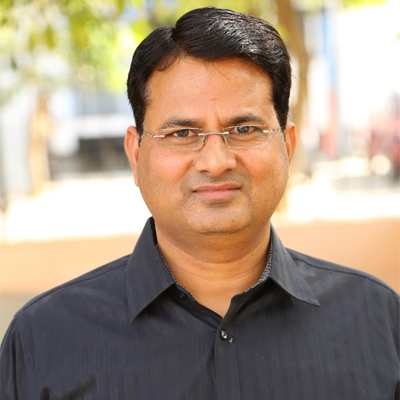
(These are purely personal views of iSpyPrice.com founder and director Suresh Sharma and Indiantelevision.com does not necessarily subscribe to these views.)










MUMBAI: 2025 will be remembered as the year India’s OTT industry stopped chasing scale for its own sake and began reckoning with how audiences actually consume content. Completion rates fell, patience wore thin and the limits of long-form excess became impossible to ignore. In this guest column, Pratap Jain, founder and CEO of ChanaJor, traces how micro-drama moved from the fringes to the centre of viewing behaviour, why short-form fiction emerged as a retention engine rather than a trend, and how platforms that respected time, habit and emotional payoff were the ones that truly grew up in 2025.
If there is one thing 2025 will be remembered for in the Indian OTT industry, it’s this: the industry finally stopped pretending.
Stopped pretending that bigger automatically meant better.
Stopped pretending that viewers had endless time.
Stopped pretending that scale without retention was success.
What began as a quiet reset in 2023 and a cautious correction in 2024 turned into a very visible shift in 2025. Business models matured. Content strategies tightened. And most importantly, platforms started aligning themselves with how Indians actually watch content, not how the industry wished they would.
At the centre of this shift was micro-drama—not as a trend, but as a behavioural inevitability.
When OTT finally understood the time problem
For years, long episodes were treated as a marker of seriousness. A 45–60 minute runtime was almost a badge of credibility. Shorter formats were pushed to the margins, labelled as “snack content” or “mobile-only.”
That belief quietly collapsed in 2025.
What platform data showed very clearly was not a drop in interest—but a drop in patience. Viewers weren’t rejecting stories. They were rejecting commitment.
Across platforms, the same patterns appeared:
* First-episode drop-offs on long-form shows kept increasing
* Completion rates continued to slide
* Viewers were sampling more titles but finishing fewer
At the same time, shows with episodes in the six to 10 minute range started showing the opposite behaviour: higher completion, higher repeat viewing, and stronger daily habit formation.
Micro-drama didn’t win because it was short. It won because it respected time.
Micro-Drama didn’t arrive loudly. It took over quietly.
There was no single moment when micro-drama “launched” in India. It crept in through dashboards and retention charts.
By mid-2025, it was clear that viewers were happy watching four, five, sometimes six short episodes in one sitting—even when they wouldn’t finish a single long episode. Romance, relationship drama, slice-of-life conflict, and grounded comedy worked especially well.
This wasn’t disposable content. It was compressed storytelling.
In shorter formats, there was no room for indulgence. Every episode had to move the story forward. Weak writing was punished faster. Strong writing was rewarded immediately.
Micro-drama raised the bar instead of lowering it.
Where ChanaJor naturally fit into this shift
ChanaJor didn’t pivot to micro-drama in 2025 because the market demanded it. In many ways, the platform was already built around the same viewing behaviour.
From the beginning, ChanaJor focused on short-to-mid-length fictional stories that felt close to everyday Indian life—hostels, rented flats, office romances, small-town relationships, young people figuring things out. Stories that didn’t need heavy context or cinematic scale to connect.
What worked in ChanaJor’s favour in 2025 was clarity:
* A clearly defined audience
* Tight episode lengths
* Storytelling that prioritised emotion and pace over spectacle
While several platforms rushed to copy global micro-drama formats, ChanaJor stayed rooted in familiar Indian settings and conflicts. That familiarity mattered. Viewers didn’t have to “enter” the world of the show—it already felt like theirs.
Why audiences started responding differently
One of the biggest misconceptions going into 2025 was that audiences wanted shorter content because their attention spans had reduced. That wasn’t entirely true.
What viewers actually wanted was meaningful payoff per minute.
On platforms like ChanaJor, episodes didn’t waste time setting the mood for ten minutes. Conflicts arrived early. Characters were recognisable within moments. Emotional hooks landed fast.
A typical consumption pattern looked like real life:
* One episode during a break
* Two more before sleeping
* A few the next day
This is how viewing habits are built—not through marketing spends, but through comfort and consistency.
Viewers came back not because every show was a blockbuster, but because they knew what kind of experience to expect.
2025 was also the year OTT faced business reality
The other big change in 2025 was on the business side. Subscriber growth slowed. Discounts stopped hiding churn. Customer acquisition costs rose.
Platforms were forced to ask harder questions:
* Are viewers finishing what they start?
* Are they returning without reminders?
* Is this content worth what we’re spending on it?
This is where micro-drama began outperforming expectations. A well-written short series could deliver sustained engagement without massive budgets. It didn’t peak for one weekend and disappear—it stayed alive through repeat viewing.
Platforms like ChanaJor benefited because they weren’t chasing inflated launch numbers. The focus was on consistency and retention, not noise.
Failures Became Visible Faster
2025 also exposed weaknesses brutally.
Several platforms assumed micro-drama was a shortcut—short episodes, quick shoots, instant traction. What they discovered was that bad writing fails faster in short formats than in long ones.
Viewers dropped off within minutes. Episodes were abandoned mid-way. Weak stories had nowhere to hide.
Micro-drama didn’t forgive laziness. It amplified it.
The platforms that survived were the ones that treated short storytelling with the same seriousness as long-form—sometimes more.
OTT Stopped Chasing Prestige and Started Chasing Habit
Perhaps the most important shift in 2025 wasn’t technical or creative—it was psychological.
OTT stopped trying to look like cinema. It stopped chasing validation through scale and awards alone. It began behaving like what it actually is in people’s lives: a daily companion.
Platforms like ChanaJor found their space here because that mindset was already baked in. The goal wasn’t to dominate a weekend launch. It was to quietly become part of someone’s everyday viewing routine.
That shift changed everything—from release strategies to how success was measured.
What 2025 Ultimately Taught the Industry
By the end of the year, three truths were impossible to ignore:
* Time is the most valuable thing a viewer gives you
* Retention matters more than reach
* Format must follow behaviour, not ego
Micro-drama didn’t take over because it was fashionable. It took over because it fit real life.
Looking Ahead
Micro-drama is not replacing long-form storytelling. It is redefining the baseline of engagement.
Longer shows will survive—but only when they earn their length. Short-form fiction will continue to evolve, becoming sharper, more emotionally confident, and better written.
Platforms like ChanaJor have shown that it’s possible to grow without shouting—by understanding the audience, respecting their time, and telling stories that feel real.
2025 wasn’t the year OTT became smaller. It was the year it became smarter.
Note: The views expressed in this article are solely the author’s and do not necessarily reflect our own.
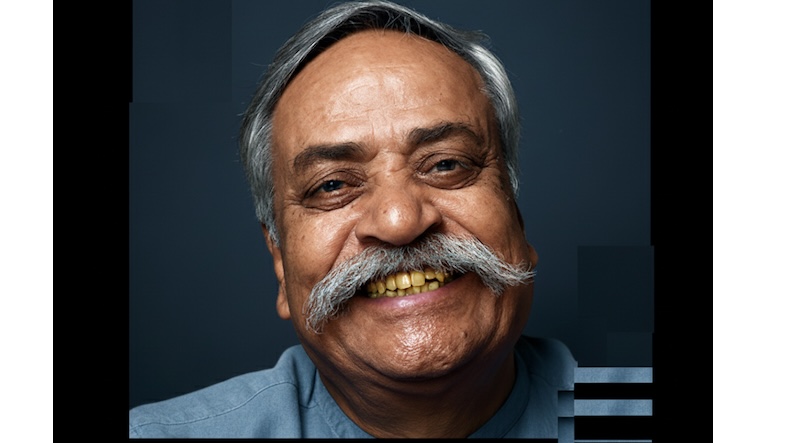
MUMBAI: The lights went out on Indian advertising this Diwali. Piyush Pandey, the wordsmith who turned bus rides and roadside tea into unforgettable campaigns, died on Friday aged 70. Just four months earlier, at the Emvies awards in Mumbai, veterans had touched his feet for blessings while young hopefuls queued for selfies. He looked frail but smiled through every encounter. Humility was his signature; genius was his secret.
Pandey never claimed special talent. His gift was simpler and rarer: he kept his eyes open. The famous Fevicol advertisement—a Jaisalmer bus groaning under passengers clinging to every inch—came from a real sighting. The magic was slapping a Fevicol poster on the back of the bus. “Keep your eyes open, keep your ears to the ground and have a heart willing to accept,” he told newcomers at Ogilvy. It wasn’t a slogan. It was scripture.

He joined Ogilvy & Mather in 1982 at 27, after failing at cricket, tea tasting and construction. When Mani Iyer, who headed the agency, introduced him to me as creative director in the late 1980s, Pandey’s deep, soft voice belied a fierce passion for the craft. Like Roda Mehta, who ran media at Ogilvy, he was generous with his time, patiently explaining the thought behind many a campaign to me. Those campaigns moved hundreds of thousands of crores worth of products off shelves over their lifespans.
His method was observation turned into emotion. The Dum Laga Ke Haisha Fevicol spot was originally made for a smaller brand called Fevitite. The Parekhs, who owned Pidilite, told him the ad was too good to waste. Reshoot it for Fevicol, they urged. He did. That single decision spawned a series of award-winning campaigns and turned Fevicol into the category itself.
His philosophy was disarmingly simple: love life. “Whether you are sipping tea from a roadside vendor or in a five-star hotel, whether you are travelling by second class or in a Mercedes-Benz,” he would say. Great ideas came from loving all of it—the chaos, the mundane, the sublime. “Be open to accepting ideas from the world. Be open to sharing ideas with the world. Learn to talk but most importantly also learn to listen.”
 Pandey despised lazy advertising. Technology for its own sake was pointless; celebrities without ideas were useless. “Many TVCs are pathetic these days when they use celebrities. They are made very lazily,” he once said. For him, the idea came first. Technology could enhance it; fame could amplify it. But without a core truth, it was just expensive noise.
He believed consumers, not suits or pony-tailed creatives, made advertising great. “It’s when he or she accepts the product and emotionally bonds with it, the product becomes a brand,” he said. His advice to brand managers was blunt: stop being salesmen. Build brands, not just products.
I lost touch with him for decades as I went about building the indiantelevision.com group and all its ancillary services. Journalism and writing as I used to practice when I was younger was relegated to the background. It was during the pandemic that I reached out to him and requested him to spare some time for an online interview. To my surprise, he remembered me and he readily agreed. It was an interesting conversation about how Ogilvy was serving clients during the pandemic and how its creative edge was being maintained. We had agreed we would speak for 30 minutes, but the conversation went on for an hour. It was peppered with Pandey-isms. But that was the last time we spoke at length to each other, though we said hello to each other at advertising industry get-togethers which I rarely attended. Sadly, for me.
The man who taught India to watch, listen and love has gone silent. But his voice echoes still—in every vernacular tagline, every slice-of-life commercial, every campaign that dares to see India as it truly is. Pandey didn’t just sell products. He gave an entire nation permission to speak in its own accent, to find poetry in the everyday, to believe that the roadside and the boardroom could meet and make magic.
The lights dimmed this Diwali, but the spark he lit—built on observation, fuelled by empathy, sustained by love—will burn for generations. That’s not advertising. That’s immortality.
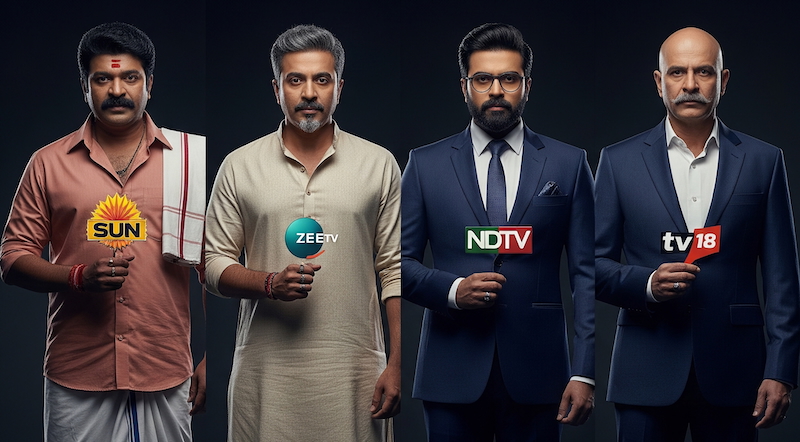
MUMBAI: Once, they blazed across the Indian media landscape with the swagger of pioneers. Entrepreneur-led behemoths like Subhash Chandra’s Zee Entertainment, Kalanithi Maran’s Sun TV, Prannoy Roy’s NDTV, and Raghav Bahl’s Network18 weren’t just market leaders — they were institutions, holding their own even as foreign giants circled hungrily.
Today, those stars are fading. Some have already fallen.
Network18 and TV18 are now firmly in the grip of Reliance Industries and Disney Star. NDTV, long a bastion of editorial independence, is under the control of the Adani Group. Its founders — Roy and Radhika — have exited stage left, their names now relics of an era that once prized journalistic idealism.
Zee, once the crown jewel of Indian broadcasting, is barely hanging on. The Chandra family — once majority owners — now clutch a meagre four-odd per cent stake. It’s a dramatic fall from grace fuelled by Subhash Chandra’s ill-advised adventures into infrastructure. To bankroll these forays, he pledged Zee shares, opening the gates to lenders who came calling. The result: a sharp dilution of promoter ownership and a credibility crisis. The failed merger with Sony’s Indian arm, Culver Max Entertainment, only added insult to injury — scuppered reportedly due to concerns about Zee’s financial hygiene. A company once viewed as squeaky clean had its reputation muddied.
Sun TV, the fourth of the old guard, is also showing cracks. Helmed with iron discipline by Kalanithi Maran, it long stood as a symbol of stability. But the facade is now under strain. A family feud has burst into public view, with brother Dayanidhi Maran accusing Kala of wresting control of Sun TV through backdoor share acquisitions. Legal notices have flown, regulatory filings issued, and the company insists all was above board. Still, some reputational damage has been done — and the gossip mills are churning.
The result is a media map being redrawn in real time. Where once these founders shaped the narrative, today they’re either sidelined, embattled, or ousted. And as corporate titans and conglomerates take over, the question is whether passion-led media can survive in an era of balance sheets, bottom lines, and boardroom power plays.
India’s media isn’t short on ambition. But nostalgia alone won’t stop the sun from setting on yesterday’s giants.


MIB sets OTT accessibility rules, mandates captions and audio description

Boney Kapoor acquires remake rights of Tamil political satire Thalaivar Thambi Thalaimaiyil

Netflix India names Rekha Rane director of films and series marketing

Zabeen signs off from TV9 after shaping the network’s public voice

Dhawan steps up to bat for Delhi’s grassroots sports push

Orient Beverages pops the fizz with steady Q3 gains and rising profits

Cheekatilo shines in the dark with record debut on Prime Video

These ’90s fashion trends are making a comeback in 2017
The final 6 ‘Game of Thrones’ episodes might feel like a full season
According to Dior Couture, this taboo fashion accessory is back
The old and New Edition cast comes together to perform
Phillies’ Aaron Altherr makes mind-boggling barehanded play
Uber and Lyft are finally available in all of New York State
Disney’s live-action Aladdin finally finds its stars
MIB sets OTT accessibility rules, mandates captions and audio description
Boney Kapoor acquires remake rights of Tamil political satire Thalaivar Thambi Thalaimaiyil
Netflix India names Rekha Rane director of films and series marketing
Zabeen signs off from TV9 after shaping the network’s public voice
Dhawan steps up to bat for Delhi’s grassroots sports push
Orient Beverages pops the fizz with steady Q3 gains and rising profits
Cheekatilo shines in the dark with record debut on Prime Video
-

 News Broadcasting1 week ago
Mukesh Ambani, Larry Fink come together for CNBC-TV18 exclusive
-

 News Headline1 month ago
From selfies to big bucks, India’s influencer economy explodes in 2025
-
 iWorld5 months ago
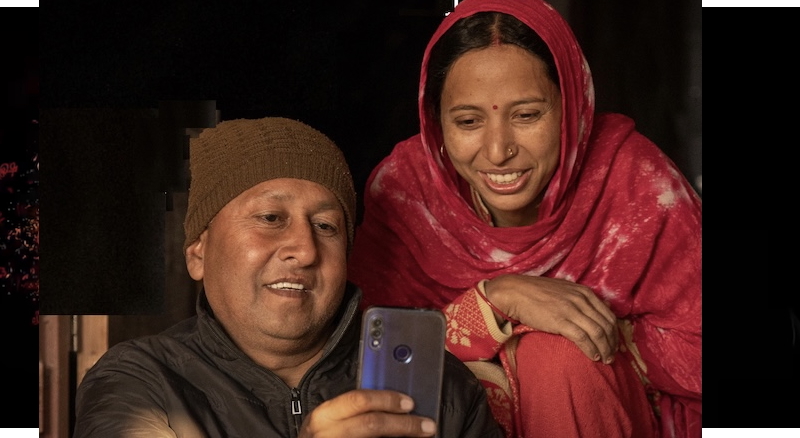
Billions still offline despite mobile internet surge: GSMA
-

 Applications2 months ago
28 per cent of divorced daters in India are open to remarriage: Rebounce
-

 iWorld2 weeks ago
Netflix celebrates a decade in India with Shah Rukh Khan-narrated tribute film
-

 Hollywood1 week ago
The man who dubbed Harry Potter for the world is stunned by Mumbai traffic
-

 News Headline2 months ago
Game on again as 2025 powers up a record year and sets the stage for 2030
-
 I&B Ministry3 months ago
India steps up fight against digital piracy
