
Broadband
India lags in fixed broadband, but ahead in mobile: ESCAP

NEW DELHI: India had just over 100 million fixed broadband subscriptions in 2015 as compared to Iran and Japan which had more than 250 million.
There were only 1.3 fixed broadband subscribers per 100 inhabitants in the country as against South Korea which had 40.2 per 100 inhabitants and China and Hong Kong which had 31.9. India stood at the 40th place, even below its immediate neighbours Bangladesh and Sri Lanka.
However, a map of fixed broadband subscriptions per 100 inhabitants in Asia and the Pacific in 2015 shows India as the most developed country in this regard.
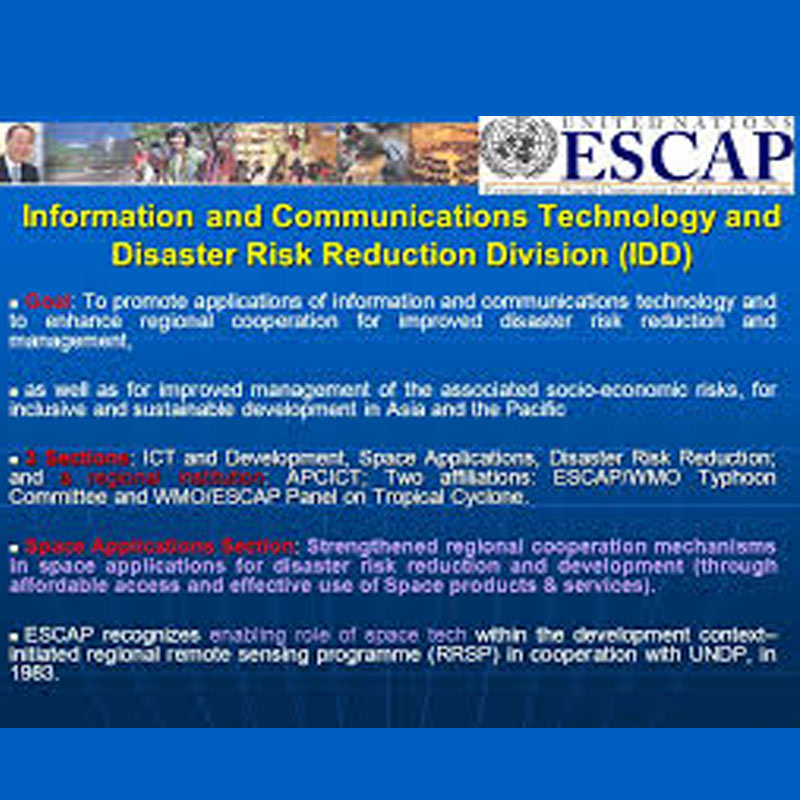
These facts were revealed by the State of ICT in Asia and The Pacific 2016 Report by the Information and Communications Technology and Disaster Risk Reduction Division of the United Nations Economic and Social Commission for Asia and the Pacific (ESCAP).
South and South-West Asia, Sri Lanka, Turkey, India and the Islamic Republic of Iran progressed well in both online services and telecommunications infrastructure development between 2008 and 2014. Other countries such as Bangladesh and Maldives performed well predominantly in the development of the telecommunications infrastructure.
India has risen from just under 4 to around 5.5 out of seven in online services index among South Asian countries between 2008 and 2014.
India was also among the top active mobile broadband subscriptions per 100 inhabitants in the Asia-Pacific region in 2015 with 120 million subscribers in 2015, the study showed.
Disaster Risk Reduction Division.
In 2015, China announced the One Belt One Road (OBOR) initiative, based on six economic corridors corresponding to the Silk Road. These economic corridors (China-Mongolia-Russia Corridor; New Eurasia Land Bridge; China-Central Asia-West Asia; China-Pakistan; Bangladesh-China-India-Myanmar; and China-Indochina Economic Corridor) aim to promote connectivity of these economies with China through infrastructure, trade and investment based on the original Silk Road’s pathway.
The Global NGO Online Technology Report found that there are diverse regional differences in how NGOs worldwide utilize online technology. Within Asia Pacific, the report notes that the NGOs’ use of online technology varies greatly from subregion to subregion. For instance, India has hundreds of thousands of NGOs likely to come online in the next five years, while internet access throughout South-East Asia is growing as smartphone sales soar across the country. In Australia and Oceania, Europe and North America, NGOs’ use of web and e-mail communications, online fundraising tools, and social media is high, but NGOs in Asia, Africa and Latin America lag behind.
Lack of a robust internet infrastructure is suggested to be a potential cause for this NGO divide. The report remarks that social, economic and political factors have either hastened or hindered the development of the infrastructure, and thereby also the uptake by the NGO sector.
In a discussion on net neutrality, the paper says “Free Basics, formerly known as Internet.org, has sparked discussions in India and is one such case of net neutrality. This initiative pursues telecom companies in emerging markets, such as India — the world’s second largest market — to provide their customers free access to Facebook and entailing websites willing to play by its rule.”
TechCrunch notes that these Facebook rules make it difficult to build competing social network or messaging applications. In February 2016, the Telecom Regulatory Authority of India (Trai) announced the prohibition of internet services such as Free Basics, claiming that they offer discriminatory tariffs for data services on the basis of content. While this may be a victory for neutrality supporters, others might be disappointed with the outcome as the goal of the Facebook initiative is to connect people who may otherwise not have internet access. The ruling will be in place for two years but may be open for review — it is still an open question whether the project will succeed in the long term.”
The competition for spectrum has significant impact on the cost and affordability associated with broadband networks and access. As observed in the cases of the recent fourth generation (4G) spectrum auctions in India and Thailand, the quests for bandwidth and frequency would intensify along with the demand for mobile access and services, and subsequent need for more extensive broadband infrastructure.
The report says Asia-Pacific countries are expanding their investments in the ICT infrastructure. For instance, in July 2015, the Chinese State Council announced the plan to develop underground telecommunication networks connecting 10 cities, which will be funded by the USD 160 billion bond programme designed for infrastructure projects.
A mobile operator in India announced its plan to invest USD 9 billion for their mobile broadband network expansion in the next three years.
Maldives will soon have USD 25 million nationwide fibre optic submarine networks of 1,200 kilometres to provide high-bandwidth services throughout the island nation. A mobile operator in Brunei announced plan for a nationwide Wi-Fi network rollout through more than 60 hotspots.
The report found that connectivity still constrains not only ICT development but also various socioeconomic development opportunities. For instance, an UNCTAD report found that despite the unparalleled promise of the digital economy, the main barrier to B2C transactions in Asia and the Pacific appear to be the low internet penetration, the relatively poor postal reliability, and the low number of secure servers, which are essential for online shopping sites.
China has demonstrated an exponential increase in fixed and mobile broadband, while slowest growths have been detected among LDCs, LLDCs and SIDs. The persistent challenge is that one-third of ESCAP member-countries have made only negligible progress over the last 15 years. In these countries, broadband access is still largely unavailable and unaffordable, while the gap as compared to the fast-growing economies is widening. Some sub-regions, such as Central Asia, seem to have made more holistic progress. The report also conducted descriptive statistical analysis using standard deviation on fixed broadband subscriptions per 100 inhabitants so as to statistically understand the digital divide.
The results showed that Europe is the only region that has demonstrated a reduction in the broadband digital divide, while in Asia and the Pacific, it
is in fact widening.
Despite the increasing spotlight on newer technologies such as the IoT that aims to connect millions of devices and machines worldwide, the region still suffers from the lack of ICT connectivity, and mobile devices are mainly used for communication and entertainment.
The report found that some countries have focused on broadband access expansion over online content and service development, but, in the long run, both infrastructure and content should be developed in tandem. The telecommunications investment seems to co-relate with fixed broadband subscriptions more strongly than with mobile broadband, indicating the investment-intensive nature of the fixed broadband infrastructure, which is a prerequisite for e-commerce.
The report also found that weak regulatory framework might be associated with slow broadband growth.
Regional broadband initiatives, such as the Asia-Pacific Information Superhighway, have become an essential and strategic development intervention that will shape the future of the region, the report concludes.












PUNE: Airtel has appointed Rabi Shankar Mishra as chief executive officer, based in Pune, marking a sharp leadership shift as the telco sharpens its focus on growth, execution and market momentum.
Mishra moves into the role after leading Airtel’s Guwahati operations, where he built a reputation for tight execution and cross-functional leadership. In Pune, he will drive business strategy, operational excellence and expansion, drawing on deep expertise across sales, scale and complex, multi-market operations.
Before joining Airtel, Mishra held senior leadership roles across global consumer giants. He served as sales director at the Hershey company, vice president at Diageo, and held multiple associate vice president and associate director roles at Mondelēz International and Cadbury India Ltd, overseeing large, high-value businesses and teams across regions.
His earlier career at Pepsico India and Cavinkare laid a strong foundation in sales, customer development and route-to-market strategy across fast-moving consumer businesses.
With a rare blend of FMCG rigour and telecom scale, Mishra arrives in Pune to push Airtel harder, faster and deeper into its next phase of growth.

MUMBAI: Global broadband subscribers surged past 1.52 billion in the first quarter of 2025, marking a 1.21 per cent quarterly rise as South and East Asia drove expansion, according to Point Topic data. Yet the picture remains patchy, with 22 countries—up from 14 in the previous quarter—seeing subscriber numbers fall as consumers shift to mobile broadband or grapple with economic headwinds and market saturation.
India topped the largest 20 fixed broadband markets with a blistering 4.7 per cent quarterly growth rate, whilst Britain stood out as an outlier, suffering a 0.3 per cent decline as fibre rollout failed to offset broader connection losses.
Fibre-to-the-home and building connections now command 72.34 per cent of global fixed broadband subscriptions, cementing the technology’s dominance. Other fixed technologies saw their market shares shrink, bar satellite and fixed wireless access, which bucked the trend with spectacular annual growth of 47.4 per cent and 29.9 per cent respectively.
The satellite boom was largely driven by Starlink breaching the 5 million customer mark, though growth has slowed due to capacity constraints and pricing pressures. Competition is set to intensify as Amazon’s Project Kuiper prepares for launch by year-end, with Britain expected among the first markets to go live following Ofcom approvals. Residential plans currently start at around £75 monthly.
Fixed wireless access is reshaping rural connectivity, particularly in America and India, with aggressive investments from Reliance, Bharti, T-Mobile, Verizon and AT&T driving adoption.
Industry consolidation is accelerating, with potential mega-deals including Charter’s merger with Cox in America and a possible carve-up of France’s SFR among Orange, Bouygues and Iliad. Meanwhile, sub-Saharan Africa represents untapped potential, attracting significant infrastructure investment targeting broadband expansion.

MUMBAI: Act Fibernet has struck a streaming sweet spot. The wired internet major has teamed up with Amazon Prime to offer its users a fresh set of broadband plans bundled with Prime Lite — a compact yet power-packed version of Amazon’s popular subscription service.
Designed for digital-first consumers who want speed and spectacle in equal measure, the new ACT plans include high-speed fibre connectivity along with Prime Lite benefits: HD access to Prime Video’s catalogue of originals, films, and TV shows on one device, unlimited Same-Day/Next-Day deliveries, early bird access to marquee sales like Prime Day, and exclusive shopping deals.
Act’s subscribers, both new and existing, can access the bundle by signing up for six-month (or longer) plans. Once onboard, Prime Lite perks remain active for as long as the eligible Act subscription is live.
Act VP, head of brands, content and partnerships, Naveen Nahar, said, “At Act Fibernet, our brand promise is simple — Feel the Advantage. It’s about going beyond the fast internet to deliver real, everyday value to our customers. With the launch of Amazon Prime Lite on our platform, we’re giving our users the best of entertainment, shopping, and convenience — all in one seamless experience. Whether its world class shows, free express deliveries, or early access to deals, this partnership ensures our customers don’t just stay connected, they stay ahead.”
“At Prime Video, we remain committed to offering easy and convenient access to our much-loved Originals, movies, series, and more to customers across India,” said Prime Video India director & head, SVOD Business, Shilangi Mukherji said, “This strategic collaboration with Act Fibernet not only simplifies access to Prime Video’s extensive content selection but also delivers other shopping & shipping benefits of Prime Lite, like unlimited free ‘Same-day/Next-Day’ delivery across millions of products, early access to exclusive deals, and much more.”
With this move, Act is no longer just a broadband provider — it’s a bundled convenience powerhouse. For subscribers, it’s all the streaming, scrolling, and shopping — at the speed of light.
Below is a list of cities and their corresponding starting rates for Prime Lite with ACT Plans:


Mukesh Ambani, Larry Fink come together for CNBC-TV18 exclusive

Nielsen launches co-viewing pilot to sharpen TV measurement

Netflix celebrates a decade in India with Shah Rukh Khan-narrated tribute film

Delhivery chairman Deepak Kapoor, independent director Saugata Gupta quit board

Meta appoints Anuvrat Rao as APAC head of commerce partnerships

Brnd.me enters Europe as haircare brands power global expansion

TechnoSport taps quick commerce with launch on Slikk’s 60-minute platform

These ’90s fashion trends are making a comeback in 2017
The final 6 ‘Game of Thrones’ episodes might feel like a full season
According to Dior Couture, this taboo fashion accessory is back
The old and New Edition cast comes together to perform
Phillies’ Aaron Altherr makes mind-boggling barehanded play
Uber and Lyft are finally available in all of New York State
Disney’s live-action Aladdin finally finds its stars
Mukesh Ambani, Larry Fink come together for CNBC-TV18 exclusive
Nielsen launches co-viewing pilot to sharpen TV measurement
Netflix celebrates a decade in India with Shah Rukh Khan-narrated tribute film
Delhivery chairman Deepak Kapoor, independent director Saugata Gupta quit board
Meta appoints Anuvrat Rao as APAC head of commerce partnerships
Brnd.me enters Europe as haircare brands power global expansion
TechnoSport taps quick commerce with launch on Slikk’s 60-minute platform
-
 News Broadcasting3 days ago
Mukesh Ambani, Larry Fink come together for CNBC-TV18 exclusive
-
 iWorld6 days ago
Netflix celebrates a decade in India with Shah Rukh Khan-narrated tribute film
-
 iWorld12 months ago
BSNL rings in a revival with Rs 4,969 crore revenue
-
 I&B Ministry3 months ago
India steps up fight against digital piracy
-
 iWorld3 months ago
Tips Music turns up the heat with Tamil party anthem Mayangiren
-
 MAM3 months ago
HoABL soars high with dazzling Nagpur sebut
-
 MAM3 days ago
Nielsen launches co-viewing pilot to sharpen TV measurement
-

 News Broadcasting2 months ago
CNN-News18 dominates Bihar election coverage with record viewership

