
News Headline
2016: The Year of Disruption: Growth, revenues, M&As, new techs, flip-flops in times of demonetisation

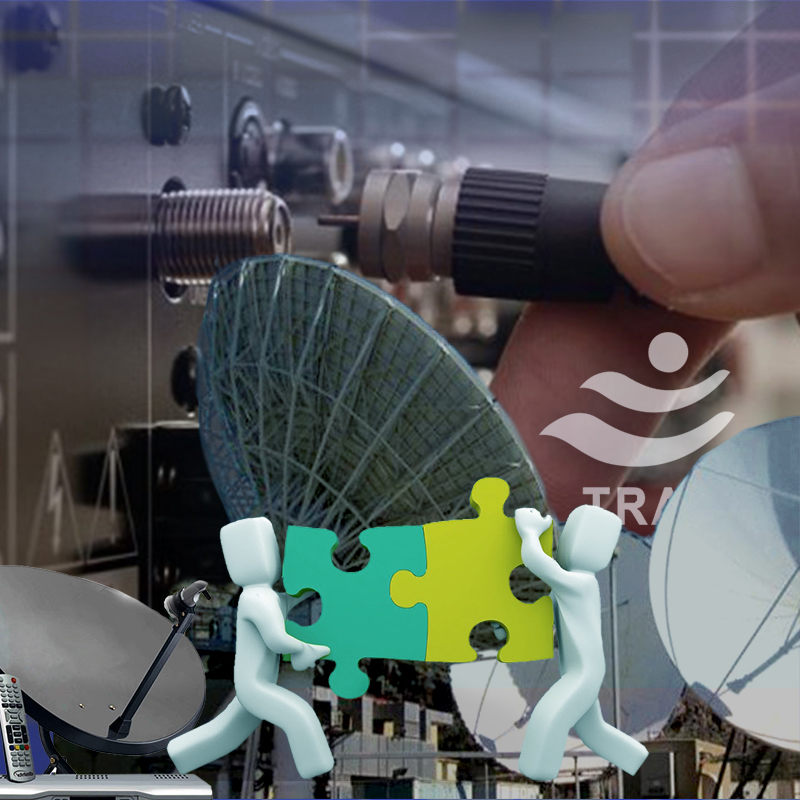
Year 2016 was a rare instance when the Indian government and a global company’s projections for the Indian media and entertainment industry seemed to be matching for a large part of the year. Almost. Considering the differences in parameters that the government adopts for economic outlook calculations, convergence on data (give and take a few billions here and there) was startling — and pleasant too.
PwC’s mid-year Global Entertainment & Media Outlook 2016-20 said India’s entertainment and media sector was expected to grow steadily over the next four years and exceed US$40,000million (or US$ 40 billion) by 2020.
Ditto for the government’s predictions, which were looking as pretty, but then came demonetisation and the figures have since been revised.
The website of India Brand Equity Foundation (IBEF), a think-tank established by India’s Ministry of Commerce, states that the media & entertainment sector is expected to grow at a CAGR of 14.3 per cent to touch Rs 2.26 trillion (US$ 33.7 billion) by 2020; revenues from advertising are expected to grow at 15.9 per cent to Rs 99,400 crore (US$ 14.82 billion).
Even though these numbers may seem fabulous for many in snail like growth economies, the fact is that the government seems to have moderated its outlook as the website was updated in December 2016.

These projections, coupled with some bold regulatory and policy initiatives in 2016, stll indicate a fairly good pace of growth this year and continuing momentum over the next few years.
The goals seemed achievable and an easy cruise till Prime Minister Modi’s currency demonetisation bomb exploded on 8 November and resulted in the shifting of various goalposts.
Despite lofty ideals of fighting the menace of black economy, of enabling a digital cashless society, and enriching the poor via the demonetisation move, uncertainties over policy decisions, are gradually sinking in and slowing down various segments of the economy, including the media and entertainment sector.
 As India grapples with challenging times, we at indiantelevision.com bring to you the first episode in our year-ender 2016 series, which will look at various segments of the M&E industry; especially the broadcast and cable segments. Presenting to you the 2016 Big Picture.
Mergers & Acquisitions and Consolidations
The year saw some big mergers and acquisitions (M&A) moves, subject to regulatory approvals, of course, but also signalling that the highly fragmented Indian broadcast and cable sector was witnessing some consolidation, which has been talked about for over five years now.
For example, an oft repeated question of overseas media observers tracking Indian media sector was: even if India is a huge market, how long can it sustain six private sector DTH services and pubcaster Doordarshan’s free DTH service FreeDish in terms of burgeoning subscriber numbers and also rising expenditure on servicing them?
The question got answered when Zee/Essel Group’s Dish TV and Videocon D2h announced that the latter would merge with the former under a complex share swap with the merged entity — to be called Dish TV Videocon Ltd — becoming a cable and satellite behemoth serving 27.6 million net subscribers (based on September 30, 2016 numbers) out of a total of 175 million TV households in India.
In the combined satellite platform, to be led by India’s DTH pioneer Jawahar Goel, Dish TV would be holding a 36 per cent stake with Videocon D2h promoters owning a 28 per cent equity stake. Later, the two announced that the former has agreed to buy an additional 9.90 per cent equity in the company in two tranches from the promoters of Videocon d2h going forward within the next two years.
Not content with grabbing access to additional DTH homes, the Subhash Chandra-led Essel group went on an on an acquisition spree. In two separate developments in November, through two different corporate entities — Zee Entertainment and Zee Media — Zee took full control of the general entertainment TV business and a 49 per cent stake in the radio business of the Anil Ambani-led Reliance ADA group, respectively. Both these acquisitions have not only given the Zee group access to a few Indian language GECs and 59 FM radio channels, but also scope for monetising additional eyeballs, ears and reach.
Zee Entertainment shed some weight and agreed to sell its sports TV channels, marketed under the Ten Sports brand name, to Sony Pictures Network leaving the 21 st Century Fox owned Star (which was earlier this year valued at $14 billion by financial services firm Edelweiss Capital) and Sony-ESPN combine to slug it out in the sports broadcasting ring. Of course, Nimbus Sports continues to hover around as a comparatively small player.
Cable TV’s tough road; the struggle continues
It was a year of deja-vu for cable TV firms and broadcasters as the effort to eke out more subscription revenues from the ground met with limited and marginal success. That meant those in distribution continued to struggle to get their acts together even as those companies which were listed had their stocks being hammered as cable TV digitisation in Phase III areas stalled because of a legal stalemate and a court decision which took a long time a-coming.
With limited leeway in bringing about change in things cable TV, the MSOs upped their investments in the higher ARPU delivering broadband and focused on signing on subscribers for the same. With much succees.
In times like this, companies such as DEN Networks brought back veteran cable TV executive SN Sharma as CEO and even raised $21 million through a private placement with Goldman Sachs.
On the other hand, leading MSO Hathway Cable worked on a management restructuring with old hand CEO Jagdish Kumar parting ways and Rajan Gupta being appointed in his place.
Speculations in media circles regarding Zee’s sister MSO company Siti Networks acquiring fully or partially DEN continued for the first half of the year, but they were officially scotched. However, the national MSO swallowed a few smaller cable TV operations across India.
There could have also been a few other small M&As in the cable sector with big regional MSOs gobbling up smaller LCOs, but they failed to make much of a blip.
Hopes were high that the digital rollout would commence with great gusto followed the court dismissing petitions favoring the Phase III DAS stay and the sunset date of 31 December 2016 approaching for Phase IV. But, much to media observers and industry’s consternation the ministry of information and broadcasting (MIB) announced that the Phase III sunset was being pushed forward to 31 January 2017 and Phase IV to 31 March 2017 two days before Christmas.
Hopefully, the government will not once again backpedal and go for another postponment when these dates near. India’s cable TV sector needs some desperate measures and they need to be taken.
Demonetisation
On 8 November 2016, Prime Minister Narendra Modi announced the biggest-ever demonetisation exercise India has ever seen by abruptly withdrawing Rs 500 and Rs1,000 notes from public use in a bid to clamp down on black money, fake currency menace, terror funding and corruption. Clap, clap. Only the brave dare to tread the path even angels fear and for that PM Modi should be applauded.
 But the policy flip-flops that has been following that announcement, coupled with inadequacies in implementing a good-intentioned scheme and large-scale insensitivity of the ruling class to inconveniences caused to the general public, has started claiming collateral damage — including that on the economy, which seems to be slowing down sending out cascading effects on various other industries.
The media industry was no exception. With cash hard to come by courtesy the shortage of currency notes, consumers went easy, spending only on essential items. Additionally, cash has been the lifeblood of the entire product distribution chain right from wholesalers to retailiers for most product manufacturers.
Advertisers and brands – fearing that with cash drying up and consumers wary of spulrging – believed there was not much purpose in promoting on television or other media. Hence, they immediately tied the knot on their ad spend budgets. Net result: almost everyone in the media ecosystem was yelping in pain right from broadcasters to TV producers.
From initial estimates made by media stakeholders that demonetisation of high currency notes would lead to a loss of Rs. 8,000 million, including advertising segment, the number has soared. Recent ad industry estimates fear the loss could be as high Rs. 25,000 million — unless the government gets it act together like Usain Bolt running in the last Olympics.
The changes in buying and consumption patterns of people have resulted in lesser revenues, compelling companies to slash their promotional and marketing budgets.
The news channels seem to have taken a big hit. Ditto with the GECs. Small regional TV channels, depending a lot on local advertising, too are getting hit as those advertisers are drying up.
TRAI’s Push for Ambiguity-free Regulatory Regime
Widely criticised for over regulating the telecoms and broadcast & cable sectors, Telecom Regulatory Authority of India (TRAI) stuck to its avowed and stated aim of attempting to create a regulatory regime that would reduce ambiguities and create a level playing field for all stakeholders.
From trying to deal with issues in a piecemeal fashion to smoothening the road ahead for the players via its various guidelines and recommendations, TRAI, under chairman RS Sharma, has not shied away from confronting any bull (like Facebook) — some players, however, say it acted like a bull in a China shop.
Whether it was the issue of Net Neutrality or zero tariffs offered by telcos for certain services or tariffs, interconnect and quality of services in the broadcast carriage sector or pushing MSOs on digital rollout or suggesting free limited data to rural India to give a fillip to digital economy or cracking the whip on mobile phone call drops, or on interoperability of DTH and cable TV, TRAI has quite ably been walking the tight rope between regulations and industry and political lobbying.
A Government In Search of Investor-Friendly Policies
When the ministry of commerce mid-year announced a slew of steps aimed at liberalising foreign investments in broadcast carriage businesses, amongst other business segments, it was hoped FDI would flow in quickly. But that did not happen as envisaged.
The MIB did manage to shave to an extent the time period taken to obtain a licence for uplink or downlink for TV channels and teleports, but failed on many counts to be proactive on developing issues (like controversial appointments in several MIB-controlled media institutions and attempted content regulation by non-authorised organisations, for example) and its reactionary approach complicated matters further.
But now it’s incumbent on the MIB to push through some big ongoing reforms like rollout of digital TV services in India. With the judiciary having cleared the cobwebs around digitisation by dismissing cases on implementation processes and TRAI aiming to remove remaining potholes, it’s to be seen whether MIB can withstand pressures arising out of demonetisation and from political allies going forward in 2017.
Government Attempts On Content Regulation, Censorship & Flip-flops
In a year when media, in general, went hyper on nationalism — Arnab Goswami, notwithstanding — and floated a narrative that it was questionable to question government directives and actions, developments highlighted that the MIB and its allied organisations could oscillate between being a facilitator (after all PM Modi and his Finance Minister were working towards the ease of doing business) and playing Big Brother.
From the film certification board (helmed by a self-confessed Modi fan) trying to censor what Indians should see or shouldn’t in films ( for instance, clipping of kissing scenes between James Bond and his girlfriends in the last 007 flick) to suggestions that even TV content should obtain certification to paid news to cracking the whip on a news channel for allegedly flouting content norms related to national security, it has been an eventful year when the need for stricter self-regulation by TV industry couldn’t be more visible.
That the MIB had to keep aside a one-day blackout order handed to NDTV India for allegedly airing security details relating to terrorism activities and anti-terror ops is a story in itself. But the message that the government could attempt a back-door entry intocontent regulation was driven home effectively.
The year also saw the Indo-Pak faceoff leading to a ban on Indian DTH dishes and on content in Pakistan. India too retaliated but with a hesitant ban on Pakistani artistes working in India.
BARC India Measures Up To Transparency, Credibility
The two-year old new age TV audience measurement regime of India, complete with water-marked channels, hack-proof gadgets and alert number-crunchers keeping tabs on unusual spikes and blips in viewing habits, has not only managed to open up new monetisation avenues for its subscribers, but also ruffle some feathers in the process.
The rural India audience data being now supplied by BARC for a year continued to throw up surprises in ratings and it also highlight India’s viewing patterns.
However, towards the end of the year, BARC’s search for truth, transparency and data credibility created a few headlines, but in a still highly-fragmented and complicated market like India, it, probably, was expected.
Mushrooming OTT Players, Arrival of 4G and Disruptive Tactics
Interestingly in a country where bandwidth is still patchy, data cost high and ambiguous norms relating to online content make things interesting, OTT players seem to be mushrooming all over hoping to get a slice of the El Dorado someday, if not today.
 With Amazon Prime too launching in India in December, along with many other parts on Planet Earth, India continued to be a playground where global and home-grown players are rubbing shoulders attempting to differentiate themselves and carve out a subscriber base and some revenue.
The list seems interesting. Indian players (some of them extensions of established broadcasting companies) like Hotstar, Voot, dittoTV, Savvn, Box TV, Alt, Eros Now, etc are all there in the Indian ballroom tangoing with the likes of Netflix, Amazon Prime, Hooq, YouTube and Viu.
Is there money to be made? Certainly, yes. Are the ARPUs worth speaking about now? Oh, shut up as these are early days. Is the consumer biting? Yes, but mostly urban-centric. What are the differentiators in services? Let me think. What about (impending) regulations? We’ll cross the bridge when it comes, but hush; don’t give ideas to the regulator. What’s so interesting about India despite various challenges? Oh boy, don’t be dumb, it’s a huge market and the pace of penetration of mobile devices is phenomenal. Final outcome? Hmmmmmmmm!
Many of these hems and haws, probably, saw a ray of light when 4G services rolled out this year. It meant less buffering and a more enjoyable consumer experience (read more subscription money). But true to a style, honed to the level of being a talent, Reliance came with its Jio 4G service, announced free unlimited data (subsequently toned down for fair usage by all consumers) and a host of other freebies that wiped out billions of dollars in market capitalisation of existing telcos, all of whom have fat budgets, indifferent services. Each one of them scurried to roll out their own 4G services and freebies.
If a marketing guru said Reliance managed to disrupt the market good and proper, it wouldn’t be an observation much off the mark.
But then 2016 has been a year of disruptions and disruptive tactics all around. But we at indiantelevision.com wish you Christmas cheer and a disruption-free Happy 2017!






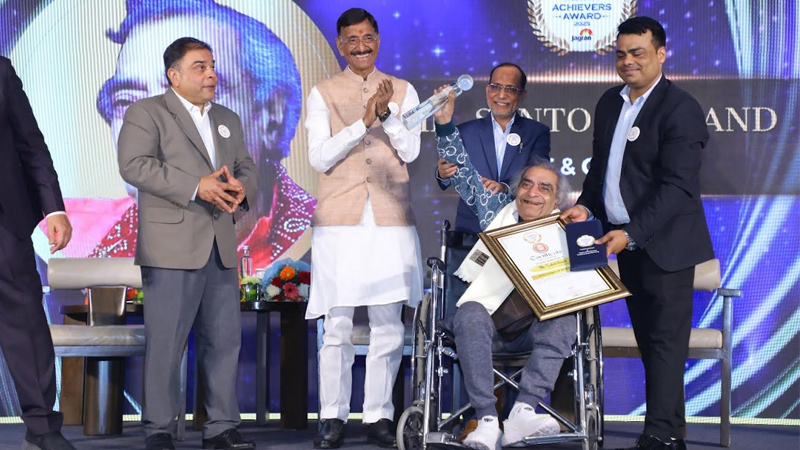
NEW DELHI: Hamdard Laboratories gathered a cross-section of India’s achievers in New Delhi on Friday, handing out the Hakeem Abdul Hameed Excellence Awards to figures who have left their mark across healthcare, education, sport, public service and the arts.
The ceremony, attended by minister of state for defence Sanjay Seth and senior officials from the ministry of Ayush, celebrated individuals whose work blends professional success with a sense of public purpose. It was as much a roll call of achievement as it was a reminder that influence is not measured only in profits or podiums, but in people reached and lives improved.
Among the headline awardees was Alakh Pandey, founder and chief executive of PhysicsWallah, recognised for turning affordable digital learning into a mass movement. On the sporting front, Arjuna Awardee and kabaddi player Sakshi Puniya was honoured for her contribution to the game and for pushing women’s participation onto bigger stages.
The cultural spotlight fell on veteran lyricist and poet Santosh Anand, whose songs have echoed across generations of Hindi cinema. At 97, Anand accepted the honour with characteristic humility, reflecting on a life shaped by perseverance and hope.
Healthcare honours spanned both modern and traditional systems. Manoj N. Nesari was recognised for strengthening Ayurveda’s place in national and global health frameworks. Padma shri Mohammed Abdul Waheed was honoured for his research-backed work in Unani medicine, while padma shri Mohsin Wali received recognition for his long-standing contribution to patient-centred care.
Education and social development also featured prominently. Padma shri Zahir Ishaq Kazi was honoured for decades of work in education, while former Meghalaya superintendent of Police T. C. Chacko was recognised for public service. Goonj founder Anshu Gupta received an award for his dignity-centred rural development initiatives, and the Hunar Shakti Foundation was honoured for empowering women and young girls through skill development.
The Lifetime Achievement Award went to former IAS officer Shailaja Chandra for her long career in public healthcare and governance, particularly in the traditional systems under Ayush.
Speaking at the event, Hamdard chairman Abdul Majeed said the awards were a tribute to those who combine excellence with empathy. “These awardees reflect Hakeem Sahib’s belief that healthcare, education and public service must ultimately serve humanity,” he said.
Minister Seth struck a forward-looking note, saying India’s young population gives the country a unique opportunity to become a global destination for learning, health and wellness by 2047.
The ceremony also featured the trailer launch of Unani Ki Kahaani, an upcoming documentary starring actor Jim Sarbh, set to premiere on Discovery on 11 February.
Instituted in memory of Unani scholar and educationist Hakeem Abdul Hameed, the awards have grown into a national platform that celebrates those building a more inclusive and resilient India. For one evening at least, the spotlight was not just on success, but on service with substance.
MUMBAI: For decades, creative storytelling has been the cornerstone of brand communication. The “big idea” amplified through catchy jingles, striking visuals, and memorable hooks was once the gold standard for relevance and recall. Creativity defined presence, and the loudest, boldest campaigns often won attention.
But the marketing landscape today looks very different.
Audiences are more exposed, more discerning, and far less patient. They are inundated with messages across platforms, formats, and creators, often encountering hundreds of brand touchpoints in a single day. In this environment, creativity alone especially when untethered from real consumer truths is no longer enough to move behaviour. Great ideas are abundant. Meaningful impact is not.
This is where insights matter.
The difference may seem subtle, but it is fundamental. An idea represents what a brand wants to say. An insight reflects what the audience is already thinking, feeling, or experiencing. The most effective campaigns emerge not from cleverness alone, but from the intersection of these two forces.
From creativity to relevance
As the marketing ecosystem becomes increasingly saturated, consumers are growing immune to inflated claims and surface-level storytelling. Even beautifully crafted campaigns can fail if they are disconnected from lived realities. The gap between a brand’s internal enthusiasm and the audience’s actual sentiment can be the difference between attention and indifference.
Insights help bridge this gap. They force brands to pause, listen, and observe to understand emotions, behaviours, cultural contexts, and contradictions. Instead of trying to be remembered through louder branding, insight-led campaigns allow audiences to see their own experiences reflected back at them. When a campaign articulates a problem that feels personal, relevance is created. Trust follows.
Insight is interpretation, not information
It’s important to distinguish between data and insight. Data tells us what is happening. Insight explains why it is happening. While data is measurable and structured, insights are interpretive and dynamic, shaped by real-time sentiment and human behaviour.
Modern consumers are full of contradictions. They demand authenticity while remaining deeply aspirational. They want brands to take a stand but expect nuance, not instruction. They seek transparency, yet are drawn to curated narratives. These tensions are not obstacles, they are opportunities. When understood correctly, they can shape communication that feels timely, credible, and human.
Some of the most effective campaigns today are born not in isolated brainstorm rooms, but through listening to audiences, creators, editors, online communities, and cultural signals. Insights often exist in blurred patterns, but once identified, they can redefine how a brand connects.
A recent campaign we executed for Domino’s illustrates this shift clearly. The brief wasn’t to make a pizza look bigger or louder. Instead, it was rooted in a simple behavioural truth: in Tier 2 and Tier 3 markets, sharing food is an emotional act tied to family, celebration, and value perception. The “Big Big 6-in-1 Pizza” became a canvas for this insight. The campaign leaned into regional voices and real sharing moments, allowing people to show how they experienced the product rather than being told why they should buy it. Influencers and celebrities amplified genuine usage, not scripted endorsements. The impact from engagement to footfall to sales came not from a clever idea, but from understanding how people relate to food in their everyday lives.
Shifting the starting point
Today’s consumer landscape demands a shift in perspective from “What should the brand say?” to “What does the audience need to hear right now?” This marks a move away from inward-led marketing toward communication shaped by behaviour, emotion, and cultural relevance.
Brands leading today are keen observers. They notice when perfection stops resonating. They sense when luxury shifts from aspiration to excess. They recognise when influencer content begins to feel repetitive and trust erodes.
Virality, too, is often misunderstood. It is not a strategy to chase, but an outcome. Campaigns rooted in insight do not aim to go viral; they aim to resonate. When content reflects something familiar, a shared truth, emotion, or tension, it travels organically because people see themselves in it.
Ideas attract attention. Insights build connection.
The evolving role of PR
For PR professionals, this shift has redefined success. Coverage volume alone no longer tells the full story. The more meaningful questions today are: Did the communication influence behaviour? Did it align with cultural conversations? Did it address a real consumer pain point?
Insight-first thinking allows these questions to be answered at the planning stage, rather than corrected midway through execution.
In a world where formats and platforms will continue to evolve, what remains constant is the power of authentic communication. The strongest campaigns today do not begin with a brainstorm, but with observation, interpretation, and empathy. That is not just better marketing, it is more responsible, resilient, and meaningful brand-building.
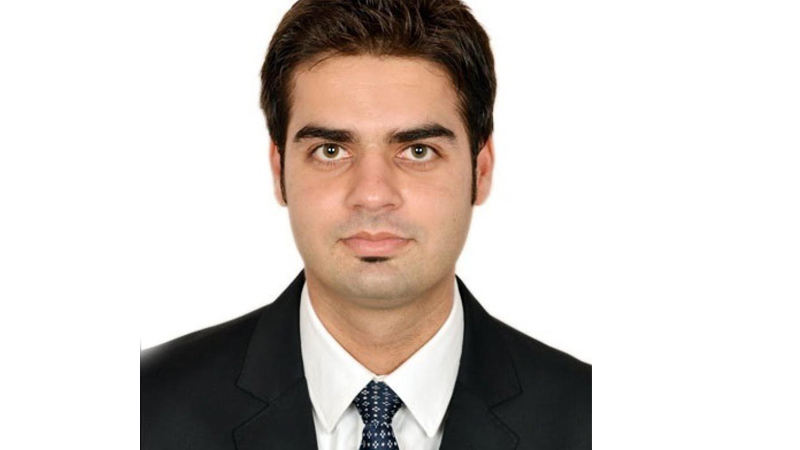
MUMBAI: Zepto has elevated Ahmad Muneeb to vice president – HR centre of excellence, placing him at the helm of the company’s total rewards, executive compensation and organisational effectiveness as the quick-commerce firm powers through a high-growth phase.
The move follows his stint as senior director of the HR COE, where he played a central role in preparing the company for IPO readiness while scaling its people analytics capabilities. During this period, Muneeb helped align complex performance management structures with more streamlined and scalable employee experience frameworks.
In his new role, he will steer the design of total rewards strategies, executive compensation planning and organisational design, while also overseeing performance management, employee experience initiatives and people analytics programmes.
Before joining Zepto, Muneeb spent nearly three years at Meesho, where he held multiple rewards and HR business partner roles. Earlier in his career, he worked as a senior rewards consultant at Mercer, advising high-tech clients on compensation benchmarking, pay structures and talent-focused reward frameworks.
He began his hr journey at Cognizant, where he supported compensation programmes for nearly two lakh employees across India and worked on m&a compensation alignment and skill-based pay initiatives. Prior to moving into HR, Muneeb started his career as a software engineer at Netcracker, bringing a technical grounding to his people strategy work.
With a mix of consulting rigour, start-up agility and enterprise-scale experience, Muneeb’s elevation signals Zepto’s continued focus on building robust people systems as it races towards its next phase of growth.


MIB sets OTT accessibility rules, mandates captions and audio description

Boney Kapoor acquires remake rights of Tamil political satire Thalaivar Thambi Thalaimaiyil

Netflix India names Rekha Rane director of films and series marketing

Zabeen signs off from TV9 after shaping the network’s public voice

Dhawan steps up to bat for Delhi’s grassroots sports push

Orient Beverages pops the fizz with steady Q3 gains and rising profits

Cheekatilo shines in the dark with record debut on Prime Video

These ’90s fashion trends are making a comeback in 2017
The final 6 ‘Game of Thrones’ episodes might feel like a full season
According to Dior Couture, this taboo fashion accessory is back
The old and New Edition cast comes together to perform
Phillies’ Aaron Altherr makes mind-boggling barehanded play
Uber and Lyft are finally available in all of New York State
Disney’s live-action Aladdin finally finds its stars
MIB sets OTT accessibility rules, mandates captions and audio description
Boney Kapoor acquires remake rights of Tamil political satire Thalaivar Thambi Thalaimaiyil
Netflix India names Rekha Rane director of films and series marketing
Zabeen signs off from TV9 after shaping the network’s public voice
Dhawan steps up to bat for Delhi’s grassroots sports push
Orient Beverages pops the fizz with steady Q3 gains and rising profits
Cheekatilo shines in the dark with record debut on Prime Video
-

 News Broadcasting5 days ago
Mukesh Ambani, Larry Fink come together for CNBC-TV18 exclusive
-
 I&B Ministry3 months ago
India steps up fight against digital piracy
-

 iWorld1 week ago
Netflix celebrates a decade in India with Shah Rukh Khan-narrated tribute film
-
 iWorld3 months ago
Tips Music turns up the heat with Tamil party anthem Mayangiren
-
 MAM3 months ago
HoABL soars high with dazzling Nagpur sebut
-
 iWorld12 months ago
BSNL rings in a revival with Rs 4,969 crore revenue
-
 MAM5 days ago
Nielsen launches co-viewing pilot to sharpen TV measurement
-

 Film Production1 week ago
UFO Moviez rides high on strong Q3 earnings
